Year 3, Steve McQueen

Yesterday ArtAngel ran a live Q&A with artist and director Steve McQueen, following their most recent collaboration for his vast work, Year 3. For this artwork, McQueen arranged for 76,146 kids, from 3,128 Year 3 classes (ages 7–8) to be photographed in the timeless, traditional, and I would even say iconic format of the class photo. It’s something most of us can relate to. Bodies arranged in rows, taller kids standing, some sitting on plastic chairs or old wooden gym benches, and others cross-legged on the floor. What has emerged is a rich tapestry, a beautiful, huge patchwork quilt of thousands of photographs that document the present and, as McQueen emphasised in the talk, the future of London. What an incredible concept for a piece of art. I’ve heard it described as a giant portrait. But it feels far more dynamic, participatory and meaningful than that word implies.

I knew that the work was being exhibited at Tate Britain (I was due to visit in April, and am gutted that now I’m unlikely to see it at all), but from photos the installation looks impressive. The messy brightness of 1,504 schools packed into the grandiose space of the Duveen Galleries would always create a delicious juxtaposition. I hadn’t realised that for the ArtAngel side of the work, some 600 of the photos were created into billboards, situated across all 33 London boroughs, in November 2019. An ephemeral facet of a monumental artwork. It’s the stuff Encounters Art was made to write about – my only regret is to not have seen and documented them myself. In some ways that’s the beauty of these pop up artworks though. They aren’t supposed to be sought out, they mix and mingle with the everyday and you don’t know it’s there until you stumble upon it. If you did see a billboard in London back in November then I would love to hear your thoughts – leave a comment or DM me @encounters_art.

Installation view on Camden Road

Subverting a space that is usually used for adverts by filling it with a school photograph which is simultaneously strange (because we don’t know these children) and familiar (because we’ve all been children) is such a strong, engaging idea. One of the best moments I’ve come across by searching online for #year3project is a BT advert on Camden Road announcing “Technology will save us”. It is a timelapse video of BT’s billboard being surmounted with a photo of smiling kids in bright red cardigans and summer dresses in an old school hall. Here the children aren’t being prepped and presented as the consumers of the future. They are the future. They will save us. (Though I suppose ironically I owe my thanks to technology for preserving this moment for me to find months later.)

I love seeing these images interwoven into the London landscape. In tube stations, framed by carriage windows, this array of smiling young faces must have cheered up and intrigued countless commuters. Even in the gallery display, away from the urban fabric, it feels like a very London-based artwork, because it celebrates the city’s amazing diversity. McQueen chose Year 3 because for him, that is the moment we start to gain perception of our identities. Our classroom becomes a window on society and a crucible of the nuances of race, class, privilege and opportunity, all of which are explored in the work.
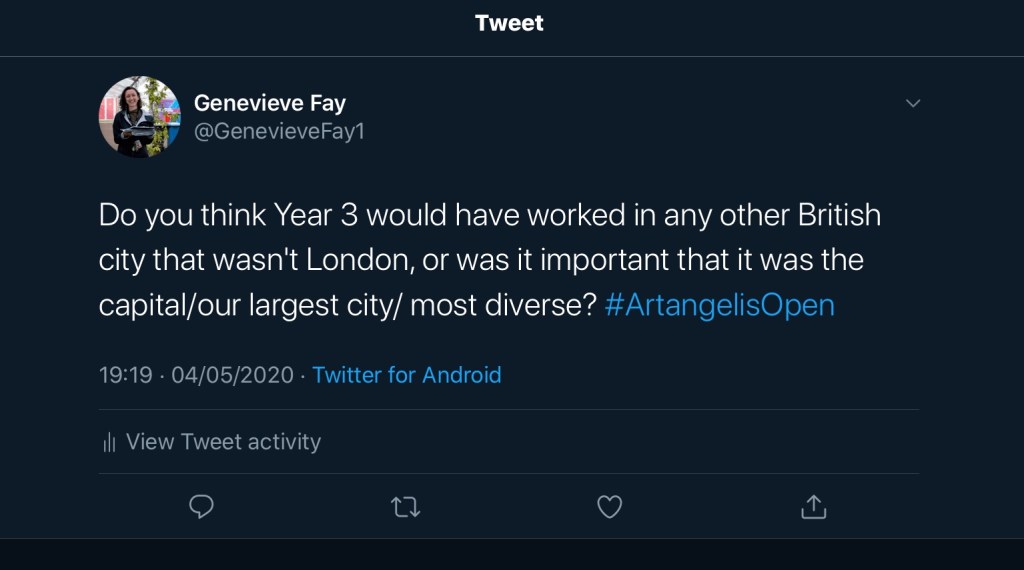
I found the London aspect particularly intriguing so I decided to ask a question using the hashtag #artangelisopen and I couldn’t believe it when it was picked for McQueen to answer. I was so excited, cheering and jumping up and down that I almost forgot to listen to his response. He said that for him, London was the clear choice, but it didn’t have to be limited to that – it could be carried out anywhere – and he seemed to be encouraging people to take up the project and move it on elsewhere. I would love to see that, particularly somewhere like Nottinghamshire (where I grew up) where there are rural and urban childhoods playing out. I wonder if it would click in the same way the original project does.

Installation view at Tate Britain Duveen Galleries

Listening to McQueen, the work was also understandably rooted in London because that was his experience – despite its scale, there is a highly personal context to the artwork which draws on his own boyhood engagement with art: a primary school outing to Tate Britain was the start of his journey. But it’s also about visibility. According to TIME magazine, Steve McQueen is one of the 100 most influential people in the world. For Twelve Years A Slave he won an Academy Award for Best Picture, and became the first black filmmaker to do so.

By creating this work, displayed in the gallery he visited as a child, he has come full circle. What an amazing thing, to provide an opportunity for the children in Year 3 be able to visit that same space, and see themselves, and others who look like them, on the walls. It fills me with hope that the project will be the spark that ignites countless artistic explorations and adventures. I can’t wait to see what they create when they’re fully grown.
Artist interview with Nicky Bird

Recently I had the opportunity to interview Nicky Bird, an artist who, among many exciting projects, has been undertaking a Land Mark residency with Art Walk Porty.

Her residency has focused on rediscovering and retelling the lost stories of the Buchan Pottery decorators, using found photographs and oral histories. The project is culminating in two weekends of events/exhibits, including an artist walk, site-specific artworks and a soundscape, which will be played in one of the pottery’s old kilns. Definitely worth a trip down to Portobello, if you needed any further encouragement to visit Edinburgh’s loveliest coastline.

We talked about artistic process, how Bird’s work treads the boundaries between art and heritage, and the importance of place and community in the project. You can read the interview in full here.

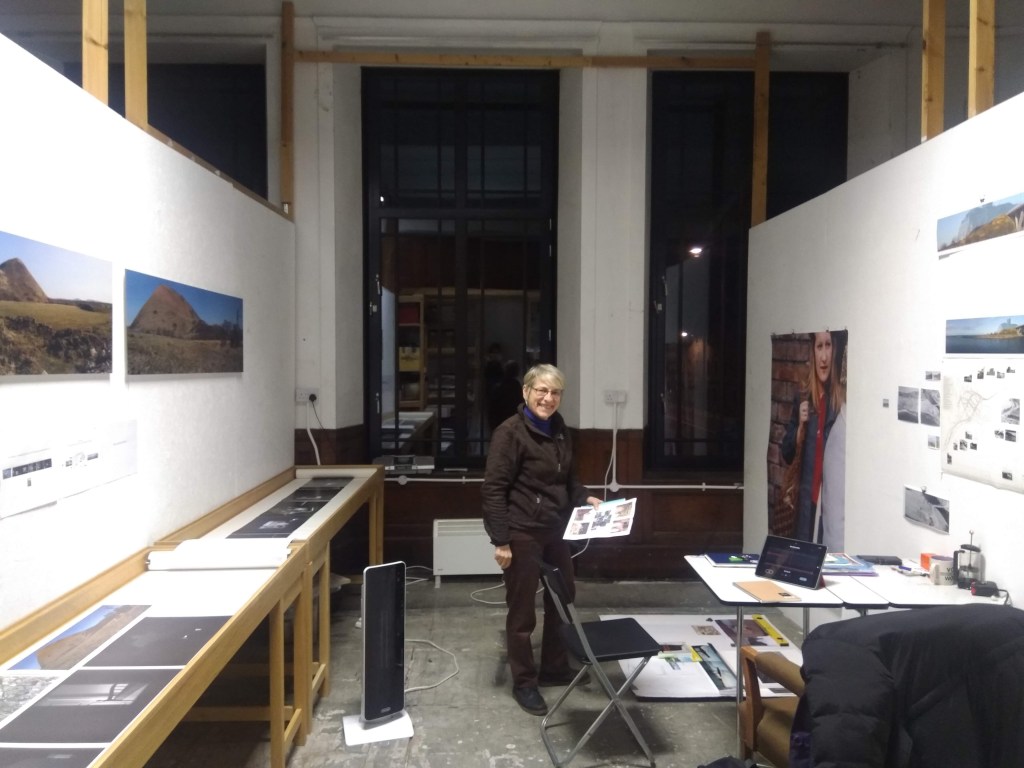
This is the first time I’ve interviewed an artist directly, and the process was fascinating. Though much of her work is site-specific, we met in Bird’s studio in Leith, where various projects and works-in-progress are tacked to the walls. She described how she doesn’t always manage to work in the studio – alongside her artist projects she teaches at Glasgow School of Art – but the images that surround her when she returns are good reminders that help her pick up where she left off.

I recorded the conversation and transcribed it into its interview format afterwards, and was reminded of how conversations jump around in a way the written word simply cannot. Though audio interviews, via the radio or through podcasts, are probably more personal and intimate, I liked the procedure of drilling down into our conversation and distilling Bird’s thoughts and motivations into a few paragraphs, though editing while keeping someone’s voice is always a challenge.

This is a new venture for me and I’m hoping it is the starting point for more interviews, written and recorded, which shine a light on the fascinating process of art making. I’m very grateful to Nicky Bird for her warmth and patience, and to Rosy Naylor, Curator of Art Walk Porty, for giving me this opportunity.

Nicky Bird in her Leith studio

Nicky Bird & Art Walk Projects, Portobello

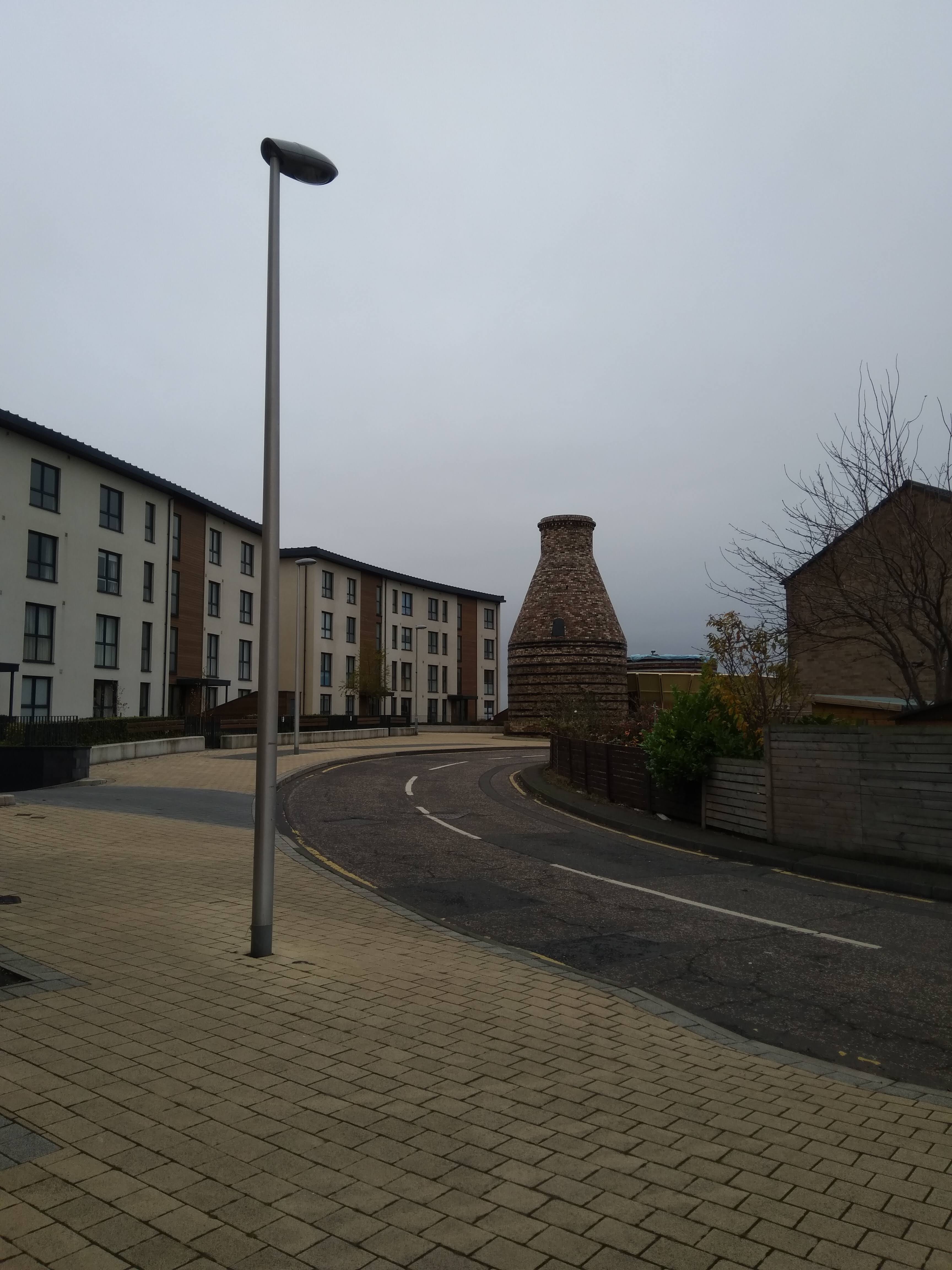
How much do we really know about our surroundings? Living in towns and cities, there are fragments of past lives and clues to how the environment has changed scattered all around us, if we look carefully. That careful looking, backed up by detailed research is how artist Nicky Bird is spending her LAND MARK residency with Art Walk Projects, based in Portobello. The starting points for her project are the two bottle kilns close to the shore (dated 1906 and 1909), the only fragments left of the large Buchan Pottery complex, which dominated the area close to the shore, but closed in the early 1970s.

One of the bottle kilns, an alien industrial fragment adrift in a sea of new builds

Portobello is a seaside town between Leith and Musselburgh, east of Edinburgh city centre. It’s a beautiful walk along the promenade, more a place of leisure than of work, but until relatively recently it was an important industrial hub – there was a paper mill and a chocolate factory all within easy reach of the Pottery.

Today a small group, led by Bird, helped to revive a memory of that recent industrial past, through a walk event which told the decorators’ stories. These were the women who painted the ceramics before they were fired in they kiln, who occasionally raked through the spoils to try out their own designs and have them fired on the sly. Like a band of investigators searching for clues we walked around the area and examined maps from different phases of the area’s history.

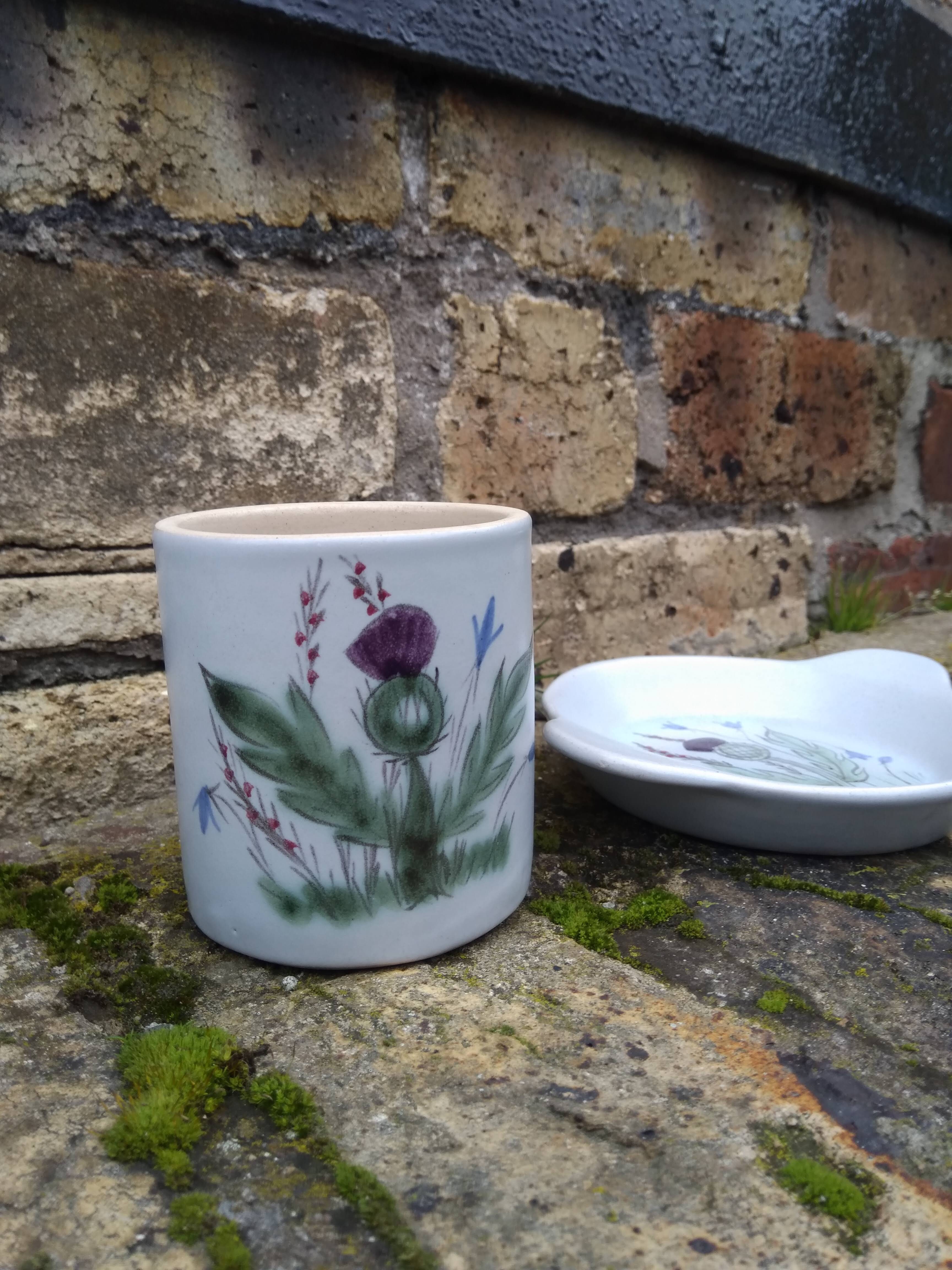
Classic Buchan Portobello pottery, set against the backdrop of the beautiful kiln bricks

We also looked at examples of the pottery the women had decorated, and two fellow participants told me they recognised the design – it used to be sold in all the tourist shops in the 1970s, but they had never realised it had been made in Portobello itself. It felt good to participate in reviving that part of the town’s story, and I’ll be keeping an eye out for pieces of Buchan pottery in Edinburgh’s shops from now on. Even the most everyday objects can be brought to life through giving a voice to their past, which is why art projects like this one, which evoke memories that have been lost, are so important, especially for communities that have changed as much as Portobello.

Nicky Bird’s residency with Art Walk Projects is culminating with an event in February, so this walk was really a launch for her project. The completed work promises to be one that shakes off the dust that has settled on Portobello’s recent history, and I’ll look forward to seeing what else is revealed.

Edinburgh Art Festival is here

It’s been a bit quiet on the blog recently while I’m trying to knuckle down and get my dissertation done. Apologies! However, Edinburgh Art Festival has just opened and I’m going to try and see as many of the exhibitions as I can and write about them on here over the next couple of weeks, so watch this space.

So far, the only things I’ve booked are both related to the same work, Night Walk for Edinburgh by Janet Cardiff and George Bures Miller. My slot for the walk is next Sunday, and it sounds like an unusual and immersive experience. From what I can gather, the artists have created a site specific work which you carry with you on a walk around the streets of central Edinburgh, using a tablet and headphones. They become your tour guides in an experience which mixes reality and fiction. The artists are delivering the keynote lecture at the National Gallery of Scotland this evening, which will cover what it was like to make the work in Edinburgh, and will touch on their art practices more generally.

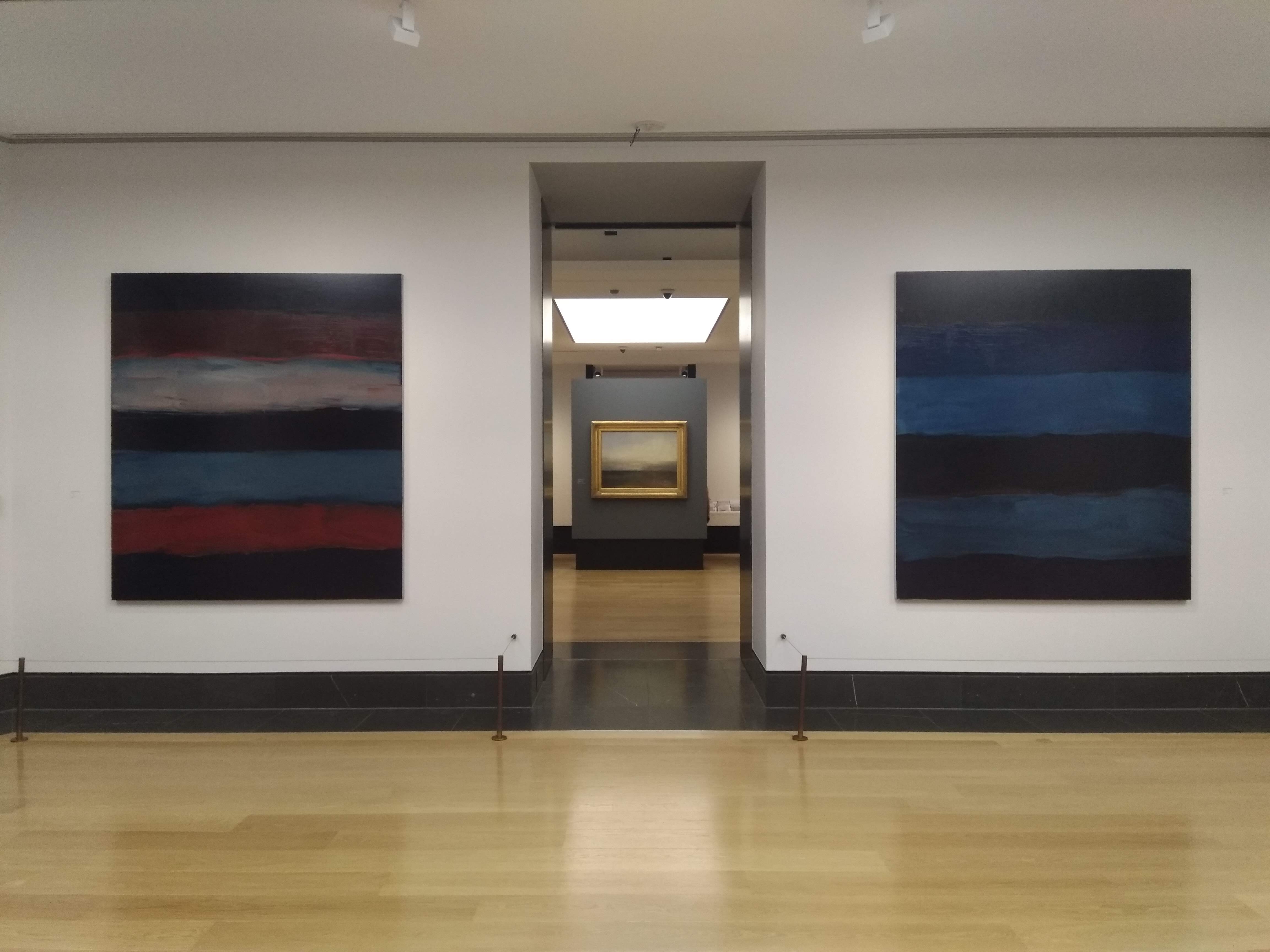
I’ll be back with more updates as and when I get to more Art Festival exhibitions and events. In the meantime, here’s a photo of some excellent curation I noticed recently at the National Gallery in London, pairing two recent works by Sean Scully, Landline Star and Landline Pool (both 2017) with the work that inspired them, The Evening Star (1830) by J. M. W. Turner.