Walking into Summerhall, you never really know if you’re in the right place. The old bronze door handle doesn’t completely turn. No matter how many times you’ve been, you have to have a millisecond of doubt (is it still open? have I come to the right entrance?) before you manage to get in. Once you’re inside, you can feel you’re somewhere that good things are happening, but it’s not always clear where, or how to get there. Most times I’ve been there, I’ve wandered in a circle, disorientated, and stumbled on something new, or I’ve followed others into the place I was looking for.
Summerhall is many things. It’s a rambling old veterinary school transformed into a multimedia arts venue which is home to over 100 businesses, including several artists’ studios. It’s also for sale. Like lots of Edinburgh residents, I’d experienced a wave of disappointment when I heard the place was on the market. But it wasn’t until last night, in the Dissection Room lit up by fairy lights, listening to Jalen Ngonda’s soaring falsetto that I realised how much I’d miss it.
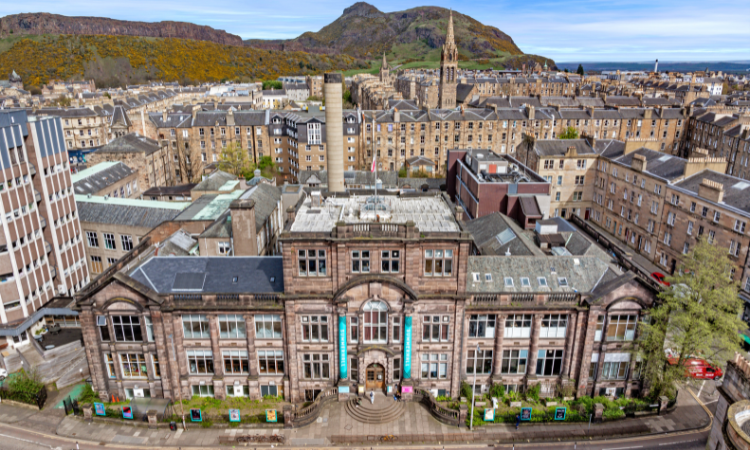
Summerhall from the air
I stood there with lots of Six Music Dads soaking up the music and the atmosphere. No one had checked my ridiculously large and cumbersome cycling bag, no one had searched me. It has the lovely feeling of a slightly ramshackle, informal space (with the same sort of energy as Hidden Door festival) where no one asks what you’re doing. You could probably get lost wandering around in there for several hours and no one would bat an eyelid.
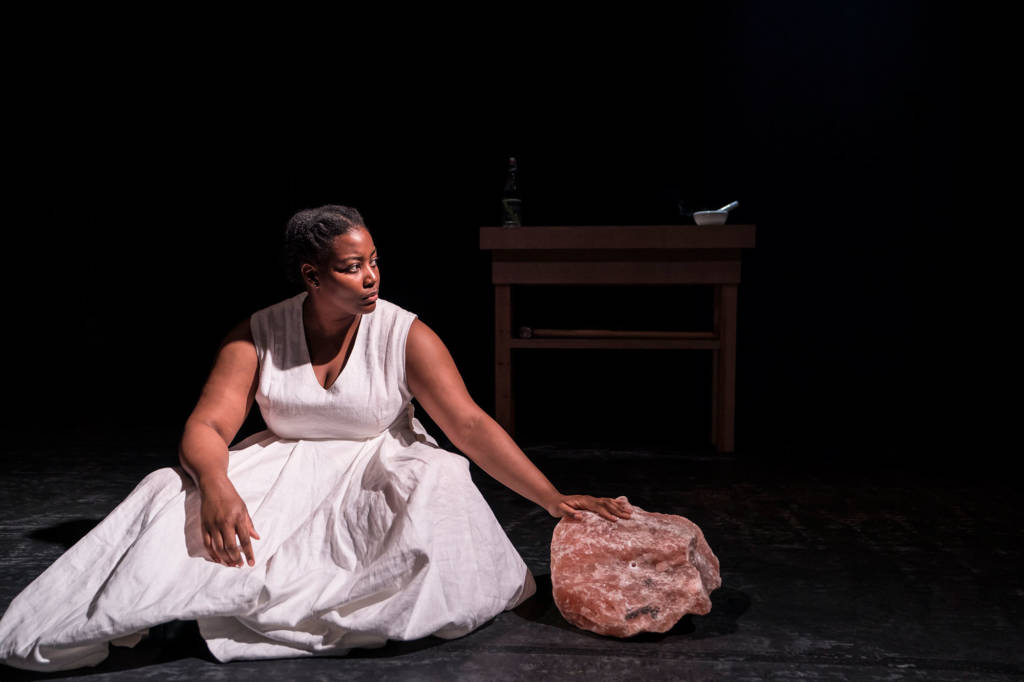
Even before I moved to Edinburgh six years ago, I’d seen theatre there during the Fringe. Summerhall is known for being home to some of the more experimental shows, and two stick out in my mind. First, Salt., a haunting one-woman show where Selina Thompson recounted her experience of retracing the route of the transatlantic slave trade. We were given science-lesson style safety goggles (the ones where the ends were always chewed on or slightly melted by bunsen burners at school) to protect us, while Thompson smashed out her anger and grief on a chunk of Himalayan pink rock salt on stage.
Salt. production photo by John Persson
More recently, with some trepidation given I was only recently bereaved, I saw The Last Show Before We Die. It was an apocalyptic cabaret of sorts, interweaving verbatim interviews and naked writhing on the floor, which questioned the meanings of endings, death, life and relationships. I cried (I always cry) and laughed and hoped no one would ask me to get involved in the audience participation bits. It’s that type of show that keeps the Fringe weird, and keeps people coming back to the Fringe.
Work has brought me to Summerhall too. When I worked at the Book Festival, EHFM, the online radio station based in Summerhall welcomed a group of young writers I worked with, encouraging them to share their beautiful, tender and teenage words with the world. I felt like a proud auntie. I’ve done an escape room at Summerhall too, as part of a teambuilding outing in my current role at Edinburgh College. As an old veterinary school, it has just the right amount of a creepy vibe to be perfect for an escape room. I am terrible at escape rooms, I contributed nothing but telling everyone else “oh well done!”, but we had fun.
After covid, Summerhall was one of the first places we could tentatively meet with friends again, exchanging pandemic stories over pints. Edinburgh is seriously lacking in beer gardens (there is quite an obvious a reason for that, as demonstrated this week) but the courtyard at Summerhall is one of the finest. Perhaps it seems shallow to mourn the lack of a drinking spot just as much as the gallery spaces, but the social spaces are where the good stuff happens. That’s where the connections are made, plans are hatched, friendships formed.
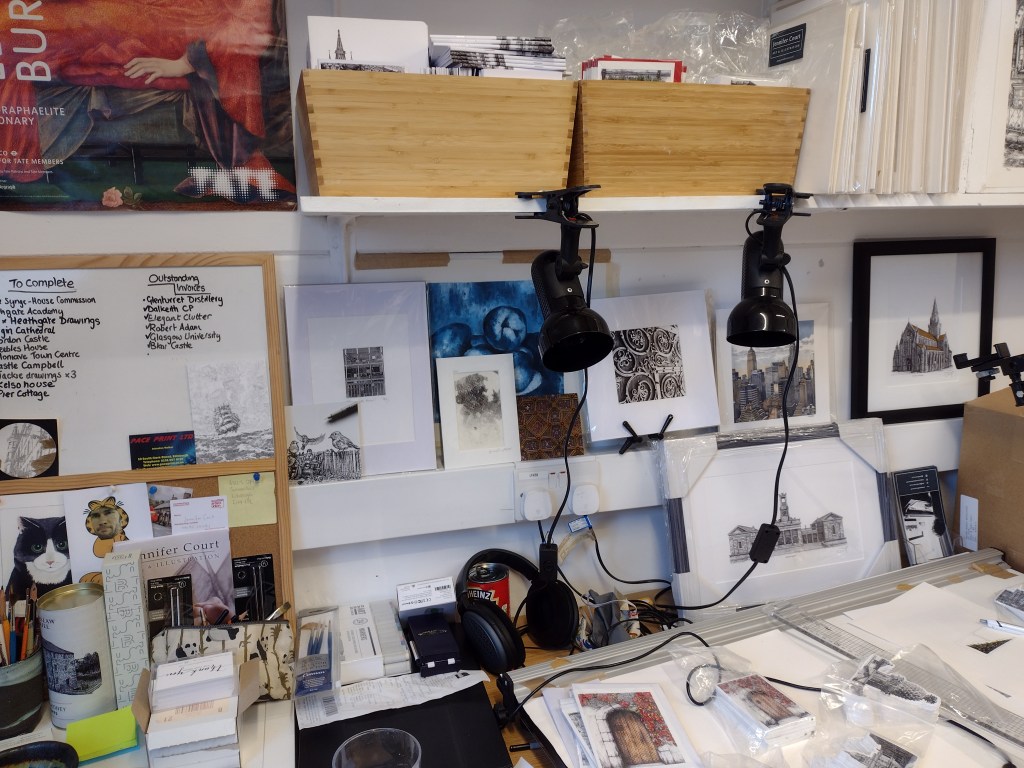
My pal Jenny’s summerhall studio. Summerhall is a beautiful hub of creativity in so many ways.
We don’t know for sure what’s going to happen with the sale of the space yet. There may still be scope for an arts venue to continue there, but whether it’ll retain the rickety, casual beauty of the current Summerhall is another question entirely. So, while we still have it, I’m going to try and get there, get lost, and soak up the atmosphere for just a little longer. Experimental naked cabaret, anyone?
Yesterday in Edinburgh, the sunset time was 5pm for the first time this year. This is cause to celebrate! Not just that it will now still be light when we leave work, but also that spring is on the horizon which means more time for adventures. I’ve been thinking about the many places to see art in Scotland that I still haven’t been to, and I’ve made a list.
These are the top places that have been on my radar, but that I’ve never been to, even though I’m now coming up to six years of living in Scotland. Ten places equals one per month from March to December. I hope I can manage it. Quick plea: it is genuinely embarrassing to admit I haven’t yet visited some of these places, so please don’t judge me too harshly!
Little Sparta, Lanark
I’ve been saying I wanted to go hear for YEARS and for some reason, have never managed it. This is the garden of poet, writer and artist Ian Hamilton Finlay (1925-2008). The garden in its entirety is the artwork here, dotted with metal, wood and stone sculptures created by Finlay, sometimes in collaboration with other artists. The site is only open June to September, when the trees and plants are in full leaf.
Mount Stuart House, Bute
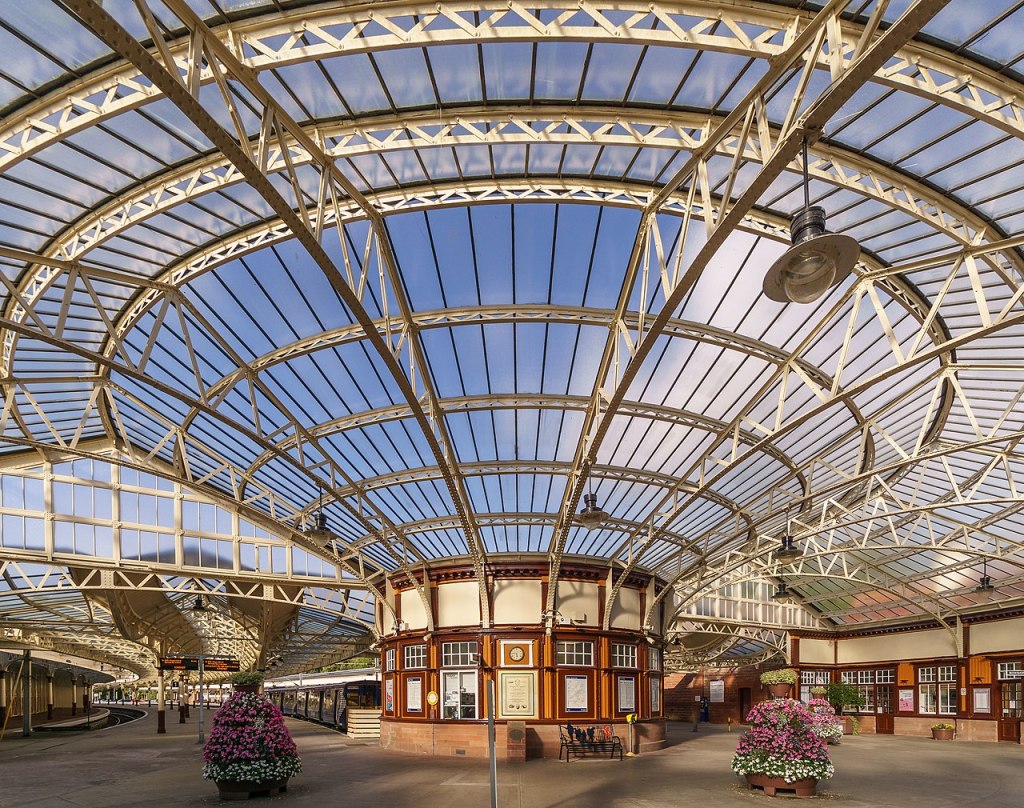
A few of the places on this list I’ve attempted to visit before, but never made it. That’s the case with Mount Stuart House. My partner and I made the journey to Bute via the train to Weymss Bay (almost worth it for beautiful station itself) and we made it as far as the gate to Mount Stewart, only to find it was closed. We wandered around the grounds a bit, possibly illegally. A reminder to always check the website and not just Google Maps.
Specifically this year I want to see the new immersive exhibition by Alberta Whittle (an artist whose work I love and have written about here and here). The exhibition will draw from the history and landscapes of Mount Stuart House, Bute and the Clyde, to explore ancestral roots, empire and routes of power. It’s sure to be a powerful show. The house opens on 29th March 2024 and the exhibition runs from 1 June until August 2024.
Weymss Bay station
The Burrell Collection, Glasgow
I first heard about the Burrell Collection when I was working at the National Gallery, and we held an exhibition of some of the most beautiful and delicate Degas pastel drawings I have ever seen. The Burrell reopened in 2022 and has since been celebrated and praised everywhere: it won the Art Fund Museum of the year last year. Alongside there Degas pastels, there’s one of the most significant holdings of Chinese art in the UK, stained glass, tapestries paintings… the list goes on and I am definitely going to need more than one visit.
Degree Shows: Duncan of Jordanstone College of Art & Design and Glasgow School of Art
I am a huge fan of attending art school degree shows and seeing what themes are being explored by emerging artists. Scotland is home to some of the best art schools and some really talented people embracing creativity in new ways. Although I always attend the ECA degree show, I have never been to Dundee’s Duncan of Jordanstone College of Art & Design or (and I’m afraid to admit this because I have no excuse other than being disorganised), Glasgow School of Art. I will be rectifying that this year. Shows normally happen around May-June and as soon as dates are announced, I’ll be planning my trip.
Cample Line Gallery, Nithsdale
People love Cample Line gallery. It’s quite a young gallery, having only been established in 2016, but I get the feeling they punch above their weight in terms of shows and programming. From its rural location, around 15 miles north of Dumfries, they host a year-round programme of exhibitions, screenings, talks, walks, workshops and events, exploring the work of contemporary artists, filmmakers and writers. Their next exhibition opens on 23 March and presents the work of Scottish painter, Gabriella Boyd.
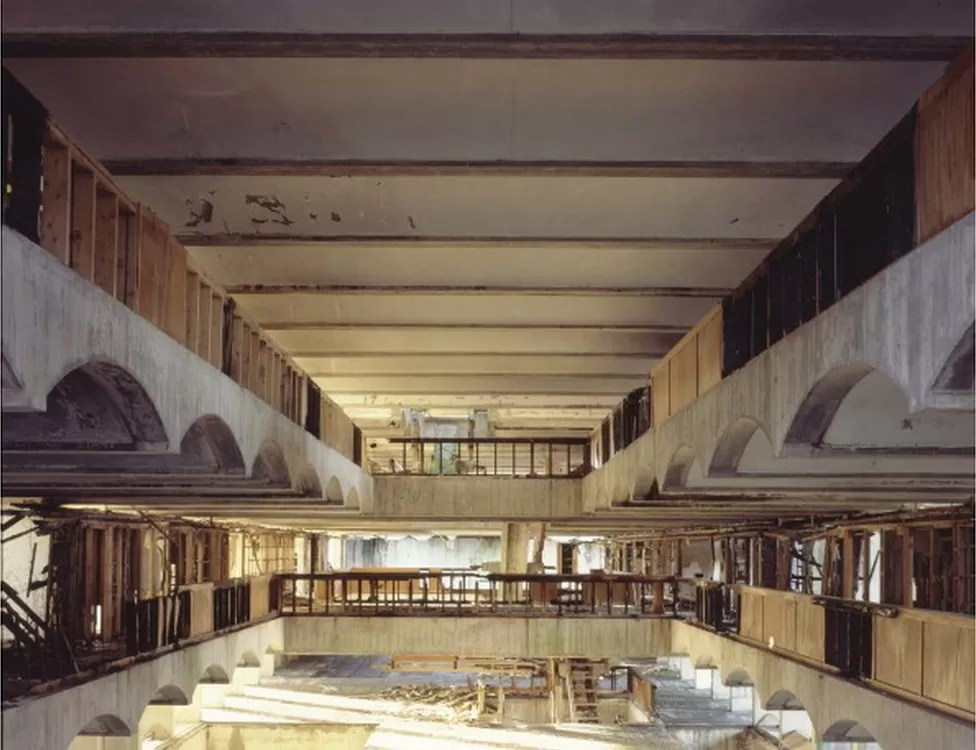
St Peter’s Seminary, Cardross
Anyone for a bit of urban exploring? Well, not really urban, because St Peter’s Seminary isn’t in an urban centre, but a couple of miles outside of Cardross on the west coast of Scotland. The concrete structure, which was constructed between 1961-66 was once hailed as an architectural masterpiece and has now completely fallen into ruin. But it still looks majestic even in this state, covered in moss, rust and graffiti. Have a look at this Guardian photo essay from 2019 and you’ll see what I mean. I don’t think visitors are really allowed, so I’ll have to pluck up some courage and combat my inner teacher’s pet for this one.
The Italian Chapel, Orkney
Here’s another entry on the ‘tried to go but was thwarted’ list. In October 2020 we had a trip scheduled to Orkney, but then 2020 happened, so we couldn’t go. This is the most ambitious and furthest away feature on my list, but one that perhaps has the most intriguing story behind it. In 1939, after the HMS Royal Oak was sank by a German submarine resulting in the loss of 834 lives, the decision was taken to transport 550 captured Italian soldiers in North Africa to Orkney, to construct naval defences in Scapa Flow. Among the prisoners was talented artist, Domenico Chiocchetti, who was placed in charge or transforming two Nissen huts into a chapel for the prisoners of war. Thus, the Italian Chapel was born. It is now one of Orkney’s most well-loved attractions, and is open year round.
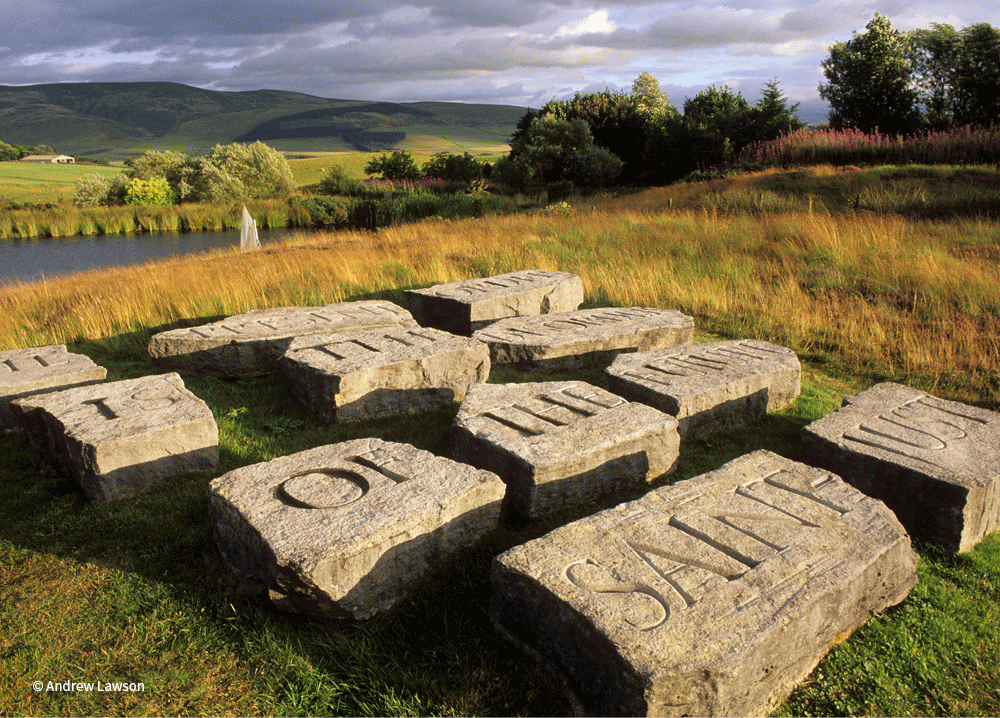
Crawick Multiverse, Sanquhar
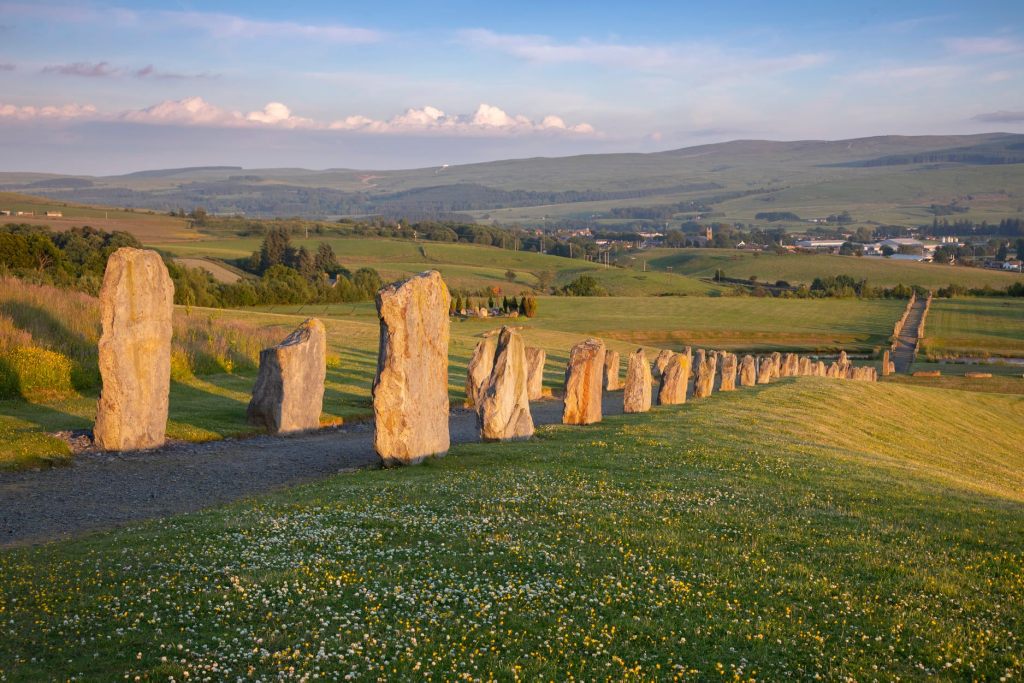
I really love Charles Jenks’ works at Jupiter Artland and the Scottish National Gallery of Modern Art. What I didn’t realise until recently is that there is a huge site designed by Jenks called Crawick Multiverse, which transformed a former open cast coal mine into a huge artland/sculpture park. The site opened in 2015 and links the themes of space, astronomy and cosmology “with a network of paths navigating features and landforms that represent the sun, universes, galaxies, black holes and comets”. It sounds totally wild and I can’t wait to explore it once it reopens on Saturday 16th March.
Newhailes House, Edinburgh
A lot closer to home with Newhailes House, where I’ve once booked a tour of, only to completely underestimate how long it would take to cycle there from my house and miss my slot. The house is a Palladian style 18th-century villa, complete with rococo interiors, Italian marble fireplaces and a Chinese sitting room and impressive fine art collection. The house was acquired by the National Trust for Scotland in 1997, and the unique conservation approach has meant that the house is preserved just as it was when they acquired it (rather than returning it to its ‘original’ condition). That approach fascinates me and this year when I book a tour I am planning to be far more realistic about my transportation methods.
Hospitalfield, Arbroath
I love to see today’s artists breathing life and creativity into grand old houses of the past, and that’s exactly what seems to be happening at Hospitalfield in Arbroath, they have an extensive residency programme, and see the house as a place of learning and ideas. The building is a 19th century Arts & Crafts house, built on the site of a mediaeval hospital. I’m keen to seen the sculptures in the garden (including Paolozzi’s Rio which is on loan from the Huntarian in Glasgow until 2027) and especially to explore the inside of the house via one of their tours, which restart in April.
Looking back at this list, I feel like I’ve given myself a lot to do! Scotland is such a beautiful and rich place to see varied art, architecture, sculpture and landscapes. I’ve had a few failed attempts in the past, because sometimes life gets in the way, but I hope to see as much of this as possible and encounter more art as the light and energy creeps back after a winter of hibernation.
I’d love to hear all the places you’re planning on visiting for the first time this year, wherever you are, so leave a comment or give me a shout on Instagram!
A few of my friends, who know I’m interested in public space, memorials, statues and public art (because I’m constantly banging on about it) have asked me what I think about the debate raging over statues in Britain. In order to try and express this, I’m going to draw on something I wrote during my MSc at Edinburgh College of Art last year, which takes two case studies from the USA as its main examples.
I want to show that public art, including performative rituals such as protests, can usefully inform debates around our identity, and that a frank discussion of visual culture in public spaces remains vital for understanding the public sphere we operate in today.
The essay was written for a class called Art in the Creative City, run by Harry Weeks (now at Newcastle University ). I’ve taken out large chunks, removed the footnotes and edited it fairly heavily in the interest of making it more accessible. If you want to see my reading list or access the original essay, send me a note in the comments, or DM me on Instagram. Events are changing so fast. ‘Statue defenders’ are holding protests at London’s Cenotaph as I write this. I’ll try and keep up with the momentum. Asterisks mark the start and end of the essay section, before sharing some of my thoughts on the situation in Britain.
***
The question of who is commemorated and who is erased in public space is one that is charged with different interpretations of history, politics and the concept of identity. Historically, public art has reflected the power of the dominant forces in society, because having a presence in public space, being deemed worthy of representation, is a signal of power, status and money.
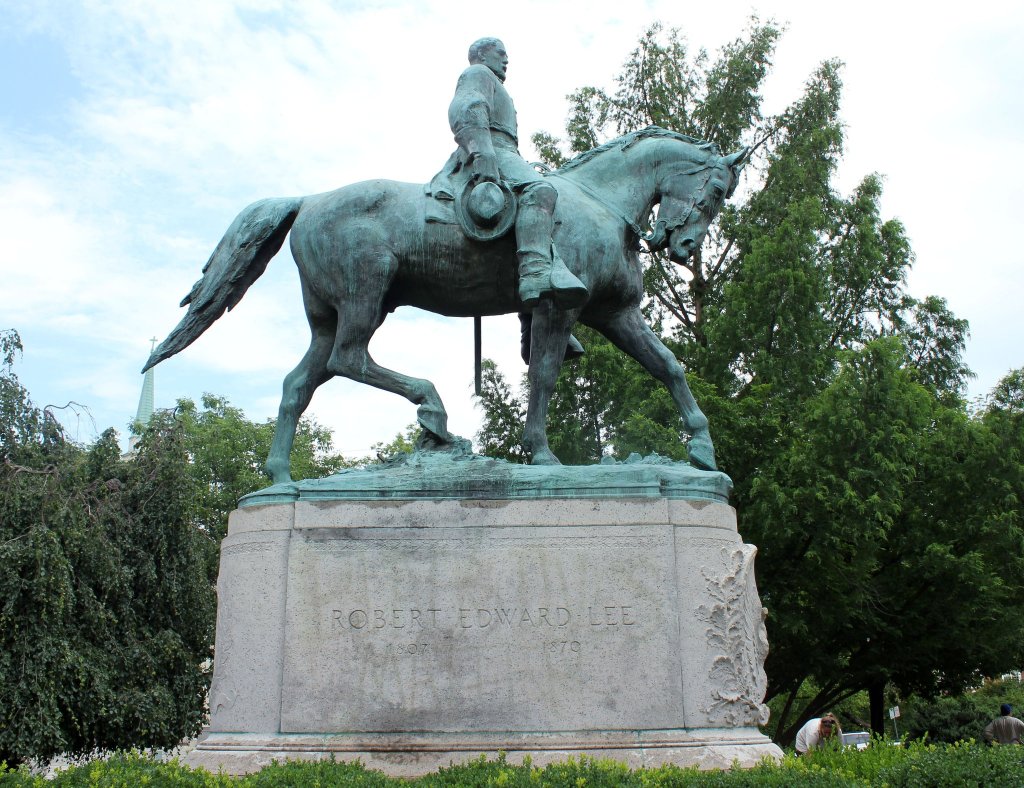
Statue of Robert E. Lee, Charlottesville, VA., (1924), bronze and granite, (7.9m × 3.7m × 2.4m including plinth)
The turbulent history surrounding the equestrian statue of Confederate General Robert E. Lee in Charlottesville, Virginia, is indicated by the renaming of its location three times over the past three years. Formerly Lee Park, it was briefly to become Emancipation Park, and now is known as Market Street Park; the difficulty of finding the right name for the space directly connects with the controversy around the statue of Lee. The monument was erected in 1924 as part of the wider movement known as the ‘Lost Cause’, which intended to frame the participation of the Southern States in a Civil War narrative of heroism and gallantry, with similar monuments erected in nearby Richmond, Virginia and further afield. In Charlottesville, city councillors took the decision to remove the monument in the spring of 2017, though its removal was delayed pending a legal challenge. During the delay between March and August of that year, the statue became a rallying point for far right groups, who protested against its proposed removal. Over the summer, a number of protests and counter-protests for and against the removal of the statue culminated in August, when violence at a rally for ‘Unite the Right’ resulted in the death of Heather Heyer, a peaceful protestor. The event was reported widely on national and international news.
As a piece of public sculpture, this statue and its interpretation as a symbol of either hateful racism or historic pride by different sides of the debate, is at the centre of these political events. The visual symbolism of the statue and the differing aesthetics that emerged around it, are therefore highly relevant. As embodied rituals, protests, marches and vigils can be read as forms of performance, which use visual tools to enhance their legibility and potency. The rallies both for and against the Robert E. Lee’s removal were no exception.
During a rally in May 2017 protesting against the removal of the sculpture, the leader Richard Spencer was heavily criticised for promoting the use of torches, which were interpreted as an symbolic visual invocation of Ku Klux Klan gatherings. Spencer’s response was to deny that the torches had any reference to the KKK, but justified their use on the basis of their ‘beautiful aesthetic’. This argument, highly doubtful given Spencer’s overtly white nationalist views, attempts to justify the use of a controversial symbol of terror on the basis of an aesthetic effect. It shows the extent to which aesthetic and political strategies are interlinked, and highlights the ways in which public art and aesthetic gestures can be (mis)used as tools for political agitation, whether progressive or regressive.
Scholar David Harvey has convincingly argued that cities as public spaces are constantly in a symbiotic relationship of shaping and being shaped by their inhabitants, through their political, intellectual and economic engagement. It is therefore no surprise that public art is persistently at the centre of debates about identity, collective memory, history and politics, and a whole range of different ideas about right and wrong, who is represented, and who is erased. The case of the Charlottesville statue of Robert E. Lee shows this in action. So far, the statue has been analysed as a magnet for far-right politics, but there are other tactics at work too, interventions that successfully question its validity as a supposedly heroic symbol.
On a purely formal level, the equestrian statue of Robert E. Lee, raised up on its stone plinth, works within the visual language of dominance and power: gazing up from below, we see nothing but galloping hooves. In 2015, prior to the council’s vote to remove the statue, the words ‘Black Lives Matter’ were sprayed on its plinth, and although removed soon afterwards, the outline remains vaguely visible. While many might categorise graffiti as anti-social behaviour and vandalism, Lucy Lippard has framed these kinds of gestures as ‘wake-up art’, and assigns them a significant role within the field of public art, with the capacity to call attention to problematic places and to galvanise communities into action. The political resonance of the graffiti gesture in this context, proven by the groundswell of support for the campaign to remove the Charlottesville statue, is indisputable. In February 2019, further graffiti covered the statue’s plinth, and it is likely that these gestures will continue to be enacted on the statue until its fate has been decided in the legal courts. In this context then, the graffiti acts as a kind of reframing mechanism, reminding passers-by and the media that the debate has not gone away. Statues and monuments commemorating military leaders who fought to defend slavery remain unacceptable to swaths of American society, and especially painful to the African-American community. The debate will continue in public life as long as these contentious symbols remain standing in shared, supposedly equal-access public spaces.
By existing in public spaces, public artworks and their interpretation are fundamentally unpredictable, just as people themselves can be unpredictable. Instead of being confined to the space of a gallery or museum, where artworks are constantly under surveillance and accessible only to a minority of people, public art is out in the open. It is exposed to all passers-by and, while this means it may exist completely unnoticed, equally it can also function as a site of intervention, either in the form of graffiti, or by being used as rallying points within performative gatherings, such as protests and vigils. It is through this very unpredictability and spontaneity that these public works can attain their meaning, and spark debate about what kind of society we wish to construct. Public art in all its forms can help to inform our debates about who is visible, who is represented in our public spaces, and can help us to articulate our equal responsibility in building our shared ownership of them.
Though the graffiti intervention on Robert E. Lee’s plinth effectively brings the sculpture back into the discursive realm and questions its validity, ‘wake up art’ is not the only option for diversifying public spaces. The right to be officially recognised in public sculpture and represented within the ‘symbolic public landscape’, to use Magdalena Dembinska’s term, is also important for the assertion of minorities’ identities.
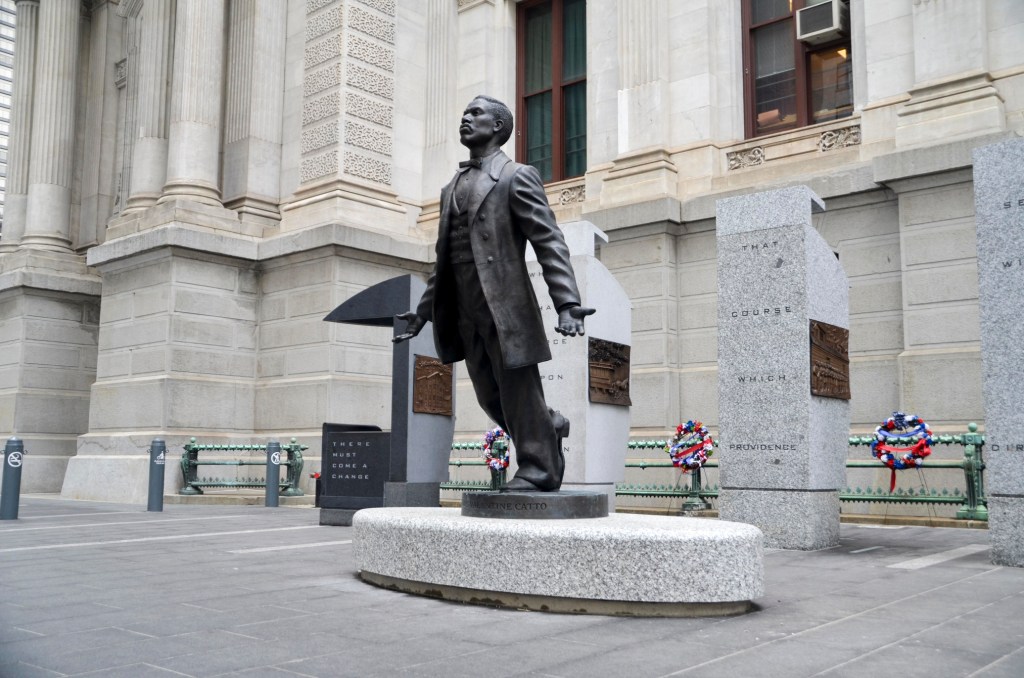
Branly Cadet, A Quest for Parity: The Octavius V. Catto Memorial, (2017), bronze, granite, and stainless steel, statue height 3.6m
Branly Cadet’s 2017 monument A Quest for Parity: The Octavius V. Catto Memorial, which is situated on the southwest corner of Philadelphia’s City Hall, is a useful example. The memorial is comprised of multiple elements which together form an impressive monument to an extraordinary figure – a Civil War-era activist who campaigned for the rights of African-American citizens – who is clearly deserving of recognition in the public sphere.
The monument operates strictly within the confines of the traditional aesthetic of monumental public art, through its figurative use of bronze, and its position outside City Hall. From a formal perspective therefore, it does not push the boundaries or challenge its viewers aesthetically – it is clearly designed to avoid provoking controversy. Yet this is perhaps the very purpose of the Catto monument: it allows African-Americans to assert their presence and validity within the mainstream tradition of monumental forms. The sculpture’s title, A Quest for Parity, specifically refers to Catto’s campaigns for equality. Yet the monument itself is also a reassertion of that quest for parity within public art and representation in the public arena more broadly. The monument therefore is an example of how traditional forms can also help to raise visibility of minority communities, and that their presence in the public arena need not only be represented by avant-garde artistic strategies or counter-monumental interventions.
Public art is embedded in a political landscape. In whatever form it takes, in both its inception and its interpretation, it is informed by differing ideological positions and political beliefs: what remains standing and what is removed from our parks, squares, and the façades of government buildings reflects the societies in which we live. Artworks can be deeply divisive, and can expose latent divisions within societies in ways that can be traumatic and will require healing. Art has the power to spark and intervene in public debate.
What was revered, relevant and what was commemorated in the past may not always be admirable and appropriate in the present and future, which is why those who manage public spaces need to enter into dialogues with the communities and individuals who use them. Artworks that evolve and change help us to question the notions of one fixed ‘public’, and can encourage us to embrace flexible visions of the public sphere, and recognise multiple viewpoints, helping to make those who had been invisible and unheard part of the many voices that make up public life.
***
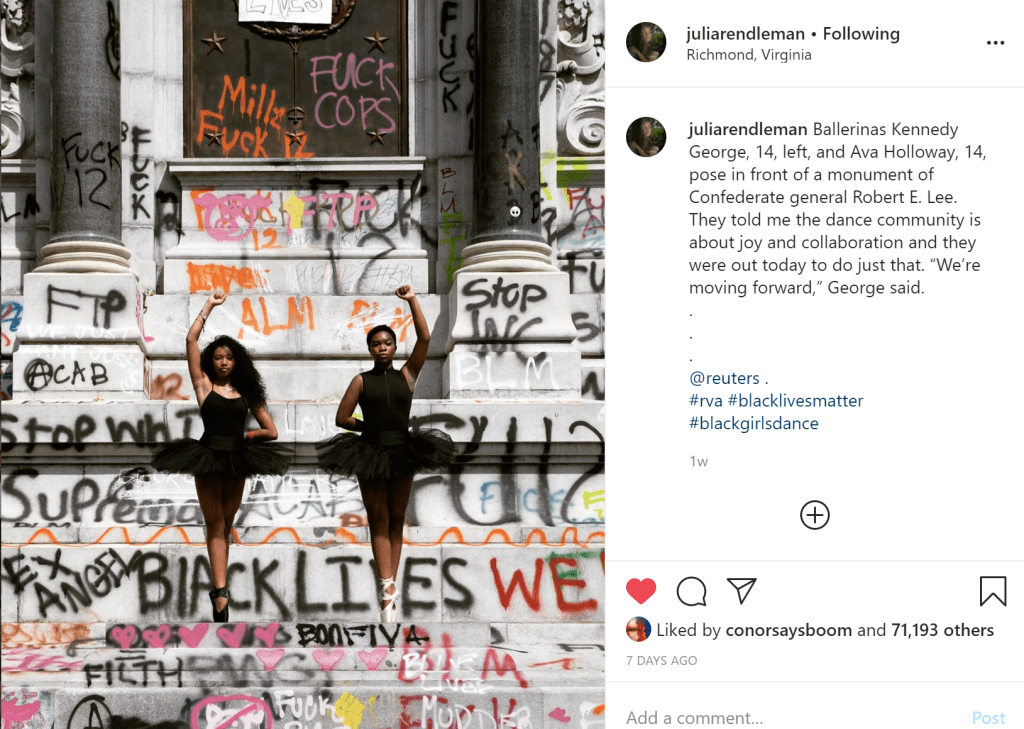
Fast forward a year and after the murder of George Floyd by a police officer, a wave of social activism has swept the US and Britain. In Richmond, Virginia, the government has pledged to remove a statue of Robert E. Lee on Monument Avenue. Images on Instagram of black ballerinas posing below the monument, now covered in graffiti, depict a significant historic moment and show the power of activism. Neighbouring Charlottesville campaigners are relieved that their state authorities are finally acknowledging the hurt these monuments have caused, and hope it will hasten the removal of Lee’s statue from Market Street Park.
In Britain, the argument over who is permitted representation in public space seems to be right at the heart of the nation’s identity crisis. There are a few thoughts I have to add to this debate, which is constantly evolving. Firstly, it is a good thing our public monuments are under scrutiny. They have remained invisible in plain sight for far too long.
The statue of Edward Colston that was forcibly removed by anti-racist protestors and symbolically dumped into the River Avon, where his ships that carried slaves across the Atlantic would have docked, was a momentous and powerful act. The act of its removal has done more to educate people about Britain than the passive existence of the statue itself ever has. As historian David Olusoga has said, rather than the erasure of history, this was the writing of it. Removed in this way is actually far better than had it been quietly taken down by the city’s authorities. It was a moment of activism, a kindling of hope that change could be possible.
For this reason, I don’t believe the statue should have been retrieved from the water so hastily, and I don’t believe it belongs in a museum. As stated above, museums are accessed by a small proportion of the populace, whereas the public space, city squares and streets, are used by us all. (Or were, until coronavirus forced us back to the private sphere, an act which though necessary and in the interest of public health, will serve to entrench the inequalities already prevalent in British society). Rather, Bristol City Council could commission an art piece which works in dialogue with the local community and their city to respond to Colston’s removal: an artwork which shows the journey of the statue from its plinth to the waterfront. Leave the plinth standing empty – the equivalent of an empty chair at a political debate. Leave up the graffiti. Use the landscape and the statue’s journey within it to teach people about Colston, about the legacies of the slave trade upon which Bristol and Britain’s wealth was built.
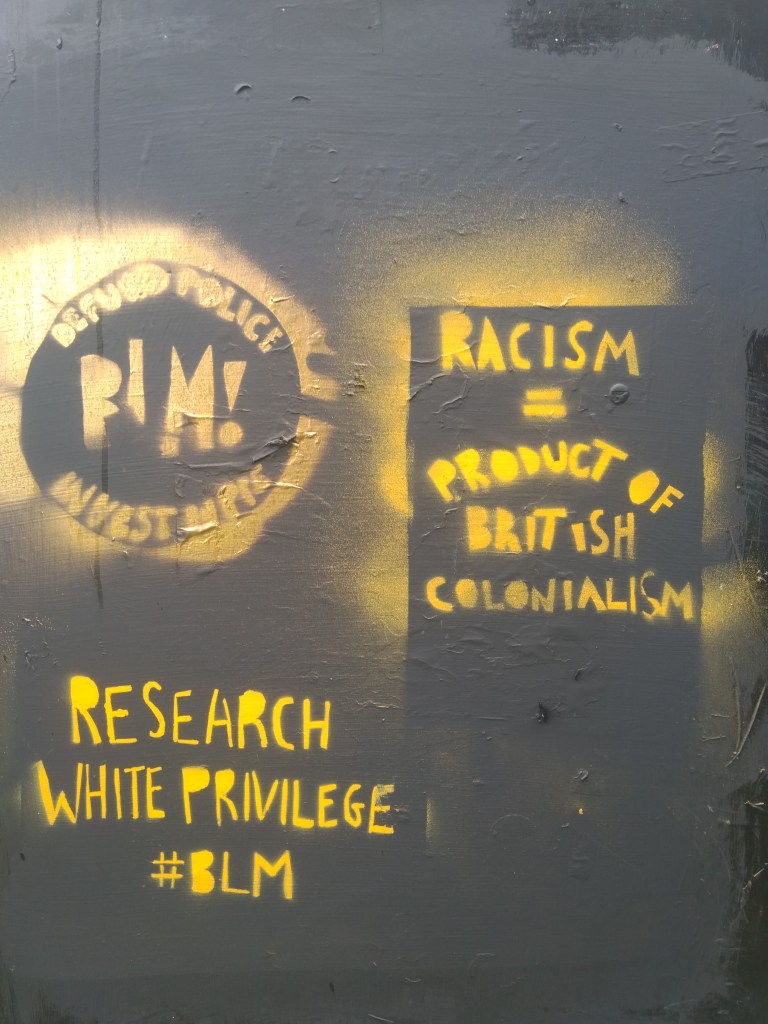
Graffiti on the Meadows, Edinburgh, 13 June 2020
For far too long have the British seen themselves as the “goodies” of history, an idea that has been perpetuated by an education system that doesn’t include the British Empire or colonial rule. I had to do a history degree before I was really exposed to these aspects of our past. If we need inspiration, our European neighbours have examples of public art that helps passers-by work through the traumas of the history. The Berlin wall is commemorated by a copper line which traces the footprint of where the barrier once stood, an artwork woven into the urban fabric which educates but doesn’t erase. Britain could learn a lot from Germany when it comes to acknowledging the past through the use of public space and visual culture.
Understandably, the movement to reassess our statues and monuments has now gathered significant momentum, and other historical figures have come into focus, which has exposed some uncomfortable truths that many would rather sweep under the rug. I think, or would hope, that the vast majority of people agree that slave traders like Colston should have removed long ago. Meanwhile, figures like Winston Churchill and Robert Baden-Powell attract both support and denouncement. Many see these men as heroes, while others reject them for their support of ideologies which, while perhaps common in their day, are not to be celebrated in 2020.
I personally know that the Second World War was not won by one man, and believe that it is possible (and more constructive) to celebrate the now inclusive and welcoming Scout movement without glorifying its founder. However, when I ‘read the room’, and see who is in power in the UK, I think we may have to concede the impossibility of removing all contentious historic figures from view in this current climate. If that is the case, then we need to level the playing field by following the example of Brandy Cadet’s Octavius V. CattoMemorial: let’s commission artists to create monuments to those who have been forgotten, the historically powerless and marginalised. Edinburgh infamously has more statues of animals than of women. If we can’t topple the statue of Henry Dundas in St Andrew’s Square, let’s set up a sculpture that counteracts the ridiculous, phallic intrusion of his monument on our city’s skyline. Let’s insert the narratives of the witches who were publicly executed, the Windrush generation, the LGBT+ community, working class voices, immigrant communities and all who have built our cities into the diverse and interesting places they are today.
Public art can help to articulate and inform our very understanding of who we are, and how we operate in the public sphere, as both individuals and within the groups to which we identify ourselves as belonging. Britain is a deeply divided society, so a proper exploration of our art, which acts like a mirror, can be a way of working through and understanding these divisions. It’s not going to be an easy task. It’s not going to be pretty. There will be lots of feathers ruffled, tears shed, arguments and fights in the process, but asserting our public spaces as sites for activism and debate will be a necessary catharsis, and will enable us to ‘build back better’ in the imminent future.
‘Wake up’ art at a bus stop in Edinburgh, seen 13 June 2020
I recently found an old hard drive I’d stored photos on for many years, dating back roughly to 2009 – pre cloud storage and Instagram. Back then, I was getting ready to leave school and move out of the family home I’d lived in for most of my life. Finding these photos now, I’m struck by what you can learn about yourself by seeing what you’ve carried with you, and who you’ve journeyed with, over the years.
I never thought I’d taken that many pictures, and yet here they are. A selection of moments documenting around 8 years of my life. Over that time, what did I decide to photograph? Is this curation, of a sort?
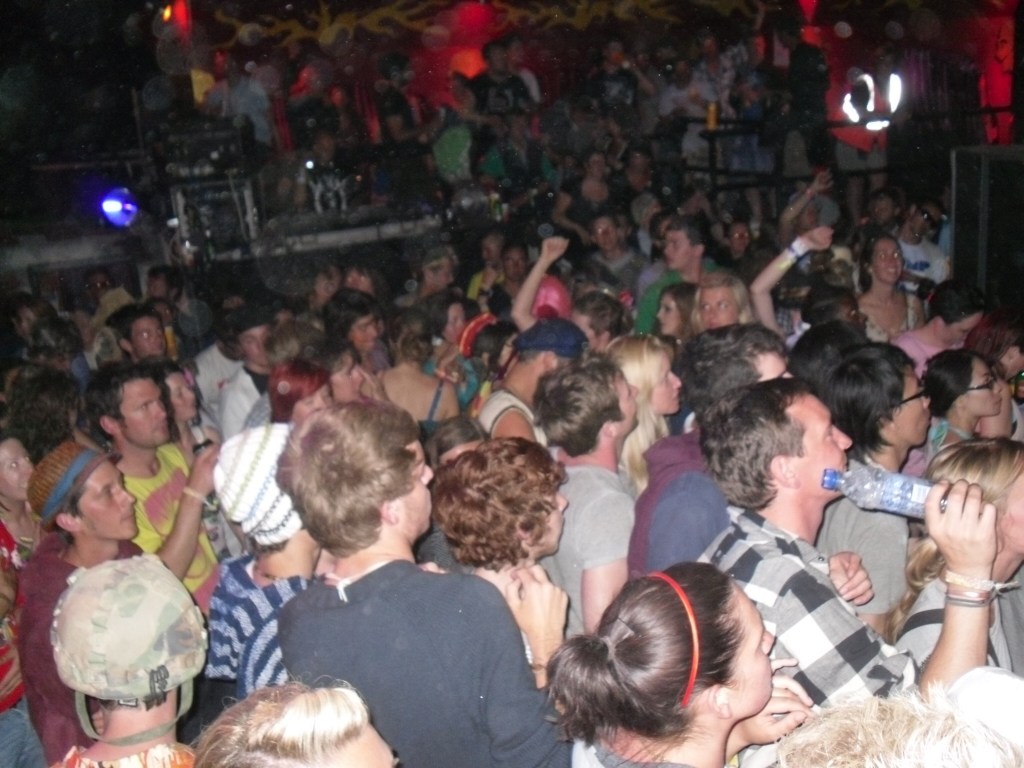
Of course, my favourite photos, the ones that give me the most pleasure, are those of people. Family and friends, people I’ve held close, literally, over the years. My appearance has barely changed, I’ve never had an interesting or drastic haircut. But despise the lack of intrigue provided by my personal aesthetic, these pictures of people together show moments of joy, some of which feel so distant now – a packed Shangri la at Glastonbury in 2010. Look how many people are in such close proximity!
Shangri-la, Glastonbury, 2010
There are a couple of art photos, but not that many. Before formally studying and writing about art, I don’t think I took many photos of paintings or sculptures. In fact, I thought that was lame. That it was a distracting side quest which got in the way of the true purpose: engaging directly with the art, without intermediaries. Yes, I was a censorious undergrad. Now of course, photography is one of the prime ways I engage with and consume art.
Themes start to recur. There are photos of old buildings, the backs of houses. The patchwork aesthetic of cities, their layering, has always appealed to me. I like seeing things in multiples, billboards that repeat themselves, tiny bricks, signage, squares of different colours and textures that make up a whole.
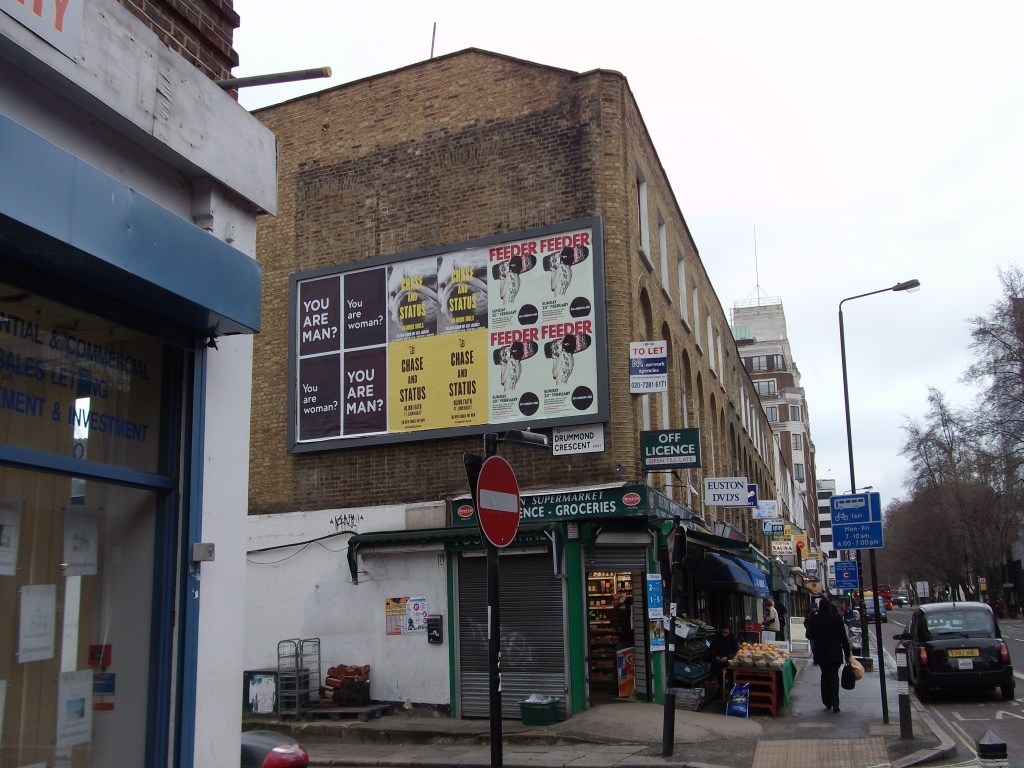
Drummond Street, London, as a patchwork quilt
It turns out that the idea which underpins Encounters Art, of finding intrigue or humour or beauty in the everyday has been there for a long while. There are more photos of graffiti, ephemera, what I call ‘notes in the margins’ than there are of Art™, and each of these is loaded with associations and place-memories. My photo library treasures are a bin in Berlin that screams “HATE Gentrification” and an annotation on a signpost in New Haven (the home of Yale University) that advises, “God = 1st / College = 2nd).”
Bin graffiti, Berlin, 2012
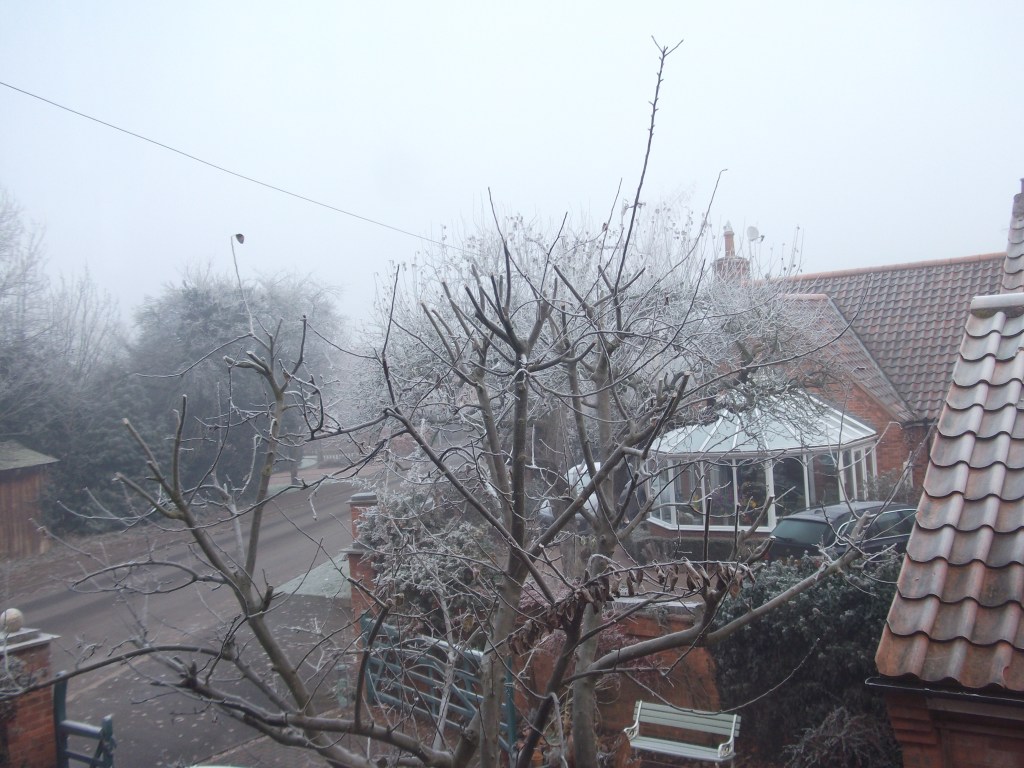
Some of the photos that unexpectedly chimed with me were of a different kind of ‘everyday’, not in the city but at home. There aren’t many of these – clearly we don’t document where we live as much as the special, occasional, noteworthy moments in our lives. There’s a photo from my childhood bedroom window which I must have taken to preserve the delicate lattice of snow and frost on trees and buildings, but now it’s everything else, the normality of it, that resonates.
The view from my bedroom from 1992-2010
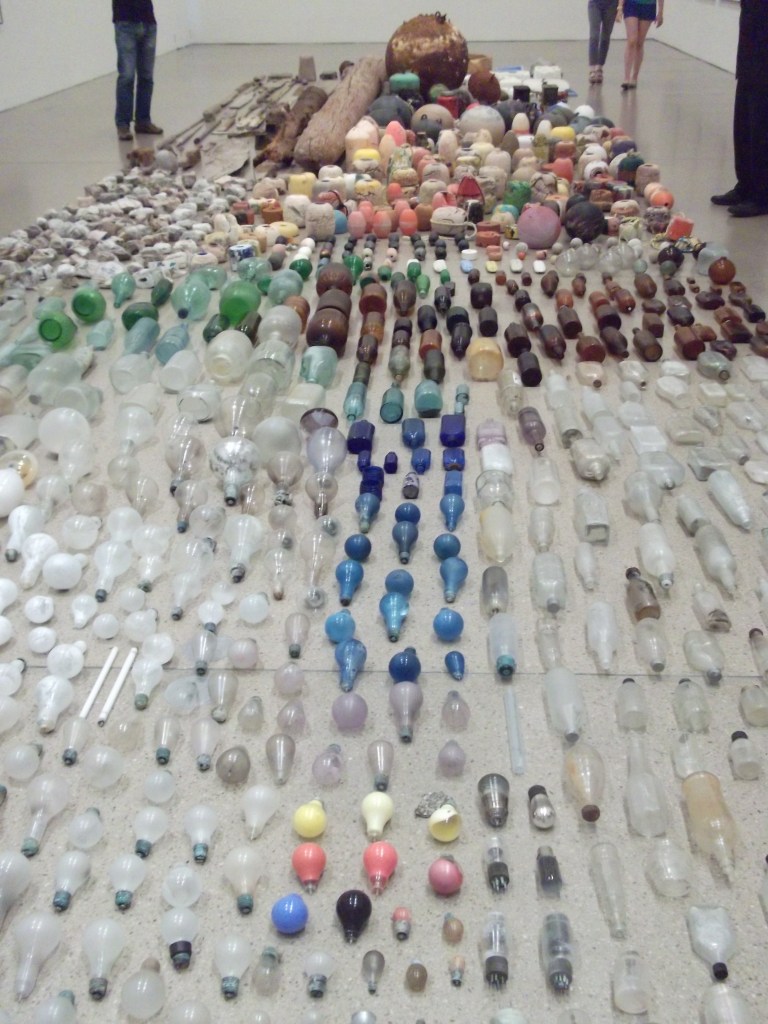
Looking back at the somewhat unremarkable picture, I realised that the view I saw every day for nearly 18 years (the apple tree in the garden, our neighbours’ grand conservatory they never used) had been forgotten. Or rather, it was covered in memory-dust that had gathered over years without me realising, which I hadn’t bothered to wipe away. Even my basement room in university halls of residence, a place I hated, seems interesting at this distance, captured in blurry photographs, hastily taken and packed away until now. Artists who work with found objects (a genre I, perhaps predictably, love) have understood that things don’t actually need to be our own to feel intimate, to resonate. Certain feelings, moments, memories are almost universal, though drawn from vastly differing actual experiences.
Perhaps these images of home interiors and window views have taken on a new significance since lockdown began. Looking at these photos didn’t feel simply like a trip down memory lane. I felt more like an archivist with the task of retrieving and reviving the forgotten. Unraveling continuities and disruptions in relationships, places, things my eyes have been drawn to, was a task which felt like the psychological equivalent of traveling. It gave me reassurance I think I needed, that this period of staying at home doesn’t have to be a vacuum because nothing has really happened. That memories can be made out of and despite boredom, via the simple act of taking a photograph from your window, or failing that, just looking out of it.
One of the exhibitions I did photograph, Gabriel Orozco, Deutsche Guggenheim in Berlin, 2012
Yesterday ArtAngel ran a live Q&A with artist and director Steve McQueen, following their most recent collaboration for his vast work, Year 3. For this artwork, McQueen arranged for 76,146 kids, from 3,128 Year 3 classes (ages 7–8) to be photographed in the timeless, traditional, and I would even say iconic format of the class photo. It’s something most of us can relate to. Bodies arranged in rows, taller kids standing, some sitting on plastic chairs or old wooden gym benches, and others cross-legged on the floor. What has emerged is a rich tapestry, a beautiful, huge patchwork quilt of thousands of photographs that document the present and, as McQueen emphasised in the talk, the future of London. What an incredible concept for a piece of art. I’ve heard it described as a giant portrait. But it feels far more dynamic, participatory and meaningful than that word implies.
I knew that the work was being exhibited at Tate Britain (I was due to visit in April, and am gutted that now I’m unlikely to see it at all), but from photos the installation looks impressive. The messy brightness of 1,504 schools packed into the grandiose space of the Duveen Galleries would always create a delicious juxtaposition. I hadn’t realised that for the ArtAngel side of the work, some 600 of the photos were created into billboards, situated across all 33 London boroughs, in November 2019. An ephemeral facet of a monumental artwork. It’s the stuff Encounters Art was made to write about – my only regret is to not have seen and documented them myself. In some ways that’s the beauty of these pop up artworks though. They aren’t supposed to be sought out, they mix and mingle with the everyday and you don’t know it’s there until you stumble upon it. If you did see a billboard in London back in November then I would love to hear your thoughts – leave a comment or DM me @encounters_art.
Installation view on Camden Road
Subverting a space that is usually used for adverts by filling it with a school photograph which is simultaneously strange (because we don’t know these children) and familiar (because we’ve all been children) is such a strong, engaging idea. One of the best moments I’ve come across by searching online for #year3project is a BT advert on Camden Road announcing “Technology will save us”. It is a timelapse video of BT’s billboard being surmounted with a photo of smiling kids in bright red cardigans and summer dresses in an old school hall. Here the children aren’t being prepped and presented as the consumers of the future. They are the future. They will save us. (Though I suppose ironically I owe my thanks to technology for preserving this moment for me to find months later.)
I love seeing these images interwoven into the London landscape. In tube stations, framed by carriage windows, this array of smiling young faces must have cheered up and intrigued countless commuters. Even in the gallery display, away from the urban fabric, it feels like a very London-based artwork, because it celebrates the city’s amazing diversity. McQueen chose Year 3 because for him, that is the moment we start to gain perception of our identities. Our classroom becomes a window on society and a crucible of the nuances of race, class, privilege and opportunity, all of which are explored in the work.
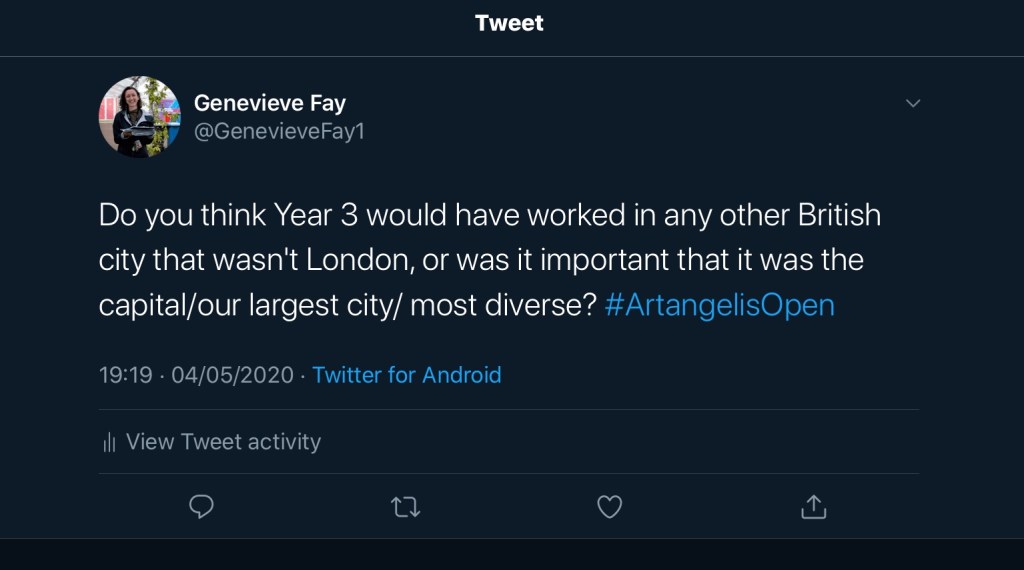
I found the London aspect particularly intriguing so I decided to ask a question using the hashtag #artangelisopen and I couldn’t believe it when it was picked for McQueen to answer. I was so excited, cheering and jumping up and down that I almost forgot to listen to his response. He said that for him, London was the clear choice, but it didn’t have to be limited to that – it could be carried out anywhere – and he seemed to be encouraging people to take up the project and move it on elsewhere. I would love to see that, particularly somewhere like Nottinghamshire (where I grew up) where there are rural and urban childhoods playing out. I wonder if it would click in the same way the original project does.
Installation view at Tate Britain Duveen Galleries
Listening to McQueen, the work was also understandably rooted in London because that was his experience – despite its scale, there is a highly personal context to the artwork which draws on his own boyhood engagement with art: a primary school outing to Tate Britain was the start of his journey. But it’s also about visibility. According to TIME magazine, Steve McQueen is one of the 100 most influential people in the world. For Twelve Years A Slave he won an Academy Award for Best Picture, and became the first black filmmaker to do so.
By creating this work, displayed in the gallery he visited as a child, he has come full circle. What an amazing thing, to provide an opportunity for the children in Year 3 be able to visit that same space, and see themselves, and others who look like them, on the walls. It fills me with hope that the project will be the spark that ignites countless artistic explorations and adventures. I can’t wait to see what they create when they’re fully grown.
Recently I had the opportunity to interview Nicky Bird, an artist who, among many exciting projects, has been undertaking a Land Mark residency with Art Walk Porty.
Her residency has focused on rediscovering and retelling the lost stories of the Buchan Pottery decorators, using found photographs and oral histories. The project is culminating in two weekends of events/exhibits, including an artist walk, site-specific artworks and a soundscape, which will be played in one of the pottery’s old kilns. Definitely worth a trip down to Portobello, if you needed any further encouragement to visit Edinburgh’s loveliest coastline.
We talked about artistic process, how Bird’s work treads the boundaries between art and heritage, and the importance of place and community in the project. You can read the interview in full here.
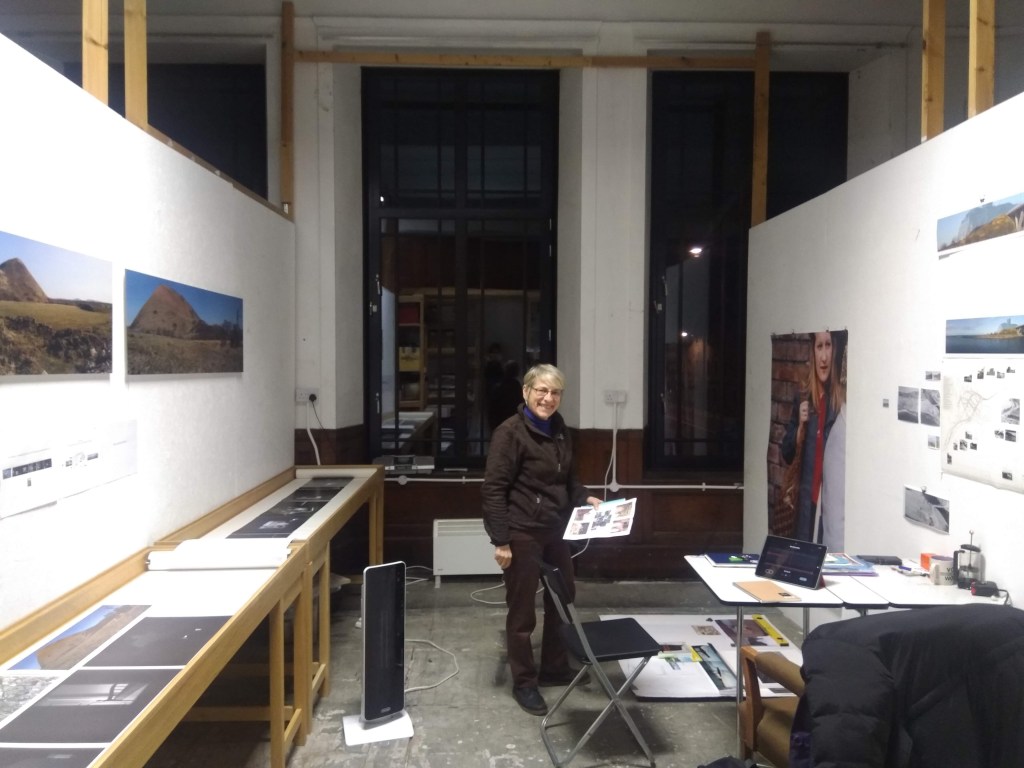
This is the first time I’ve interviewed an artist directly, and the process was fascinating. Though much of her work is site-specific, we met in Bird’s studio in Leith, where various projects and works-in-progress are tacked to the walls. She described how she doesn’t always manage to work in the studio – alongside her artist projects she teaches at Glasgow School of Art – but the images that surround her when she returns are good reminders that help her pick up where she left off.
I recorded the conversation and transcribed it into its interview format afterwards, and was reminded of how conversations jump around in a way the written word simply cannot. Though audio interviews, via the radio or through podcasts, are probably more personal and intimate, I liked the procedure of drilling down into our conversation and distilling Bird’s thoughts and motivations into a few paragraphs, though editing while keeping someone’s voice is always a challenge.
This is a new venture for me and I’m hoping it is the starting point for more interviews, written and recorded, which shine a light on the fascinating process of art making. I’m very grateful to Nicky Bird for her warmth and patience, and to Rosy Naylor, Curator of Art Walk Porty, for giving me this opportunity.
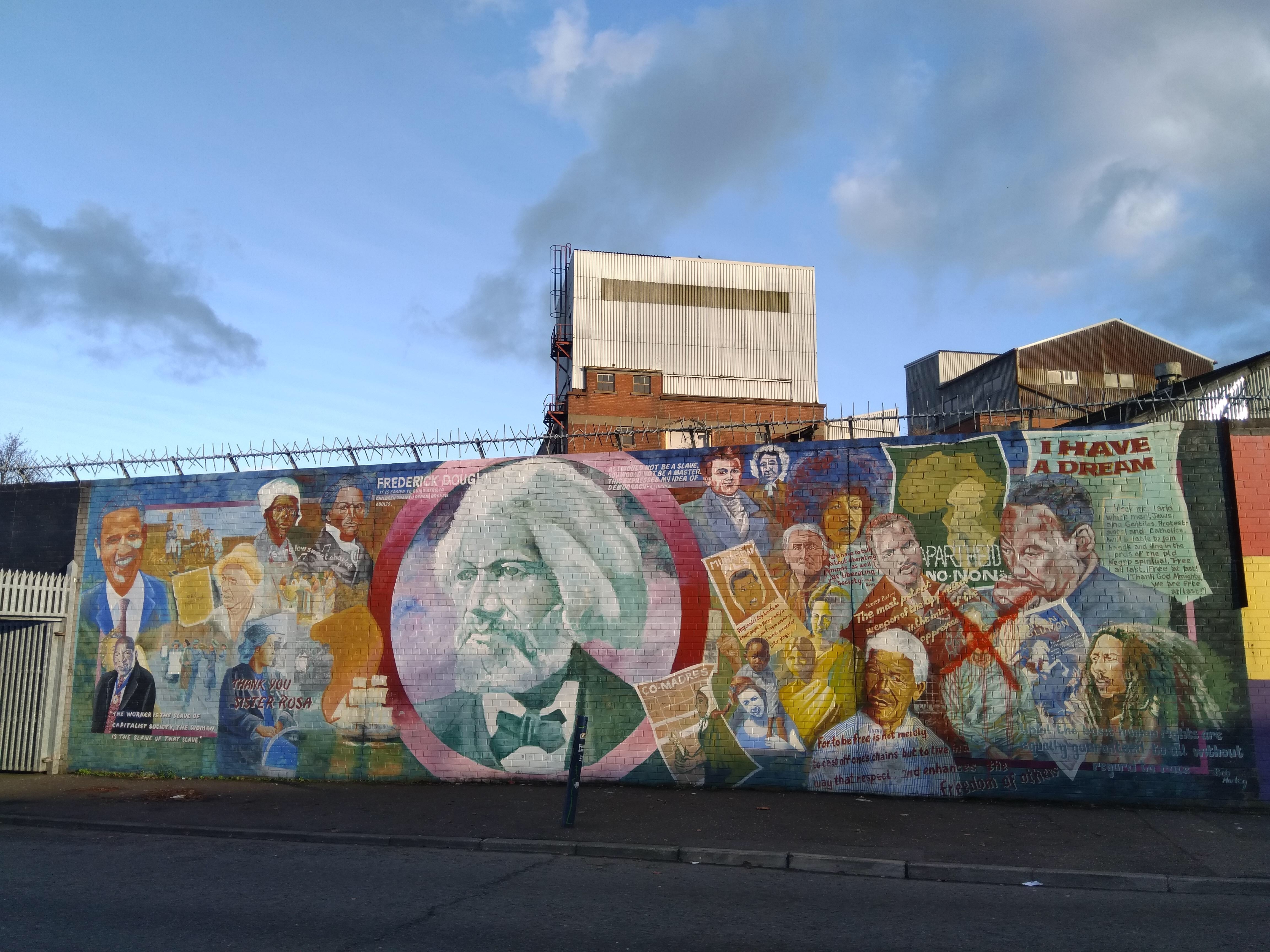
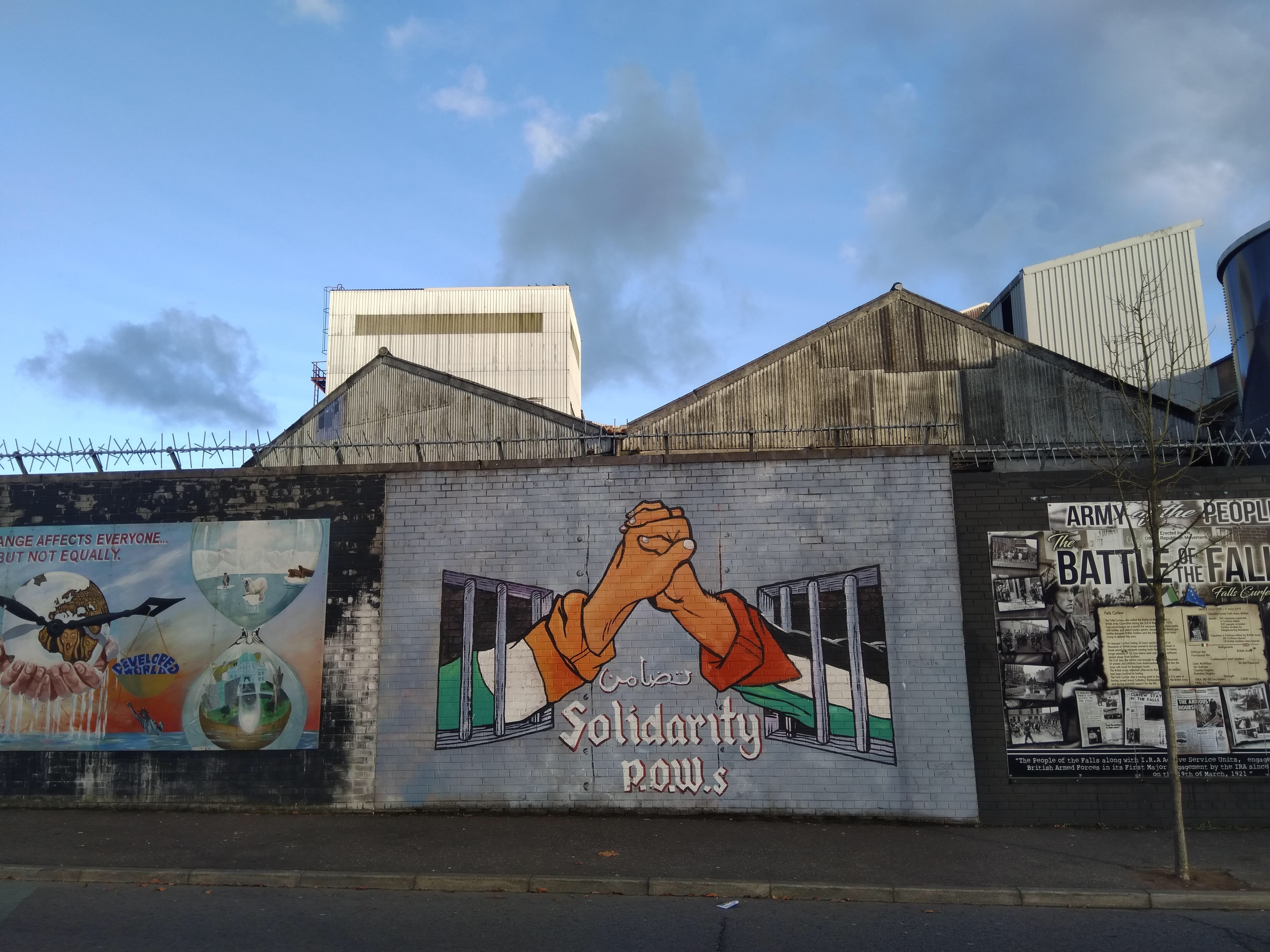
Last weekend was my first visit to Belfast, and I spent some time looking at the city’s famous murals. I wasn’t there for nearly long enough – there are hundreds of murals scattered throughout the city and I only managed to walk around the Falls Road and Shankill Road areas for a short while. But what little I saw I know will stay with me for a long time.
A section of the International Wall, which addresses global struggles
I wouldn’t presume to even try and talk in detail about the context here, but the murals are deeply embedded in years of complicated and violent political history. Public art is always a reflection of power struggles: who is represented and who is left out is a political issue. This is even more true in the case of the murals, which have sprung up over decades, and are for the most part created by people who live in these communities, rather than by artists brought in from outside and commissioned to make work.
The subjects of the murals vary hugely, but many of them commemorate the victims of The Troubles. In a conflict fought at such close quarters, even the smallest of exposed façades becomes a canvas for stating the allegiances of the area.
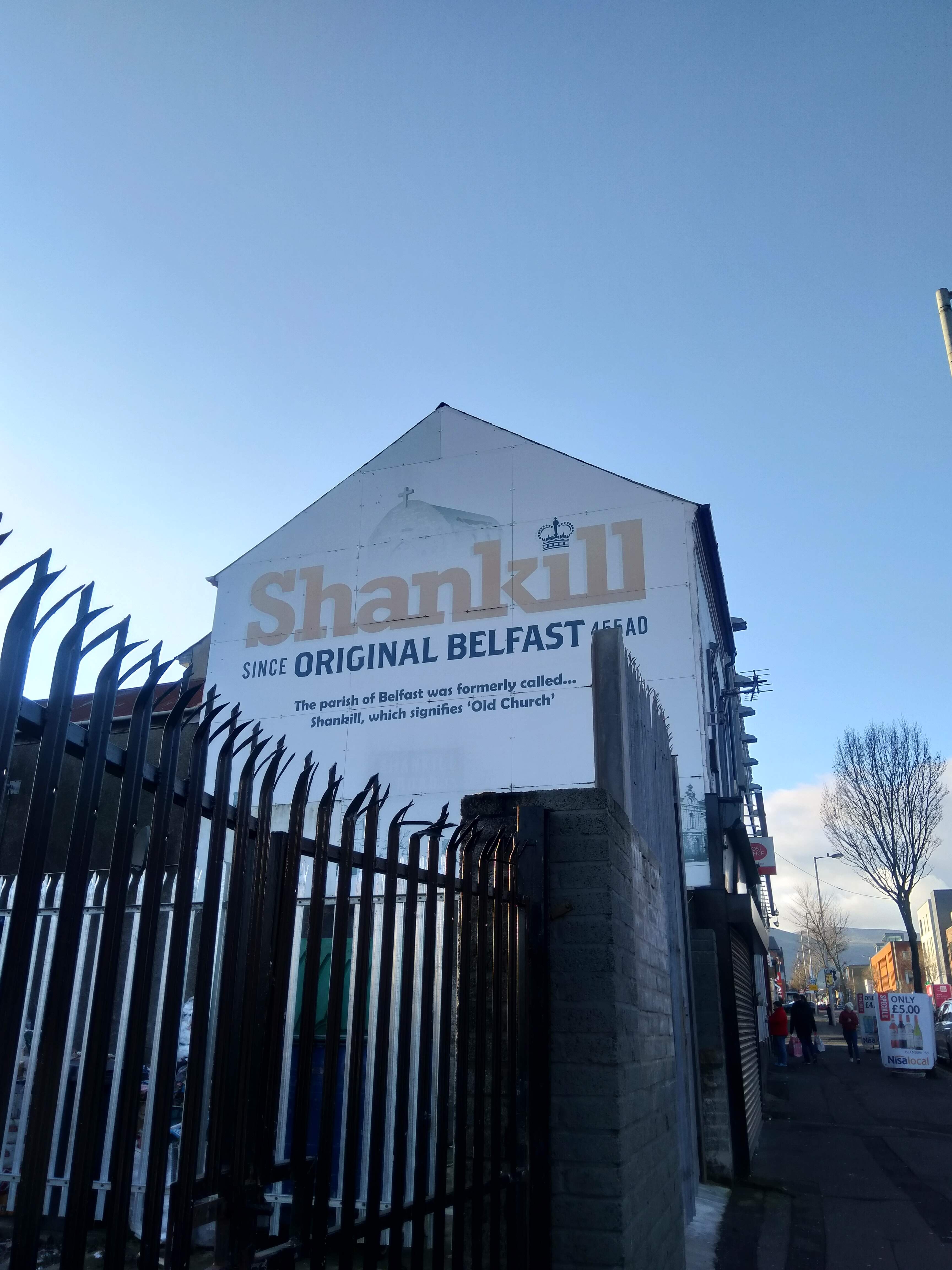
Signs and symbols: the crown dotting the ‘i’ of Shankill denotes the area’s allegiances
I was shocked to learn that thousands of lives were lost in the violence, and perhaps just as surprising was that neither me, nor any of the people I was with (Scottish and English) had learned anything about the conflict in school, even though it is very much in living memory and an important part of both British and Irish history.
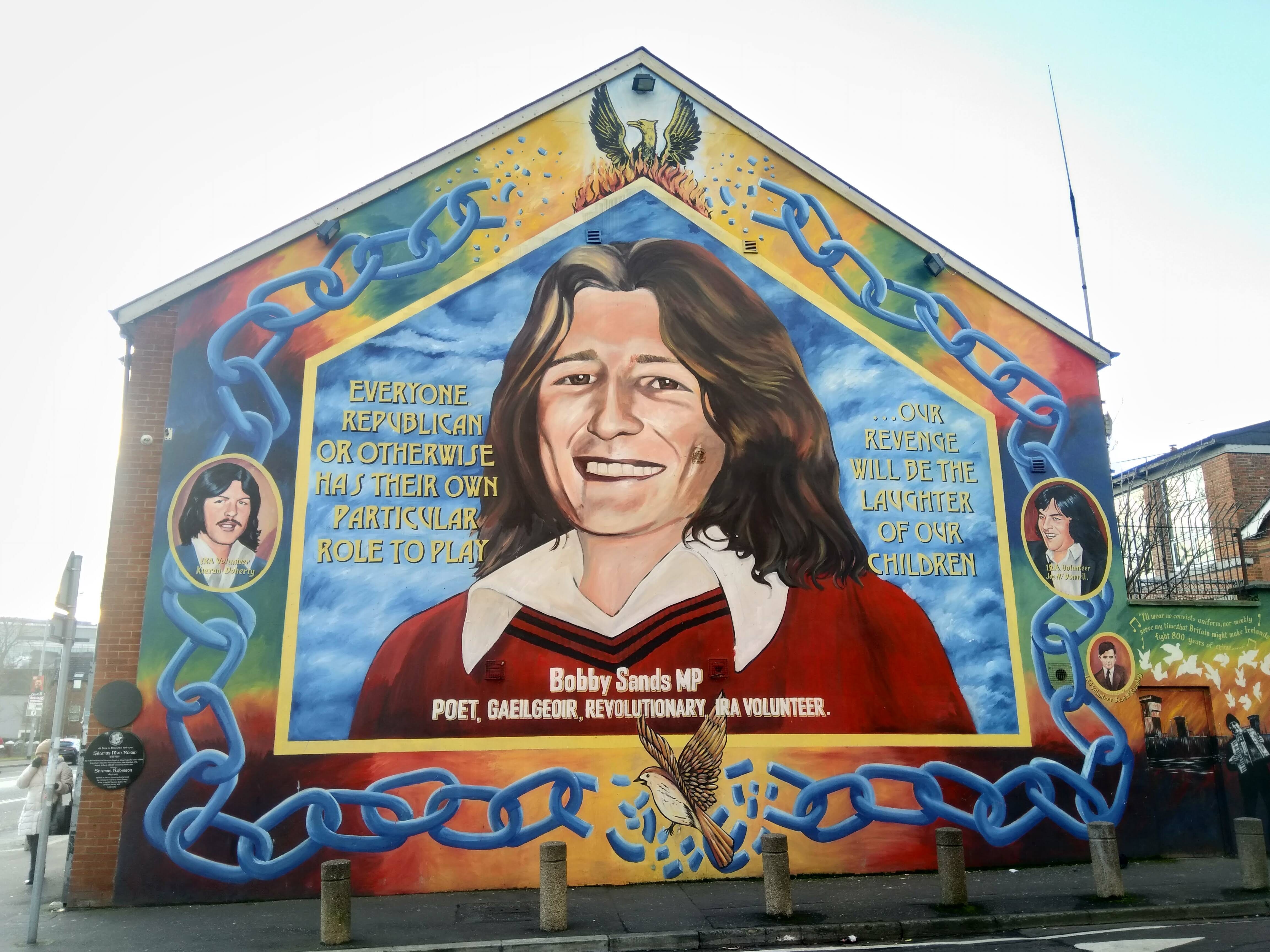
The Bobby Sands mural is the most photographed in Belfast.
It’s a moving and hard-hitting experience, but walking the streets and engaging with the murals as a tourist is one of the ways we can learn about the city’s difficult past in an accessible way. It’s also an important reminder that images, signs and symbols are always laced with countless different meanings, and it is worth taking some time to try and decipher them.
Images of solidarity using the colours of the Irish and Palestinian flags, situated on the International Wall
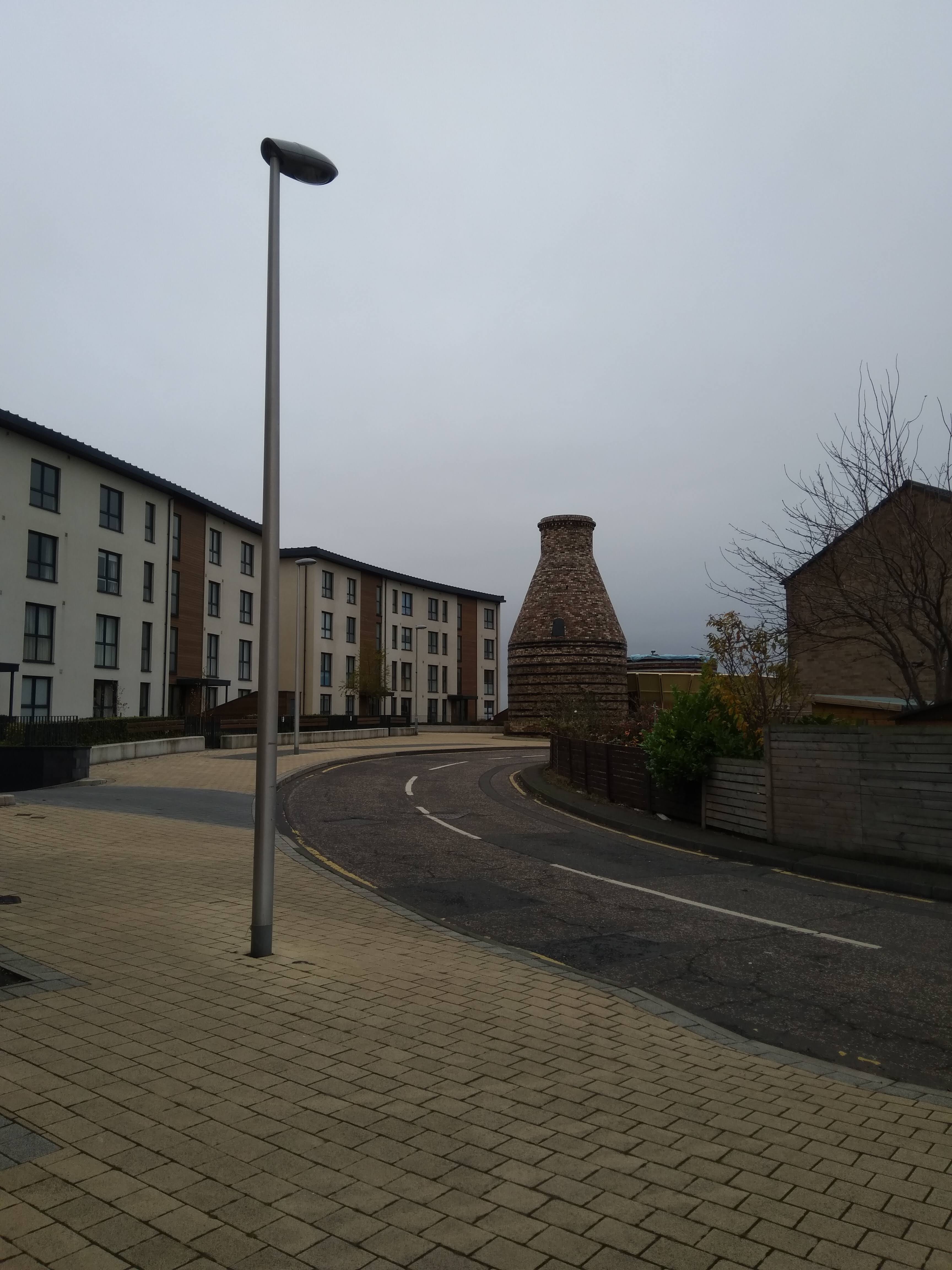
How much do we really know about our surroundings? Living in towns and cities, there are fragments of past lives and clues to how the environment has changed scattered all around us, if we look carefully. That careful looking, backed up by detailed research is how artist Nicky Bird is spending her LAND MARK residency with Art Walk Projects, based in Portobello. The starting points for her project are the two bottle kilns close to the shore (dated 1906 and 1909), the only fragments left of the large Buchan Pottery complex, which dominated the area close to the shore, but closed in the early 1970s.
One of the bottle kilns, an alien industrial fragment adrift in a sea of new builds
Portobello is a seaside town between Leith and Musselburgh, east of Edinburgh city centre. It’s a beautiful walk along the promenade, more a place of leisure than of work, but until relatively recently it was an important industrial hub – there was a paper mill and a chocolate factory all within easy reach of the Pottery.
Today a small group, led by Bird, helped to revive a memory of that recent industrial past, through a walk event which told the decorators’ stories. These were the women who painted the ceramics before they were fired in they kiln, who occasionally raked through the spoils to try out their own designs and have them fired on the sly. Like a band of investigators searching for clues we walked around the area and examined maps from different phases of the area’s history.
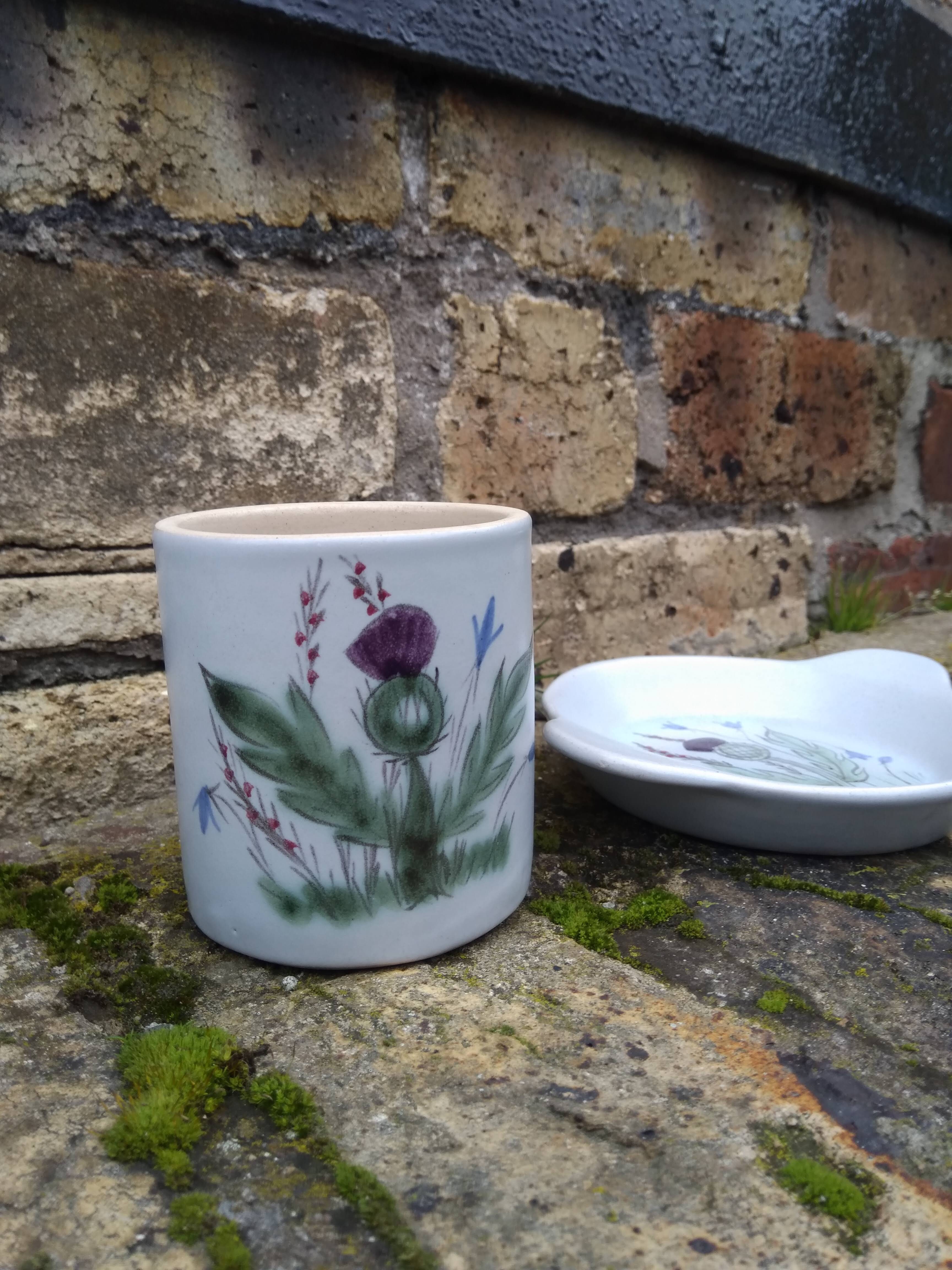
Classic Buchan Portobello pottery, set against the backdrop of the beautiful kiln bricks
We also looked at examples of the pottery the women had decorated, and two fellow participants told me they recognised the design – it used to be sold in all the tourist shops in the 1970s, but they had never realised it had been made in Portobello itself. It felt good to participate in reviving that part of the town’s story, and I’ll be keeping an eye out for pieces of Buchan pottery in Edinburgh’s shops from now on. Even the most everyday objects can be brought to life through giving a voice to their past, which is why art projects like this one, which evoke memories that have been lost, are so important, especially for communities that have changed as much as Portobello.
Nicky Bird’s residency with Art Walk Projects is culminating with an event in February, so this walk was really a launch for her project. The completed work promises to be one that shakes off the dust that has settled on Portobello’s recent history, and I’ll look forward to seeing what else is revealed.
I’ve been meaning for a while now to write about a lovely, focused exhibition I saw at the Pallant House Gallery in Chichester last week. I’d never been to the gallery before, and unfortunately I didn’t have enough time to explore its permanent collection, which is based around modern and contemporary British art – I’m looking forward to exploring that the next time I go.
So many important creative people of the twentieth century, including members of the Bloomsbury Group, the poet Edward Thomas and visual artists like Eric Ravilious, seem to have been drawn to spend time in Sussex at some point in their lives, so it makes sense that this Sussex gallery represents some of the most important artistic developments of the last century. While Ivon Hitchens (who I hadn’t heard of before seeing the show) isn’t someone who rewrote the rulebook of modern art, his work shows a talent for noticing and capturing the remarkable detail within the big picture, the abstract patterns he experimented with in his early career continuing playing a major part in the landscapes he is primarily known for today.
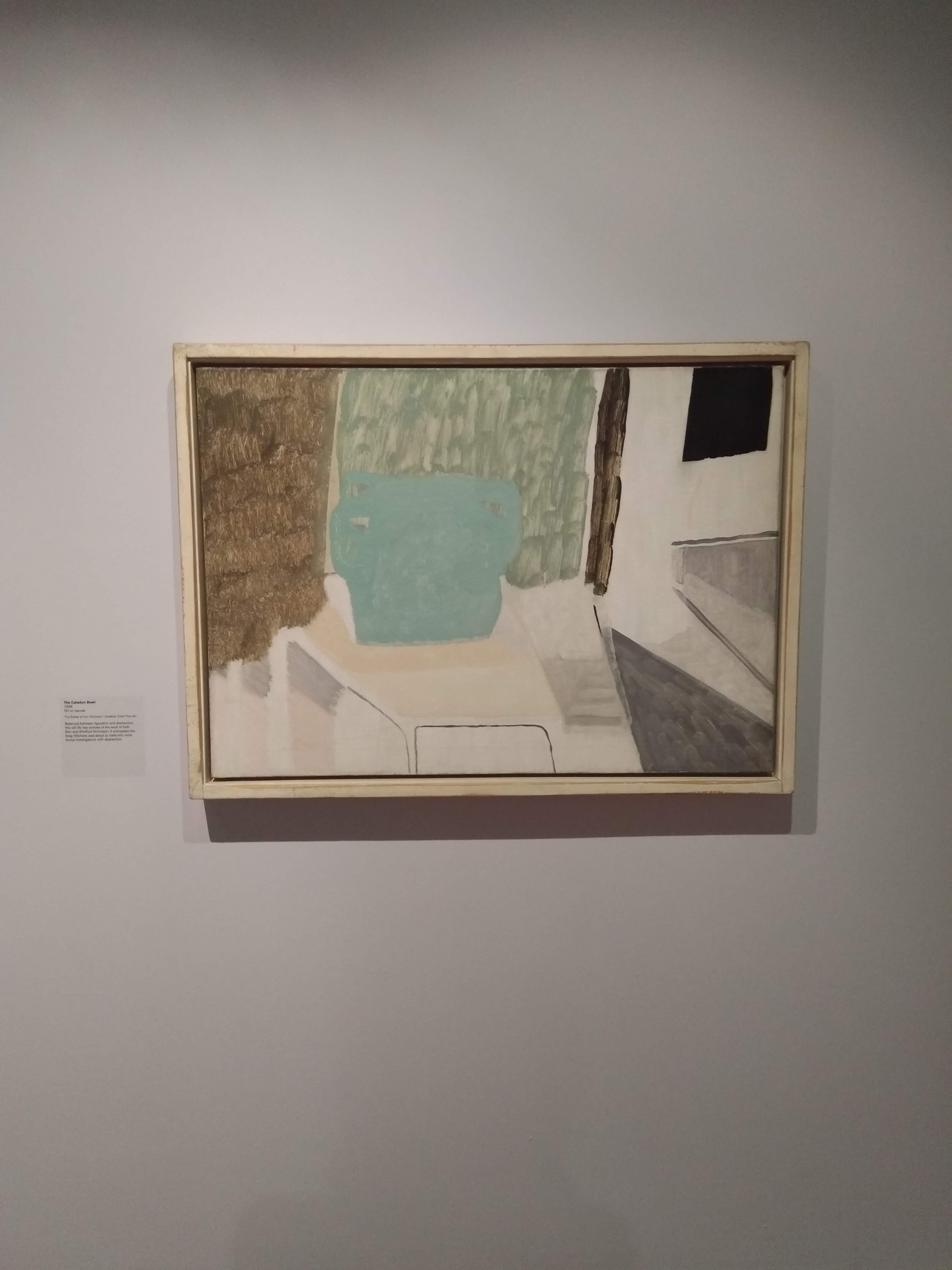
The Celadon Bowl (1936)
Some of my favourite of his works were early oneslike The Celadon Bowl (1936), in the way that it delicately treads the line between abstraction and figuration, the scrubby brushstrokes of the teal and khaki squares in the backdrop adding texture to the plain white canvas. In a sketchbook annotation, he wrote “don’t try to find a picture. Find a place you like and discover the picture in that”, which is true of every setting he painted, interior and exterior.
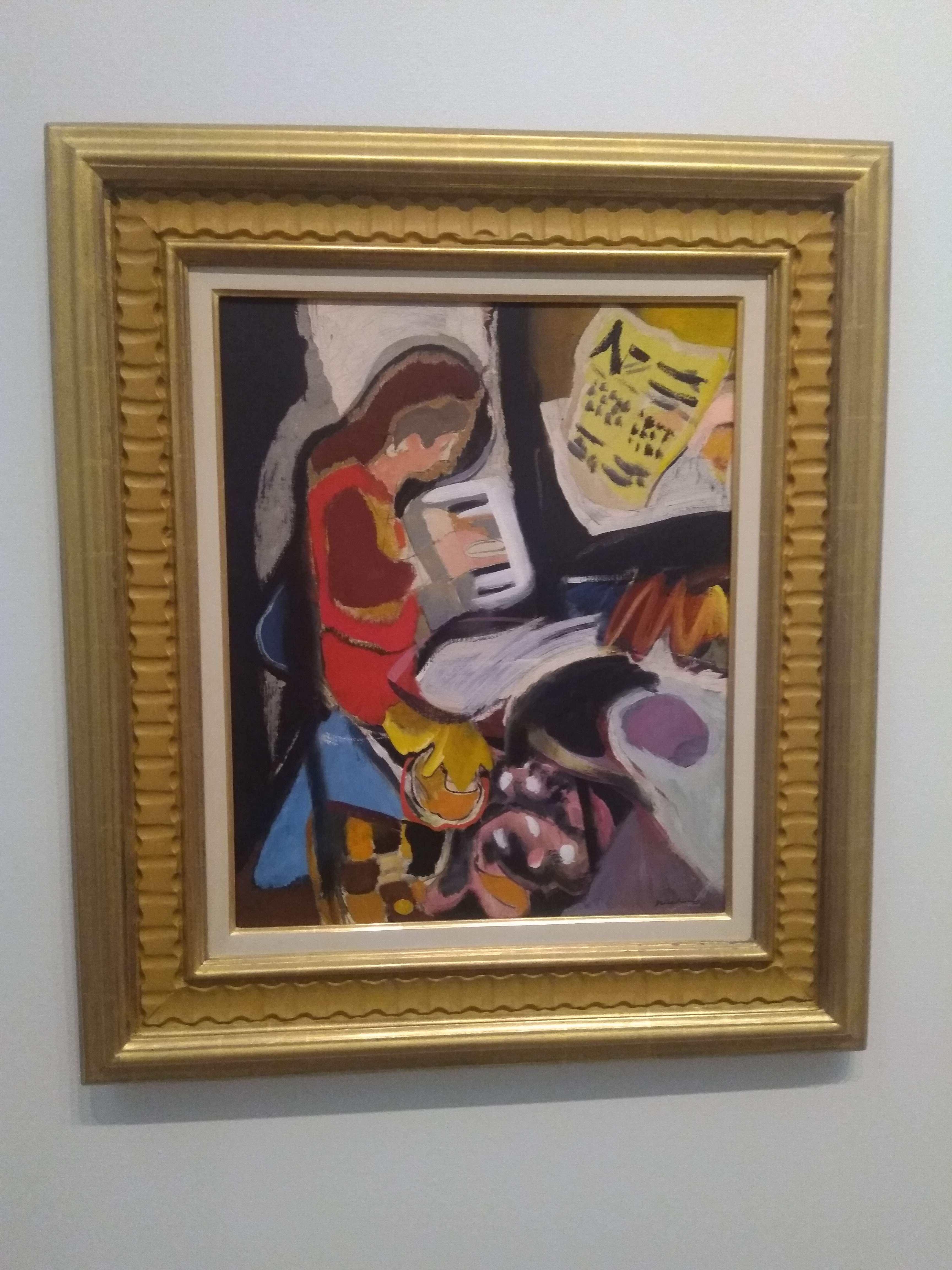
Woman playing the piano, c.(1942)
He left London during the war, and lived in a caravan called Greenleaves with his wife and their baby, set in a forest clearing. Living in the heart of the countryside clearly gave Hitchens more than enough subject matter for his art, and he set about painting the landscape, not focusing on grand vistas, but on his favourite spots that he visited repeatedly, capturing the view in different seasons and at times of day.
I love the Sussex countryside and have enjoyed walking on the South Downs, in the woods and by the rivers that Hitchens lived alongside, and so I may be biased, but I found his landscapes very evocative and able to capture the magic of the place. Perhaps there’s something in the water that makes it special.
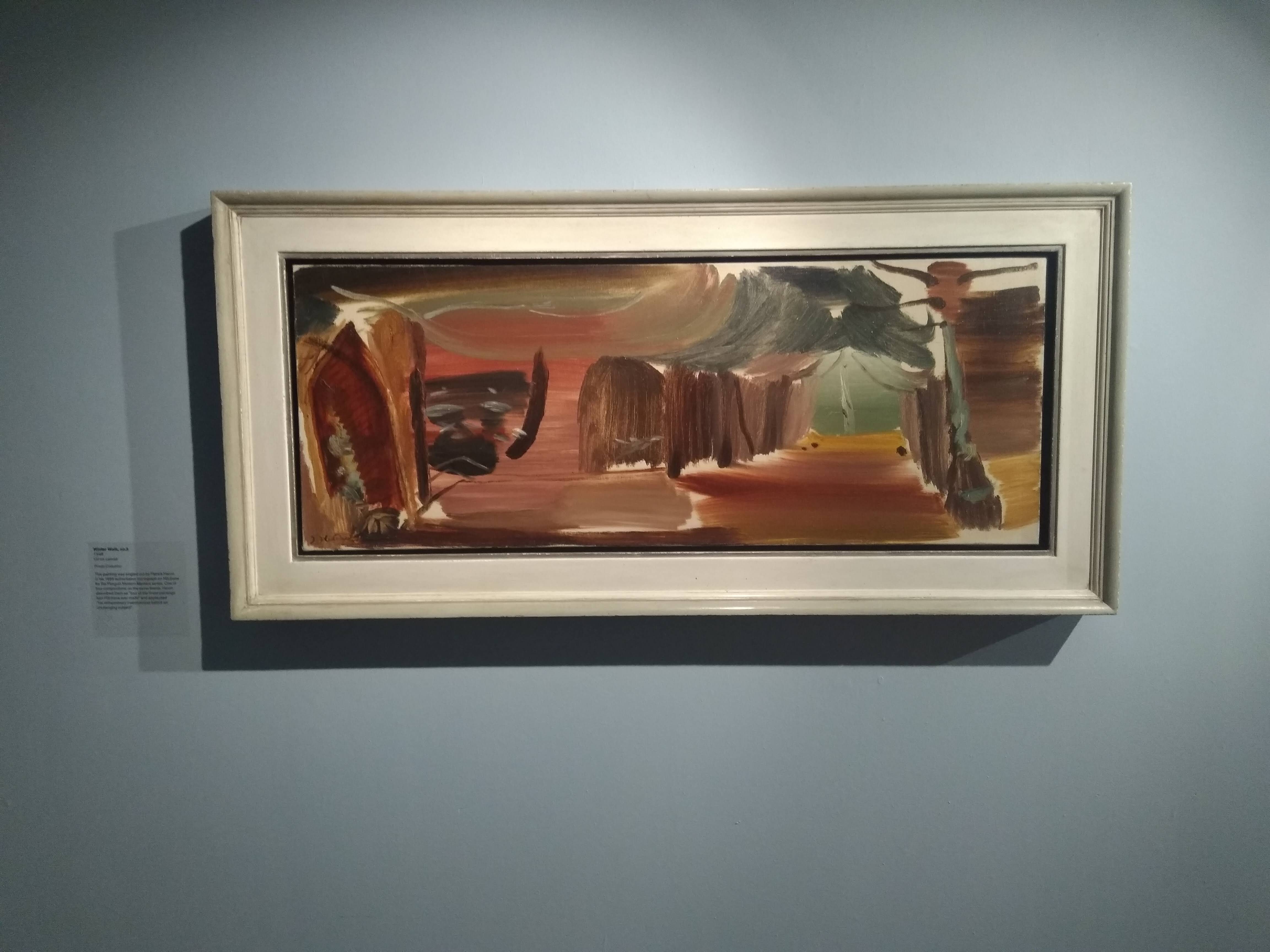
Winter Walk, no.3 (1948)
Winter Walk no.3 (1948), really captured me. The earthy brown and scratchy red tones, mixed with the evergreen of the avenue of pine trees towards the right of the picture perfectly sum up the colours of winter which are beautiful too, in their muted way.
The theme of the exhibition, how artists use their works as an exploration of their surroundings and of place more generally, was underpinned by the audio element of Simon Roberts’ Inscapes exhibition, which were dotted throughout Hitchens show. Roberts is an artist-photographer whose work focuses on identity and people’s connections with the landscape around them, and as part of the exhibition was invited to revisit the settings that so fascinated Hitchens. His soundscapes of the countryside (cattle lowing, brooks babbling, branches creaking in the wind) brought Hitchens’ landscapes to life in new ways, and the pairing of the two artists’ work brought out the best in both of them.
On Sunday night I took part in an art experience that had been intriguing me since I first saw it advertised as part of Edinburgh International Festival several weeks ago. It fell into the category of “must go” because it sounded unique (commissioned especially by the Fruitmarket Gallery), immersive and slightly odd, making the perfect cocktail for someone who likes thinking, writing and talking about art.
Starting at the bottom of Cockburn St near the Royal Mile, the Fruitmarket staff gave me a short briefing (which made me ever more intrigued and slightly trepidatious about what was coming), armed me with a pair of headphones and a small screen, and away I went. What followed was a cross between virtual gaming, crime drama, ghost tour and art piece.
Edinburgh’s Old Town is the stage set for this discombobulating drama
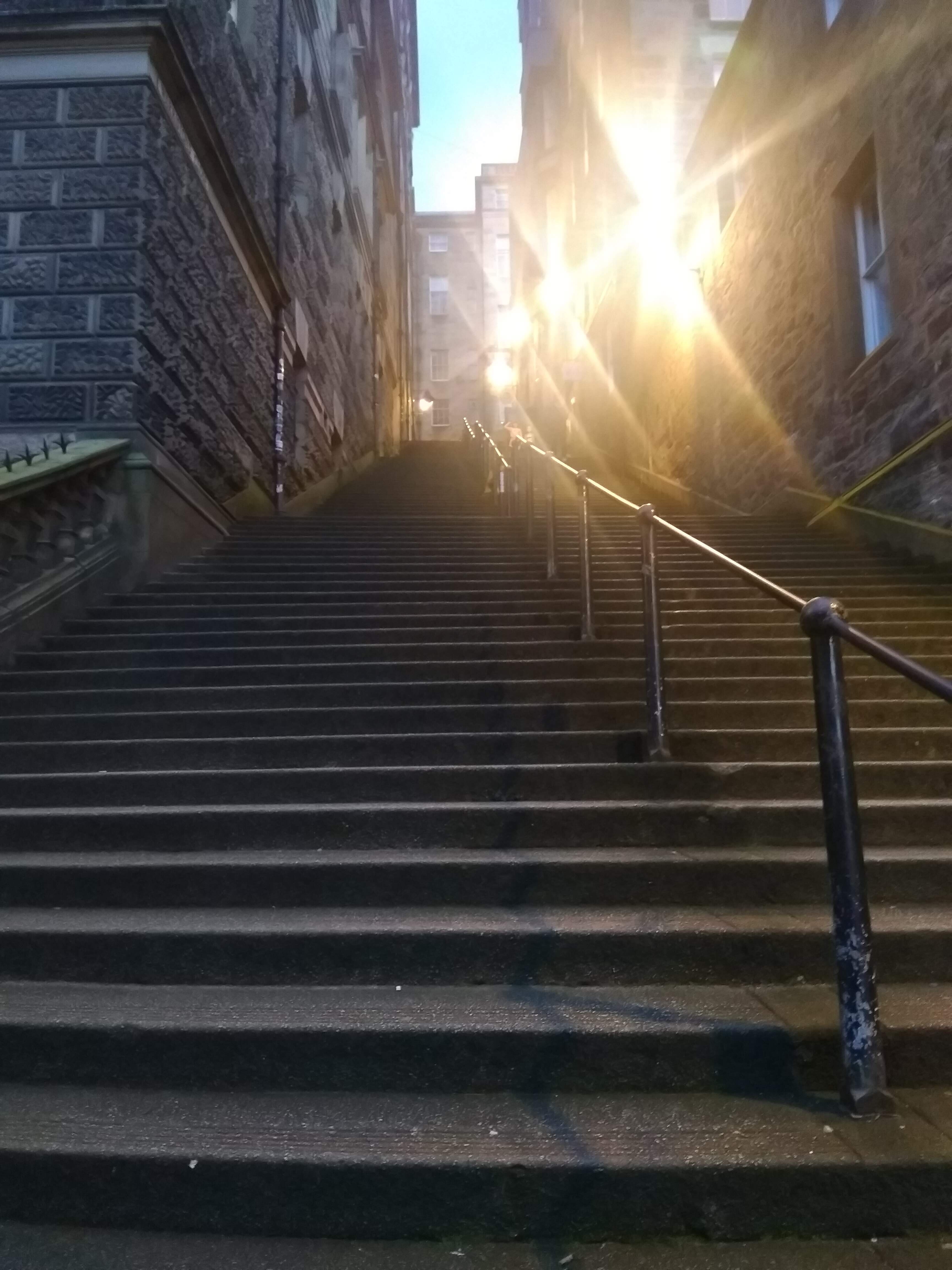
Janet Cardiff’s voice whispers in your ear, half talking to you, half musing to herself. The walk winds through the backstreets, closes and alleys surrounding the Royal Mile, strangely empty, dusty and damp compared to the garish, touristy brightness of the Mile itself. Arrows on the ground sometimes indicate the way, but mostly you are guided by Cardiff’s instructions, enhancing the sense that you are taking part in a game in which your own agency is reduced to zero.
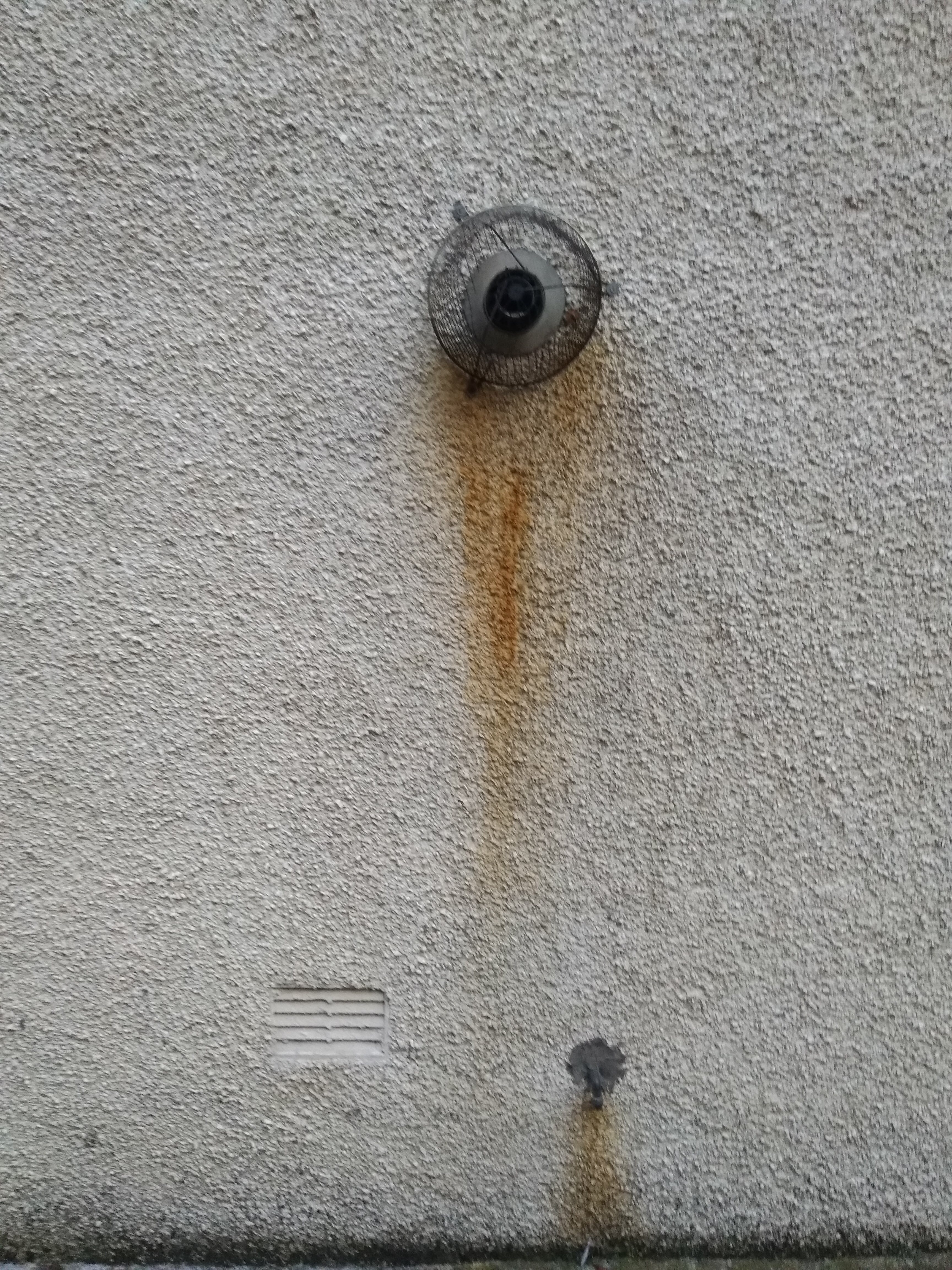
The narrative weaves in and out of fiction and reality, with the film element of the walk emphasising the idea that the city is a canvas or a stage, and we as its residents, its visitors, its participants, are part of the multiple layerings that make up its history, and its identity. Marks on the canvas are left behind by former inhabitants: chewing gum pressed into the crevice of a wall, string delicately tied around a lamppost, pieces of scattered clothing lost, left behind. The work delves into Edinburgh’s macabre history, but is also rooted in the banal fabric of the city itself, drawing attention to air vents, street signs and shop windows.
The walk draws your attention to all sorts of details, making the banal into something noticeable
The sound effects, with snatches of conversations, song, sirens, and the noises of city life unfolding around you make the stories of the walk all the more convincing. I can’t count the number of times I turned around to check whether the footsteps approaching me were part of the fake cinematic narrative I was immersed in, or belonging to life itself. The artists play with the uneasy gesture of looking over one’s shoulder, the sound of footsteps is inherently creepy and unnerving and puts the participant/viewer on edge throughout the walk, in a way that is both thrilling and memorable.
Weaving their way through the city, Cardiff and Bures Miller have made a fascinating and haunting piece that interweaves history, the digital, magic, reality, memory and storytelling. If you’re interested in any of the above, this is something you won’t want to miss.




 encounters_art