Goodwood Art Foundation

The corner of West Sussex where my Dad lives, you are never far from a large country estate. Brown National Trust signs proliferate (Petworth; Uppark), and there are also estates that are still going, that still belong to some of the country’s richest families. You can tell this even by the architecture. In the villages surrounding Midhurst, many of the houses windowframes are painted in a bright saffron yellow, the colour of corn-fed chicken’s egg yolks. To a casual passerby, this might just be a jolly colour scheme collectively chosen by the locals, but in reality they are a territorial marker, showing that they belong to the Cowdray Estate (a 16,000-acre estate owned by Michael Pearson, aka the 4th Viscount Cowdray). 

The Viscount’s neighbour is Charles Gordon-Lennox, 11th Duke of Richmond. His estate, Goodwood, is about 10 miles south of Cowdray. He is the owner of the the Goodwood Art Foundation, a beautiful new sculpture park and exhibition space tucked amongst the rolling hills of the South Downs. From 1992-2020, it was the site of the Cass Sculpture Foundation but it has been expanded and reopened. As it’s just a stone’s throw away from my Dad’s, I was keen to get there. Especially when I found out their first headline exhibition is by Rachel Whiteread, an artist I researched as part of my Master’s in 2019.
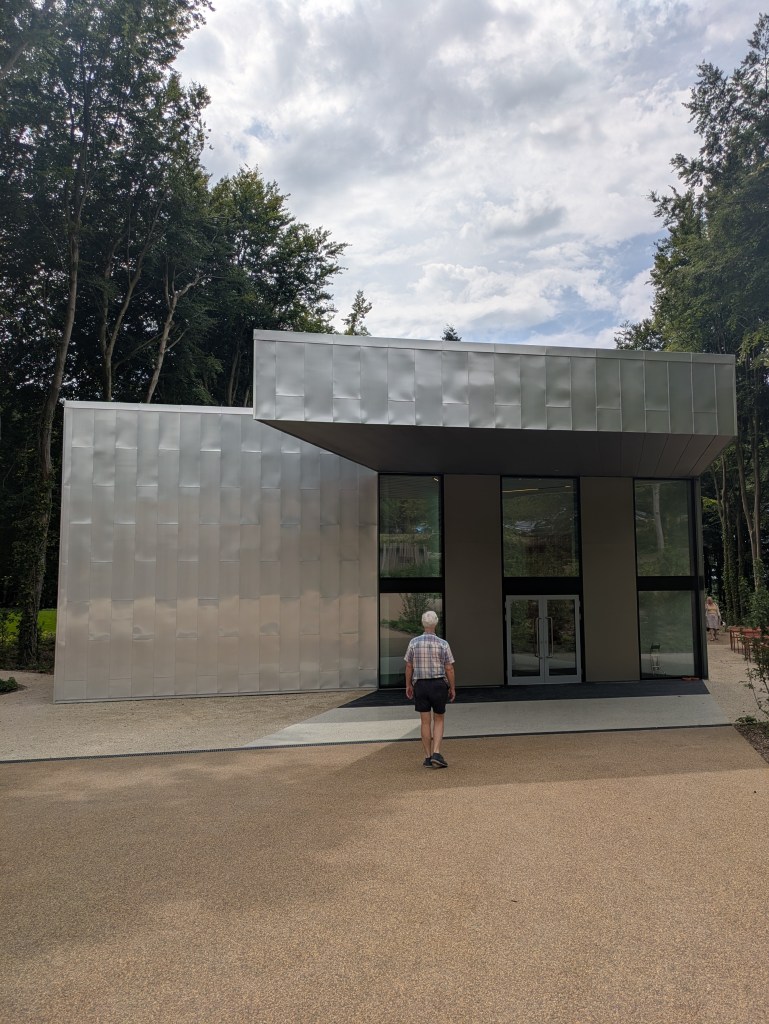
The Restaurant at Goodwood Art Foundation with my Dad for scale

My first impression is one of taste: everything looks new and clean and swanky. Like it cost a lot. There’s a striking black and silver and asymmetrical building, and for a second, it feels like I’m back at the Louisiana museum on the far reaches of Copenhagen. But the landscape around here is undeniably English: the rolling hills, the ancient woodlands, and the mighty oak trees dotted in the fields. It’s a fascinating, jarring almost, setting for Rachel Whiteread’s work, which has always struck me as unfailingly urban. Her use of concrete is what defines much of her sculpture, with her most famous work, House (1993) filling up an east London townhouse from the inside out, then its cast left behind, standing as a lonely monument to demolition and faded domesticity. 

This season, Whiteread is the main focus of the larger gallery, one of two indoor art spaces at the Foundation. In the centre, the space is dominated by her work Doppelgänger (2020-21), a bright white ghost of a tumbledown corrugated iron shack, trees poking through the building’s seams. However, I was drawn to the photos on display, the first substantial showing of her photography. Her photos, like most people’s, were largely taken on her phone and capture landscapes, interesting shapes, everyday encounters with the traces of human presence, or as she says “eccentric features” that interest her. Whiteread views photographs as a form of notetaking, a sentiment which strongly chimes with me. Part of the reason for starting this blog came from a desire to capture those artistic ‘encounters’ that one meets within the city. So in Whiteread’s photos, we see fragments of colour against brown and grey of signs and posts, and the pleasing, satisfying textures of tiles, pictured side by side with dried, fragmented earth. The wall labels tells us the locations for these images: France, Rome, California, Essex, Tuscany.
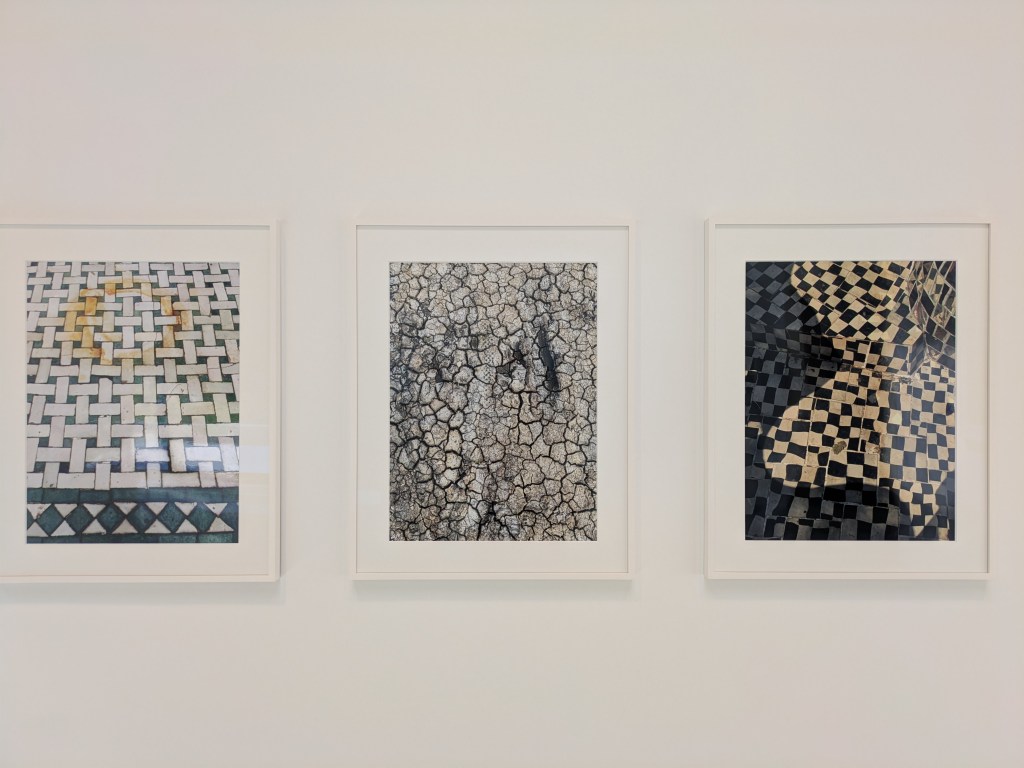
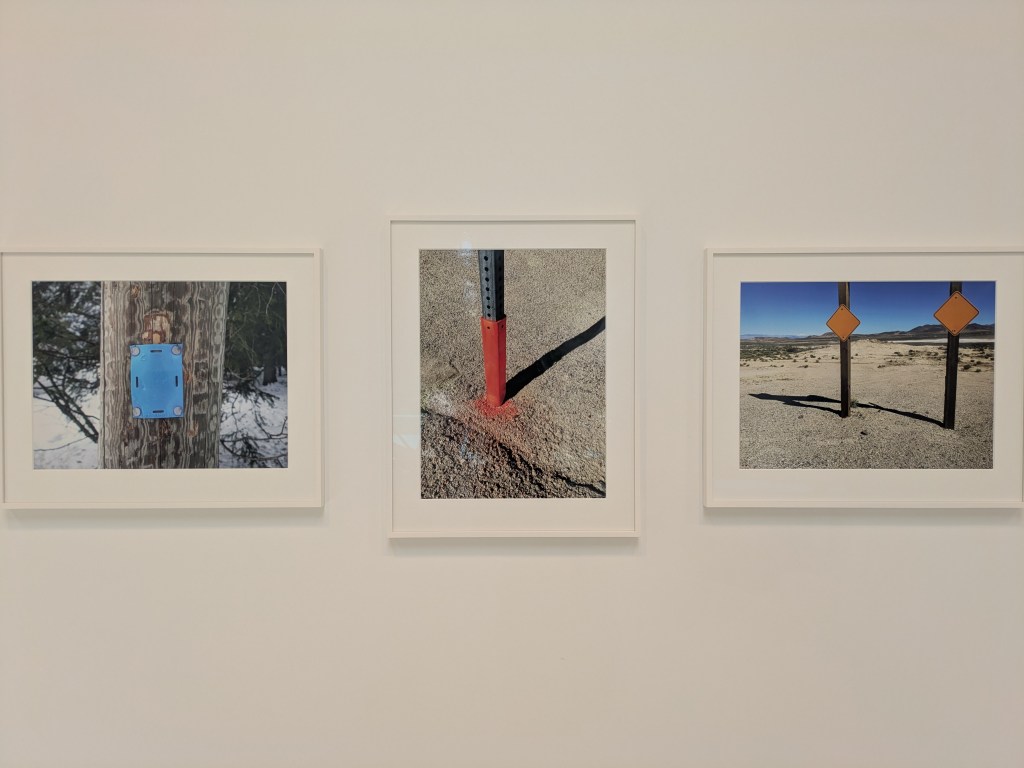
Whiteread’s photographs

Back outside, my Dad and I strolled around at an easy pace, enjoying the vistas through the woods and occasionally playing a game of “is it an artwork or is it a nicely arranged pile of wood?” The landscape gardener, Dan Pearson, clearly has a nuanced understanding of the playful boundary between them. I enjoyed the exploration of materials and fragility in Veronica Ryan’s Magnolia Blossoms (2025) a circle of fallen petals and buds made from bronze. Rose Wylie’s Pale-Pink Pineapple/Bomb (2025) isn’t my type of thing, but looked pleasantly incongruous in the landscape. Unfortunately, Hélcio Oiticica’s Magic Square #3 (1978) was not yet open for exploration, but I’ll go back.
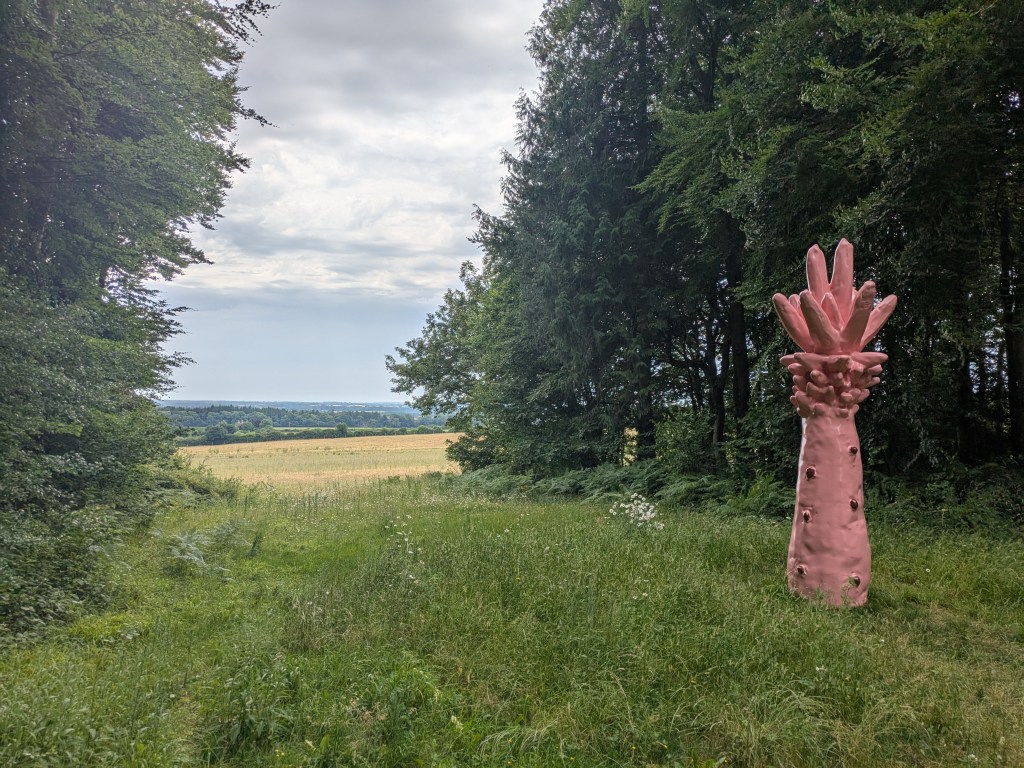
Rose Wylie’s Pale-Pink Pineapple/Bomb (2025)

When we came upon Susan Phillipsz’ work As Many As Will (2015), it took a few moments of listening to the silence (actually the birds and the wind in the trees) before being startled by a lone signing voice, soon joined by others. This beautiful ‘in the round’ song, which Phillipsz sings herself with her soft Scottish accent, about refuge and Robin Hood moved me, but I couldn’t quite say why I had tears in my eyes and a strange catch in my throat. Something about feeling lucky and sad at the same time. How did I get to stroll through this beautiful landscape, stumbling upon art, when there is so much horror unfolding before our very eyes on our phones from morning ‘til night. Why is the world like this.

Whiteread’s unmistakable footprints appear again across the wildflower meadow, her signature concrete casting process back with Down and Up (2024-25), a staircase flung in the wide field like a strange fragment of a disappeared home. The free guide booklet contained an interview with Whiteread, where she refers to this sculptural staircase as  “universal memory of a commonplace architectural form”. I cannot think of her work without feeling it is haunted, these casts of buildings capture a ghostly suggestion of a structure that once was and now isn’t there any more. It is no wonder her art is associated with memorials: her Memorial to the 65,000 Austrian Jews who were Murdered in the Shoah in the Judenplatz in Vienna is an unforgettable work. Seeing this staircase then, one cannot help but think of ruined buildings of Gaza, of destruction and war. It is inescapable.
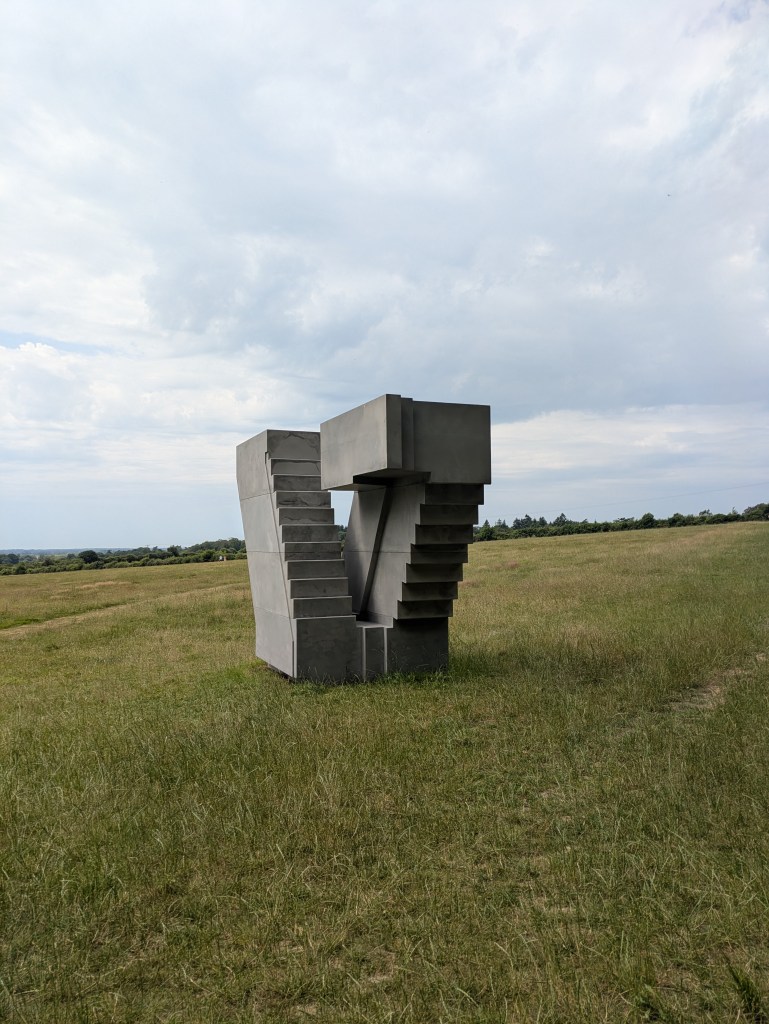
Whiteread, Down and Up (2024-25)

The smaller gallery space housed Amie Siegel’s Bloodlines (2022). I don’t normally engage video art for long, I’m naturally impatient. Here though, in the shade and darkness I was completely captivated by the luxurious interiors of Seigel’s film. Unnarrated, the camera drifts eerily along magnificently decorated hallways and into rooms with ticking clocks, marble pillars and strange taxidermied animal collections. We see an ‘insider’ view of huge stately homes, that are choc-full of artworks. It felt very apt that Bloodlines, which traces the movement of artworks by George Stubbs between private collections and public museums but really explores wealth, history, the legacies of ownership, class, and the strange power dynamics of who owns art and who can look at, and on whose terms that is, felt an important nod to where we were: the art collection of an actual Duke, (because yes, they’re still around), in the middle of a field in England.
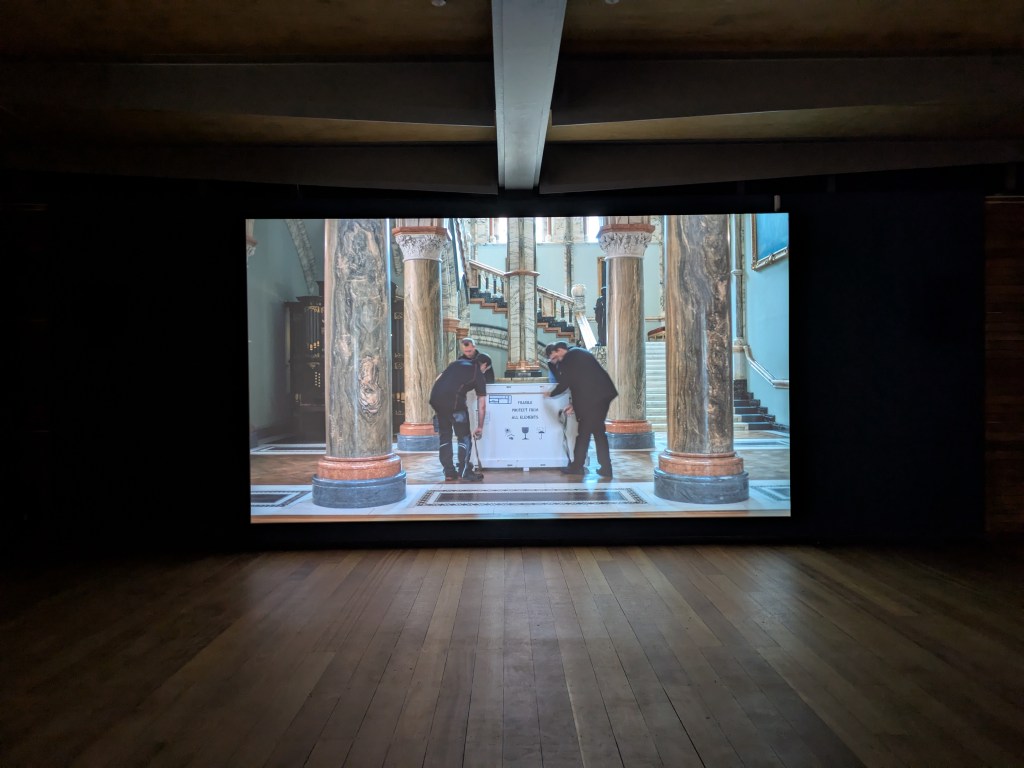
Film still from Amie Siegel’s Bloodlines (2022)

Art in Scotland: My 2024 Bucket List

Yesterday in Edinburgh, the sunset time was 5pm for the first time this year. This is cause to celebrate! Not just that it will now still be light when we leave work, but also that spring is on the horizon which means more time for adventures. I’ve been thinking about the many places to see art in Scotland that I still haven’t been to, and I’ve made a list.

These are the top places that have been on my radar, but that I’ve never been to, even though I’m now coming up to six years of living in Scotland. Ten places equals one per month from March to December. I hope I can manage it. Quick plea: it is genuinely embarrassing to admit I haven’t yet visited some of these places, so please don’t judge me too harshly!
Little Sparta, Lanark

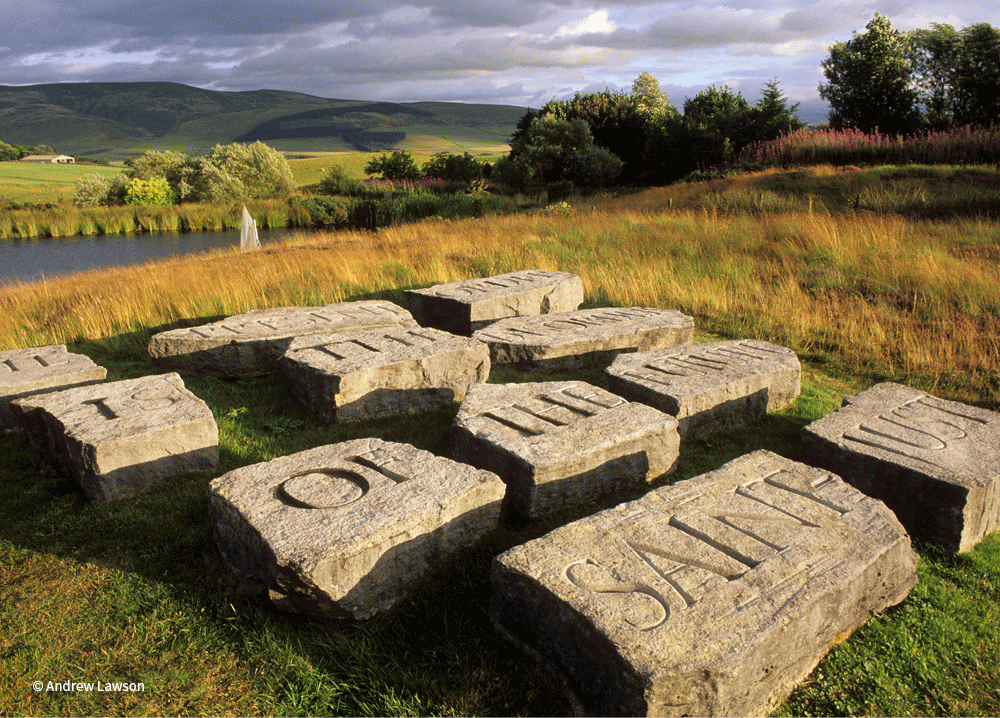
I’ve been saying I wanted to go hear for YEARS and for some reason, have never managed it. This is the garden of poet, writer and artist Ian Hamilton Finlay (1925-2008). The garden in its entirety is the artwork here, dotted with metal, wood and stone sculptures created by Finlay, sometimes in collaboration with other artists. The site is only open June to September, when the trees and plants are in full leaf.

Mount Stuart House, Bute

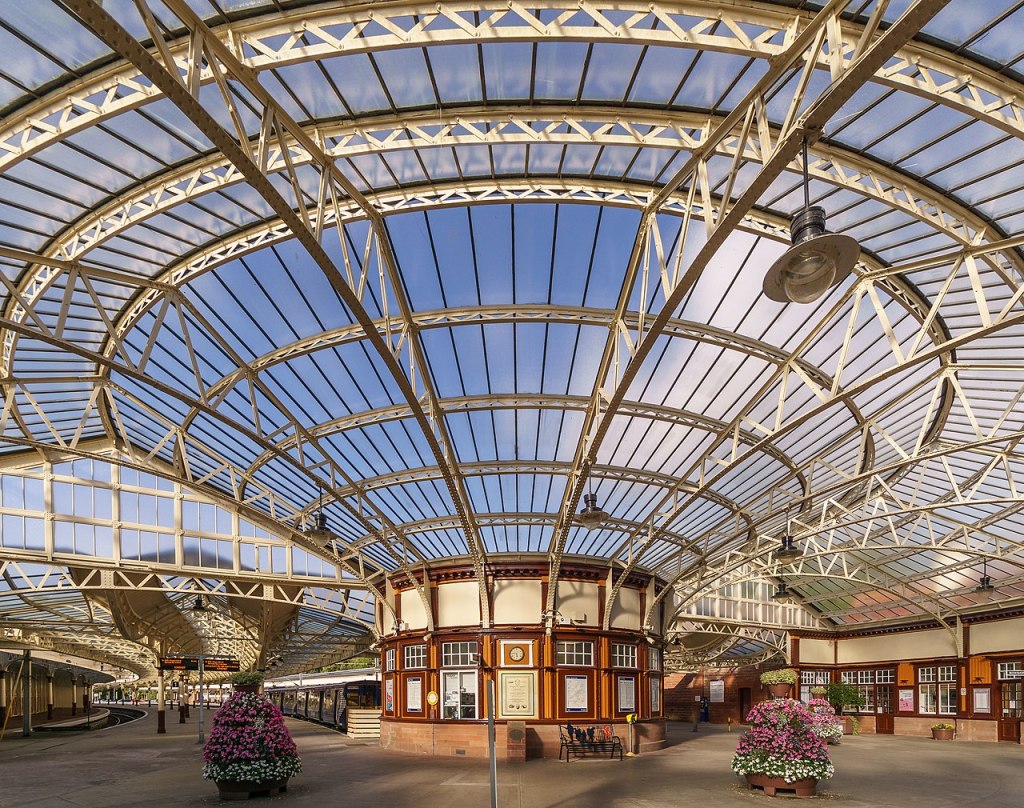
A few of the places on this list I’ve attempted to visit before, but never made it. That’s the case with Mount Stuart House. My partner and I made the journey to Bute via the train to Weymss Bay (almost worth it for beautiful station itself) and we made it as far as the gate to Mount Stewart, only to find it was closed. We wandered around the grounds a bit, possibly illegally. A reminder to always check the website and not just Google Maps. 

Specifically this year I want to see the new immersive exhibition by Alberta Whittle (an artist whose work I love and have written about here and here). The exhibition will draw from the history and landscapes of Mount Stuart House, Bute and the Clyde, to explore ancestral roots, empire and routes of power. It’s sure to be a powerful show. The house opens on 29th March 2024 and the exhibition runs from 1 June until August 2024.

Weymss Bay station

The Burrell Collection, Glasgow

I first heard about the Burrell Collection when I was working at the National Gallery, and we held an exhibition of some of the most beautiful and delicate Degas pastel drawings I have ever seen. The Burrell reopened in 2022 and has since been celebrated and praised everywhere: it won the Art Fund Museum of the year last year. Alongside there Degas pastels, there’s one of the most significant holdings of Chinese art in the UK, stained glass, tapestries paintings… the list goes on and I am definitely going to need more than one visit.

Degree Shows: Duncan of Jordanstone College of Art & Design and Glasgow School of Art

I am a huge fan of attending art school degree shows and seeing what themes are being explored by emerging artists. Scotland is home to some of the best art schools and some really talented people embracing creativity in new ways. Although I always attend the ECA degree show, I have never been to Dundee’s Duncan of Jordanstone College of Art & Design or (and I’m afraid to admit this because I have no excuse other than being disorganised), Glasgow School of Art. I will be rectifying that this year. Shows normally happen around May-June and as soon as dates are announced, I’ll be planning my trip.

Cample Line Gallery, Nithsdale

People love Cample Line gallery. It’s quite a young gallery, having only been established in 2016, but I get the feeling they punch above their weight in terms of shows and programming. From its rural location, around 15 miles north of Dumfries, they host a year-round programme of exhibitions, screenings, talks, walks, workshops and events, exploring the work of contemporary artists, filmmakers and writers. Their next exhibition opens on 23 March and presents the work of Scottish painter, Gabriella Boyd.

St Peter’s Seminary, Cardross

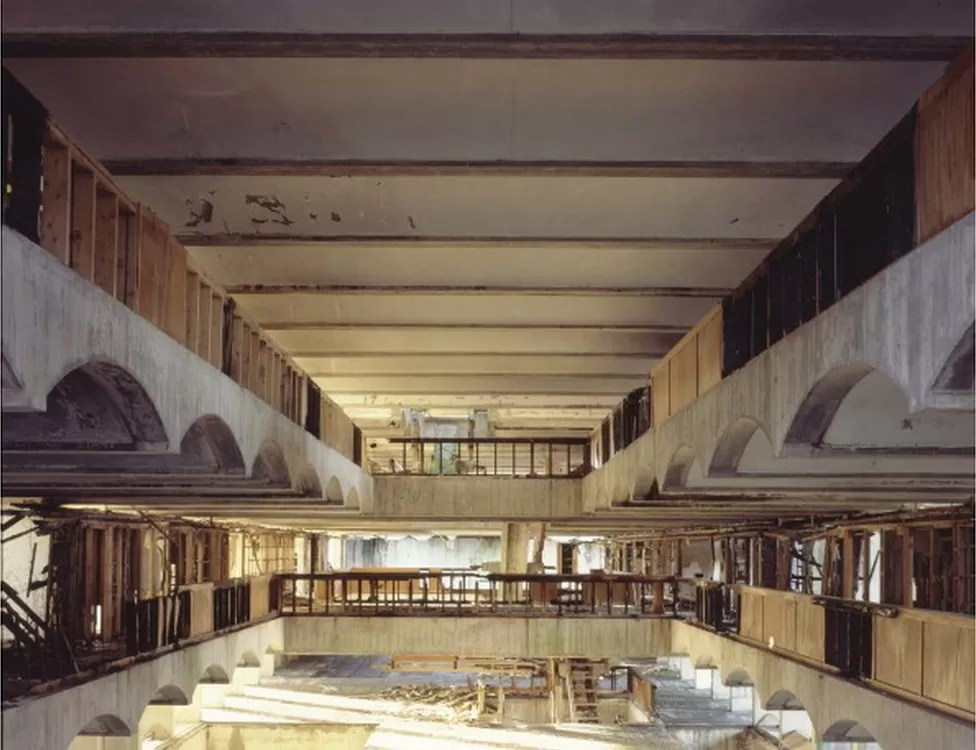
Anyone for a bit of urban exploring? Well, not really urban, because St Peter’s Seminary isn’t in an urban centre, but a couple of miles outside of Cardross on the west coast of Scotland. The concrete structure, which was constructed between 1961-66 was once hailed as an architectural masterpiece and has now completely fallen into ruin. But it still looks majestic even in this state, covered in moss, rust and graffiti. Have a look at this Guardian photo essay from 2019 and you’ll see what I mean. I don’t think visitors are really allowed, so I’ll have to pluck up some courage and combat my inner teacher’s pet for this one.
The Italian Chapel, Orkney

Here’s another entry on the ‘tried to go but was thwarted’ list. In October 2020 we had a trip scheduled to Orkney, but then 2020 happened, so we couldn’t go. This is the most ambitious and furthest away feature on my list, but one that perhaps has the most intriguing story behind it. In 1939, after the HMS Royal Oak was sank by a German submarine resulting in the loss of 834 lives, the decision was taken to transport 550 captured Italian soldiers in North Africa to Orkney, to construct naval defences in Scapa Flow. Among the prisoners was talented artist, Domenico Chiocchetti, who was placed in charge or transforming two Nissen huts into a chapel for the prisoners of war. Thus, the Italian Chapel was born. It is now one of Orkney’s most well-loved attractions, and is open year round.
Crawick Multiverse, Sanquhar

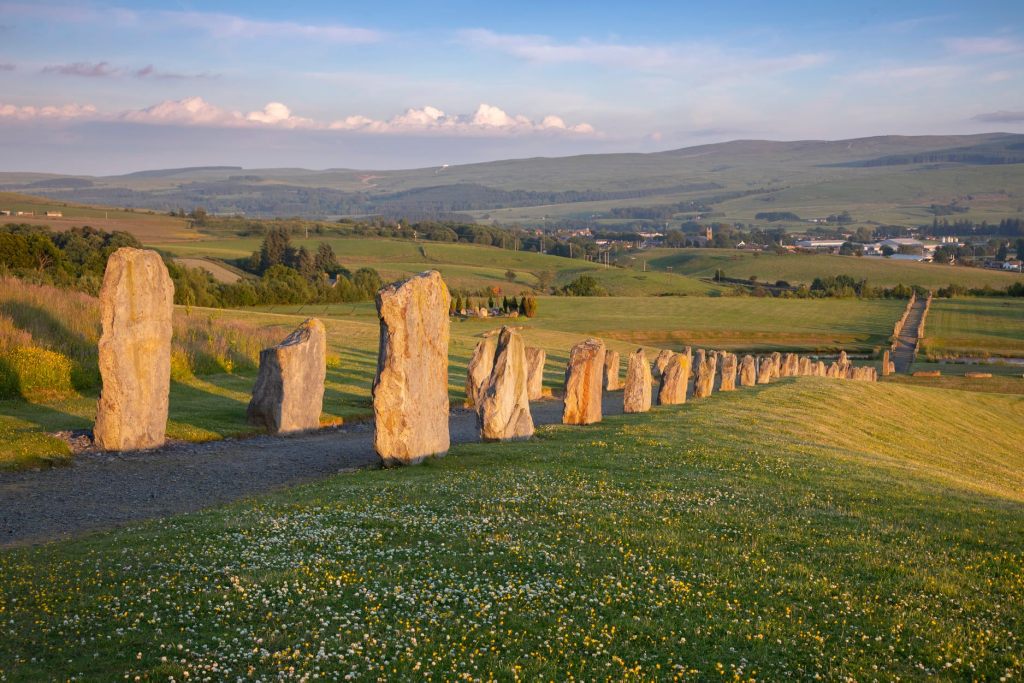
I really love Charles Jenks’ works at Jupiter Artland and the Scottish National Gallery of Modern Art. What I didn’t realise until recently is that there is a huge site designed by Jenks called Crawick Multiverse, which transformed a former open cast coal mine into a huge artland/sculpture park. The site opened in 2015 and links the themes of space, astronomy and cosmology “with a network of paths navigating features and landforms that represent the sun, universes, galaxies, black holes and comets”. It sounds totally wild and I can’t wait to explore it once it reopens on Saturday 16th March.

Newhailes House, Edinburgh

A lot closer to home with Newhailes House, where I’ve once booked a tour of, only to completely underestimate how long it would take to cycle there from my house and miss my slot. The house is a Palladian style 18th-century villa, complete with rococo interiors, Italian marble fireplaces and a Chinese sitting room and impressive fine art collection. The house was acquired by the National Trust for Scotland in 1997, and the unique conservation approach has meant that the house is preserved just as it was when they acquired it (rather than returning it to its ‘original’ condition). That approach fascinates me and this year when I book a tour I am planning to be far more realistic about my transportation methods.

Hospitalfield, Arbroath

I love to see today’s artists breathing life and creativity into grand old houses of the past, and that’s exactly what seems to be happening at Hospitalfield in Arbroath, they have an extensive residency programme, and see the house as a place of learning and ideas. The building is a 19th century Arts & Crafts house, built on the site of a mediaeval hospital. I’m keen to seen the sculptures in the garden (including Paolozzi’s Rio which is on loan from the Huntarian in Glasgow until 2027) and especially to explore the inside of the house via one of their tours, which restart in April.

Looking back at this list, I feel like I’ve given myself a lot to do! Scotland is such a beautiful and rich place to see varied art, architecture, sculpture and landscapes. I’ve had a few failed attempts in the past, because sometimes life gets in the way, but I hope to see as much of this as possible and encounter more art as the light and energy creeps back after a winter of hibernation.

I’d love to hear all the places you’re planning on visiting for the first time this year, wherever you are, so leave a comment or give me a shout on Instagram!

Art in Edinburgh this spring

After months of closed doors and darkened rooms, museums and galleries are set to begin opening in Scotland from Monday 26 April. Unsurprisingly, I’m excited about the prospect of returning to experiencing art ‘in the flesh’, though lockdown has proven that art can be found everywhere and anywhere, and isn’t confined to the walls of a hushed gallery space.

Over the past year, I’ve had to be more imaginative about what to look at and write about: seeking out artists to highlight each week on Instagram, exploring virtual viewing rooms and reading more art criticism. This unwanted pause on what had seemed a never-ending cycle of exhibitions has, I hope, made the blog less of a diary of exhibition reviews, and more a set of broad suggestions of how we can engage with art.

The more I think about it, the more I realise we’ll have to reacquaint ourselves with how to look at art in person, as the world around us becomes available again in all its glory. How will we prioritise our time? Can we pace ourselves? Will we be overwhelmed, underwhelmed, or just ‘whelmed’? Will our stamina for standing and wandering around galleries be a shadow of its former self?

Contrary to what some might suggest, Edinburgh is alive and buzzing with art all year, so here’s a round-up of some things I’m most looking forward to visiting in person this spring and summer.

Jonathan Owen at Ingleby Gallery: 29 May-17 July

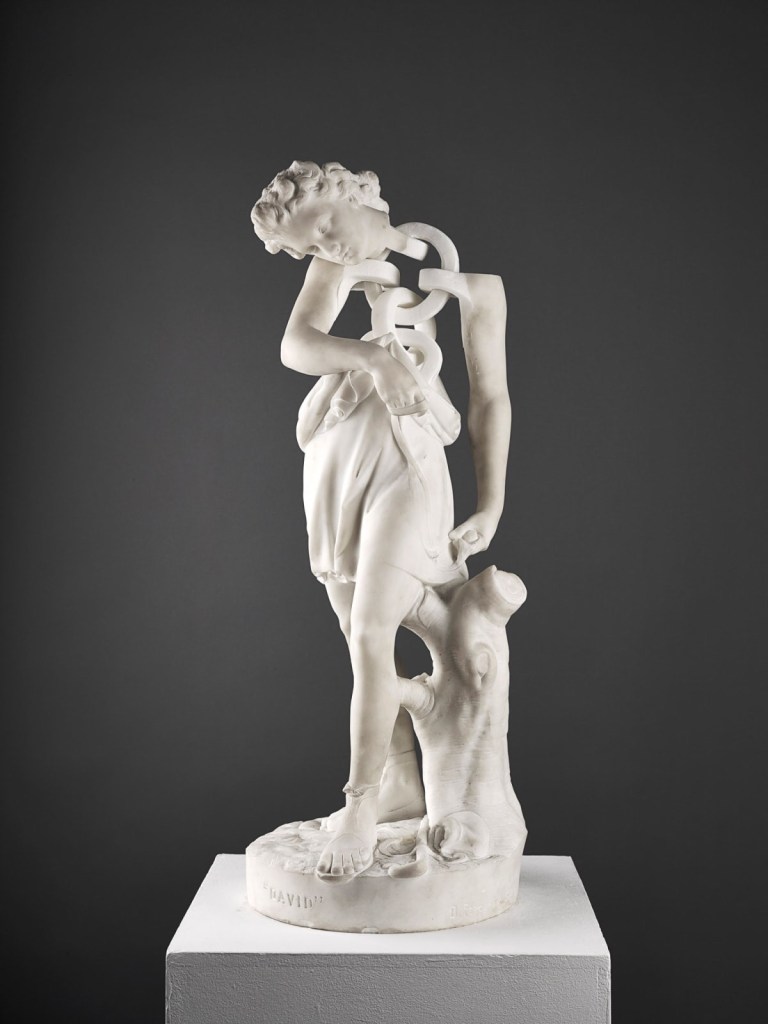
Regular readers will know that I love the Old Masters. That’s where my art journey started (as a child I loved The National Gallery card game). But I also love it when contemporary artists reinterpret traditional forms to say something new e.g. Meekyoung Shin’s slowly eroding soap sculpture of the Duke of Cumberland in Cavendish Square. Jonathan Owen is such an artist. His work uses erasure and interventions to alter found materials, including marble statues. This show at Ingleby Gallery, one of my favourite places to see art in Edinburgh, will feature these altered statues, and will also include the unveiling of a new life-size work about empire and exploitation. I’m sure this exhibition will go straight into the heart of the monument debate and I can’t wait to see these sculptural works in 3D. For me, sculpture is something you have to see in person. The screen just doesn’t cut it.

Jonathan Owen, ‘David’, (2013),
nineteenth century marble figure with further carving

A very interesting rehang at the Scottish National Gallery: Open Thursday-Saturday from 6 May

When I was studying art history at ECA, we were incredibly lucky to get to visit the Scottish National Gallery before opening hours. I remember asking our host, Frances Fowle, Senior Curator of French Art, why some of the most famous paintings are kind of… hard to find in the Gallery. While some people love the fact that you go up a narrow set of stairs and suddenly you’re surprised to be in the company of Van Gogh’s Olive Trees, Monet’s Haystacks and Gaugin’s Vision of the Sermon, apparently lots of folk agreed that they seemed needlessly buried. The latest Friends newsletter explains:
You spoke, we listened. For the re-opening of the Scottish National Gallery we have moved seven of the much-requested Post-Impressionist paintings to a display on the ground floor.

While I doubt this will be a permanent change (the rooms upstairs are probably a much better scale for these works), it will be really wonderful to see these incredible paintings placed front and centre, and I’m fascinated to see how the team at the Galleries will take on this re-hang.

Vincent Van Gogh, ‘Olive Trees’, 1889. Excuse my wonky camerawork.

Fine Art Society Edinburgh, Joan Eardley 6-29 May

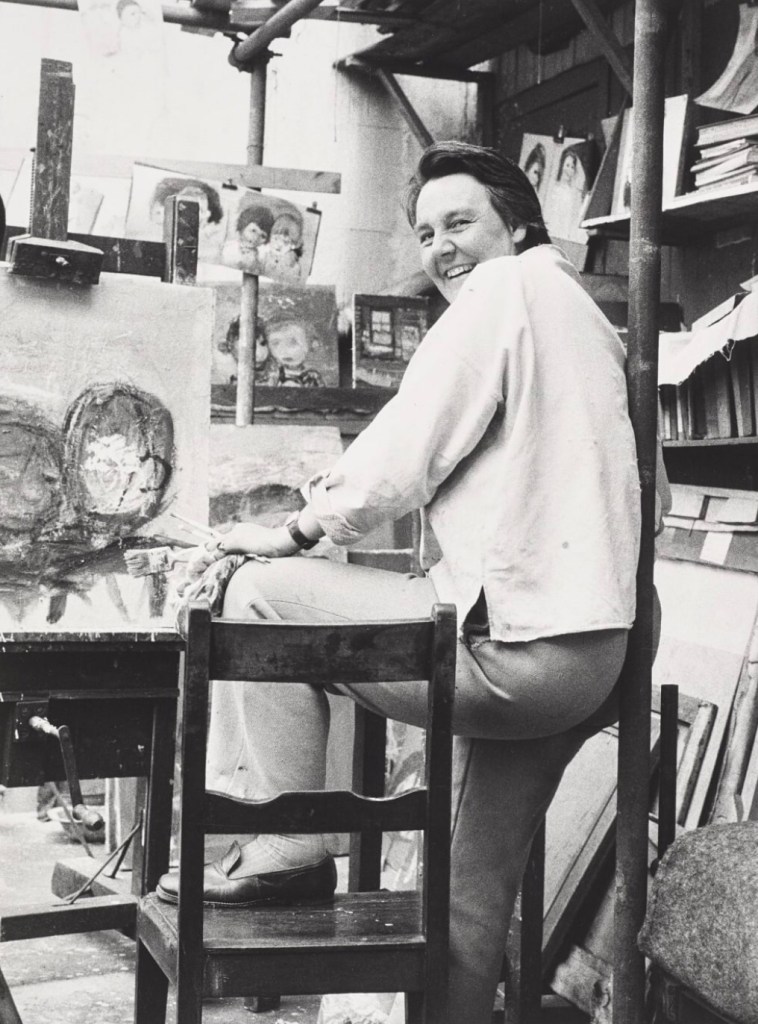
I’ve written about the forthcoming #Eardley100 celebrations before, and am hoping to write about her again several times this year. While the centenary celebrations are happening across Scotland (especially at Paisley Art Museum and the Hunterian in Glasgow), this exhibition at the Fine Art Society on Dundas Street in Edinburgh pairs works by Eardley with photographs of her in her studio. I’ve long been interested in our obsession with artists’ studios (the weird preserved Paolozzi studio at Modern Two is a great example), so I’m really curious to see this combination. It also ticks off a major ambition for me, which is to visit more of the galleries on Dundas Street. From the outside, they aren’t the most welcoming, but to learn more about Eardley, one of the best artists I’ve encountered since moving to Scotland, I’ll brave it.

Oscar Marzaroli ‘Joan Eardley in her Townhead studio’, 1942

Restless Worlds for MANIPULATE Festival: Lyceum, 22 April-2 May

This is why everyone should go to their local art school’s degree show (happening online this year, watch this space). At the ECA Degree Show in 2019, I came across an artist called Chell Young, who works to create miniature worlds that make you feel like you’ve had one of Alice’s EAT ME cupcakes. I’ve followed Chell’s work since, and that’s how I came across Restless Worlds. MANIPULATE Festival has commissioned eight Scottish artists to create kinetic sculptural works, displayed in windows, alongside a short story or soundscape that you download to your phone. While I’m especially looking forward to seeing what Chell has created, the whole project sounds fascinating. In Edinburgh, it is happening in the windows of the Lyceum foyer but there are projects planned for Glasgow and Aberdeen too. More info and tickets here.

Chell Young, ‘Fragile Realities’, part of installation at ECA Degree Show, 2019

Christian Newby at Collective: 13 May-29 August

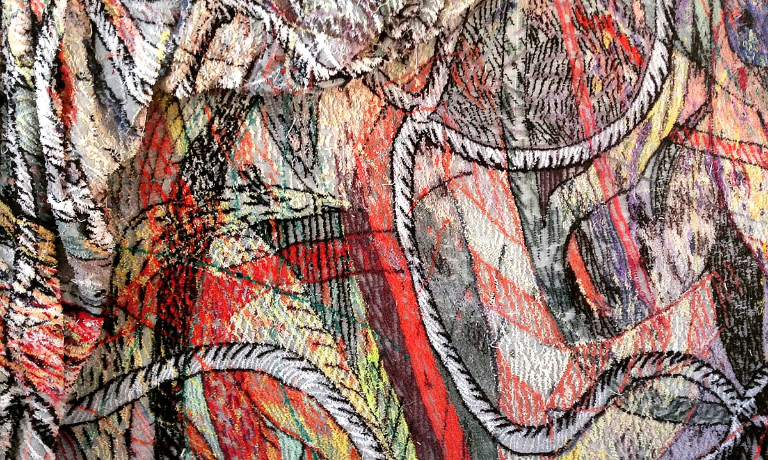
I’m sure lots of Edinburgh residents have braved the climb up Calton Hill for a lockdown walk, just to feel *something*. Well, from early May we will be rewarded with an open-for-business Collective Gallery at the summit. The exhibition they’re emerging from lockdown with is by Christian Newby, and features a large-scale textile called Flower-Necklace-Cargo-Net. This tapestry, made with industrial carpet tufting techniques responds to the building, which originally housed an astronomical telescope. Christian’s work explores ideas of craftsmanship, labour and the use of machinery in the fine and applied arts. I am intrigued by the description and I really want it to be absolutely massive. We all love a large scale work.

Christian Newby, ‘Flower-Necklace-Cargo-Net’ (detail), 2020

There will be so, so much more to talk about and explore, so please consider this an initial scanning of the Edinburgh art horizon. Other things I want to explore further are the Fruitmarket Gallery reopening after its refurbishment, The Normal exhibition at the Talbot Rice Gallery which explores the pandemic, the ECA Degree Show and the Art Festival. I’ll keep my ear to the ground and post more recommendations as and when.

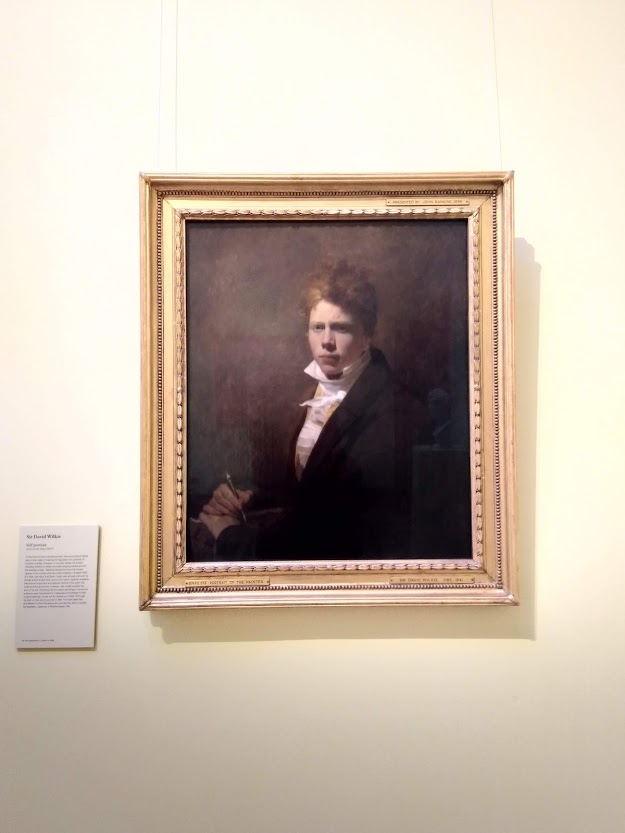
Alongside all that, we can never forget our old favourites. One of my first tasks when the Scottish National Portrait Gallery opens on 30th April is to go and visit my old pals, David Wilkie and Duncan Grant, to check they’ve been OK over the past year.

David Wilkie, Self Portrait, 1804-05

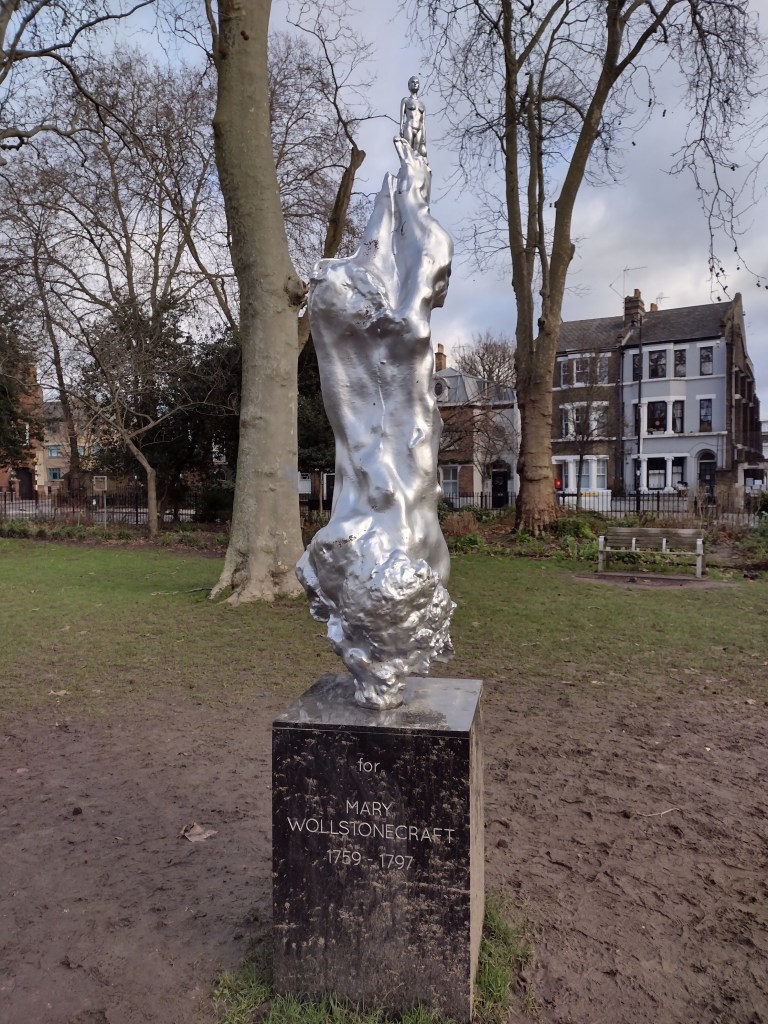
Maggi Hambling’s Wollstonecraft statue

I’m currently locked down in London, so what better activity than to go to Newington Green and look at what the Guardian yesterday called ‘one of 2020’s most polarising artworks’. It is Maggi Hambling’s A Sculpture for Mary Wollstonecraft. If you missed out on the social media furore about this sculpture, the main issue was that people were very, very angry that what was supposedly honouring and commemorating one of the founders of feminism had a naked woman at the top of it. In principle I agreed and plus, visually it didn’t seem that interesting. More figurative art? Still?

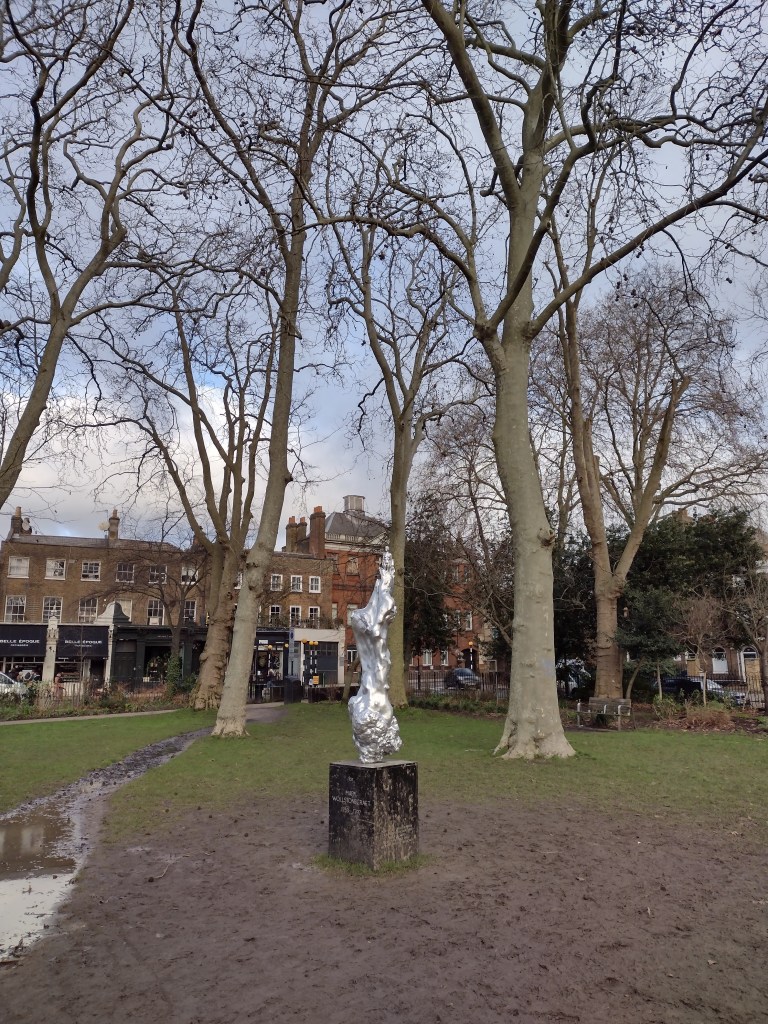
As I trudged up, I hoped that I might see some protest performance going on (it has been covered up at various points), but there was nothing except a LOT of mud on and around the plinth, which reads “For Mary Wollstonecraft”, i.e. it’s for her, not of her, which is important to remember.

The statue on a muddy Newington Green

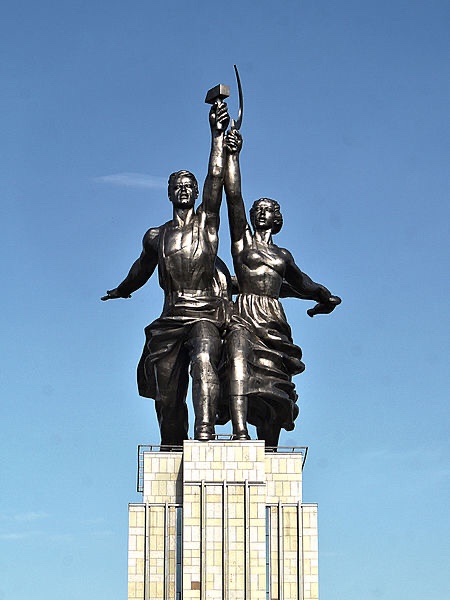
Firstly though, some perspective. The figurine that caused such a stir is TINY. She appears at the top of a much bigger silver blob, and though I was standing right up close, the height of the sculpture means she’s far away. On twitter and in the media, all the photos I’d seen were deceptive: closely cropped and zoomed in on the female figure, emphasising the defined abs, perky boobs and a full, rather prominent bush. Some were cross that the female body had been idealised in this way, but in the context of the full sculpture, that critique strikes me as odd. For me, this muscular figure brought to mind soviet-era sculptures, in particular, Vera Mukhina’s Worker and Kolkhoz Woman. Made in stainless steel, 24 metres high and created for the 1937 Paris World’s Fair, it is one of the most badass monuments ever. The diminutive size of the figure in Hambling’s sculpture works against this reading, but it still is a visual connection I find helpful when trying to place the work.

Vera Mukhina, ‘Worker and Kolkhoz Woman’, 1937

To me the figure does not read as sexual in any way. But, maybe, because of our understanding of the nude, it’s not possible to see a naked woman without this idea being drawn into this debate. As Heather Parry explained on twitter at the time:

Yep.

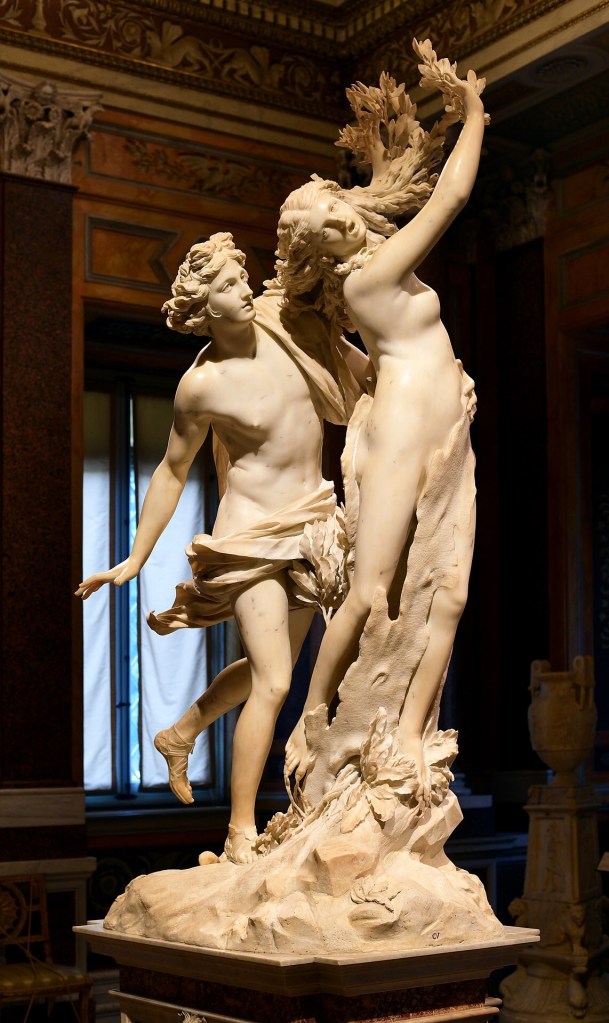
The woman emerges from a swirling mass, which calls to mind another transformation, Bernini’s Apollo and Daphne, the marble sculpture in the Galleria Borghese in Rome, made in 1622-25. It is based on the tale in Ovid’s Metamorphosis. Apollo has been struck by Cupid’s arrow, and is lusting after Daphne, chasing her. Daphne cries out for her beauty to be destroyed, or for her body to be changed to save her from the impending rape, and is transformed into a tree. Bernini’s sculpture captures the exact moment when flesh begins to become bark. Her outstretched fingers transform into leaves, she is swallowed up as the natural form encases her living body.

Bernini, ‘Apollo and Daphne’, 1622-25

It feels strange to compare those works, because the Bernini is one of my favourite sculptures of all time, and the Hambling is certainly not. But perhaps we can see the Hambling sculpture as this metamorphosis process in reverse. Here, rather than being engulfed, the female figure emerges from the shapeless forms and looks powerful. The aesthetic of the shiny silvered bronze also acts as a reversal of the natural elements in Ovid’a tale. The sheer artificiality makes it look futuristic and alien and that is my favourite thing about it.

In its almost mirror state, it jars pleasingly with the muted, natural winter browns and greens of the mud and bark in its surrounding park. There’s no missing this sculpture, it is a beacon that demands attention and has definitely received it. Wollstonecraft has too, and that’s not a bad thing.

The take home for me is that artworks may be polarising, but art is not Marmite. You can simultaneously love and hate different things about it, you can sit with it and feel differently about it on different days. It’s a reminder that especially at the moment, when we’re consuming art on a screen and from afar, context is everything. It’s good to know if we’re getting a detail or the whole picture.

Top ten art moments of 2020

This year, it is needless to say that we’ve not had the art experiences we might have been hoping for. With travel restrictions, exhibitions cancelled, rescheduled and put online, the art world landscape has changed significantly, perhaps forever. I have just had pre-Christmas visits to see Artemisia and Titian’s Poesie at the National Gallery cancelled, as London crashes into Tier Three. I’ve been longing to see these once-in-a-lifetime exhibitions for years, since I first heard they were going ahead. So I began writing this with a sad heart.

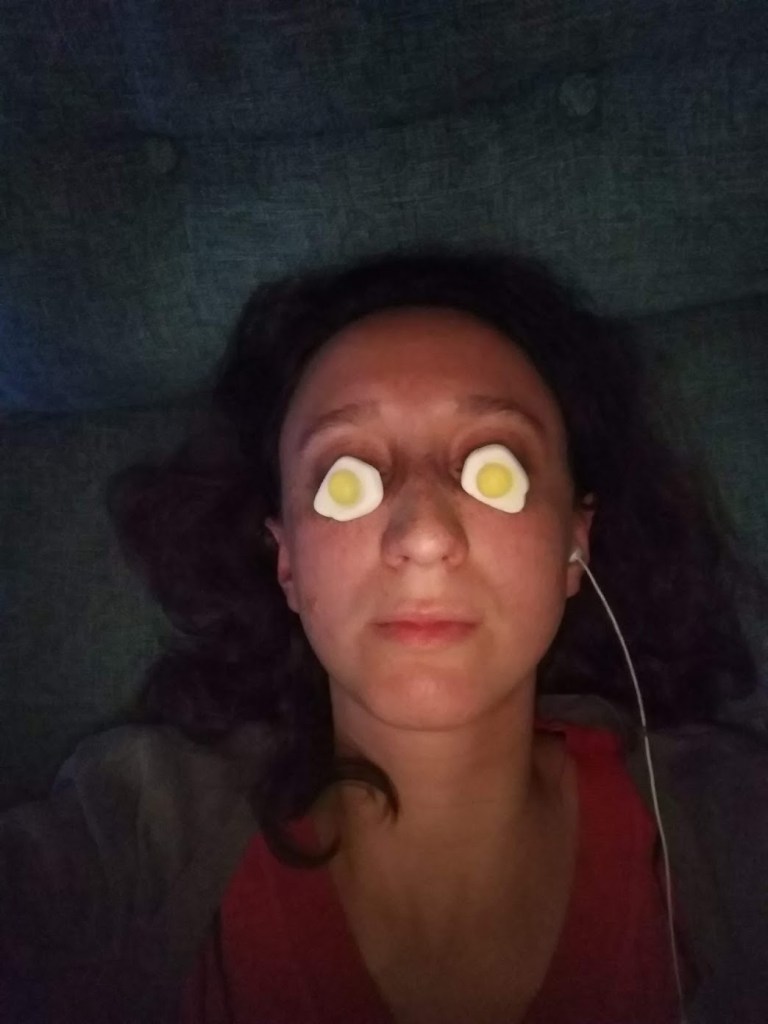
Yet despite and because of what 2020 has thrown at us, the need for art and culture is stronger than ever, as a way to escape, to heal, to reflect on what is happening. Many people have used 2020 to have a go at making art themselves, with countless organisations sending out art packs for people to unleash creativity at home. What I’m now calling Self Portrait with Haribo was born of boredom and childishness (yes I’m 29 and I still buy Haribo), but looking back at it now, it captures a particularly cabin fever-ridden moment of lockdown. Marking moments like this is a good way of acknowledging time passing, in a year that has felt interminable but with very little to show for it.

‘Self portrait with Haribo’

You’ll be relieved to hear, this blog post isn’t about my own personal creative output. Rather, it’s a moment of reflection and reassurance, to look back at 2020 and realise it hasn’t been a total creative wasteland. As by now you may have guessed, my concept of what art is is very broad, and that attitude has helped me this year.  It helps me notice my surroundings, and to not feel culturally deprived, even when museums and galleries have been largely closed.

Art hasn’t gone away this year, we’ve just experienced it differently. So consider this an invitation for you to get out your phone, scroll through 2020’s photos and consider the past twelve months in a new light: there will be evidence of things you’ve seen that connect us, that have made life more interesting, that have enabled you to see or understand something differently. To me, that is the purpose of art.

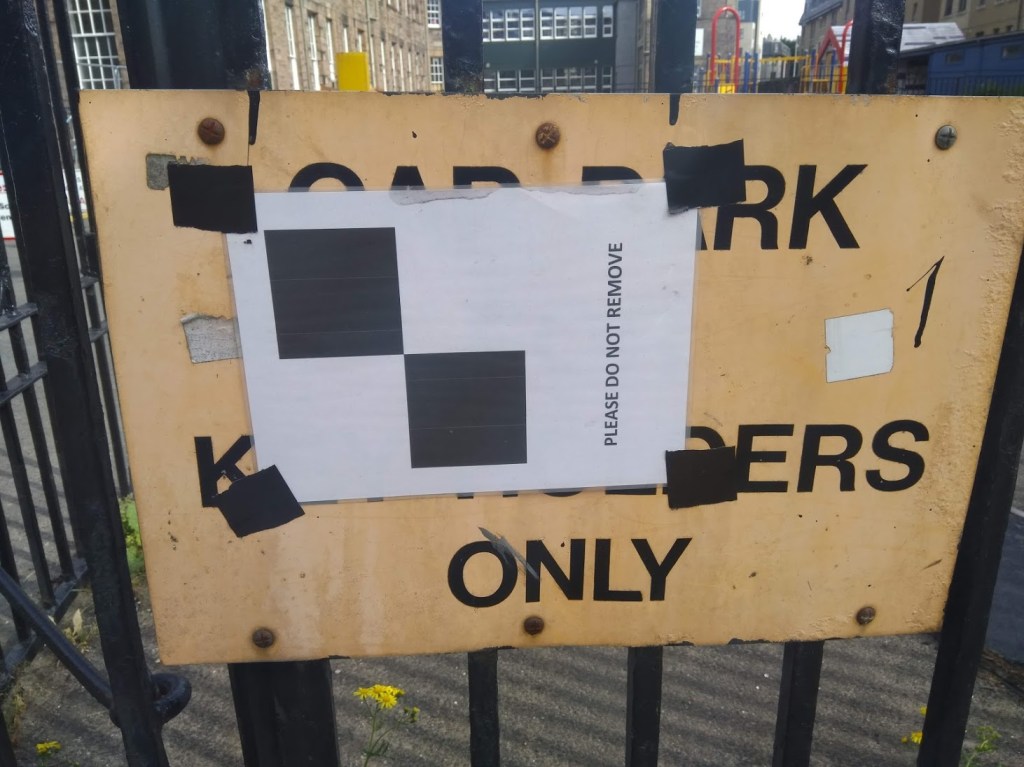
10) “Please do not remove” sign, Fountainbridge

This comes under the category of ‘weird things I take photos of in the streets of Edinburgh’. I first noticed this sign in Fountainbridge in January. It was still there in June. I love random signs, posters and stickers that are woven into the fabric of our cities. Once you start noticing them, you’ll never be able to stop: there are whole debates played out on bus stops, sign posts, bins and streetlights. I like this one because it shows how people did what the sign said by leaving it there. Either the people Edinburgh are very law abiding, or, possibly more likely, it went unnoticed.

‘Please do not remove’, Fountainbridge, June 2020

9) A visit to Petworth House

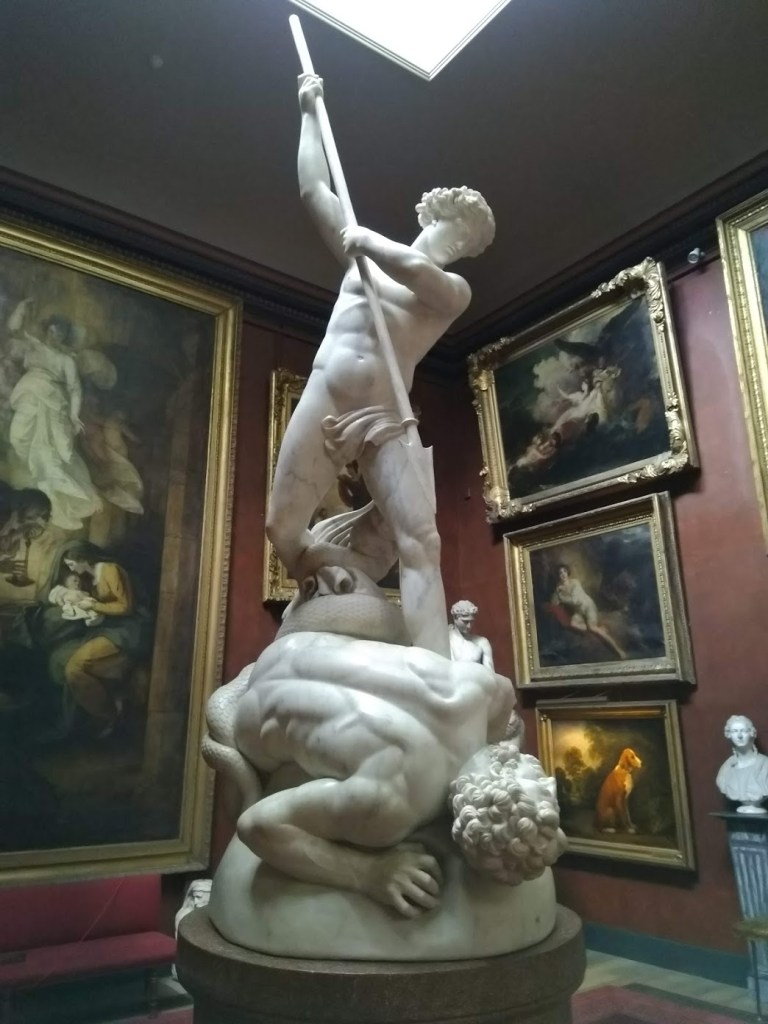
When infection rates were low, I visited Petworth House for the first time this year. I’d known that the house had lots of art connections, having seen it in the film Mr Turner, but I hadn’t realised how many treasures are packed into just a few rooms. The National Trust’s webpage says that it is one of the finest art collections in their care. It includes The Adoration of the Magi by Hieronymous Bosch, a bust of Aphrodite attributed to Praxiteles which is over 2,300 years old, and The Molyneux Globe, the earliest English-made globe in existence, made in 1592. My favourite moment was seeing the beautiful marble sculpture of Saint Michael overcoming Satan by Jonathan Flaxman, created 1817-1826. When I was studying at UCL, the full-scale plaster model that Flaxman made in preparation for this piece was on display in the main library, so seeing the final result felt like the artwork had come full circle for me.

‘Saint Michael overcoming Satan’, Jonathan Flaxman

8) Apple’s iPhone X advert at The Hermitage

Ah, who knew an advert would play such an important part in my year. I actually am one of those people who enjoy TV adverts: the ludicrous fantasies of high-end perfume, the terrible, expensive sofas at DFS. An oven chip advert about family made me cry once. Yet this advert was not your usual one. It was five hours long, a slow-paced art house film with minimal dialogue, all shot on iPhone X, filmed in The Hermitage in St Petersburg. Each Tuesday in the spring, my friend Jane and I sat down, started a phone call and pressed play on YouTube together as we watched an installment. We discussed the paintings, the dancers, the architecture, the narratives, and sometimes, we just talked over the film about life. It was as close as I came to the real experience of trawling through a major museum while on holiday and I looked forward to it every Tuesday for over a month. I’ve written a longer piece which has a link to the advert here.

7) A specific frame in The Wallace Collection

From my trip to The Wallace Collection in the summer, one object is thoroughly wedged in my mind: the frame of Ary Scheffer’s Francesca da Rimini (1835). The painting itself is very dramatic, it depicts a scene from Dante’s Inferno, with the tragic figures of Francesca and her lover Paolo condemned with the souls of the lustful to the second circle of hell. The frame completely wowed me, I think it’s one of the largest frames I’ve ever seen. You can see a book in the bottom right corner, there are doves, chains, oak leaves and a scroll which incorporates elements of Dante’s text. It was created by a certain Félicie de Faveau for the painting’s third owner, Anatole Demidoff, Prince of San Donato, who owned the painting from 1853-70.

Ary Scheffer’s ‘Francesca da Rimini’ in the Wallace Collection

6) Graveyards of Edinburgh

Edinburgh is one of the greenest cities in the UK and I recognise my privilege in experiencing lockdown here for that very reason. Exploring the city’s open spaces has led me to encounter several of Edinburgh’s old graveyards for the first time this year. Being a fan of the Romantics, the more dilapidated and ivy-covered the angels, skulls and crossbones and shrouded urns, the better. Perhaps it seems morbid, but I’ve always found these places peaceful and interesting, and as someone who doesn’t believe in life after death, seeing nature flourish in these places has always been reassuring. Warriston Cemetery, Greyfriars Kirkyard, Dean Cemetery and Dalry Cemetery are some places I’ve found solace this year, as well a place to appreciate the art and symbolism in the carvings, sculptures and iconography.

A grave with ivy, Warriston Cemetery

5) Andy Goldsworthy’s Stone Coppice at Jupiter Artland

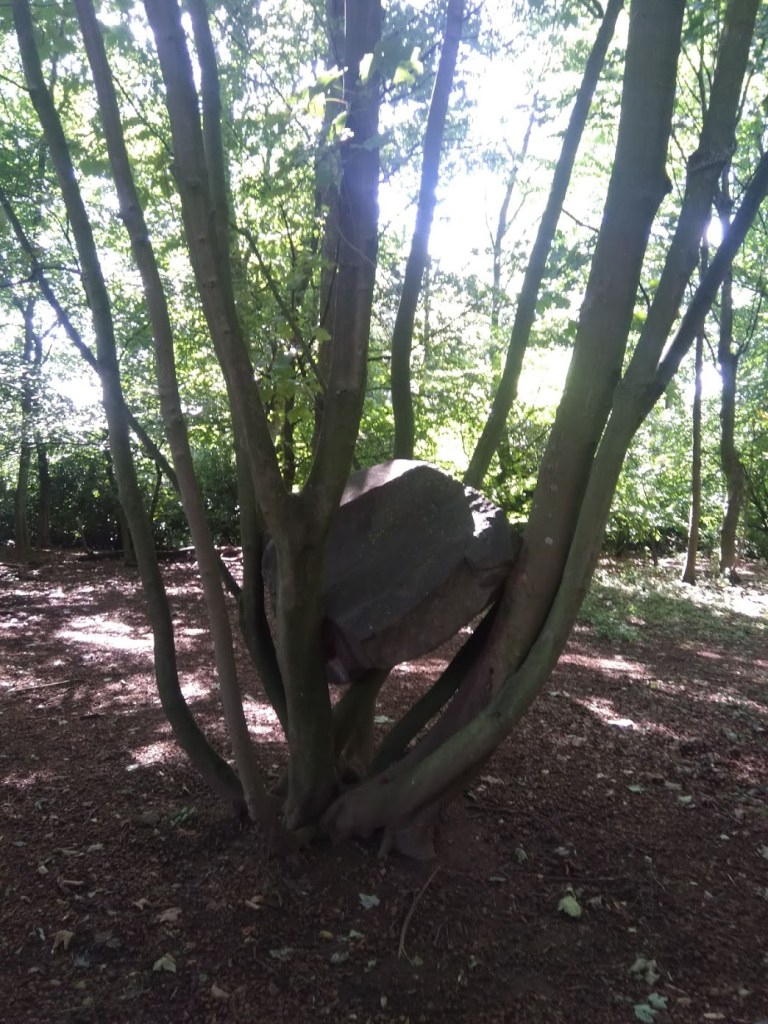
Jupiter Artland – I visited at last! Cycling with my sister out to Wilkieston on the canal path, this was one of the most perfect art afternoons of the year. We walked around the whole thing slowly, soaking it all up, and got a seat in the café just as the rain came down. I love so many of the artworks here, but my top one for this list is Stone Coppice by Andy Goldsworthy. You stumble upon this artwork in one of the more unkempt pockets of the sculpture park, you might not even know it was there at first. It’s the perfect balancing act: the way the trees delicately hold the rocks, how some seem composed in a tender embrace, how others seem crushed by the branches or vice versa. The artist’s positioning of the natural matter, which is then left to its own devices to grow and unfold over the years, is poetic.

‘Stone Coppice’, by Andy Goldsworthy, at Jupiter Artland

4) Rainbows – Colinton Tunnel

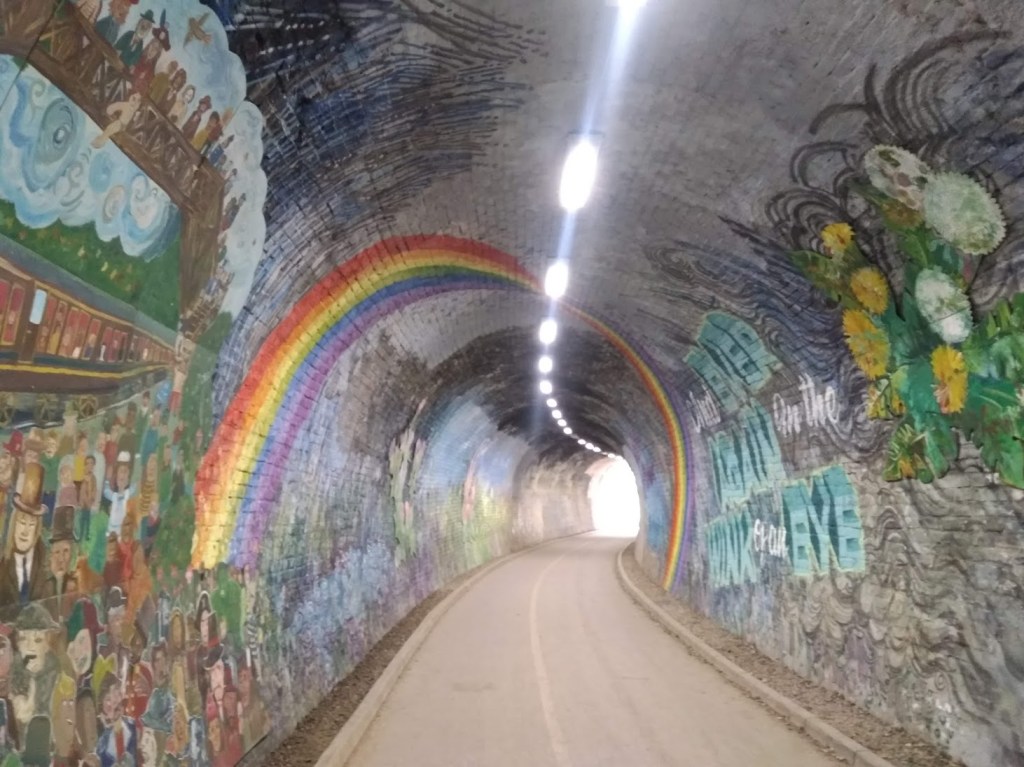
The cynical among you will perhaps raise your eyebrows at this… rainbows in windows everywhere were sweet at first, but as the grim reality and longevity of the pandemic set in, they started creating a backlash, with one of my favourite tweets of the year capturing a perfect counterpoint – a sign in Glasgow that simply said “This is shite”. But this huge rainbow, arching over me as I cycled through Colinton Tunnel stopped me in my tracks. Street art and bike rides have both helped me through the year.

Colinton Tunnel

3) Rediscovering Black Portraiture by Peter Brathwaite

Peter Brathwaite has taught me so much this year. His project to recreate artworks at home was born out of a light-hearted DIY art challenge started by the Getty Art Museum. But Peter’s project took on huge significance as he made it his mission to shine a light on Black portraiture specifically, and used objects in his home to explore his own ancestry and past. In the context of the Black Lives Matter protest movement this year, this exercise in sharing these portraits of Black people with the world was so important, reminding us that these figures do exist in art and history, we just haven’t seen them, we haven’t named then. The whole project showed how the personal is political. How art is a mirror that reflects history and society, flaws and all, and critical engagement with it can help us understand the world and ourselves. Scroll through Peter’s Instagram to have your mind expanded, or take a deep dive into five of his recreations as part of The Essay on Radio 3 – highly recommended listening.

2) Violet Chachki’s ‘fall reveal’ runway look on Ru Paul’s Drag Race

Though I was a fan of Ru Paul’s Drag Race before 2020, the antics of the queens, their talent, their silliness, their mental strength and their artistry has meant the show has been my constant companion through lockdown. Yes, one of the reasons I love the show is that it satisfies my craving for gossip and drama, which has been so utterly lacking in real life this year. But despite its highly formulaic reality TV structure, the show has done so much to expose mainstream heterosexual audiences like me to the art of drag. And what an art it is! It’s difficult for me to pinpoint an exact moment, but I think we can all appreciate that the two-in-one catwalk outfit Violet Chachki burst on the scene with, in the very first mini-challenge of season 7, is the most delicious balance between high fashion and performance art.

1) Leith’s historic mural, brought to life by Double Take Projections

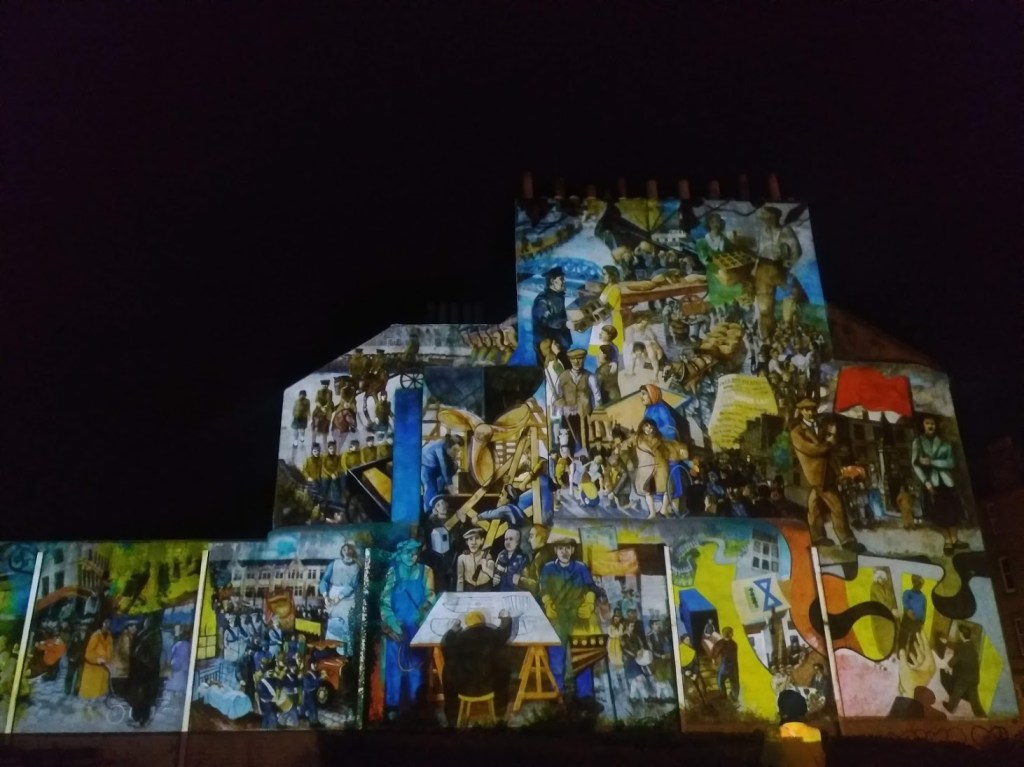
There are some artworks that seem a little like magic and this is one of those. If you’ve ever seen Leith’s historic mural near Leith Theatre, you’ll know it’s not in the best state of repair. The colours have faded, the edges are eroding, it’s difficult to decipher. I wouldn’t necessarily want to change that, fading is part of a mural’s cycle of existence. Plus I’ve heard that the artists Paul Grime and Tim Chalk, who created the mural in collaboration with local residents in 1985-6, have resisted suggestions of the mural being restored. This decision then, to use projections, sound effects and music to bring different parts of the mural to life, is inspired. With the projection focusing on particular characters and animating different parts, we see a ship’s rudder gently rotating, children playing and soldiers marching. We notice the mural’s complex layers, and the installation restores what is a special piece of street art and local history in the city’s collective memory.

There you have it, my top ten art moments of 2020 so far. What have yours been? I would love to hear from you, so feel free to leave me a comment or DM me on Instagram or Twitter.

Art in lockdown: The Hermitage, St Petersburg

Each week for the past month, I’ve been going to Russia. To the State Hermitage Museum in St Petersburg, specifically. A close friend and I have been watching something we wouldn’t have considered engaging with before lockdown: a five-hour iPhone 11 advert, which explores the museum in an extraordinary way.

Even in lockdown, five hours is a bit too long. It’s far longer than I would be able to spend in a museum before fatigue, overwhelm and “museum back” set in. So we watched it in bite-size chunks. It became a little ritual. Every Tuesday at 9pm we would call each other, and press play at the same time to experience the tour together. It sounds bizarre, but it’s one of my favourite ways I’ve experienced art in lockdown.

The tour is meticulously curated. It is in one take, but isn’t a film that simply drifts past the museum’s many artworks (there are three million objects in the collection, including paintings, sculptures, textiles, porcelain, jewels, armour, coins, etc., so we only see a snapshot). This is a focussed journey that pays attention to the architecture and the interiors of the building. Dancers, actors and musicians all feature. They activate the space in vast corridors and lavish rooms, enliven the collection, and act as ciphers for our own bodies which, in normal circumstances, could be travelling through the rooms, pacing the floors, gazing at the ceilings.

I’ve long enjoyed watching people engaging with art: imagining what they’re thinking, and wondering why certain artworks speak to some people but not to others. My friend and I were now observing a false version of this in private and at a distance. We discussed the characters’ hair and clothes, speculated about their relationships with each other, puzzled over what the experience of making a film in an otherwise empty national museum, on the precipice of a global pandemic might have been like.

Gossiping with my friend, analysing what we were seeing together, was one of the best parts of the experience, making the surreal normal, as if we were actually touring a museum together. The mutuality of it, my friend watching in London and me in Edinburgh, spurred us on, and time slipped away quickly. Sometimes, the film became the backdrop to our conservation, sometimes we just watched and our words left us.

The physicality of the camera moving through rooms, doubling back, going in circles, helped make the experience lifelike. We commented on different works we liked, we discussed the merits of the decor (she hated the white curtains), I tried to show off some biblical knowledge to help interpret some of the Christian paintings, to varying degrees of success. There were moments when I craved a few clues about the paintings’ narratives, who made them, their titles – without explanation or context, lots of artworks are VERY weird and tricky to interpret – but providing additional information on screen would have made it too educational. The experience was more about wonder than learning.

The Garden of Earthly Delights prior to ultra zoom

The entire film is shot on iPhone 11, which is where the advert side comes in. The detail it captures is really extraordinary. The ultra zoom is one of my favourite digital tools through which we can experience art differently. Our capacity to see intricate close-ups of paintings is mind-blowing, and something to be celebrated. Zooming in on The Garden of Earthly Delights by a follower of Hieronymus Bosch (1556-1568?) – the original is in the Prado in Madrid – we could see more clearly than had we been standing before it. There are people cavorting on/with animals, giant birds, bodies inside clam shells, people with flowers sprouting from their bums, fruit the size of humans. If you want to pick three minutes of the whole thing to watch, this carnival of a painting features from 1:09-1:12.

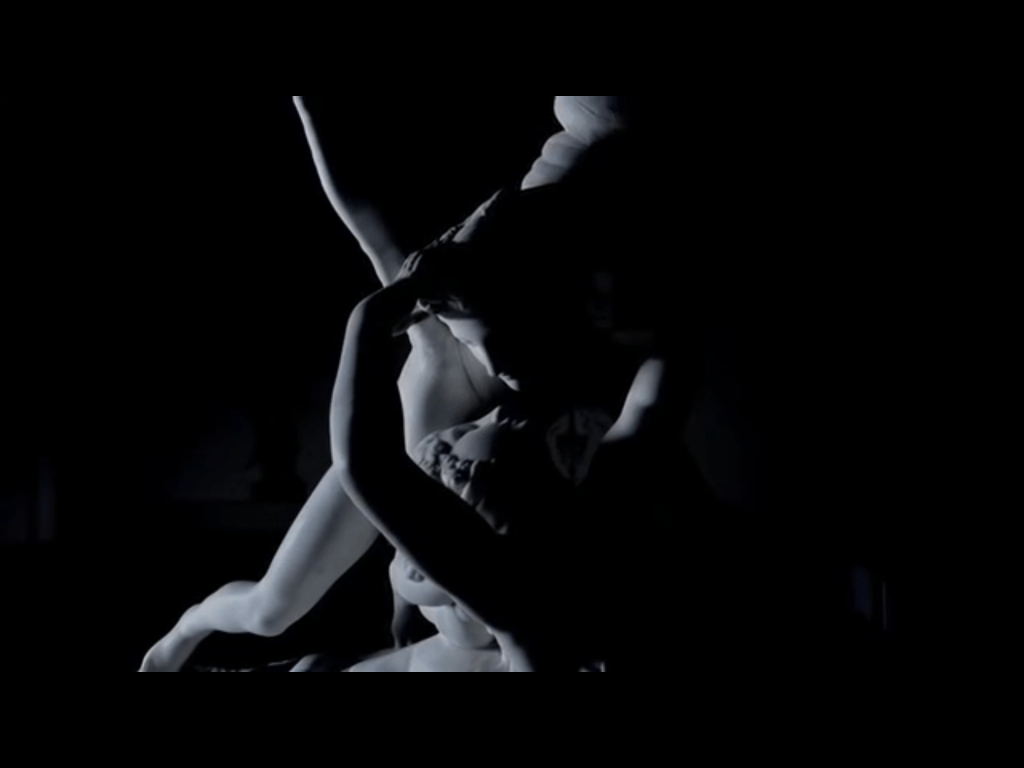
The Hermitage film played with light in interesting ways which warped time, creating uncertainty over whether it was day or night. Towards the end the use of a white torch light on white marble sculptures plunged everything else into darkness, and we were floating in a monochrome world.

Marble sculptures floating in a monochrome world

The museum at night is a creepy, exciting prospect, and one the film makes use of. There were several allusions to the presence of history, and the ghosts that live within its very walls. After all, it is a building which began as a private palace, its first collections were amassed by Catherine the Great in the 18th century. It has ridden the waves of Russian/Soviet/global history since then: wars, revolutions, political regimes, the Siege of Leningrad, and this pandemic. That it is still here today, for us to enjoy, even only as digital ghosts from a distance, is something we can all take comfort in.

I found some old photos

I recently found an old hard drive I’d stored photos on for many years, dating back roughly to 2009 – pre cloud storage and Instagram. Back then, I was getting ready to leave school and move out of the family home I’d lived in for most of my life. Finding these photos now, I’m struck by what you can learn about yourself by seeing what you’ve carried with you, and who you’ve journeyed with, over the years.

I never thought I’d taken that many pictures, and yet here they are. A selection of moments documenting around 8 years of my life. Over that time, what did I decide to photograph? Is this curation, of a sort?

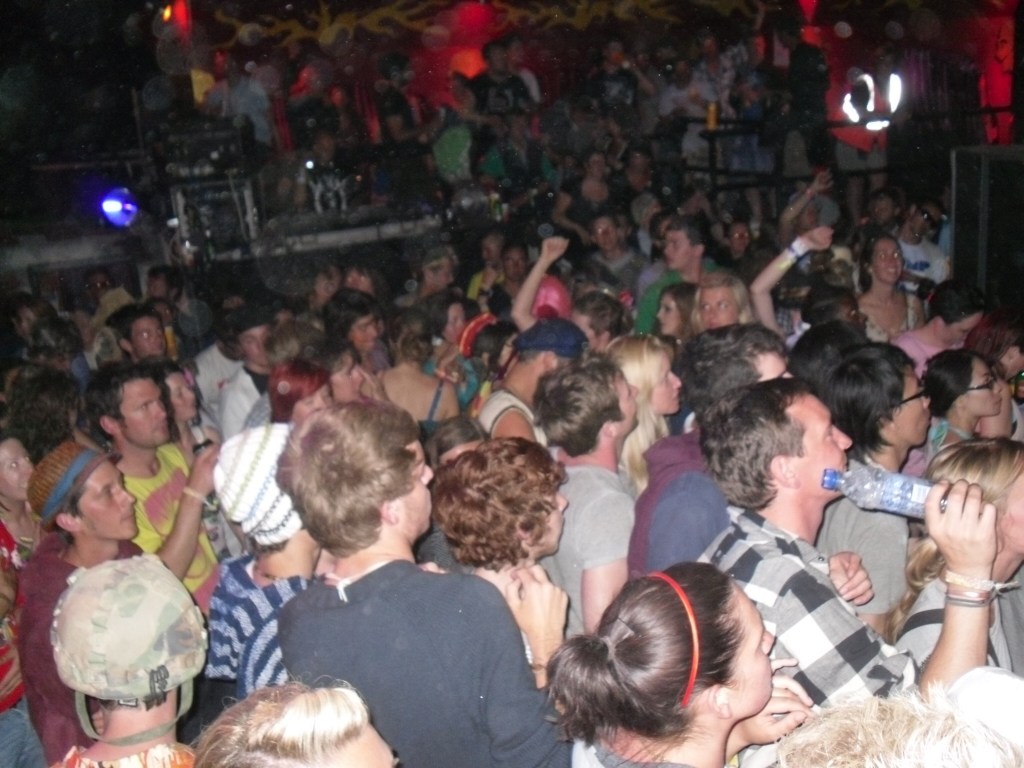
Of course, my favourite photos, the ones that give me the most pleasure, are those of people. Family and friends, people I’ve held close, literally, over the years. My appearance has barely changed, I’ve never had an interesting or drastic haircut. But despise the lack of intrigue provided by my personal aesthetic, these pictures of people together show moments of joy, some of which feel so distant now – a packed Shangri la at Glastonbury in 2010. Look how many people are in such close proximity!

Shangri-la, Glastonbury, 2010

There are a couple of art photos, but not that many. Before formally studying and writing about art, I don’t think I took many photos of paintings or sculptures. In fact, I thought that was lame. That it was a distracting side quest which got in the way of the true purpose: engaging directly with the art, without intermediaries. Yes, I was a censorious undergrad. Now of course, photography is one of the prime ways I engage with and consume art.

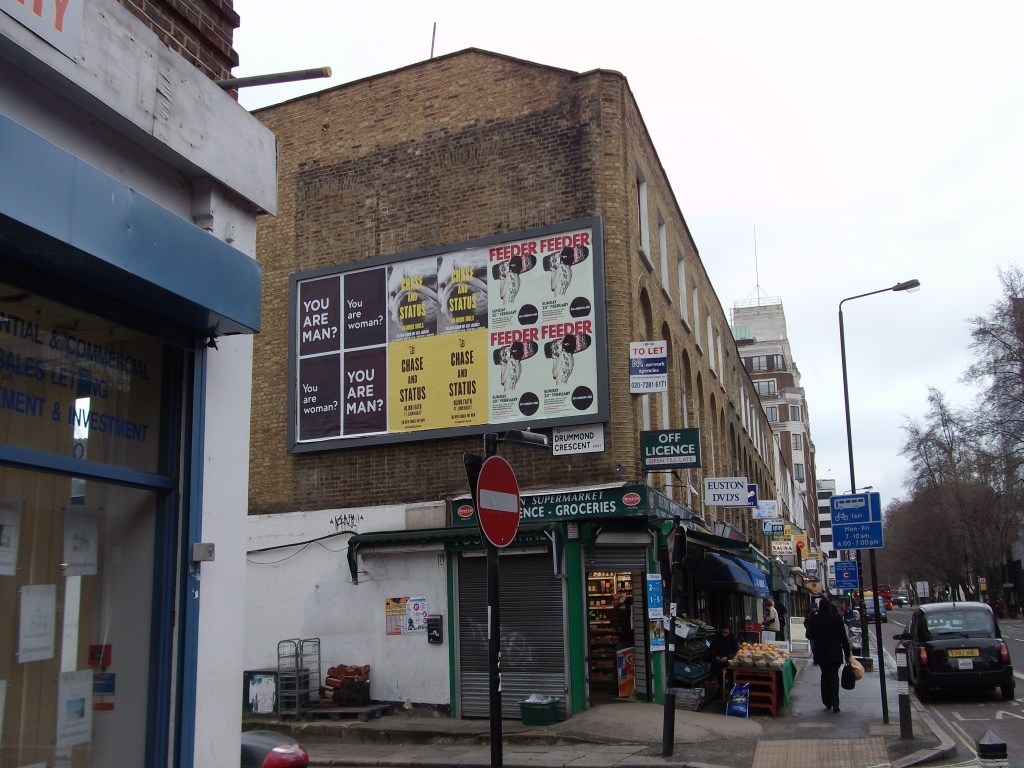
Themes start to recur. There are photos of old buildings, the backs of houses. The patchwork aesthetic of cities, their layering, has always appealed to me. I like seeing things in multiples, billboards that repeat themselves, tiny bricks, signage, squares of different colours and textures that make up a whole.

Drummond Street, London, as a patchwork quilt

It turns out that the idea which underpins Encounters Art, of finding intrigue or humour or beauty in the everyday has been there for a long while. There are more photos of graffiti, ephemera, what I call ‘notes in the margins’ than there are of Art™, and each of these is loaded with associations and place-memories. My photo library treasures are a bin in Berlin that screams “HATE Gentrification” and an annotation on a signpost in New Haven (the home of Yale University) that advises, “God = 1st / College = 2nd).”

Bin graffiti, Berlin, 2012

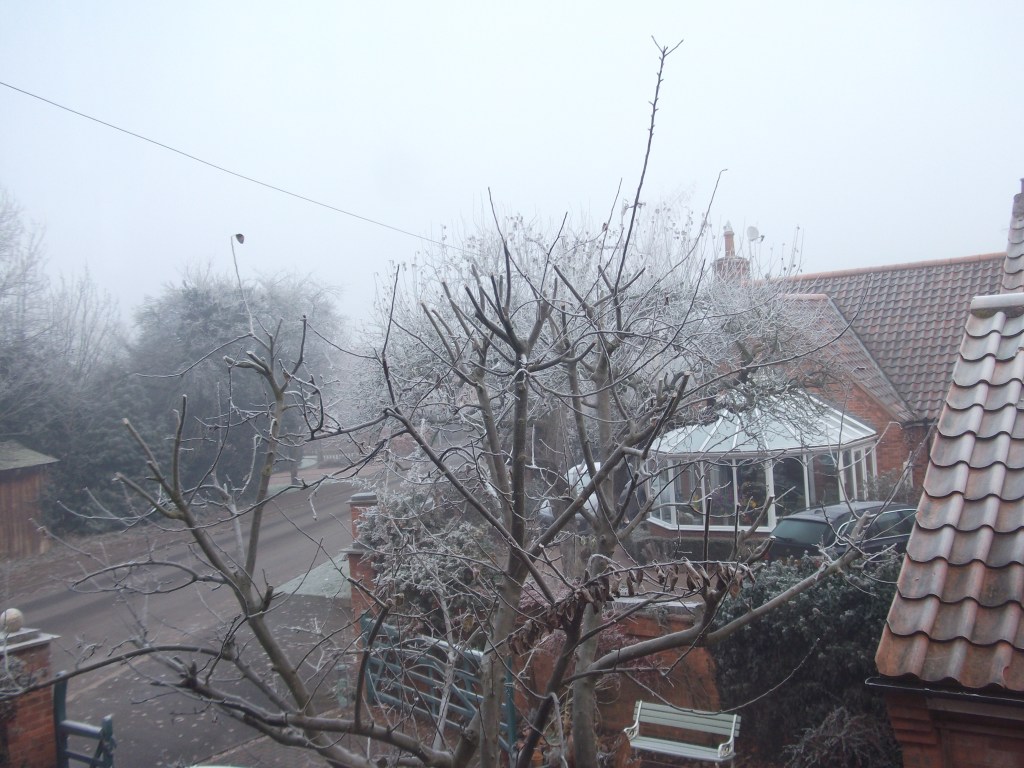
Some of the photos that unexpectedly chimed with me were of a different kind of ‘everyday’, not in the city but at home. There aren’t many of these – clearly we don’t document where we live as much as the special, occasional, noteworthy moments in our lives. There’s a photo from my childhood bedroom window which I must have taken to preserve the delicate lattice of snow and frost on trees and buildings, but now it’s everything else, the normality of it, that resonates.

The view from my bedroom from 1992-2010

Looking back at the somewhat unremarkable picture, I realised that the view I saw every day for nearly 18 years (the apple tree in the garden, our neighbours’ grand conservatory they never used) had been forgotten. Or rather, it was covered in memory-dust that had gathered over years without me realising, which I hadn’t bothered to wipe away. Even my basement room in university halls of residence, a place I hated, seems interesting at this distance, captured in blurry photographs, hastily taken and packed away until now. Artists who work with found objects (a genre I, perhaps predictably, love) have understood that things don’t actually need to be our own to feel intimate, to resonate. Certain feelings, moments, memories are almost universal, though drawn from vastly differing actual experiences.

Perhaps these images of home interiors and window views have taken on a new significance since lockdown began. Looking at these photos didn’t feel simply like a trip down memory lane. I felt more like an archivist with the task of retrieving and reviving the forgotten. Unraveling continuities and disruptions in relationships, places, things my eyes have been drawn to, was a task which felt like the psychological equivalent of traveling. It gave me reassurance I think I needed, that this period of staying at home doesn’t have to be a vacuum because nothing has really happened. That memories can be made out of and despite boredom, via the simple act of taking a photograph from your window, or failing that, just looking out of it.

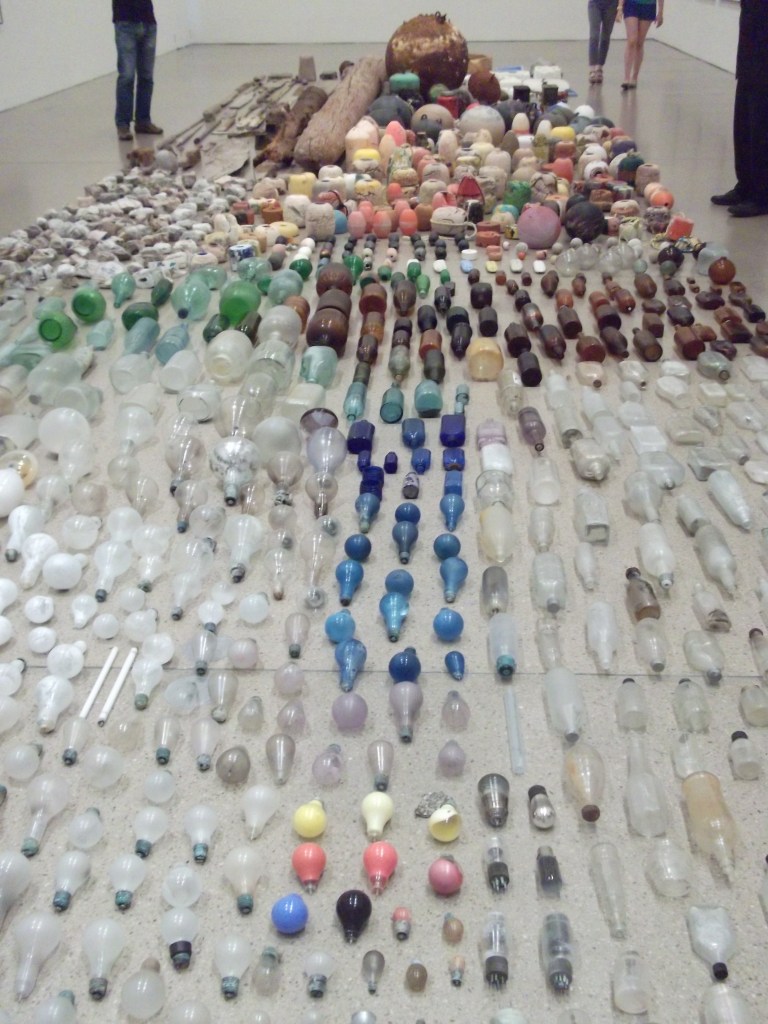
One of the exhibitions I did photograph, Gabriel Orozco,
Deutsche Guggenheim in Berlin, 2012

Gormley and Eliasson: perception and perspective

At first glance, it might not seem that there is much that connects the art of Anthony Gormley and Olafur Eliasson. Two weeks ago I would have summarised Gormley’s work as largely figurative, heavy, often made using metal and other industrial materials, and sombre in tone, while I tended to think of Eliasson’s as abstract, colourful and using a range of substances, natural and artificial, to playful effect.

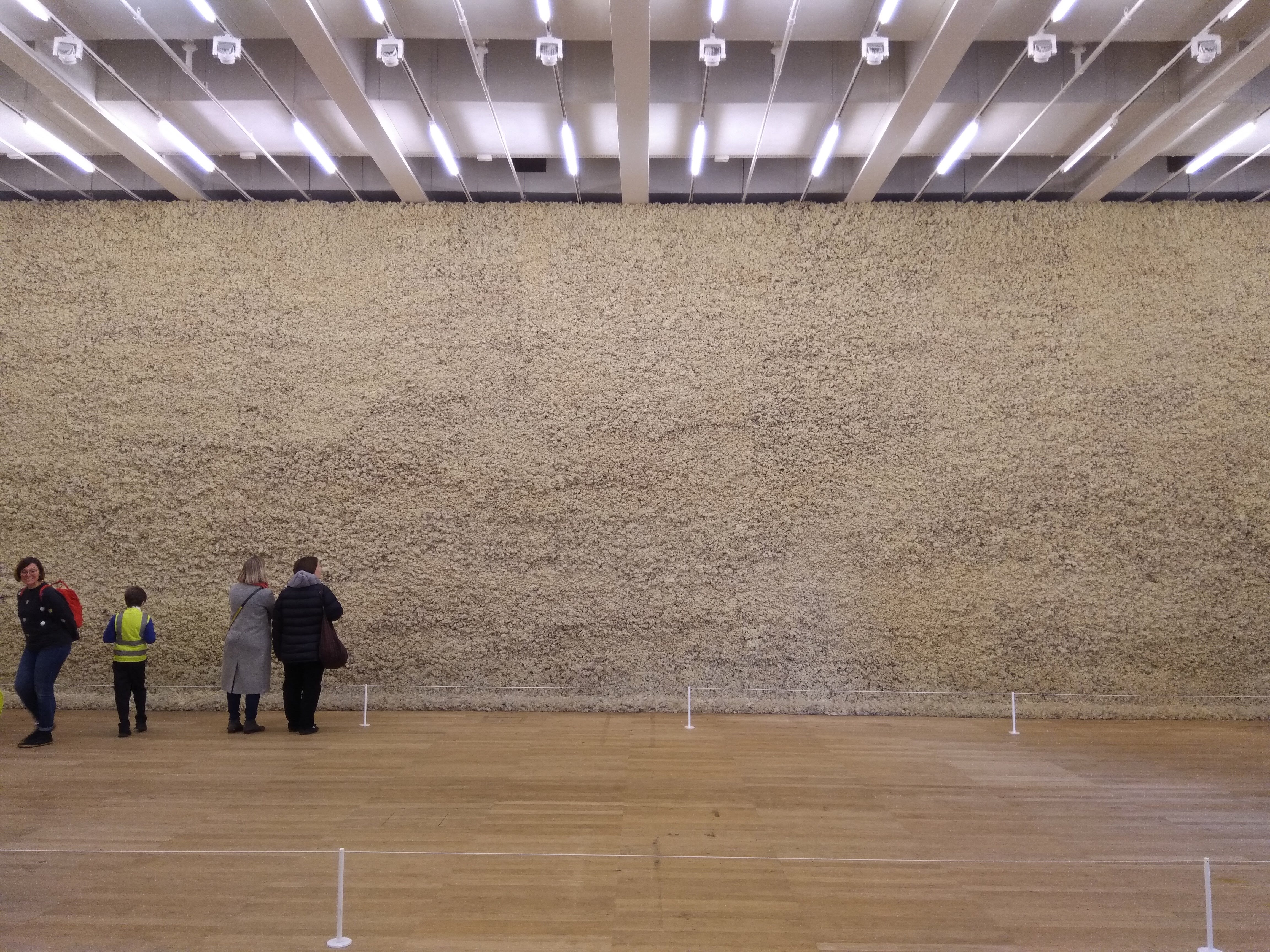
Eliasson’s Moss Wall (1994)

Before visiting their recent exhibitions in London two weeks ago, the only thing that connected them in my mind was the fact that both shows were exceedingly busy and popular. This was based on the huge volume of posts I’d seen on Instagram, combined with an article in the Guardian in which gallery-goers expressed their chagrin that other people were getting in their way of enjoying art (more on that later).

Both exhibitions surprised me, starting with the Gormley. Although I’ve always enjoyed his work when I’ve come across it, I’ve often thought of it as fairly repetitive (frequently based on his own body) and ubiquitous. His sculptures are scattered across the country, in high-profile installations from Gateshead to Merseyside. In Edinburgh there are six Gormleys standing in a short stretch of the Water of Leith. But the Royal Academy show demonstrated how his artwork is much broader and more varied than the ‘universal’ self portraits we are frequently exposed to in his public art. His best works challenge how we perceive space, and how we perceive ourselves and each other through art.

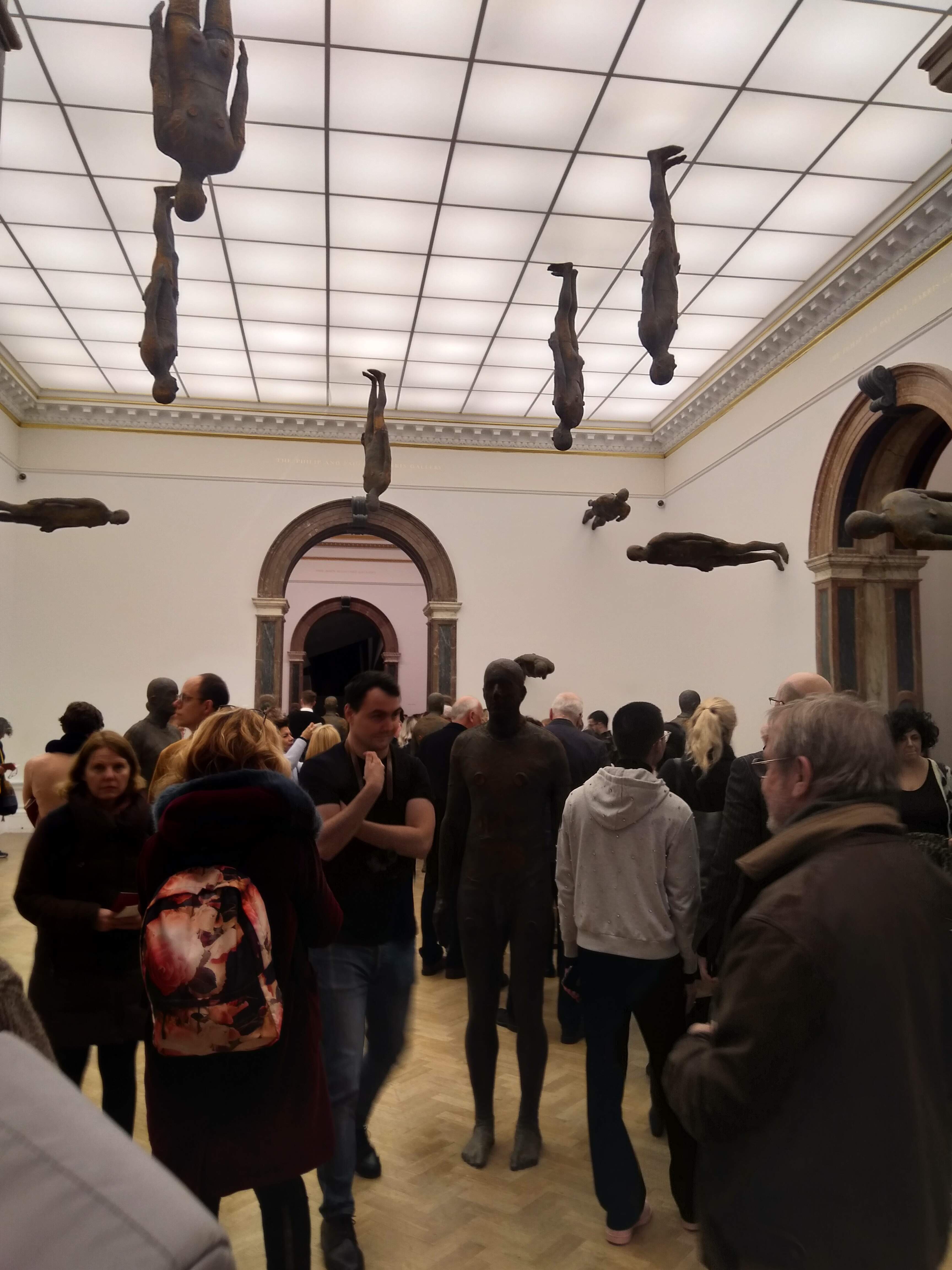
For instance, his Lost Horizon (2008), presents us with a familiar sight, multiple forms of Gormley’s body in cast iron, but in a different way. Bodies jut out at all angles and surround us, defying gravity and playing with our senses. The work isn’t ponderous, it’s fun. Seeing the exhibition on the last day meant that the room was packed with people, making it difficult to tell the sculptures from the live bodies that surrounded them.

Art and life intermingle in Lost Horizon I (2008)

Some of you might look at that photo and recoil at the number of people in the room. Yes, both exhibitions were busy. But part of experiencing art is noticing how others experience it: seeing other people react to and interact with art is one of the things I find most interesting about it. This aspect was what really made me see the connections between the two artists’ work. Humans play a major part in activating these artworks and making them resonate.

Visiting the Eliasson exhibition mid-week and during the day, I experienced it alongside a large school group of teenagers. Their interactions with Your Uncertain Shadow (colour) (2010), brought the work to life for me: they danced, flicked their hair, and had fun with it. One criticism that has been levelled at the show is that it’s a little gimmicky, but it is indisputable that this very quality makes it a good entry point for young people. And in turn, they remind us that we don’t have to be so serious all the time when it comes to art.

My fellow guests brought Your Uncertain Shadow (colour) to life

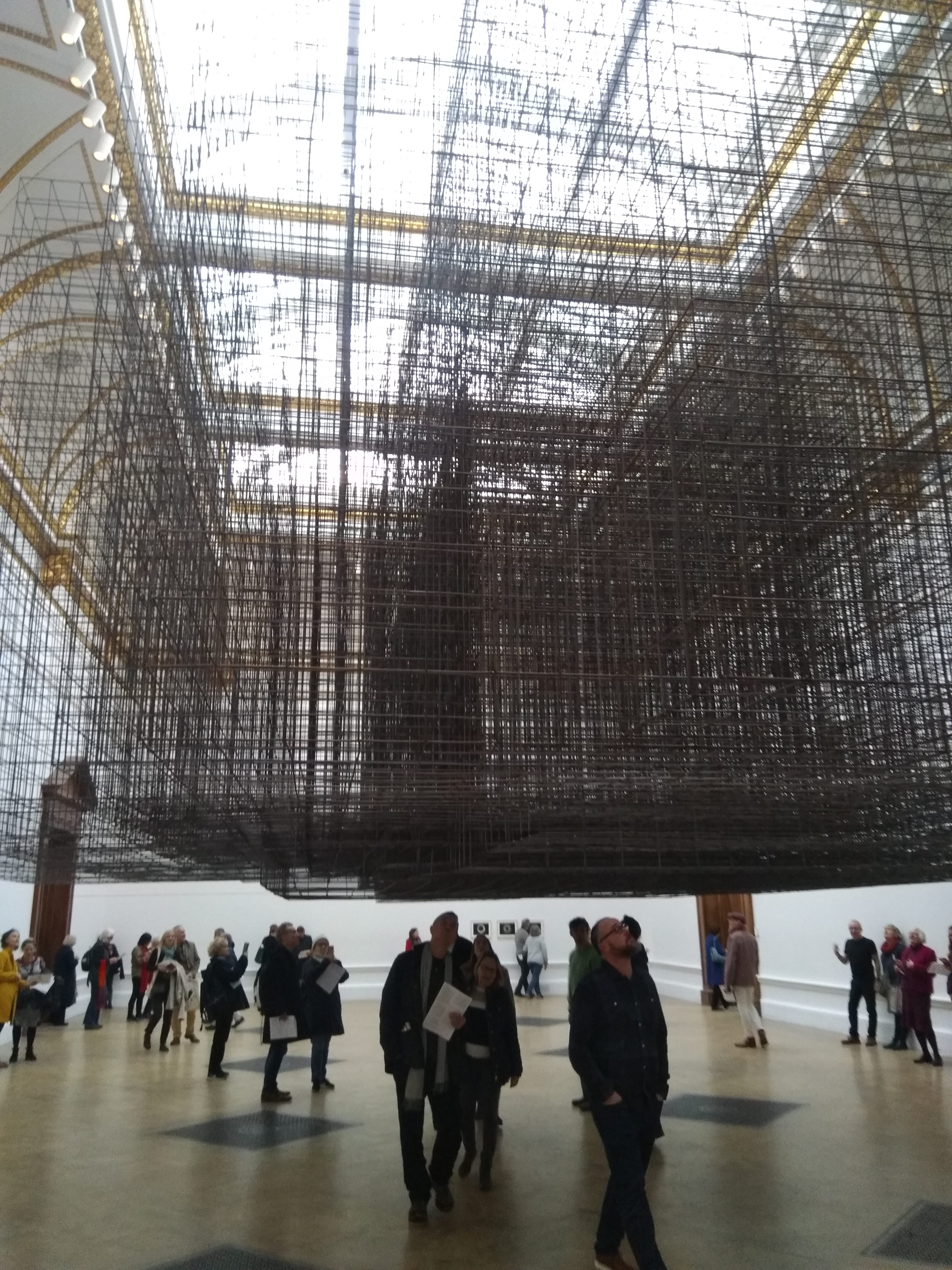
As well as having moments of levity and playfulness though, both exhibitions experimented with their visitors’ senses of fear and disorientation. Walking, sitting and lying beneath the Gormley’s colossal Matrix III (2019), 21 intersecting weighty steel mesh cages that contrasted satisfyingly with the Academy’s gilt cornices, felt genuinely daring. Cautiously making my way through the 39-metre fog tunnel of Eliasson’s Din blinde Passager (Your blind passenger) (2010), I wondered whether this immersive journey through colour and light would ever end (is this what they speak about when they say you see a white light when you die?!) Both were enormous, immersive, visceral and tinged with danger.

Walking underneath Matrix III – not for the faint-hearted

Alongside the colossal, statement-making art of these two big budget shows, there is also an exploration of vulnerability which makes them more than a bombastic celebration of these highly successful artists’ achievements.

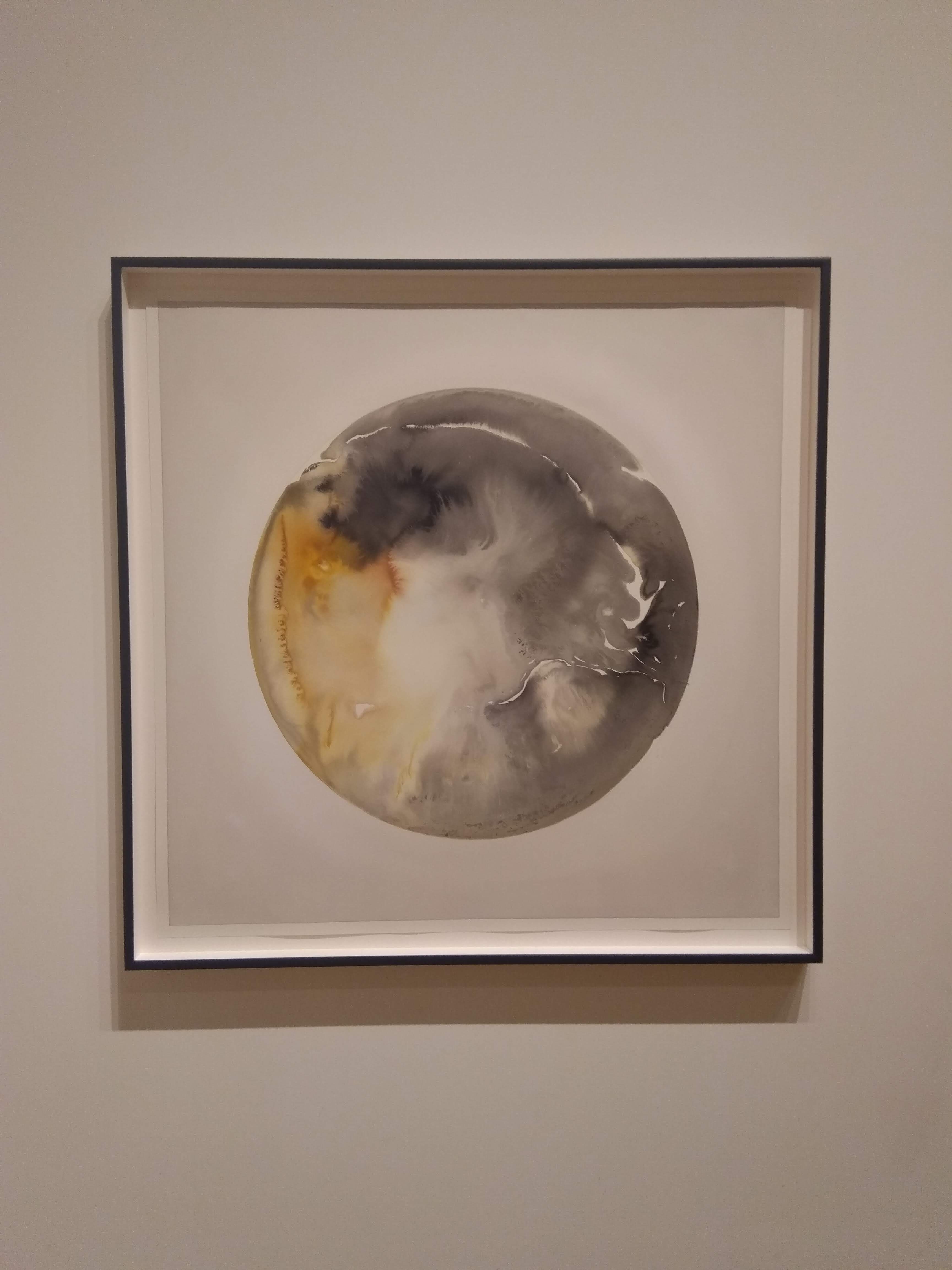
Eliasson’s work is centred around the environment, focusing on absence as well as presence, and soberly examines the loss of elements of our natural world in an era of climate crisis. Installations remind the viewer of the magic of the everyday: rain trickling down a window in Regenfenster (1999), the different effects that occur when light and water meet are made manifest in Beauty (1993) and Big Bang Fountain (2014). The ghostly imprints left by glacial ice melting into thin washes of colour in the Glacial currents series (2018) were almost haunting.

Glacial currents (yellow, sienna), 2018

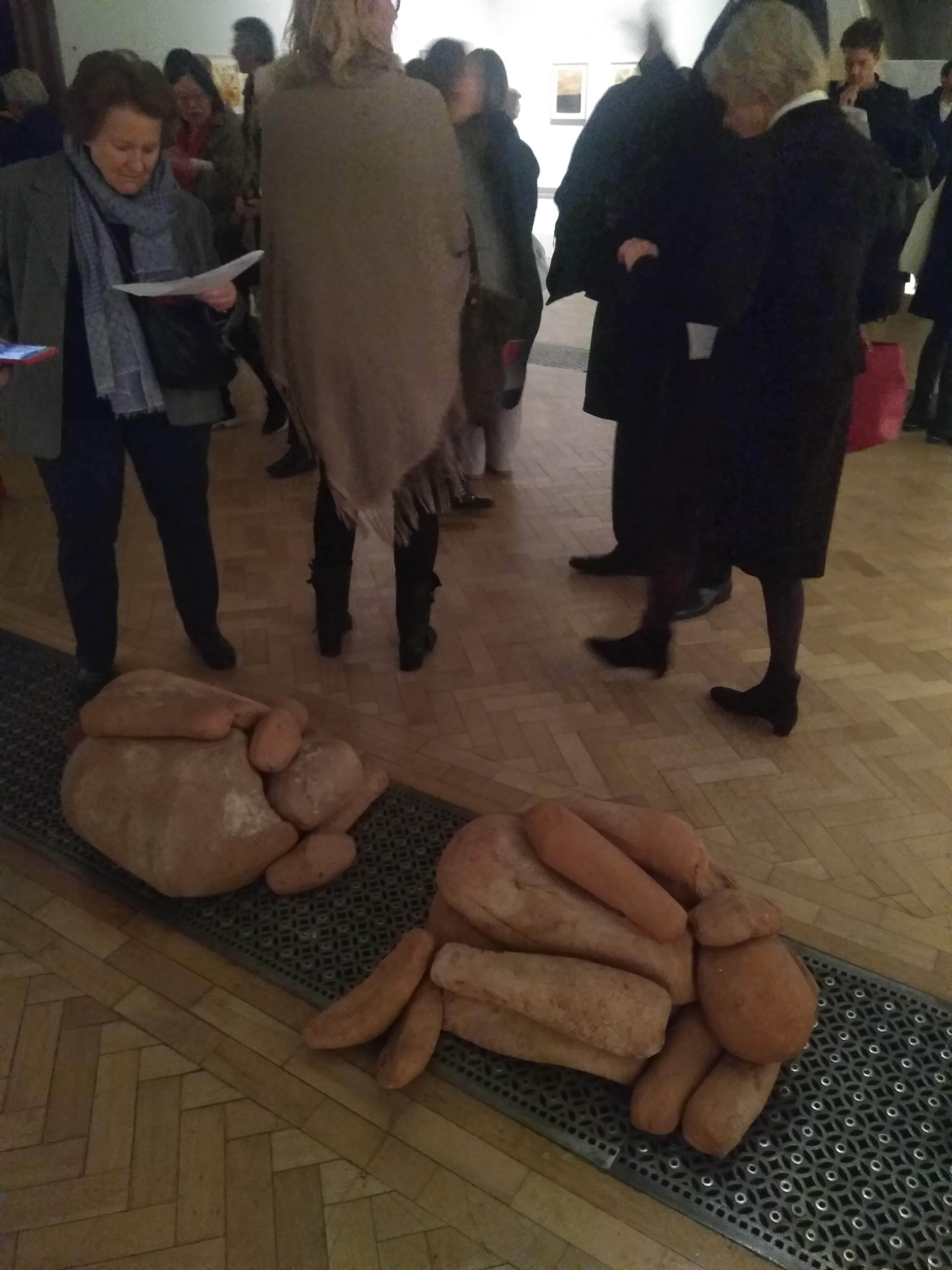
While Eliasson’s work focusses on the vulnerability of the planet, Gormley takes us back to ourselves once again. Starting the journey in the courtyard with Iron Baby (1999), at the end of the show we encounter ourselves once more, in Pile I (2017) and Pile II (2018). Stacks of simple, earth-coloured clay, huddled on the floor and without a plinth to protect them from the metal grates beneath, these small works are the hardest hitting of all in their unassuming fragility. We contemplate ourselves, our earthliness and our mortality.

Full circle: we encounter ourselves again as huddled lumps of clay

In very different ways, both artists are helping us to make sense of ourselves, our present, and heightening our awareness of our surroundings. That kind of lesson is worth braving a crowded exhibition for – and who knows – you might even feel inspired by those you have been thrown together with on your journey of discovery.

‘My Own Private Bauhaus’, David Batchelor at Ingleby Gallery, Edinburgh

I first encountered David Batchelor’s work about a year ago, and I was so happy when I heard he had a show in Edinburgh, at Ingleby Gallery (free, ending 28 September). It’s not a place I’m familiar with, and being a commercial gallery, I wondered whether the space would feel welcoming. Though I had to ring a bell to be let in, there was no need to fear – I was welcomed by a friendly member of staff who introduced me to the gallery and some of the ideas behind the exhibition.

The building itself dates from 1834 and is settled in the heart of Edinburgh’s austere but beautiful New Town. It was originally built as a religious meeting house for the Glasites, a break-away group of worshippers from the Church of Scotland, who heartily disapproved of embellishment, decoration (or, it seems, joyfulness of any kind) in their places of worship. So it is with a delicious sense of irony that such a space has been transformed into a gallery, a dynamic that I’m sure Batchelor would have revelled in when planning the exhibition.

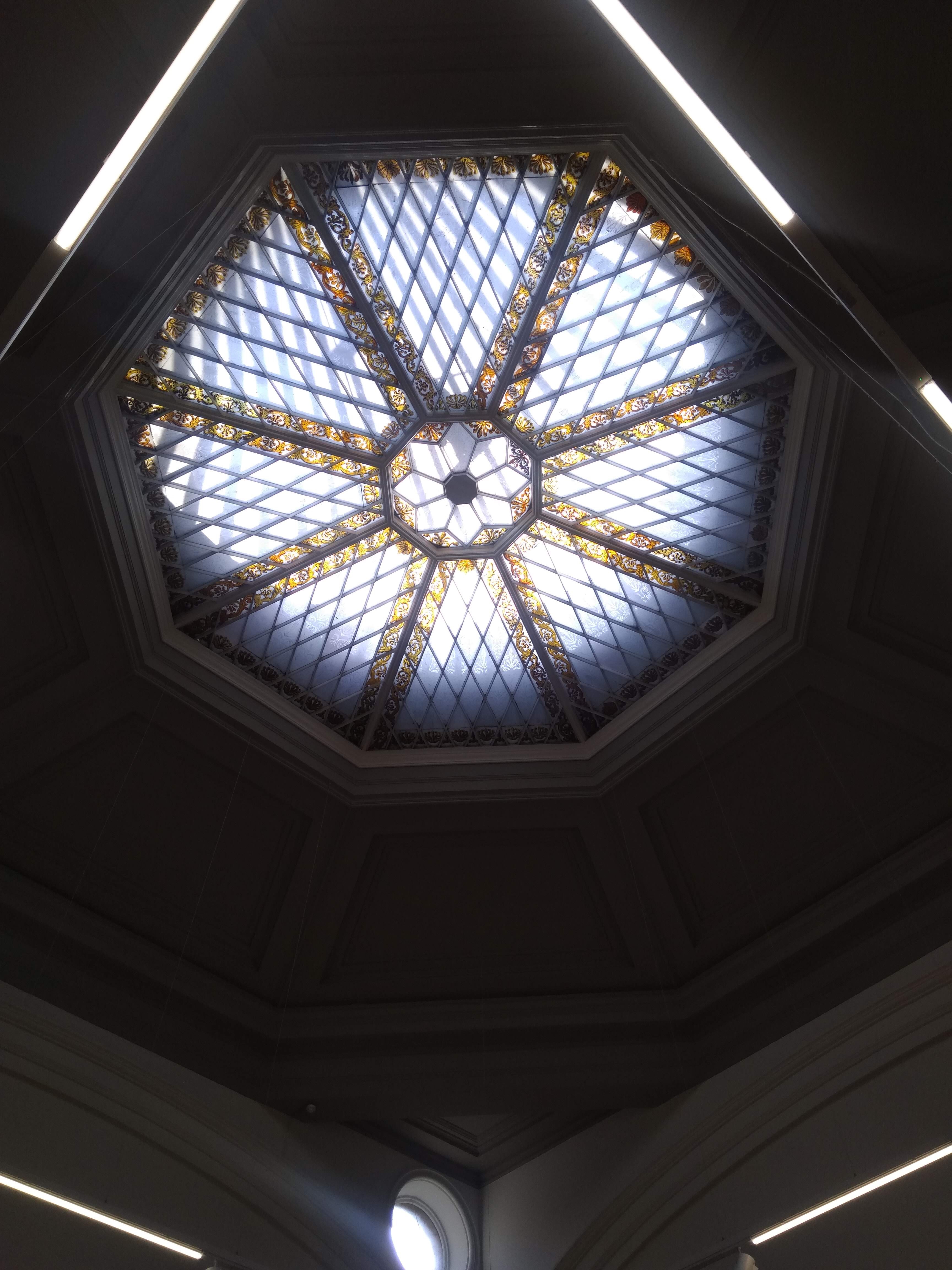
The ceiling of the main exhibition space

One of my favourite things about Batchelor’s work is that it is characterised by a sense of playfulness. It doesn’t seem to take itself to seriously: art is boiled down to its essentials – colours and shapes – reminding us that all of us begin interacting with the world through these two key sensory building blocks. Through his explorations, Batchelor invites us become children again, to see with fresh eyes and wonderment that art can exist within the banal and the everyday. He’s there to show us where and how to look.

Installation view, the piece on the floor in the centre is Dogdays, 2008-2011

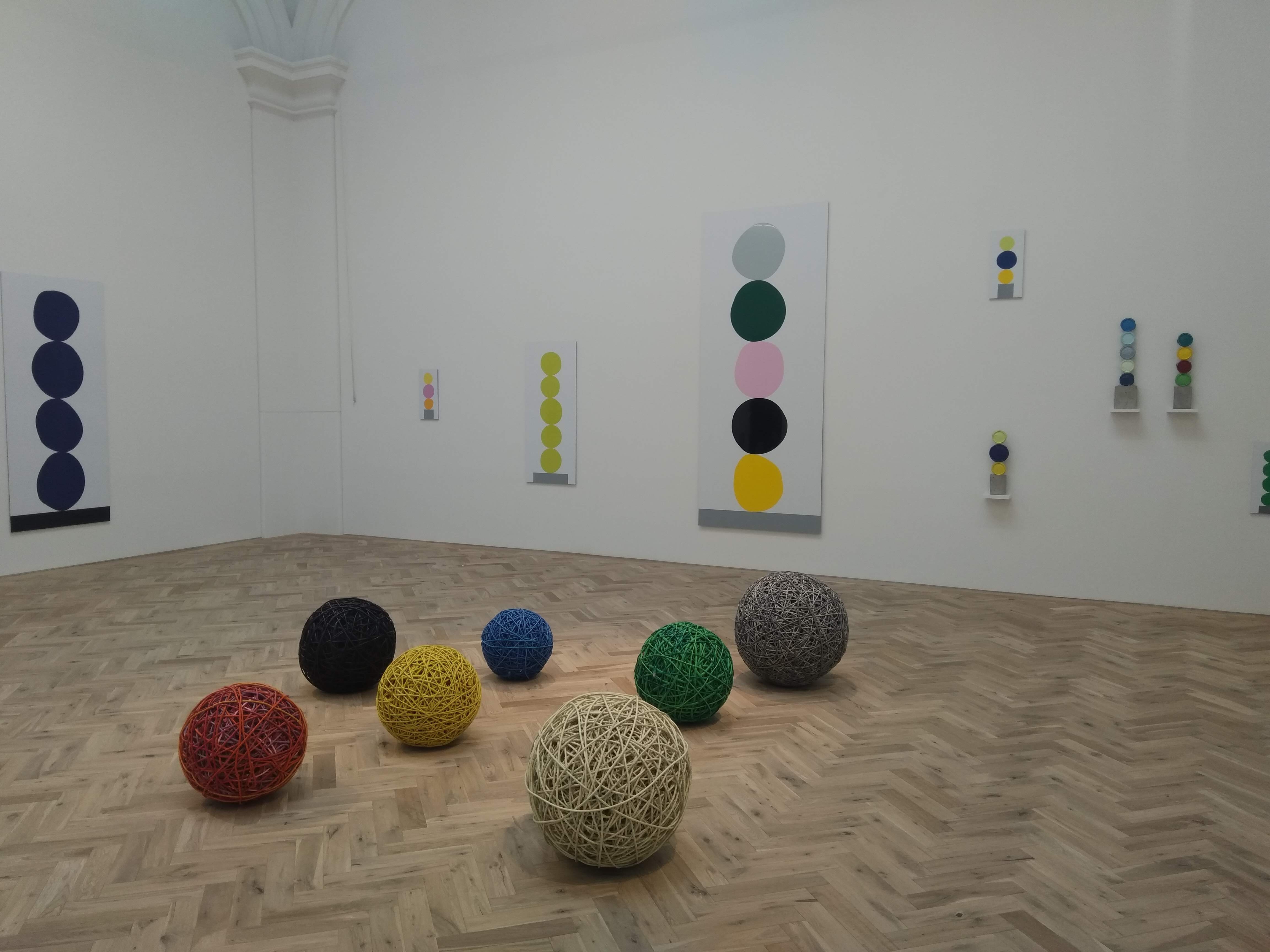
The exhibition is full of all sorts of mundane objects made fascinating, mounted on their concrete plinths and transformed into abstract sculptures. There are tape measures, huge spheres made of electrical wires and cable ties, sheets of intricate mesh, plastic circles that look like bottle tops, all celebrating the vibrancy of artificial colour. There’s not much suggesting the natural world in here, though shards of glass stuck in concrete look remarkably like window boxes. Rather, it’s the things we have invented that take precedence, repurposed and reframed by Batchelor, the magpie-esque collector of all things shiny, bright and saturated.

Geo-Concreto 06, 2018 (left) and Geo-Concreto 02, 2018 (right)

Yet for all of their man-made qualities, the show is not about looking at the pristine perfection of these objects, but rather their imperfections. The paintings on the walls are made using spray paint, giving them a mechanical shine that seems totally devoid of the artist’s hand, yet the circles themselves are misshapen and pleasingly wobbly, with the occasional splodge of paint that may not have been intended, but remains present on the canvas nonetheless.

Part of the Concreto 1.0h series

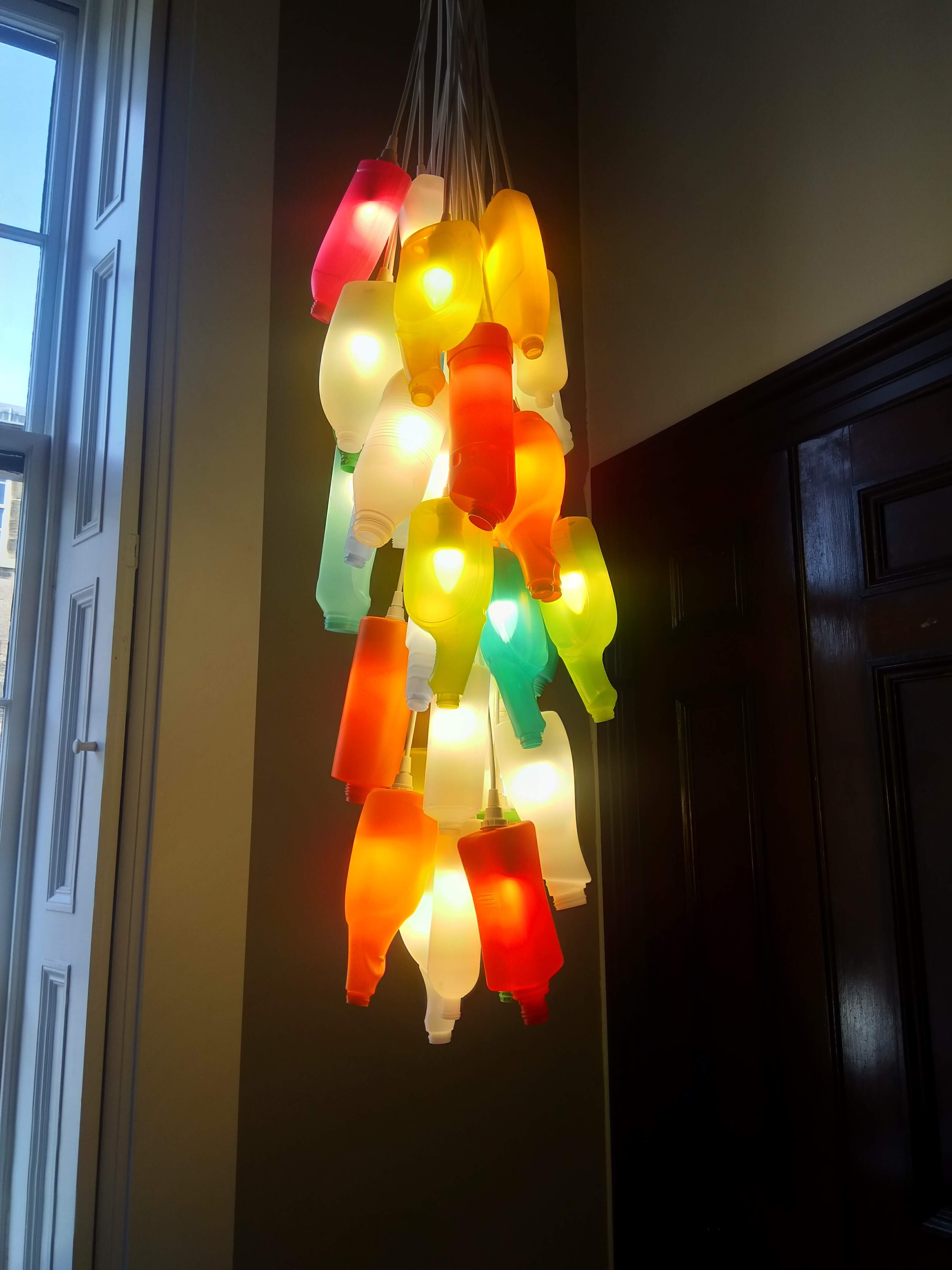
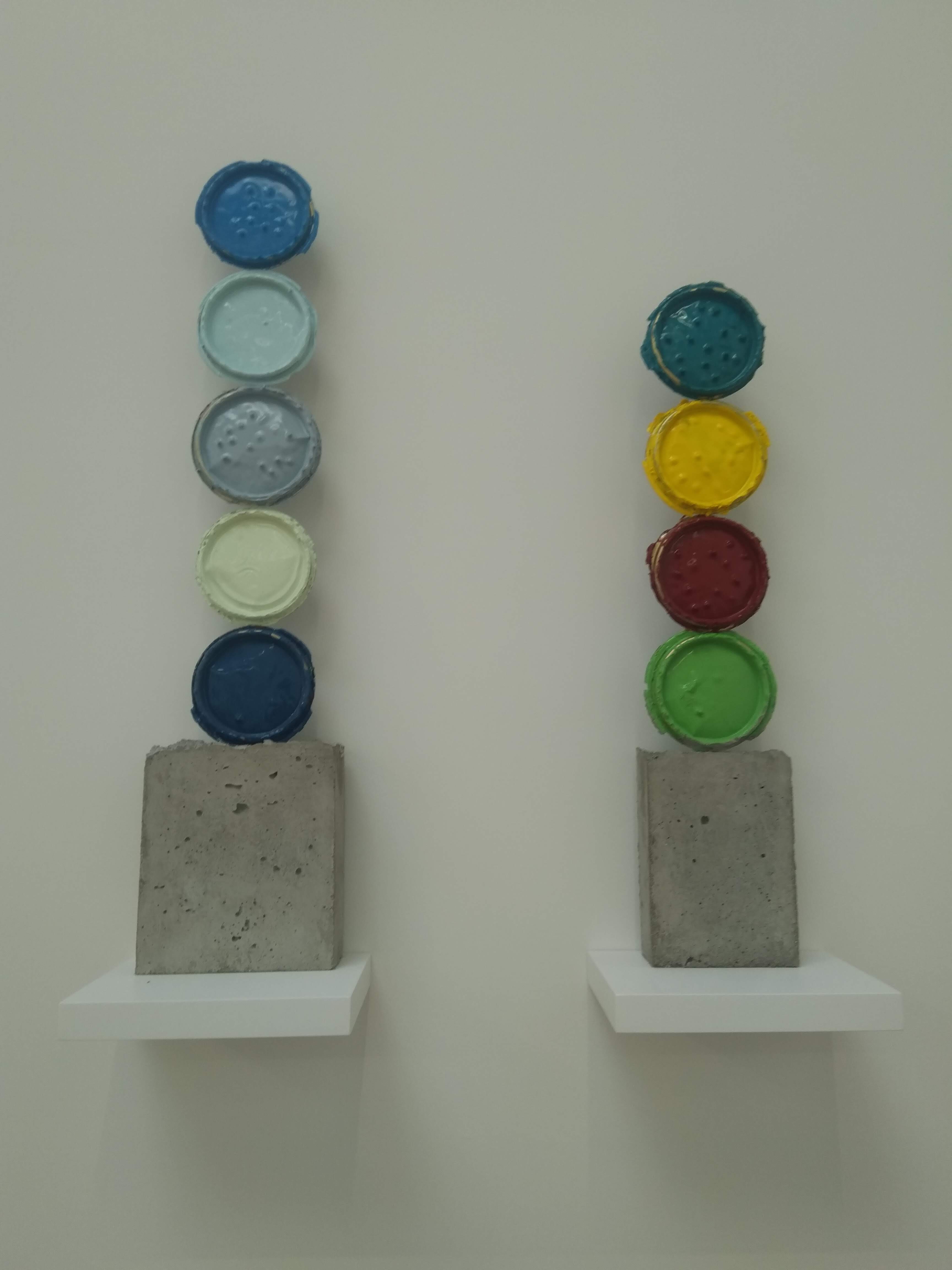
Much more tactile than the paintings, however, are their partner sculptures, made by precariously stacking the lids of paint pots on to of one another, the paint crusty, wrinkled and stippled, crying out to be prodded and poked. Some sculptures are framed by fluorescent fabric backdrops, and the much maligned plastic bottle is transformed the ultimate 21st century chandelier.

It’s art that’s fun, accessible, and shows us the possibility of finding beauty in the most basic of everyday things, a skill we need more than ever at the moment.

Candela, 2016

Oor Wullie’s Big Bucket Trail, #OWBBT

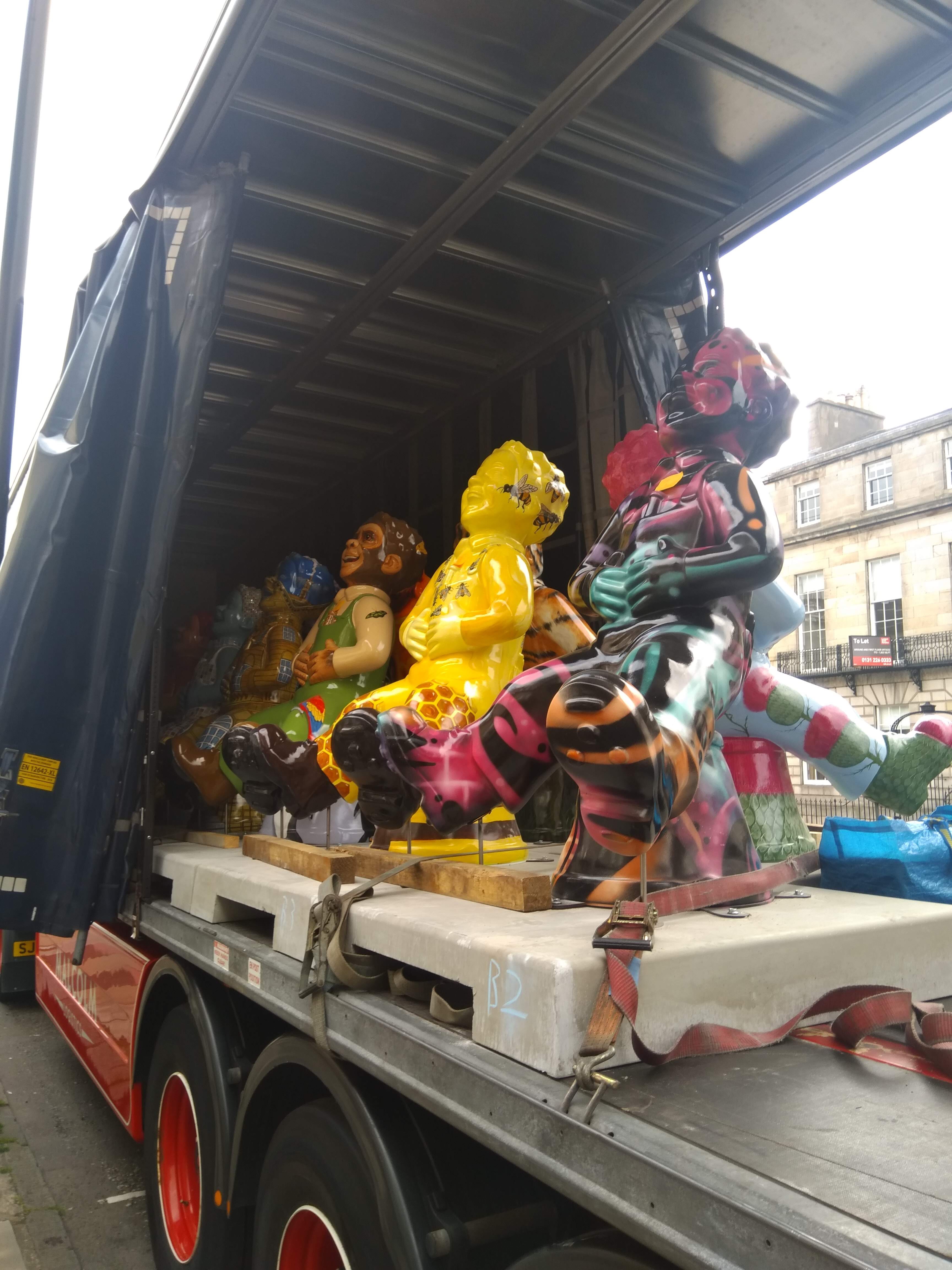
About a week ago I came across a strange sight. There was a huge lorry parked up on a quiet side street in Edinburgh with its sides open, no one was around, but inside the lorry there were about 20 bright sculptures.

Lots of Oor Wullies in a row

I was pretty baffled, especially because there is a certain creepiness in seeing all these laughing characters en masse, but since then have discovered that the sculptures are part of Oor Wullie’s Big Bucket Trail. The trail is happening across Scotland in Edinburgh, Glasgow, Dundee, Aberdeen and Inverness, to raise money for children’s hospitals in each of those cities.

I am not Scottish, so don’t know much about Oor Wullie and his escapades (he is something of a national treasure, especially for the baby boomer generation) but from the statues he seems like a cheeky lad who loves to laugh. Seeing them scattered across the city, they are definitely eye-catching and intriguing, most are painted in bright colours and shiny, glossy paint. Artists were commissioned to paint their designs on each statue, so every single one is unique.

Oor Wullies in transit

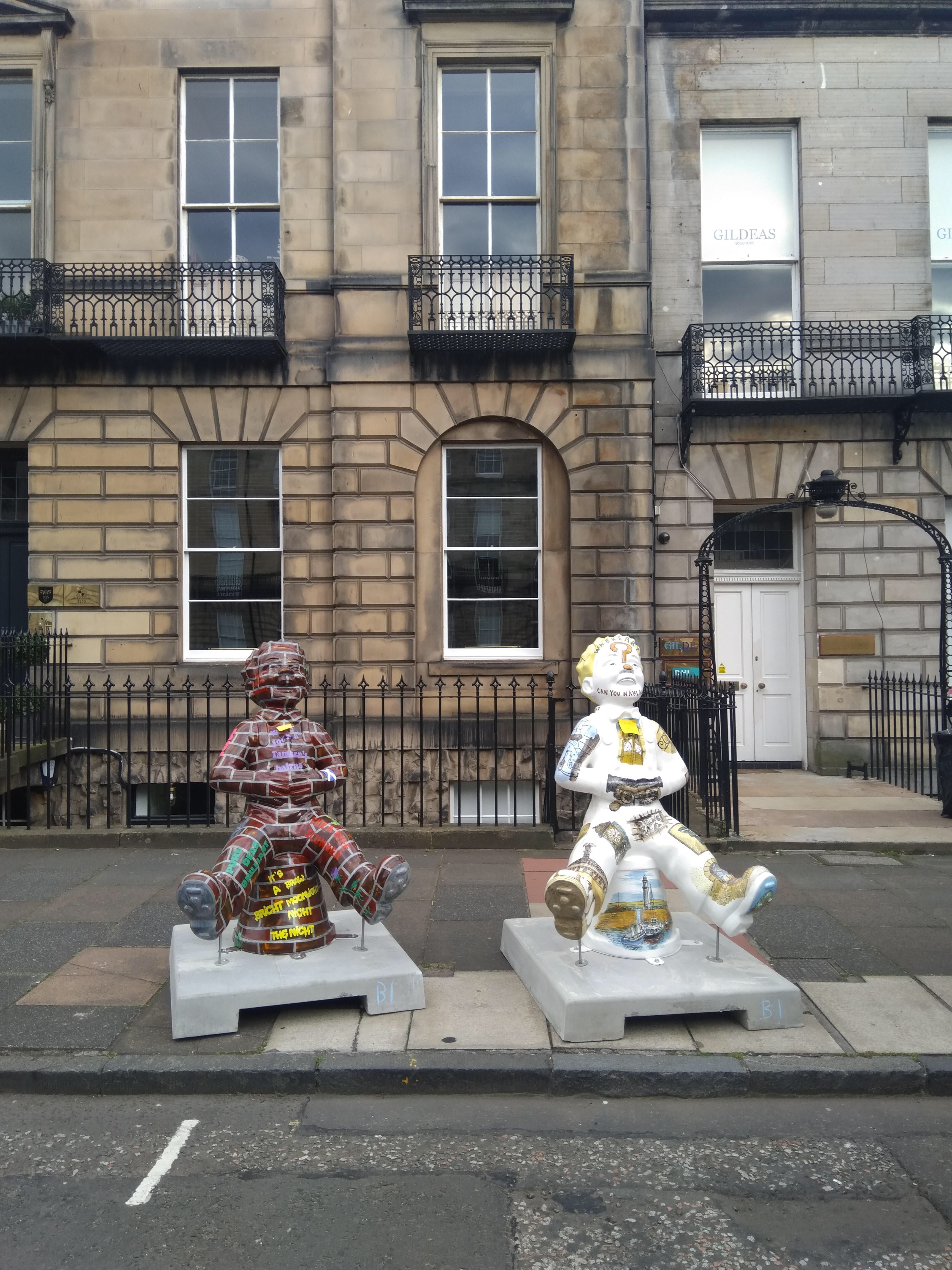
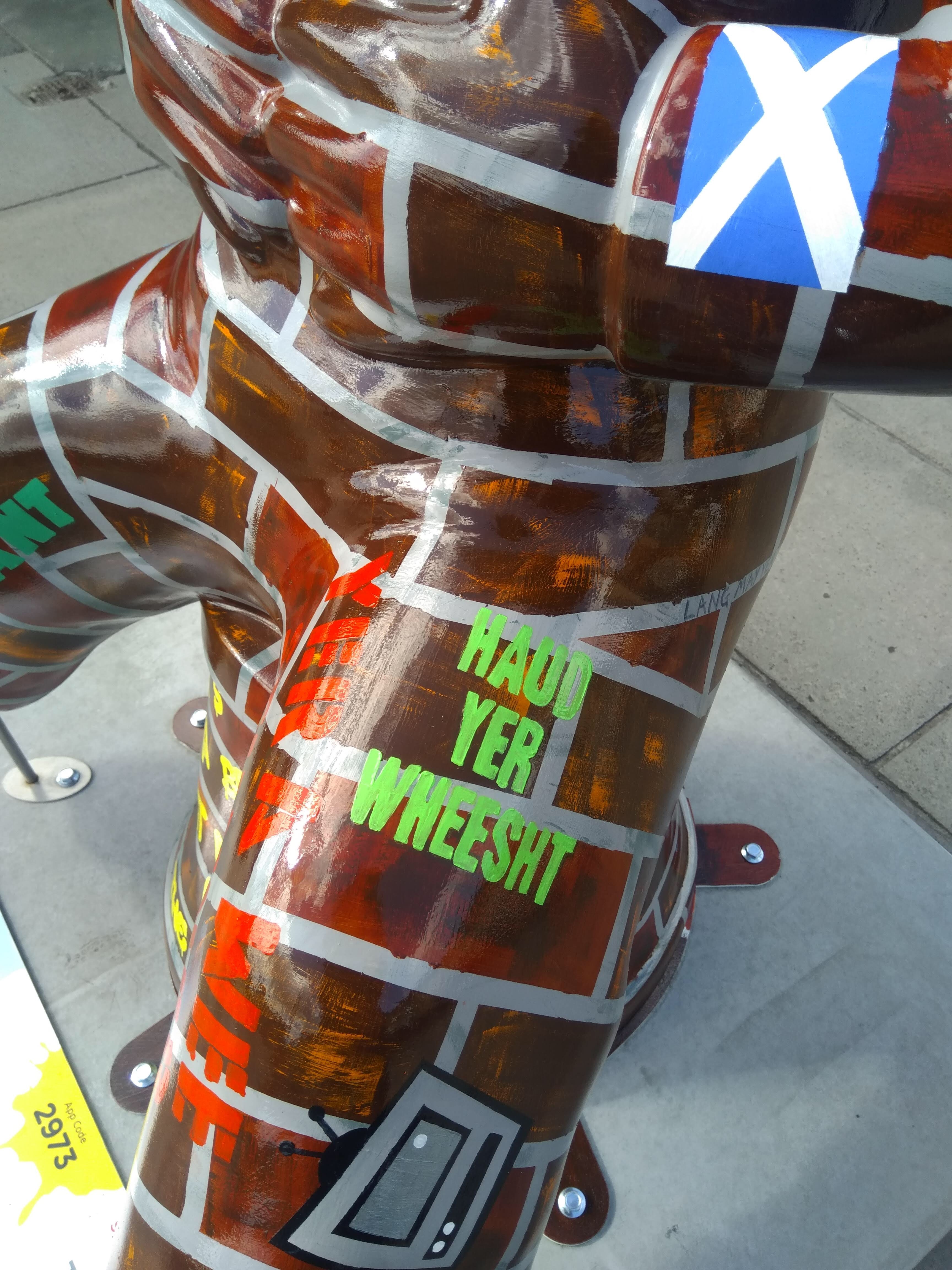
If you’re not convinced, I recommend getting a bit closer, and taking some time to read the plinths, where the artist has a space to explain the inspirations behind their designs. For example, this design by Wee Lainey which is just outside Haymarket is covered in painted bricks to echo the designs of Scotland’s tenement buildings, and the statue has famous Scottish inventions and sayings on him too, along with one of my favourites, ‘haud yer wheesht’.

Wee Lainey’s design, near Haymarket

Even though stylistically they are probably not to everyone’s taste, to me they are kitsch and camp in all the best ways. Public art is always going to divide opinions, but that’s what makes it interesting. At its heart, the scheme is there to raise money for a good cause, and along the way it is supporting artists by commissioning them to make new works. Hopefully the trail will get more people, especially kids and families, talking about art. To me, that can only be a good thing.

If you agree, you can donate to the campaign online.