Unearthing curiosity: Stephen Gill at the Arnolfini, Bristol

A few months ago I was in the Self Help section of a bookshop. It isn’t a zone I am particularly familiar with, being a cynically-minded, stubborn sort of person. I had been searching for a specific book in the Art section ‒ much more familiar territory ‒ before realising I’d been looking in the wrong place: cue the obvious metaphor here. 

The Artist’s Way: A Spiritual Path to Higher Creativity by Julia Cameron is a multi-million-copy worldwide bestseller. It’s something my sister read years ago, and she had gleaned a lot from it, but I’d never considered giving it a try myself. Until now. It was late Autumn, I hadn’t written anything for weeks, and creativity of any kind seemed an exhausting and far-off prospect. Along with the background of the never-ending pandemic slowly eating away at my sense of self, I could tell I was in a rut. Keen to bundle myself out of this rut by any means necessary, I decided to put my scepticism aside while attempting Cameron’s twelve-week journey which promised to ‘unblock my creative potential’. Yikes. Writing that down makes me physically cringe. But I’m doing my best to embrace the cringe, the daily freewriting, the imaginative exercises and the creative affirmations. Yes, these elements are all part of the process (some are a bit much).

Around the same time, I went to a wonderful wedding in Bristol, one of my favourite cities. With a strong culture of street art since the late 70’s, explored brilliantly at a recent exhibition at M-Shed, and the recent history of trundling Edward Colston’s defaced and disgraced statue into its harbour, Bristol is the kind of place where creative and political agency seem to fizz just beneath the surface. If there were ever a place to mix up my stagnant energy, then surely it was here, with time to myself and new places to explore.

Looking at art is one of my main ports of call when dealing with a whole range of emotions and feelings. I expect a lot from my interactions with art, but one of the best things is when these interactions surprise me. This kind of joyful surprise can be something incidental, like the unexpected shapes and surfaces in the city fabric captured by Matt Calderwood on Instagram, but if you want to be surprised at a gallery, you have to go in with little to no expectations and as little background reading as possible.

On the day I visited the Stephen Gill: Coming Up For Air exhibition at the Arnolfini I didn’t know that I’d end up being so enchanted with it. I almost ended up missing my plane back to Edinburgh because I was so absorbed (yup, I flew there, I’m a bad person). Stephen Gill is a Bristol-born, internationally-exhibited photographer who I didn’t know anything about before seeing this show, which is free and on until 16th January (omicron willing).
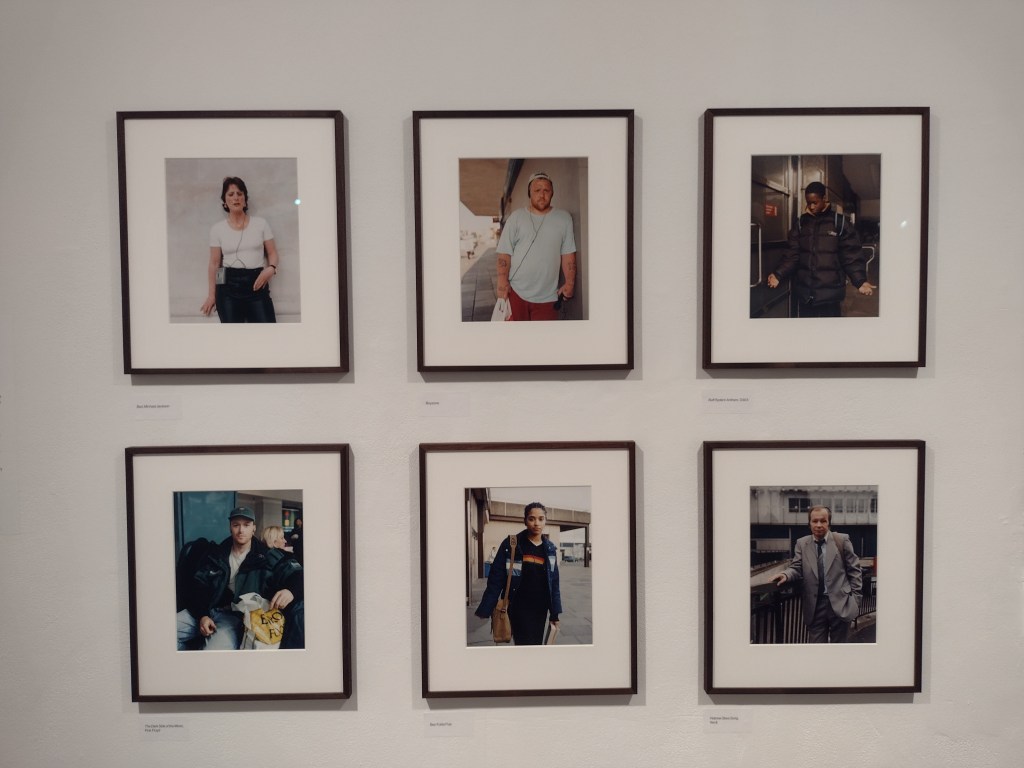
Six portraits of people listening to headphones, each in a black frame on a white gallery wall
‘Audio Portraits’, 1999-2000

I skimmed through the first half of the first room, until I came upon his Audio Portraits, (1999-2000). These are portraits of people with headphones on, with what they’re listening to written below. I like it when artists can articulate a thought you’ve already had, but never known how to express. As someone who frequently listens to music while on the move, I love the feeling that I’m immersed in my own world. I can listen to Ariana Grande with no one judging me. I can stomp down the streets of Edinburgh listening to Rage Against The Machine’s Kick Out the Jams when I’m feeling angry or rebellious. I can silently sing along word-for-word with Joseph and His Amazing Technicolour Dreamcoat whilst commuting and no one suspects a thing. In Audio Portraits, Gill lifts the lid: he lets us into other people’s worlds. The people and the tracks won’t always match or be what you expect. This is the artwork that made me realise that I was going to enjoy the exhibition.

The next was the Billboards series from 2002-2004, where Gill has photographed the back of several billboards, showing the stark and frequently ironic contrasts between the aspirational notions of the advert and the reality surrounding it. L’Oréal Paris proclaims “you’re worth it” and backs on to a wet yard surrounded by corrugated iron, a tyre and some upturned shelving units. Noticing the unnoticeable, and allowing us to notice that magic too, is the photographer’s special gift. It’s a gift we need in a world full of drudgery.
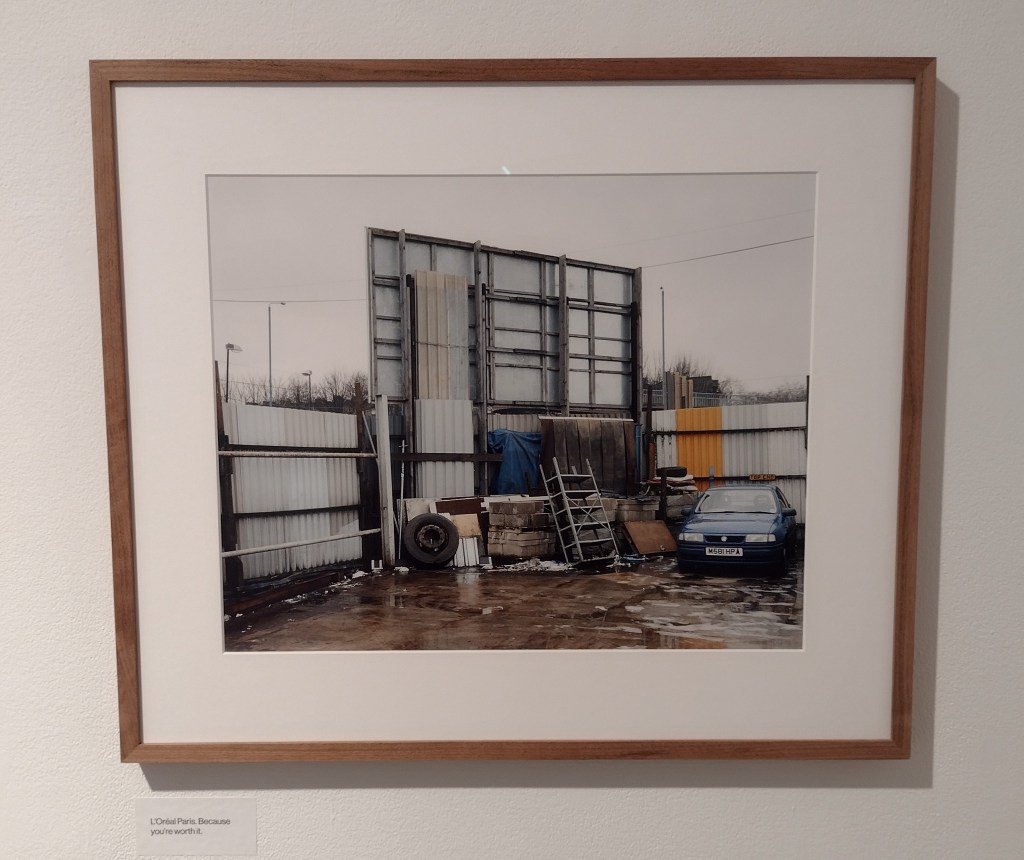
A photograph showing the back of a billboard and a junk yard with an old car, some shelving units and a tyre
“L’Oréal Paris, Because You’re Worth It”, from ‘Billboards’, 2002-2004

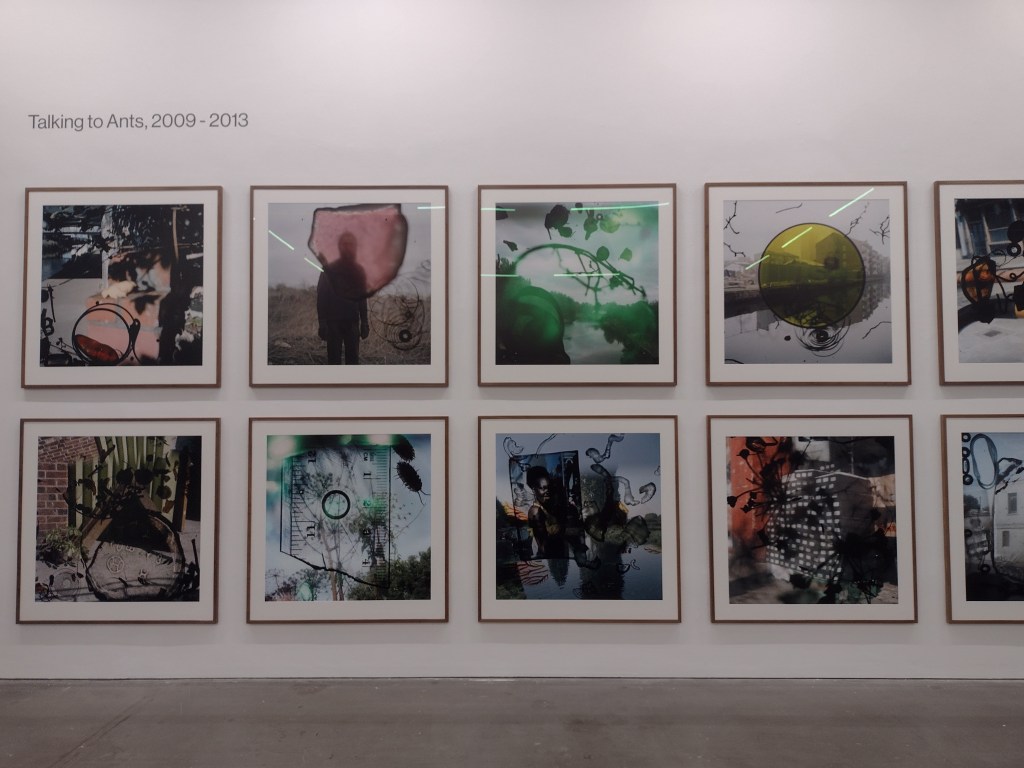
There’s a playfulness and sense of experimentation in Gill’s work that I loved. For his monumental work Talking to Ants, Gill scooped up detritus from the surrounding landscape and embedded it into his camera: stray hair bobbles, broken glasses frames, seed heads, bits of ruler and even insects weave their way into his photos and complicate the scale of the landscapes behind them. These ‘image ingredients’ make for a fascinating display that is utterly mundane but also strangely beautiful. Cable ties have never looked so poetic. 
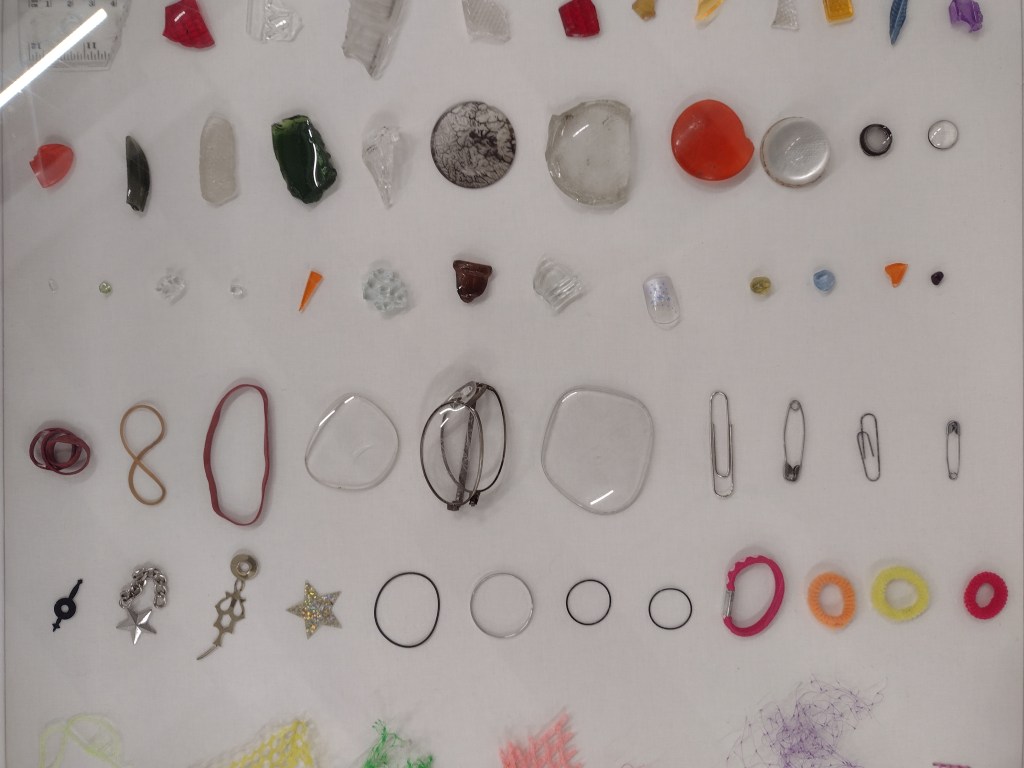
Rows of small items including hair bobbles, safety pins and shards of glass
Image ingredients for ‘Talking to Ants’, 2009-2013
Large framed photographs from Gill's series, Talking to Ants, on a while gallery wall
Gill, ‘Talking to Ants’, (2009-2013)

I feel somehow reassured that creative people will be brave enough to do things that others wouldn’t dream of: sticking a camera on a pole and shoving it between iron shafts on railway bridges in order to try and photograph the pigeons that live there (Pigeons, 2012) or collecting lipstick-marked cigarettes from the streets of St Petersburg to compile a series of anonymous portraits for Russian Women Smokers (2002). There’s a courage in this sort of experimentation, one that is drawn from a conviction that an idea is worth exploring, that there’s something special to be found in the documentation of everyday scenarios, no matter how repetitive or odd the process of capturing those scenarios may be.
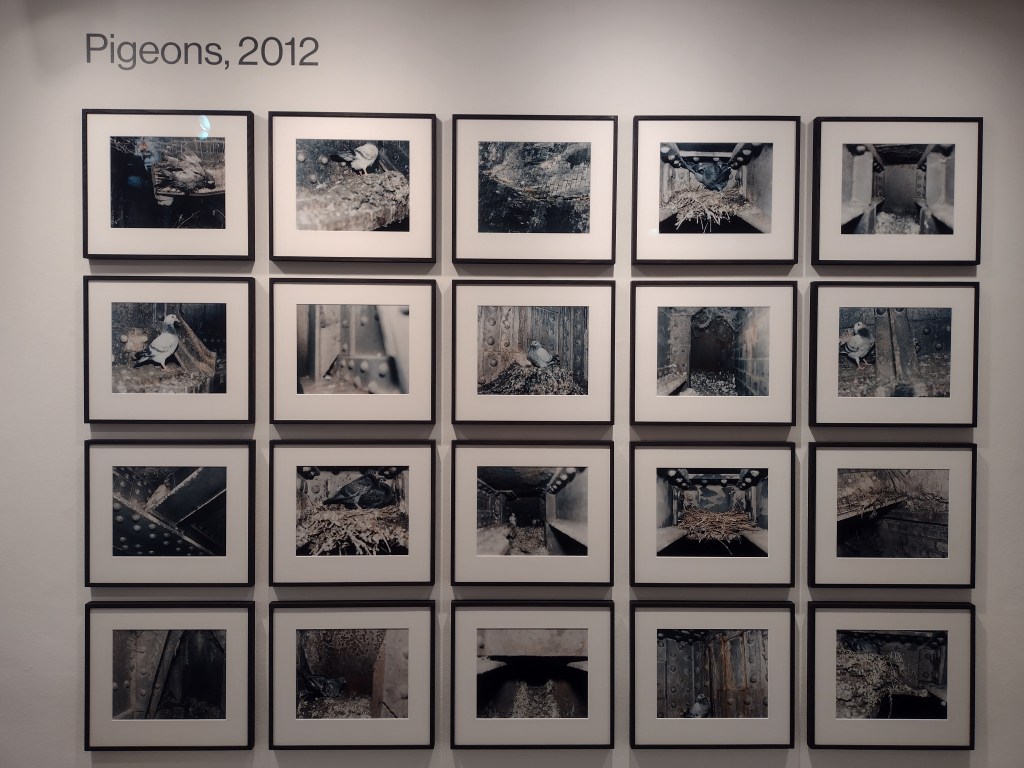
20 photographs from the pigeons series, framed and mounted on a white gallery wall
‘Pigeons’, 2012

I wanted to make a study deep within the underside of brick and iron railway bridges where I found the bleak and colourless hidden labyrinth of the pigeon world

Stephen Gill
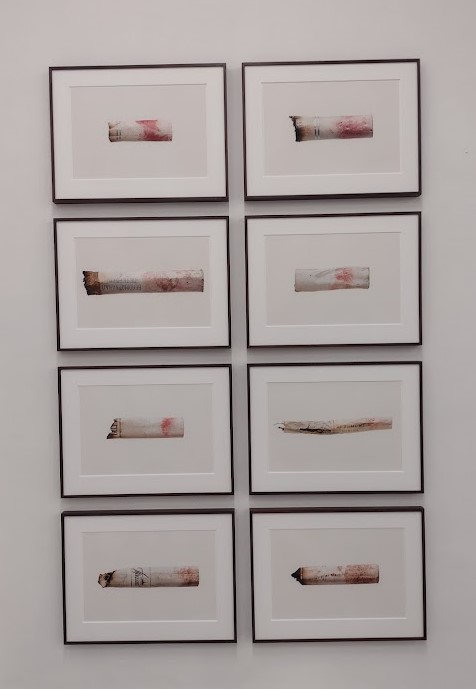
Eight landscape photos of lipstick marked cigarettes on a white wall
Gill, ‘Russian Women Smokers’, (2002)

For his work Pillar (2015-2019), Gill set up a motion-sensor camera on a fence post outside his home in Sweden, and over the years, that camera caught so many wondrous sights, even he was surprised by the variety of birds that visited this strange rural CCTV outpost. There were flypasts from flocks of starlings, contortionist crows and even fearsome looking birds of prey that seem to be posing for the camera. The feeling that underpins Gill’s work is one of trusting the process, a conviction that if you look out the window for long enough, something good will happen.
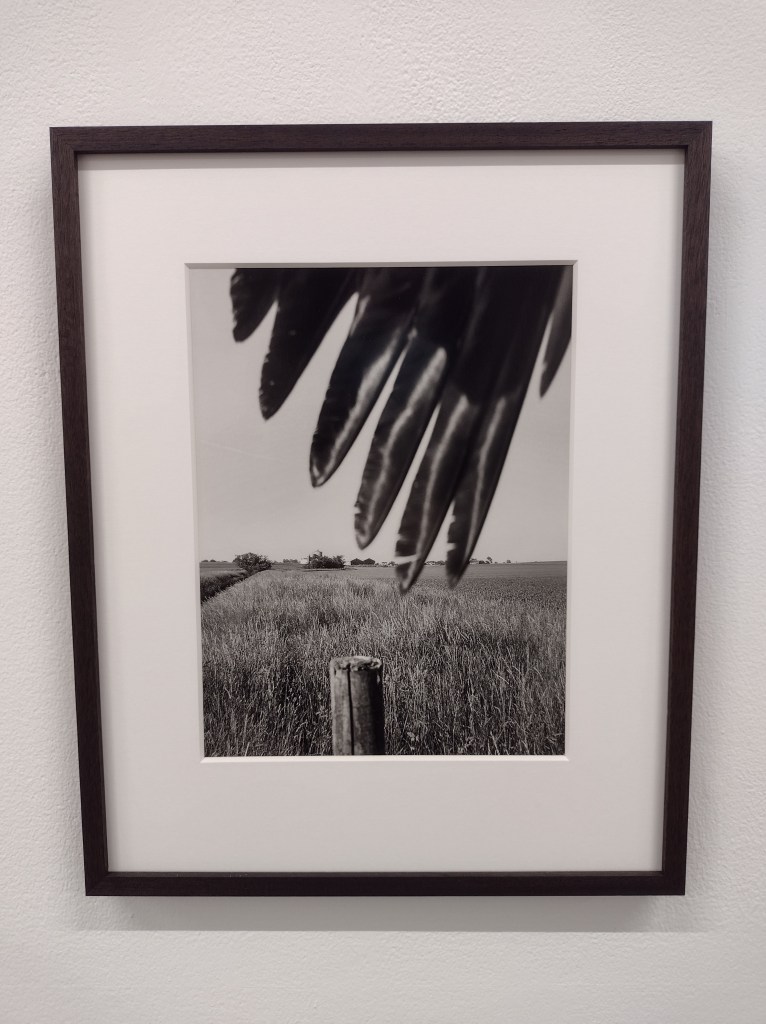
A black and white frame photo of a wing and a fence post
Stephen Gill, from the series ‘The Pillar’, (2015-2019)

It’s an attitude that is reflected, emphasised and celebrated in The Artist’s Way, which I have been working through, sometimes diligently, sometimes reluctantly, for eight weeks now. Week Six (when I began writing this blog post) is all about ‘recovering a sense of abundance’ and includes some of my favourite tasks so far, collecting interesting rocks, flowers or leaves, playful reminders of natural beauty and ‘creative consciousness’. I’ve not yet bothered to collect any stones or leaves, but I did see a feather with raindrops on it on a gravel drive, which was so beautiful it stopped me in my tracks. I’m thankful to both Cameron and Gill for helping me to see it.
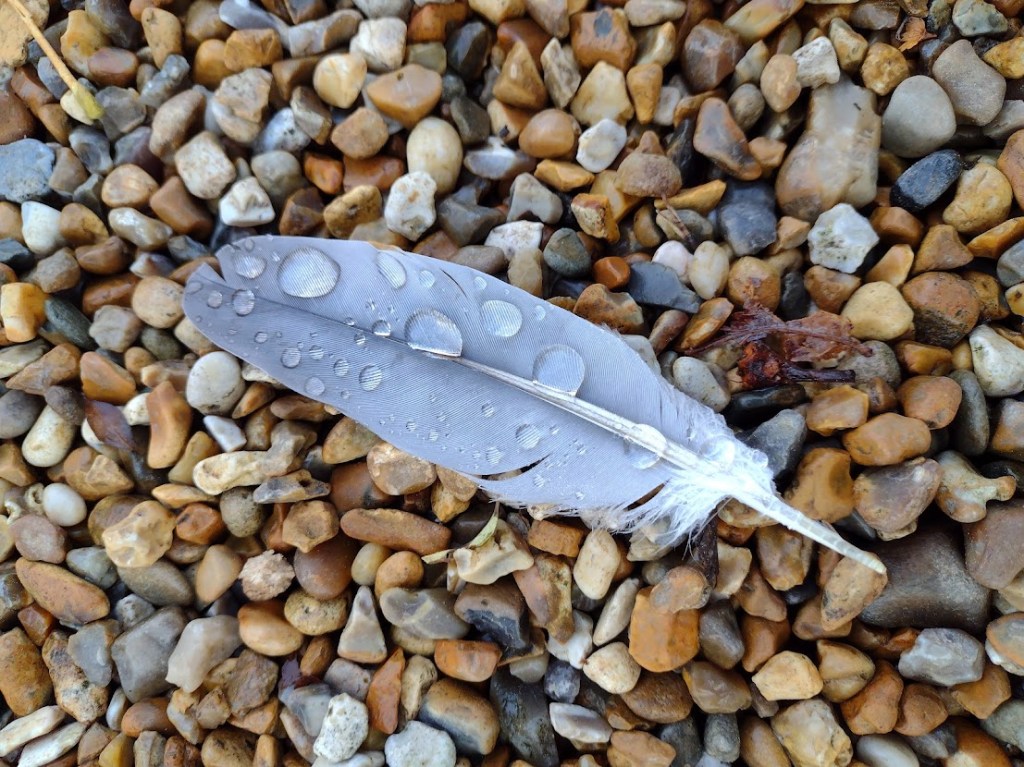
A close up photo of raindrops on a feather on a gravel drive
Photo of a feather on a gravel driveway

As December now draws to a close, I find myself reflecting again on my own creative endeavours over the past year. This is my first proper blog post for six or seven months, so perhaps The Artist’s Way is helping me get back into writing at last. It hasn’t been an easy year for anyone, and it doesn’t look like 2022 is about to get a whole lot easier. However, I continue to draw comfort from art and the way it brings interesting, creative and supportive people together. Thank you to everyone who recommended shows, books, articles and exhibitions, who challenged me with creative conundrums, who joined me on Instagram for 20 Mins With and the (recently somewhat elusive) Sunday Spotlight. You’re all gems for reading this far. My wish for 2022 is that we continue to encounter art, and hope, where we least expect it.

A close up photo from Gill's Talking To Ants series, there are silhouettes of seed heads which obscure most of the photo behind which looks like it is of a tower block.
Detail from Gill’s ‘Talking to Ants’, (2009-2013)

Emma Talbot at Dundee Contemporary Arts

I am standing in a light-filled room, one that is almost silent. The walls are white, the ceiling is high. Across the middle of the space, a huge diagonal tapestry floats, seemingly hovering, swaying slightly. It is made of the lightest of materials, silk panels hang there, lightly stitched together, suspended.

I am in a gallery for the first time in months, in a town I don’t know well. I’m looking at Emma Talbot’s Ghost Calls, created specifically for the main exhibition space at Dundee Contemporary Arts. It feels really good to be back.

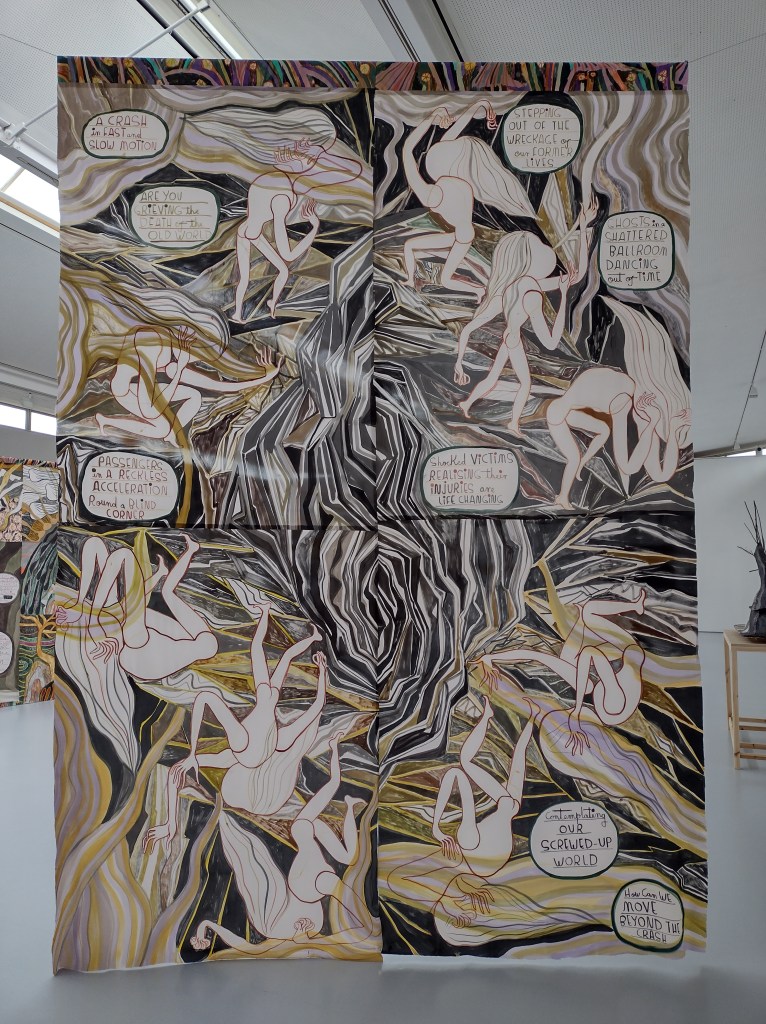
‘A Crash in Fast And Slow Motion’, 2020

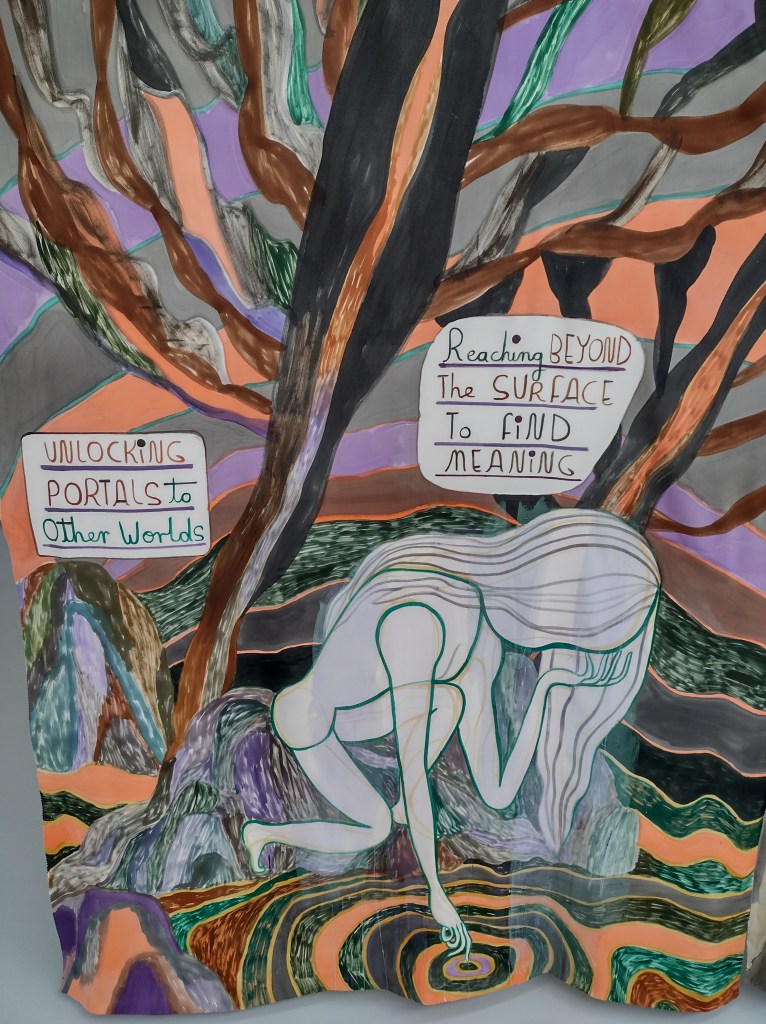
The thing I notice first about this display is the colour palette: greens, ochre, rusty red, greys and creamy white. The repeated tones help to conjure the feeling that we have entered a specific world. There is a narrative here: the first work you encounter, also a large silk tapestry, depicts an unnamed disaster that has shattered the earth and turned it upside down. There are ghostly white bodies everywhere, positioned at strange angles and holding their heads in their hands. Scattered speech bubbles tell us more: ‘passengers in a reckless acceleration round a blind corner’; ‘a crash in fast and slow motion’.

The centrepiece, a large tapestry that bisects the room, tells the story of what happens after the cataclysmic crash. Text in the first panel both questions and explains: ‘Do you hear ghost calls? A teary lament for human existence. A shout out to the living to take more care of themselves, of the world, of each other.’ I like these little ghostly souls with their long, wavy hair. The way they journey through an unknown landscape, little disembodied heads blowing long trumpets – or are these trees lying on their sides?

A section from ‘Ghost Calls‘, 2020

Though the story is about processing collective trauma, looking around me, I feel surrounded by a complete sense of calm and serenity, like a blanket has settled over the entire room. Something in the fragility of these artworks makes engaging with them a very tender encounter. Even calling the largest works ‘tapestries’ feels wrong, because that conjures up images of heavily-embroidered, thick wall hangings, decorating old castles and torchlit halls. Here, there is a palpable lightness.

The drawings are my favourite. Small-scale and pinned to the wall, they exist almost completely without ceremony: these are pages from sketchbooks. There is no glazing, there are no frames. Everything feels very immediate, right in front of me and so utterly delicate – the papers are handmade.

‘Celtic Birds’, 2020

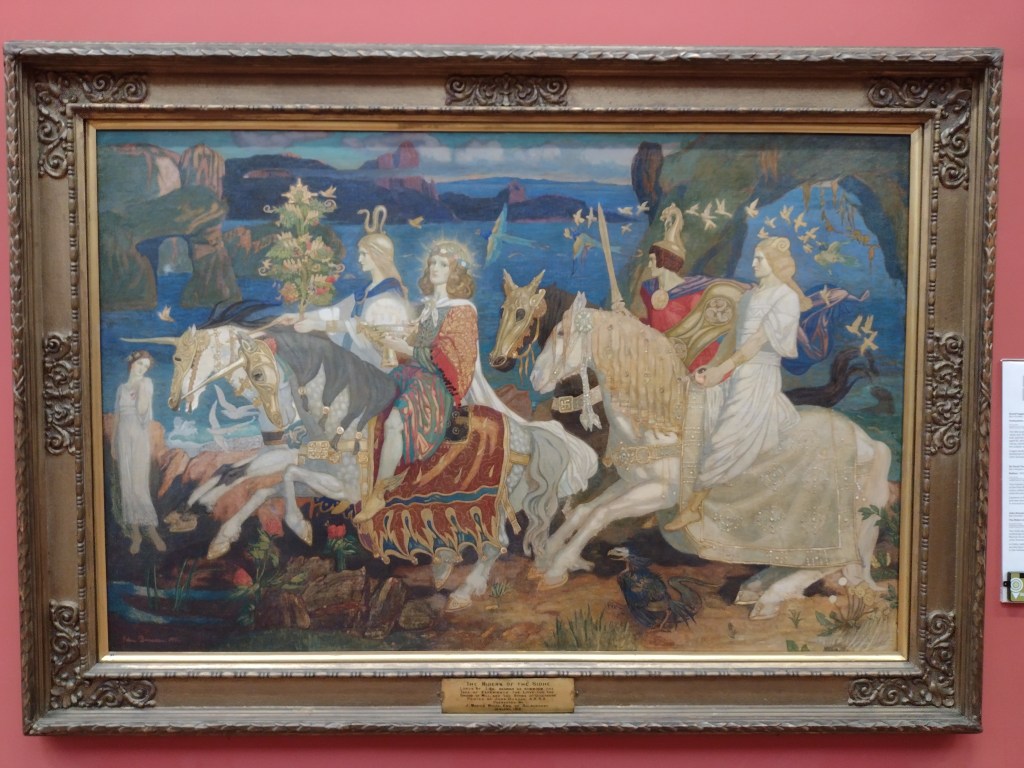
When researching for this exhibition, Talbot came to Dundee and was struck by the paintings at the local museum, the McManus. You can see here her fascination with The Riders of the Sidhe by John Duncan, one of the collection’s most famous paintings, a work thick with symbolism and arcane magic, and of great importance in the Celtic Revival movement. I had just been to the McManus and was admiring it too, so the connections felt particularly present in Talbot’s fine drawings of mythical beasts, a connection that was reinforced by the sense that her tapestries represent a linear journey, one with a similarly ambiguous destination.

John Duncan, ‘The Riders of the Sidhe’, 1911

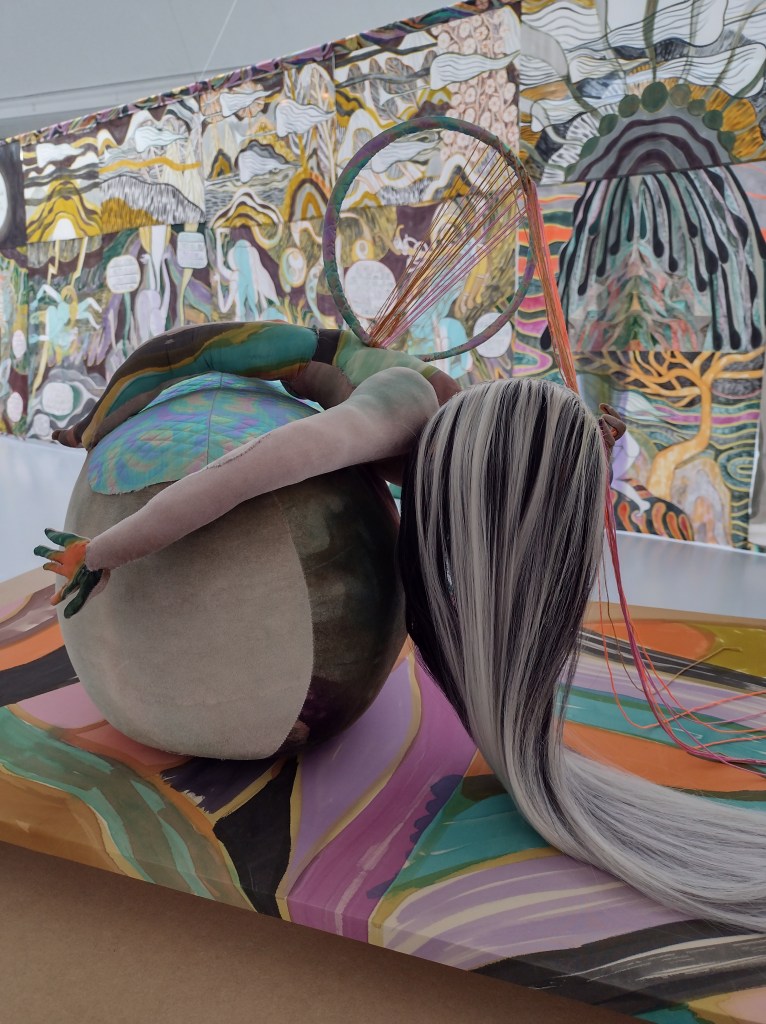
There were five sculptures dotted around the exhibition, but these struck me as out-of-place, needless add-ons to the main body of work. The stuffed figurines were 3D versions of the ghost characters, made from a kind of velour material, with crudely kirby-gripped wigs and random accessories (a dream catcher, a willow tree). To me, they looked clumsy and jarred displeasingly with everything else, which was so finely drawn and meticulously put together.

A much more successful use of a different medium was the animated 14-minute film Keening Songs, where figures of women move through a landscape, meeting animals and spirits, enacting a ‘keening,’ a mourning ritual associated with old Gaelic communities in Scotland and Ireland. These stories were enchanting, layered with poetry and intrigue, and the exhibition as a whole suggested that we will have to enact our own keening, as we journey beyond the global trauma of the pandemic. Perhaps art can be a tool in that process?

I was visiting my second gallery of the day, for the first time in over a year, and my stamina was wavering. Yet despite the inevitable ‘museum back’, I was here at last, looking at new art in all its freshness. I felt so much gratitude for this place, these artworks, that they existed right here in front of me, without the intermediary of a screen. There is an undeniable physicality to the experience of looking, and looking carefully, one that can make the viewer feel truly present, truly awake and alive for the first time in a long time.

‘Dreaming Woman’, 2020

Embracing art across the UK

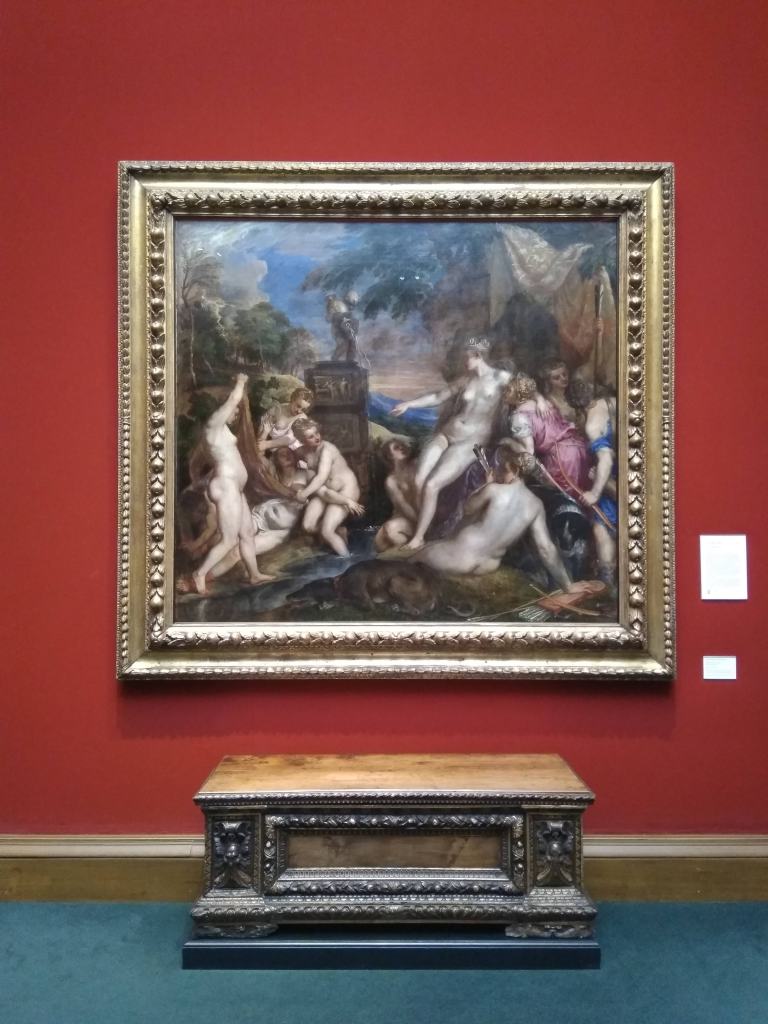
It started with the news that the Titian exhibition, which united all six of his poesie paintings, commissioned in 1551 by Prince Philip Spain, would not be travelling to Scotland. I was completely gutted. I had been looking forward to this exhibition since I first heard of the plans hatching, while I still worked at the National Gallery in London. The very idea of bringing these huge masterpieces of myth together seemed magical to me. An idea that somehow turned back time, reconstructed a historical moment, and recognised paintings as objects with lives of their own (over the centuries they travel, are put in different frames, owned by different people, and end up in different museums across the world). To have these paintings brought together once more, we would be able to see them as a series, to see them as Philip II of Spain saw them. I think I might have been mildly obsessed with the idea. I certainly saw myself as personally attached to two of these paintings, Diana and Callisto and Diana and Actaeon, which are co-owned by the National Gallery in London and the National Galleries of Scotland. When I moved to Edinburgh from London, I didn’t have a job and only knew about four people. So, I spent time in the Galleries, and seeing these paintings in their Scottish setting made me feel like I was reunited with old friends.

‘Diana and Callisto’ by Titian, (1556-9), situated in the Scottish National Gallery

The circumstances of its cancellation were understandable. The pandemic had disrupted the schedule completely (the show was supposed to go to London, Edinburgh, Spain and Boston – it still will go to the latter two locations). Even if the pandemic had been contained, the lack of festivals in Edinburgh in the summer meant the usual glut of tourists would not be in circulation, so presumably there would not be enough people paying to see these artworks and buying overpriced cakes in the shops to offset the huge costs of putting on exhibitions like this one. Travel for pleasure became a thing of the past and we were forced, by necessity, to embrace what the local could offer.

For years, uncertainty about funding has changed the way galleries operate, pushing them further down a path of supposed self-sufficiency. This is survival by embracing corporate opportunities such as venue hire, event experiences, cafes, shops, big-name exhibitions that can sell more pricey tickets (and on the more sinister side, outsourcing huge swathes of security staff and cutting specialist teams). The gallery-as-business was hit hard by the pandemic: by taking away the consumers, the model no longer worked. What is going to emerge from the wreckage of the pandemic and Brexit remains to be seen, but what’s for sure is our urgent need to recognise that art isn’t just about blockbuster exhibitions, much though we love them. Not all galleries will, or have ever, been able to afford to put on those shows. We must safeguard these places. We have to acknowledge the role of the local, the small-scale, the community-driven in art, and its capacity to provide inspiration.

To state the obvious, not everyone’s local is the same, which is why two articles that appeared in the Guardian and the Scotsman towards the end of last year made me angry (I’ve been stewing on this a while). Firstly, the Guardian’s review of the year featured the top 10 in the visual arts and literally everything, except one show in Oxford, one virtual tour, and one podcast, EVERYTHING was in London. I am not London-bashing here. I love London and its galleries, but as art writing, this is lazy. It’s likely that the writer lives in London, and wasn’t able to travel as much to explore other places in the UK, but I wish they’d acknowledged that, or simply call the article “The Top 10 Art Exhibitions in London”. Or maybe – crazy idea – the paper could have commissioned writers around the country to talk about what art was happening in their towns and cities? Yes, 9 million people live in London, but there are a further 58 million people in the rest of the UK. I could have just googled “big exhibitions London” and the same results would have come up. The article held no real reference to the pandemic, to the flourishing of artwork at home and online that it has engendered, to the incredible innovation by recent art graduates as they reinvented their degree shows, or to the turmoil it had thrown galleries around the country into.

The same lack of imagination was played out again in the Scotsman article picking highlights in visual art for 2021. Literally all suggestions bar one were in Edinburgh. As an art blogger based here, that’s a great list for me, but what about the rest of Scotland? For a start, everyone knows that Glasgow is the hub of exciting contemporary artistic development in Scotland. Beyond the central belt – what about Dundee’s thriving scene, or the two arts organisations in Scotland, Deveron Projects in Huntley, Aberdeenshire, and Inverness’ Eden Court, whose civic role in their local communities during the pandemic has earned them a place on the shortlist of a £100,000 prize from the Calouste Gulbenkian foundation?

I’m sorry to say it, but it’s likely that international travel will be off the menu for much of this year. But hopefully, just maybe, we’ll be able to visit places beyond our own homes. I’m therefore going to finish this post (this rant, sorry) with a highly personalised list of where and what I would like to visit once it is safe to do so, and with a personal commitment to push my writing, and not solely rely on reviewing big shows and exhibitions in capital cities. Art critics need to take a leaf out of the Ru Paul’s Drag Race UK’s book and start to celebrate diversity in a joyful way.

If you’d like to explore what’s out there, I’d recommend looking at the Art Fund map, an interactive tool that highlights interesting places you can see art across the UK. The National Trust and the National Trust for Scotland look after some brilliant art collections, sculpture trails and new contemporary art commissions in the UK too. Instagram can be a great way of finding out about art that is happening near you and online. If the pandemic has proven anything, it is that the local, the everyday, can still provide inspiration and wonder. Of course, we still want to see blockbusters, but there’s so much more out there to explore and to value.

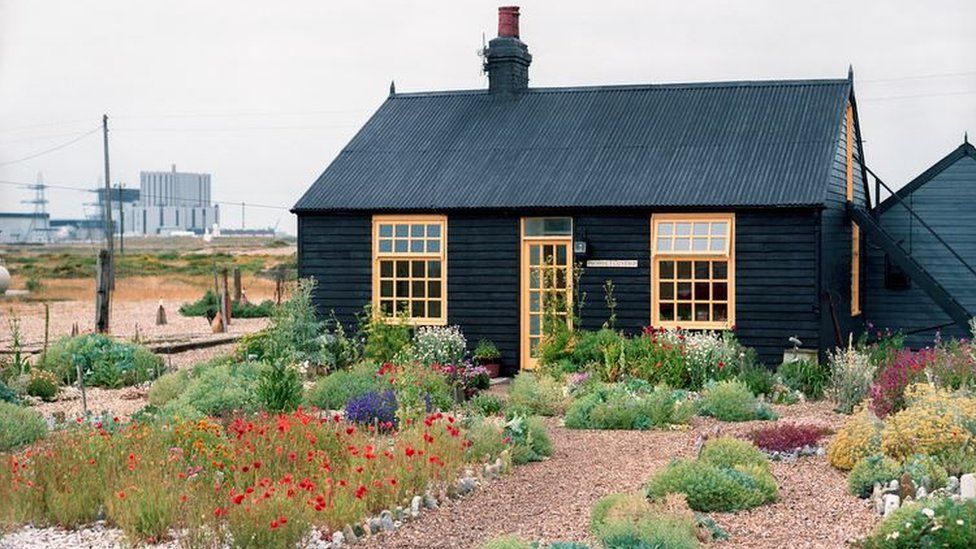
Prospect Cottage, Dungeness

My list: much is in Scotland and near-ish my parents’ house in Sussex, because I’m realistic that I might not be able to get to do a full UK tour this year. I’ll update as the year evolves.

Prospect Cottage, Dungeness

Those of you who follow me on Instagram know I’ve been reading Funny Weather by Olivia Laing, and I’m planning to post a review of that here soon. In this collection of essays, the one that shines through is ‘Sparks through stubble’, originally written as an introduction to a new edition of Derek Jarman’s Modern Nature. Laing’s talk of his special home, a fisherman’s hut on Dungeness beach where he ‘set about conjuring an unlikely oasis’, has bumped Prospect Cottage right to the top of my list for as soon as I can get there.

Deveron Projects, Huntly

Mentioned above and shortlisted for the Calouste Gulbenkian prize, I have known about Deveron Projects for a while, but when I started reading properly about it yesterday, I couldn’t stop. An innovative, place-driven project that uses a 50/50 principle to balance art/community, global/local, experimental/traditional in its ethos, it’s right up my street. I can’t wait to visit, and I hope to meet the inspiring people who run it. Until then, they are hosting a series of online talks/chats on Friday lunchtimes which I’m hoping to tune into, next week’s guest is Amanda Catto talking about Creative Scotland’s visual arts strategy.

Charleston

Ah Charleston. I have been meaning to go for years and then when it had to go into survival mode during the pandemic, I worried I would never get to see inside. Thankfully, the campaign to #ReopenCharleston was successful, and a further discovery of erotic drawings by Duncan Grant, gifted to the institution, has ensured it will continue to tell the incredible stories of the lives, loves and the art of the Bloomsbury Group in Sussex for a long time to come.

Self Portrait by Duncan Grant, (about 1920),
in the Scottish National Portrait Gallery

Newhailes House and Gardens

This is a Palladian Mansion looked after by the National Trust for Scotland, situated down the road from Edinburgh, in Musselburgh. Apparently it has amazing rococo interiors including 18th-century trompe l’oeil decoration. The house is undergoing some restoration and hopefully will open in the spring. Book me up for a guided tour please!

Joan Eardley 100, Various venues

The work of Joan Eardley has been a revelation to me since moving to Scotland, and on 18 May 2021 it will be 100 years since her birth. This year several organisations are collaborating to form a series of retrospectives of her work, in a project led by Scottish Women and the Arts Research Network. There will be shows at the Hunterian Museum in Glasgow, Paisley Museum, Gracefield Arts Centre in Dumfries, a Heritage Trail on Arran, an exhibition at the National Galleries in Edinburgh along with more not yet announced. Follow #Eardley100 on social media for updates.

The BALTIC, Gateshead

I am ashamed to say I’ve never been to Gateshead or Newcastle. I can’t quite believe I’m confessing to that. I have no excuse, especially since moving to Edinburgh, it’s not a long train journey. The BALTIC has long been on my list of galleries to visit, so when I can, I’m booking a trip. We all know Newcastle is famous for its nightlife too, so I might try and hold out for when the pubs are open again, for this one.

Artes Mundi, Cardiff

The Artes Mundi prize is probably going online this year, but if there’s a chance to see it in person, I would love to take it. The prize was on Will Gompertz’s list of 2021 art to hope for (the list also featured places in Scotland and Northern Ireland. We ❤ the Beeb). Previous winners include Theaster Gates and Teresa Margolles, and this year’s winner will be announced on 11 February.

Towner Gallery, Eastbourne

The Towner got my attention recently because of its commitment to anti-racism action and pledges following up on statements made in the wake of the Black Lives Matter protests last summer. I like that they’re following up with action, not just words stopping at words. It makes me respect them as an institution and want to go there and support their work in Eastbourne.

CAMPLE LINE, Thornhill

Located in the countryside close to Lockerbie, CAMPLE LINE is an independent arts organisation for contemporary art and film. I’ve been waiting for restrictions to ease so I can see Sara Barker’s Undo the Knot exhibition, which looks like it hovers between sculpture and painting in a very satisfying way. Also, I’ve never really been to south west Scotland and I’d like to remedy that soon.

Dalmeny House

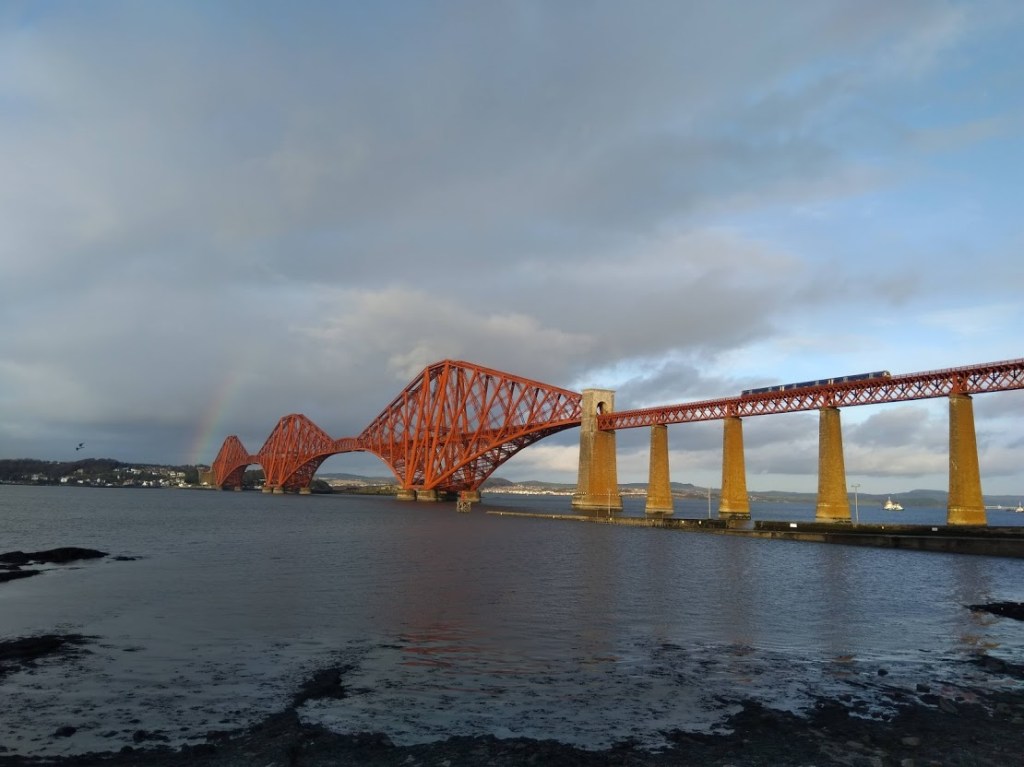
Cycling out to South Queensferry has been one of my favourite ways to alleviate the cabin fever of lockdown. Dalmeny Estate is on the way out there, and their art collection is usually open to visitors in the summer months. I have heard great things, fingers crossed they will open up again this year.

What’s on your list? What should I write about? I would love to hear from you! Leave a comment, click the contact page or you can DM me on Instagram or Twitter.

The Forth Rail Bridge from South Queensferry, reached by bike via Dalmeny Estate

Maggi Hambling’s Wollstonecraft statue

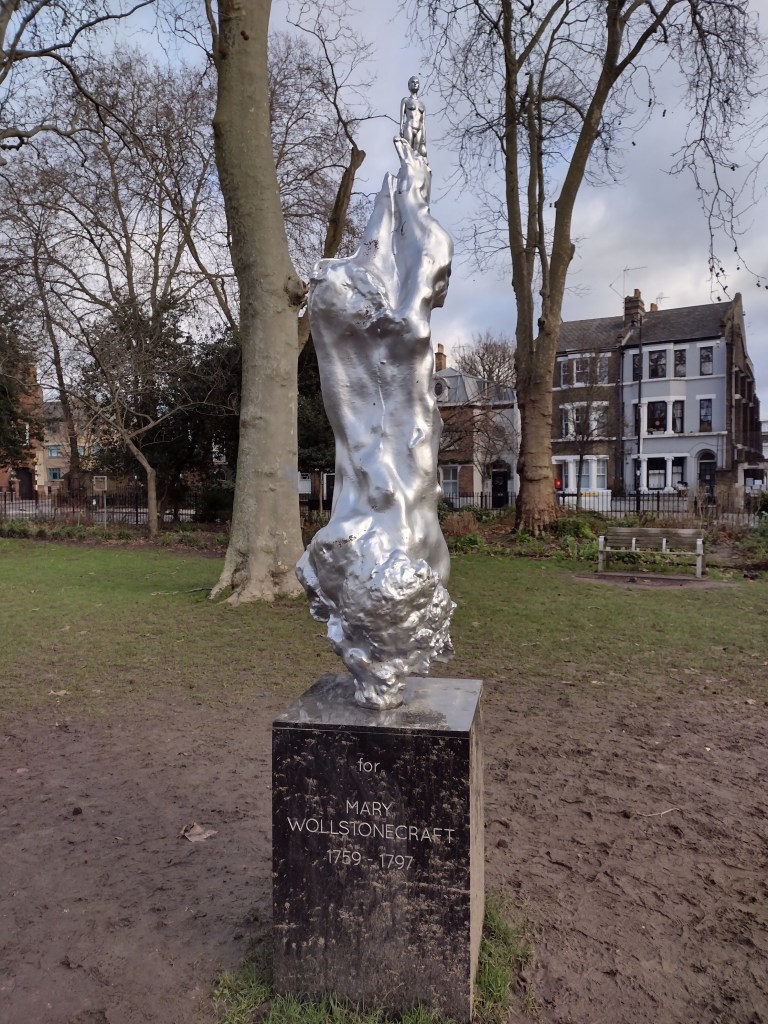
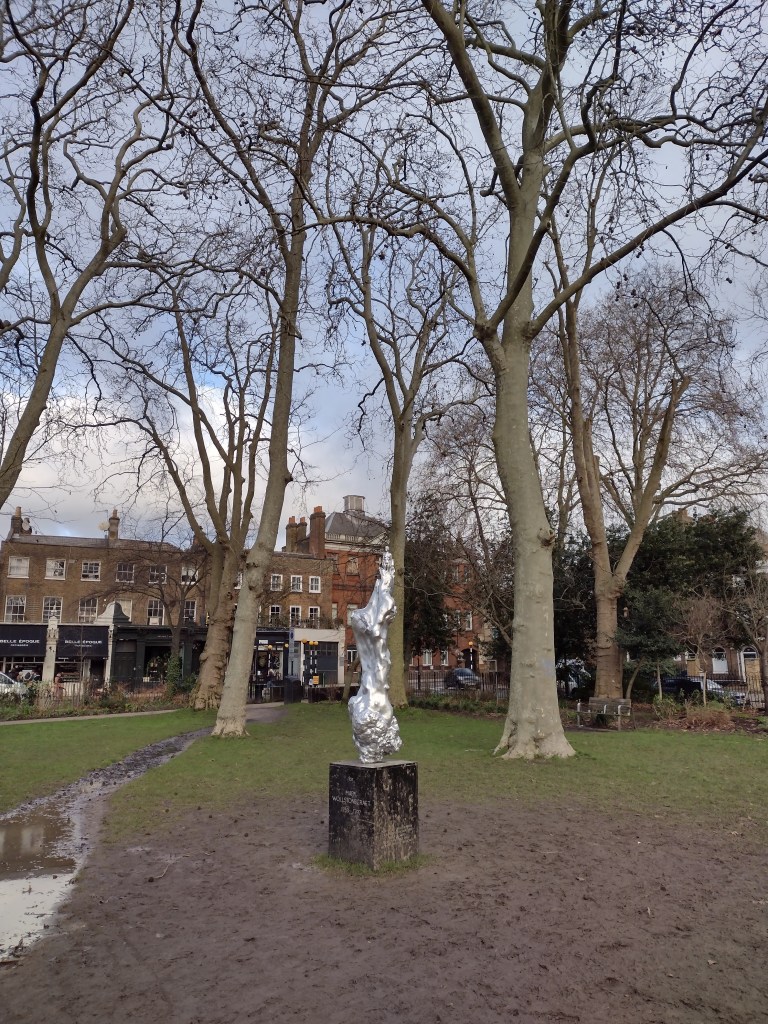
I’m currently locked down in London, so what better activity than to go to Newington Green and look at what the Guardian yesterday called ‘one of 2020’s most polarising artworks’. It is Maggi Hambling’s A Sculpture for Mary Wollstonecraft. If you missed out on the social media furore about this sculpture, the main issue was that people were very, very angry that what was supposedly honouring and commemorating one of the founders of feminism had a naked woman at the top of it. In principle I agreed and plus, visually it didn’t seem that interesting. More figurative art? Still?

As I trudged up, I hoped that I might see some protest performance going on (it has been covered up at various points), but there was nothing except a LOT of mud on and around the plinth, which reads “For Mary Wollstonecraft”, i.e. it’s for her, not of her, which is important to remember.

The statue on a muddy Newington Green

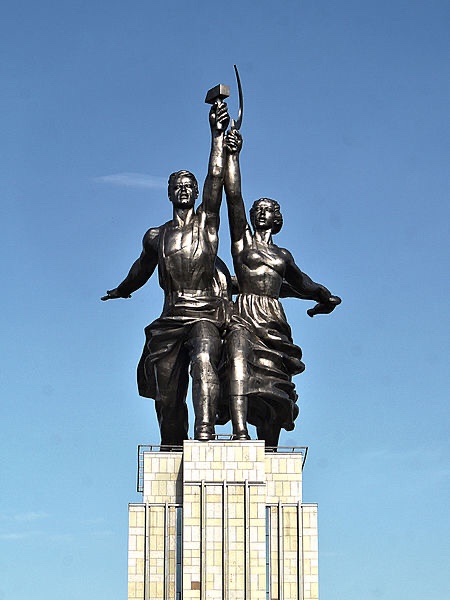
Firstly though, some perspective. The figurine that caused such a stir is TINY. She appears at the top of a much bigger silver blob, and though I was standing right up close, the height of the sculpture means she’s far away. On twitter and in the media, all the photos I’d seen were deceptive: closely cropped and zoomed in on the female figure, emphasising the defined abs, perky boobs and a full, rather prominent bush. Some were cross that the female body had been idealised in this way, but in the context of the full sculpture, that critique strikes me as odd. For me, this muscular figure brought to mind soviet-era sculptures, in particular, Vera Mukhina’s Worker and Kolkhoz Woman. Made in stainless steel, 24 metres high and created for the 1937 Paris World’s Fair, it is one of the most badass monuments ever. The diminutive size of the figure in Hambling’s sculpture works against this reading, but it still is a visual connection I find helpful when trying to place the work.

Vera Mukhina, ‘Worker and Kolkhoz Woman’, 1937

To me the figure does not read as sexual in any way. But, maybe, because of our understanding of the nude, it’s not possible to see a naked woman without this idea being drawn into this debate. As Heather Parry explained on twitter at the time:

Yep.

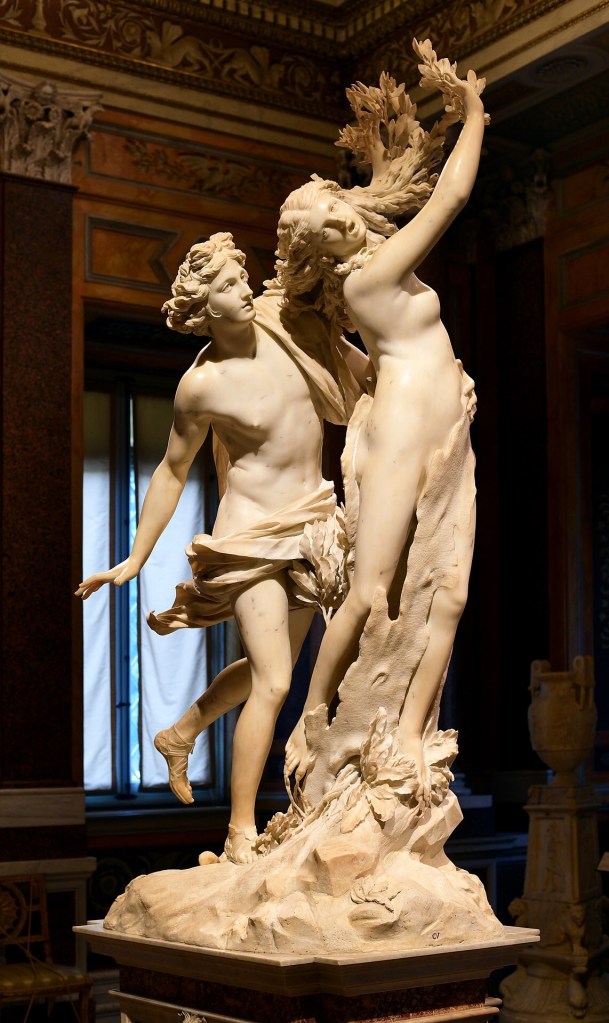
The woman emerges from a swirling mass, which calls to mind another transformation, Bernini’s Apollo and Daphne, the marble sculpture in the Galleria Borghese in Rome, made in 1622-25. It is based on the tale in Ovid’s Metamorphosis. Apollo has been struck by Cupid’s arrow, and is lusting after Daphne, chasing her. Daphne cries out for her beauty to be destroyed, or for her body to be changed to save her from the impending rape, and is transformed into a tree. Bernini’s sculpture captures the exact moment when flesh begins to become bark. Her outstretched fingers transform into leaves, she is swallowed up as the natural form encases her living body.

Bernini, ‘Apollo and Daphne’, 1622-25

It feels strange to compare those works, because the Bernini is one of my favourite sculptures of all time, and the Hambling is certainly not. But perhaps we can see the Hambling sculpture as this metamorphosis process in reverse. Here, rather than being engulfed, the female figure emerges from the shapeless forms and looks powerful. The aesthetic of the shiny silvered bronze also acts as a reversal of the natural elements in Ovid’a tale. The sheer artificiality makes it look futuristic and alien and that is my favourite thing about it.
In its almost mirror state, it jars pleasingly with the muted, natural winter browns and greens of the mud and bark in its surrounding park. There’s no missing this sculpture, it is a beacon that demands attention and has definitely received it. Wollstonecraft has too, and that’s not a bad thing.
The take home for me is that artworks may be polarising, but art is not Marmite. You can simultaneously love and hate different things about it, you can sit with it and feel differently about it on different days. It’s a reminder that especially at the moment, when we’re consuming art on a screen and from afar, context is everything. It’s good to know if we’re getting a detail or the whole picture.

Top ten art moments of 2020

This year, it is needless to say that we’ve not had the art experiences we might have been hoping for. With travel restrictions, exhibitions cancelled, rescheduled and put online, the art world landscape has changed significantly, perhaps forever. I have just had pre-Christmas visits to see Artemisia and Titian’s Poesie at the National Gallery cancelled, as London crashes into Tier Three. I’ve been longing to see these once-in-a-lifetime exhibitions for years, since I first heard they were going ahead. So I began writing this with a sad heart.

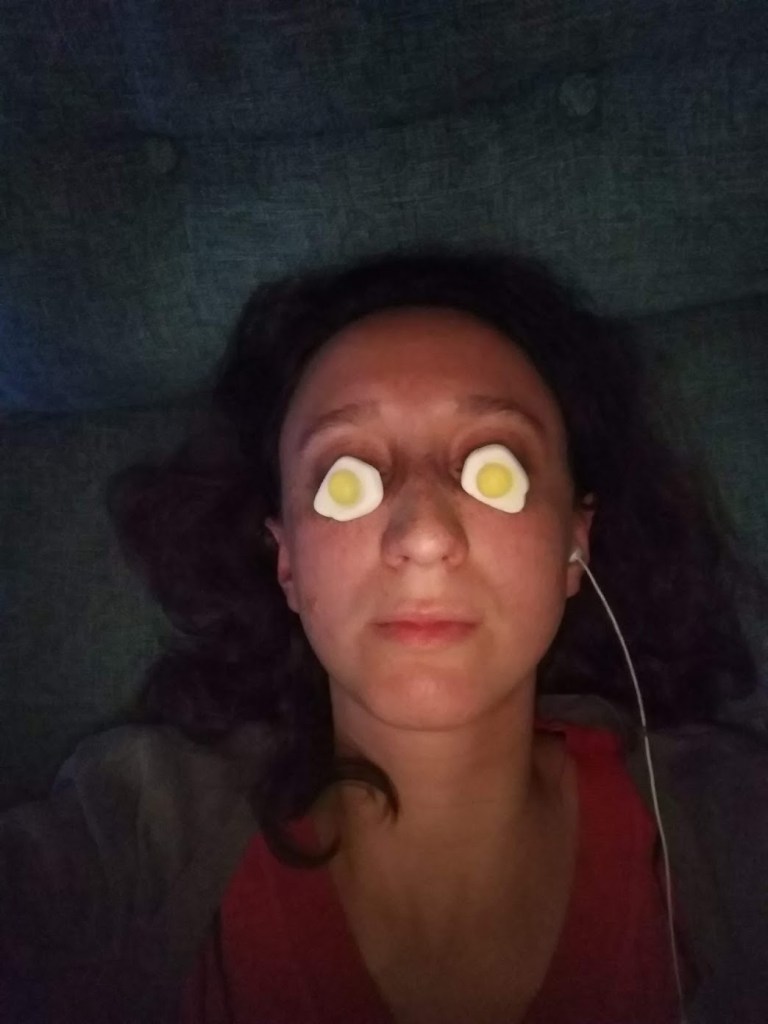
Yet despite and because of what 2020 has thrown at us, the need for art and culture is stronger than ever, as a way to escape, to heal, to reflect on what is happening. Many people have used 2020 to have a go at making art themselves, with countless organisations sending out art packs for people to unleash creativity at home. What I’m now calling Self Portrait with Haribo was born of boredom and childishness (yes I’m 29 and I still buy Haribo), but looking back at it now, it captures a particularly cabin fever-ridden moment of lockdown. Marking moments like this is a good way of acknowledging time passing, in a year that has felt interminable but with very little to show for it.
‘Self portrait with Haribo’

You’ll be relieved to hear, this blog post isn’t about my own personal creative output. Rather, it’s a moment of reflection and reassurance, to look back at 2020 and realise it hasn’t been a total creative wasteland. As by now you may have guessed, my concept of what art is is very broad, and that attitude has helped me this year.  It helps me notice my surroundings, and to not feel culturally deprived, even when museums and galleries have been largely closed.
Art hasn’t gone away this year, we’ve just experienced it differently. So consider this an invitation for you to get out your phone, scroll through 2020’s photos and consider the past twelve months in a new light: there will be evidence of things you’ve seen that connect us, that have made life more interesting, that have enabled you to see or understand something differently. To me, that is the purpose of art.

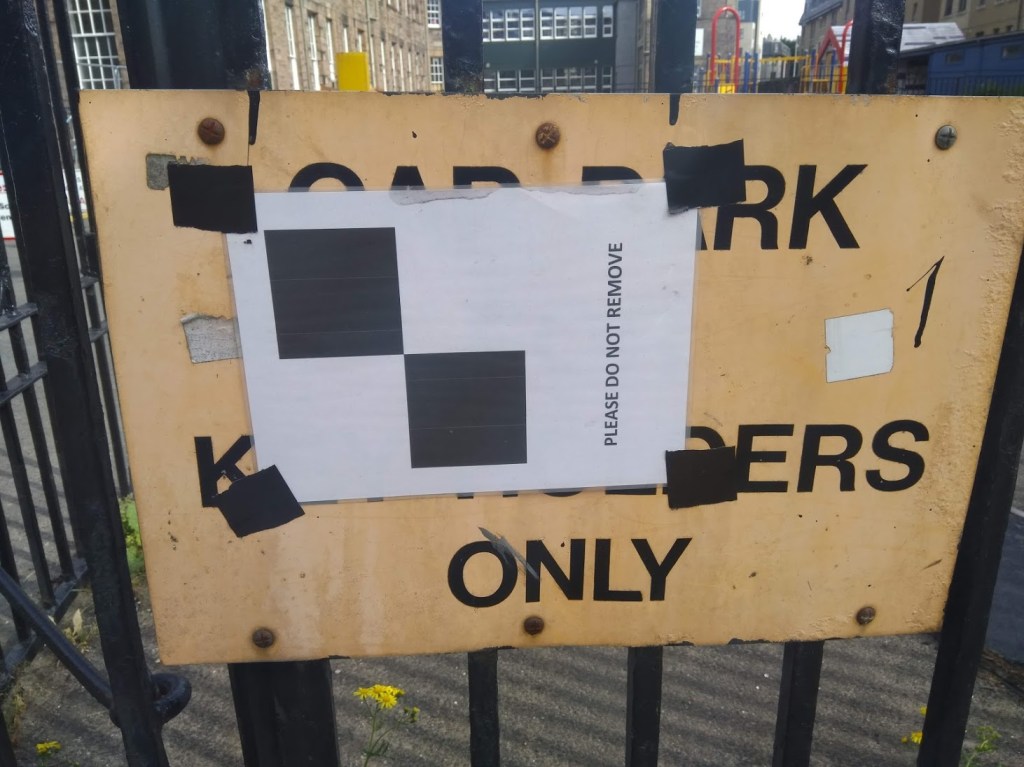
10) “Please do not remove” sign, Fountainbridge

This comes under the category of ‘weird things I take photos of in the streets of Edinburgh’. I first noticed this sign in Fountainbridge in January. It was still there in June. I love random signs, posters and stickers that are woven into the fabric of our cities. Once you start noticing them, you’ll never be able to stop: there are whole debates played out on bus stops, sign posts, bins and streetlights. I like this one because it shows how people did what the sign said by leaving it there. Either the people Edinburgh are very law abiding, or, possibly more likely, it went unnoticed.

‘Please do not remove’, Fountainbridge, June 2020

9) A visit to Petworth House

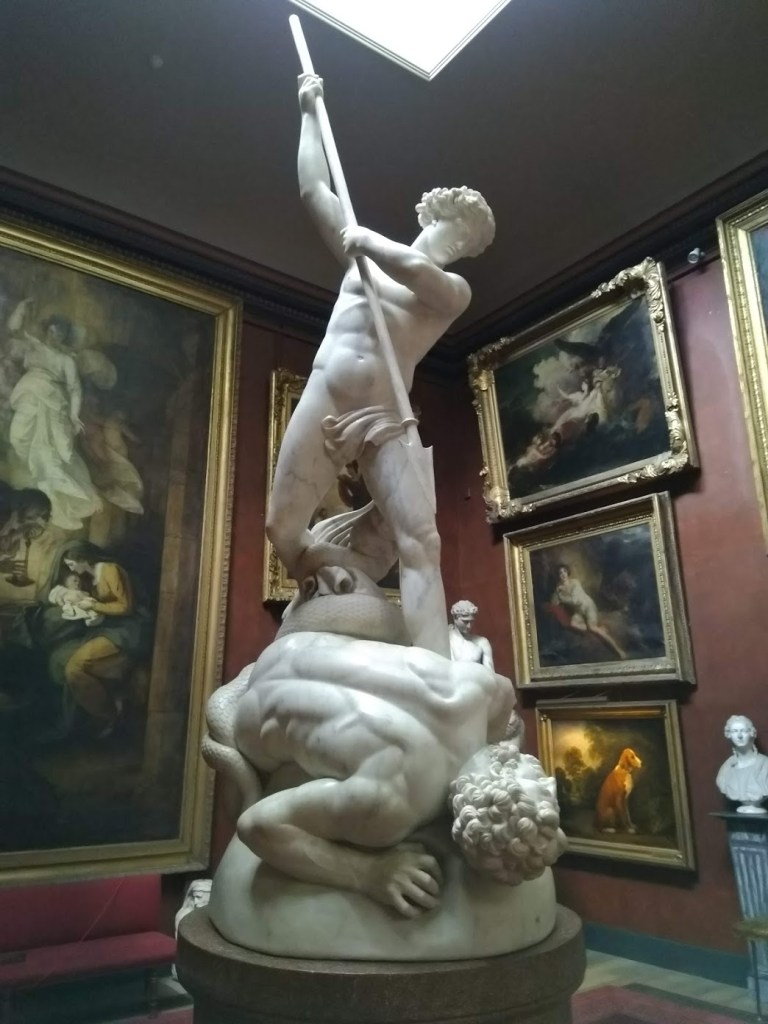
When infection rates were low, I visited Petworth House for the first time this year. I’d known that the house had lots of art connections, having seen it in the film Mr Turner, but I hadn’t realised how many treasures are packed into just a few rooms. The National Trust’s webpage says that it is one of the finest art collections in their care. It includes The Adoration of the Magi by Hieronymous Bosch, a bust of Aphrodite attributed to Praxiteles which is over 2,300 years old, and The Molyneux Globe, the earliest English-made globe in existence, made in 1592. My favourite moment was seeing the beautiful marble sculpture of Saint Michael overcoming Satan by Jonathan Flaxman, created 1817-1826. When I was studying at UCL, the full-scale plaster model that Flaxman made in preparation for this piece was on display in the main library, so seeing the final result felt like the artwork had come full circle for me.

‘Saint Michael overcoming Satan’, Jonathan Flaxman

8) Apple’s iPhone X advert at The Hermitage

Ah, who knew an advert would play such an important part in my year. I actually am one of those people who enjoy TV adverts: the ludicrous fantasies of high-end perfume, the terrible, expensive sofas at DFS. An oven chip advert about family made me cry once. Yet this advert was not your usual one. It was five hours long, a slow-paced art house film with minimal dialogue, all shot on iPhone X, filmed in The Hermitage in St Petersburg. Each Tuesday in the spring, my friend Jane and I sat down, started a phone call and pressed play on YouTube together as we watched an installment. We discussed the paintings, the dancers, the architecture, the narratives, and sometimes, we just talked over the film about life. It was as close as I came to the real experience of trawling through a major museum while on holiday and I looked forward to it every Tuesday for over a month. I’ve written a longer piece which has a link to the advert here.

7) A specific frame in The Wallace Collection

From my trip to The Wallace Collection in the summer, one object is thoroughly wedged in my mind: the frame of Ary Scheffer’s Francesca da Rimini (1835). The painting itself is very dramatic, it depicts a scene from Dante’s Inferno, with the tragic figures of Francesca and her lover Paolo condemned with the souls of the lustful to the second circle of hell. The frame completely wowed me, I think it’s one of the largest frames I’ve ever seen. You can see a book in the bottom right corner, there are doves, chains, oak leaves and a scroll which incorporates elements of Dante’s text. It was created by a certain Félicie de Faveau for the painting’s third owner, Anatole Demidoff, Prince of San Donato, who owned the painting from 1853-70.

Ary Scheffer’s ‘Francesca da Rimini’ in the Wallace Collection

6) Graveyards of Edinburgh

Edinburgh is one of the greenest cities in the UK and I recognise my privilege in experiencing lockdown here for that very reason. Exploring the city’s open spaces has led me to encounter several of Edinburgh’s old graveyards for the first time this year. Being a fan of the Romantics, the more dilapidated and ivy-covered the angels, skulls and crossbones and shrouded urns, the better. Perhaps it seems morbid, but I’ve always found these places peaceful and interesting, and as someone who doesn’t believe in life after death, seeing nature flourish in these places has always been reassuring. Warriston Cemetery, Greyfriars Kirkyard, Dean Cemetery and Dalry Cemetery are some places I’ve found solace this year, as well a place to appreciate the art and symbolism in the carvings, sculptures and iconography.

A grave with ivy, Warriston Cemetery

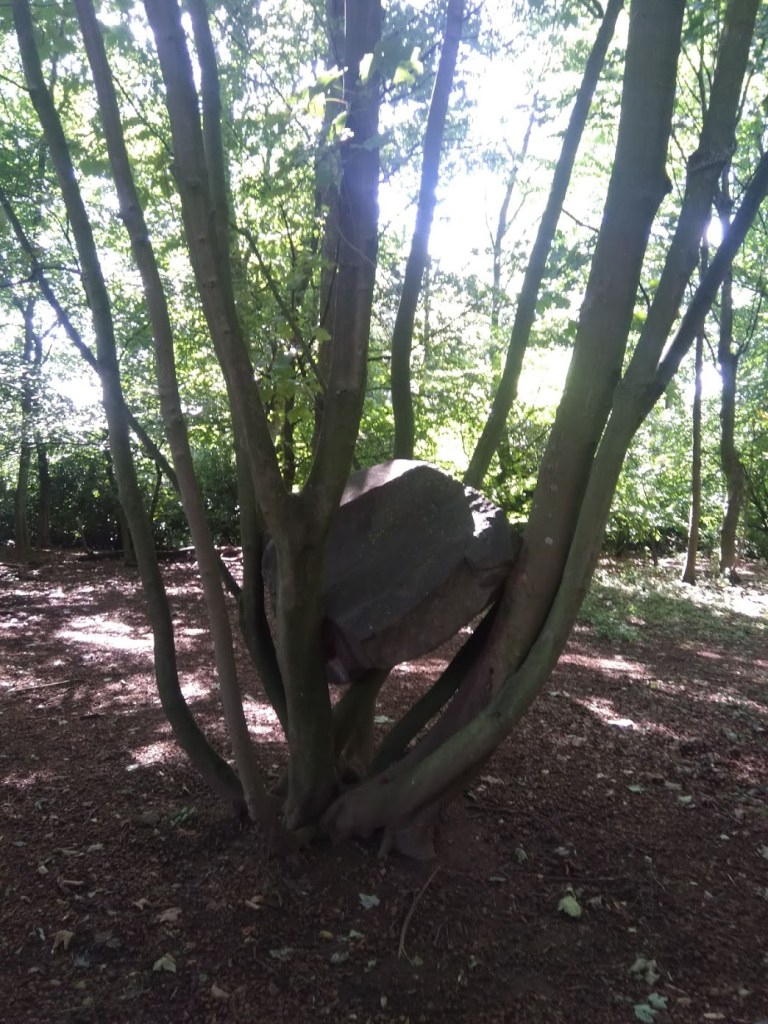
5) Andy Goldsworthy’s Stone Coppice at Jupiter Artland

Jupiter Artland – I visited at last! Cycling with my sister out to Wilkieston on the canal path, this was one of the most perfect art afternoons of the year. We walked around the whole thing slowly, soaking it all up, and got a seat in the café just as the rain came down. I love so many of the artworks here, but my top one for this list is Stone Coppice by Andy Goldsworthy. You stumble upon this artwork in one of the more unkempt pockets of the sculpture park, you might not even know it was there at first. It’s the perfect balancing act: the way the trees delicately hold the rocks, how some seem composed in a tender embrace, how others seem crushed by the branches or vice versa. The artist’s positioning of the natural matter, which is then left to its own devices to grow and unfold over the years, is poetic.

‘Stone Coppice’, by Andy Goldsworthy, at Jupiter Artland

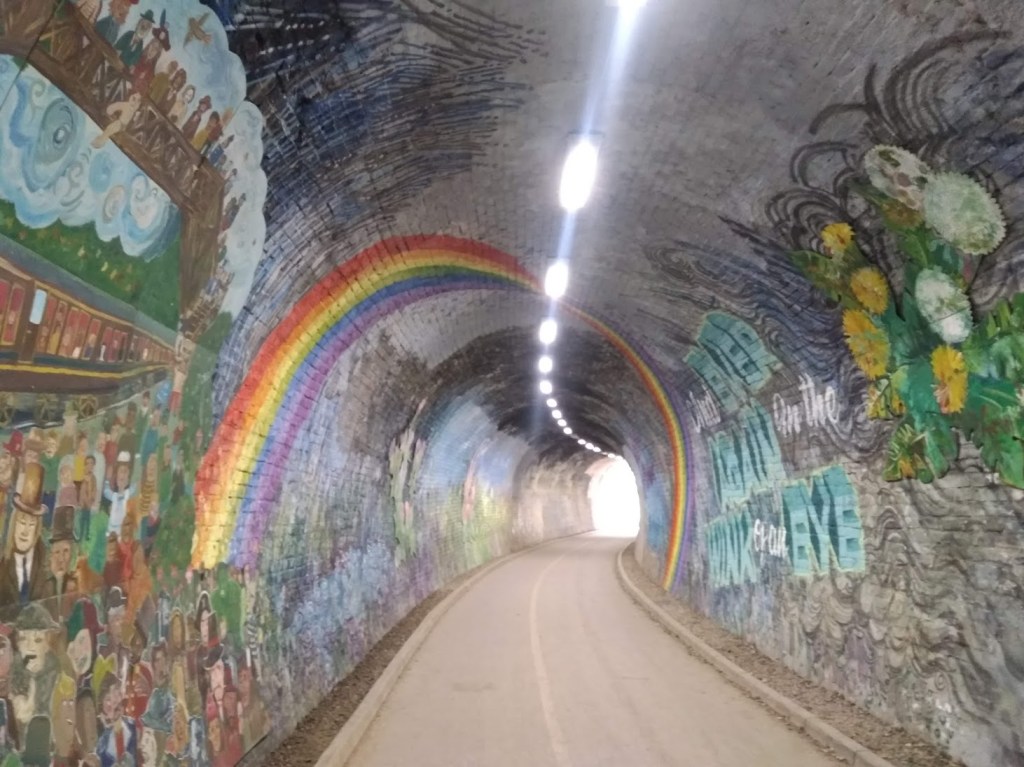
4) Rainbows – Colinton Tunnel

The cynical among you will perhaps raise your eyebrows at this… rainbows in windows everywhere were sweet at first, but as the grim reality and longevity of the pandemic set in, they started creating a backlash, with one of my favourite tweets of the year capturing a perfect counterpoint – a sign in Glasgow that simply said “This is shite”. But this huge rainbow, arching over me as I cycled through Colinton Tunnel stopped me in my tracks. Street art and bike rides have both helped me through the year.

Colinton Tunnel

3) Rediscovering Black Portraiture by Peter Brathwaite

Peter Brathwaite has taught me so much this year. His project to recreate artworks at home was born out of a light-hearted DIY art challenge started by the Getty Art Museum. But Peter’s project took on huge significance as he made it his mission to shine a light on Black portraiture specifically, and used objects in his home to explore his own ancestry and past. In the context of the Black Lives Matter protest movement this year, this exercise in sharing these portraits of Black people with the world was so important, reminding us that these figures do exist in art and history, we just haven’t seen them, we haven’t named then. The whole project showed how the personal is political. How art is a mirror that reflects history and society, flaws and all, and critical engagement with it can help us understand the world and ourselves. Scroll through Peter’s Instagram to have your mind expanded, or take a deep dive into five of his recreations as part of The Essay on Radio 3 – highly recommended listening.

2) Violet Chachki’s ‘fall reveal’ runway look on Ru Paul’s Drag Race

Though I was a fan of Ru Paul’s Drag Race before 2020, the antics of the queens, their talent, their silliness, their mental strength and their artistry has meant the show has been my constant companion through lockdown. Yes, one of the reasons I love the show is that it satisfies my craving for gossip and drama, which has been so utterly lacking in real life this year. But despite its highly formulaic reality TV structure, the show has done so much to expose mainstream heterosexual audiences like me to the art of drag. And what an art it is! It’s difficult for me to pinpoint an exact moment, but I think we can all appreciate that the two-in-one catwalk outfit Violet Chachki burst on the scene with, in the very first mini-challenge of season 7, is the most delicious balance between high fashion and performance art.

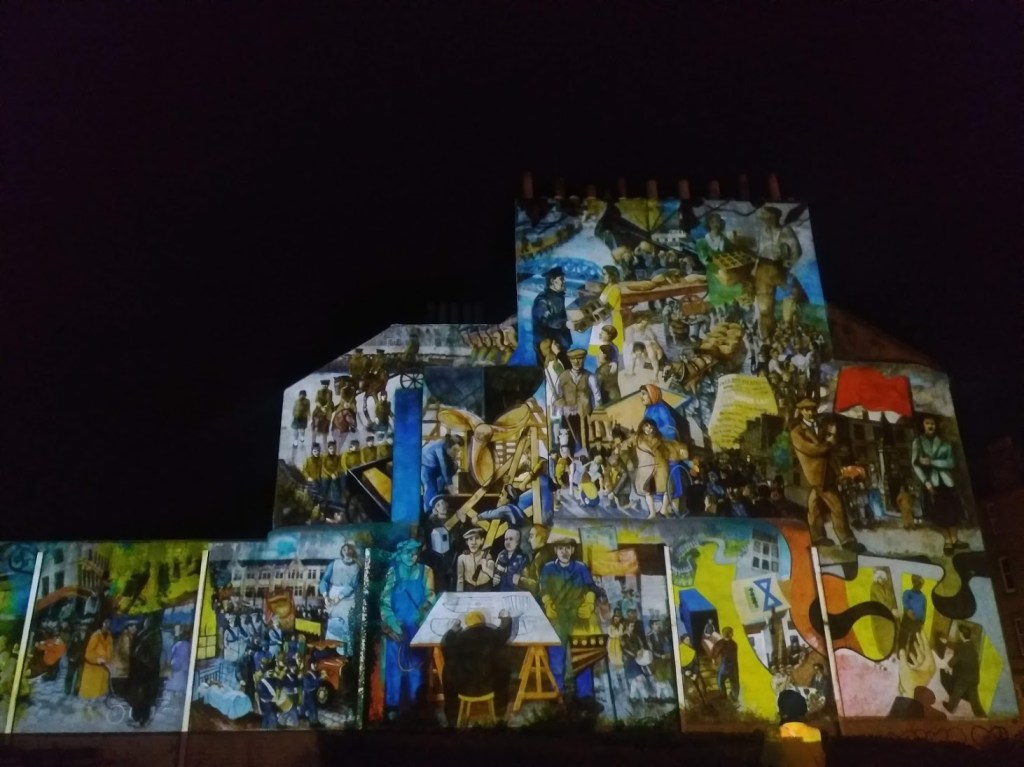
1) Leith’s historic mural, brought to life by Double Take Projections

There are some artworks that seem a little like magic and this is one of those. If you’ve ever seen Leith’s historic mural near Leith Theatre, you’ll know it’s not in the best state of repair. The colours have faded, the edges are eroding, it’s difficult to decipher. I wouldn’t necessarily want to change that, fading is part of a mural’s cycle of existence. Plus I’ve heard that the artists Paul Grime and Tim Chalk, who created the mural in collaboration with local residents in 1985-6, have resisted suggestions of the mural being restored. This decision then, to use projections, sound effects and music to bring different parts of the mural to life, is inspired. With the projection focusing on particular characters and animating different parts, we see a ship’s rudder gently rotating, children playing and soldiers marching. We notice the mural’s complex layers, and the installation restores what is a special piece of street art and local history in the city’s collective memory.

There you have it, my top ten art moments of 2020 so far. What have yours been? I would love to hear from you, so feel free to leave me a comment or DM me on Instagram or Twitter.

‘Florilegium: A Gathering of Flowers’ at the Royal Botanic Garden, Edinburgh

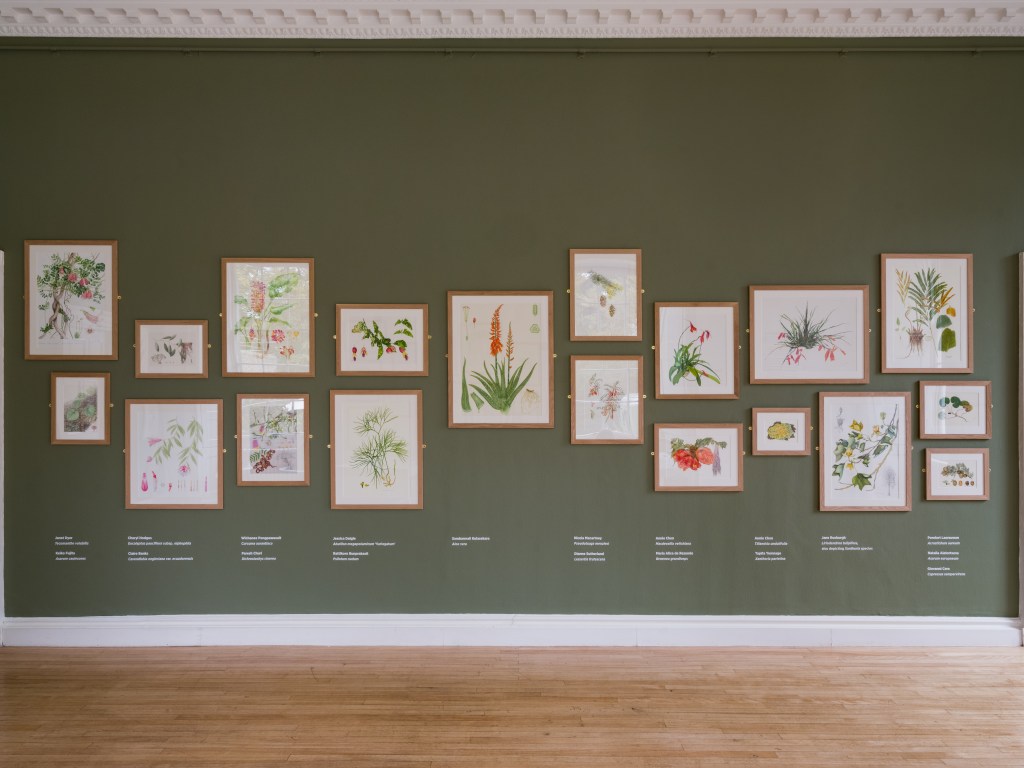
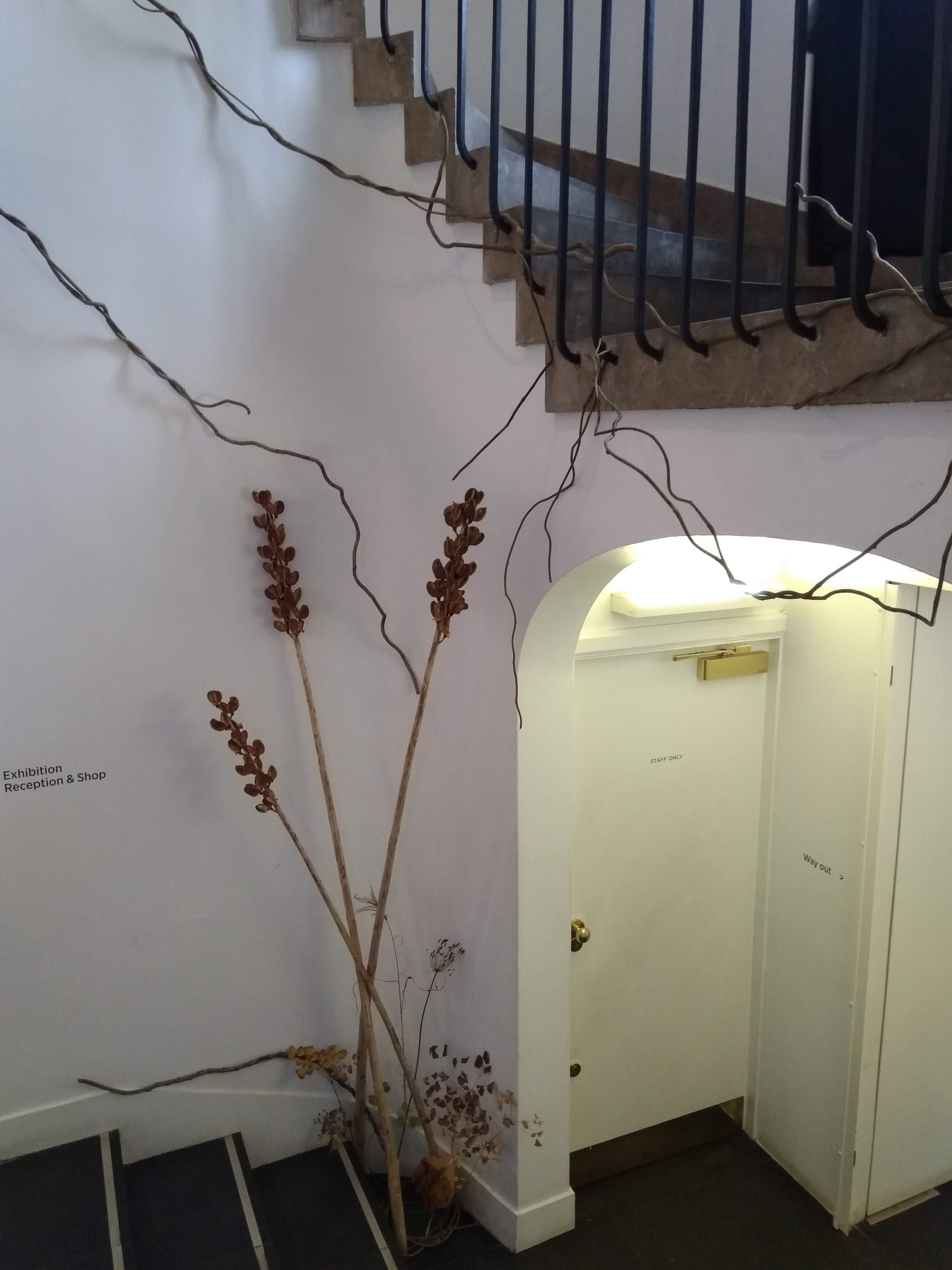
There’s a new, free exhibition in town, at the Botanics. Ever a beautiful place to relieve your Covid-19 cabin fever, to feel the peace of looking at plants and be made to feel small by impossibly tall trees, now you can supplement it with a visit to Florilegium: A Gathering of Flowers. The first exhibition since the RBGE started its Climate House initiative, the exhibition marries what seem to be two very different ways of looking at flowers. 

The first is factual, scientific, research-based. Packed into the first room are depictions of flowers from the Garden’s collections, submitted by botanical illustrators from around the world. I love their precision, the sense that these drawings have been set to view in HD. Glancing at these densely stacked images, their uniform wooden frames fitting perfectly with the olive green of the wall, I’m convinced there would be enough detail here alone to make an entire exhibition. Enhanced by the ikebana style floral displays, it’s what visitors might expect, might hope to see. It’s beautiful, classy, and it’s about flowers. Tick.

Florilegium: a gathering of flowers, installation view. Photo by Tom Nolan

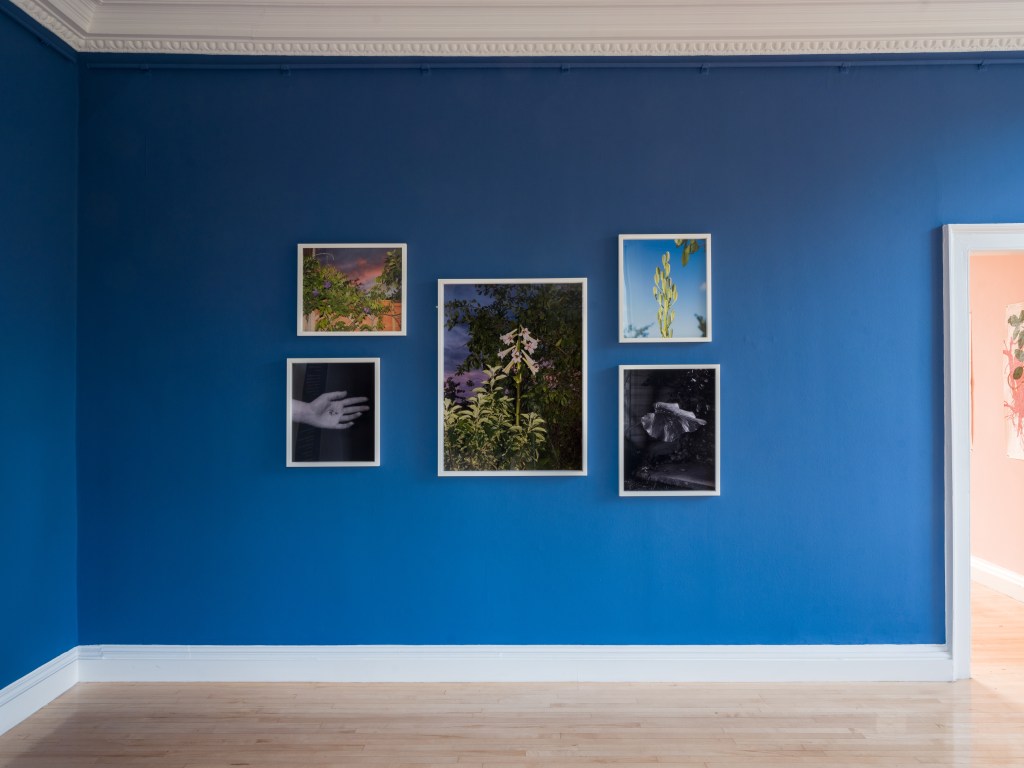
Up the stairs, we’re taken into a somewhat different realm by four contemporary artists, Wendy McMurdo, Lee Mingwei, Annalee Davis and Lyndsay Mann. While the immensely skilled botanical illustrators are concerned with depicting the flower exactly, and in some cases, the pollinators too, the artists upstairs are more concerned with what we cannot see. The emotions and meanings we as humans attach to plants, their embroilment in our colonial past, and the metaphor of life and death a flower provides so effortlessly, are all explored here.

Wendy McMurdo’s photographs from the Indeterminate Objects series from 2019 use gaming software to collapse the blooming/withering lifecycle of a single flower in one vase, an eye-catching narrative that makes you look twice. Her Night Garden series (2020), reflects on how her mother’s ill health and recent death was combined and synchronised with blossoming of a large, mystery, tropical-looking plant in her suburban garden. I loved the uncanny photo of seeds resting in the palm of her hand, which looked to me like the hand itself was punctured, decaying: a wound between the states of hurt and healing.

Wendy McMurdo, ‘Night Garden’, 2020, installation view, photo by Tom Nolan

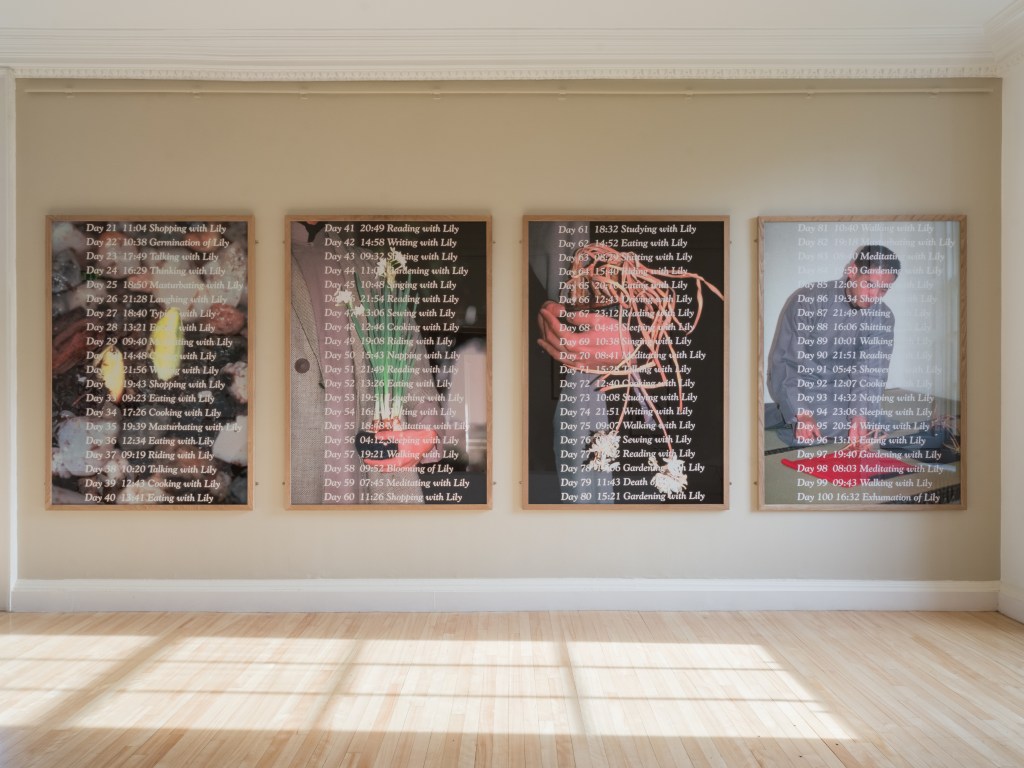
There’s a pleasant chiming here with the work 100 Days with Lily by Lee Mingwei, which documents a performance created back in 1995. His grandmother died, and in mourning he lived with this plant for 100 days, carrying it everywhere. He projects his own grief on to lifecycle of this plant, but the presence of the banal activities of daily life (Eating with Lily, Sleeping with Lily, Shitting with Lily) overwrite and undermine this strange, solemn ritual. For Florilegium, Mingwei has planned a new work called Invitation for Dawn, where opera singers will perform directly to the recipient via live video call. It sounds weird, experimental and intimate, but in a great way. You can participate between 16 November and 11 December, email creativeprogrammes@rbge.co.uk for more details on how to get your ‘gift of song’.

Lee Mingwei, 100 Days With Lily, installation view (photo by Tom Nolan)

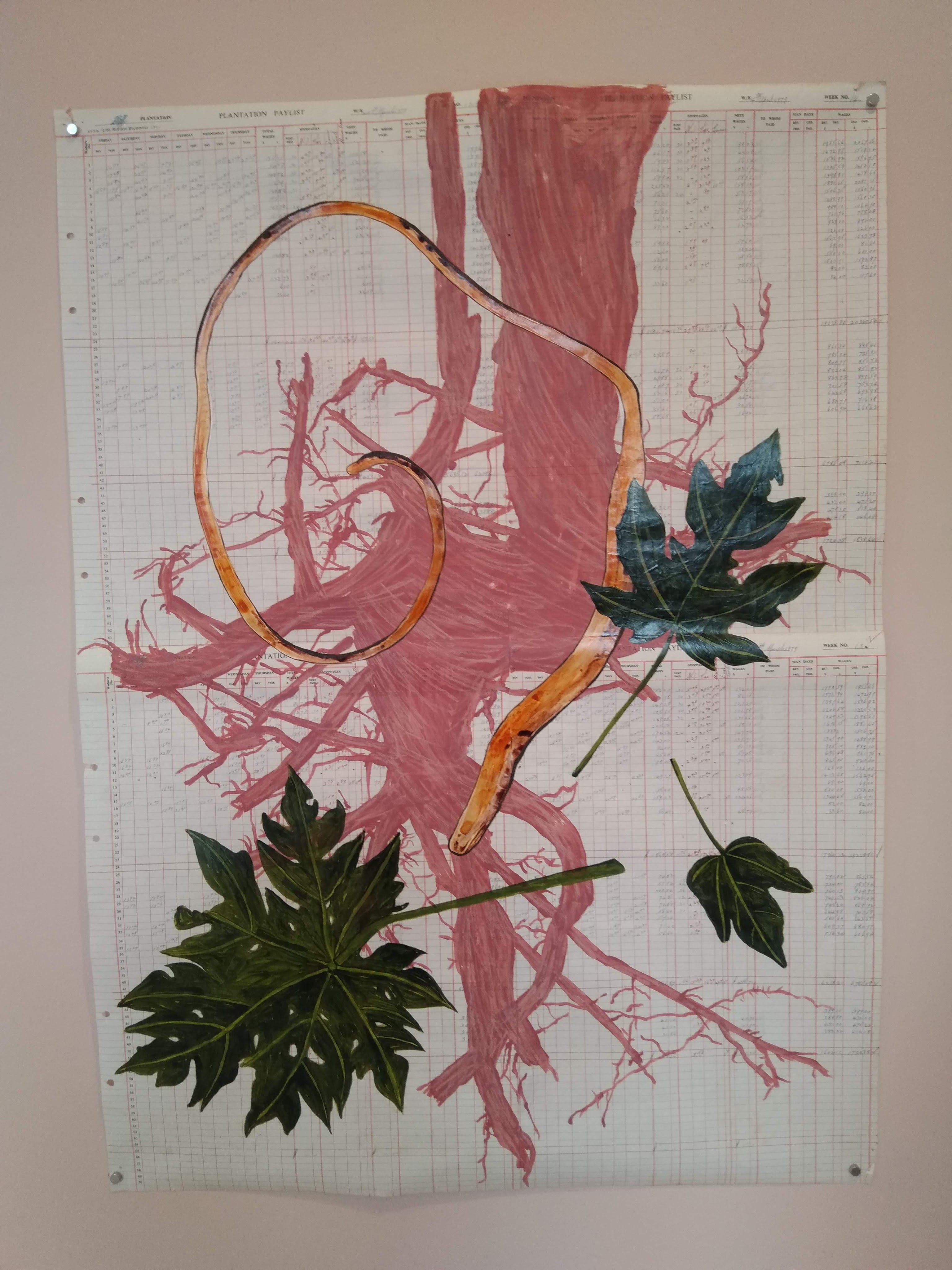
The work of both Annalee Davis and Lyndsay Mann anchors the exhibition in something deeper, bringing the role of the Botanic Garden, the collection of plants, the colonial ecosystem at the heart of RBGE’s existence, into view. Annalee Davis is a Barbadian artist whose studio is situated on what used to be a sugar plantation. Her practice investigates the history of that land, examining the power structures that have been tilled into the soil. Here, her series As If the Entanglements of Our Lives Did Not Matter (2019-20), is casually pinned up on the wall, unframed, unglazed. It immediately felt visceral and direct, denying the formality, poise and stiffness of Inverleith House. Pink, flesh-like depictions of messy clumps of roots are daubed over old payment ledgers from the plantation, which are intriguing, loaded documents in their own right. In a haunting portrait, she places two of her ancestors side by side, who though blood relatives, would have never lived together in reality, separated as they are by race and class. 

Annalee Davis, ‘As if the Entanglements of Our Lives Did Not Matter’ (2019-20), detail

Davis’ art works in dialogue with Lyndsay Mann’s A Desire for Organic Order (2016), a mesmerising film of 55 minutes which explores the RBGE’s Herbarium, where species of preserved plants are kept for study and research. Although most visitors won’t have time watch the film from start to finish, it’s a fascinating piece, which shines a light on the strangeness of it all: the meticulously categorised, catalogued, classified plants, sitting in row upon row of filing cabinets and box files, the collection expanding over the centuries as new species are found and brought to the RBGE, their final resting place. 

The violence surrounding these collections is examined at a distance, with the narrator’s voice dispassionately implying but never quite explaining what we know now, that far more care was given to these foreign plants than to the humans who lived alongside them. If you do have the chance to sit here a while, I’m sure it will make you see the exhibition, and the whole RBGE endeavour, in a slightly different light. You may not think you need this part of your world to be challenged, that you just want to enjoy the Botanics and not think too much about the difficult history and context. But it’s the ability of artists to show things you thought you knew in a new way, that is what makes them so vital to how we think about our past, present and future. That’s why we need the upper floor of the exhibition. We can’t just have a “gathering of flowers”, we need someone to tell us what they mean.

Flower displays at ‘Florilegium: a gathering of flowers’

‘Janet’ by Caroline Walker at Ingleby Gallery

Yesterday I went to see Janet, an exhibition of paintings by Caroline Walker. This was my first Edinburgh gallery visit since March, and it felt great to be back.

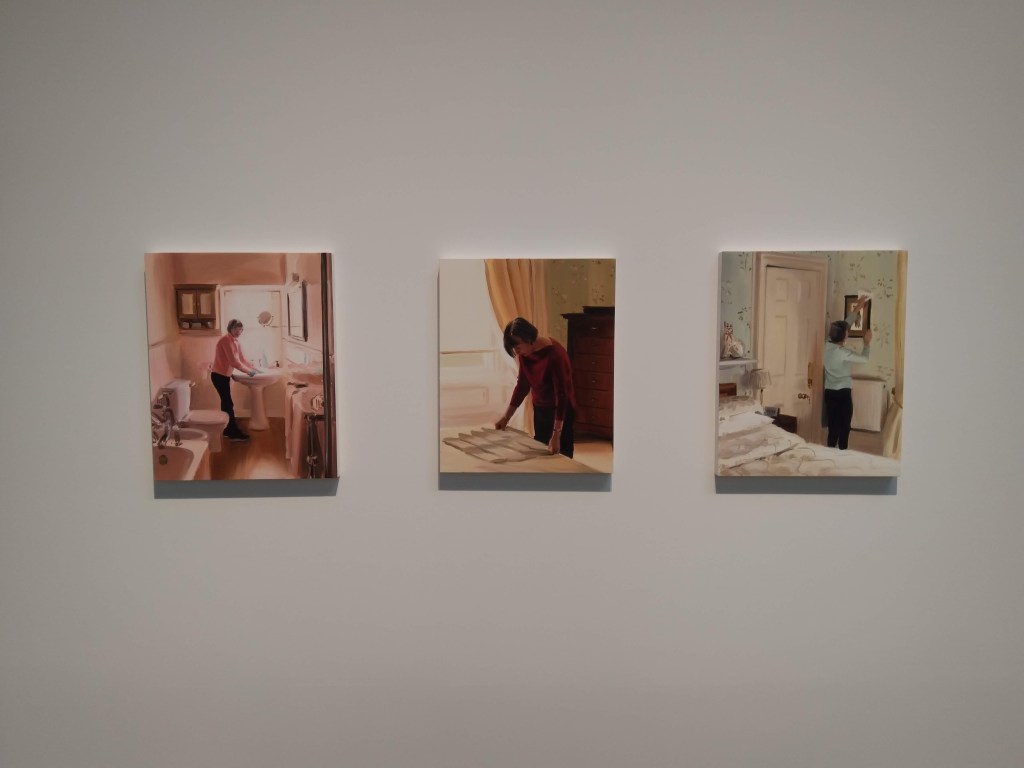
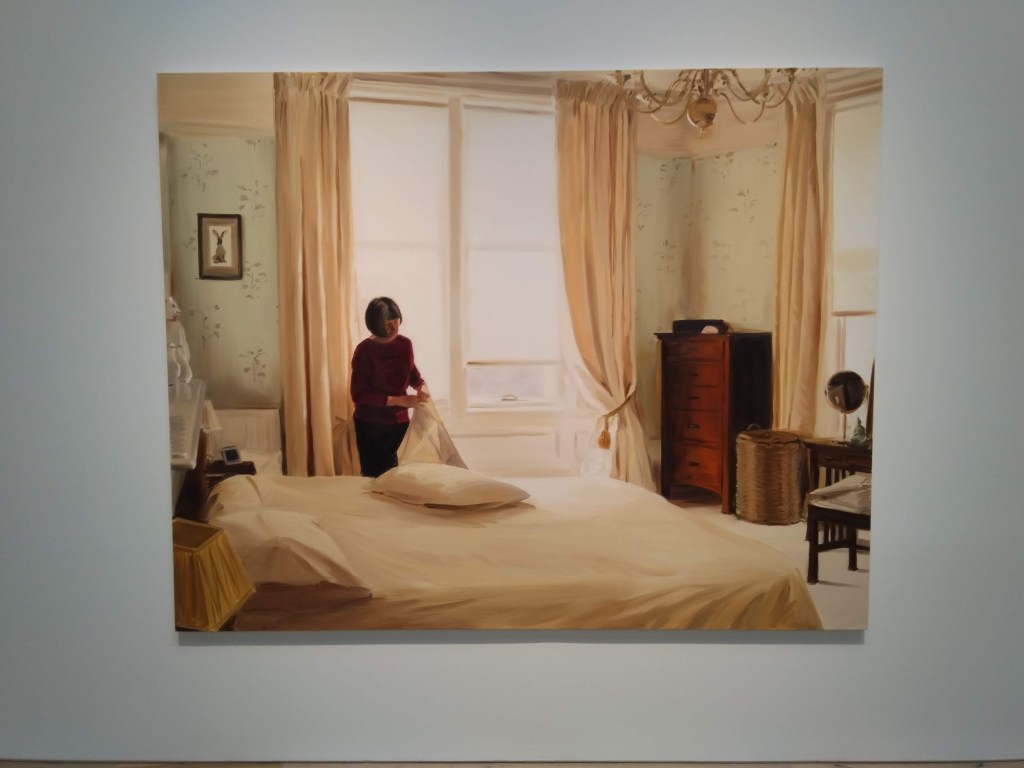
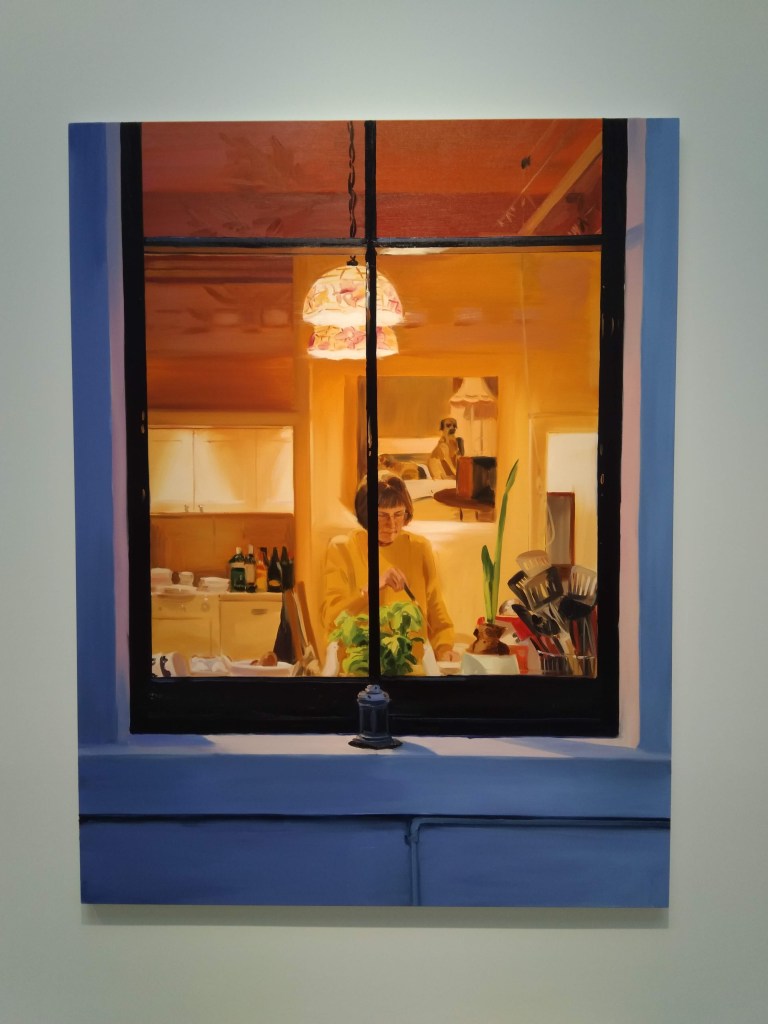
Caroline Walker, (born Dunfermline, Scotland), has created a series of works focusing on her mother, Janet, based entirely in her home. They document her mother moving from room to room, like the evidence of a childhood game. Caroline seemingly goes unnoticed, she spies on her mother, following her as she carries out chores: cleaning, gardening, cooking, dusting. We too, the viewers, spy, follow and peer in unnoticed, and it’s almost surprising when on one canvas, Janet looks straight back at us.

From left to right: ‘Bathroom Sink Cleaning, Mid Morning, March’, (2019), ‘Sizing Pillowcases‘, (2020) and ‘Dusting Pictures, Late Morning, March’, (2019)

These domestic activities are elevated, not dismissed, by the artist. The images are snapshots which combine immediacy of photography with the grandiose detachment of oil paintings. These daily moments are purposeful, meaningful, considered, deliberate.

Changing Pillowcases, Mid Morning, March’, (2020)

Yet they are also intimate. They capture the feeling of when you’re walking past houses in the winter when it’s dark outside, when you’re thrilled and somehow comforted by the warm glow within, even though you’re outside of that warmth. That feeling is especially captured by the jewel-like light in Making Fishcakes, Late Afternoon, December (2019), and Tucking In, Late Evening, March (2020). I loved looking in, indulging my curiosity. You can tell a lot about someone by what they surround themselves with. Janet likes animals. Janet seemingly also collects egg flips.

Making Fishcakes, Late Afternoon, December‘, (2019)

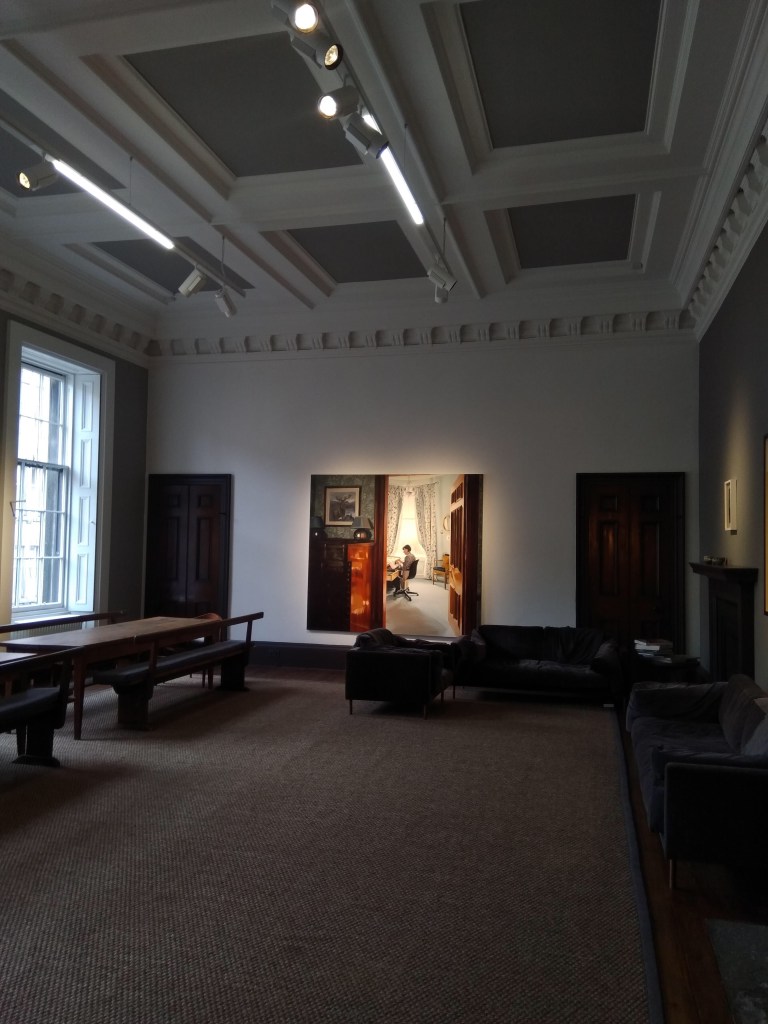
At Ingleby Gallery, the main exhibition space is on the ground floor, but upstairs in the Feast Room there are works by other artists the gallery represents. It’s like a special extra helping of art you didn’t know you were going to get, and was here where I found my favourite work by Walker, Hemming Pyjamas, Late Morning, December (2020). The darker palette of the room around the painting, the fact that the room itself is more domestic (with sofas and a dining table, albeit very grand), the placement of seeing it from afar as you come up the stairs makes it so utterly convincing and beautiful. Even though Walker paints on linen, which gives an overall matte effect, the warm light shines from the room, reflecting off the chest of drawers, beckoning you in.

‘Hemming Pyjamas, Late Morning, December’, (2020)

This is a wonderful show about light, home, warmth, the intimacy of people doing normal things. It’s what we want our homes to be, there’s a serenity about these paintings, a peace I’d like to carry with me into the next few months of winter at home.

Janet by Caroline Walker is on at Ingleby Gallery until 19th December, they are open Wednesday-Saturday, 11am-5pm. The exhibition is free but you need to book a timed slot via the website.

Among the Trees review

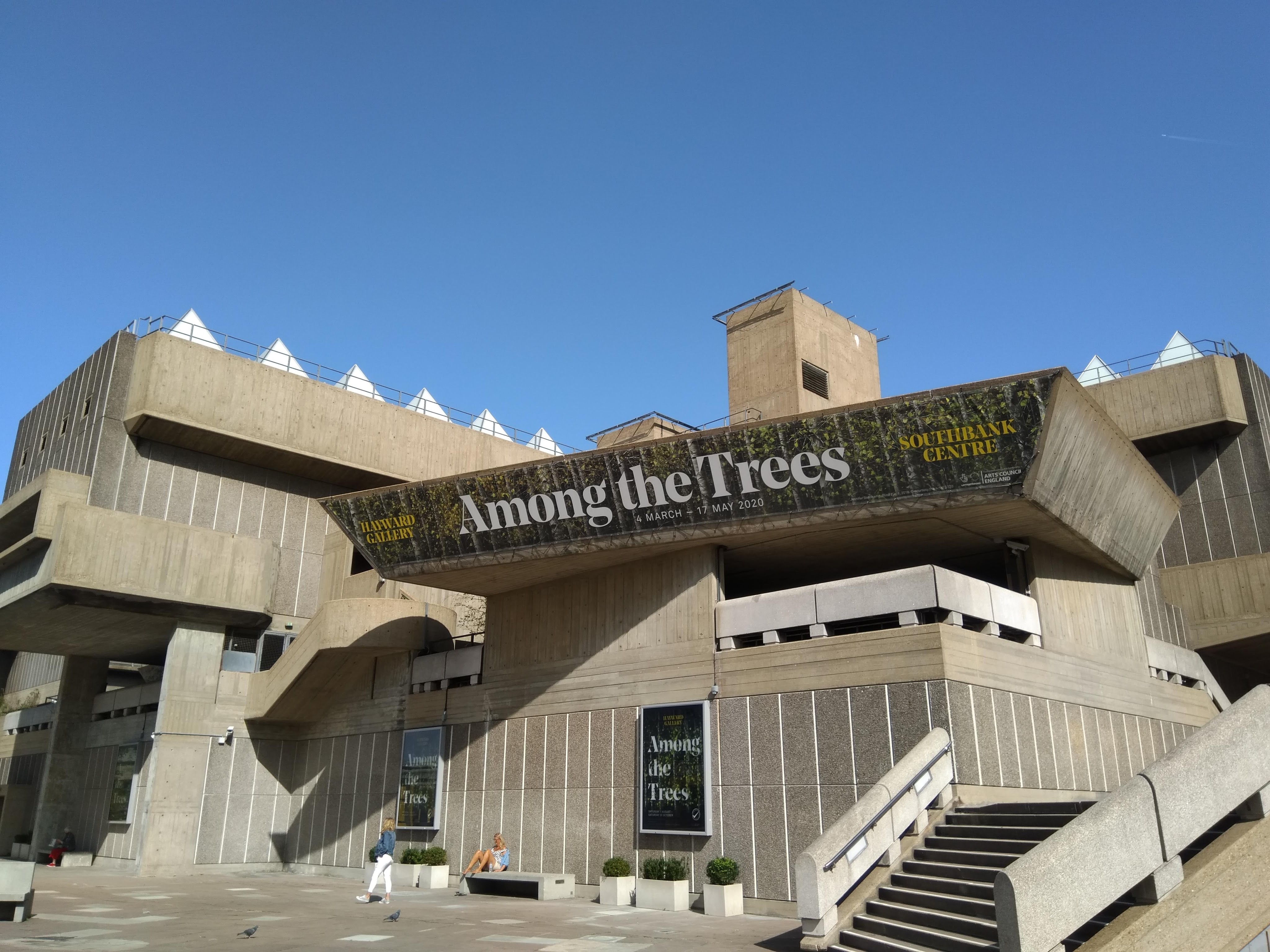
What does it mean to come to a place like the Hayward Gallery, the most concrete of concrete buildings in the heart of the UK’s largest city, to immerse oneself in images of trees? This isn’t a museum, a science hub, or a university, so it’s not a place dedicated to learning about trees, but for looking at them. It’s impossible not to hear strains of Big Yellow Taxi as you see the hoardings around the Hayward Gallery: “They took all the trees, put them in a tree museum/ and charged the people a dollar and a half just to see em”. The irony was particularly present for me, as I headed straight to a dark exhibition space to look at nature, having just arrived from the actual countryside (full of actual trees).

The outside view

In the first room, I began by wondering whether this was going to be a contemporary echoing of Romanticism. There were seemingly no signs of human life, except for the artists of course. The ghostly, delicate Untitled (2008) by Toba Khedoori, and Robert Longo’s Untitled (Sleepy Hollow) (2014) exposed what we forget in the height of summer, the intricacies of tangled branches. I wondered then whether the show was going to be boiled down to a central message: escapism through beauty. With Covid-19, Brexit, government incompetency, economic collapse and the US election for context, we crave escape more than ever, and nature can seem to offer some sort of way out of it all. That’s also what the Romantics thought too: the fewer humans in their landscapes, the better! But we know that’s not a true representation of landscapes. They are, and now always will be, shaped by humans – for better and for worse. In that context, what does it mean to imagine landscapes without humans? Is it eco-fascism, or just an overly simplistic, narrative of nature = good, humans = bad? The artists and artworks in Among the Trees put this idea under a microscope, reminding us that art can do both – be visually pleasing and profound.

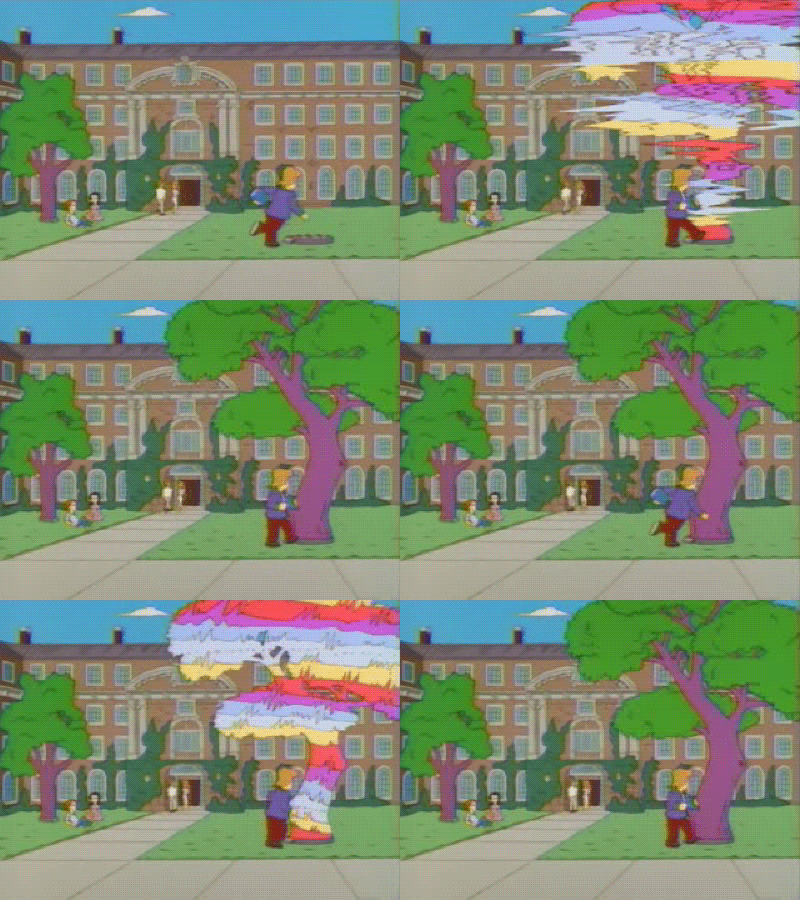
Remember the iconic Simpsons episode where Lisa has her fortune told? It’s full of painfully ironic, insightful vignettes of how the near future might pan out. In a college campus quad, a plaque reads “In memory of a real tree”, but the tree is flickering like a static TV screen. An electrical malfunction exposes this simulacrum for what it is – until a passer-by boots it back into functionality, into looking natural again. That’s the image I couldn’t get out of my mind while at this exhibition. I was looking at a monument to something we are knowingly destroying; the monument was artificial.

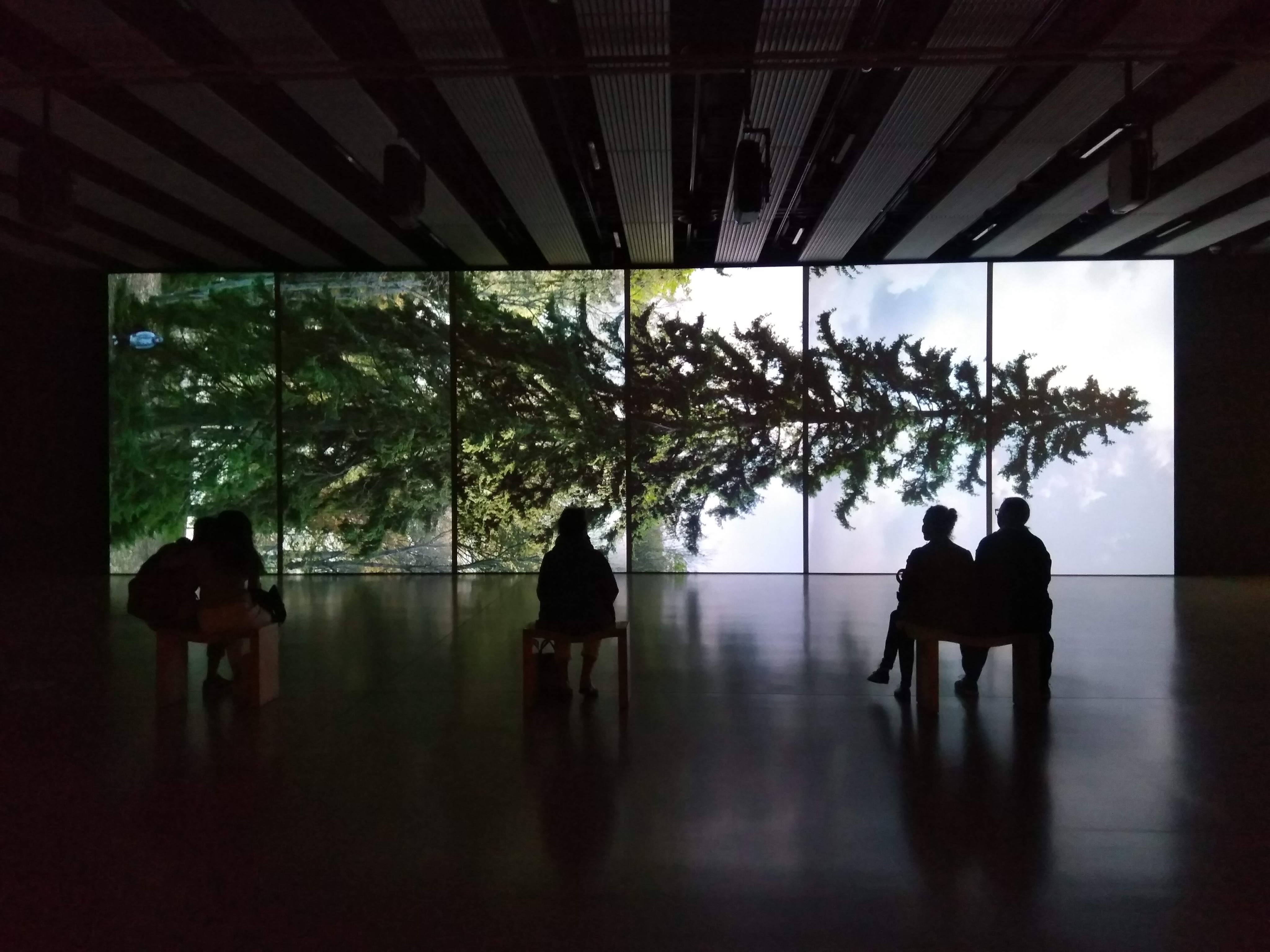
Yet the highly effective use of artifice in conjuring the natural is what I found most interesting about Among the Trees. One of the first spaces is dominated by a huge video projection across the back wall, the work that is on all the posters. This is Horizontal Vaakasuora (2011) by Eija-Liisa Ahtila, depicting a huge native Finnish spruce in five video panels, each slightly out of sync. It’s mesmerising. We hear the wind in the branches, bird song, and watch the spindly, yet strong and flexible, living tree, dancing, creaking and swaying in on itself. There’s a kind of discombobulation that comes from seeing something this tall lying on its side. You’re not supposed to see the tops of these trees close up. There’s a feeling of privilege in looking without having to crane your neck, but also a foreboding in the position. Trees lie this way when they are felled.

Eija-Liisa Ahtila, ‘Horizontal – Vaakasuora’, 2011

The other large-scale video work is Jennifer Steinkamp’s Blind Eye 1 (2018). It is wholly artificial, using animated computer technology to show a fake birch tree forest move through the cycle of all four seasons in a cool 2 minutes 47 seconds. I’ve always loved the visual effect of technology speeding up the forces of nature in a way that reveals how utterly miraculous they already are – time-lapse videos of plants growing impossibly quickly, sprouting leaves, buds, flowers, seeds and withering and dying all in a few moments. It’s all so heart-wrenching and magical.

Jennifer Steinkamp, ‘Blind Eye 1’, 2018

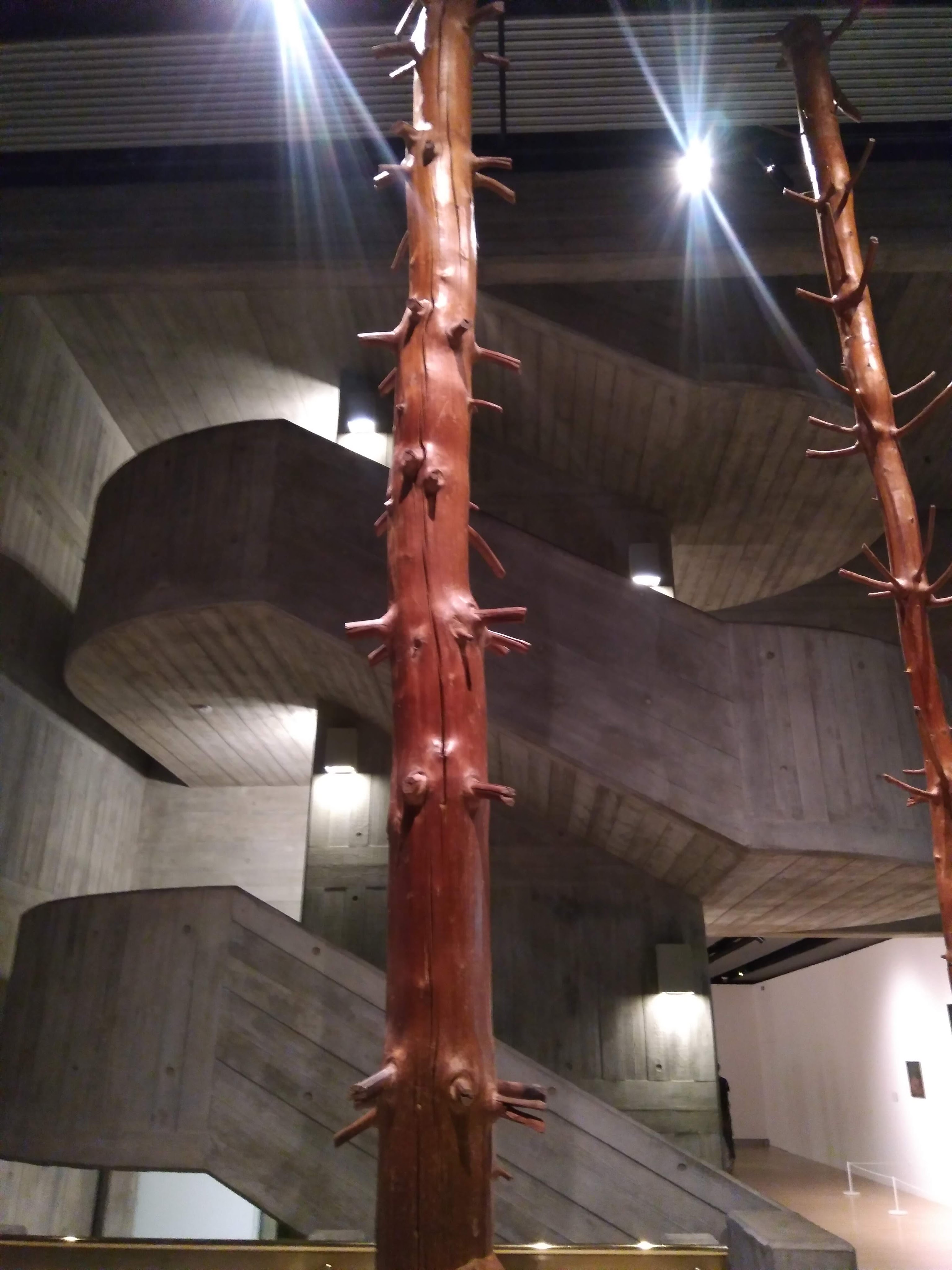
Revealing what is already there is at the heart of Giuseppe Penone’s work with trees. His Tree of 12 Metres (1980-82) is the most ‘natural’ of all works in the first room: a very tall tree has seemingly been divided in two, stuck into plinths and carted into an art gallery, it’s warm earthy tones juxtaposing with the smooth, cold concrete staircase behind. But this tree is actually a sculpture, fashioned from an industrially planed piece of timber that Penone painstakingly scraped away, in a reverse Frankenstein fashion, following the knots, lines and ridges in the wood, unlocking how the tree would have looked long before it was felled. He takes it back in time, back to nature, back to life.

Giuseppe Penone, ‘Tree of 12 Metres’, 1980

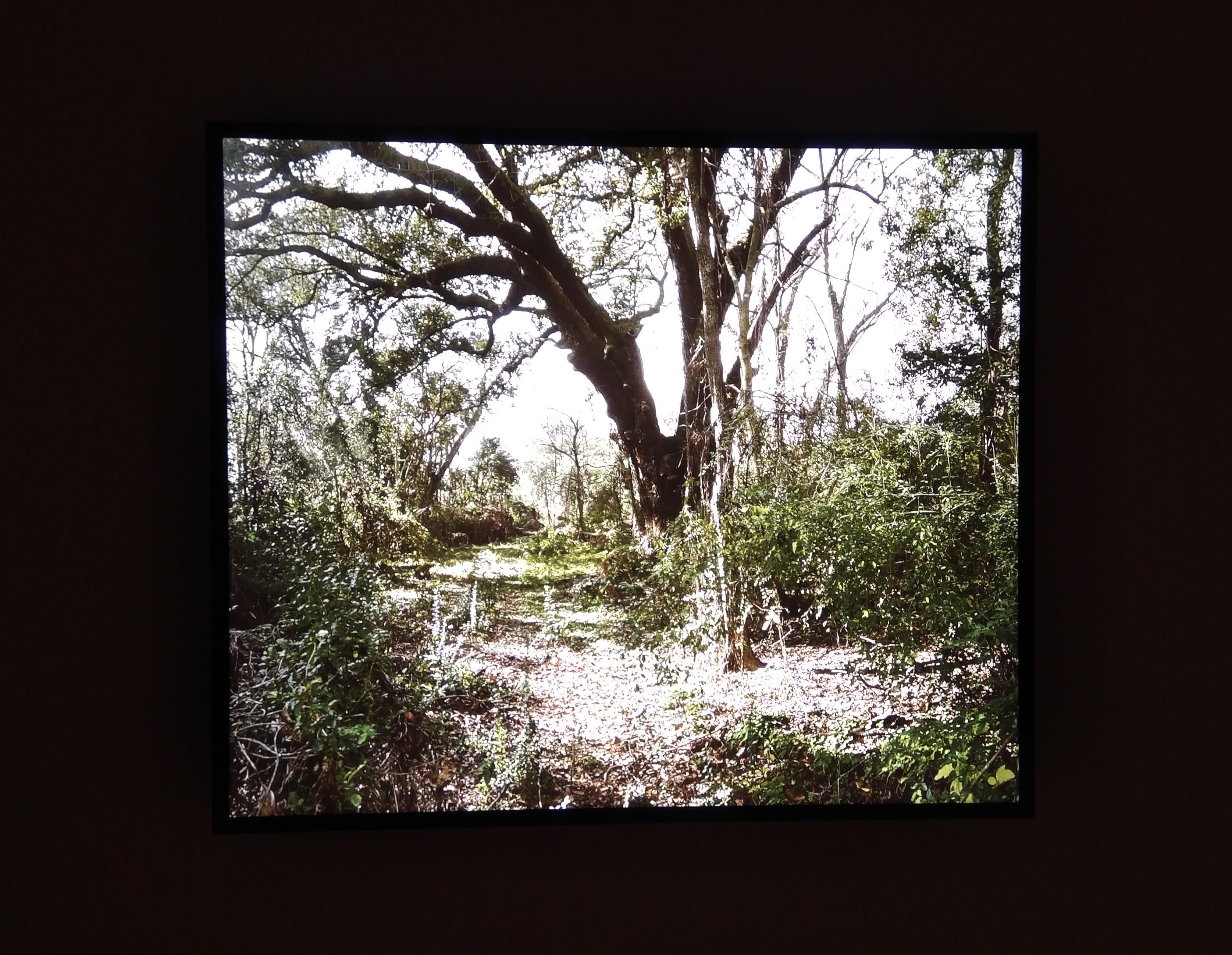
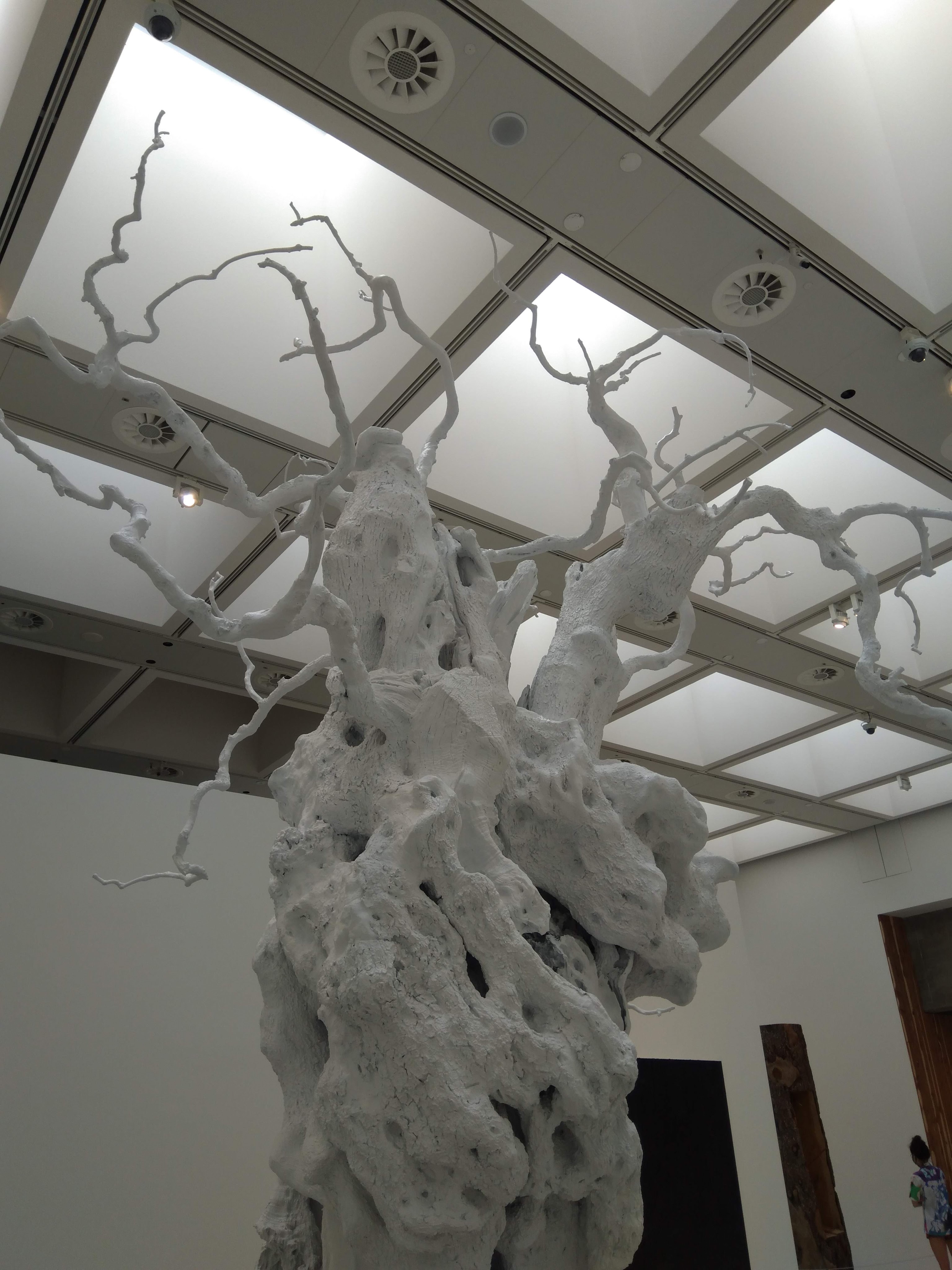
Death and life are here in abundance. Because trees can span many human lifetimes, they are presented as witnesses, as memento mori. Ugo Rondinone’s cold moon (2011) is a cast of an ancient olive tree in southern Italy, its hulking, twisted, wizened form reminiscent of the White Tree of Gondor, as well as calling to mind the Ancient Mariner, an old man sitting in a corner of a dark city pub, a man who has *seen things*. Steve McQueen’s Lynching Tree documents where countless African-American bodies were lynched, a site encountered while filming 12 Years A Slave. It is a tree that has, in its very shape, borne witness to and memorialised the worst of us.

Steve McQueen, ‘Lynching Tree’, 2013

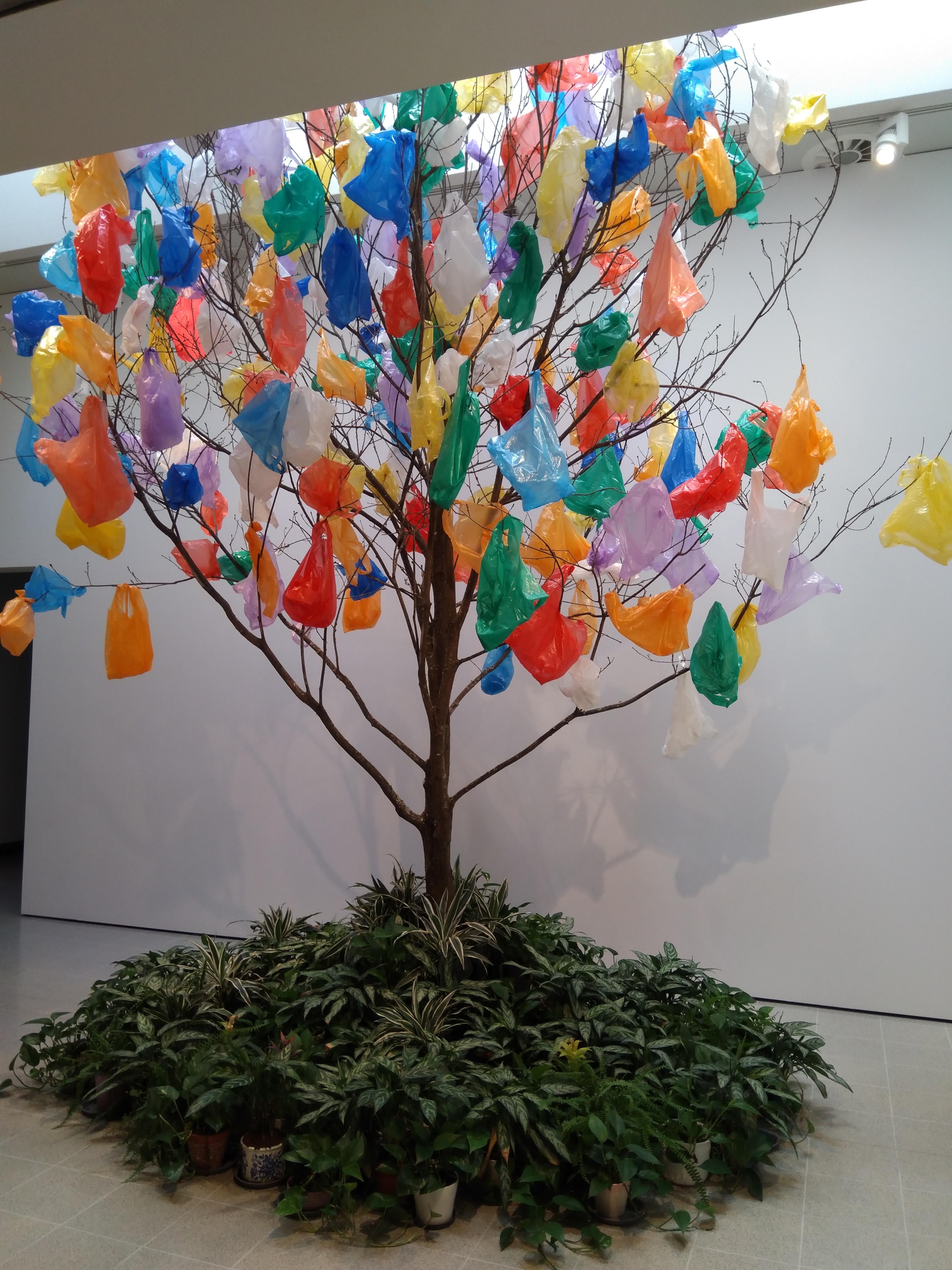
Alongside this, you can see Plastic Tree B, created this year by Pascale Marthine Tayou, where plastic bags have become the bright, somehow beautiful blossoms of an Instagram-worthy sculptural tree. Simplistic idea perhaps, but still visually striking, and reminding us of how damn precious it all is, and how much it is slipping through our fingers because we are, by and large, terrible custodians. You can’t even walk down a street without seeing hundreds of disposed plastic masks on the ground, like scattered flags of surrender to the coronavirus age. The show could probably have pressed more on the climate crisis message. But I was reminded in a talk by Olivia Laing recently, that in the face of politics, art won’t make the change itself, but it’s a way of “galvanising, and grouping a response”. In other words, art can’t do the work for us.

Pascale Marthine Tayou, ‘Plastic Tree B’, 2020

The woodland I was walking in just hours before my trip to London is full of signs of human life. On a nearby bench, “Trump Out” is scratched into the surface, reminding us that our human politics infiltrate every part of our world, no matter how much we might wish to escape them. We have to acknowledge that, and not lose ourselves in the mesmerising beauty of nature and of art. That is appreciation, and it might give us space to become mindful, but that is only the first step. A moment of escapism is acceptable, but only if we emerge from it refreshed to re-engage, to take meaningful steps to do some damage limitation, to avoid the climate crisis that is unfolding before our very eyes. Otherwise we might find ourselves, in forty years, frustrated that our tree memorial isn’t convincing enough, wishing we had acted before it was too late.

Ugo Rondinone, ‘cold moon’, 2011

My two-year-old nephew taught me how to look at art after lockdown

Last week I spent a really nice chunk of time hanging out with the youngest member of my family. My nephew is two and he’s great company. He’s how I want to be: curious, reflective, eager for fun and a sponge for new information. With his wide-eyed wonderment, he has taught me how to look at art again after a long, enforced break (otherwise known as lockdown).

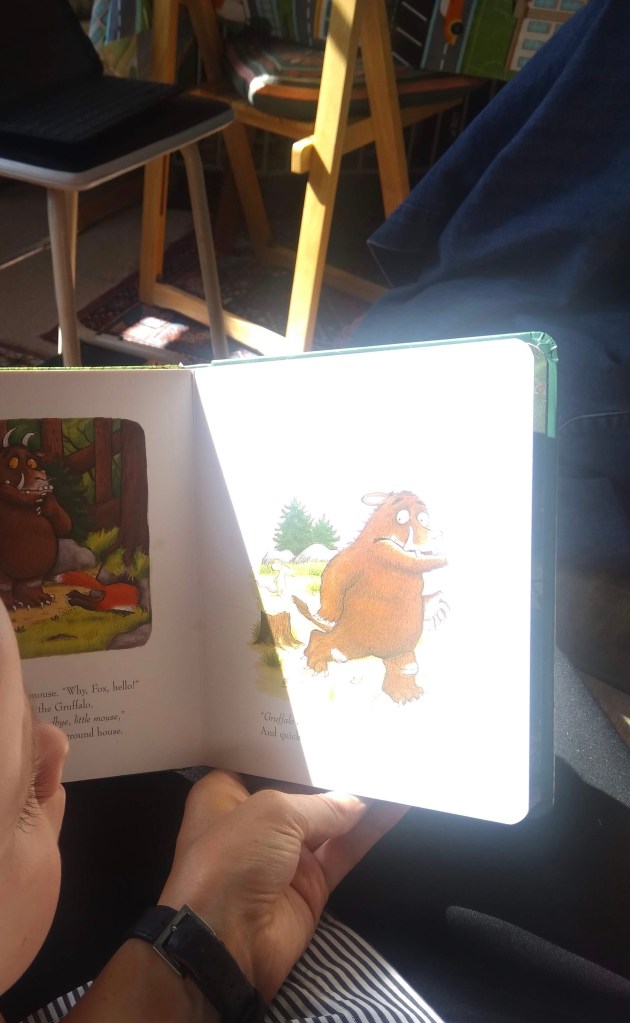
We read books together and looked at the pictures (me reading, both of us looking). Illustration is amazing, and I think a severely underrated form of art. I’m extremely lucky that in my day job, I interact with children’s books on a regular basis. Children’s books are some of the most accessible, universally loved and widely appreciated ways we experience art. The stories fascinate us, but the images are what portray and communicate the joy and terror of the narratives to young minds who cannot yet read or form sentences themselves. Fearfully gazing at the Gruffalo’s long black tongue and terrible teeth, or admiring the crisp and clear (read Scandi) aesthetic in Jon Klassen’s I Want My Hat Back, we carry the pictures with us long after the words have faded from memory.

Some of the most memorable books from my childhood were about looking at details. I was raised on books by Janet and Allan Ahlberg, searching for the characters and minuscule, meticulously written lost letters in The Jolly Postman was my delight. Later, The Most Amazing Night Book by Robert Crowther was my favourite. My nephew is also seemingly enthralled by the details. His favourite thing to do is to ask “Who’s dat?”, pointing excitedly at tiny ladybirds, trees, rocks, main characters, random piles of hay, clothes and anything else that catches his eye. Anyone who has interacted with children regularly will tell you they are incredibly perceptive and observant. Sometimes surprisingly so. They can see and sense things adults can’t.

A household favourite: The Gruffalo by Julia Donaldson, illustrated by Axel Scheffler

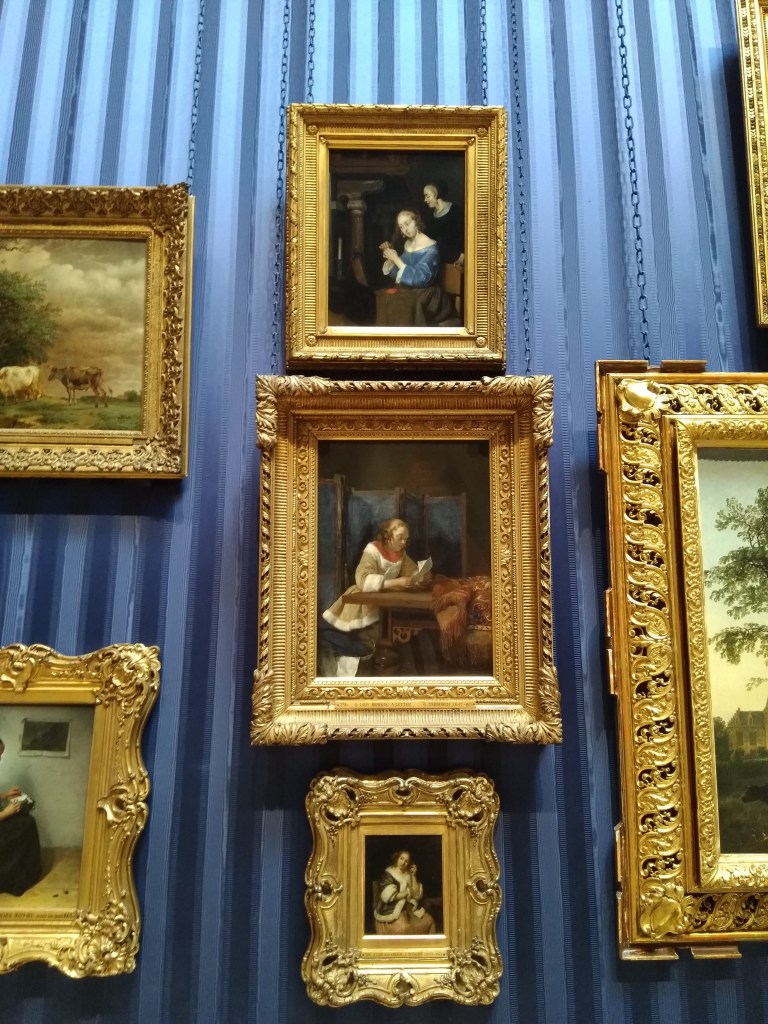
Last week, along with hanging out with my family I also went to a gallery for the first time in six months. After trawling the internet and realising most places in London had been booked out long before by far better-organised art lovers, I managed to get a midday slot at the Wallace Collection, one of my favourite places to see art, as well as admire luxurious furnishing (and pretend I’m part of eighteenth century aristocracy). I would probably go to see the silk wall hangings alone.

Blue wall silks and golden frames in a dense salon hang

I was so happy to have a slot, but despite really friendly staff and the safety measures that had been introduced, it wasn’t the most relaxing experience. It was a pressing reminder that we’re all still working through the anxieties this pandemic has produced. That the new normal isn’t going to be as good as the old normal for quite a while.

A one way system was in place and there were capacity limits on all of the rooms on the route, which created the slightly unpleasant feeling of being on a conveyor belt. Somewhat obliged to wait for those in front without pressuring them, but not wanting to take too long, disrupt the flow or be left behind, stuck in a swirling eddy without being able to rejoin the main current of my fellow gallery-goers. Not the best atmosphere for being absorbed by and for absorbing art.

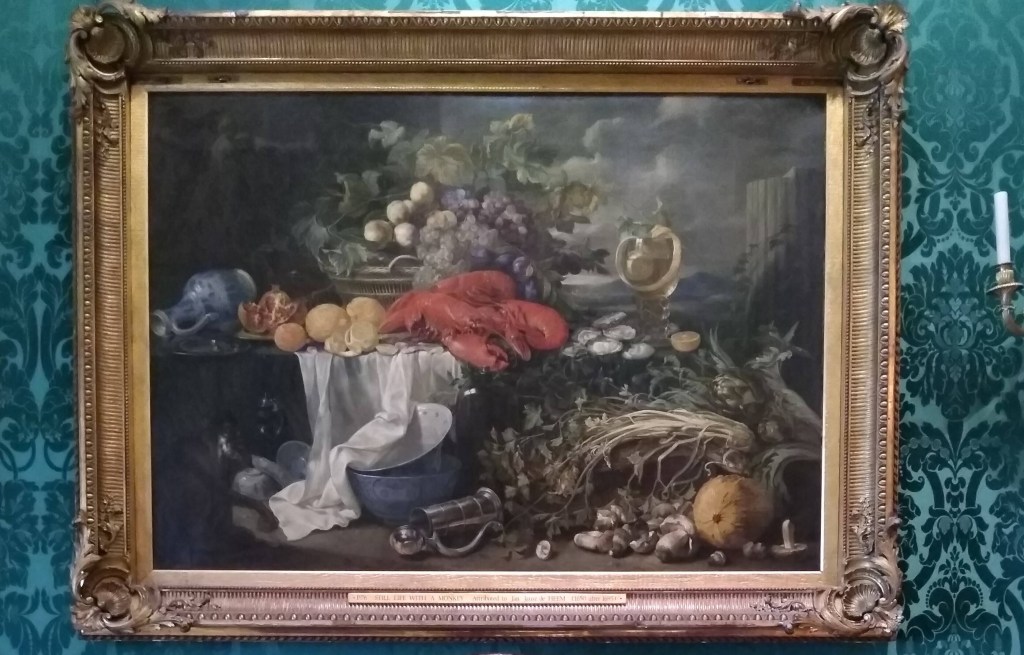
I spent the first part of my visit worrying about the choreography of my movements between my fellow observers, concerned I was getting too close, getting mildly annoyed with pushy people behind me. But then I saw an oil painting, Still Life With A Monkey, attributed to Jan Jansz de Heem (c.1670-95), that made me stop in my tracks. I thought about my nephew, how much he would love looking at the cornucopia of riches in the painting and examining all the elements, individually interrogating their form and purpose. I stepped off the conveyor belt and just looked.

Still Life With A Monkey, attributed to Jan Jansz de Heem (1670-95)

The spiral of lemon peel, the oysters, the mushrooms scattered on the table, the oozing pomegranate, the jug on its side, the tankard on its side, the bright white cloth, the monkey?! This kind of artwork demands your time, forces your eye to wander. We understand that still life paintings are often laced with double or even triple meanings (broken column = transitory nature of human life), but just looking at the surface level composition of what is there, without any further knowledge of iconography or semantics, is a pleasure in itself. The brightness of the lobster, the chaos and excess of it all, the way the food packs 7/8ths of the entire canvas, the needlessly dramatic sky behind. The above is my photo taken on the day, but there’s a brighter, slightly yellowy version of the painting here if you want to look more closely at the details.

Much of what drives my blog and my Instagram is a need and a wish to celebrate the everyday, to encourage others to read the notes in the margins, to slow down and enjoy colours and contrasts, patterns, eccentricities, particularly of city life. We can apply this attitude to great paintings in grand houses too. We think we know still life paintings. I imagine they’re the paintings most readily walked past without so much as a second glance because they are rarely super-famous showstoppers — but let’s take this opportunity to recognise how very bizarre and beautiful they are.

When we return to art galleries, they might not be the same as they were. But if we remember to approach art with curiosity, to take time, and notice the details, even if we haven’t got the brain space to work out what they mean, they can bring us both joy and a little peace. As from now, I’ll be adopting the “Who’s dat?” philosophy of close looking. That’s how I want to return to engaging with art as lockdown lifts. I’ll encourage you to do the same, but if you’re not feeling ready just yet, you can always start with The Gruffalo.

Glasgow International is happening online, right now

The art festival Glasgow International (Gi) had to cancel and has curated a set of seven different artworks available online for the duration of the festival (until 10th May). Some are special commissions, some works were made long before the pandemic hit, but all artists would have been taking part in the festival itself, and the works represent a taster of what would have been available to see. While I understand that Gi want to mark the period when the festival would have taken place, it feels needlessly restrictive to have made this very interesting set of works available only to take them down after two and a half weeks. Time seems arbitrary now. I barely know what day it is, let alone the date. Why not leave them up until the end of lockdown or the end of May at least?

I was a bit late to the party but I’ve just finished watching/listening to them all and wanted to highlight two that resonated with me.

The first is Yuko Mohri’s Everything Flows – distance, 2020. Mohri has taken Yasujirō Ozu’s 1953 silent film Tokyo Story (which I haven’t seen), and has spliced together scenes devoid of human presence. What we are left with is a ghostly compilation of images which suggest humans through their absence. The city continues to function, ships move through water with purpose, but seem to be operated by remote control. Robotic railway station signs indicate platforms and train times to no one. Clothes on washing lines blow in the breeze and shadows on the walls of cramped interiors hint at human life, but each time, the film cuts out just before the figure comes into frame. It’s a tantalising series of almost-moments, which chimes well with having experienced a quiet, deserted central Edinburgh over the last month or so. There’s a strong sense of people watching the goings on from the high viewpoints over the city. Lanterns look like eyes. A moth bashes against a light, a fragile reflection on the futility of existence in this silent world.

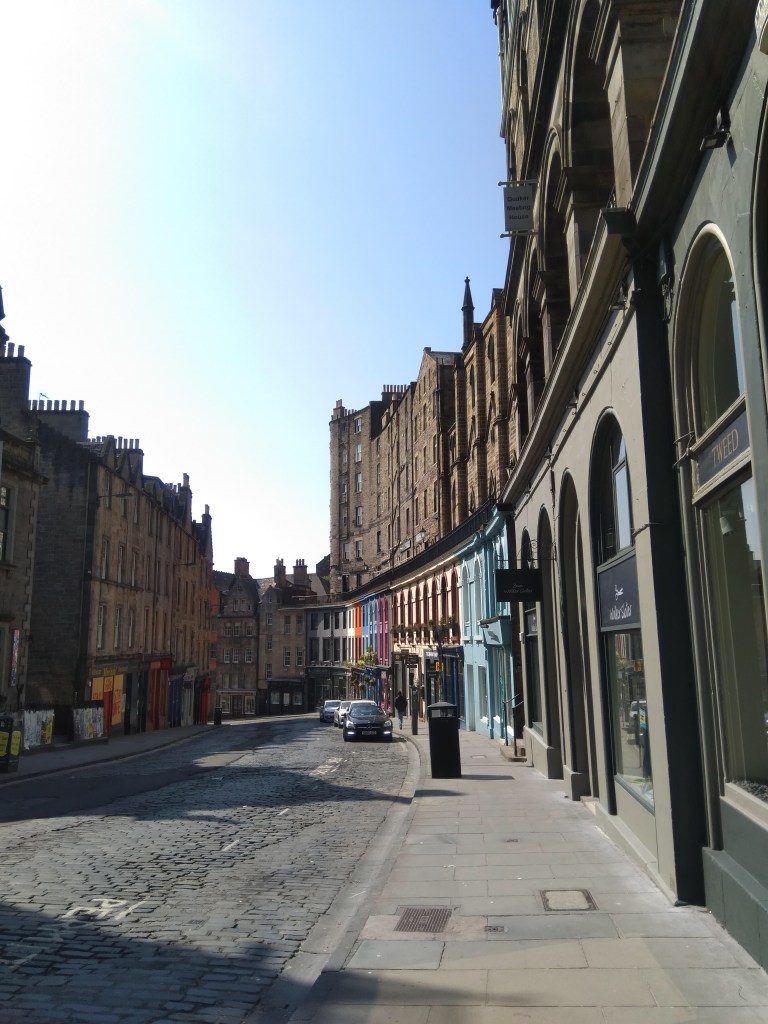
Victoria St, Edinburgh looking empty on 25 April 2020

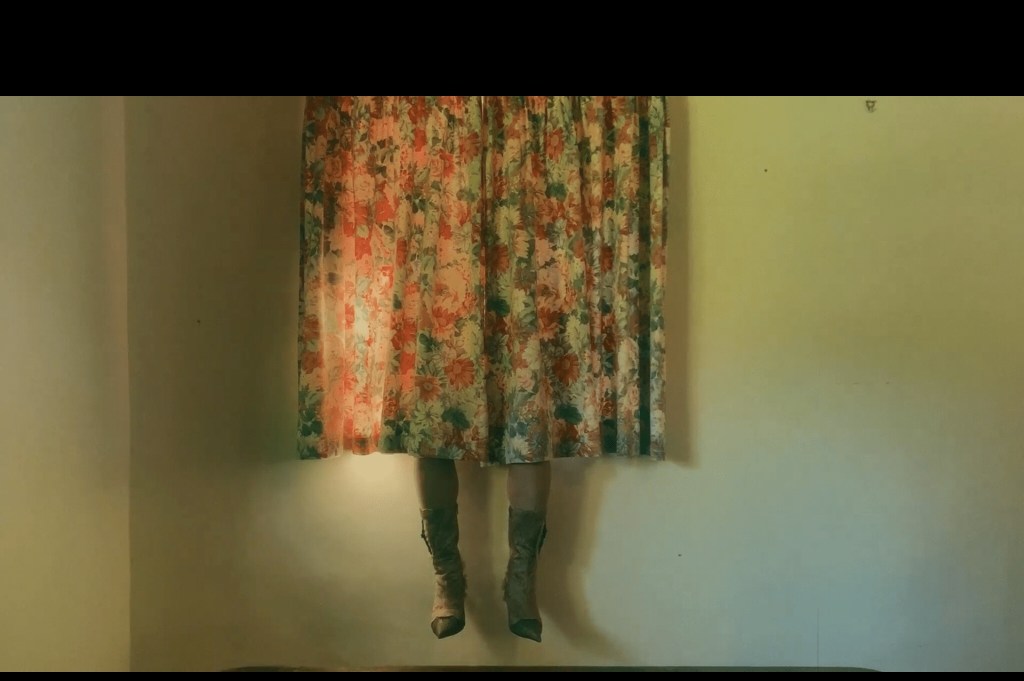
Urara Tsuchiya’s Give us a Meow, 2019, is my other pick of the bunch. This one surprised me – from the cover image and the title I didn’t think I would like it. But the 9 minute film is captivating. It tells a fragmented story, set in the rural idyll of a cottage and the countryside around it. We follow the escapades of a glamorous Asian woman who dons an impressive range of sexy outfits including animal print catsuits, fluffy negligee, powder blue and baby pink fur coats. The costumes are all made by Tsuchiya and are highly influenced by drag, adding to the fascinating confusion around the identity of our protagonist. She dances, applies makeup, takes selfies and does the ironing. It’s a surreal and humorous mash-up of the extremes of femininity, typified by one excellent shot which briefly flashes up, showing a pair of legs clad in high-heeled boots, sticking out from behind twee floral curtains. I took a screenshot which is probably not allowed, but who knows the rules of a digital art festival. Maybe this is part of a process of the democratisation of image-making, taken to a new level.

Still from Urara Tsuchiya’s ‘Give us a Meow’, 2019

For me, in a time of lockdown, it seems as though the character in Give us a Meow is attempting to recreate the experience of being in a nightclub within a completely incompatible setting of ‘home’. She dances like no one’s watching. She even has a little cry in the bathroom, picks herself back up and heads out again, an experience I’m sure we can all relate to. Seeing her vulnerability when navigating a cattle grid in heels is beautiful and moving and funny.

There’s also a fascinating, sinister aspect reflecting on the voyeurism of the film. She appears to be alone, but is not – she breaks the fourth wall repeatedly to interact with us, casting glances directly at the camera, creepily/seductively waving at us from the toilet seat. In the moments filmed outside, with her dancing by the side of the road, the film is shot from the perspective of someone watching from a car window. We are there, but it feels like someone else is there too. This also resonates particularly now – we rely on our cameras more than ever for interaction and attention, but constant rumours circulating about hackers in Zoom calls and sessions on Houseparty make us paranoid about who else might be watching. Tsuchiya created the work last year, but it feels more relevant than ever now.

So, that’s my take. I know there’s so much content out there at the moment, it can be overwhelming. I know that digital art events don’t appeal in the same way as the ones in ‘real life’, which can take you to different corners of your city and have a physicality to them that can’t be recreated on screen. But these artists have created something really interesting. What worked for me may not work for you – see what you think and let me know in the comments, or DM me on Instagram @encounters_art. I’m always here for a conversation about art!