Goodwood Art Foundation

The corner of West Sussex where my Dad lives, you are never far from a large country estate. Brown National Trust signs proliferate (Petworth; Uppark), and there are also estates that are still going, that still belong to some of the country’s richest families. You can tell this even by the architecture. In the villages surrounding Midhurst, many of the houses windowframes are painted in a bright saffron yellow, the colour of corn-fed chicken’s egg yolks. To a casual passerby, this might just be a jolly colour scheme collectively chosen by the locals, but in reality they are a territorial marker, showing that they belong to the Cowdray Estate (a 16,000-acre estate owned by Michael Pearson, aka the 4th Viscount Cowdray). 

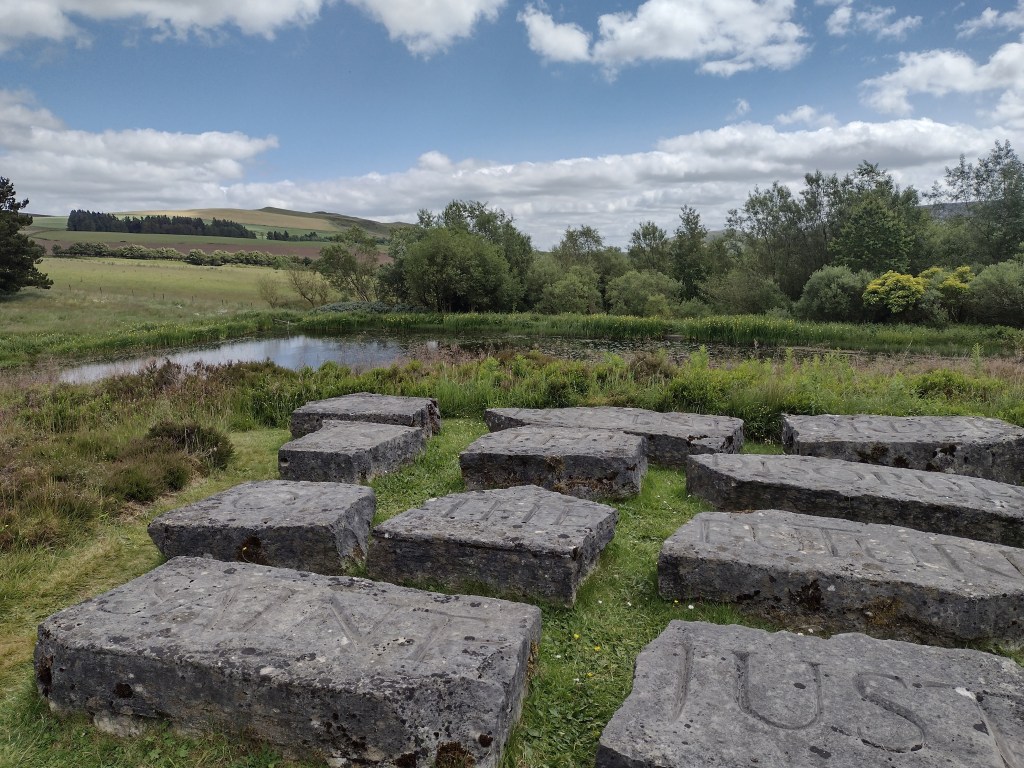
The Viscount’s neighbour is Charles Gordon-Lennox, 11th Duke of Richmond. His estate, Goodwood, is about 10 miles south of Cowdray. He is the owner of the the Goodwood Art Foundation, a beautiful new sculpture park and exhibition space tucked amongst the rolling hills of the South Downs. From 1992-2020, it was the site of the Cass Sculpture Foundation but it has been expanded and reopened. As it’s just a stone’s throw away from my Dad’s, I was keen to get there. Especially when I found out their first headline exhibition is by Rachel Whiteread, an artist I researched as part of my Master’s in 2019.
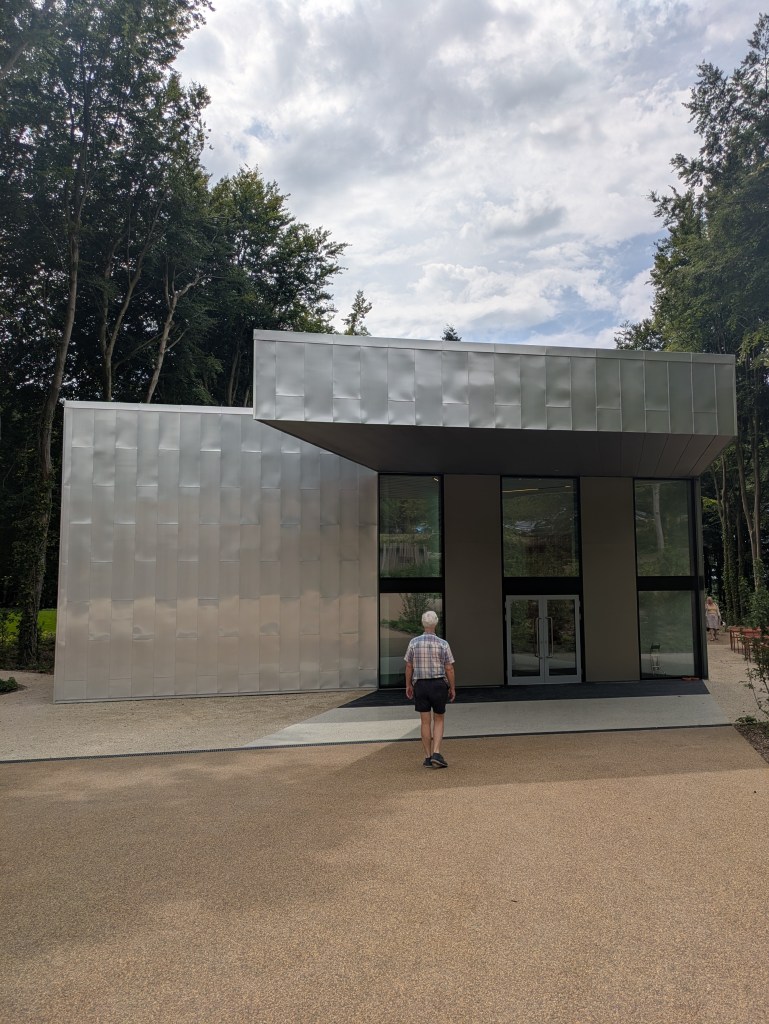
The Restaurant at Goodwood Art Foundation with my Dad for scale

My first impression is one of taste: everything looks new and clean and swanky. Like it cost a lot. There’s a striking black and silver and asymmetrical building, and for a second, it feels like I’m back at the Louisiana museum on the far reaches of Copenhagen. But the landscape around here is undeniably English: the rolling hills, the ancient woodlands, and the mighty oak trees dotted in the fields. It’s a fascinating, jarring almost, setting for Rachel Whiteread’s work, which has always struck me as unfailingly urban. Her use of concrete is what defines much of her sculpture, with her most famous work, House (1993) filling up an east London townhouse from the inside out, then its cast left behind, standing as a lonely monument to demolition and faded domesticity. 

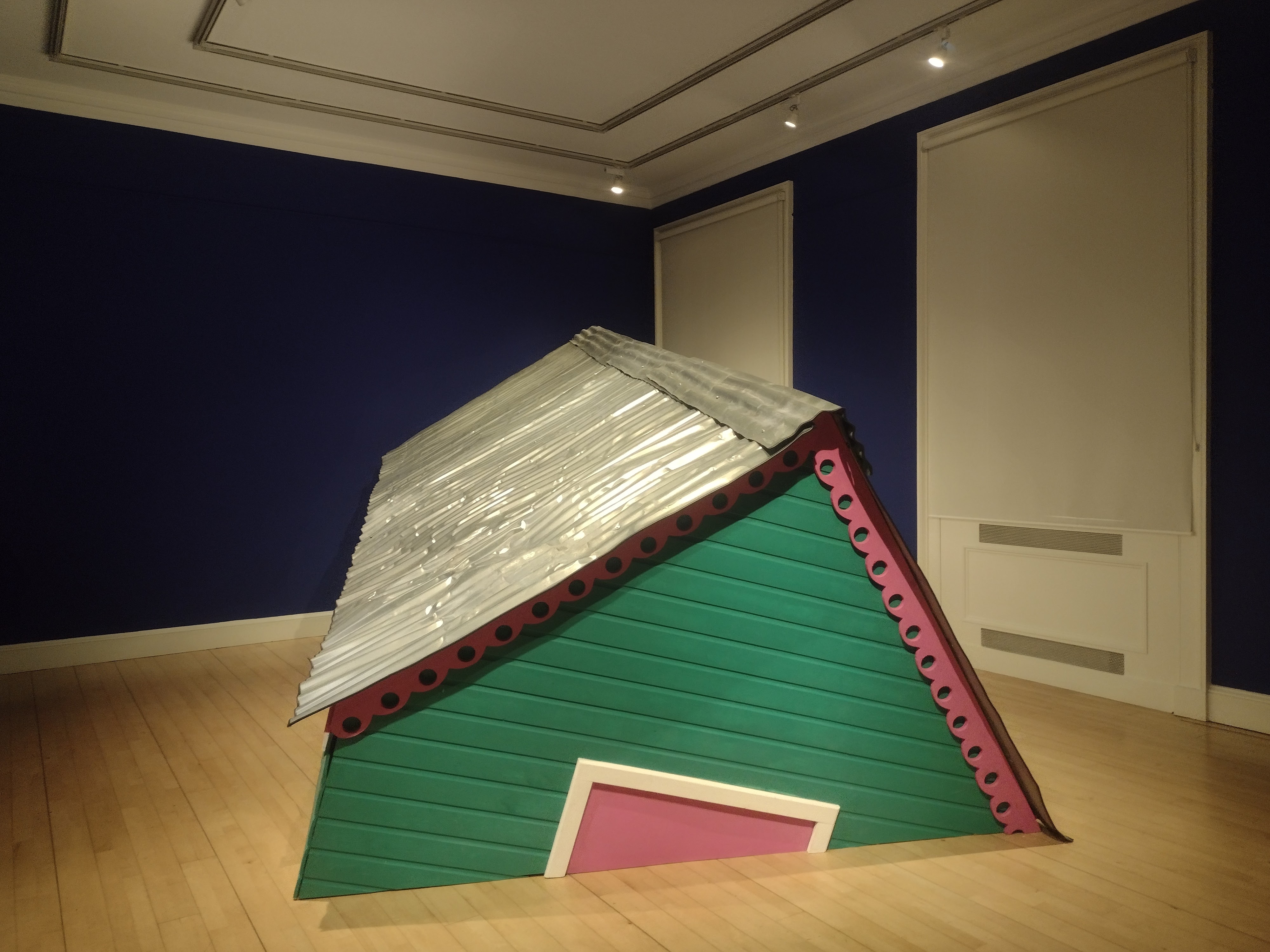
This season, Whiteread is the main focus of the larger gallery, one of two indoor art spaces at the Foundation. In the centre, the space is dominated by her work Doppelgänger (2020-21), a bright white ghost of a tumbledown corrugated iron shack, trees poking through the building’s seams. However, I was drawn to the photos on display, the first substantial showing of her photography. Her photos, like most people’s, were largely taken on her phone and capture landscapes, interesting shapes, everyday encounters with the traces of human presence, or as she says “eccentric features” that interest her. Whiteread views photographs as a form of notetaking, a sentiment which strongly chimes with me. Part of the reason for starting this blog came from a desire to capture those artistic ‘encounters’ that one meets within the city. So in Whiteread’s photos, we see fragments of colour against brown and grey of signs and posts, and the pleasing, satisfying textures of tiles, pictured side by side with dried, fragmented earth. The wall labels tells us the locations for these images: France, Rome, California, Essex, Tuscany.
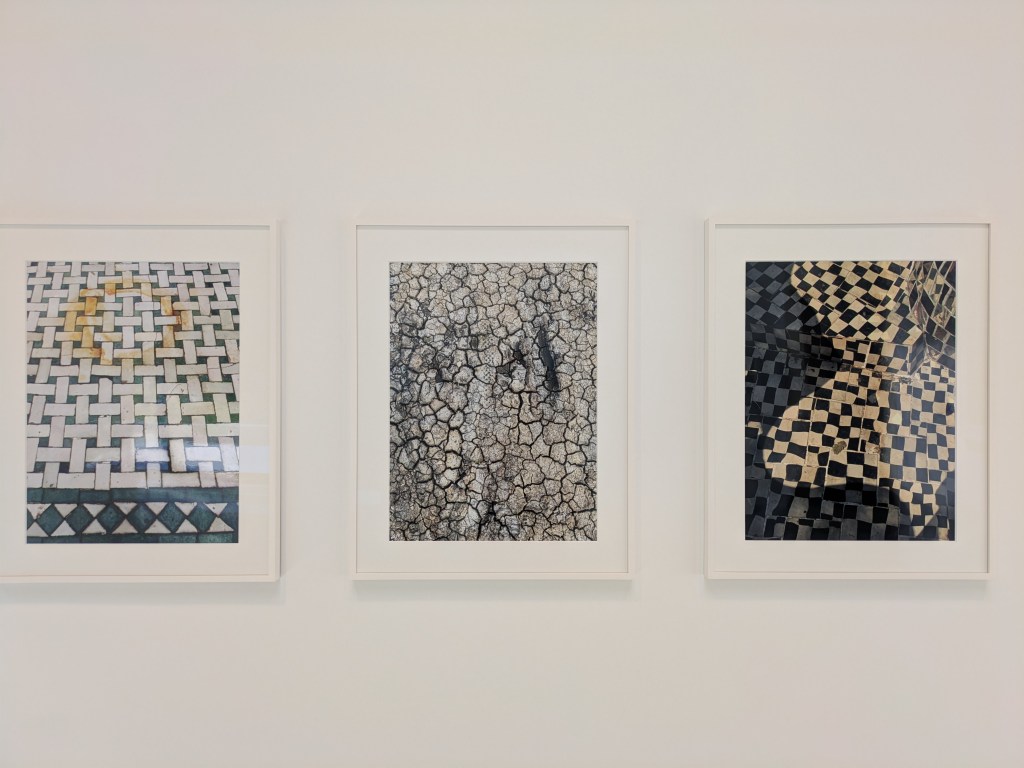
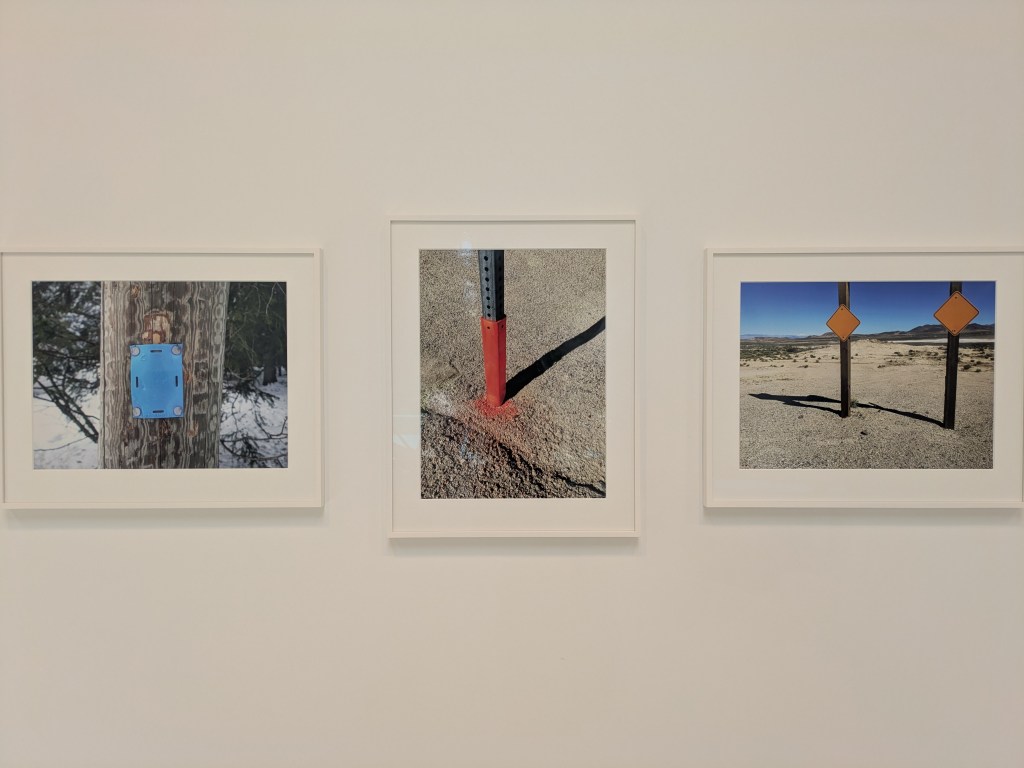
Whiteread’s photographs

Back outside, my Dad and I strolled around at an easy pace, enjoying the vistas through the woods and occasionally playing a game of “is it an artwork or is it a nicely arranged pile of wood?” The landscape gardener, Dan Pearson, clearly has a nuanced understanding of the playful boundary between them. I enjoyed the exploration of materials and fragility in Veronica Ryan’s Magnolia Blossoms (2025) a circle of fallen petals and buds made from bronze. Rose Wylie’s Pale-Pink Pineapple/Bomb (2025) isn’t my type of thing, but looked pleasantly incongruous in the landscape. Unfortunately, Hélcio Oiticica’s Magic Square #3 (1978) was not yet open for exploration, but I’ll go back.
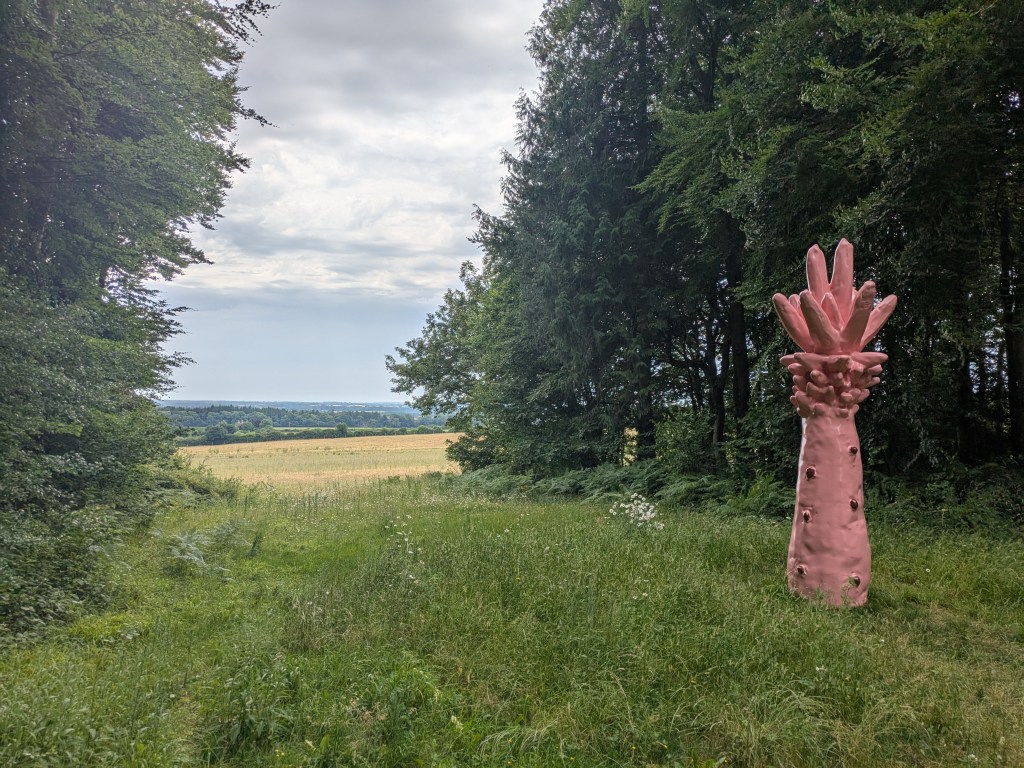
Rose Wylie’s Pale-Pink Pineapple/Bomb (2025)

When we came upon Susan Phillipsz’ work As Many As Will (2015), it took a few moments of listening to the silence (actually the birds and the wind in the trees) before being startled by a lone signing voice, soon joined by others. This beautiful ‘in the round’ song, which Phillipsz sings herself with her soft Scottish accent, about refuge and Robin Hood moved me, but I couldn’t quite say why I had tears in my eyes and a strange catch in my throat. Something about feeling lucky and sad at the same time. How did I get to stroll through this beautiful landscape, stumbling upon art, when there is so much horror unfolding before our very eyes on our phones from morning ‘til night. Why is the world like this.

Whiteread’s unmistakable footprints appear again across the wildflower meadow, her signature concrete casting process back with Down and Up (2024-25), a staircase flung in the wide field like a strange fragment of a disappeared home. The free guide booklet contained an interview with Whiteread, where she refers to this sculptural staircase as  “universal memory of a commonplace architectural form”. I cannot think of her work without feeling it is haunted, these casts of buildings capture a ghostly suggestion of a structure that once was and now isn’t there any more. It is no wonder her art is associated with memorials: her Memorial to the 65,000 Austrian Jews who were Murdered in the Shoah in the Judenplatz in Vienna is an unforgettable work. Seeing this staircase then, one cannot help but think of ruined buildings of Gaza, of destruction and war. It is inescapable.
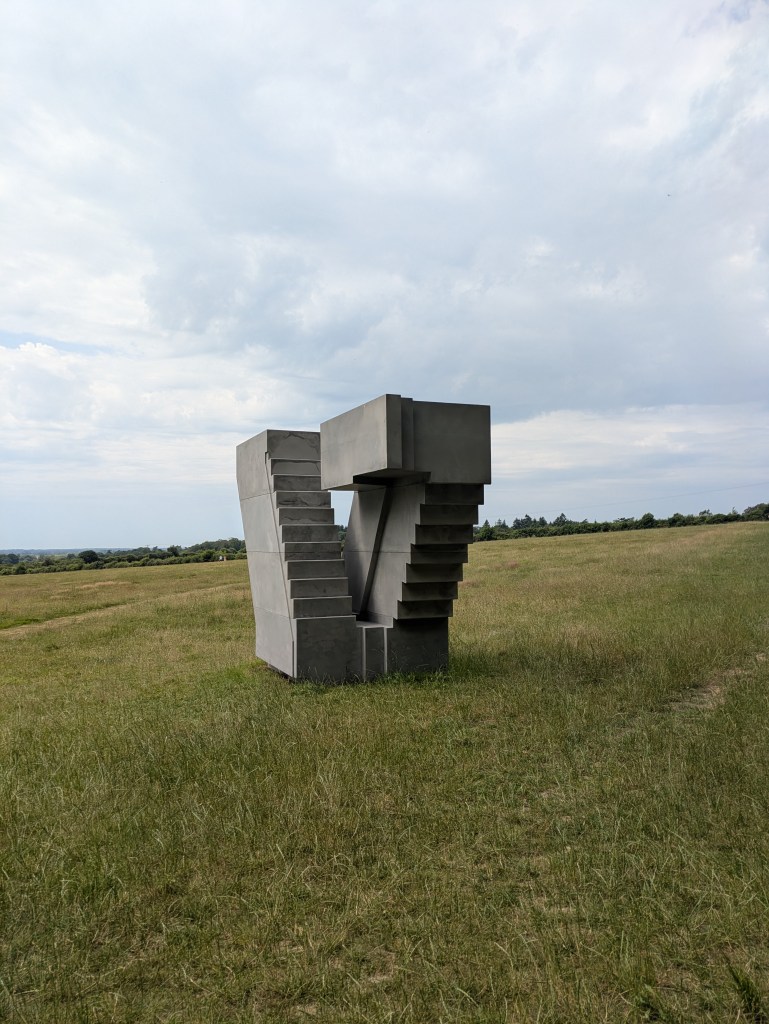
Whiteread, Down and Up (2024-25)

The smaller gallery space housed Amie Siegel’s Bloodlines (2022). I don’t normally engage video art for long, I’m naturally impatient. Here though, in the shade and darkness I was completely captivated by the luxurious interiors of Seigel’s film. Unnarrated, the camera drifts eerily along magnificently decorated hallways and into rooms with ticking clocks, marble pillars and strange taxidermied animal collections. We see an ‘insider’ view of huge stately homes, that are choc-full of artworks. It felt very apt that Bloodlines, which traces the movement of artworks by George Stubbs between private collections and public museums but really explores wealth, history, the legacies of ownership, class, and the strange power dynamics of who owns art and who can look at, and on whose terms that is, felt an important nod to where we were: the art collection of an actual Duke, (because yes, they’re still around), in the middle of a field in England.
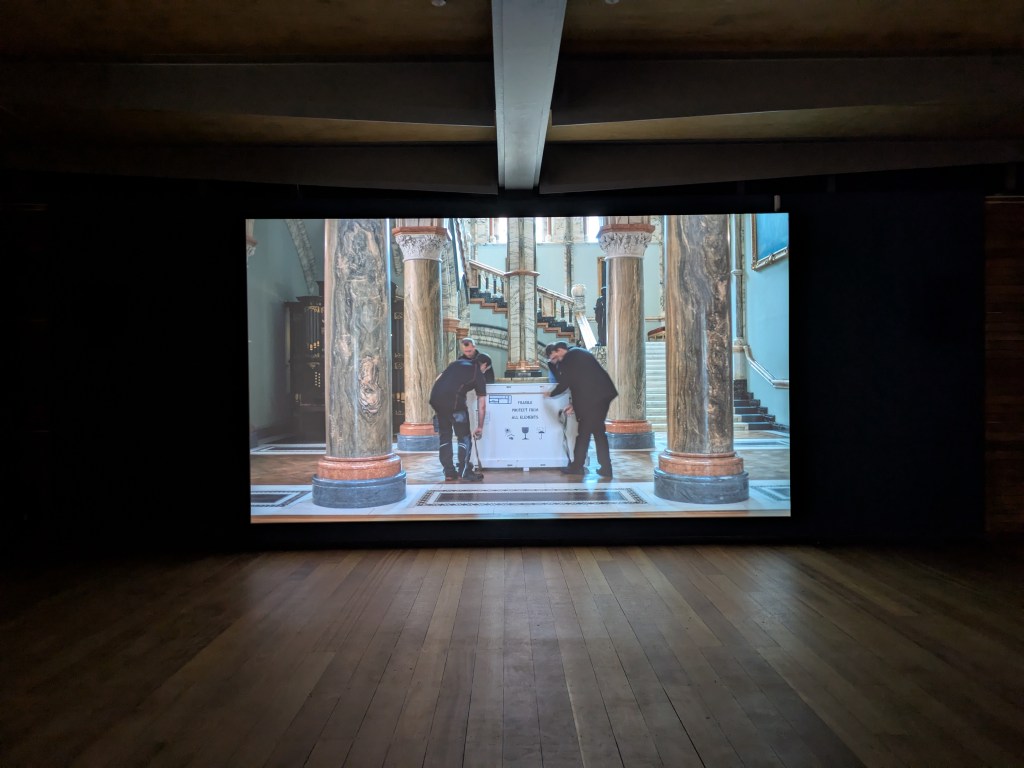
Film still from Amie Siegel’s Bloodlines (2022)

Crying in the Gallery

This is perhaps the first of a series I’m going to call ‘crying in the gallery’. Art can move us in unexpected ways and catch us off guard at times. That’s what happened during a visit earlier this year to the Royal Scottish Academy for a look at their exhibition Dürer to Van Dyck: Drawings from Chatsworth House. It was a small exhibition featuring exceptionally high quality drawings and watercolours from the Devonshire Collection (amassed by the 1st, 2nd and 3rd Dukes of Devonshire) and usually housed at Chatsworth in Derbyshire. 

As the title suggests, the exhibition featured some of the most famous-of-famous artists: Albrecht Dürer, Hans Holbein the Younger, Peter Paul Rubens, Anthony van Dyck and Rembrandt. The darkness of the room enhanced the magical effect of these delicate drawings, faces peer out from history and the darkness; animals and landscapes emerge with exquisite fragility.

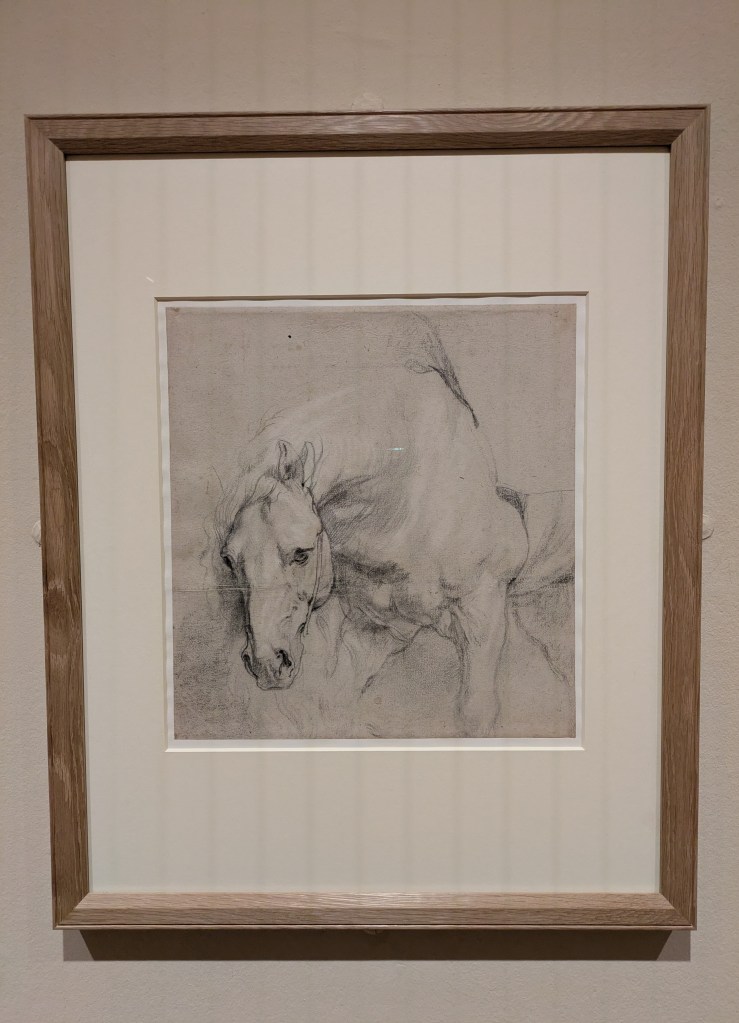
Head and Forequarters of a gray horse by Anthony van Dyck

So much of what we see in drawings feels like a glance into the ‘behind the scenes’ of an artist’s process, whether that is preparatory sketches, studies for prints or tapestries, observations of landscapes, or designs for much larger works. One piece that caught my eye was a beautiful sketch of a horse by Van Dyck. Its head is lowered, its gaze fixed. It appears to be waiting patiently – you can see the fine detail from pulsating veins to strands of its mane. This was a preparatory sketch for the 1618 painting, St Martin Dividing his Cloak, an altarpiece in the Sint-Martinuskerk in Zaventem, Belgium. If you look at them side-by-side, I much prefer the drawing to the fully fledged painting. It is the most immediate art form – far more intimate than a grand oil painting in a heavy gold frame.

Saint Martin Dividing His Cloak, Anthony Van Dyck, 1618

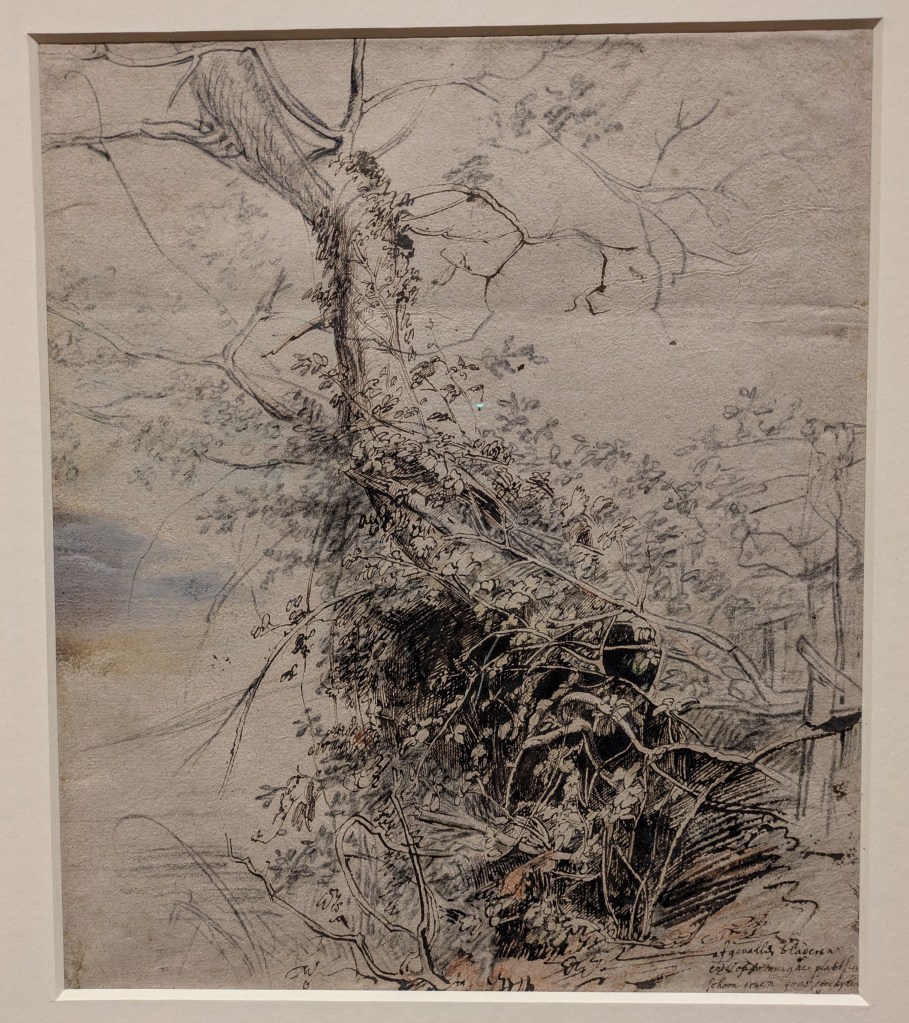
The horse wasn’t what brought tears to my eyes, though. It was this one: ‘A Dying Tree, its Trunk Covered with Brambles, Beside a Fence’, about 1618, by Peter Paul Rubens (though experts are divided as to whether it’s by Rubens or Van Dyck).

‘Dying Tree, its Trunk Covered with Brambles, Beside a Fence’, about 1618, by Peter Paul Rubens

The label explained that the drawing is made with a combination of materials: pen and brown ink; red and black chalk, with greenish-brown watercolour, touches of opaque watercolour and possibly oil paint. As with the horse, the drawing is a study for a larger painting. Rubens’ Landscape with a Boar Hunt, now held at the Gemäldegalerie in Dresden.

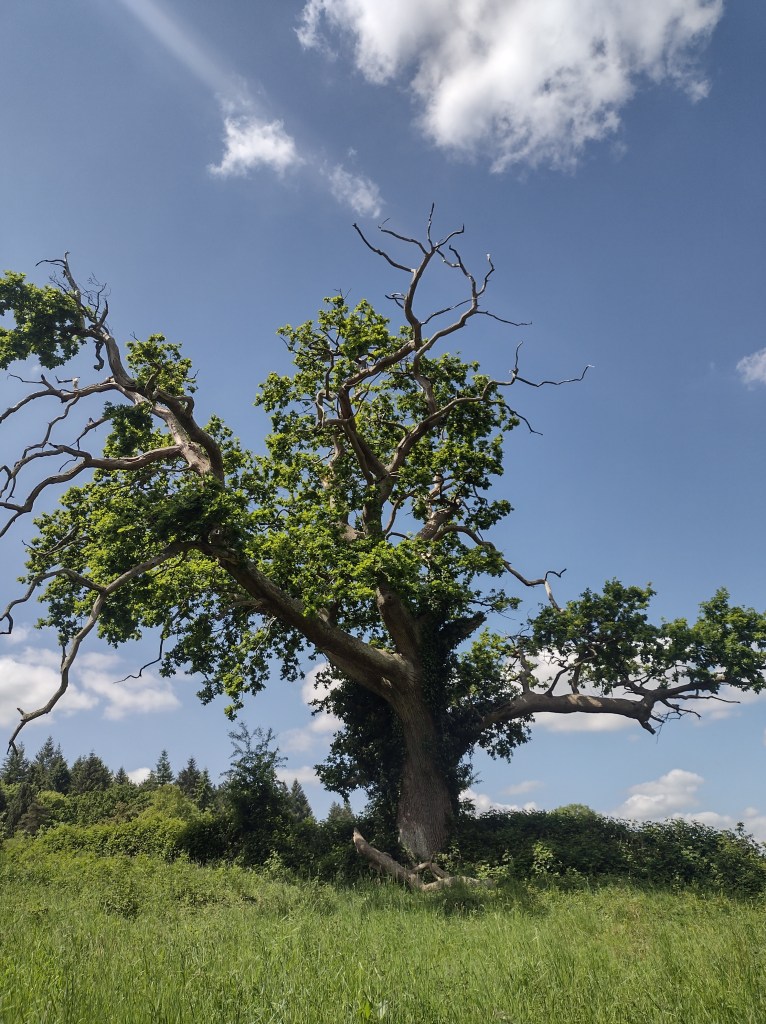
We see a tall, curving trunk of a tree emerging from a dark undergrowth. Its branches are bare, but all around it is covered in leaves, crawling up its spine, embracing it, possibly cradling its inevitable fall. The leaves fade in and out of focus, like a magnifying glass is passing over the surface of the drawing while we look at it. The undergrowth is dense and dark with cross-hatching. It reminded me of an oak tree I developed a fascination with when my mum was dying. While she was in hospital, I’d pass the time at walking near her home, watching the landscape blossom from late spring to the height of summer, this explosion of nature and life totally at odds with the personal turmoil we were experiencing. 

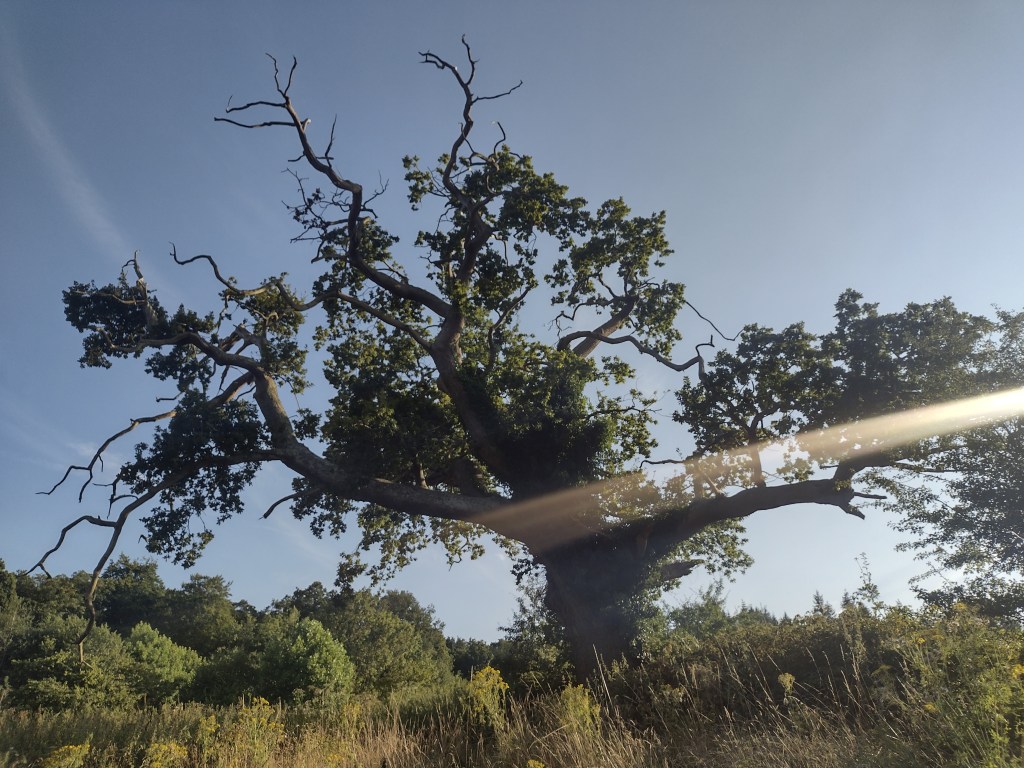
This special tree is a patchwork of life and death. Some branches are spindly and bare, but other parts of it are thriving, covered with masses of green, bright growth, healthy leaves shining in the sun. To this day, whenever I visit my dad, I check on the tree to see how it’s doing. It’s just a short walk from where my mum is buried.

The tree in May 2022

There is something comforting in being reminded that death and life coexist. Nature knows this: the ivy thrives on the branches of a dying tree, and dead wood itself is a great source of shelter for insects and is home to fungi. When a tree dies, the light that reaches down can cause huge spurts of growth on the forest floor beneath. Back in the early 1600s, Rubens took the time to observe this, laboured over it with intense detail to create what is now considered to be one of the greatest nature studies produced in Europe in the 17th century. Little did he know that 400 years later, his study of life and death would bring tears to the eyes of an observer, because it reminded her of someone, something, a time and a place, lodged in memory.

That, ultimately, is the beauty and meaning of art for me: every time you look at a picture, you bring the whole weight of associations of images, places and people you have encountered before along with you. It will mean something unique and distinct to everyone. Sometimes, it might just be a picture. Other times, it might be a whole lot more.

The tree in September 2024 – it’s still living and dying

Looking back on Louisiana

We visited on a cold, bright day fringed with snow. Humlebæk is an unassuming town a short train ride away from Copenhagen, and I imagine it’s mainly home to commuters. Yet it also boasts one of the great collections of art from 1945 onwards, Louisiana Museum of Modern Art.

Louisiana is one of those museums that just feels well done. It’s clearly immensely popular. It’s classy, sophisticated, cared for, and it feels rich. Turns out it is a private, state-recognised museum, which means around 15% of its revenue is from the Danish public sector, with the rest made up by commercial activity and sponsorships. Louisiana was founded in 1958 by Knud W. Jensen, who wanted more Danes to access contemporary art. Think the Peggy Guggenheim Collection meets Jupiter Artland. Like a smaller, more accessible Tate Modern.
The place buzzed with dynamic energy. Perhaps this is because, although the collection is large, you will not find a decade by decade chronological survey of art from 1945 to 2025 here. The display policy is centred around a programme of rotating, thematic exhibitions, interspersed with a few of their collection highlights which are on near-permanent display. For our visit, the main exhibition was OCEAN (October 2024 – April 2025), exploring humanity’s complex and fraught relationship with the sea.

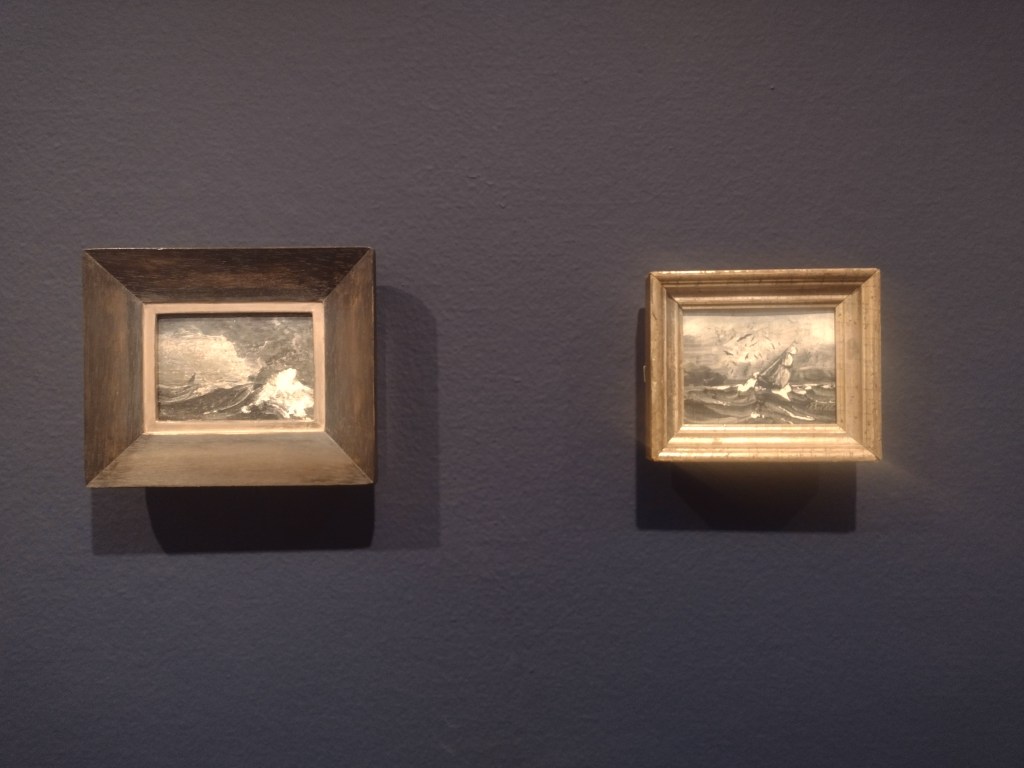
Peder Balke’s tiny seascapes

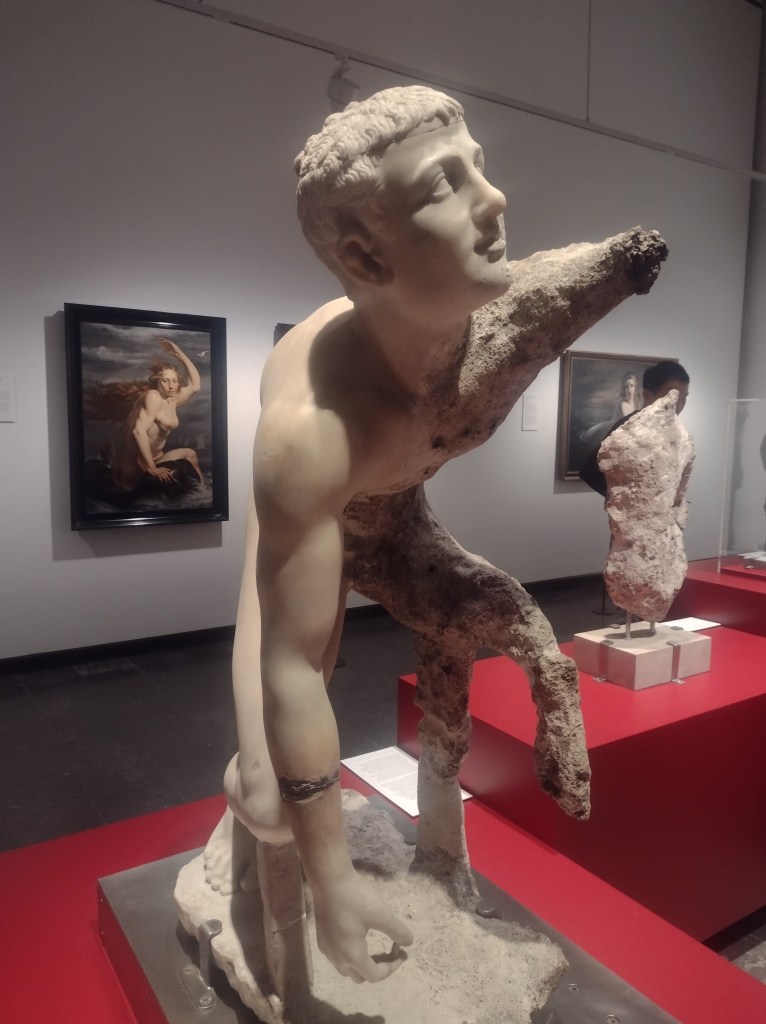
It’s apt, because Louisiana sits right on the edge of the Øresund, the strait between Denmark and Sweden which is one of the busiest waterways in the world. On 2nd January however, it was an empty deep blue canvas. Some of the works that resonated the most with me in the exhibition weren’t contemporary at all: there were beautiful antique sculptures which showed the sea as both protector and destroyer. The parts that had been submerged in the sand were uncannily smooth, while the exposed sections had been eaten away by sea creatures, and eroded by the water itself. 

Ancient sculpture found in the Aegean Sea in 1900

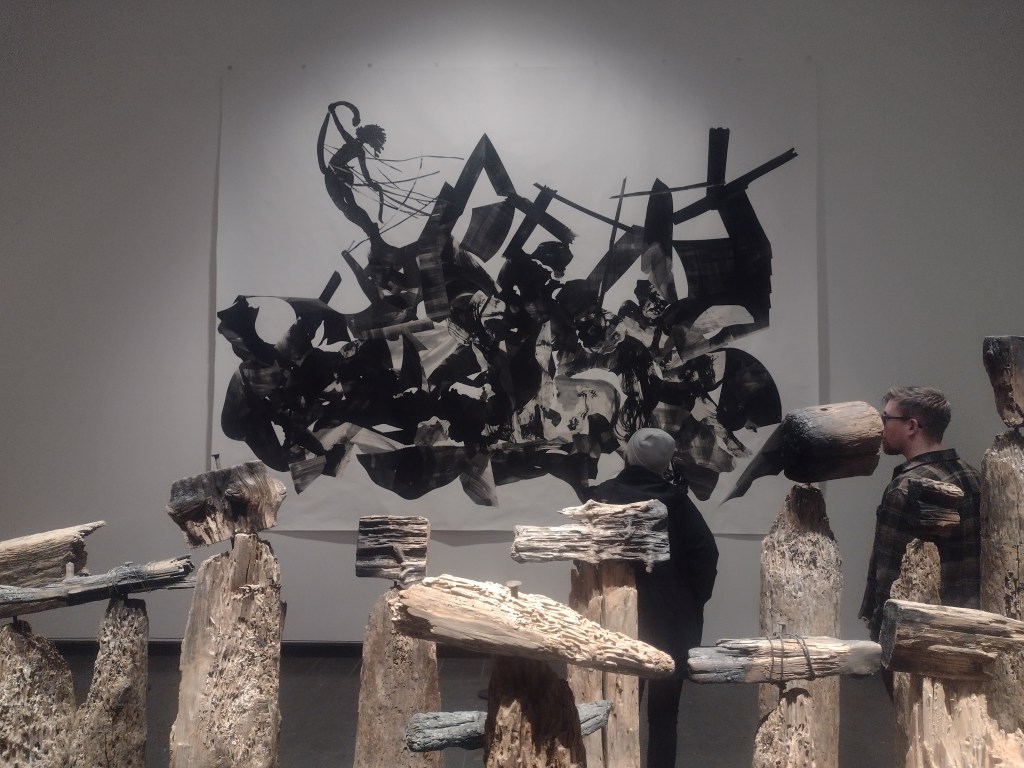
Close by, El Anatsui’s Akua’s Surviving Children (1996) was formed of pieces of driftwood and iron found 20 kms north of Louisiana when the artist was visiting Denmark. It represents a group of enslaved people returning from the sea, and was initially assembled at a local arms factory that had provided weapons utilised in the Danish slave trade in Ghana, in the 18th and 19th centuries. Positioned directly behind it was Kara Walker’s The Rift of the Medusa (2017), (after Géricault’s The Raft of the Medusa, 1819), bringing the violence of both the sea and of humans into sharp relief.

El Anatsui meets Kara Walker

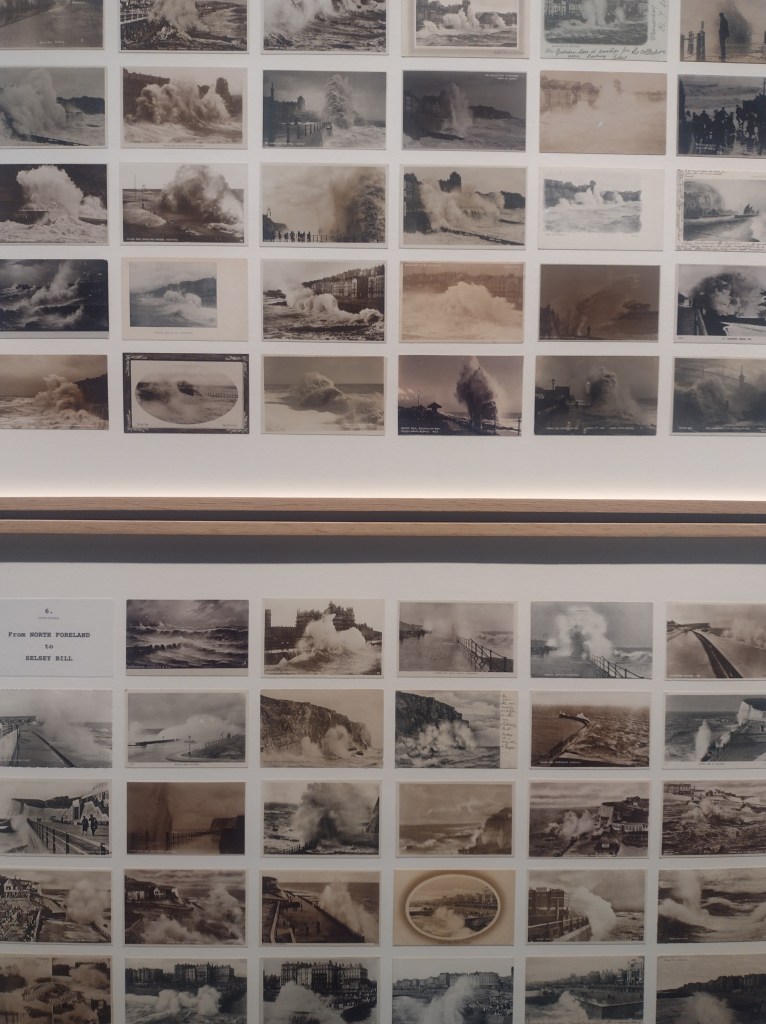
There were paintings, Japanese woodcuts, video art, sculptures. Tiny paintings of the wild sea by Peder Balke met large scale canvases by Anselm Kiefer. I was briefly transported back to Britain via Susan Hiller’s Rough Seas series, where the artist has collected hundreds of vintage postcards of the sea crashing into picturesque towns around Britain’s shorelines: each one depicting the sublime power of the sea in miniature. Sensitive, thoughtful curation meant this vast range of works were able to function in dialogue, opening up new ways of thinking, seeing and even feeling about the sea in all its complexity.

Susan Hiller’s series of Rough Seas postcards

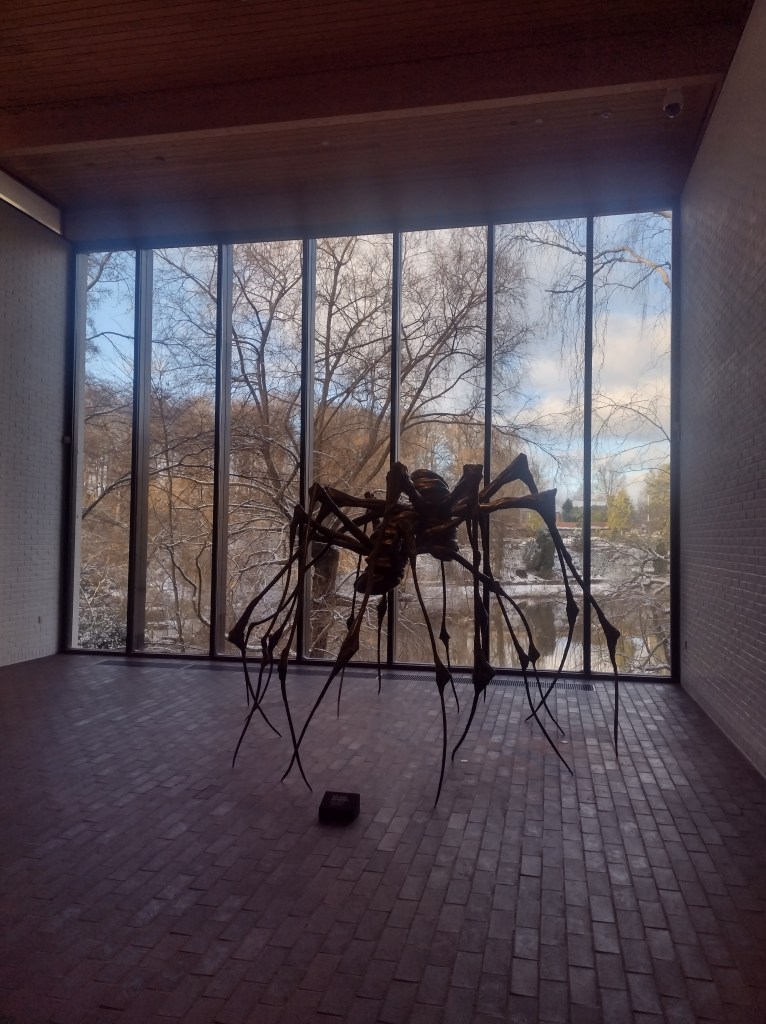
The quality of the Louisiana collection is extraordinary. If you pick any famous artist you can think of from the past 80 years, they probably own one of their works. When we arrived, we made a beeline for one of the few year-round installation artworks, Gleaming Lights of the Souls (2008) by Yayoi Kusama. Having failed miserably to get to the Yayoi Kusama Infinity Rooms that were installed for three years at Tate Modern, it was amazing to have only a short queue to see this mesmerising work. Surrounded by mirrors and water, it is easy to see why Kusama’s work is so popular in this era which prizes immersive experiences more highly than any other mode of interaction with art. Other highlights elsewhere in the museum included seeing Louise Bourgeois’ gigantic Spider Couple (2003) installed by a giant floor-to-ceiling window, their spindly legs echoing the tangle of branches outside.

Spider Couple (2003) by Louise Bourgeois

What changes a ‘good’ museum or gallery to a ‘great’ one? Much though I love Scotland’s museums, it is clear to me that even though Denmark and Scotland have a similar size of population, I can’t currently see a way that a museum of Louisiana’s scope, scale or calibre could ever be supported here. It has entire wing for kids, a sculpture park, runs an annual literature festival, hosts its own broadcasting channel which creates new educational content every week, and is open as a music and events space every Thursday and Friday until 10pm. This is one of my chief frustrations with galleries in the UK. You have to be freelance, retired or a student to go there during the week – places open at 10am and close at 5pm so if you’re working, sorry, you have to go at the weekend with everyone else. This seems to be such a missed opportunity to me.

Starting the year visiting such a wonderful museum has given me renewed ambition to try and see more art this year and write about it. For my next post, I’m planning on focusing on 2025’s must-see events and exhibitions much closer to home. Watch this space!

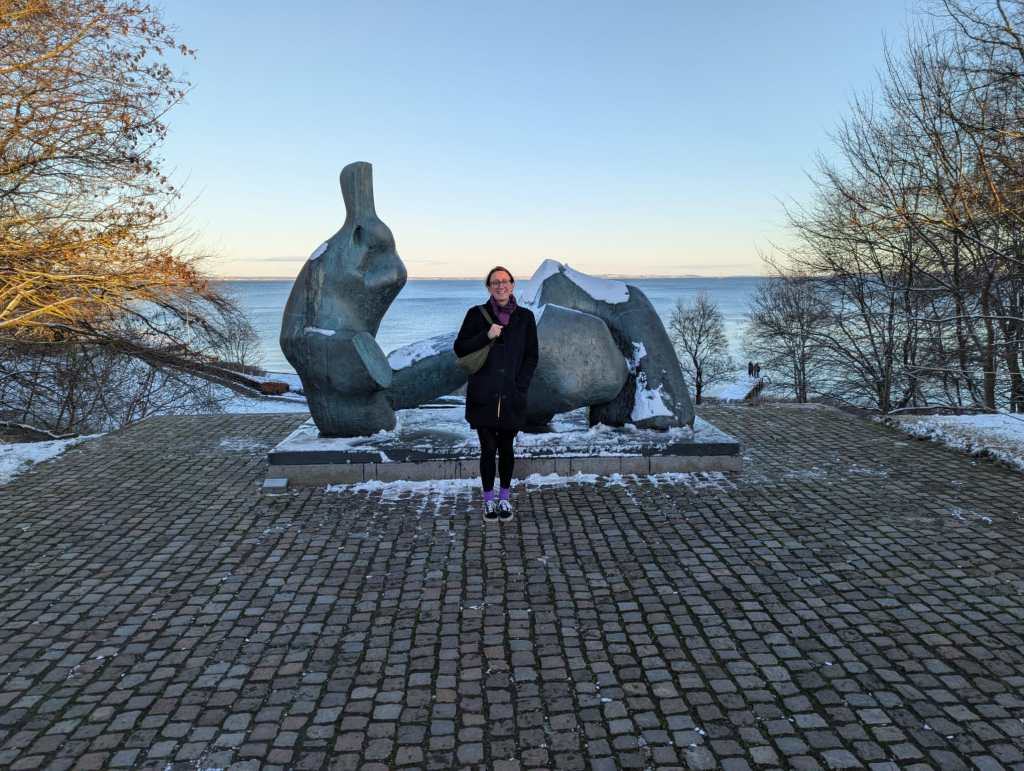
Me with Henry Moore’s Two Piece Reclining Figure No. 5 (1963-64)

My top five art encounters of the year

As the end of the year approaches, it’s become something of a tradition for me to scroll back through the pictures on my phone and reflect on my favourite encounters with art over the course of the year.

On the surface of it, it feels like I haven’t seen all that much this year. I’ve prioritised other life factors like hanging out with friends and traveling over engaging with art or blogging. But looking back, it’s been a rich year for discovery, including some memorable exhibitions and some new places visited. In the end, narrowing down this list became harder that I thought it would.

My top five in reverse order are…

5) ‘Tracing Time’ by Do Ho Suh

This unassuming exhibition at the Modern Galleries in Edinburgh has stayed with me since I visited the show in April. There was just so much to discover and be enchanted by. Do Ho Suh examines feeling and conceptual pull of ‘home’, exploring the different homes he has lived in over the years. Through his delicate and immensely varied work, he captures some of the magic that resonates within us and root us different places from our past.

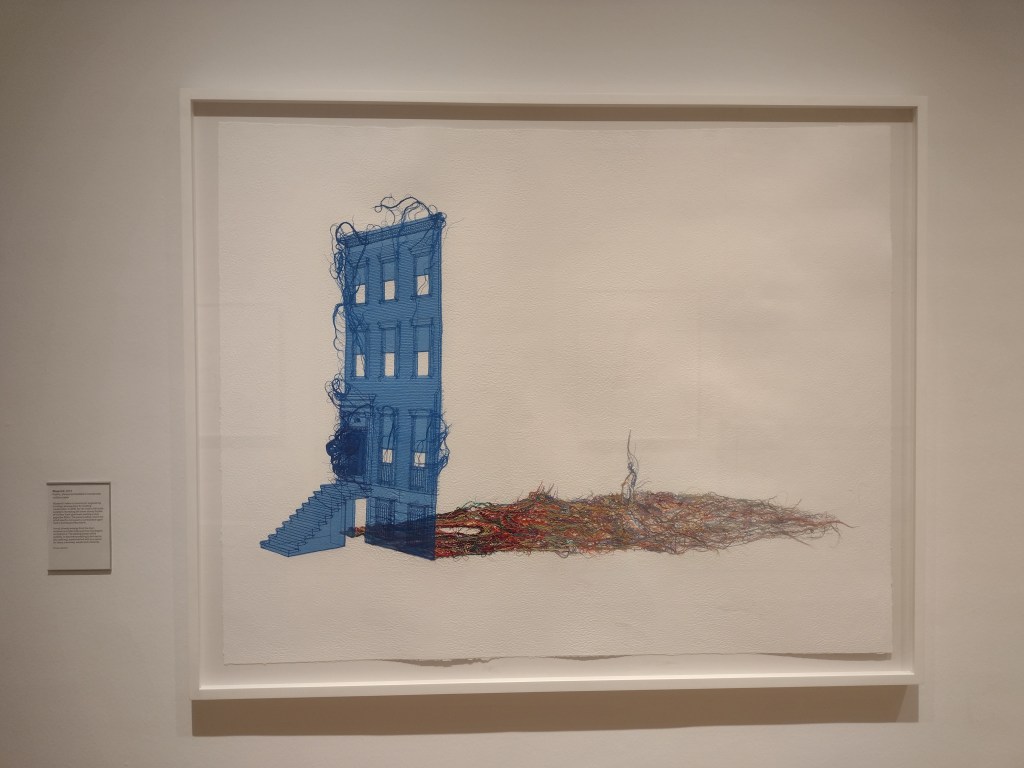
‘Blueprint’ by Do Ho Suh, 2014

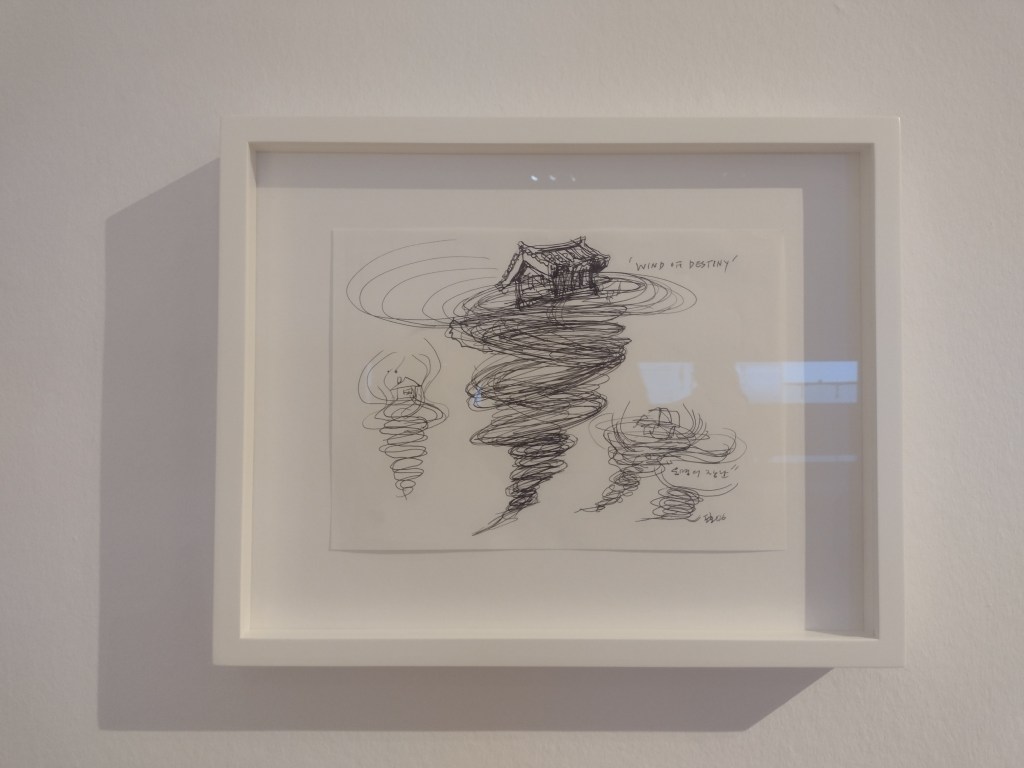
Highlights for me included the beautifully fine drawings incorporating messy masses of thread spooling out from them, as well as the stunning 3D installation which stitched together different entrance halls from two different buildings Do Ho Suh has lived in, in London and Berlin. I was also mesmerised by a short video about Fallen Star, his ambitious and deeply imaginative work inspired by the house swept away by the tornado in The Wizard of Oz, which is installed at the top of a University of California campus building. The whimsey of the idea, combined with the rigorous architectural and construction know-how to turn a sketch into a reality is inspiring and surprising in equal measure. Art can be utterly bizarre sometimes, but it can open our eyes to new possibilities in that way.

Sketch for ‘Fallen Star: Winds of Destiny’ by Do Ho Suh

Fans of the show, or those who missed it in Edinburgh have the chance to see a retrospective exhibition which is coming to Tate in 2025. That one will certainly be on my list to visit.

4) A double bill of El Anatsui

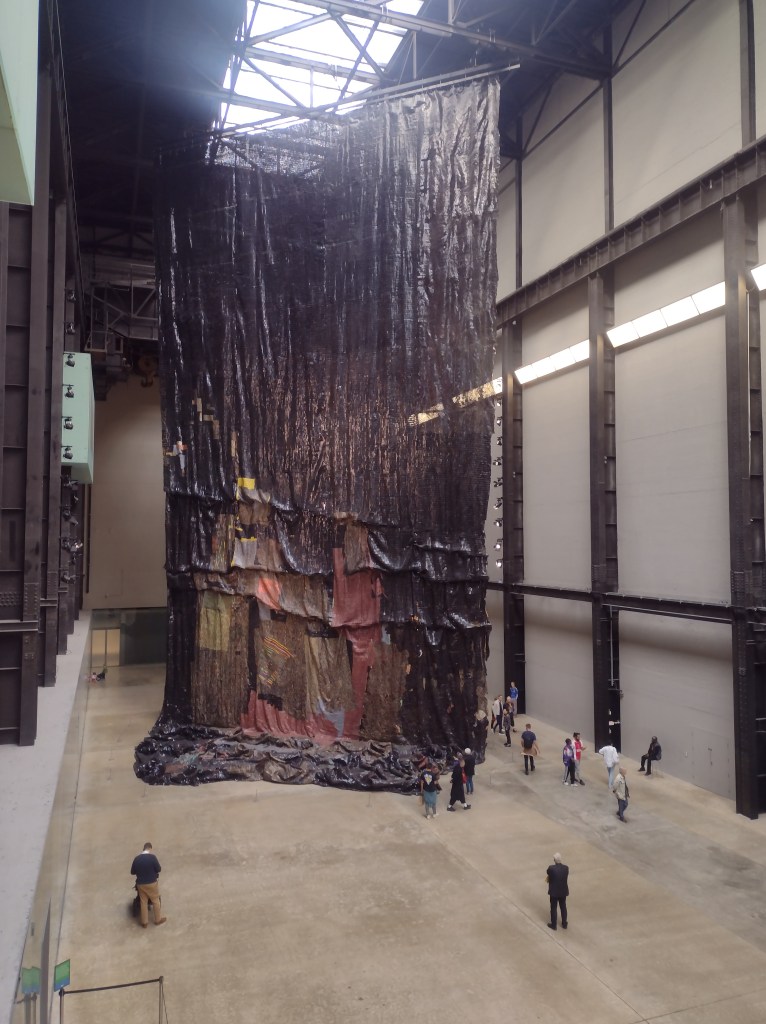
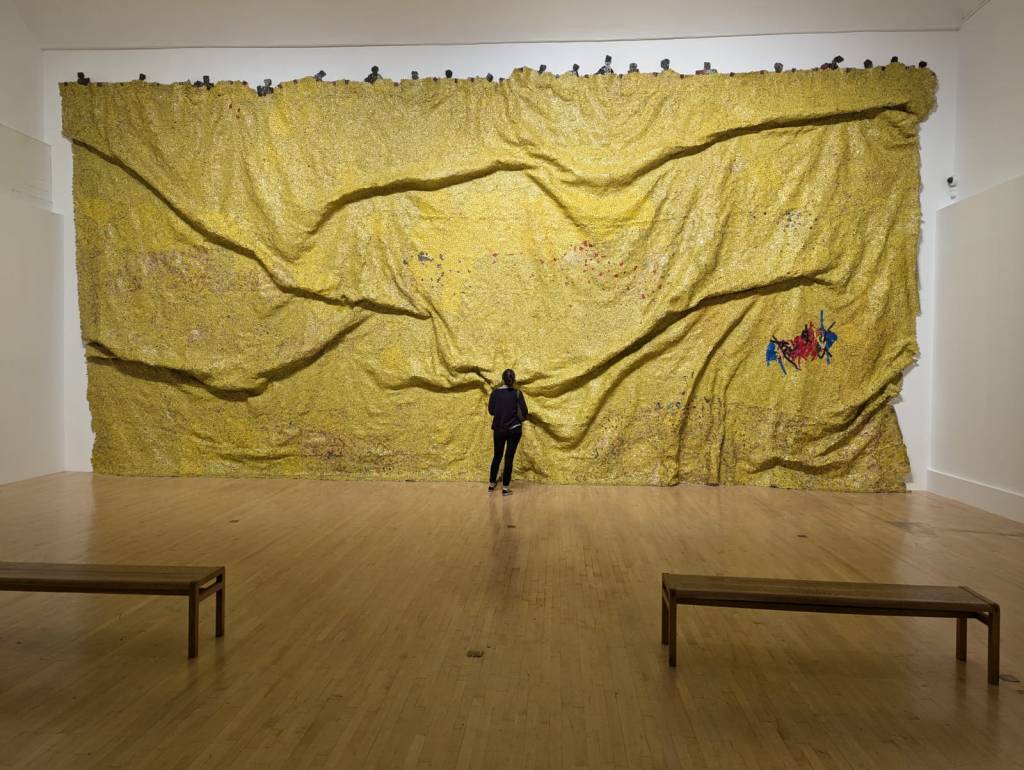
For as long as I can remember, I have enjoyed art that functions on a big scale. I vividly remember when I was little, staring up at Stubbs’s Whistlejacket in the National Gallery, being bowled over by the sheer size of the thing. Then, in my early twenties when I came to love contemporary art, it was the gigantic canvases by Anselm Kiefer that caught my imagination. So, it only makes sense that I’m drawn to large-scale installations like the work of Ghanaian artist El Anatsui. This year, I had the opportunity to see a huge exhibition of his, Behind the Red Moon, in the Turbine Hall at Tate Modern, followed by an extensive exhibition of his work (including some on a much smaller scale) at the Talbot Rice Gallery in Edinburgh.

‘Behind the Red Moon, Act III: The Wall’ by El Anatsui (2023)

What’s special about El Anatsui’s work is that it seems simple but is in fact telling a much more complex story. The metal he repurposes for his giant mosaics speak of the complex material histories and imprints that objects carry with them. There are tales of colonialism, of industry, of waste and of rebirth in every piece which contributes to a greater whole. Looking at this art makes you feel small, humbled. You can decide to step back, to view it from afar as chunks of colour and form and shape, and ponder the global systems that brought these materials together, or you can zoom in, get closer and see the intrigue in each piece, and consider the many hands who have contributed to make it a thing of beauty.

‘Scottish Mission Book Depot Keta’ by El Anatsui (2024)

3) Discovering new perspectives at the Young V&A

There is nothing quite like childlike wonder. I wish I could bottle it and save it for days when I feel jaded. I had been keen to visit the Young V&A ever since its reopening in summer 2023 after a £13m revamp. In April, I got to go along with my brother and my two nephews (aged 6 and 1). I love what they’ve done with the place to make it fun, interactive and genuinely entertaining for kids and grown-ups alike – though I would recommend going with some kids to see their enjoyment unfold with you. There are different zones for different age groups, called Play, Design and Imagine, all exploring the different ways children have played over the centuries, bringing together objects dating from 2300BC onwards.

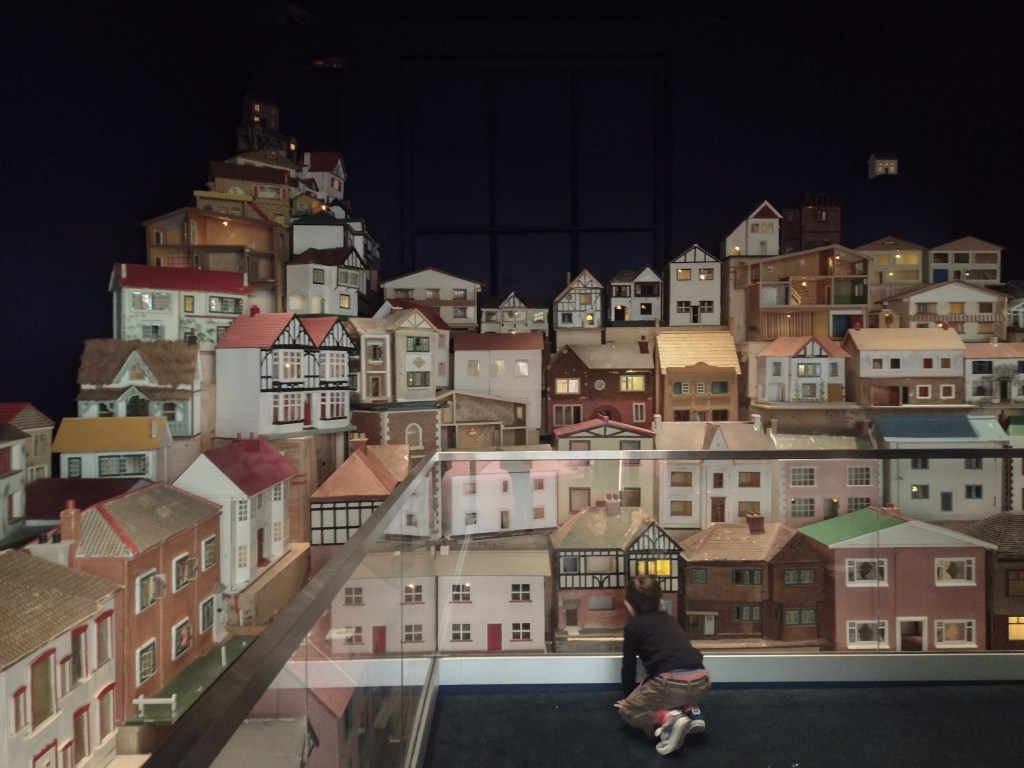
‘Place (Village)’, by Rachel Whiteread (2023)

The standout piece for me was Rachel Whiteread’s installation Place (Village), made from the extensive collection of doll’s houses the artist collected between 2007-23, and formed into a village on a hill. As someone who played with a doll’s house as a kid, but who also loves to peek into homes at night, this beautiful installation, the lights shining out from these homes in the darkness, made me feel nostalgic and curious all at once. I guess that’s the point of places like the Young V&A, they remind us all we were once children: art doesn’t always have to be serious and we can still experience life with a healthy dose of childlike wonder and a sense of play.

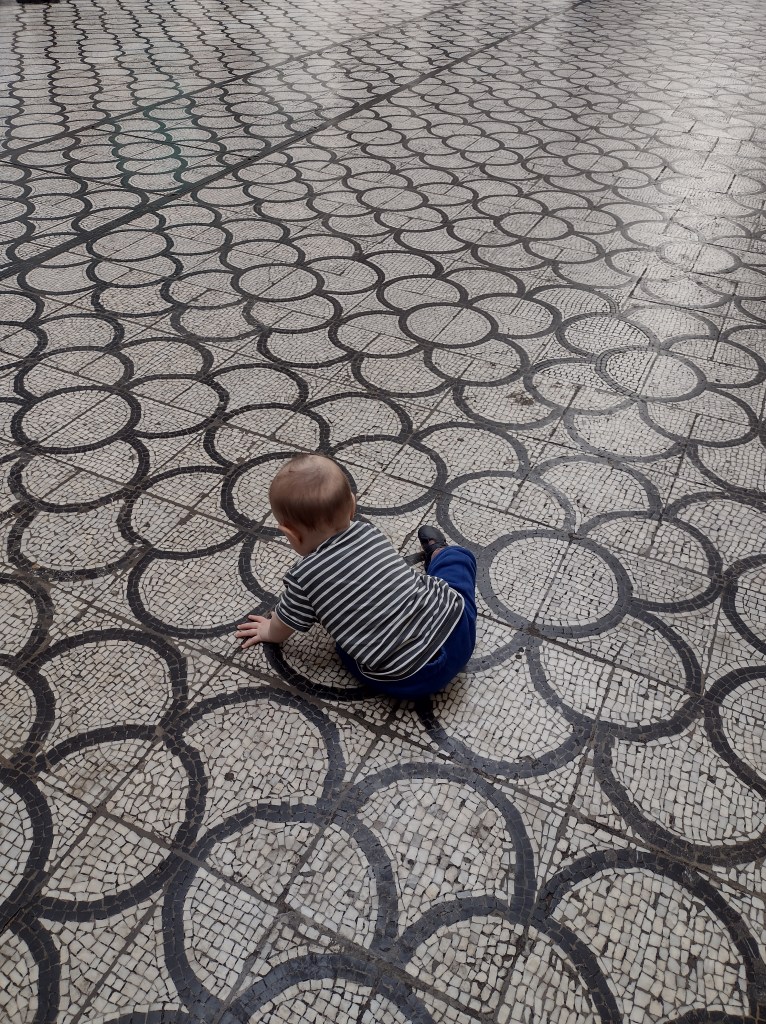
Beautiful floor, beautiful baby!

2) Moved to tears by ‘Ricochets’ at the Barbican

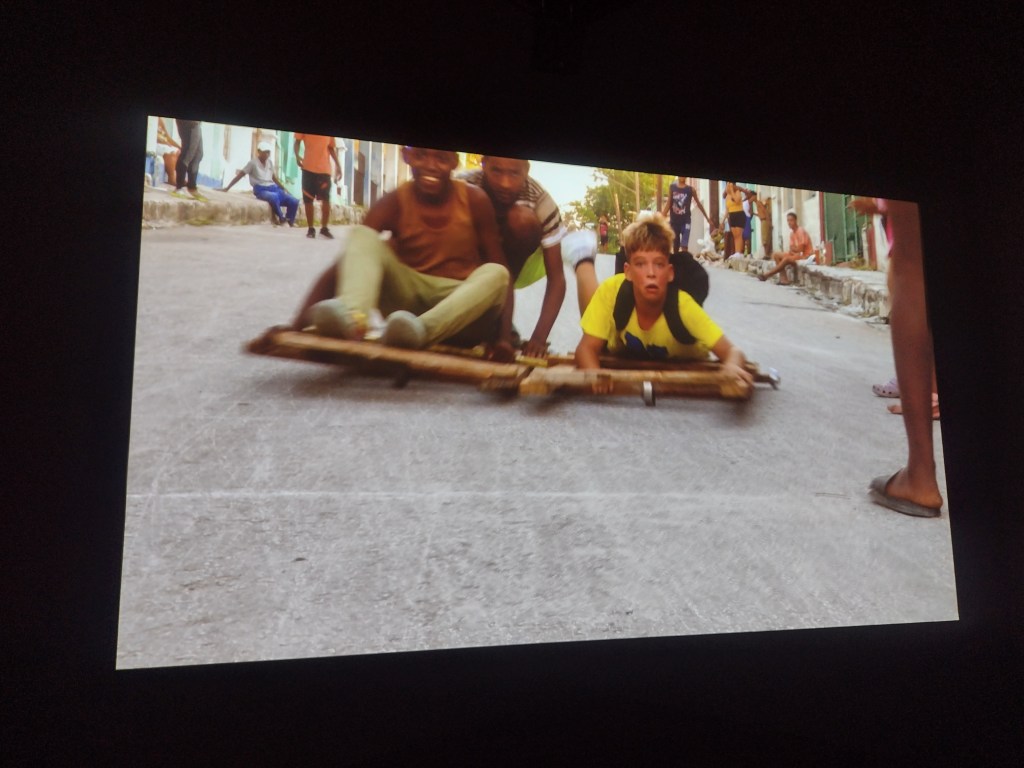
The power of play is also explored in what was probably my favourite exhibition of the year, Ricochets by Francis Alÿs at the Barbican. I wrote a long blog post about how the exhibition was one of hope and sadness, joy and melancholy. The heart of the exhibition revolved around his Children’s Games series, which looks at how resourceful and innovative and can create games even in the toughest of circumstances, including war zones, deserts and crowded cityscapes. These can all be explored online and I would recommend diving into the collection: you will be moved and uplifted in equal measure.

‘Children’s Game #40: Chivichanas’ in La Habana, Cuba, by Francis Alÿs (2023)

1) Exploring Little Sparta’s treasures

At the start of this year, I wrote a post about my Art in Scotland Bucket List for 2024. I really didn’t get very far with this list (the best laid plans of mice and men…) However I did, at last, make it to Little Sparta, the garden of poet Ian Hamilton Findlay and his wife Sue, which is nestled in the Pentlands. It’s not far as the crow flies from Edinburgh, but feels worlds away, like an enchanted garden with fragments of poetry half buried in the undergrowth. The paths wind their ways through woods and little pools, there are half-hidden sculptures and moss-covered pillars and sundials. The artworks explore themes ranging from classical antiquity to the sea and fishing fleets. I didn’t understand many of the references, but in this way the garden was like a poem in itself. I don’t always understand poetry, but I like how it makes me feel.

Little Sparta – nestled in the Pentlands

The garden is open June-September each year, respecting the late poet’s wishes that the garden should be seen while the trees and plants are in full leaf. You can find out more about visiting here.

So there we have it, my top five encounters with art for 2024. I’d love to hear what your favourite art or cultural experiences have been this year. Feel free to leave a comment below!

Francis Alÿs: Ricochets

Some exhibitions have an unofficial soundtrack in my mind. Francis Alÿs’ Ricochets at the Barbican, which closed a couple of weeks ago, has had Whitney Houston’s The Greatest Love of All bouncing around in my head. The song starts with a gentle falling scale on the synth, and then Whitney comes in with the words: “I believe that children are our future/ teach them well and let them lead the way… let the children’s laughter remind us how we used to be.”
I’m a woman and I’m 32. That means that I am almost daily drawn into discussions of children. People ask me why I don’t have them, or if I’m wanting to have them. I’m an auntie and a guideparent. Some of my closest friends have babies, toddlers, kids in primary school. Some are wanting babies and it isn’t happening for them at the moment, some have had miscarriages and lost unborn children. I kind of knew the phase would come, when this would be the main topic of conversation dominating my life, but I had never expected an art exhibition to bring me back to it once again.
I’m with Whitney, I do believe children are our future. I think that artist Francis Alÿs does too, which is why he has spent years and travelled the globe collecting and documenting children’s games, which have been compiled together in beautiful, moving, sensory-overload-inducing multi-screen installations for his exhibition at the Barbican. The photos I took weren’t great, but the most wonderful thing about the project is that all of the Children’s Games videos are available online. You can explore the whole roster here and I’ve linked to specific ones in this post. 

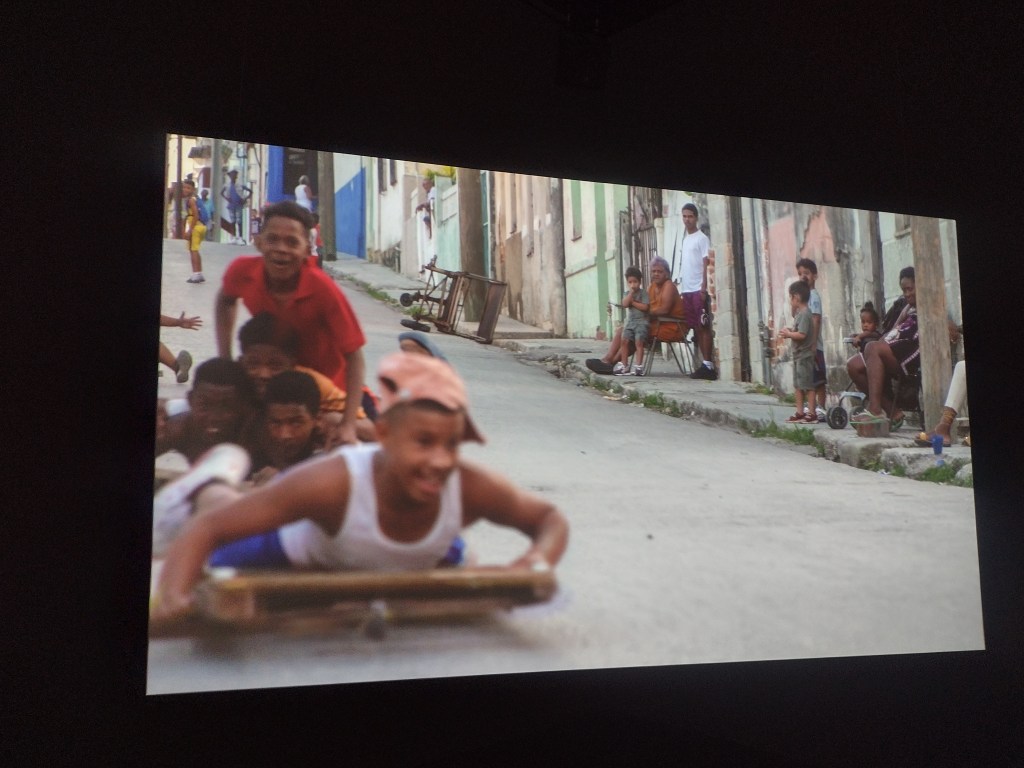
I loved immersing myself in the worlds of these children, as they raced perilously down hilly streets on makeshift go-carts, as they played “Doctor Doctor!” in a yard by a cold-looking lake, as they raced snails on concrete or flew kites, skipped and skimmed stones. They enliven and brighten and spark joy wherever these games take place. Even in war zones, places decimated by wars now over, in refugee camps, their flame and zest for life burns so brightly. The sensitive curation at the Barbican brought this home: when children play in barren wastelands, they are no longer barren. It kindles a moment of hope.

Children’s Game #40: Chivichanas
La Habana, Cuba, 2023

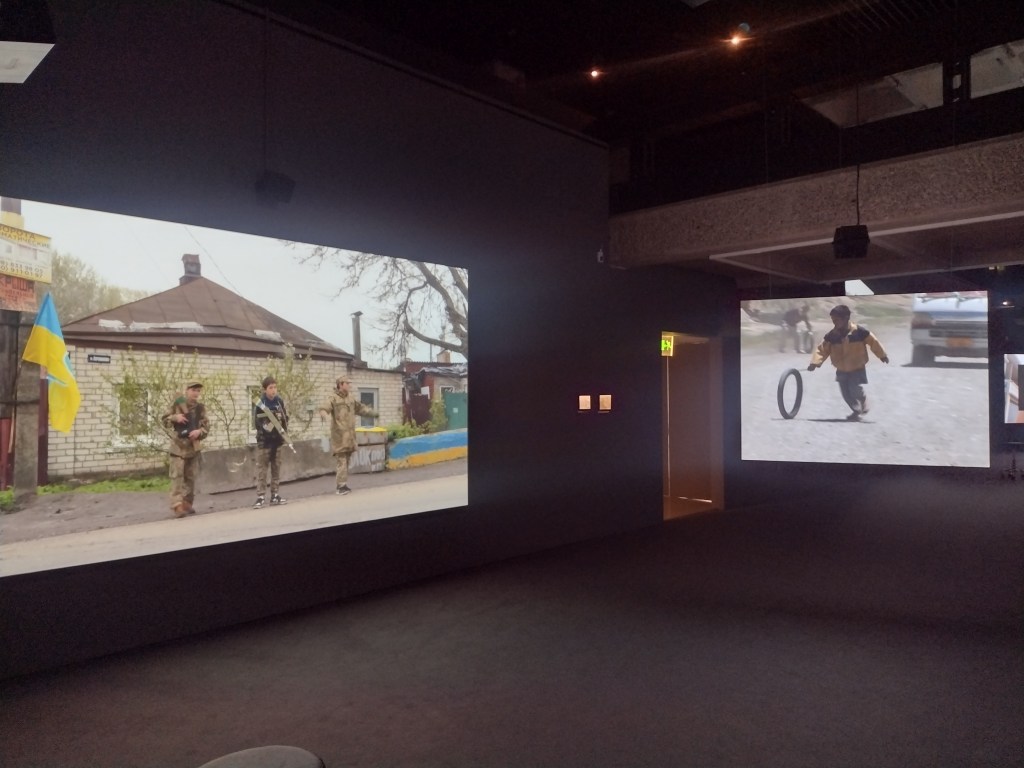
In one of the exhibition’s longer videos, Parol, three Ukranian pre-teen boys are dressed in khaki and have wooden rifles, daubed in yellow and blue, slung over their shoulders. As the accompanying text explains (beautifully written for each game by Lorna Scott Fox), the boys “act out a grown-up duty: to uncover Russian spies… Cars are flagged down, IDs requested, trunks inspected. A password is demanded: “Palyanitsya”, the name of a traditional Ukrainian bread, and a word that Russians can’t pronounce right.” While the drivers of the passing cars appear to be cheered by their interactions with the children, it’s a perilously pertinent reminder that in a few years, these boys won’t be playing anymore. They’ll be on the front line. The existence of innocence always implies the loss of it.

Children’s Game #39: Parol
Kharkiv, Ukraine, 2023

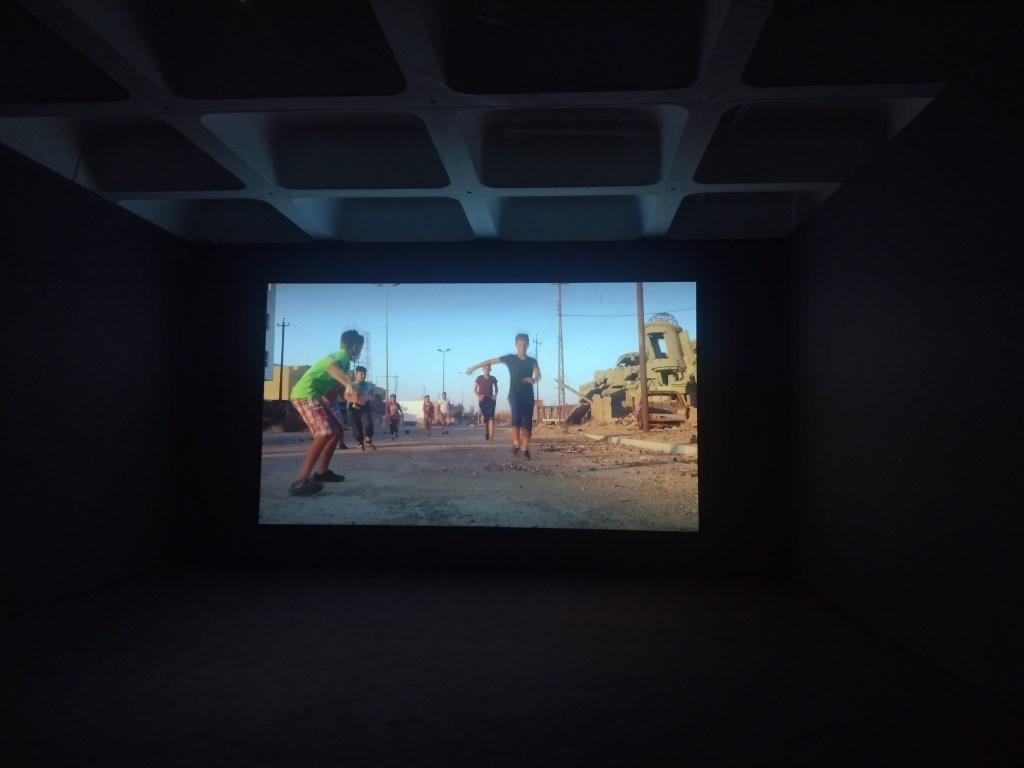
In Haram Football, a group of lads between 8-15 years old gather in the streets of Mosul, Iraq, to play a game of collective imagining inspired by ‘the beautiful game’. Haram means ‘forbidden’, and football was forbidden under the rule of Islamic State. In the shadow of that regime, these boys perfected their craft of playing football without a ball, a collective pretending, all in agreement where the ball bounces, rolls and flies through the air. They shake hands and once the game starts, they jostle, dribble and leap for headers. All around them there’s rubble and collapsing buildings, the sun is setting. At one point, a tank drives straight over their makeshift goalpost, the boys just rebuild it and carry on. They disperse into the rubble and the shadows at the sound of an explosion or gunfire, but return at the end under the cover of darkness, to announce their names paired with their favourite clubs.

Children’s Game #19: Haram Football
Mosul, Iraq, 2017

It is utterly impossible not to think of Gaza. Back in May, Unicef estimated that 14,000 children had been killed in Gaza, with 17,000 of them unaccompanied or separated. Obviously that number just keeps on going up. While I’m sure that Alÿs will be visiting Gaza to document children creating games and hope from within whatever rubble is left, it is brutal and sickening to know that the children who do survive there will inherit decades of trauma, no matter how strong their resilience is, no matter how skilled they are at continuing to create joy even among the horror. I’m reminded of Greta Thunberg’s speech to the UN in 2019: “you come to us young people for hope? How dare you.” Yet we keep on turning back to children to kindle hope in the despair and darkness, to create something better than we have. They have so much resting on their small shoulders.

If hoping is a radical act, then having children surely must be the most radical act of hope. For me, in my head, I’m still the girl in the blue summer dress weaving through the cityscape and avoiding stepping on the lines, not one of the earthbound, onlooking adults. That is the magic of Alÿs’ project. It reminds us of the beauty and fragility of youth but also presents the language of play as the universal one, the one that connects us all, if we can only hear their laughter, to ‘remind us how we used to be’.

Children’s Game #23: Step on a Crack
Hong Kong, 2020

Five to see at Edinburgh Art Festival

It only feels like yesterday that I put together my five to see at 2023’s iteration of Edinburgh Art Festival. And we’re already one week in! The Festival officially finishes on August 25th, but don’t fret. Many of the shows carry on beyond festival season. 

EAF is 20 years old this year and there really is something for everyone. So if you’re searching for something different to do this weekend, with a bit of space from the Fringe crowds, here are my suggestions.

Ibrahim Mahama: Songs about Roses

Fruitmarket Gallery until 6th October

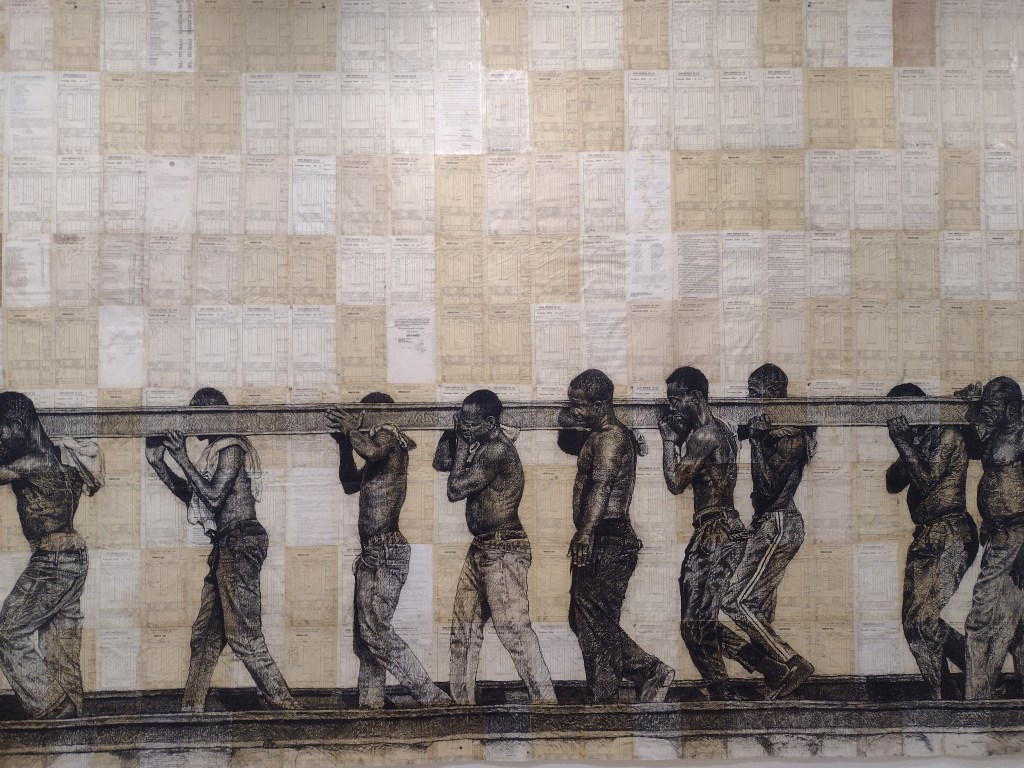
When talking to odious people about colonialism one of the things that might be brought up is how colonisers implemented infrastructure  – roads and railways – to the country that enabled it to advance. Songs about Roses explores the reality: these infrastructures were just a mechanism for extracting goods out of that land to make profit for the colonisers (pillaging). Mahama has collected huge pieces of a now defunct railway that was built by the British in 1923 to transport gold, minerals and cocoa around the area of Ghana that was then known as the Gold Coast. He has subverted and reframed these materials and given them new meaning in the process. In a video played on the ground floor, we see drone footage of these immense, rusted train carriages being transported across the Ghanaian landscape, like a funerary procession. Archival documents show the administrative nuts and bolts of empire building, that have now become the canvas for portraits and line drawings.

Detail of My Dear Comfort (2024) by Ibrahim Mahama

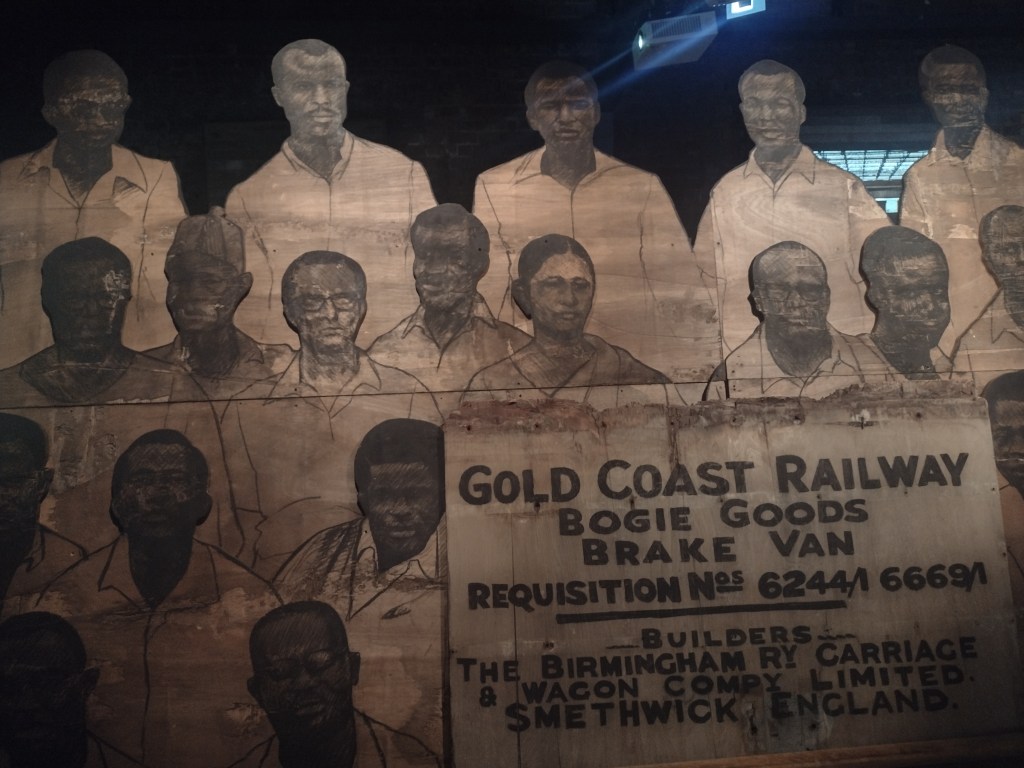
Delving further into archival material, Mahama has gathered group photographs of railway staff, which were taken pre-independence at railway workers’ retirement parties and company events. These are now rendered lifesize in charcoal and mounted on old railway tracks. The ghosts of colonial infrastructure have now returned to the Fruitmarket Gallery warehouse space: the place has become a monument to the railway workers, members of strong unions that played a key role in Ghanian independece and its immediate aftermath. It’s a dark room, thick with dust and the smells of industry. Perched as it is above Waverley station, I couldn’t help but think of Jamaican philosopher and academic Stuart Hall’s words on empires: ‘we are here because you were there’. These legacies are the ghosts of history and they have come home to roost.

Detail of Sekondi Locomotive Workshop (2024) by Ibrahim Mahama

Yet it’s not an exhibition that is about the story of historic exploitation alone. It’s also about Ghana’s future. The collaborative nature of Mahama’s practice is a source of hope: he sells his work in Europe and the USA and funds art and education institutions and projects in Ghana with the profits. Many of the works in the exhibition have links to audio of Muhama discussing the process of creating the works and exploring the ideas that inspired them – definitely worth a listen when you visit.

Renèe Helèna Browne: Sanctus!

City Art Centre until 25th August

I was lucky enough to meet artist Renèe Helèna Browne before seeing this piece, who explained how, though the surface story is about rally car driving, races and culture in Ireland, creating Sanctus! was really a mechanism to get to know their mother better. Browne discussed how, when thinking about their mother’s life, it was dominated by two systems: the catholic church which presided over her childhood, and the system of motherhood and raising children which followed. Both of these are explored in the work, but slowly, tentatively. The main piece is a film, lasting about 15 mins, obscured behind a red leather curtain (the red is a nod to the colour of Browne’s uncle’s rally car). As the viewer sits in the darkness we are confronted with the sounds of cars revving their engines. We see a distorted view of leaves and branches buffeted by the wind – reflections in the shiny paintwork of a vehicle.

What emerges is an intimate but simultaneously distant picture of the artist’s mother. At work at the farm. At home. Snippets of conversation where artist and mother discuss family deaths, the afterlife, faith and meaning. Their conversations seemingly evolve side by side but never quite join together. An intimate portrait of memory surfaces: the teenage child meticulously dyeing the mother’s hair and eyebrows. All the while the film explores the hyper-masculine space of rally driving. A little boy in full rally gear eagerly awaits the cars at the side of the road, poses for family photos with his father, uncles, cousins. Teenage boys drive cars in mesmeric circles like a dance, where they edge ever closer until you feel sure that one of them will collide (I think it’s called adjacent diffing). Meanwhile, we see the artist’s view from the sidelines. It feels as though this rally driving world is a source of nostalgia, a means of connection hovering close but always just out of reach. Fascinating and multilayered: I hope to go again to see the things I missed the first time. I also need to get some photos!

Home: Ukrainian Photography, UK Worlds 

Stills Centre for Photography until 5th October 

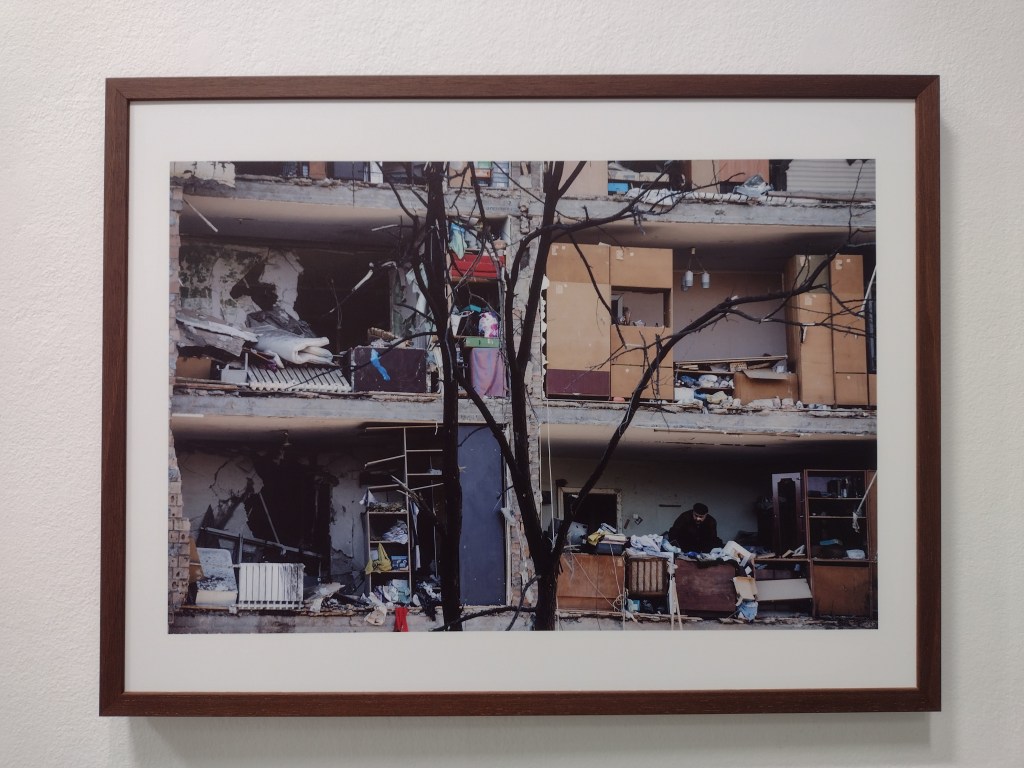
I am always drawn to the shows that Stills puts on and this one is no exception. There’s much talk about how now that everyone has access to good quality cameras via their smartphones, everyone’s a photographer. But when you go into a place like Stills you realise there is a still a difference. During the hype and excitement of the Fringe, it seems like the last thing you might want to do is look at photographs documenting the brutal realities of war. But the way this small but powerful show is put together makes it utterly necessary. We see a snapshots of clothes and possessions that refugees have left behind on a beach. There are insights too from Ukrainian life from the very end of the Soviet Era: in Passport (1995) photographer Alexander Chekmenev visiting the elderly at home to take passport photos and exposing the brutal reality of their living conditions. There’s an apartment block which looks like a doll’s house because the front of it has come clean off.

Damaged buildings in the aftermath of shelling, Podilskyi district, Kyiv (March 2022), Mykhaylo Palinchak

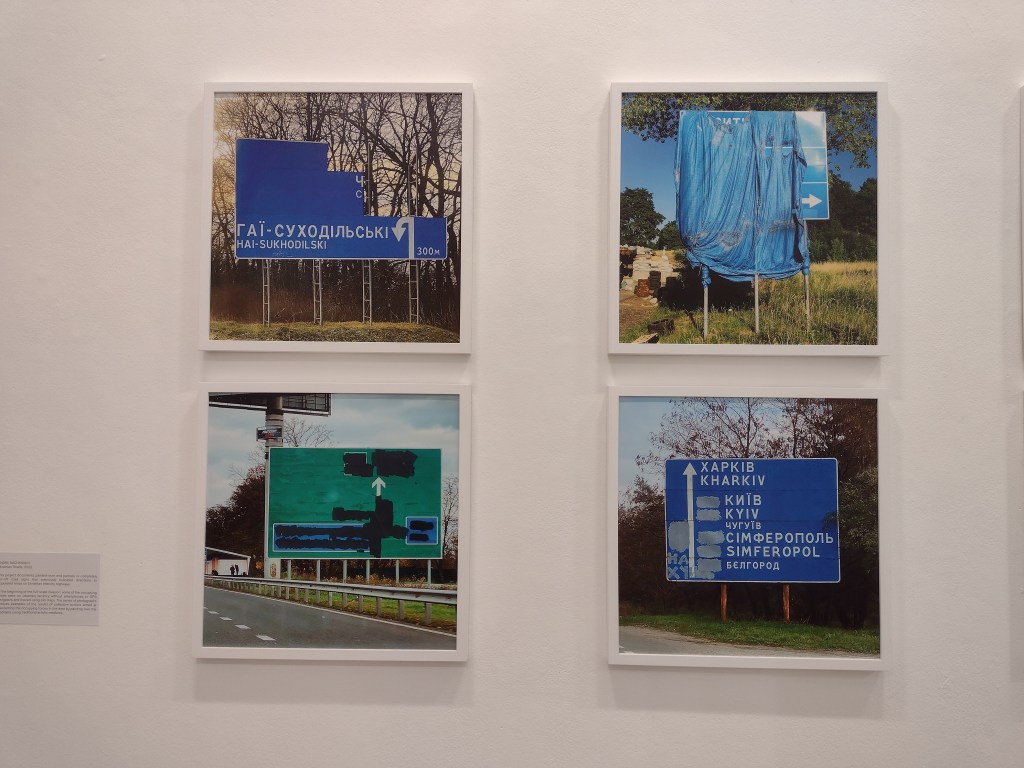
In the series that captured my attention the most, Ukrainian Roads (2022) by Andrii Ravhynskyi, we see roadsigns that have been obscured by bin liners, plastic bags, the mileage between towns and village names daubed with black paint: all attempts by local Ukrainian citizens to confuse and disorientate the Russian army whose GPS was patchy at the beginning of the war. Something so simple as a road sign, that looks so familiar, conflated with what has now become familiar because they are synonyms of war: Kharkiv, Kyiv, Simferopol. These images are deeply unsettling but demand to be seen.

Ukrainian Roads (2022) by Andrii Ravhynskyi

Platform24: Early Career Artist Award

City Art Centre until 25th August

I always enjoy seeing what the EAF Platform artists are up to. Now in its 10th year, the platform programme is a group show for emerging artists, and they have taken over a floor of the City Art Centre with this year’s presentation. The artists are Alaya Ang, Edward Gwyn Jones, Tamara MacArthur and Kialy Tihngang, who were asked to respond directly to the themes of the 2024 programme: intimacy, material memory, protest and persecution. My particular favourite was Gwyn Jones’ multi channel video piece Pillory, Pillocks!, where we see muck, slime, food residue and all manner of unknown substances flying at the face of a person looking back at us. He flinches, we flinch, and each time is saved by the presence of a clear screen. The artist says that it’s a response to historic shaming of people (think the stocks, rotten vegetables), humiliation and entertainment. It reminded me how as children we used to watch “get your own back” willing parents to be covered in slime. While you pity the man in the video, part of you wills for the protective screen to disappear.

I promise I will add some pictures to this section when I revisit!

El Anatsui: Scottish Mission Book Depot Keta 

Talbot Rice Gallery until 29th September

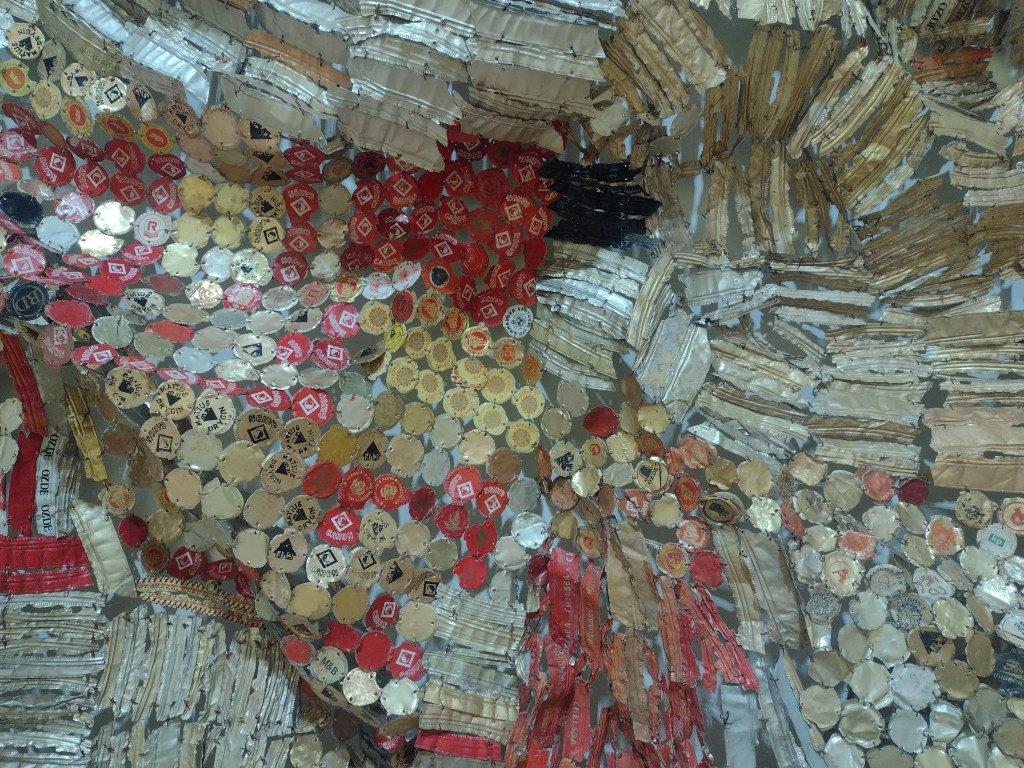
It feels so right that El Anatsui’s exhibition overlaps with Ibrahim Mahama’s at the Fruitmarket. Both artists are concerned with materiality, the legacies of history, colonialism, consumerism and they both work on a vast scale. I love El Anatsui’s work because it can be taken in on so many levels. You begin seeing the work from afar, dwarfed by it (recently, these huge scale works have adorned the side of the Royal Academy and the Turbine Hall in the Tate Modern). As you approach, it’s like zooming in to see the pixels in a photograph, each element emerges as unique and distinctive. These huge ‘tapestries’ may look like woven Kente cloth, but slowly reveal themselves as thousands of pieces of reclaimed aluminium bottle tops, from Ghana and Nigeria’s liquor bottling industries.

El Anatsui, details

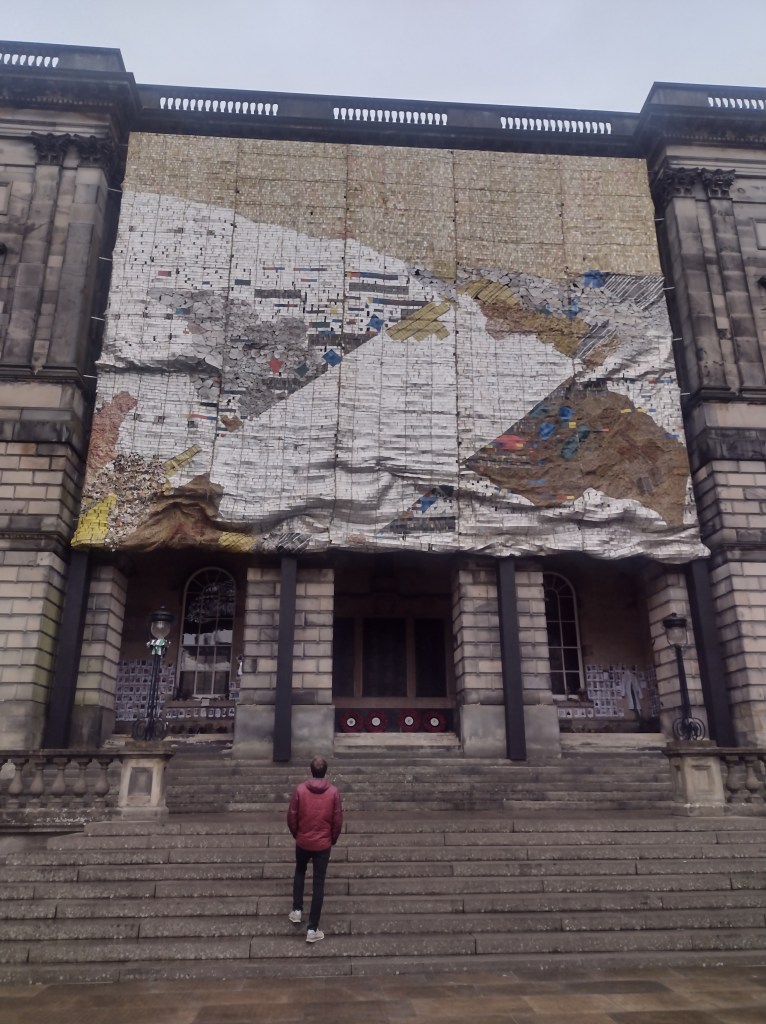
This exhibition is the largest examination of El Anatsui’s work staged in the UK, and spans five decades of his career. The crowning glory is the beautiful and huge outdoor installation TSIATSIA – Searching for Connection (2013) which dominates the Old College courtyard, draped over the Georgian architecture like some shining shroud. Yet it’s also a treat to see smaller works which I wasn’t so familiar with: works on paper, and carved wooden reliefs. I would love to see these two giants of Ghanaian art in conversation. Or, at least responding to the other’s exhibitions. Come on Fruitmarket and Talbot Rice, make it happen?

TSIATSIA – Searching for Connection (2013) with Andrew for scale

There are still shows I haven’t managed to see yet, so what I’m looking forward to exploring next are:

I would love to hear what others have been enjoying at EAF this year. Let me know in the comments!

A love letter to Summerhall

Walking into Summerhall, you never really know if you’re in the right place. The old bronze door handle doesn’t completely turn. No matter how many times you’ve been, you have to have a millisecond of doubt (is it still open? have I come to the right entrance?) before you manage to get in. Once you’re inside, you can feel you’re somewhere that good things are happening, but it’s not always clear where, or how to get there. Most times I’ve been there, I’ve wandered in a circle, disorientated, and stumbled on something new, or I’ve followed others into the place I was looking for.

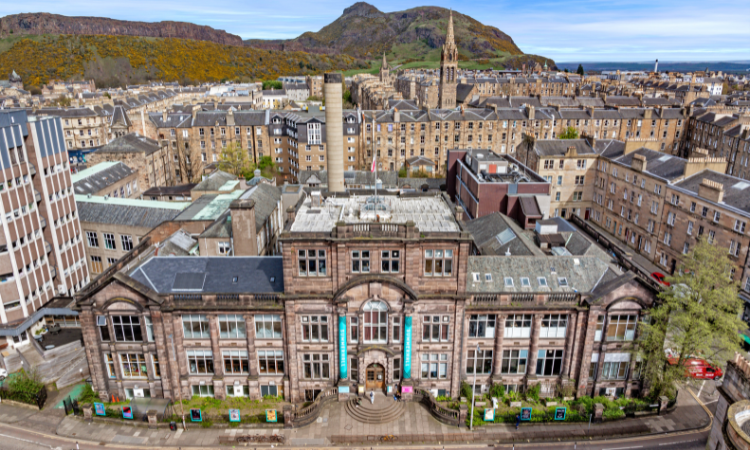
Summerhall is many things. It’s a rambling old veterinary school transformed into a multimedia arts venue which is home to over 100 businesses, including several artists’ studios. It’s also for sale. Like lots of Edinburgh residents, I’d experienced a wave of disappointment when I heard the place was on the market. But it wasn’t until last night, in the Dissection Room lit up by fairy lights, listening to Jalen Ngonda’s soaring falsetto that I realised how much I’d miss it.

Summerhall from the air

I stood there with lots of Six Music Dads soaking up the music and the atmosphere. No one had checked my ridiculously large and cumbersome cycling bag, no one had searched me. It has the lovely feeling of a slightly ramshackle, informal space (with the same sort of energy as Hidden Door festival) where no one asks what you’re doing. You could probably get lost wandering around in there for several hours and no one would bat an eyelid.

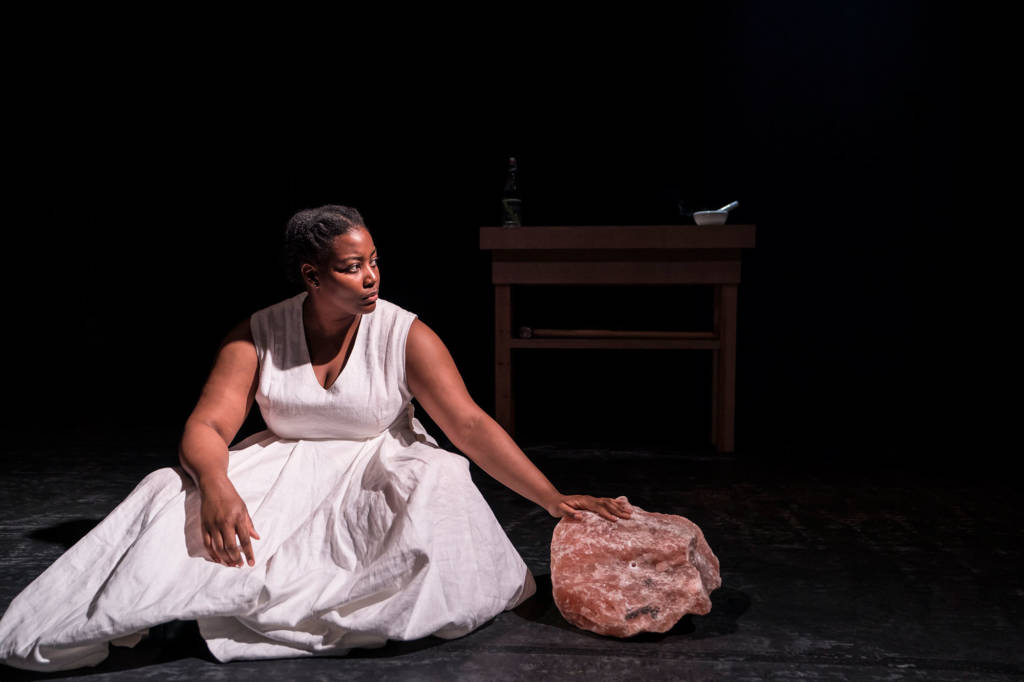
Even before I moved to Edinburgh six years ago, I’d seen theatre there during the Fringe. Summerhall is known for being home to some of the more experimental shows, and two stick out in my mind. First, Salt., a haunting one-woman show where Selina Thompson recounted her experience of retracing the route of the transatlantic slave trade. We were given science-lesson style safety goggles (the ones where the ends were always chewed on or slightly melted by bunsen burners at school) to protect us, while Thompson smashed out her anger and grief on a chunk of Himalayan pink rock salt on stage.

Salt. production photo by John Persson

More recently, with some trepidation given I was only recently bereaved, I saw The Last Show Before We Die. It was an apocalyptic cabaret of sorts, interweaving verbatim interviews and naked writhing on the floor, which questioned the meanings of endings, death, life and relationships. I cried (I always cry) and laughed and hoped no one would ask me to get involved in the audience participation bits. It’s that type of show that keeps the Fringe weird, and keeps people coming back to the Fringe.

Work has brought me to Summerhall too. When I worked at the Book Festival, EHFM, the online radio station based in Summerhall welcomed a group of young writers I worked with, encouraging them to share their beautiful, tender and teenage words with the world. I felt like a proud auntie. I’ve done an escape room at Summerhall too, as part of a teambuilding outing in my current role at Edinburgh College. As an old veterinary school, it has just the right amount of a creepy vibe to be perfect for an escape room. I am terrible at escape rooms, I contributed nothing but telling everyone else “oh well done!”, but we had fun.

After covid, Summerhall was one of the first places we could tentatively meet with friends again, exchanging pandemic stories over pints. Edinburgh is seriously lacking in beer gardens (there is quite an obvious a reason for that, as demonstrated this week) but the courtyard at Summerhall is one of the finest. Perhaps it seems shallow to mourn the lack of a drinking spot just as much as the gallery spaces, but the social spaces are where the good stuff happens. That’s where the connections are made, plans are hatched, friendships formed.

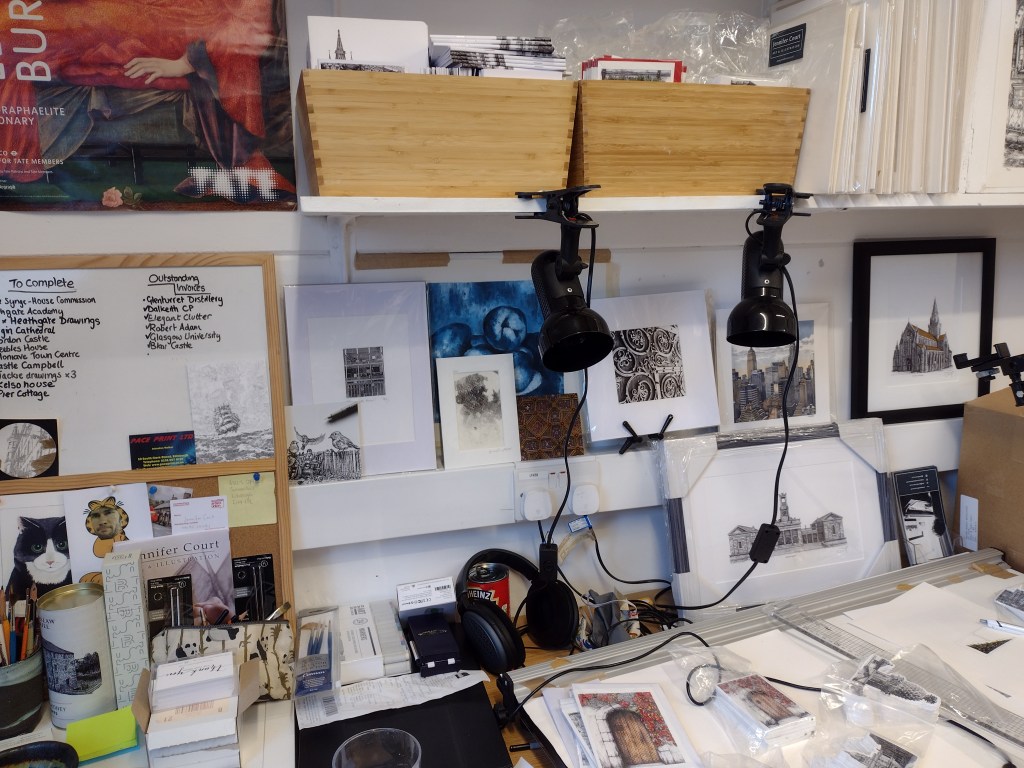
My pal Jenny’s summerhall studio.
Summerhall is a beautiful hub of creativity in so many ways.

We don’t know for sure what’s going to happen with the sale of the space yet. There may still be scope for an arts venue to continue there, but whether it’ll retain the rickety, casual beauty of the current Summerhall is another question entirely. So, while we still have it, I’m going to try and get there, get lost, and soak up the atmosphere for just a little longer. Experimental naked cabaret, anyone?

Five to see at Edinburgh Art Festival

As Edinburgh’s festival season approaches, residents and visitors alike become spoilt for choice as to how to spend their free time. While I often wish things were more spread out throughout the year, in truth, I’m a big fan. I love the buzz, the excitement and the chaos energy the festivals bring to an otherwise pretty chilled (some would say sedate) city.

Edinburgh Art Festival is an interesting beast, because it’s not quite as temporary as the Fringe, Book or International festivals. Rather, the art festival takes lots of different exhibitions which are already happening, and groups them under its banner, while adding special events, talks and tours. I guess the aim of this tactic is to raise the profile of the galleries and exhibition spaces across the city, allowing them both to compete with performance venues, and to take advantage of the vastly swelled number of tourists in town. 

As an Edinburgh resident, the best thing about this is that many of the exhibitions aren’t just limited to the month of August. Some have already started, while others will be here until the autumn and beyond. So, whether you’re a festival hater, or just here in Auld Reekie for a few precious August days, here are my five top choices for Edinburgh Art Festival. Picking only five was difficult, there are lots more shows and events to see, so make sure you head to the EAF website for more info.

Leonor Antunes: the apparent length of a floor area

Fruitmarket From now until 8 October

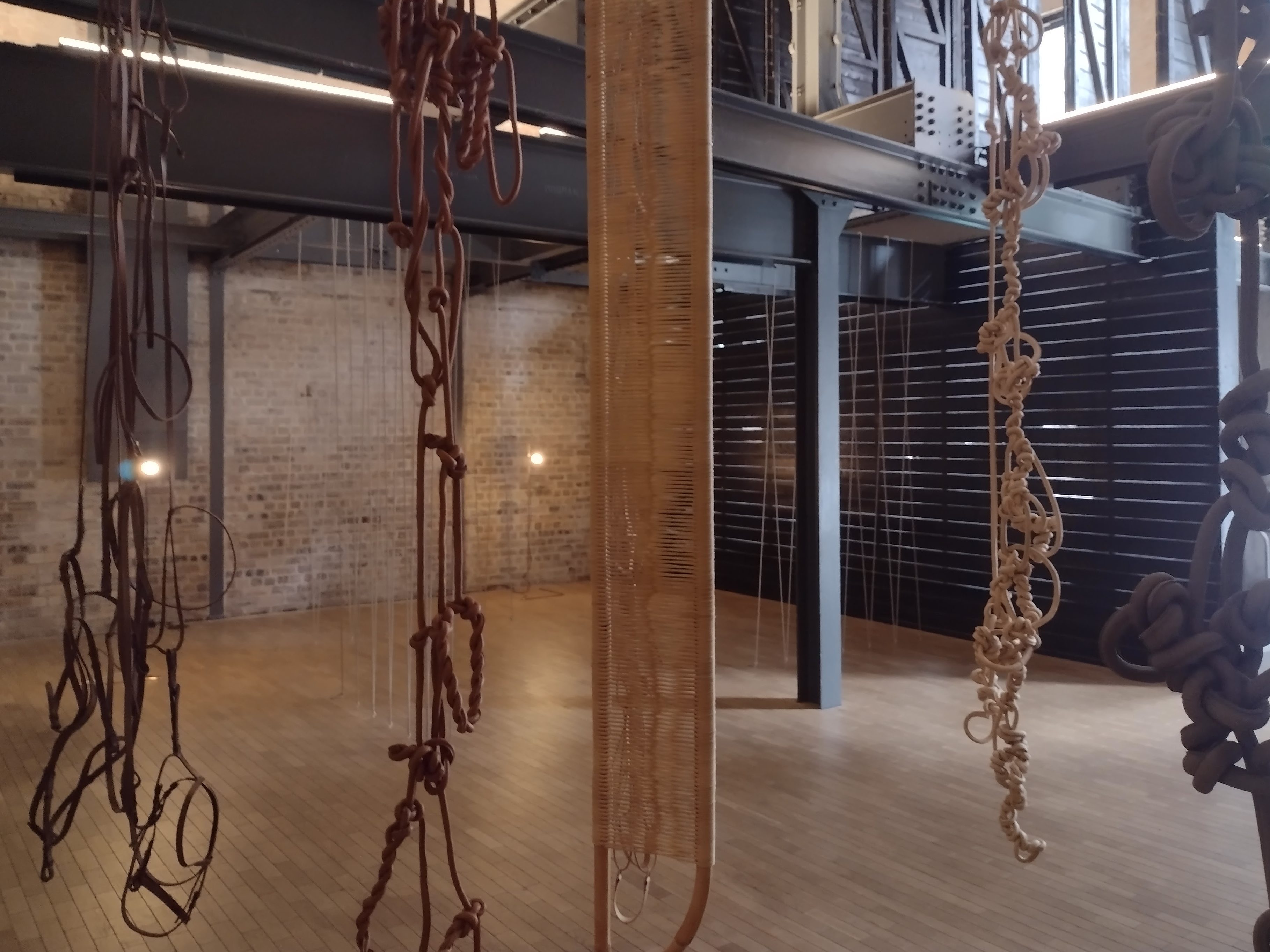
This is the best I’ve seen the Fruitmarket looking in ages, particularly the cavernous warehouse space (walk through the café to get there). Portuguese artist Leonor Antunes has used the dark room to miraculous effect, her woven/knotted/sculpted horse bridles, made from leather, wire and rattan, hanging like vines in clusters from the industrial beams above. As you walk among these tangled pieces, the different lines and fabrics intersect and enliven the empty space. It could be mistaken for some sort of S&M dungeon rather than a gallery, but that makes these weirdly haunted artworks all the more interesting. In the other rooms, the artist has created bespoke cork flooring where blocks of black and brown abstract shapes interlock and create artificial barriers: we must traverse these barriers in order to see this art more clearly. These floors, which smell comfortingly earthy and give the impression the artworks are floating, are based on designs for rugs by British designer Marian Pepler (1904-1997). Here, I’d recommend watching the short exhibition film in the upstairs gallery, which gives the work more context, and explains how Antunes looks to acknowledge overlooked (often female) artists and designers from history. 

Keg De Souza: Shipping Roots

Inverleith House, Royal Botanic Garden from now until 27 August

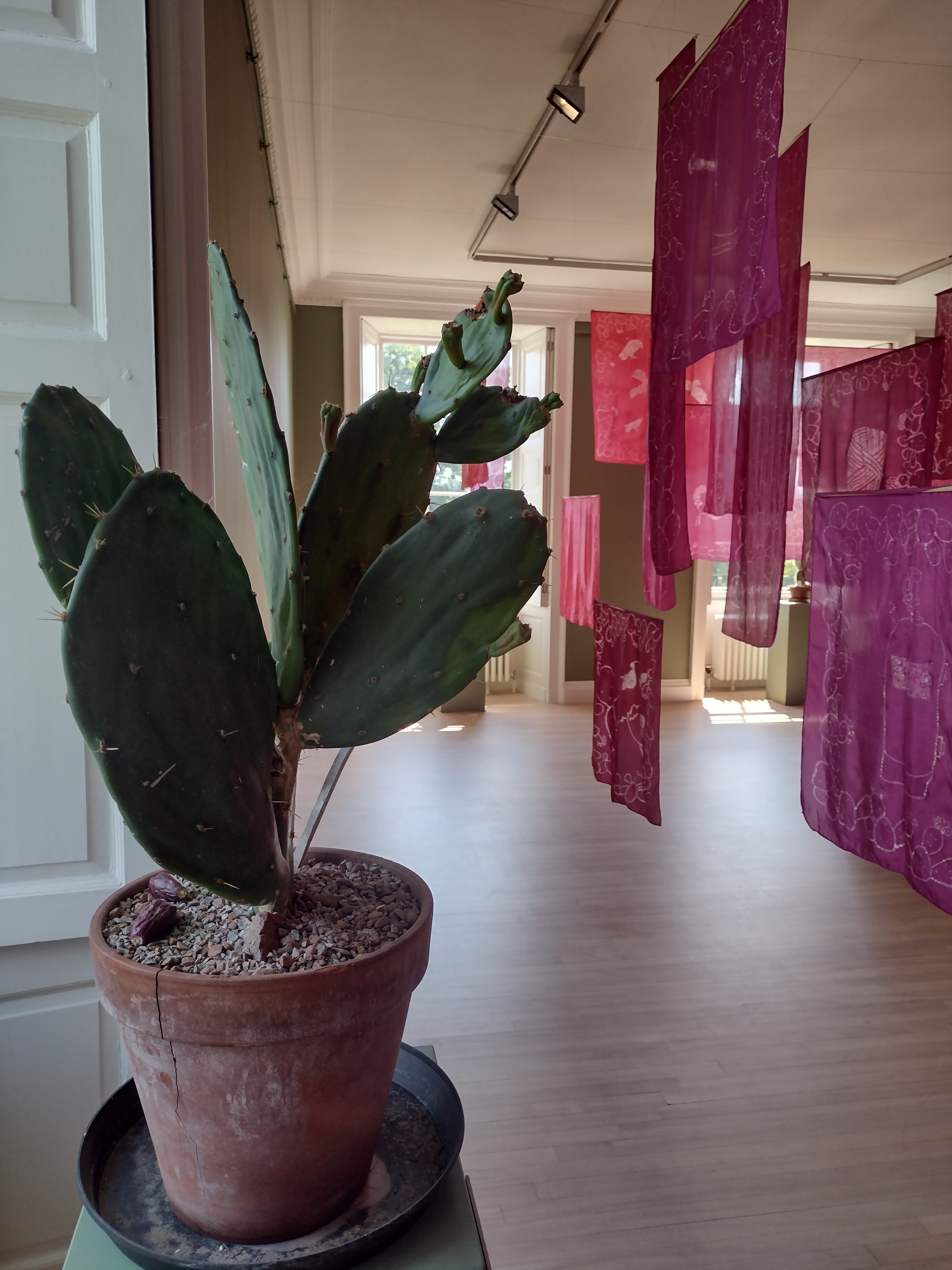
I stumbled upon this exhibition while showing my Australian aunt and uncle around Edinburgh’s Botanics – one of my favourite places to show off the views of the city. At the time, I didn’t really feel in the mood to look at art. I felt like a petulant child. I had already walked quite a bit, it was sunny, bright and breezy, the type of day where you don’t want to be inside and really don’t want to think too hard. My mood changed almost the moment I entered the first room, where the artist has placed branches of eucalyptus alongside floating silks which drape down dreamily. The air was beautifully scented and calming, conjuring the sweet lull of being in a Muji shop with several of their diffusers blasting at once. Yet despite the dreamy feel, the exhibition grapples with problematic histories of Botanical Gardens, through examining certain plant species that were transported across the British Empire. Upstairs, beautiful, ancient prickly pear plants combined with hanging artworks take on a sculptural quality. De Souza has managed to create an exhibition which examines the legacies of colonialism in a beguiling, almost-too-beautiful way. Very clever.

Grayson Perry: Smash Hits

Royal Scottish Academy from now until 12 November (ticketed)

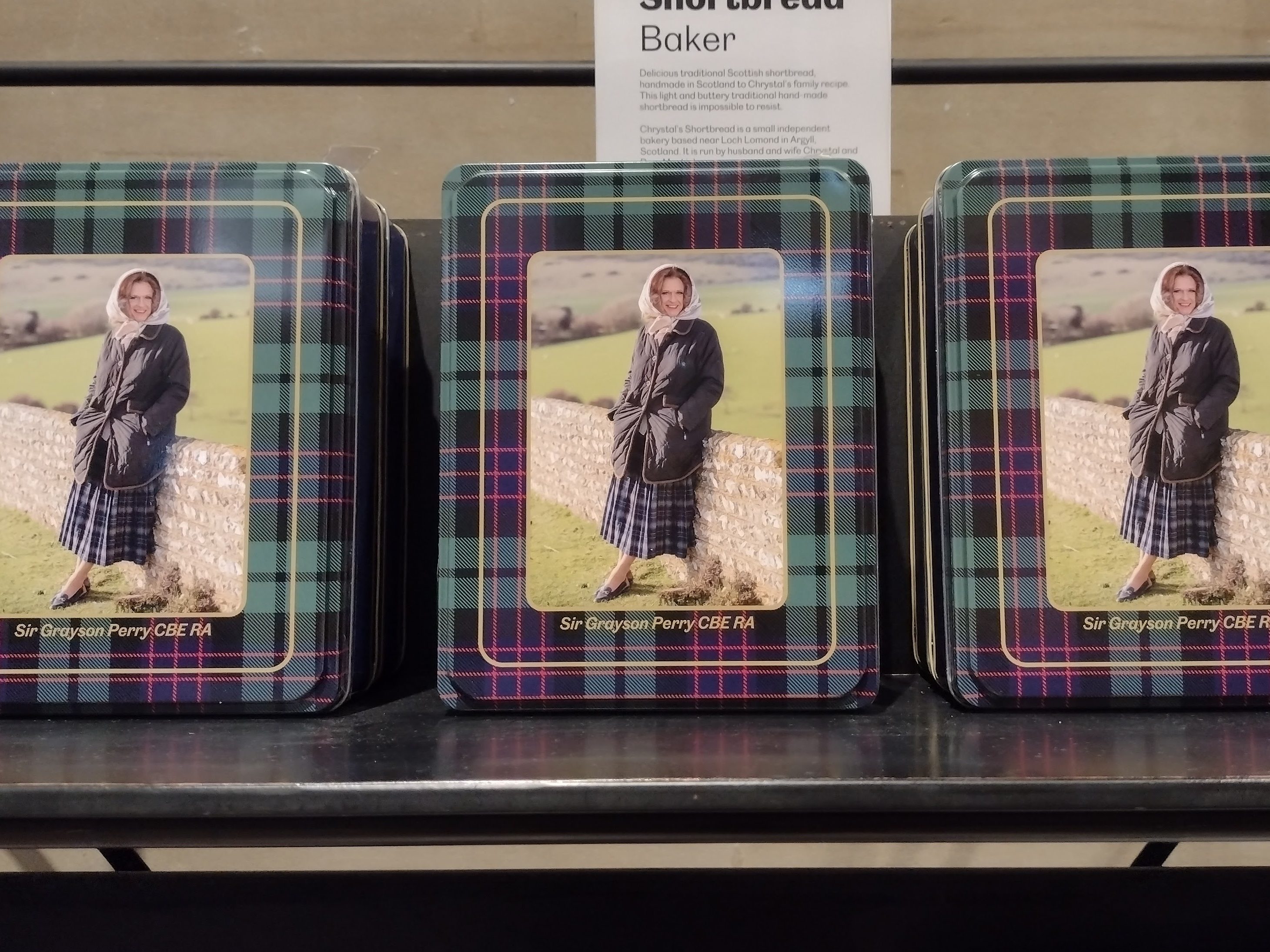
OK so this exhibition got panned in the Guardian (2 stars from JJ!?) but I loved it. I am in the Grayson cult and I pretty much love everything he has done, from TV shows to his Reith Lectures to his actual artwork. The Royal Scottish Academy’s massive walls are the perfect setting for the huge tapestries that adorn them. Whether you like art on a grand scale, or prefer to getting up nice and close to examine the details, then this is for you. If you like bright colours, this is for you. If you like shortbread biscuit tins decorated with Grayson dressed as Queen Elizabeth II on holiday in Balmoral, then this is for you. I think Jonathan Jones is right to question the relevance of placing Grayson’s obsession with Englishness in the Royal Scottish Academy, but maybe he’s forgetting how many English people live in Edinburgh or will be visiting Edinburgh this August. I can confirm that the shortbread is also delicious.

Markéta Luskačová

Stills Centre for Photography from 12 August until 7 October

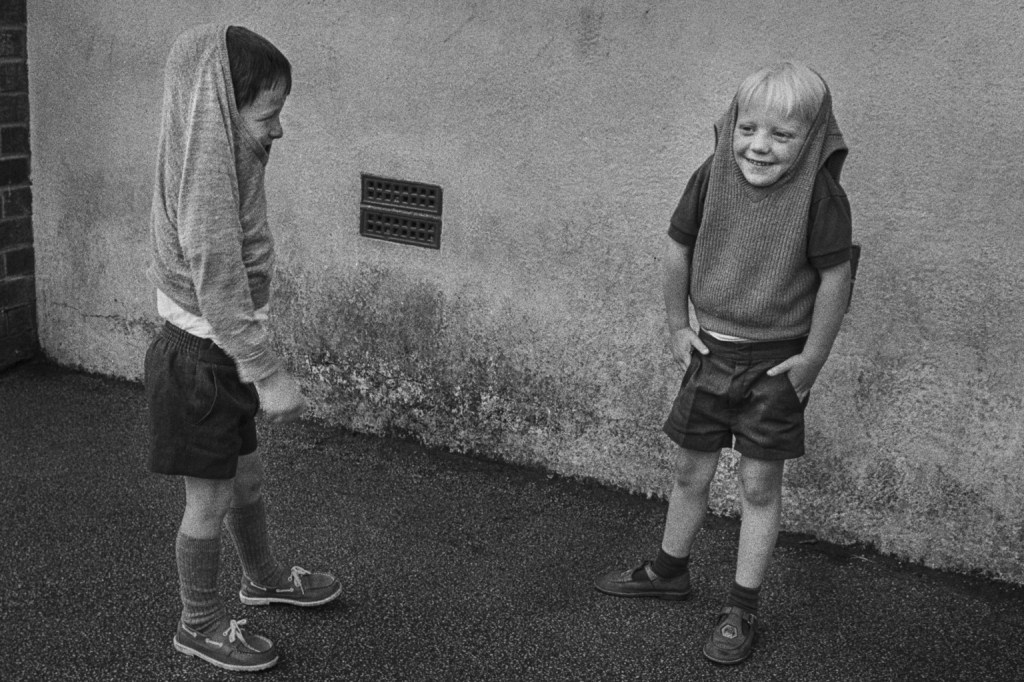
Although I’m not familiar with Markéta Luskačová’s work, I know it will be captivating. Encounters Art began life as an exploration of the magic of everyday ‘encounters’ with art, from graffiti to pleasing patterns in brickwork, so street photography has always had a place in my heart. The exhibition focuses on Luskačová’s photographs of children, and I’m interested in how she plays with the nostalgia that is inherent to photojournalism, and how this contrasts with our current usage of photography, where memories are instantly captured and then lost in the internet’s ether. Stills is consistently one of the best (and perhaps a little underrated) places to see art in Edinburgh. I trust their curating and expect this will be a fascinating show.

Two boys with their jumpers over their heads, Booker Avenue Primary School, Liverpool (1988), Markéta Luskačová

Alberta Whittle: create dangerously

National Galleries of Scotland: Modern One from now until 7 January 2024

I’ve been a fan of Alberta Whittle since I reviewed her film business as usual: hostile environment that was part of Glasgow International’s online edition in 2020. This exhibition is the largest showing of her work to date, and there is a LOT to see here, including sculpture, tapestry, film, photography and installations, all exploring the idea that compassion and collective care can be a powerful means of resisting racism. The major piece in the exhibition is Lagareh – The Last Born, a 43-minute video installation which Whittle presented at the Venice Biennale in 2022. Unfortunately I didn’t have the chance to see the film all the way through (I will be going back) but was deeply moved by the portion I saw, where musician Kumba Kuyateh walks around a sparse wooden courtroom, slamming the stands, the lecterns, the apparatus of ‘justice’ with her fists, whilst singing a lamentation for Sheyku Bayoh, who died in police custody in Scotland in 2015. A personal highlight for me was the final installation, portal for breathing love into the Elders or an Adoration for kith-folk who we long for (2021) which brings together special, significant objects – fabrics, shells, plants – to creates a shrine to lost loved ones, completing what is a deeply moving, and in some parts shocking exhibition with an act of contemplation, showing how anger and grief live alongside one another.

Memorial for ‘The Great Carew’ aka Neville Denis Blackman, (2019), Alberta Whittle

Follow me on Instagram for more updates on art to see in Edinburgh this summer, and let me know what you’re most looking forward to seeing, I would love to hear from you!

“It pleases me to stand in silence here” Giorgio Morandi at the Estorick Collection

I was in London last weekend, and with the cultural cul-de-sac of January now over, I was spoilt for choice as to what art to see. Exhibitions including Donatello: Sculpting the Renaissance at the V&A and Alice Neel: Hot Off the Griddle at the Barbican were clamouring for my attention. But instead, I picked a small exhibition at one of London’s ‘secret’ treasures – the Estorick Collection in Islington.

I don’t get art sometimes. Not perhaps the stance you’d immediately associate with someone claiming to be an art blogger. But what I really mean is I don’t always understand why I like what I like. Giorgio Morandi’s work is quiet, steady, pastel-coloured, and consists mainly of still lifes of vases. Writing it now, it doesn’t sound particularly scintillating. Luckily my pal trusted my artistic judgement and, coupled with the fact that that London postcode is particularly strong on post-gallery cake options, we headed along.

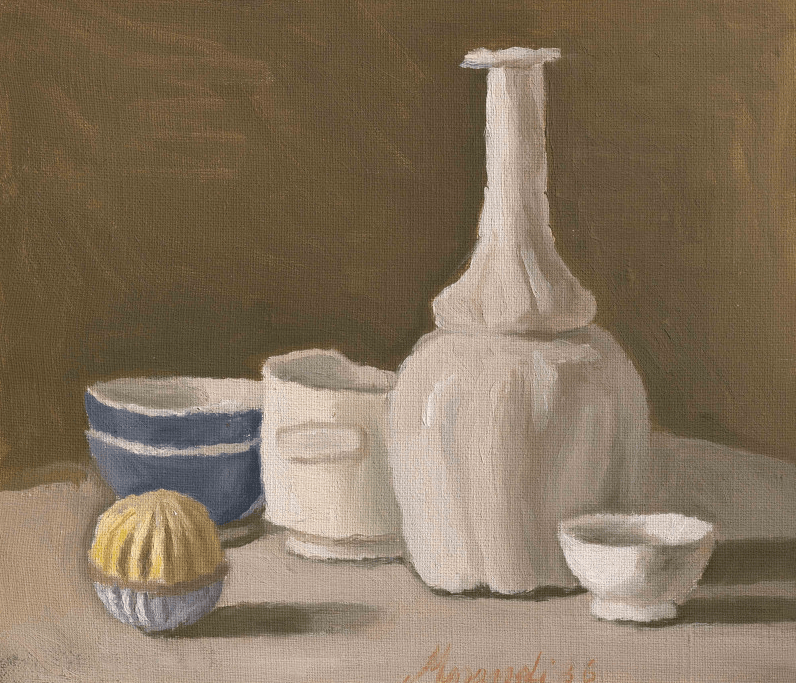
Still Life (1936), Giorgio Morandi

For the exhibition, the Estorick Collection has paired up with the Magnani-Rocca Foundation, combining both the Estorick’s own collection of etchings by Morandi, and the Foundation’s more extensive collection of paintings. Magnani was a persistent collector over the course of his and Morandi’s lives, and the letters between them on display in the exhibition provide an interesting insight into the artist-patron relationship.

The exhibition was small, made up of only a few rooms, which allows you to focus on each work in its own time, and I think these sorts of artworks need some time. There they were, lined up in neat rows along the white walls. Morandi’s persistent, almost obsessive, repetitive paintings of vessels. Vases, cups, bottles, all stand in grey and brown and pink arrangements. This should not be that interesting, but somehow I found myself under their slow spell.

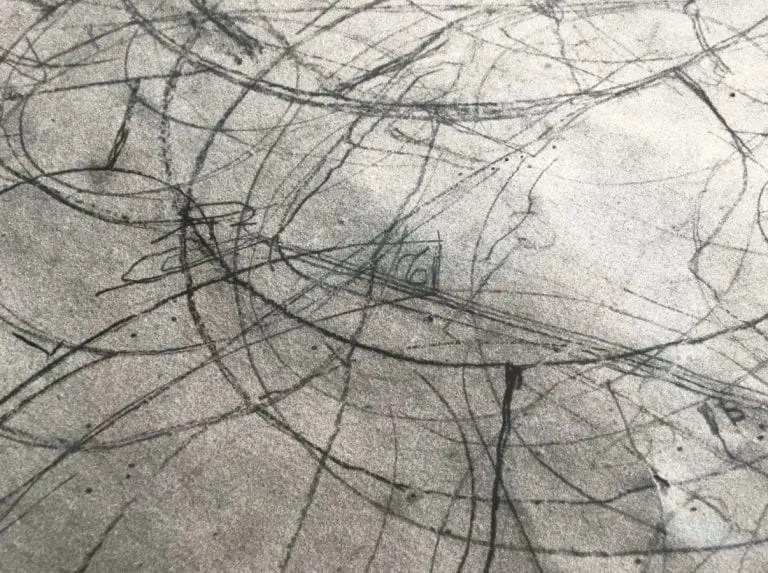
Artists over the decades have been fascinated by Morandi, and while looking at the paintings in front of me, I was reminded of a film, Still Life by Tacita Dean, made in 2009 after she spent time in the Bologna apartment where Morandi lived and worked for over 50 years. The film focuses on the measurements and careful markings found on the paper Morandi placed underneath his objects. These traces have a kind of magic to them, the same magic held by the objects, the empty vessels he returned to again and again.

Still Life (2009), Tacita Dean

I’ve long been a fan of still lifes, and by this, I mean the grand ones from the 17th century that you can find the National Gallery or the Wallace Collection. They are voluptuous, excessive, violent even. Full of reminders of life and death, tables groaning with the excess of food and silverware. Looking at these paintings is a visual treasure hunt, like reading Where’s Wally. Is that a monkey in the corner?

Still Life of Fruit and Vegetables with Two Monkeys (about 1620), Jan Roos

Morandi’s are the opposite. They are sort of dry and dusty. They are objects which hint at a precious use or existence but don’t give much else away. There are no extraneous distractions. It is not the sort of art that ‘performs’ well in the Instagram age, but there is a joy in this stillness. Up close, the objects are scrubby and mottled, the scratches in the paint are plainly obvious. But then, you take a few steps back and they meld and resolve, like a key change from minor to major.

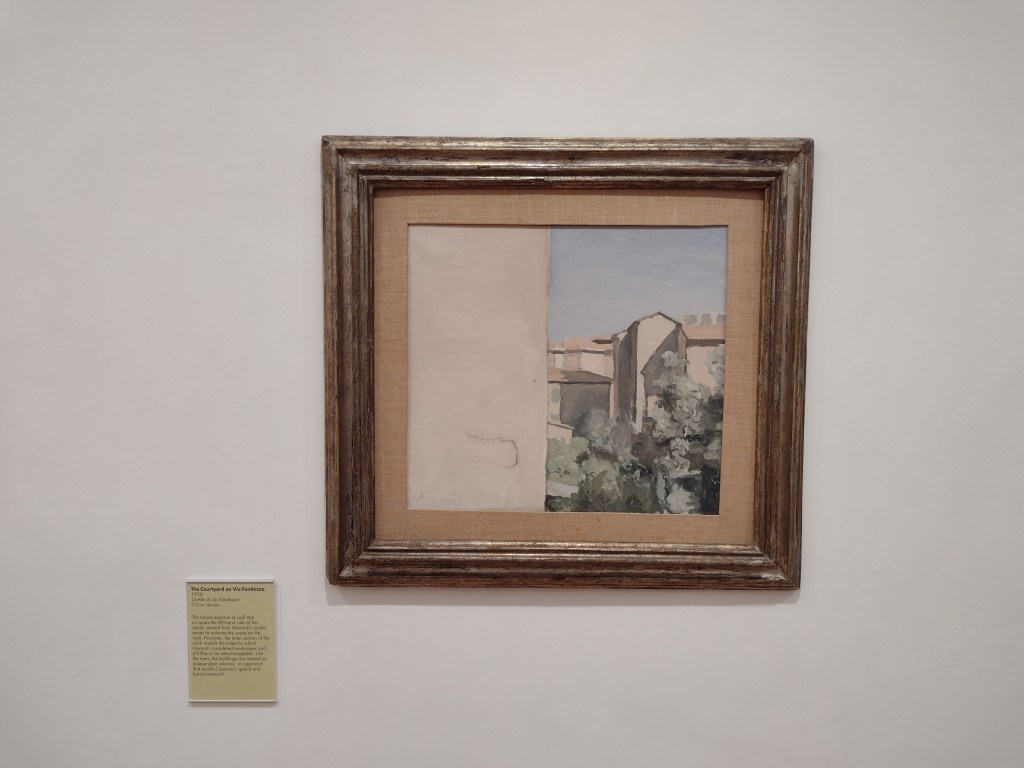
The only photo I took, shows The Courtyard on Via Fondazza (1954), a painting of some buildings and trees next to an enormous blank space on the left, which almost looks like totally untreated canvas, but actually depicts the empty side of a windowless building. It’s the space Morandi gives his subjects that I find satisfying to observe, and the exhibition wall text suggested similarities with Cézanne’s approach to space and form.

The Courtyard on Via Fondazza (1954), Giorgio Morandi

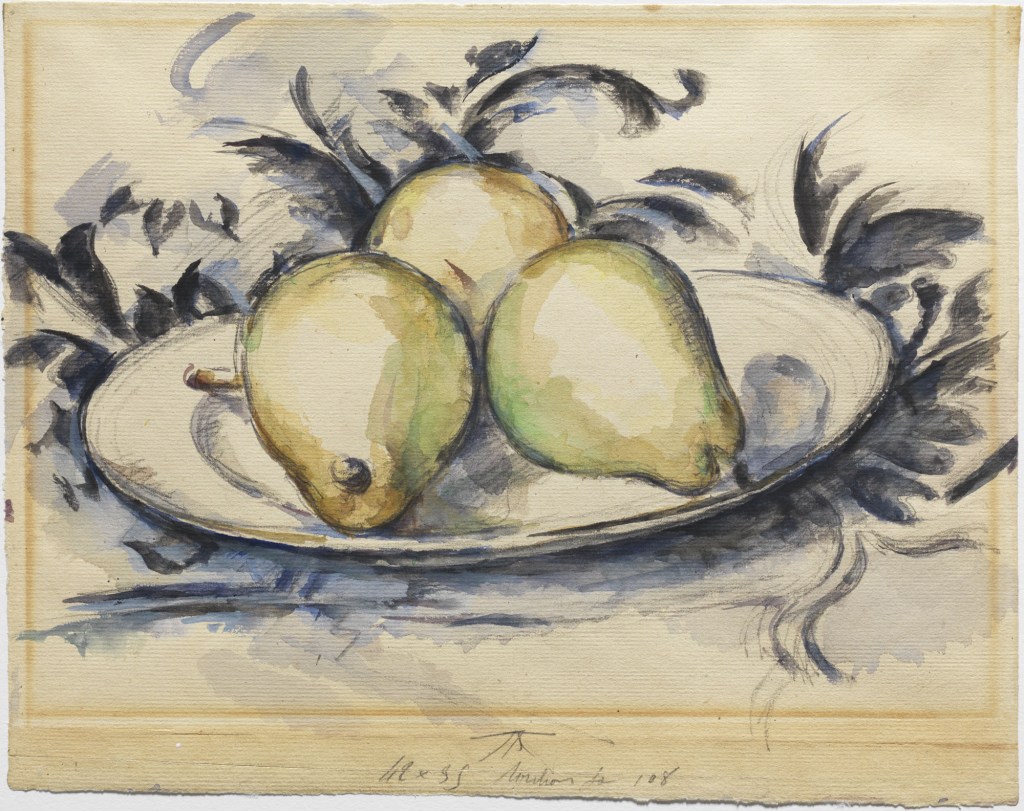
Perhaps this parallel with Cézanne is what endears me to Morandi so much. Years ago, I went to a Cézanne exhibition in Oxford where I bought a postcard of his work Three Pears (1889-90). After the show, a friend of a friend was bemused by it all: “I don’t get it. It’s just pears?”. I didn’t really know what to say. Yes, they are pears. But they are very lovely pears?

Three Pears (1889-90), Paul Cézanne

More and more these days, if I try to interrogate what I like about looking at art, it boils down to how it makes me feel. The feelings lead the way. After a while of walking around the exhibition wondering why Morandi was so obsessed with empty vessels, I decided to stop wondering why and just enjoyed the tranquillity, stillness and peace that looking at these quiet paintings can bring. 

There’s a poem by Philip Larkin my Mum loved called Church Going, where he describes encountering an old abandoned church, and he doesn’t know why, but it means something to him. He says, “it pleases me to stand in silence here”, and that’s what came to mind looking at these small, intimate paintings. Sometimes standing, looking and feeling is enough. No other justifications or explanations necessary.

Art for our times

I ask myself how can it already be the end of April. What happened to the first third of the year? It seemed to have passed me by without me noticing, meanwhile the world plunges from one crisis to another. I find myself asking, ‘was it always like this?’ Did we always lurch from tragedy to crisis in a never-ending cycle? Have I only started noticing now, after living in a pandemic-induced state of hyper awareness? Or are things just particularly bad at the moment?

War, suffering, poor health, exploitation, callous political decision-making. It seems to be closing in on every side. Has it always been like this?

Four months since my last blog post and the time just keeps on ticking away. The truth is, in times like these, I don’t feel like I have much to say. Or maybe I just don’t feel like any contribution I could make adds much value. The old saying, “If you don’t have something nice to say, then don’t say anything at all”, is pretty deeply ingrained in me, and I don’t have anything nice to say about the times we’re living in. They’re scary, depressing and disorientating, and sometimes it seems like the only alternative (for the privileged ones like me) is to wrap ourselves in a comfort blanket and disengage – I actually re-downloaded Candy Crush and got to level 306 – my way of wishing it was 2015 again. Sometimes, you just don’t have anything to say.

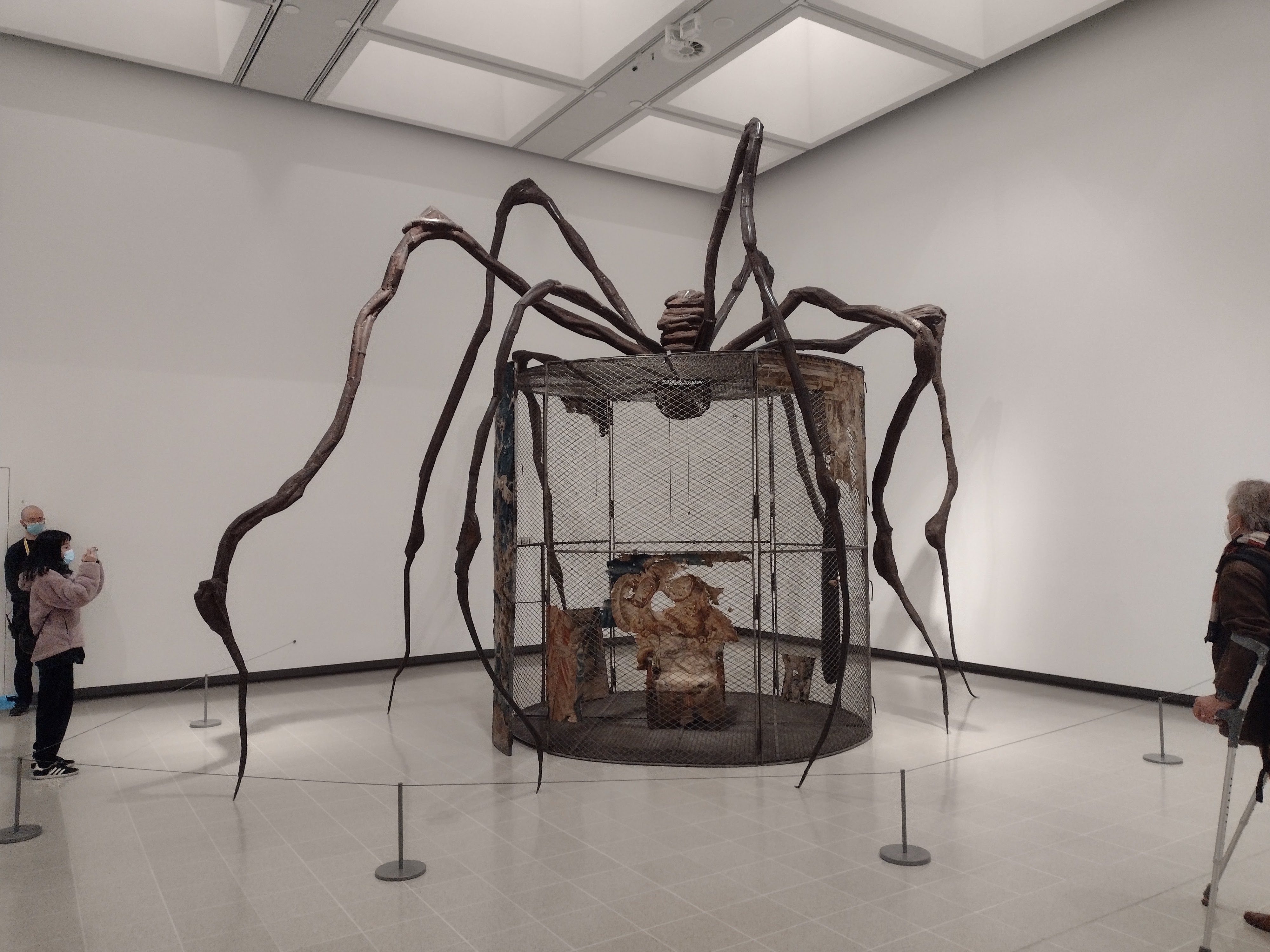
I haven’t seen much art, for one thing, which is a big contributing factor in not having much to share here on the blog, or on Instagram. I went to the Louise Bourgeois exhibition at Hayward Gallery, and while I loved the huge spider and appreciated the dark, uncanny bone sculpture installation, it didn’t make me want to write. The show was busy. The photos I took were blurry. And perhaps I just didn’t need more heavy subject matter to struggle with in my free time – Bourgeois’ art is about as far as you can get from light and breezy.

A photo of Louise Bourgeois' artwork, Spider
Louise Bourgeois, Spider, (1997)

Despite my personal reaction to the weight of this show, I continue to believe that engaging with art that seems difficult can be enlightening, illuminating, and can give us tools to help us process difficult things. Art can say things we don’t want to, or that we don’t have the words for. A few weeks ago, it was on this basis that I decided to use my Instagram to “highlight some artworks that speak to what’s happening in the world over the coming weeks, if that doesn’t seem too crass”. The aim was to post a couple of works per week, broadly related to the displacement of people and refugees, with the Ukraine crisis unfolding on our doorstep. 

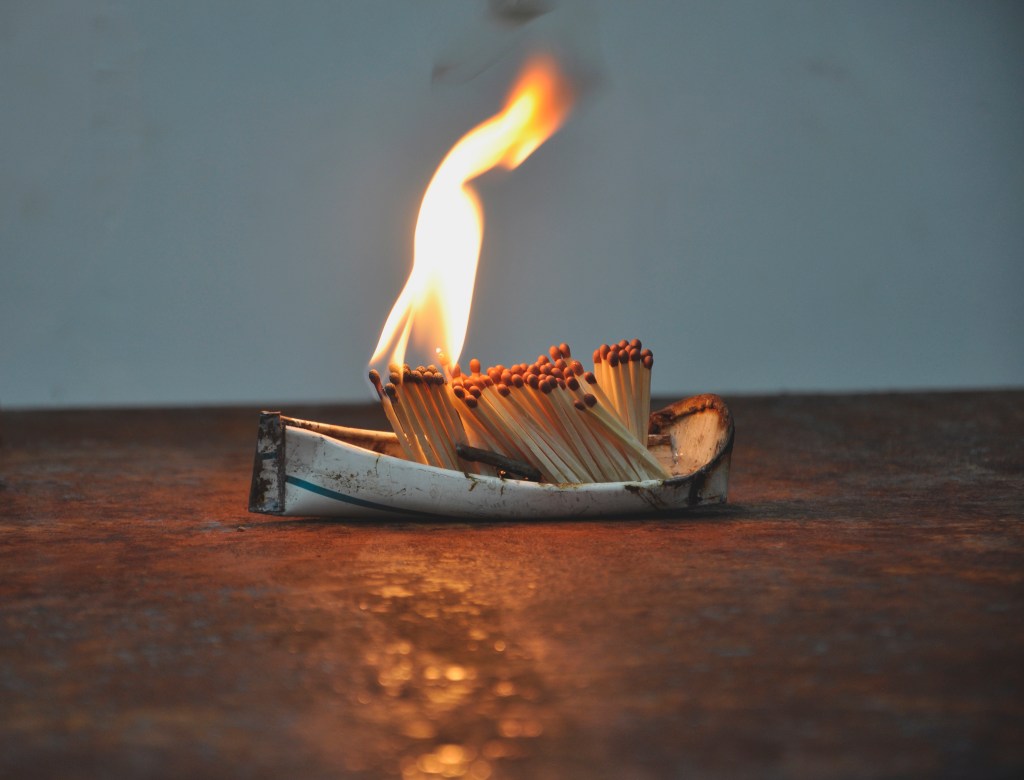
A couple of months prior, I’d posted Dark Water, Burning World (2017) by Issam Kourbaj, an unforgettable work made up of boats, packed with burnt-out matches that resemble people. I wanted to try and make the effort to promote works and artists that engage with, rather than shirk, these difficult themes. But it tuned out that was far more challenging than I could’ve anticipated, with research becoming draining as the overarching complexity of posting artworks about refugees made me hesitate. The very fear of being crass or insensitive or saying the wrong thing was enough to shut me up. These are real people’s lives. Is it exploitative, or somehow trivialising, to wrap them up into bitesize chunks of ‘content’? Welcome to my brain. There are a lot of rhetorical questions.

A photo of Issam Kourbaj's work, 'Dark Water, Burning World'.
Issam Kourbaj, ‘Dark Water, Burning World’ (2017)

Art that is fraught with difficulty is something Mary Beard grapples with on her latest excellent two-part series, Forbidden Art. I think I have a fairly sturdy threshold for engaging with art and film that can make me feel uncomfortable (the example I pride myself on is that I loved Julia Ducournau’s 2016 film, Raw), but I was surprised at how I found some of these works, including Martin Creed’s Sick Film, and Marcus Harvey’s Myra, extremely challenging. I’d love to see the ratings on the show, which aired on the BBC at prime time on two Mondays in February. Surely I wasn’t the only one who felt genuine nausea as Mary broke taboo after taboo.

Probably the most shocking image of all from the series was Peter Howson’s Croatian and Muslim (1994), which depicts the rape of a woman with her head being shoved down a toilet. Howson was an official war artist in The Bosnian War (1992-95), though the work since has attracted controversy for being based on eyewitness accounts, rather than direct observation. Whatever the circumstances, the image points to what we now know for certain: that rape was used as a weapon in the conflict (Wikipedia estimates between 12,000-50,000 women were raped). The stories emerging from the war in the Ukraine suggest the same. As I hear this news, I have the grim realisation that I am not surprised.

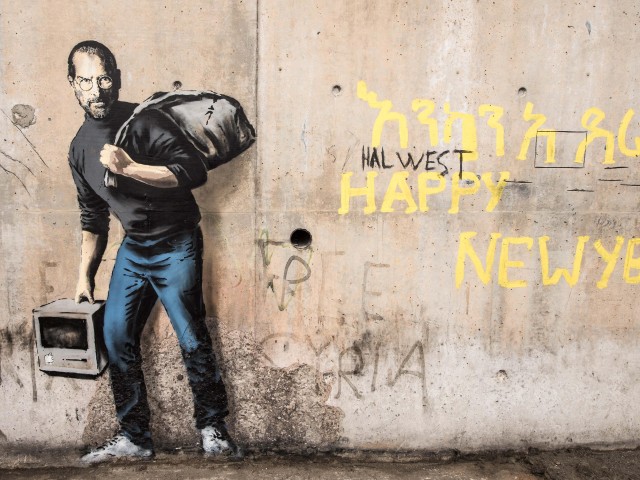
In the end, I just posted two works, Tarifa by Daniel Richter, and Soleil Levant by Ai Weiwei. They are both works I’d encountered before, which felt more natural than specifically seeking out refugee-themed works. If you google ‘art about refugees’, one suggested piece that pops up is Banksy’s ‘Son of a migrant from Syria’, (2015), a mural that the world’s most famous anonymous street artist created in the Calais Jungle, which depicts Steve Jobs as a migrant. But the message behind this idea, that among refugees the next Steve Jobs might be lying in wait, is way too simplistic, clumsy and misses the point entirely. The point of welcoming refugees is not because of the part they may end up playing in global capitalism, or because they look and live like us.

A photo of 'Son of a Migrant from Syria' mural by Banksy
Banksy, ‘Son of a Migrant from Syria’, 2015

Building these narratives into a piece of artwork is challenging, and so much of the art I came across didn’t sit right. Even Jeremy Deller’s poster artwork, Thank God For Immigrants (2020), which I have a copy of, delivers a cloudy message that is (intentionally) fraught with complexity.

Someone who has done a significant amount more meaningful thinking and research about this than me is art writer Tom Jeffreys, whose brilliant piece, reviewing Iman Tajik’s Bordered Miles performance for Glasgow International, broaches the issues of borders, safety, identity and what is at stake for undocumented immigrants and refugees in this country. Tajik’s work is built upon lived experience as a detainee at Dungavel detention centre, but his art, which encompasses performance, photography and installation, seeks to widen the lens beyond his own life and perspective, to deal with ideas, not stories. It is the kind of nuanced work with a scope and resonance goes way beyond that of an Instagram feed. The kind of work that shows us that if we want to engage with art, we may as well do it properly. That can sometimes take stamina, research, and courage.

When we encounter art, we may not always like what we see. We may want to look away and in some moments, the act of avoidance may feel like be our only option, for self-preservation and protection. As long as we clock that urge to shy away, I think that’s ok. In the meanwhile, artists will continue to respond to crises in ways that can range from the effective to the offensive. And when we do decide to re-engage, artists and artworks will be ready to receive us, to educate us, and to challenge us.