Adapting projects to fit our ‘new normal’ has been the concern of many of us over the past few days, weeks and months. Artists have had to rethink entire proposals, final year degree shows are being reimagined so they can be exhibited online, and there have been lots of virtual gallery content for us to connect with. But how do you adapt a project that is about physically being present in a place, without being able to access it in person?
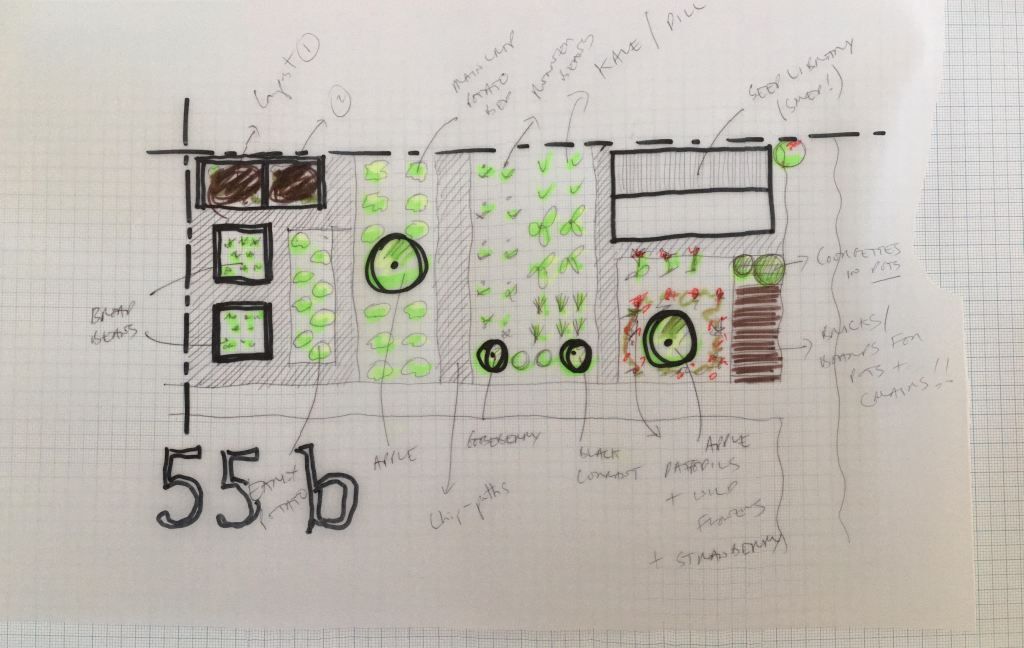
This was the challenge facing artists Felicity Bristow and Susie Wilson, who have been carrying out a Landmarks residency with Art Walk Porty. The project is based around a plot at Craigentinny Telferton allotments. After months of planning, preparing the soil, connecting with other plot holders and discovering what they had inherited from the previous owner, they were just on the cusp of beginning to plant, run workshops and kickstart the project in earnest when lockdown and the coronavirus crisis changed all that.
I had the pleasure of speaking to Felicity and Susie about their project, to find out how they have adapted and changed their approach to suit new surroundings. The interview has just gone live on the Art Walk Porty website. You can access it here.
Plot 55b, like all of Art Walk Porty’s residencies, is a place-centred project based in the local Portobello community. It is about process and engagement as much as, if not more than, about presenting a ‘final product’. In that way, the artists have discovered that although separated from the allotment itself, the process of growing things, of documenting their progress, could be carried out from their homes. They have set up a seed exchange and have been prompting each other with ideas, artworks and games sent in the post. They also discovered that the almost meditative act of sewing seeds and looking after plants has been beneficial to their mental health over the lockdown period. This is something that I can relate to even without access to a garden: managing not to kill my two houseplants over the last twelve weeks has been a source of great joy.
The recognition that connecting with the natural world can contribute positively to our mental health, combined with our need to avoid enclosed spaces in the coming months, will hopefully lead to more imaginative thinking in art projects, community engagement ideas and education as we turn to face our ‘new normal’. Plot 55b is a really lovely example of how that process can come to life.
 encounters_art