Five to see at Edinburgh Art Festival

It only feels like yesterday that I put together my five to see at 2023’s iteration of Edinburgh Art Festival. And we’re already one week in! The Festival officially finishes on August 25th, but don’t fret. Many of the shows carry on beyond festival season. 

EAF is 20 years old this year and there really is something for everyone. So if you’re searching for something different to do this weekend, with a bit of space from the Fringe crowds, here are my suggestions.

Ibrahim Mahama: Songs about Roses

Fruitmarket Gallery until 6th October

When talking to odious people about colonialism one of the things that might be brought up is how colonisers implemented infrastructure  – roads and railways – to the country that enabled it to advance. Songs about Roses explores the reality: these infrastructures were just a mechanism for extracting goods out of that land to make profit for the colonisers (pillaging). Mahama has collected huge pieces of a now defunct railway that was built by the British in 1923 to transport gold, minerals and cocoa around the area of Ghana that was then known as the Gold Coast. He has subverted and reframed these materials and given them new meaning in the process. In a video played on the ground floor, we see drone footage of these immense, rusted train carriages being transported across the Ghanaian landscape, like a funerary procession. Archival documents show the administrative nuts and bolts of empire building, that have now become the canvas for portraits and line drawings.
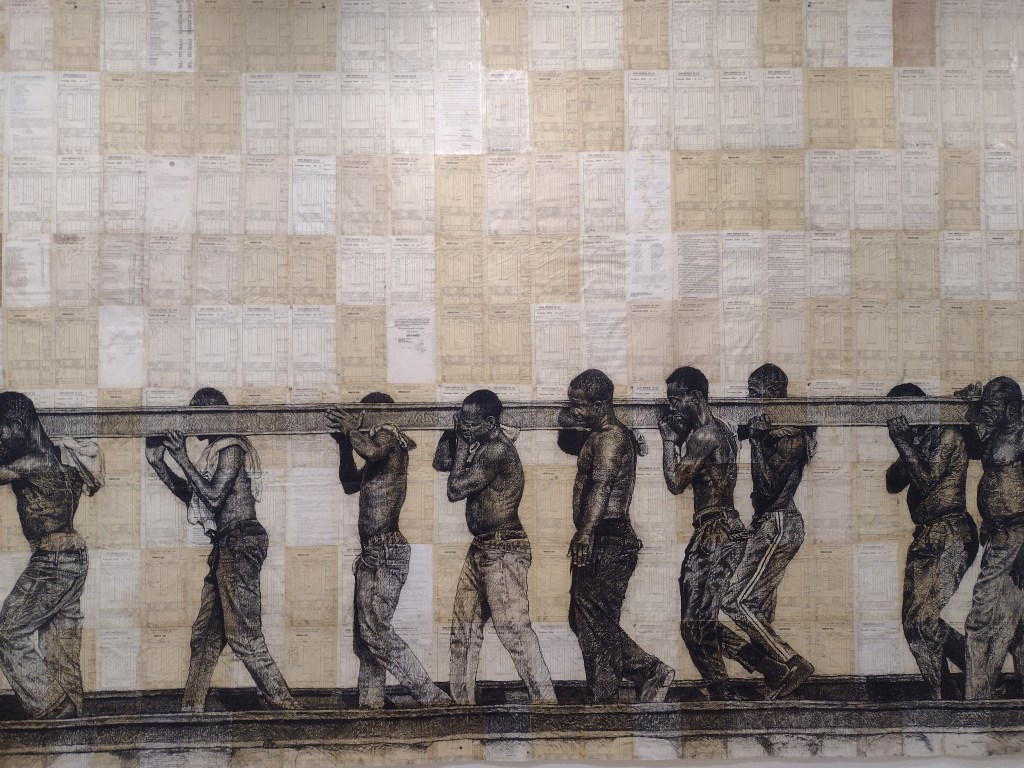
Detail of My Dear Comfort (2024) by Ibrahim Mahama

Delving further into archival material, Mahama has gathered group photographs of railway staff, which were taken pre-independence at railway workers’ retirement parties and company events. These are now rendered lifesize in charcoal and mounted on old railway tracks. The ghosts of colonial infrastructure have now returned to the Fruitmarket Gallery warehouse space: the place has become a monument to the railway workers, members of strong unions that played a key role in Ghanian independece and its immediate aftermath. It’s a dark room, thick with dust and the smells of industry. Perched as it is above Waverley station, I couldn’t help but think of Jamaican philosopher and academic Stuart Hall’s words on empires: ‘we are here because you were there’. These legacies are the ghosts of history and they have come home to roost.
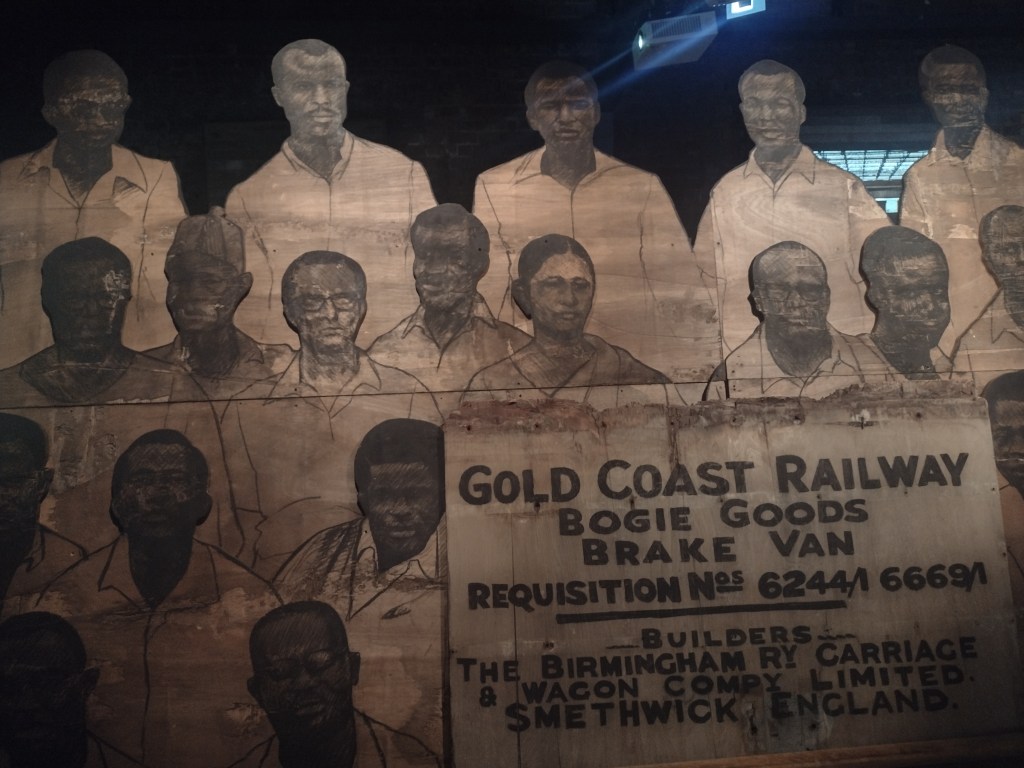
Detail of Sekondi Locomotive Workshop (2024) by Ibrahim Mahama

Yet it’s not an exhibition that is about the story of historic exploitation alone. It’s also about Ghana’s future. The collaborative nature of Mahama’s practice is a source of hope: he sells his work in Europe and the USA and funds art and education institutions and projects in Ghana with the profits. Many of the works in the exhibition have links to audio of Muhama discussing the process of creating the works and exploring the ideas that inspired them – definitely worth a listen when you visit.

Renèe Helèna Browne: Sanctus!

City Art Centre until 25th August

I was lucky enough to meet artist Renèe Helèna Browne before seeing this piece, who explained how, though the surface story is about rally car driving, races and culture in Ireland, creating Sanctus! was really a mechanism to get to know their mother better. Browne discussed how, when thinking about their mother’s life, it was dominated by two systems: the catholic church which presided over her childhood, and the system of motherhood and raising children which followed. Both of these are explored in the work, but slowly, tentatively. The main piece is a film, lasting about 15 mins, obscured behind a red leather curtain (the red is a nod to the colour of Browne’s uncle’s rally car). As the viewer sits in the darkness we are confronted with the sounds of cars revving their engines. We see a distorted view of leaves and branches buffeted by the wind – reflections in the shiny paintwork of a vehicle.

What emerges is an intimate but simultaneously distant picture of the artist’s mother. At work at the farm. At home. Snippets of conversation where artist and mother discuss family deaths, the afterlife, faith and meaning. Their conversations seemingly evolve side by side but never quite join together. An intimate portrait of memory surfaces: the teenage child meticulously dyeing the mother’s hair and eyebrows. All the while the film explores the hyper-masculine space of rally driving. A little boy in full rally gear eagerly awaits the cars at the side of the road, poses for family photos with his father, uncles, cousins. Teenage boys drive cars in mesmeric circles like a dance, where they edge ever closer until you feel sure that one of them will collide (I think it’s called adjacent diffing). Meanwhile, we see the artist’s view from the sidelines. It feels as though this rally driving world is a source of nostalgia, a means of connection hovering close but always just out of reach. Fascinating and multilayered: I hope to go again to see the things I missed the first time. I also need to get some photos!

Home: Ukrainian Photography, UK Worlds 

Stills Centre for Photography until 5th October 

I am always drawn to the shows that Stills puts on and this one is no exception. There’s much talk about how now that everyone has access to good quality cameras via their smartphones, everyone’s a photographer. But when you go into a place like Stills you realise there is a still a difference. During the hype and excitement of the Fringe, it seems like the last thing you might want to do is look at photographs documenting the brutal realities of war. But the way this small but powerful show is put together makes it utterly necessary. We see a snapshots of clothes and possessions that refugees have left behind on a beach. There are insights too from Ukrainian life from the very end of the Soviet Era: in Passport (1995) photographer Alexander Chekmenev visiting the elderly at home to take passport photos and exposing the brutal reality of their living conditions. There’s an apartment block which looks like a doll’s house because the front of it has come clean off.
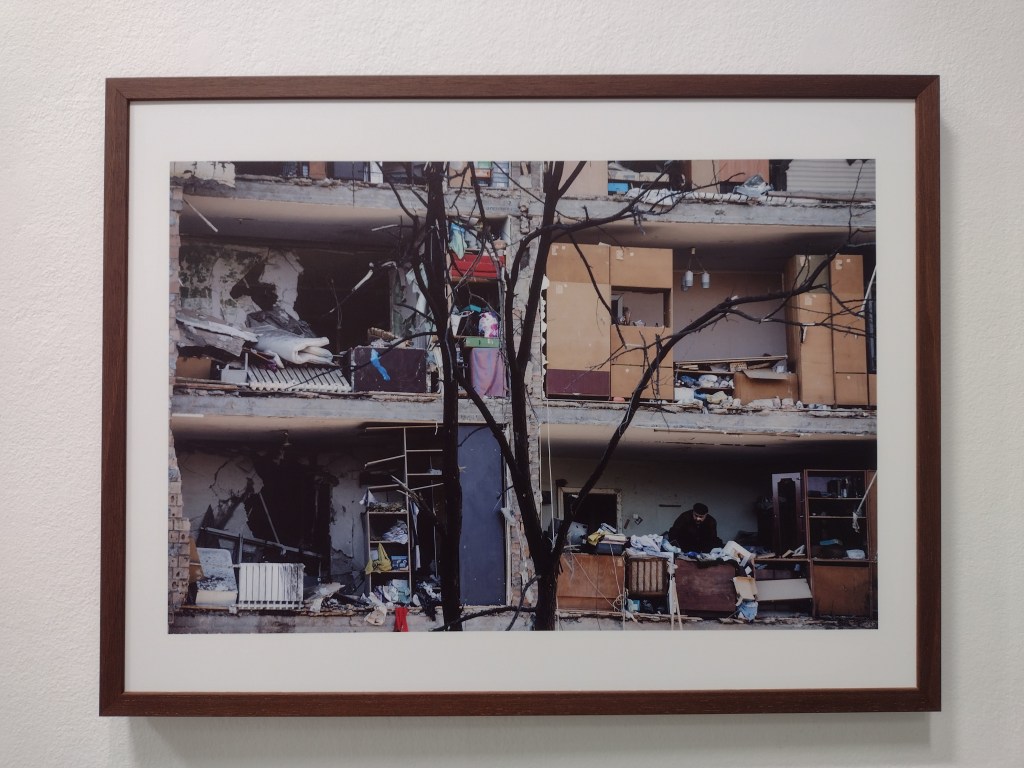
Damaged buildings in the aftermath of shelling, Podilskyi district, Kyiv (March 2022), Mykhaylo Palinchak

In the series that captured my attention the most, Ukrainian Roads (2022) by Andrii Ravhynskyi, we see roadsigns that have been obscured by bin liners, plastic bags, the mileage between towns and village names daubed with black paint: all attempts by local Ukrainian citizens to confuse and disorientate the Russian army whose GPS was patchy at the beginning of the war. Something so simple as a road sign, that looks so familiar, conflated with what has now become familiar because they are synonyms of war: Kharkiv, Kyiv, Simferopol. These images are deeply unsettling but demand to be seen.
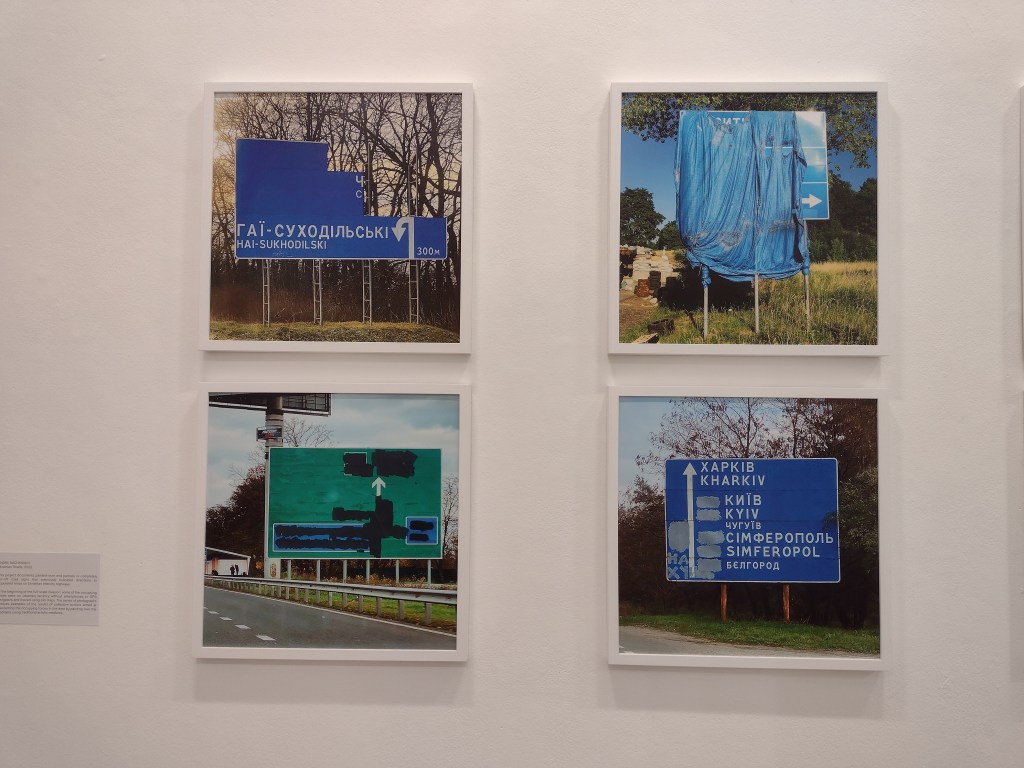
Ukrainian Roads (2022) by Andrii Ravhynskyi

Platform24: Early Career Artist Award

City Art Centre until 25th August

I always enjoy seeing what the EAF Platform artists are up to. Now in its 10th year, the platform programme is a group show for emerging artists, and they have taken over a floor of the City Art Centre with this year’s presentation. The artists are Alaya Ang, Edward Gwyn Jones, Tamara MacArthur and Kialy Tihngang, who were asked to respond directly to the themes of the 2024 programme: intimacy, material memory, protest and persecution. My particular favourite was Gwyn Jones’ multi channel video piece Pillory, Pillocks!, where we see muck, slime, food residue and all manner of unknown substances flying at the face of a person looking back at us. He flinches, we flinch, and each time is saved by the presence of a clear screen. The artist says that it’s a response to historic shaming of people (think the stocks, rotten vegetables), humiliation and entertainment. It reminded me how as children we used to watch “get your own back” willing parents to be covered in slime. While you pity the man in the video, part of you wills for the protective screen to disappear.

I promise I will add some pictures to this section when I revisit!

El Anatsui: Scottish Mission Book Depot Keta 

Talbot Rice Gallery until 29th September

It feels so right that El Anatsui’s exhibition overlaps with Ibrahim Mahama’s at the Fruitmarket. Both artists are concerned with materiality, the legacies of history, colonialism, consumerism and they both work on a vast scale. I love El Anatsui’s work because it can be taken in on so many levels. You begin seeing the work from afar, dwarfed by it (recently, these huge scale works have adorned the side of the Royal Academy and the Turbine Hall in the Tate Modern). As you approach, it’s like zooming in to see the pixels in a photograph, each element emerges as unique and distinctive. These huge ‘tapestries’ may look like woven Kente cloth, but slowly reveal themselves as thousands of pieces of reclaimed aluminium bottle tops, from Ghana and Nigeria’s liquor bottling industries.
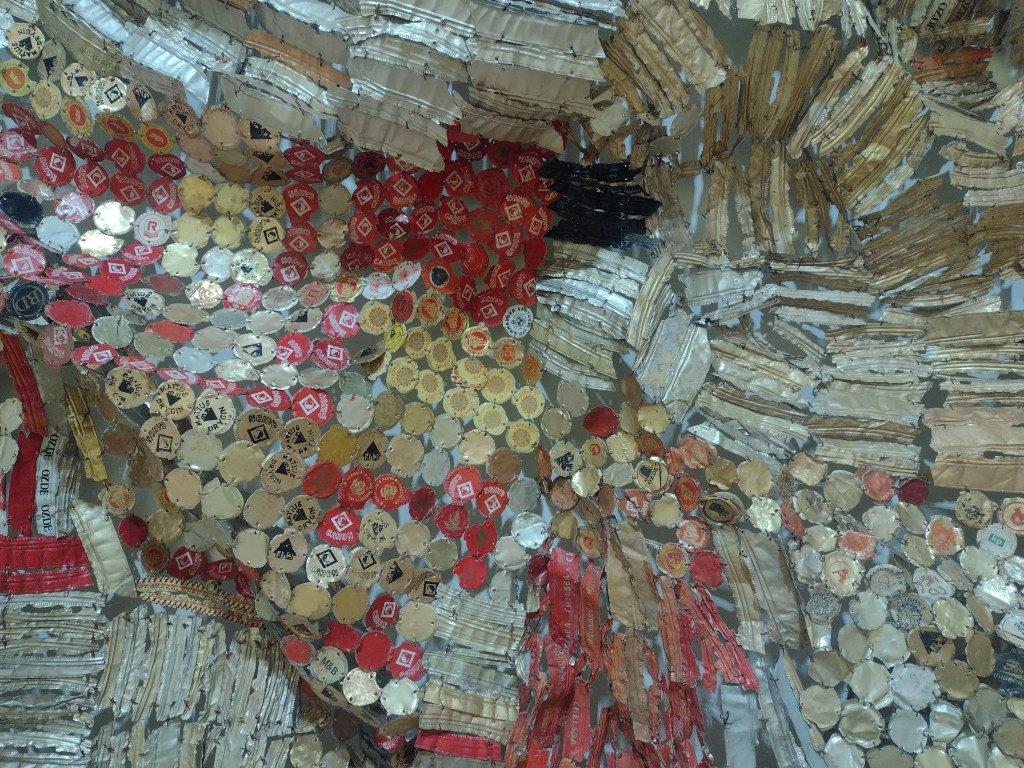
El Anatsui, details

This exhibition is the largest examination of El Anatsui’s work staged in the UK, and spans five decades of his career. The crowning glory is the beautiful and huge outdoor installation TSIATSIA – Searching for Connection (2013) which dominates the Old College courtyard, draped over the Georgian architecture like some shining shroud. Yet it’s also a treat to see smaller works which I wasn’t so familiar with: works on paper, and carved wooden reliefs. I would love to see these two giants of Ghanaian art in conversation. Or, at least responding to the other’s exhibitions. Come on Fruitmarket and Talbot Rice, make it happen?
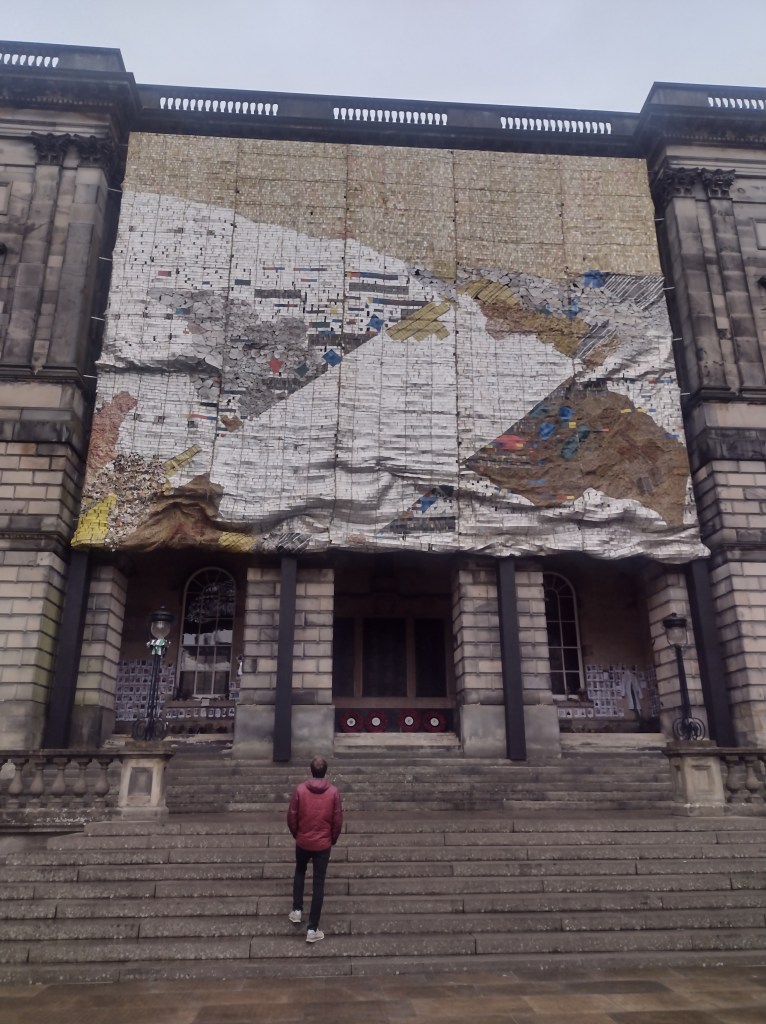
TSIATSIA – Searching for Connection (2013) with Andrew for scale

There are still shows I haven’t managed to see yet, so what I’m looking forward to exploring next are:

I would love to hear what others have been enjoying at EAF this year. Let me know in the comments!
Art in Edinburgh this spring

After months of closed doors and darkened rooms, museums and galleries are set to begin opening in Scotland from Monday 26 April. Unsurprisingly, I’m excited about the prospect of returning to experiencing art ‘in the flesh’, though lockdown has proven that art can be found everywhere and anywhere, and isn’t confined to the walls of a hushed gallery space.

Over the past year, I’ve had to be more imaginative about what to look at and write about: seeking out artists to highlight each week on Instagram, exploring virtual viewing rooms and reading more art criticism. This unwanted pause on what had seemed a never-ending cycle of exhibitions has, I hope, made the blog less of a diary of exhibition reviews, and more a set of broad suggestions of how we can engage with art.

The more I think about it, the more I realise we’ll have to reacquaint ourselves with how to look at art in person, as the world around us becomes available again in all its glory. How will we prioritise our time? Can we pace ourselves? Will we be overwhelmed, underwhelmed, or just ‘whelmed’? Will our stamina for standing and wandering around galleries be a shadow of its former self?

Contrary to what some might suggest, Edinburgh is alive and buzzing with art all year, so here’s a round-up of some things I’m most looking forward to visiting in person this spring and summer.

Jonathan Owen at Ingleby Gallery: 29 May-17 July

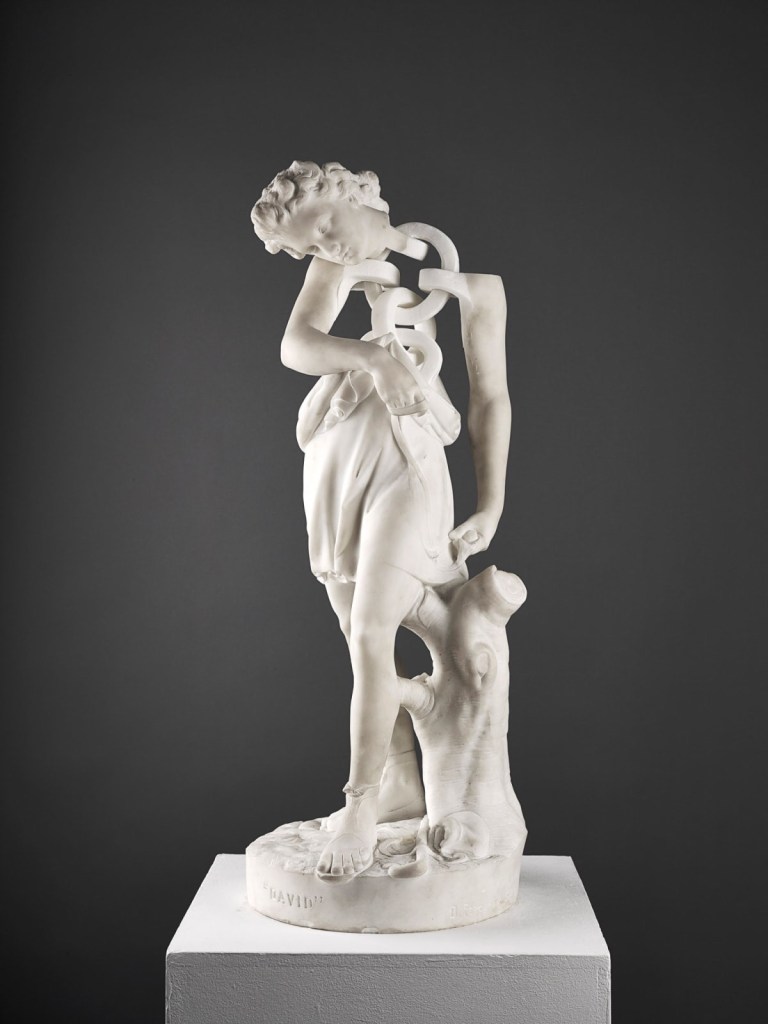
Regular readers will know that I love the Old Masters. That’s where my art journey started (as a child I loved The National Gallery card game). But I also love it when contemporary artists reinterpret traditional forms to say something new e.g. Meekyoung Shin’s slowly eroding soap sculpture of the Duke of Cumberland in Cavendish Square. Jonathan Owen is such an artist. His work uses erasure and interventions to alter found materials, including marble statues. This show at Ingleby Gallery, one of my favourite places to see art in Edinburgh, will feature these altered statues, and will also include the unveiling of a new life-size work about empire and exploitation. I’m sure this exhibition will go straight into the heart of the monument debate and I can’t wait to see these sculptural works in 3D. For me, sculpture is something you have to see in person. The screen just doesn’t cut it.

Jonathan Owen, ‘David’, (2013),
nineteenth century marble figure with further carving

A very interesting rehang at the Scottish National Gallery: Open Thursday-Saturday from 6 May

When I was studying art history at ECA, we were incredibly lucky to get to visit the Scottish National Gallery before opening hours. I remember asking our host, Frances Fowle, Senior Curator of French Art, why some of the most famous paintings are kind of… hard to find in the Gallery. While some people love the fact that you go up a narrow set of stairs and suddenly you’re surprised to be in the company of Van Gogh’s Olive Trees, Monet’s Haystacks and Gaugin’s Vision of the Sermon, apparently lots of folk agreed that they seemed needlessly buried. The latest Friends newsletter explains:

You spoke, we listened. For the re-opening of the Scottish National Gallery we have moved seven of the much-requested Post-Impressionist paintings to a display on the ground floor.

While I doubt this will be a permanent change (the rooms upstairs are probably a much better scale for these works), it will be really wonderful to see these incredible paintings placed front and centre, and I’m fascinated to see how the team at the Galleries will take on this re-hang.

Vincent Van Gogh, ‘Olive Trees’, 1889. Excuse my wonky camerawork.

Fine Art Society Edinburgh, Joan Eardley 6-29 May

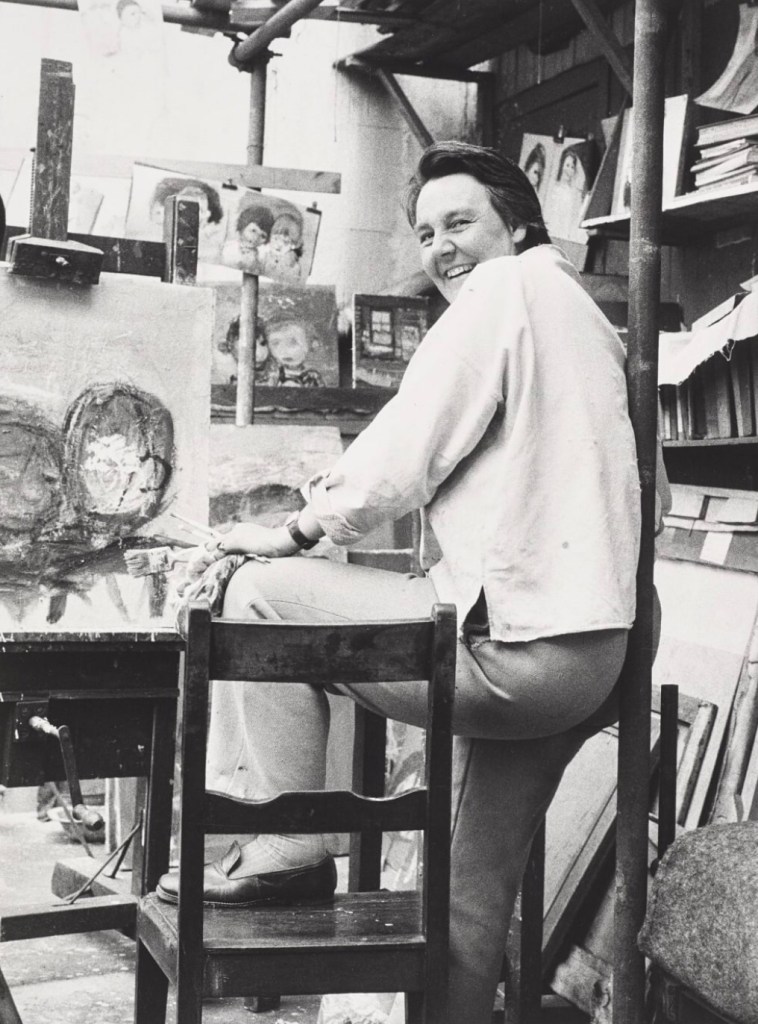
I’ve written about the forthcoming #Eardley100 celebrations before, and am hoping to write about her again several times this year. While the centenary celebrations are happening across Scotland (especially at Paisley Art Museum and the Hunterian in Glasgow), this exhibition at the Fine Art Society on Dundas Street in Edinburgh pairs works by Eardley with photographs of her in her studio. I’ve long been interested in our obsession with artists’ studios (the weird preserved Paolozzi studio at Modern Two is a great example), so I’m really curious to see this combination. It also ticks off a major ambition for me, which is to visit more of the galleries on Dundas Street. From the outside, they aren’t the most welcoming, but to learn more about Eardley, one of the best artists I’ve encountered since moving to Scotland, I’ll brave it.

Oscar Marzaroli ‘Joan Eardley in her Townhead studio’, 1942

Restless Worlds for MANIPULATE Festival: Lyceum, 22 April-2 May

This is why everyone should go to their local art school’s degree show (happening online this year, watch this space). At the ECA Degree Show in 2019, I came across an artist called Chell Young, who works to create miniature worlds that make you feel like you’ve had one of Alice’s EAT ME cupcakes. I’ve followed Chell’s work since, and that’s how I came across Restless Worlds. MANIPULATE Festival has commissioned eight Scottish artists to create kinetic sculptural works, displayed in windows, alongside a short story or soundscape that you download to your phone. While I’m especially looking forward to seeing what Chell has created, the whole project sounds fascinating. In Edinburgh, it is happening in the windows of the Lyceum foyer but there are projects planned for Glasgow and Aberdeen too. More info and tickets here.

Chell Young, ‘Fragile Realities’, part of installation at ECA Degree Show, 2019

Christian Newby at Collective: 13 May-29 August

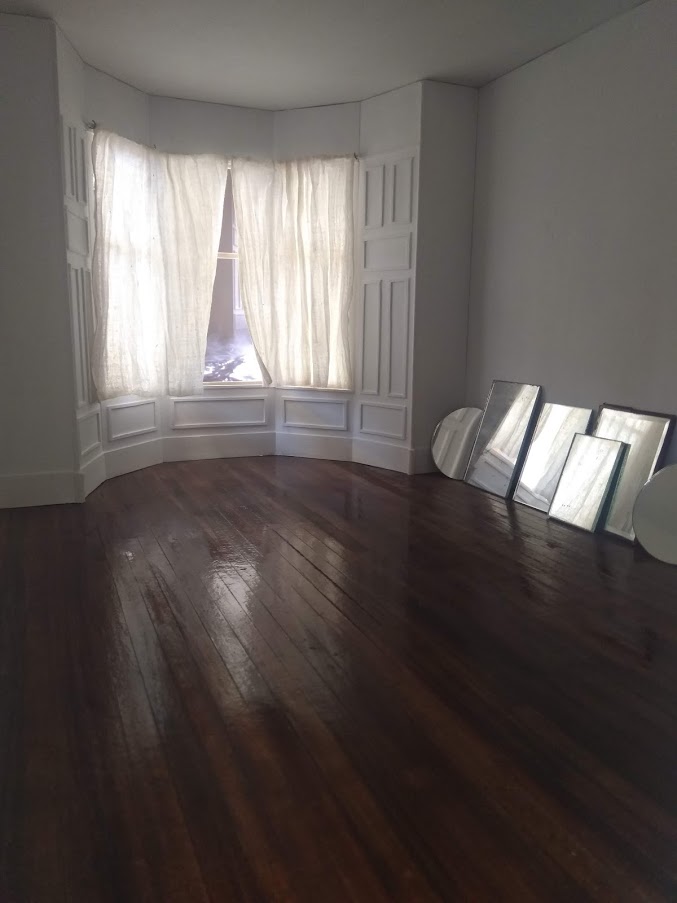
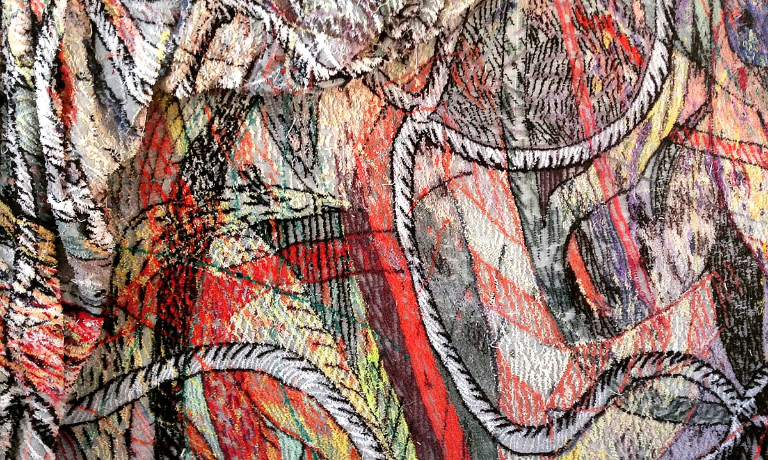
I’m sure lots of Edinburgh residents have braved the climb up Calton Hill for a lockdown walk, just to feel *something*. Well, from early May we will be rewarded with an open-for-business Collective Gallery at the summit. The exhibition they’re emerging from lockdown with is by Christian Newby, and features a large-scale textile called Flower-Necklace-Cargo-Net. This tapestry, made with industrial carpet tufting techniques responds to the building, which originally housed an astronomical telescope. Christian’s work explores ideas of craftsmanship, labour and the use of machinery in the fine and applied arts. I am intrigued by the description and I really want it to be absolutely massive. We all love a large scale work.

Christian Newby, ‘Flower-Necklace-Cargo-Net’ (detail), 2020

There will be so, so much more to talk about and explore, so please consider this an initial scanning of the Edinburgh art horizon. Other things I want to explore further are the Fruitmarket Gallery reopening after its refurbishment, The Normal exhibition at the Talbot Rice Gallery which explores the pandemic, the ECA Degree Show and the Art Festival. I’ll keep my ear to the ground and post more recommendations as and when.

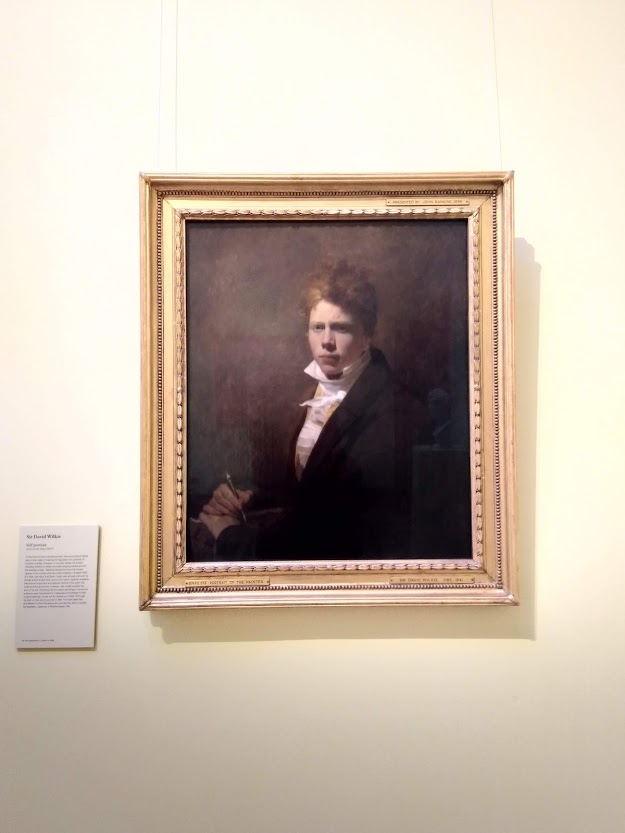
Alongside all that, we can never forget our old favourites. One of my first tasks when the Scottish National Portrait Gallery opens on 30th April is to go and visit my old pals, David Wilkie and Duncan Grant, to check they’ve been OK over the past year.

David Wilkie, Self Portrait, 1804-05

Five art postcards

Inspired by Ben Street’s recent article in Apollo magazine about the meaning of art postcards, I’ve decided to have a root around in my own collection, and share five of them with you.

How art postcards collections come into being is a curious matter. We buy them as mementos from favourite exhibitions, or while visiting new places on holiday (remember those?). Some, we are sent by friends and family, not all of which we would’ve chosen ourselves. When I was looking through my own stash, I came across blank postcards of artworks I have zero memory of seeing in real life, which I don’t even like that much. Where do they come from? They seem to spawn independently in shoeboxes and desk draws.

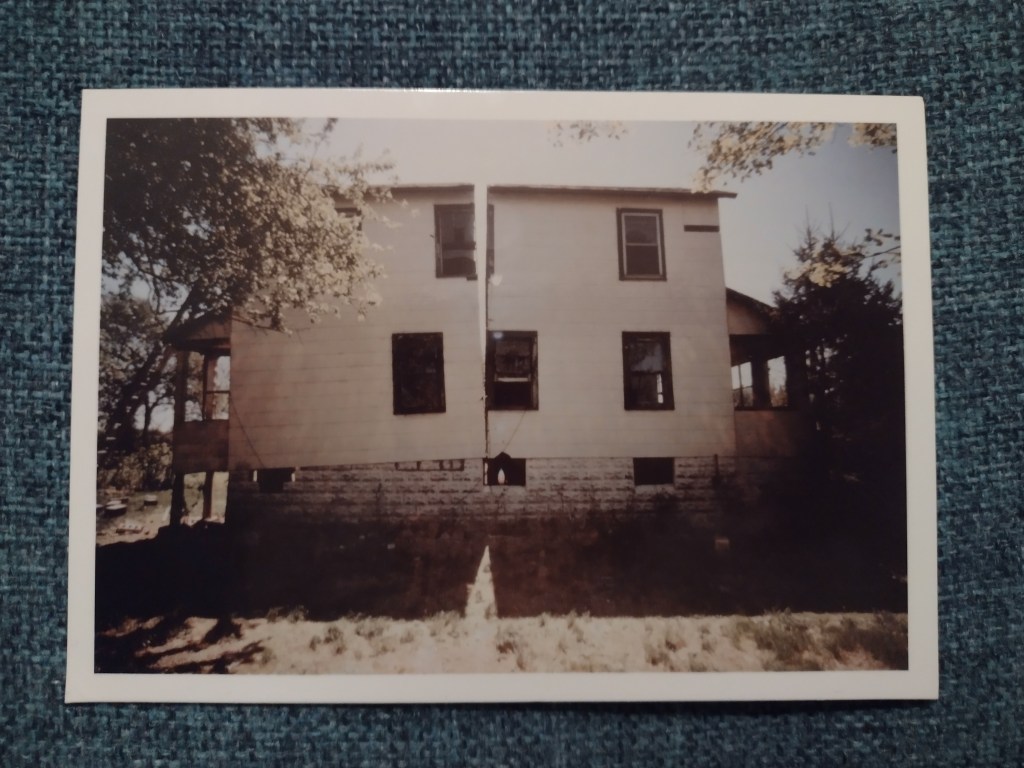
Splitting by Gordon Matta-Clark, 1974

I often end up sending my favourite art postcards to people who I know will appreciate them. But I’ve never wanted to part with this one, I love this postcard a lot. I think I bought it at an exhibition at the Barbican in 2011, long before I started writing about art. I only really remember Matta-Clark from that show. His art hovered at the edges of architecture and performance, and this documents one of his most famous works, where he bisected an entire New Jersey house. It’s unlike anything I’d seen before, an artwork on such a huge scale. Cutting up a house like that makes it useless, which makes me wonder, what’s the point of this act? Why turn something useful, valuable, a place of shelter and memories into something broken and strange? I’m still drawn to it though. It’s an arresting image, the sunshine beaming down, a big wedge missing from the house’s shadow like a slice of cake. It stops you in your tracks, makes you curious, makes you a little confused. It’s like a beautiful, surreal cartoon and for that moment you see something as simple as a house in a different way. Sometimes certain artworks chime with us and we don’t really know why. Perhaps that’s the reason I’ve held on to this postcard for so long: I’m still trying to figure it out.

Gordon Matta-Clark, ‘Splitting’, 1974

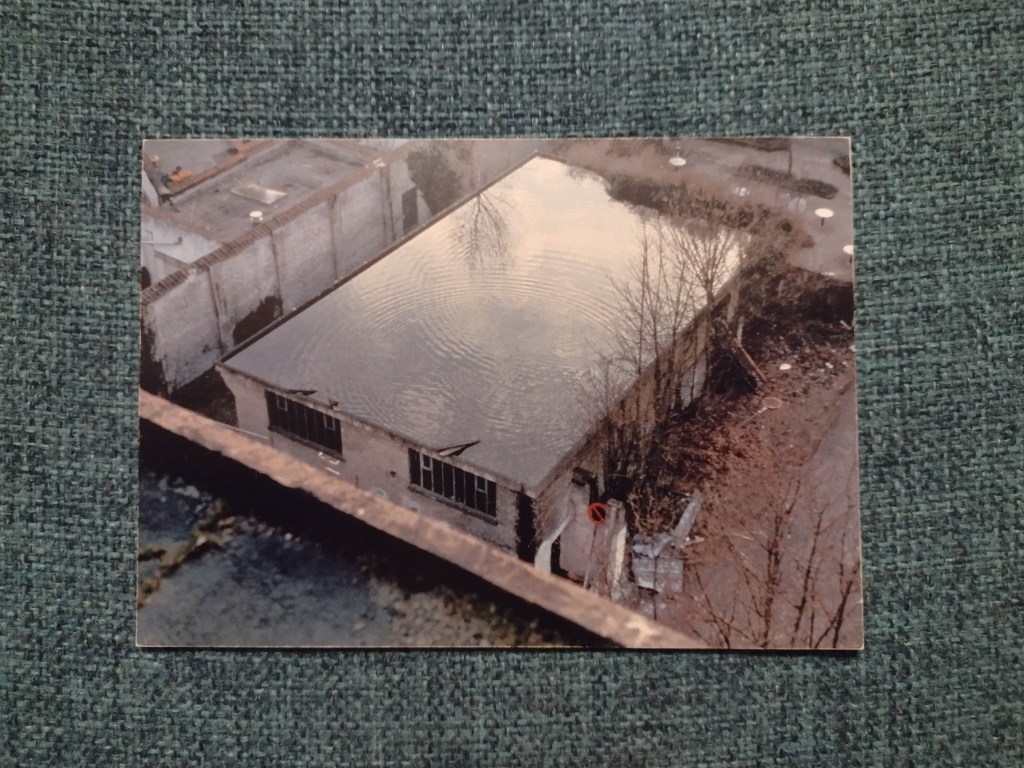
From Roof to Roof by Gabriel Orozco, 1993

The artist Gabriel Orozco notices things. His eagle eye can spot a fleeting moment of enchantment from afar the way a shark can sense a drop of blood in an ocean. I recently wrote about how visiting his retrospective exhibition at Tate Modern changed the way I saw art and the world, and it resonated with lots of other people. Why? Why does this rectangle of water captured on a flat rooftop, reflecting light, sky and trees, pinpointing a passing breeze in its ripples, make such captivating art? I think it’s because it’s about seeing the magic, or the possibility of magic, in the mundane, which is something we all can do, a radical choice we can all make. It’s empowering, to be able to take a moment and see beauty, chance, luck, favour where we might otherwise just have seen a dilapidated outhouse with a flat roof. 

Gabriel Orozco, ‘From Roof to Roof’, 1993

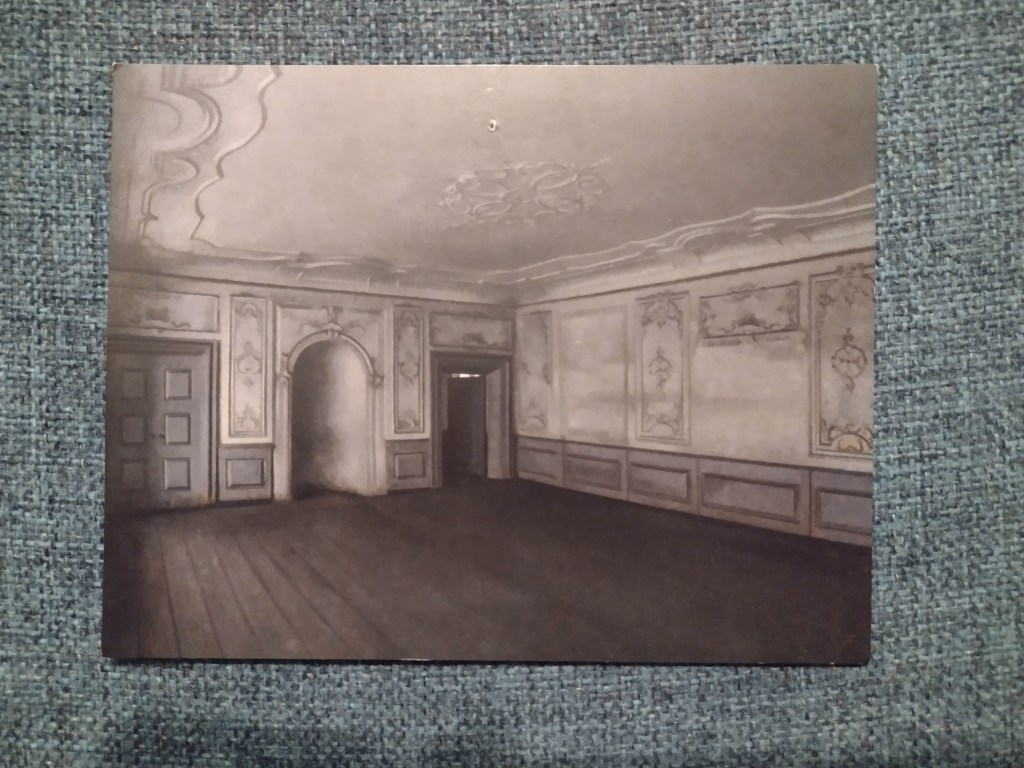
Interior of the Great Hall in Lindegaarden by Vilhelm Hammershøi, 1909

I am pretty sure I have loved every work I’ve seen by Hammershøi, though I don’t know many of them well. I think I first encountered his work at the National Gallery’s most modern rooms, and remember how the greys, and the stripped back aesthetic of his Interior, (1899) contrasted so shockingly with the bright colours of paintings by Manet and Seurat. This postcard is from a trip to Ordrupgaard, a gallery outside of Copenhagen I visited with a dear friend. The atmosphere of this ghostly, grand, empty room is so convincing, you feel like you are looking through a keyhole in a haunted house, not at a tiny postcard of a painting. I have so many questions about this room that I know will never be answered, and I’m ok with that.

Vilhelm Hammershøi, ‘Interior of the Great Hall in Lindegaarden’, 1909.

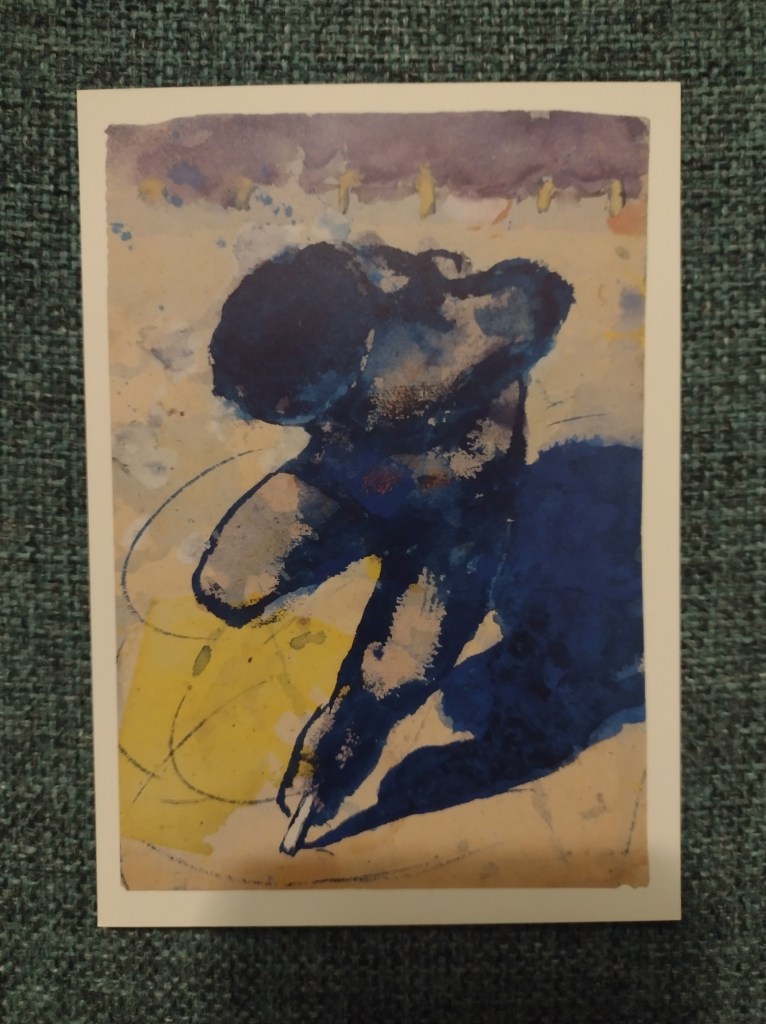
Skater by Emil Nolde, 1938-45

The reason I’ve picked this is that it’s simply one of the most beautiful prints I’ve seen. Some artworks really translate to postcards (in the same way that some really translate to Instagram) and this is just perfect. I remember buying two copies, and sending one to my sister just saying “look how beautiful this is”. The yellows and blues, the blurred splodges contrasting with the precise curved lines on the ice, the movement of the skater crouching forward, propelling into our space. I picked this postcard up at National Galleries of Scotland’s Emil Nolde: Colour is Life in 2018. Sometimes colour IS life. Looking at this picture lifts my mood in a big way. Thanks Emil.

Emil Nolde, ‘Skater’, 1938-45

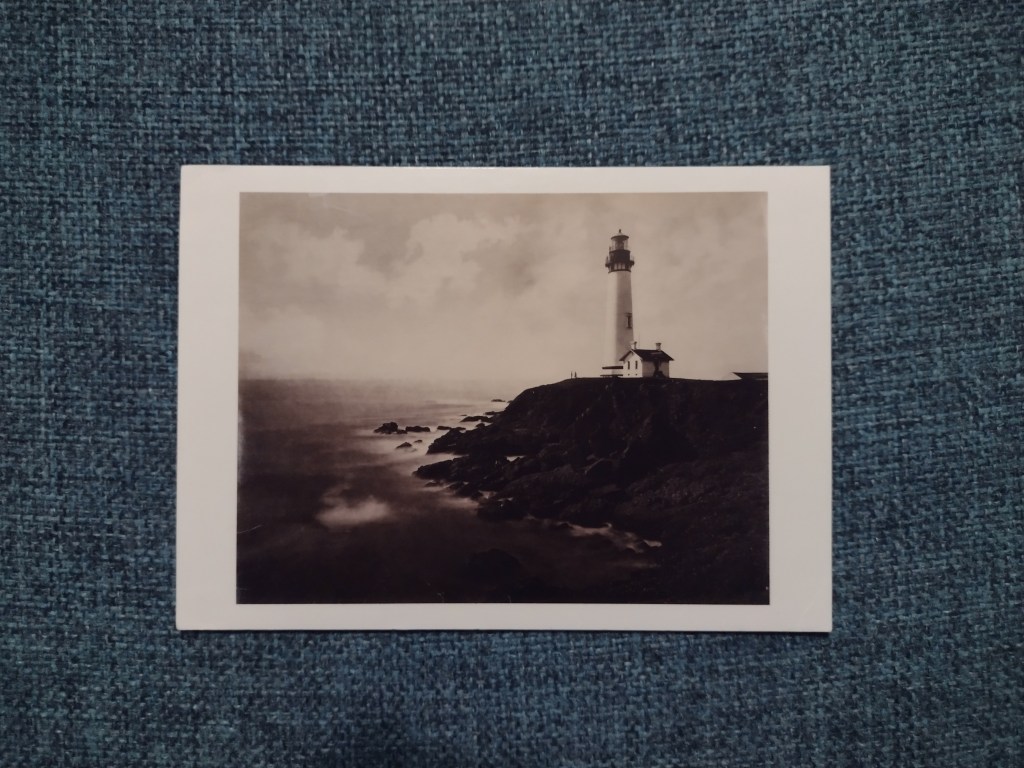
Pigeon Point Lighthouse by Eadweard Muybridge, 1873

My final choice from my collection of many, many art postcards is this one, bought at the Muybridge exhibition at Tate Britain in 2010. Lining up the dates, I must have seen this picture when I first moved to London. I would’ve been 18 or 19. I love photography, I think it has always tied into my fascination with the past – I studied history before I studied art. But I think photography might also have been a route in to contemporary art for me: it straddles past, present and future. Muybridge changed the medium of photography, the fields of art and filmmaking and with that, the way people saw the world. I look at this now and remember a visit in 2019 to a lighthouse on the most northerly point of the Isle of Lewis, where it was so windy we could barely open the car doors. That’s what’s special about these images. They are scraps of memory that live with us, they gather meanings as well as dust. They remind us of what we love about art, and sometimes tell us what we used to treasure that now doesn’t hold so much weight. 

Eadweard Muybridge, ‘Pigeon Point Lighthouse’, 1873

Thank you Ben for inspiring me to look through this old collection of images. I’ll be doing it more often from now on.

If you collect art postcards, I would love to know which artworks they reproduce and what they mean for you. Head to the Contact page to get in touch, or DM me on Instagram.

‘Florilegium: A Gathering of Flowers’ at the Royal Botanic Garden, Edinburgh

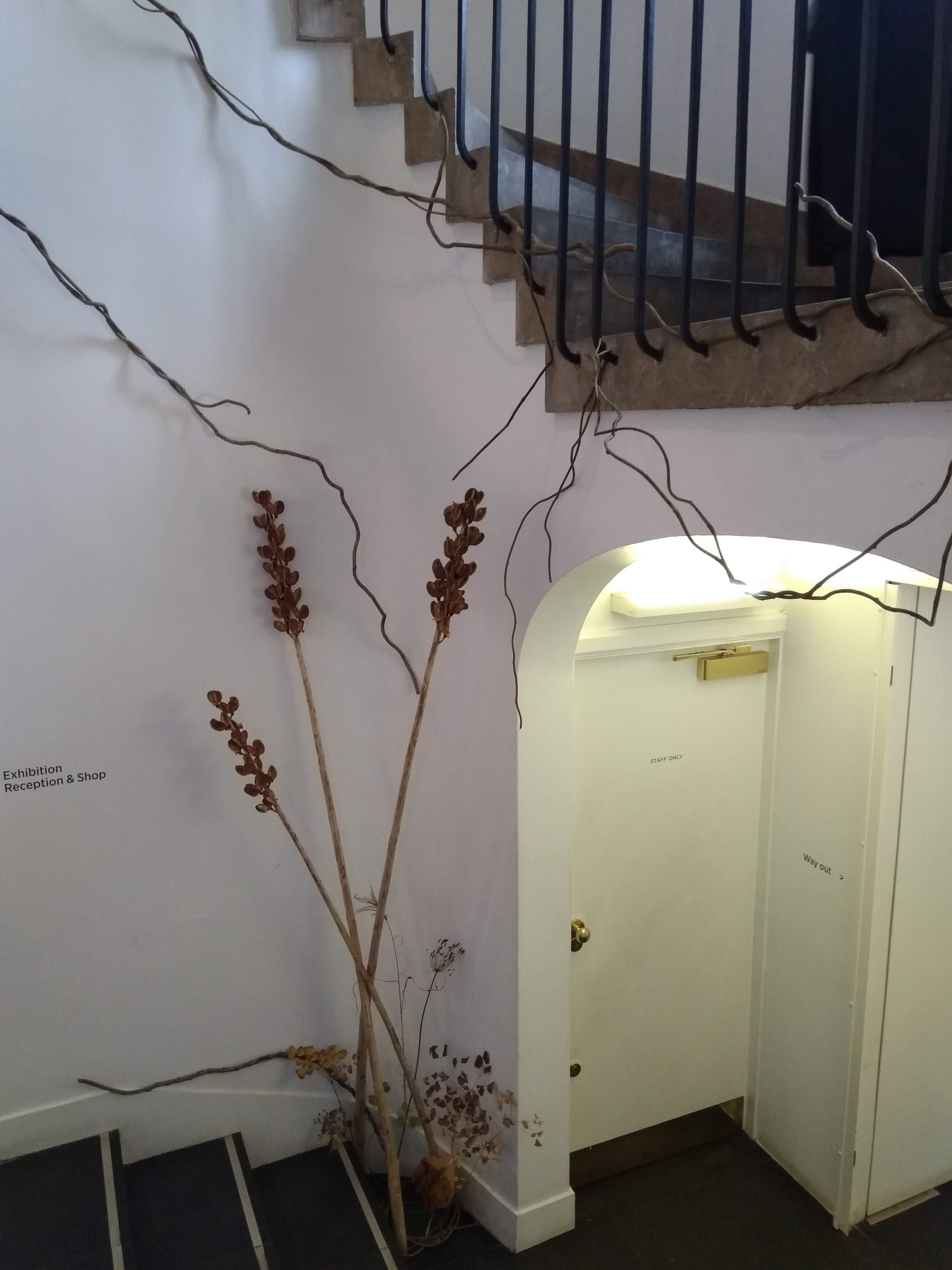
There’s a new, free exhibition in town, at the Botanics. Ever a beautiful place to relieve your Covid-19 cabin fever, to feel the peace of looking at plants and be made to feel small by impossibly tall trees, now you can supplement it with a visit to Florilegium: A Gathering of Flowers. The first exhibition since the RBGE started its Climate House initiative, the exhibition marries what seem to be two very different ways of looking at flowers. 

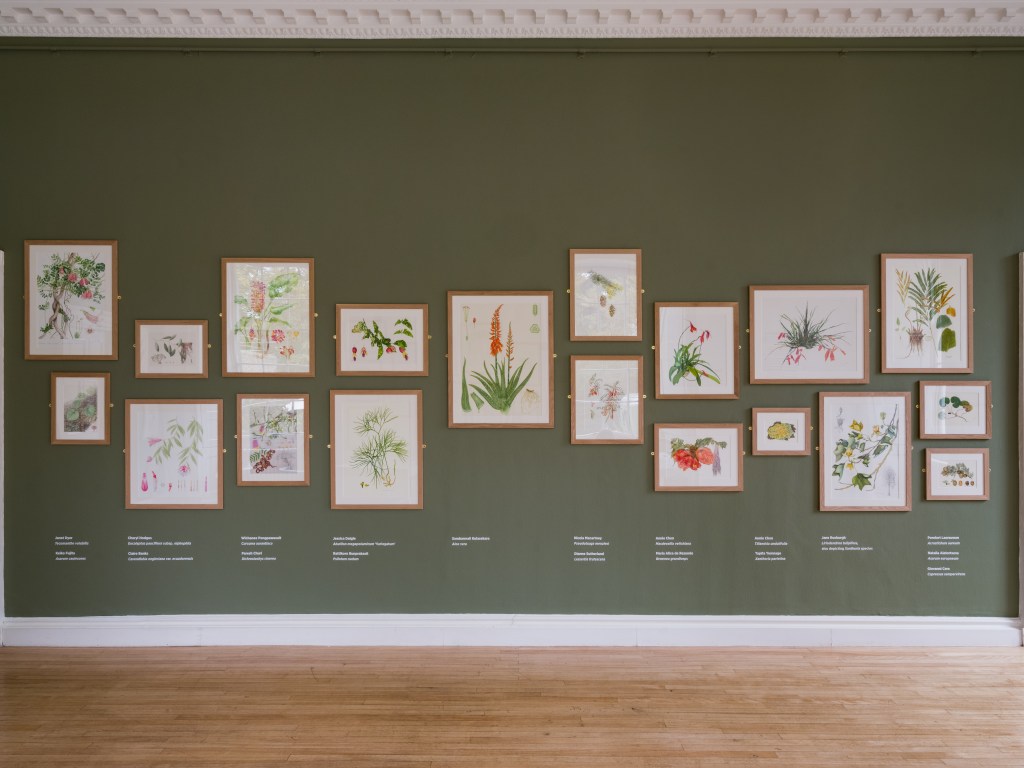
The first is factual, scientific, research-based. Packed into the first room are depictions of flowers from the Garden’s collections, submitted by botanical illustrators from around the world. I love their precision, the sense that these drawings have been set to view in HD. Glancing at these densely stacked images, their uniform wooden frames fitting perfectly with the olive green of the wall, I’m convinced there would be enough detail here alone to make an entire exhibition. Enhanced by the ikebana style floral displays, it’s what visitors might expect, might hope to see. It’s beautiful, classy, and it’s about flowers. Tick.

Florilegium: a gathering of flowers, installation view. Photo by Tom Nolan

Up the stairs, we’re taken into a somewhat different realm by four contemporary artists, Wendy McMurdo, Lee Mingwei, Annalee Davis and Lyndsay Mann. While the immensely skilled botanical illustrators are concerned with depicting the flower exactly, and in some cases, the pollinators too, the artists upstairs are more concerned with what we cannot see. The emotions and meanings we as humans attach to plants, their embroilment in our colonial past, and the metaphor of life and death a flower provides so effortlessly, are all explored here.

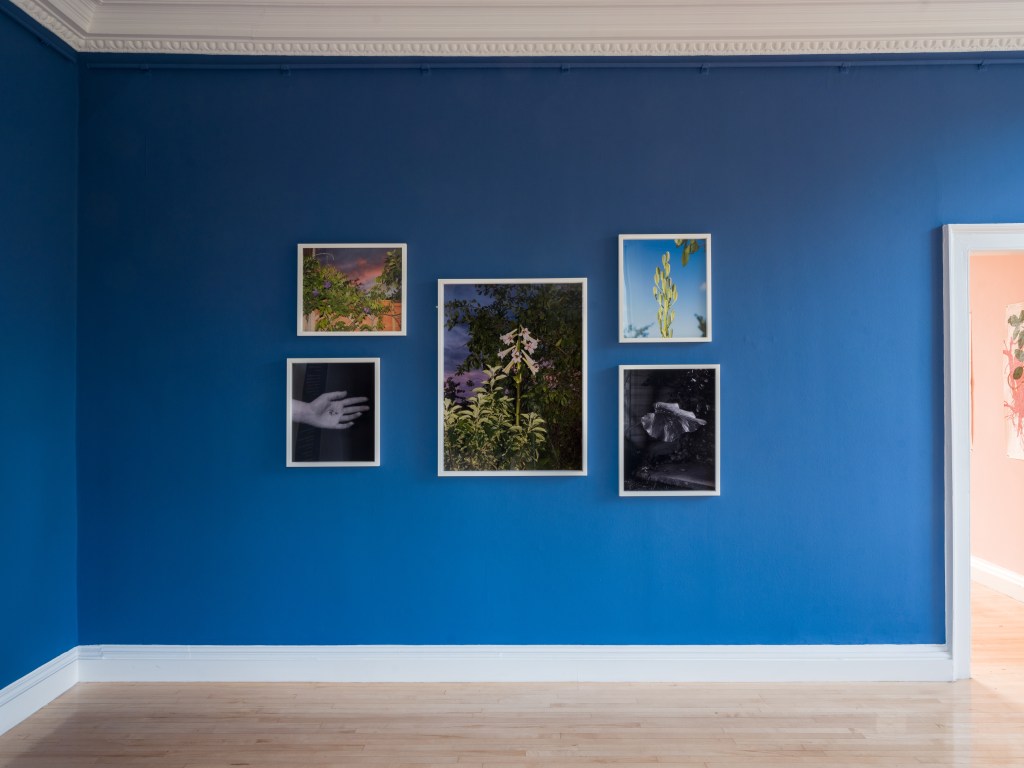
Wendy McMurdo’s photographs from the Indeterminate Objects series from 2019 use gaming software to collapse the blooming/withering lifecycle of a single flower in one vase, an eye-catching narrative that makes you look twice. Her Night Garden series (2020), reflects on how her mother’s ill health and recent death was combined and synchronised with blossoming of a large, mystery, tropical-looking plant in her suburban garden. I loved the uncanny photo of seeds resting in the palm of her hand, which looked to me like the hand itself was punctured, decaying: a wound between the states of hurt and healing.

Wendy McMurdo, ‘Night Garden’, 2020, installation view, photo by Tom Nolan

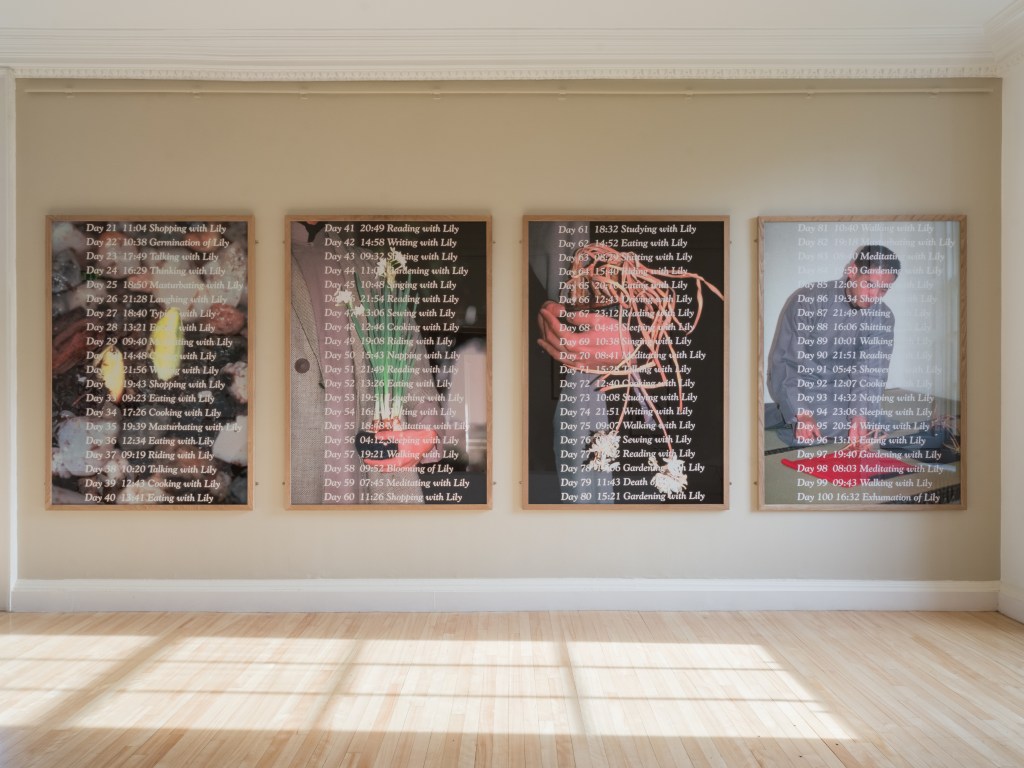
There’s a pleasant chiming here with the work 100 Days with Lily by Lee Mingwei, which documents a performance created back in 1995. His grandmother died, and in mourning he lived with this plant for 100 days, carrying it everywhere. He projects his own grief on to lifecycle of this plant, but the presence of the banal activities of daily life (Eating with Lily, Sleeping with Lily, Shitting with Lily) overwrite and undermine this strange, solemn ritual. For Florilegium, Mingwei has planned a new work called Invitation for Dawn, where opera singers will perform directly to the recipient via live video call. It sounds weird, experimental and intimate, but in a great way. You can participate between 16 November and 11 December, email creativeprogrammes@rbge.co.uk for more details on how to get your ‘gift of song’.

Lee Mingwei, 100 Days With Lily, installation view (photo by Tom Nolan)

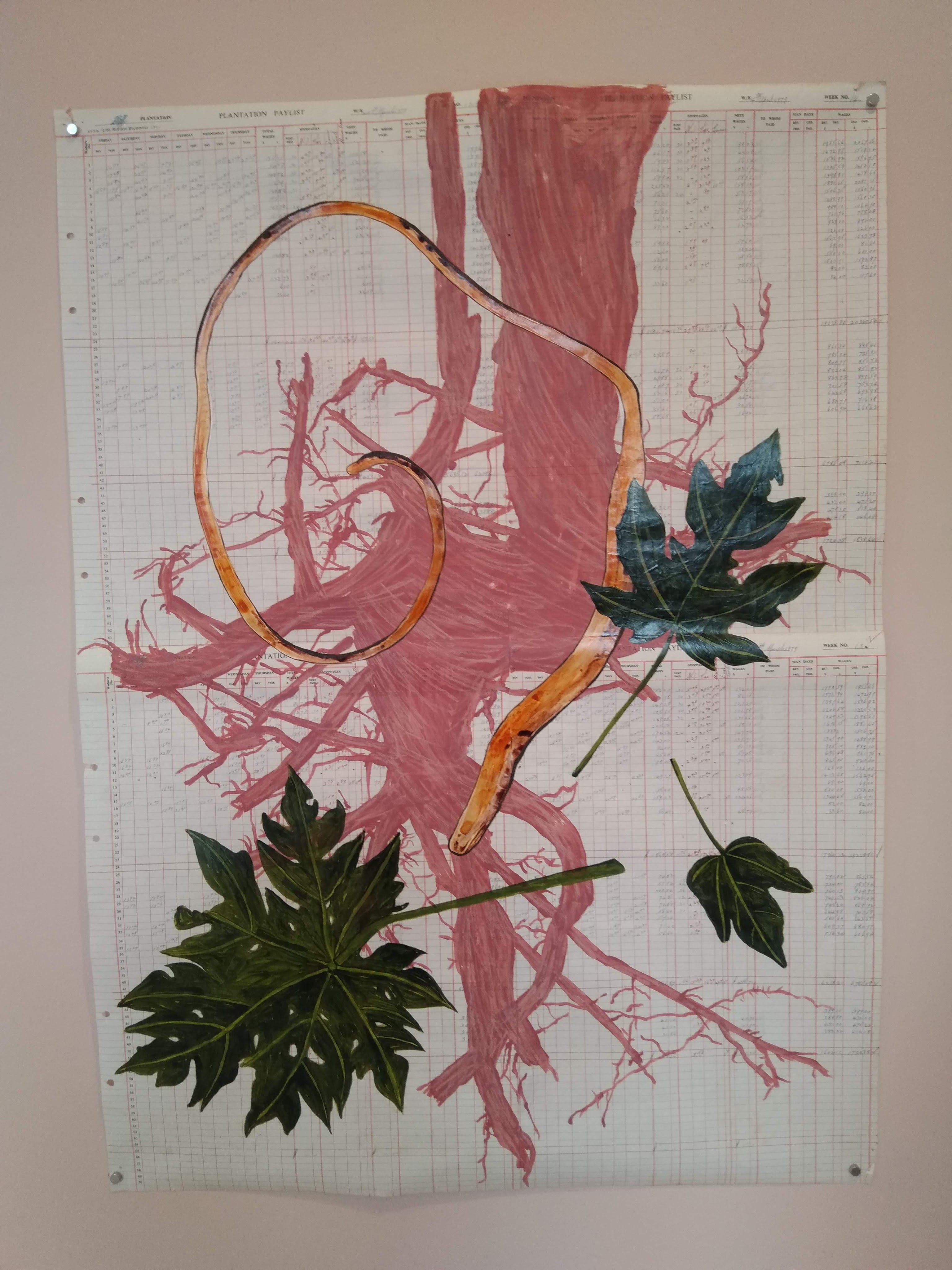
The work of both Annalee Davis and Lyndsay Mann anchors the exhibition in something deeper, bringing the role of the Botanic Garden, the collection of plants, the colonial ecosystem at the heart of RBGE’s existence, into view. Annalee Davis is a Barbadian artist whose studio is situated on what used to be a sugar plantation. Her practice investigates the history of that land, examining the power structures that have been tilled into the soil. Here, her series As If the Entanglements of Our Lives Did Not Matter (2019-20), is casually pinned up on the wall, unframed, unglazed. It immediately felt visceral and direct, denying the formality, poise and stiffness of Inverleith House. Pink, flesh-like depictions of messy clumps of roots are daubed over old payment ledgers from the plantation, which are intriguing, loaded documents in their own right. In a haunting portrait, she places two of her ancestors side by side, who though blood relatives, would have never lived together in reality, separated as they are by race and class. 

Annalee Davis, ‘As if the Entanglements of Our Lives Did Not Matter’ (2019-20), detail

Davis’ art works in dialogue with Lyndsay Mann’s A Desire for Organic Order (2016), a mesmerising film of 55 minutes which explores the RBGE’s Herbarium, where species of preserved plants are kept for study and research. Although most visitors won’t have time watch the film from start to finish, it’s a fascinating piece, which shines a light on the strangeness of it all: the meticulously categorised, catalogued, classified plants, sitting in row upon row of filing cabinets and box files, the collection expanding over the centuries as new species are found and brought to the RBGE, their final resting place. 

The violence surrounding these collections is examined at a distance, with the narrator’s voice dispassionately implying but never quite explaining what we know now, that far more care was given to these foreign plants than to the humans who lived alongside them. If you do have the chance to sit here a while, I’m sure it will make you see the exhibition, and the whole RBGE endeavour, in a slightly different light. You may not think you need this part of your world to be challenged, that you just want to enjoy the Botanics and not think too much about the difficult history and context. But it’s the ability of artists to show things you thought you knew in a new way, that is what makes them so vital to how we think about our past, present and future. That’s why we need the upper floor of the exhibition. We can’t just have a “gathering of flowers”, we need someone to tell us what they mean.

Flower displays at ‘Florilegium: a gathering of flowers’

I found some old photos

I recently found an old hard drive I’d stored photos on for many years, dating back roughly to 2009 – pre cloud storage and Instagram. Back then, I was getting ready to leave school and move out of the family home I’d lived in for most of my life. Finding these photos now, I’m struck by what you can learn about yourself by seeing what you’ve carried with you, and who you’ve journeyed with, over the years.

I never thought I’d taken that many pictures, and yet here they are. A selection of moments documenting around 8 years of my life. Over that time, what did I decide to photograph? Is this curation, of a sort?

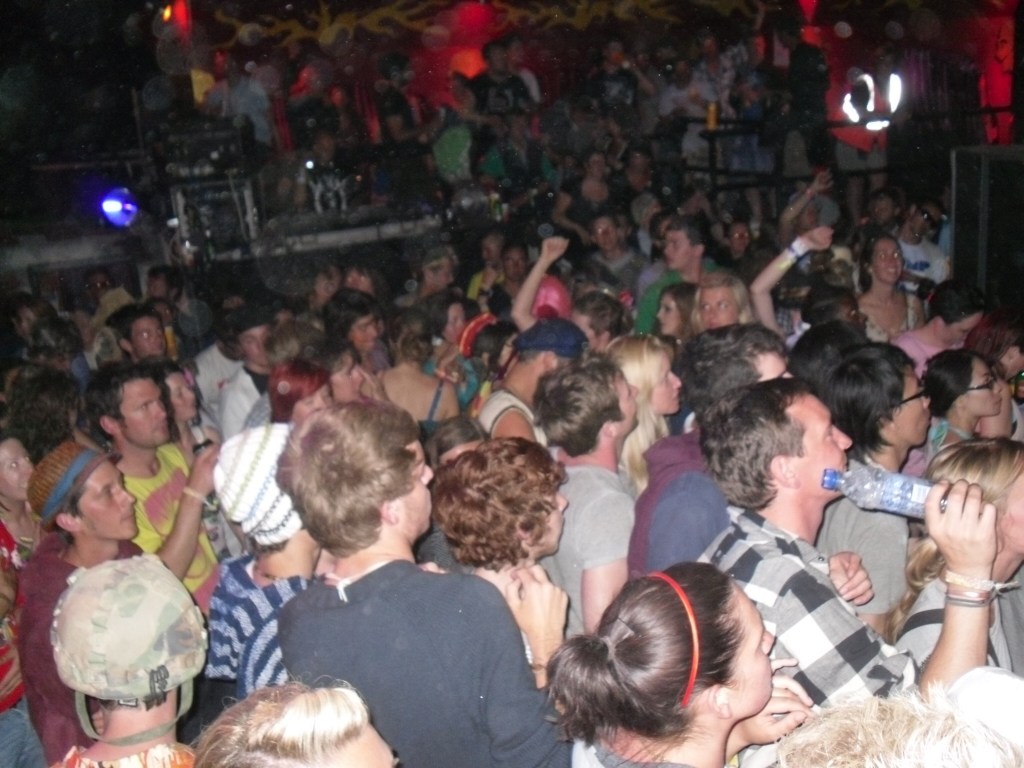
Of course, my favourite photos, the ones that give me the most pleasure, are those of people. Family and friends, people I’ve held close, literally, over the years. My appearance has barely changed, I’ve never had an interesting or drastic haircut. But despise the lack of intrigue provided by my personal aesthetic, these pictures of people together show moments of joy, some of which feel so distant now – a packed Shangri la at Glastonbury in 2010. Look how many people are in such close proximity!

Shangri-la, Glastonbury, 2010

There are a couple of art photos, but not that many. Before formally studying and writing about art, I don’t think I took many photos of paintings or sculptures. In fact, I thought that was lame. That it was a distracting side quest which got in the way of the true purpose: engaging directly with the art, without intermediaries. Yes, I was a censorious undergrad. Now of course, photography is one of the prime ways I engage with and consume art.

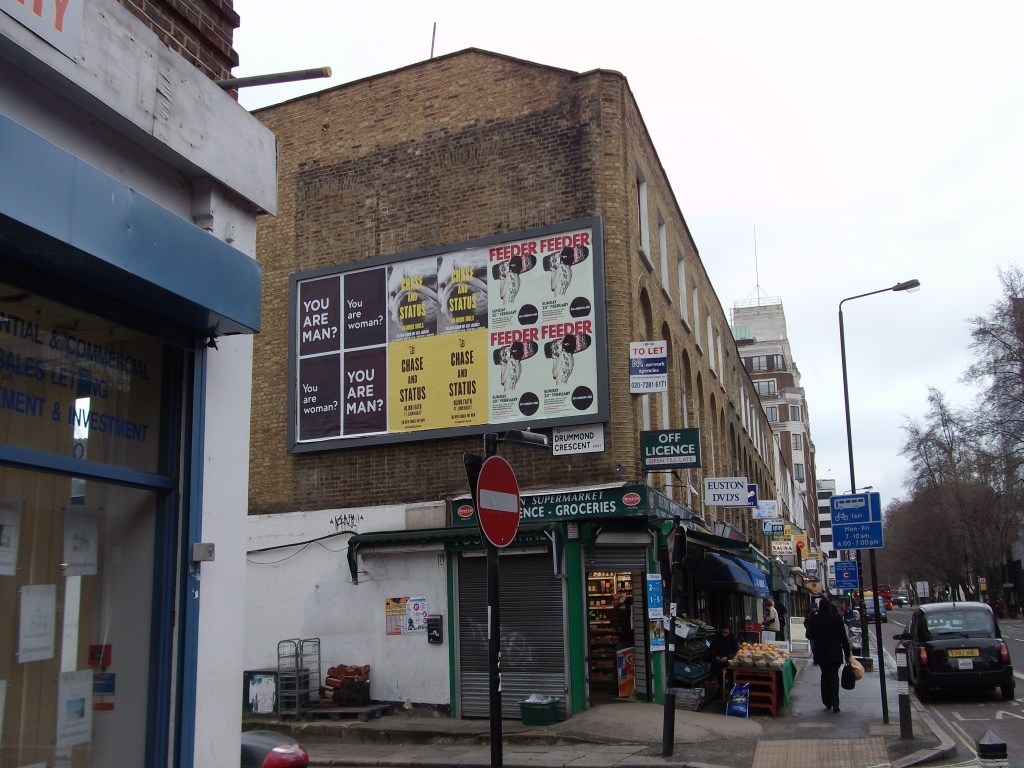
Themes start to recur. There are photos of old buildings, the backs of houses. The patchwork aesthetic of cities, their layering, has always appealed to me. I like seeing things in multiples, billboards that repeat themselves, tiny bricks, signage, squares of different colours and textures that make up a whole.

Drummond Street, London, as a patchwork quilt

It turns out that the idea which underpins Encounters Art, of finding intrigue or humour or beauty in the everyday has been there for a long while. There are more photos of graffiti, ephemera, what I call ‘notes in the margins’ than there are of Art™, and each of these is loaded with associations and place-memories. My photo library treasures are a bin in Berlin that screams “HATE Gentrification” and an annotation on a signpost in New Haven (the home of Yale University) that advises, “God = 1st / College = 2nd).”

Bin graffiti, Berlin, 2012

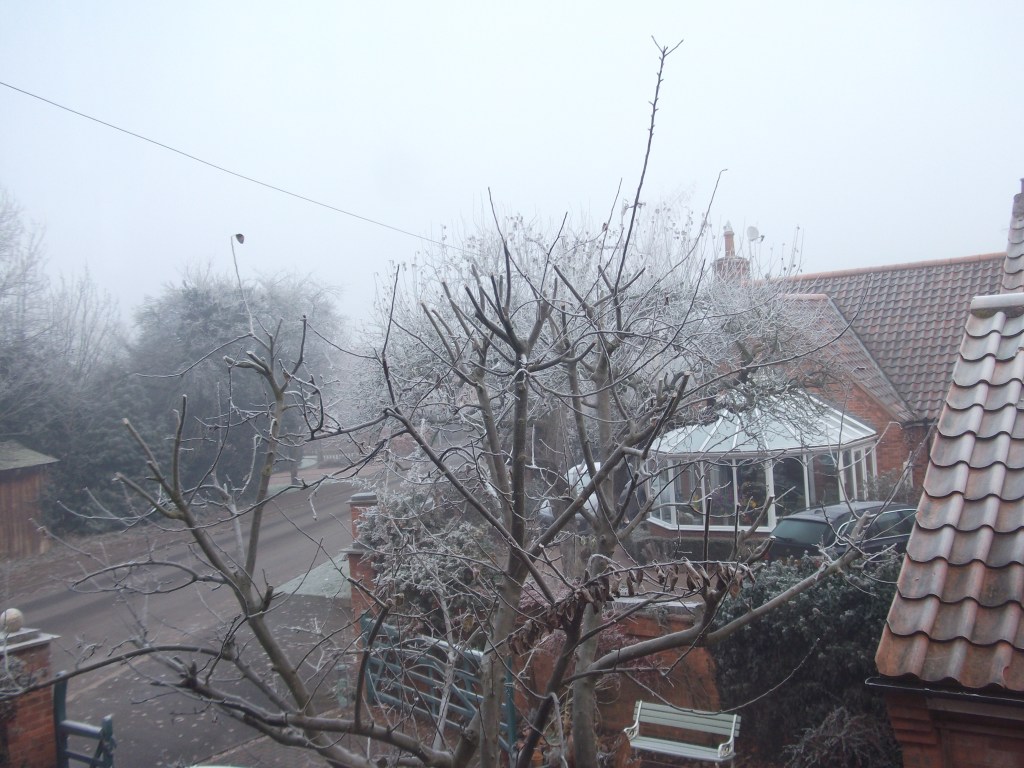
Some of the photos that unexpectedly chimed with me were of a different kind of ‘everyday’, not in the city but at home. There aren’t many of these – clearly we don’t document where we live as much as the special, occasional, noteworthy moments in our lives. There’s a photo from my childhood bedroom window which I must have taken to preserve the delicate lattice of snow and frost on trees and buildings, but now it’s everything else, the normality of it, that resonates.

The view from my bedroom from 1992-2010

Looking back at the somewhat unremarkable picture, I realised that the view I saw every day for nearly 18 years (the apple tree in the garden, our neighbours’ grand conservatory they never used) had been forgotten. Or rather, it was covered in memory-dust that had gathered over years without me realising, which I hadn’t bothered to wipe away. Even my basement room in university halls of residence, a place I hated, seems interesting at this distance, captured in blurry photographs, hastily taken and packed away until now. Artists who work with found objects (a genre I, perhaps predictably, love) have understood that things don’t actually need to be our own to feel intimate, to resonate. Certain feelings, moments, memories are almost universal, though drawn from vastly differing actual experiences.

Perhaps these images of home interiors and window views have taken on a new significance since lockdown began. Looking at these photos didn’t feel simply like a trip down memory lane. I felt more like an archivist with the task of retrieving and reviving the forgotten. Unraveling continuities and disruptions in relationships, places, things my eyes have been drawn to, was a task which felt like the psychological equivalent of traveling. It gave me reassurance I think I needed, that this period of staying at home doesn’t have to be a vacuum because nothing has really happened. That memories can be made out of and despite boredom, via the simple act of taking a photograph from your window, or failing that, just looking out of it.

One of the exhibitions I did photograph, Gabriel Orozco,
Deutsche Guggenheim in Berlin, 2012

Glasgow International is happening online, right now

The art festival Glasgow International (Gi) had to cancel and has curated a set of seven different artworks available online for the duration of the festival (until 10th May). Some are special commissions, some works were made long before the pandemic hit, but all artists would have been taking part in the festival itself, and the works represent a taster of what would have been available to see. While I understand that Gi want to mark the period when the festival would have taken place, it feels needlessly restrictive to have made this very interesting set of works available only to take them down after two and a half weeks. Time seems arbitrary now. I barely know what day it is, let alone the date. Why not leave them up until the end of lockdown or the end of May at least?

I was a bit late to the party but I’ve just finished watching/listening to them all and wanted to highlight two that resonated with me.

The first is Yuko Mohri’s Everything Flows – distance, 2020. Mohri has taken Yasujirō Ozu’s 1953 silent film Tokyo Story (which I haven’t seen), and has spliced together scenes devoid of human presence. What we are left with is a ghostly compilation of images which suggest humans through their absence. The city continues to function, ships move through water with purpose, but seem to be operated by remote control. Robotic railway station signs indicate platforms and train times to no one. Clothes on washing lines blow in the breeze and shadows on the walls of cramped interiors hint at human life, but each time, the film cuts out just before the figure comes into frame. It’s a tantalising series of almost-moments, which chimes well with having experienced a quiet, deserted central Edinburgh over the last month or so. There’s a strong sense of people watching the goings on from the high viewpoints over the city. Lanterns look like eyes. A moth bashes against a light, a fragile reflection on the futility of existence in this silent world.

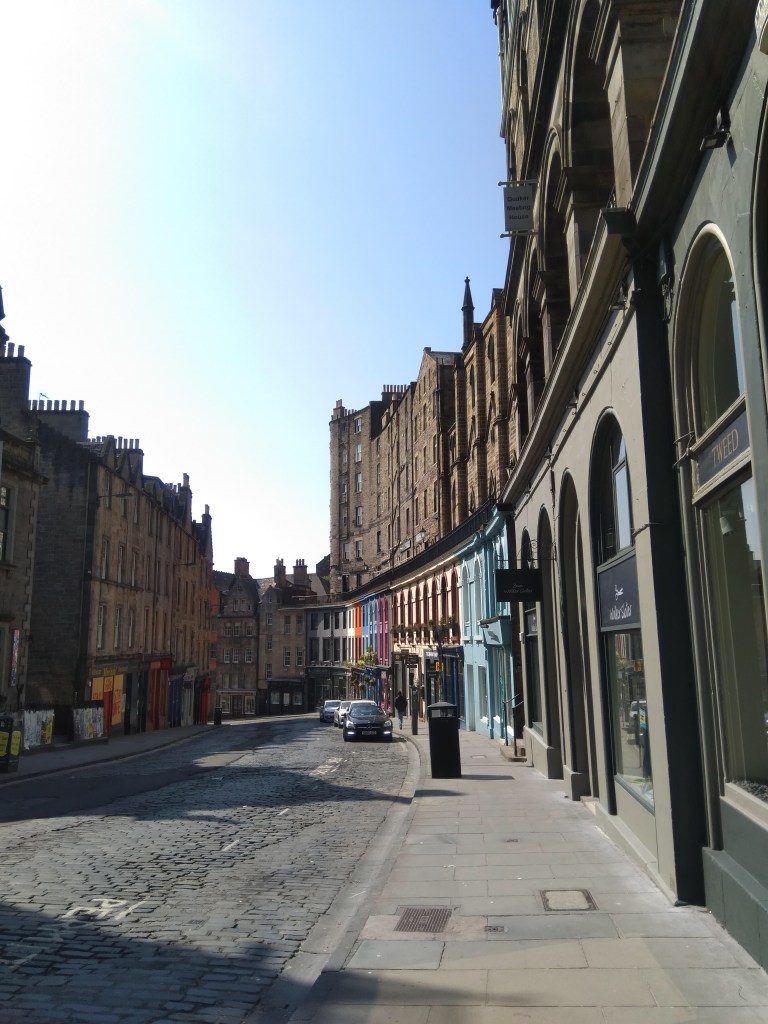
Victoria St, Edinburgh looking empty on 25 April 2020

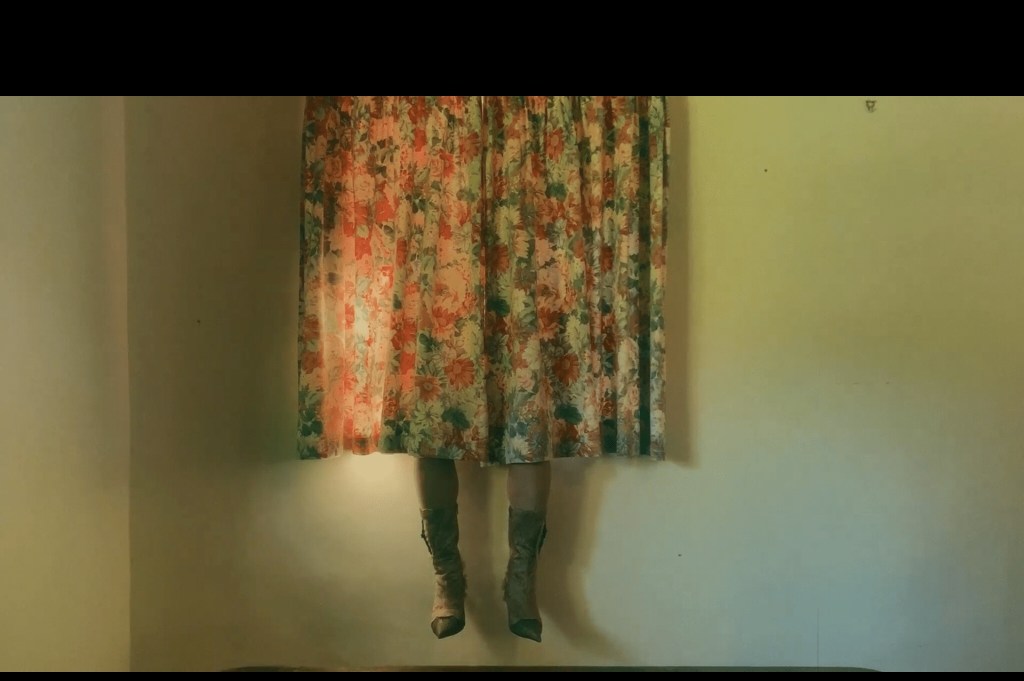
Urara Tsuchiya’s Give us a Meow, 2019, is my other pick of the bunch. This one surprised me – from the cover image and the title I didn’t think I would like it. But the 9 minute film is captivating. It tells a fragmented story, set in the rural idyll of a cottage and the countryside around it. We follow the escapades of a glamorous Asian woman who dons an impressive range of sexy outfits including animal print catsuits, fluffy negligee, powder blue and baby pink fur coats. The costumes are all made by Tsuchiya and are highly influenced by drag, adding to the fascinating confusion around the identity of our protagonist. She dances, applies makeup, takes selfies and does the ironing. It’s a surreal and humorous mash-up of the extremes of femininity, typified by one excellent shot which briefly flashes up, showing a pair of legs clad in high-heeled boots, sticking out from behind twee floral curtains. I took a screenshot which is probably not allowed, but who knows the rules of a digital art festival. Maybe this is part of a process of the democratisation of image-making, taken to a new level.

Still from Urara Tsuchiya’s ‘Give us a Meow’, 2019

For me, in a time of lockdown, it seems as though the character in Give us a Meow is attempting to recreate the experience of being in a nightclub within a completely incompatible setting of ‘home’. She dances like no one’s watching. She even has a little cry in the bathroom, picks herself back up and heads out again, an experience I’m sure we can all relate to. Seeing her vulnerability when navigating a cattle grid in heels is beautiful and moving and funny.

There’s also a fascinating, sinister aspect reflecting on the voyeurism of the film. She appears to be alone, but is not – she breaks the fourth wall repeatedly to interact with us, casting glances directly at the camera, creepily/seductively waving at us from the toilet seat. In the moments filmed outside, with her dancing by the side of the road, the film is shot from the perspective of someone watching from a car window. We are there, but it feels like someone else is there too. This also resonates particularly now – we rely on our cameras more than ever for interaction and attention, but constant rumours circulating about hackers in Zoom calls and sessions on Houseparty make us paranoid about who else might be watching. Tsuchiya created the work last year, but it feels more relevant than ever now.

So, that’s my take. I know there’s so much content out there at the moment, it can be overwhelming. I know that digital art events don’t appeal in the same way as the ones in ‘real life’, which can take you to different corners of your city and have a physicality to them that can’t be recreated on screen. But these artists have created something really interesting. What worked for me may not work for you – see what you think and let me know in the comments, or DM me on Instagram @encounters_art. I’m always here for a conversation about art!

Year 3, Steve McQueen

Yesterday ArtAngel ran a live Q&A with artist and director Steve McQueen, following their most recent collaboration for his vast work, Year 3. For this artwork, McQueen arranged for 76,146 kids, from 3,128 Year 3 classes (ages 7–8) to be photographed in the timeless, traditional, and I would even say iconic format of the class photo. It’s something most of us can relate to. Bodies arranged in rows, taller kids standing, some sitting on plastic chairs or old wooden gym benches, and others cross-legged on the floor. What has emerged is a rich tapestry, a beautiful, huge patchwork quilt of thousands of photographs that document the present and, as McQueen emphasised in the talk, the future of London. What an incredible concept for a piece of art. I’ve heard it described as a giant portrait. But it feels far more dynamic, participatory and meaningful than that word implies.

I knew that the work was being exhibited at Tate Britain (I was due to visit in April, and am gutted that now I’m unlikely to see it at all), but from photos the installation looks impressive. The messy brightness of 1,504 schools packed into the grandiose space of the Duveen Galleries would always create a delicious juxtaposition. I hadn’t realised that for the ArtAngel side of the work, some 600 of the photos were created into billboards, situated across all 33 London boroughs, in November 2019. An ephemeral facet of a monumental artwork. It’s the stuff Encounters Art was made to write about – my only regret is to not have seen and documented them myself. In some ways that’s the beauty of these pop up artworks though. They aren’t supposed to be sought out, they mix and mingle with the everyday and you don’t know it’s there until you stumble upon it. If you did see a billboard in London back in November then I would love to hear your thoughts – leave a comment or DM me @encounters_art.

Installation view on Camden Road

Subverting a space that is usually used for adverts by filling it with a school photograph which is simultaneously strange (because we don’t know these children) and familiar (because we’ve all been children) is such a strong, engaging idea. One of the best moments I’ve come across by searching online for #year3project is a BT advert on Camden Road announcing “Technology will save us”. It is a timelapse video of BT’s billboard being surmounted with a photo of smiling kids in bright red cardigans and summer dresses in an old school hall. Here the children aren’t being prepped and presented as the consumers of the future. They are the future. They will save us. (Though I suppose ironically I owe my thanks to technology for preserving this moment for me to find months later.)

I love seeing these images interwoven into the London landscape. In tube stations, framed by carriage windows, this array of smiling young faces must have cheered up and intrigued countless commuters. Even in the gallery display, away from the urban fabric, it feels like a very London-based artwork, because it celebrates the city’s amazing diversity. McQueen chose Year 3 because for him, that is the moment we start to gain perception of our identities. Our classroom becomes a window on society and a crucible of the nuances of race, class, privilege and opportunity, all of which are explored in the work.

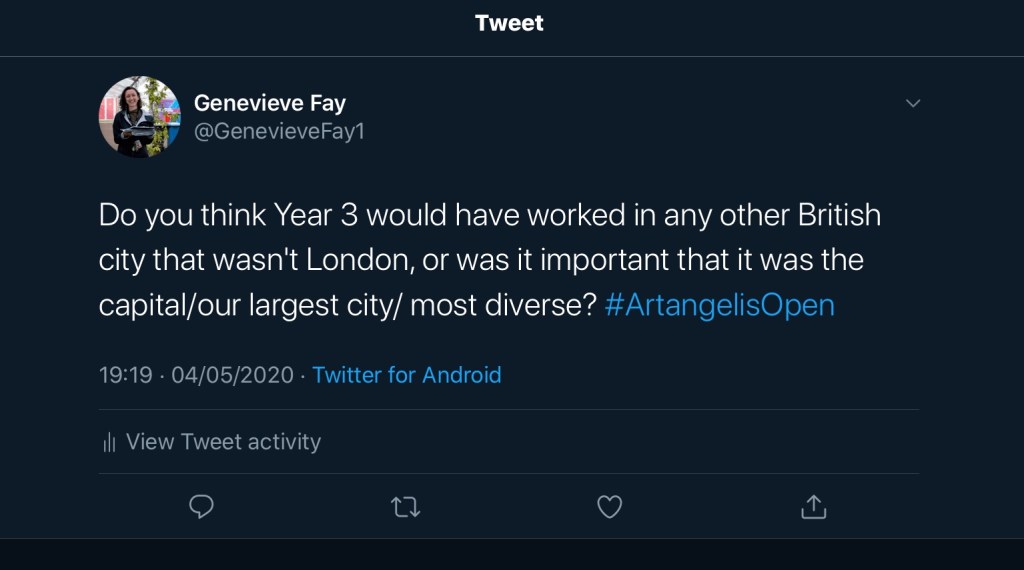
I found the London aspect particularly intriguing so I decided to ask a question using the hashtag #artangelisopen and I couldn’t believe it when it was picked for McQueen to answer. I was so excited, cheering and jumping up and down that I almost forgot to listen to his response. He said that for him, London was the clear choice, but it didn’t have to be limited to that – it could be carried out anywhere – and he seemed to be encouraging people to take up the project and move it on elsewhere. I would love to see that, particularly somewhere like Nottinghamshire (where I grew up) where there are rural and urban childhoods playing out. I wonder if it would click in the same way the original project does.

Installation view at Tate Britain Duveen Galleries

Listening to McQueen, the work was also understandably rooted in London because that was his experience – despite its scale, there is a highly personal context to the artwork which draws on his own boyhood engagement with art: a primary school outing to Tate Britain was the start of his journey. But it’s also about visibility. According to TIME magazine, Steve McQueen is one of the 100 most influential people in the world. For Twelve Years A Slave he won an Academy Award for Best Picture, and became the first black filmmaker to do so.

By creating this work, displayed in the gallery he visited as a child, he has come full circle. What an amazing thing, to provide an opportunity for the children in Year 3 be able to visit that same space, and see themselves, and others who look like them, on the walls. It fills me with hope that the project will be the spark that ignites countless artistic explorations and adventures. I can’t wait to see what they create when they’re fully grown.

Art and life at home (in the age of Coronavirus)

This is my first post since the Coronavirus outbreak hit Europe. Not for a lack of time – like all of us, I’ve had more time at home than ever before in my adult life. It’s not even for a lack of having things to write about. Rather, it’s because I haven’t had the will, or the inclination to sit down and focus. I often have vague waves of guilt around this – but then I remind myself that this is a pandemic, not a sabbatical. Having free time doesn’t automatically make this an opportune moment to hone my art writing, and that’s ok.

There are a million and one distractions (some would say excuses) that have prevented me from writing, or doing other productive things. The same is also true of engaging with art, the activity I love most. Galleries and museums have been closed for weeks, and they have scrabbled, been inventive and tried their best not to let years of work bringing exhibitions together go to waste. Switching projects to the digital realm successfully is not easy, and I would be interested to see the stats on reach and engagement for online content. I would hazard a guess that for the majority of us, while digital outputs are appreciated, quantity is overwhelming and we still don’t really want to go online to “visit” an exhibition. Even the idea of it brings to mind my least favourite gallery online content of all – photographs of exhibition previews where influential art people drink champagne and look thoughtful. No matter the quality of the exhibition, the virtual tour doesn’t sound appealing. It is more screen time that could be spent looking at things that are created for screens in the first place: telly, films, games. Even “doom-scrolling” through reams of information about the virus, though stress-including, is addictive and sometimes even mentally easier than engaging with something that doesn’t concern the virus at all. 

Art can be engaged with online. Some of the artworks I have studied in depth I have only ever seen via a screen. But there is a social and physical element to visiting exhibitions that is a necessary side-effect of the experience. Why else would the National Gallery have worked through years of negotiations to bring Titian’s poesie together into the same room? We could have googled them individually and seen them together that way if we wanted. But it’s not the same. The best exhibitions have a strength of narrative that enables us to enter a state of meditative curiosity which really absorbs us. That is simply not possible at this moment, and especially on a device, where we are accustomed to enjoying art in Instagram-sized chunks. There are too many other distractions, including our own boredom, to compete with. I doubt that a physical exhibition transported online could recreate that effect – though maybe I will be pleasantly surprised. My sister and I are going to tour the Royal Academy’s Picasso and Paper virtually later this week – will report back…

Despite the circumstances, against all the odds, people have been creative and productive. Far more relevant and fun than an online exhibition, is seeing the results of people making and imitating art themselves. The hashtag #tussenkunstenquarantaine reminds us that with a bit of inventiveness and improvisation, some of the best-loved artworks can be recreated at home. I am biased, but my former colleagues have done a fantastic Twitter thread recreating some of their favourite works in the collection. The results are totally heartwarming, and that’s what we need now. 

Projects like the weekly creative challenge run by OG Education (the learning branch of the October Gallery) provide a bit more freedom than creating an exact copy of an artwork – taking their artists’ work as a starting point for inspiration. Defying gravity, the theme inspired by artist Benji Reid, produced some daft and wonderful homemade results. 

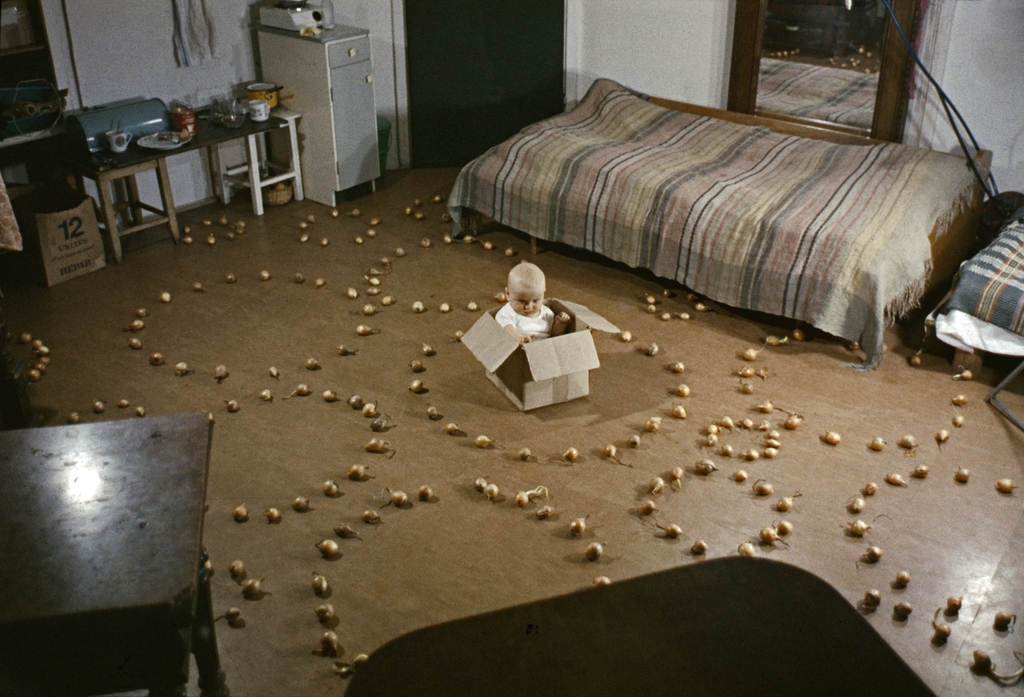
The idea of creating artworks at home is of course, not especially new. The foremost example I can think of is Activities with Dobromierz, created by the Polish artist duo KwieKulik in the early 1970s. Having experienced issues with publicly showing their work, they made the decision to produce and exhibit art in their flat, working with objects they found. Their home, which they renamed Studio of Activities, Documentation and Propagation (PDDiU) became the site for art that blurred the boundaries of the personal and political. 

KwieKulik, Activities with Dobromierz, (1972-74)

We see the couple’s baby, Dobromierz, arranged in multiple surreal scenarios, surrounded by the miscellanea of domestic life. At the centre of a circle of onions, he is a cherub surrounded by stars, or a sacrificial offering in the midst of an occult ceremony. You can see more examples of this fascinating artwork here. There’s an absurdist symmetry and playfulness to these images which I find enchanting – if you can overlook the slightly dubious ethics around it (is it ok to make art by making your child the subject and placing him in a toilet? – I’ll leave that one to the psychoanalysts.) 

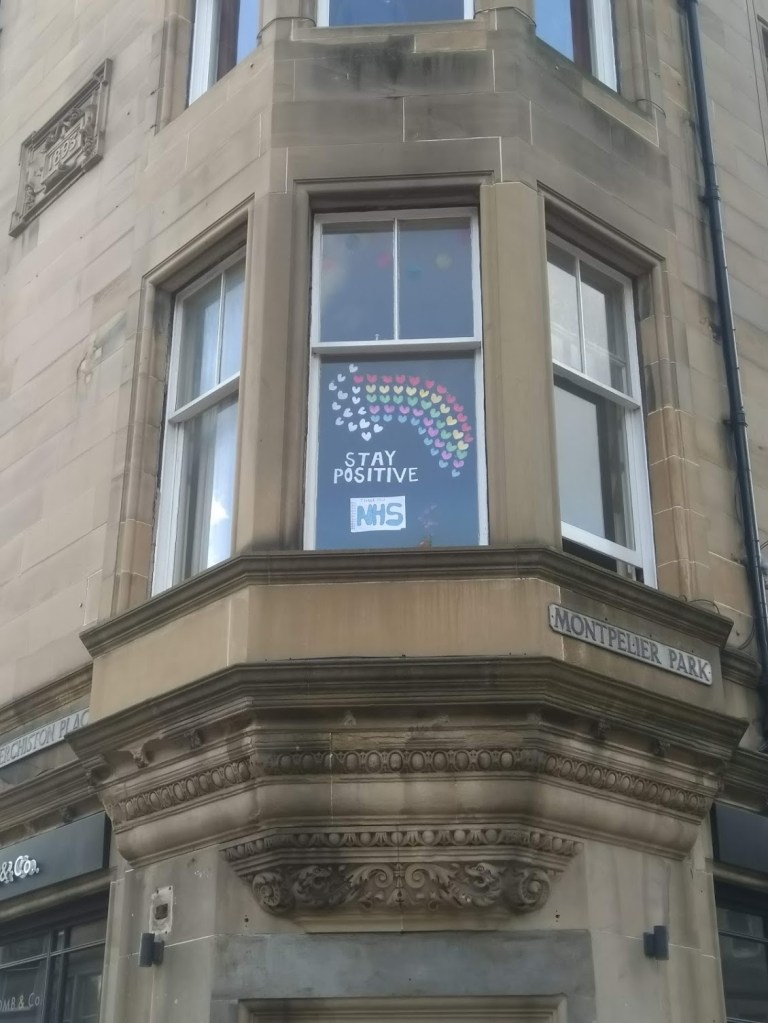
On my daily walks I am reminded of how much inspiration we really can derive from visual symbols and art marks left by other people. The name of this blog is inspired by my belief that art can (and must) be encountered in the everyday. Graffiti is, as always, the site for debate, discussion and seat-of-the-pants creativity. Seeing rainbows stuck against windows does give me hope. People are amazing, creative and inventive, and in the case of an iconic image of a sign spotted in Glasgow which reads “this is shite”, they are astutely acerbic. It is shite. There is as much truth and validity in that as there is in a rainbow.

Rainbows of all shapes and sizes adorn our streets now

We are all dealing with this situation differently: some things that appeal to you as a way to spend your time might not be fathomable to others. Some will create art, others will chuckle at their creations. There will be time to do life admin, and time to sit on the sofa. All are ok.

As we enter another week of lockdown, I miss the outside world. From the privileged perspective of someone who likes to write about art, I miss the solace of visiting exhibitions, learning new things, seeing weird and wonderful objects “in the flesh” and of course, sharing those experiences with others. But the restrictions on our movement have shown us that the democratisation of artwork is possible. Celebrating the joy of art is necessary. Humour and a spirit of accessible creativity are two tools with which we can counter the cultural shock of this pandemic. The challenge now is to bottle that spirit and carry it with us into the post-COVID 19 art world. We are going to need it.

Artist interview with Nicky Bird

Recently I had the opportunity to interview Nicky Bird, an artist who, among many exciting projects, has been undertaking a Land Mark residency with Art Walk Porty.

Her residency has focused on rediscovering and retelling the lost stories of the Buchan Pottery decorators, using found photographs and oral histories. The project is culminating in two weekends of events/exhibits, including an artist walk, site-specific artworks and a soundscape, which will be played in one of the pottery’s old kilns. Definitely worth a trip down to Portobello, if you needed any further encouragement to visit Edinburgh’s loveliest coastline.

We talked about artistic process, how Bird’s work treads the boundaries between art and heritage, and the importance of place and community in the project. You can read the interview in full here.

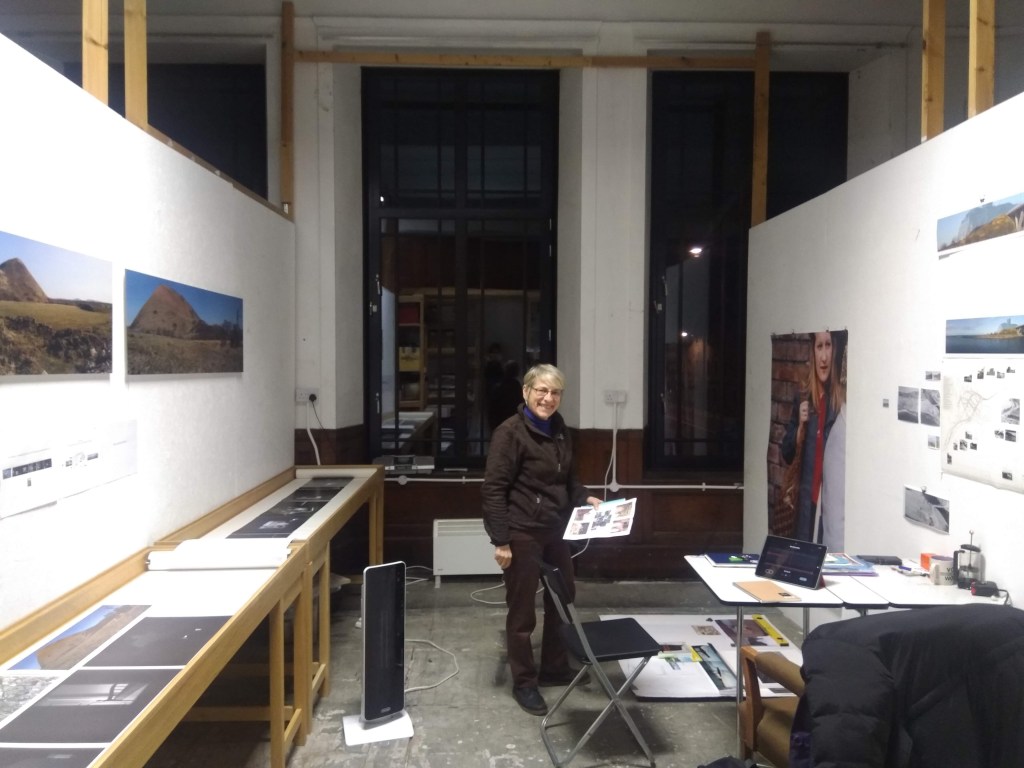
This is the first time I’ve interviewed an artist directly, and the process was fascinating. Though much of her work is site-specific, we met in Bird’s studio in Leith, where various projects and works-in-progress are tacked to the walls. She described how she doesn’t always manage to work in the studio – alongside her artist projects she teaches at Glasgow School of Art – but the images that surround her when she returns are good reminders that help her pick up where she left off.

I recorded the conversation and transcribed it into its interview format afterwards, and was reminded of how conversations jump around in a way the written word simply cannot. Though audio interviews, via the radio or through podcasts, are probably more personal and intimate, I liked the procedure of drilling down into our conversation and distilling Bird’s thoughts and motivations into a few paragraphs, though editing while keeping someone’s voice is always a challenge.

This is a new venture for me and I’m hoping it is the starting point for more interviews, written and recorded, which shine a light on the fascinating process of art making. I’m very grateful to Nicky Bird for her warmth and patience, and to Rosy Naylor, Curator of Art Walk Porty, for giving me this opportunity.

Nicky Bird in her Leith studio

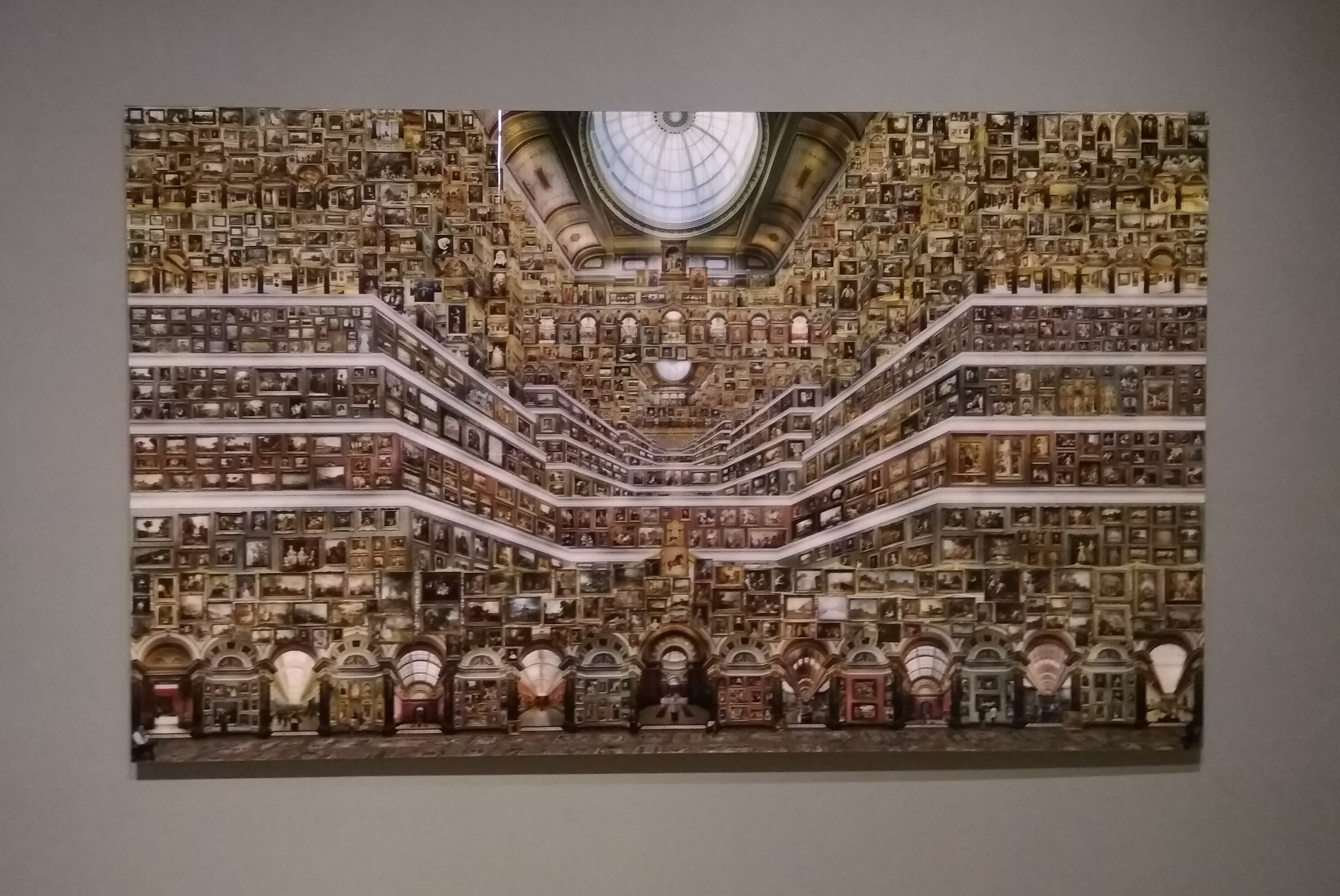
‘National Gallery, London’, by Jean-François Rauzier (2018)

I keep on thinking about a remarkable work I saw as part of Cut and Paste: 400 Years of Collage at the Modern last week, which I didn’t include in my review. The work was made in 2018 by Jean-Francois Rauzier (b.1952) and is called National Gallery, London.

At this stage I will admit that I may have been predisposed to think favourably of the piece. I worked at National Gallery for around four years, and the bonds I form with places dear to me don’t tend to fade away casually. This work recreates some of the place’s grandeur, its abundance, then mashes it up and reimagines it in the most striking way.

Familiar architecture, reimagined

The composition is made up of thousands of different photos of the National Gallery, with around 3000 works from the collection digitally stitched together (hence being part of the ‘Cut and Paste’ narrative). The National Gallery’s architecture has been futuristically transposed, its famous long vistas and arches lined up across the base of the work, while the broad white borders that cut horizontally across the centre give the impression of a multi-storey building, packed to the rafters with paintings in a dizzying salon hang.

National Gallery, London is one of Rauzier’s “Hyperphotos”, which he began creating in 2002 and which combine the feeling of a panorama with microscopic detail. While it may not be evident from my own photographs of the work, snapped during an exhibition visit, each painting is reproduced with pinpoint accuracy, astounding detail and clarity. Getting up close to the work, the viewer can pick out any number of famous, recognisable and well-loved paintings. For me, finding some of my old favourites was like searching for the faces of long lost friends in a crowd.

I found George Stubbs’ Whistlejacket (1762), a painting I loved as a child, taking pride of place in the centre.

One of the special things about the National Gallery is that in the action of walking through its rooms, the visitor goes on a pretty comprehensive journey through the history of Western European painting from c.1250-c.1930. Within that broad narrative, each painting tells an individual story, and captures something of its own historical moment. With the help of wall texts, written by curators and educators, we as viewers use clues to decipher that story, such as the subject matter, the style in which it is painted, the life of the artist, or through the artwork’s history as an object itself (who it was painted for, who has owned it throughout the centuries).

Even though I am lucky enough to be familiar with some of the works photographed by Rauzier, I felt as though I needed hours, if not days, to look properly at this artwork and the paintings contained within it, just as when you visit an art gallery you know it won’t be possible to absorb everything before what a friend of mine calls “museum back” kicks in and you need to sit down in the cafe.

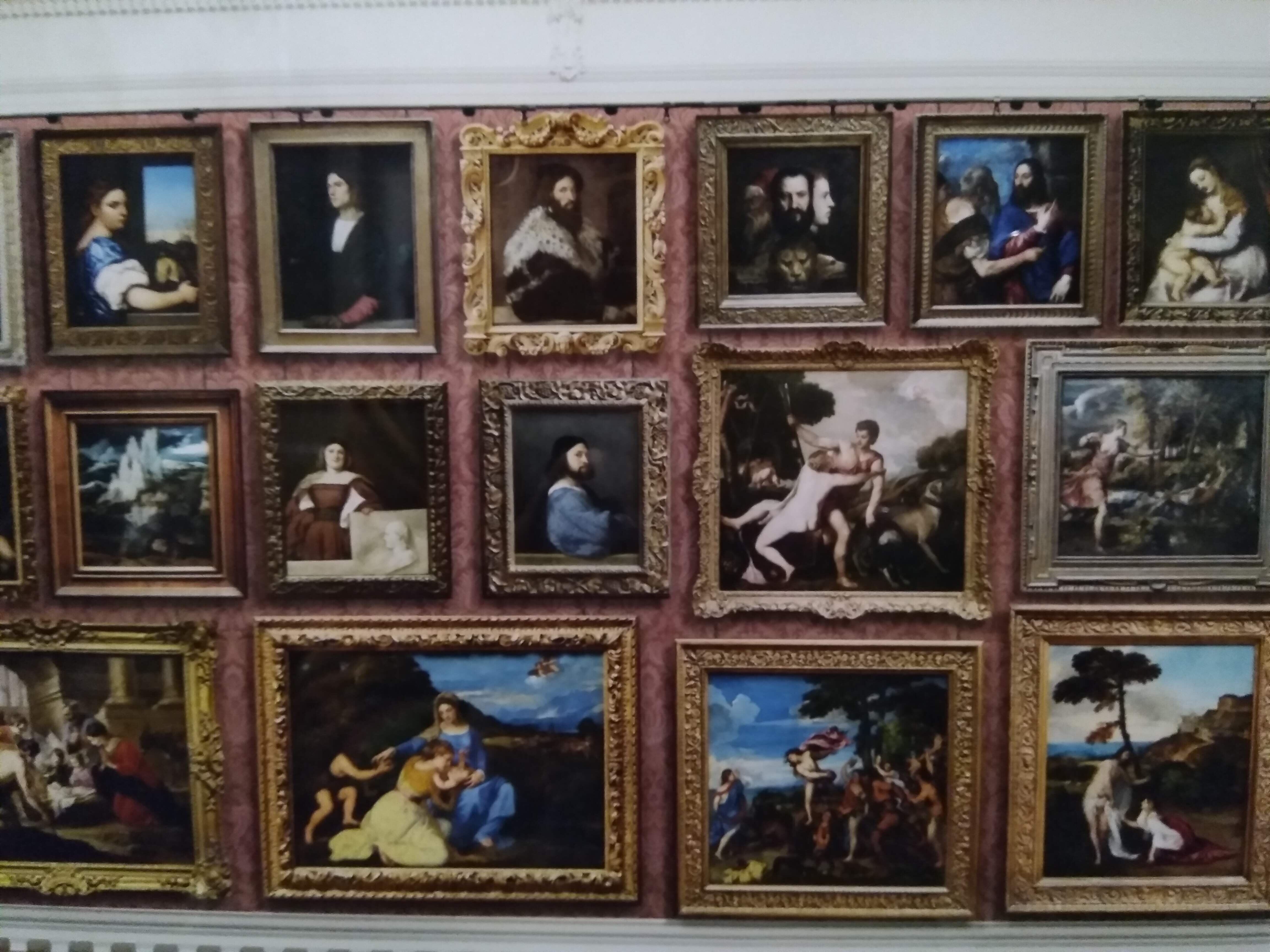
A wall of paintings by Titian (1490-1576). What’s not to love?

There is so much life packed into every single artwork, and the more you learn about the history of art, the more remarkable it is that here, Rauzier has piled a major chunk of that sumptuous and fascinating history into one single work, exercising his own curatorial and architectural choices along the way. He tells the story in way that would almost be legible in one glance, were it not for the sheer weight of all that’s packed into it.

As individuals, we create and take our own meanings from artworks, and our experience of art is informed by our own stories, which is certainly one of the reasons why I found this work by Rauzier so fascinating, and why I know I’ll keep finding things to say about it even after I’ve hit the ‘publish’ button for this blog post. Whether or not you are interested in art history, it is impossible to deny that Rauzier’s futuristic retelling of it is a visual feast, albeit an overwhelming one that is impossible to finish in one sitting.