Top ten art moments of 2020

This year, it is needless to say that we’ve not had the art experiences we might have been hoping for. With travel restrictions, exhibitions cancelled, rescheduled and put online, the art world landscape has changed significantly, perhaps forever. I have just had pre-Christmas visits to see Artemisia and Titian’s Poesie at the National Gallery cancelled, as London crashes into Tier Three. I’ve been longing to see these once-in-a-lifetime exhibitions for years, since I first heard they were going ahead. So I began writing this with a sad heart.

Yet despite and because of what 2020 has thrown at us, the need for art and culture is stronger than ever, as a way to escape, to heal, to reflect on what is happening. Many people have used 2020 to have a go at making art themselves, with countless organisations sending out art packs for people to unleash creativity at home. What I’m now calling Self Portrait with Haribo was born of boredom and childishness (yes I’m 29 and I still buy Haribo), but looking back at it now, it captures a particularly cabin fever-ridden moment of lockdown. Marking moments like this is a good way of acknowledging time passing, in a year that has felt interminable but with very little to show for it.
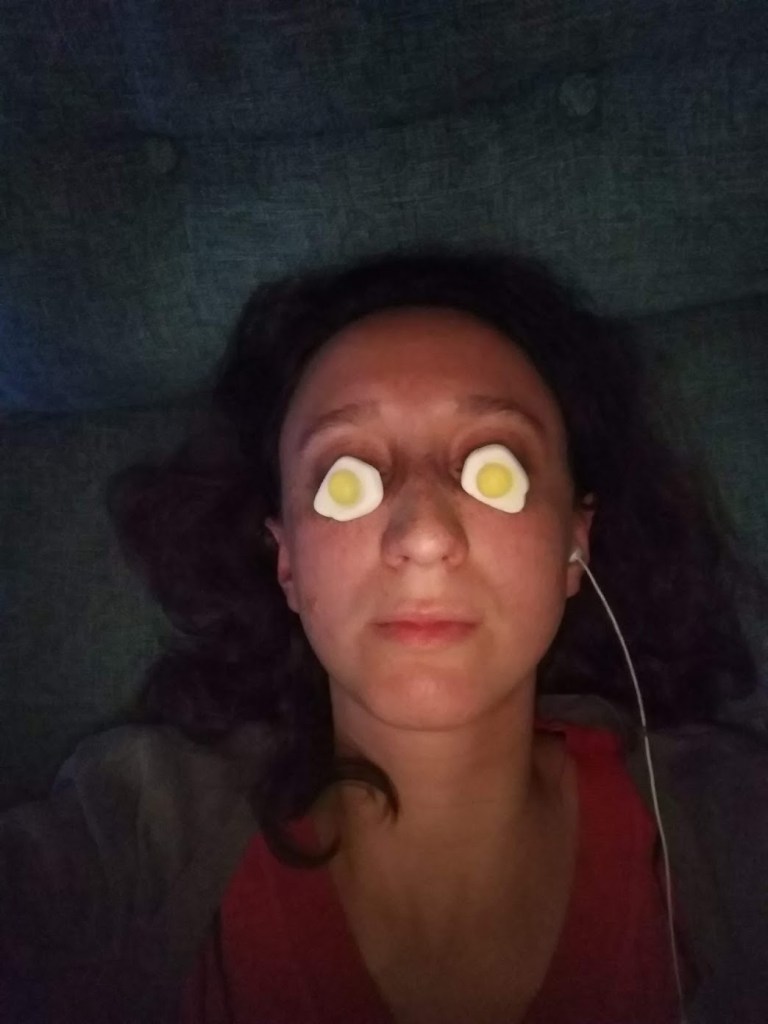
‘Self portrait with Haribo’

You’ll be relieved to hear, this blog post isn’t about my own personal creative output. Rather, it’s a moment of reflection and reassurance, to look back at 2020 and realise it hasn’t been a total creative wasteland. As by now you may have guessed, my concept of what art is is very broad, and that attitude has helped me this year.  It helps me notice my surroundings, and to not feel culturally deprived, even when museums and galleries have been largely closed.

Art hasn’t gone away this year, we’ve just experienced it differently. So consider this an invitation for you to get out your phone, scroll through 2020’s photos and consider the past twelve months in a new light: there will be evidence of things you’ve seen that connect us, that have made life more interesting, that have enabled you to see or understand something differently. To me, that is the purpose of art.

10) “Please do not remove” sign, Fountainbridge

This comes under the category of ‘weird things I take photos of in the streets of Edinburgh’. I first noticed this sign in Fountainbridge in January. It was still there in June. I love random signs, posters and stickers that are woven into the fabric of our cities. Once you start noticing them, you’ll never be able to stop: there are whole debates played out on bus stops, sign posts, bins and streetlights. I like this one because it shows how people did what the sign said by leaving it there. Either the people Edinburgh are very law abiding, or, possibly more likely, it went unnoticed.
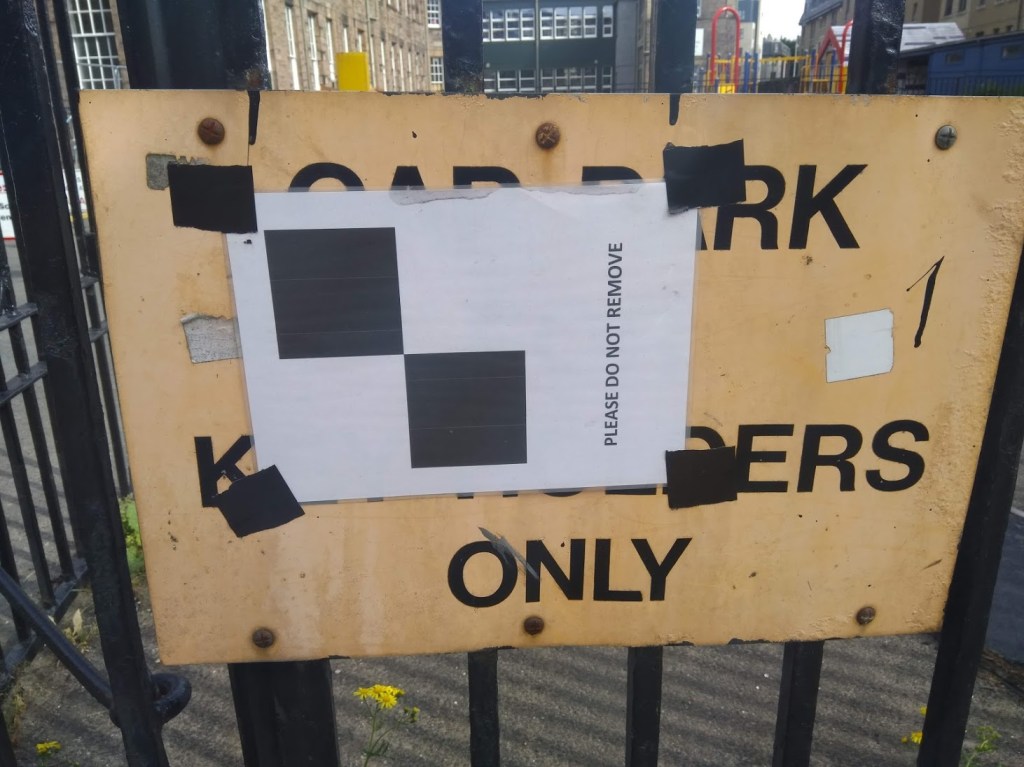
‘Please do not remove’, Fountainbridge, June 2020

9) A visit to Petworth House

When infection rates were low, I visited Petworth House for the first time this year. I’d known that the house had lots of art connections, having seen it in the film Mr Turner, but I hadn’t realised how many treasures are packed into just a few rooms. The National Trust’s webpage says that it is one of the finest art collections in their care. It includes The Adoration of the Magi by Hieronymous Bosch, a bust of Aphrodite attributed to Praxiteles which is over 2,300 years old, and The Molyneux Globe, the earliest English-made globe in existence, made in 1592. My favourite moment was seeing the beautiful marble sculpture of Saint Michael overcoming Satan by Jonathan Flaxman, created 1817-1826. When I was studying at UCL, the full-scale plaster model that Flaxman made in preparation for this piece was on display in the main library, so seeing the final result felt like the artwork had come full circle for me.
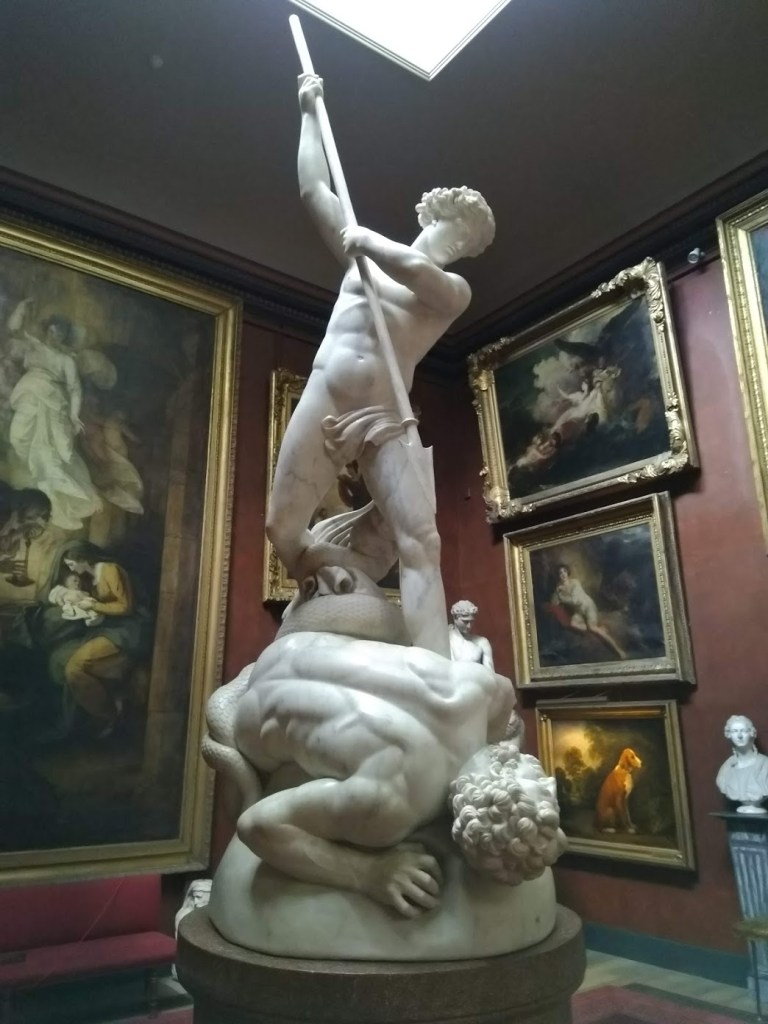
‘Saint Michael overcoming Satan’, Jonathan Flaxman

8) Apple’s iPhone X advert at The Hermitage

Ah, who knew an advert would play such an important part in my year. I actually am one of those people who enjoy TV adverts: the ludicrous fantasies of high-end perfume, the terrible, expensive sofas at DFS. An oven chip advert about family made me cry once. Yet this advert was not your usual one. It was five hours long, a slow-paced art house film with minimal dialogue, all shot on iPhone X, filmed in The Hermitage in St Petersburg. Each Tuesday in the spring, my friend Jane and I sat down, started a phone call and pressed play on YouTube together as we watched an installment. We discussed the paintings, the dancers, the architecture, the narratives, and sometimes, we just talked over the film about life. It was as close as I came to the real experience of trawling through a major museum while on holiday and I looked forward to it every Tuesday for over a month. I’ve written a longer piece which has a link to the advert here.

7) A specific frame in The Wallace Collection

From my trip to The Wallace Collection in the summer, one object is thoroughly wedged in my mind: the frame of Ary Scheffer’s Francesca da Rimini (1835). The painting itself is very dramatic, it depicts a scene from Dante’s Inferno, with the tragic figures of Francesca and her lover Paolo condemned with the souls of the lustful to the second circle of hell. The frame completely wowed me, I think it’s one of the largest frames I’ve ever seen. You can see a book in the bottom right corner, there are doves, chains, oak leaves and a scroll which incorporates elements of Dante’s text. It was created by a certain Félicie de Faveau for the painting’s third owner, Anatole Demidoff, Prince of San Donato, who owned the painting from 1853-70.

Ary Scheffer’s ‘Francesca da Rimini’ in the Wallace Collection

6) Graveyards of Edinburgh

Edinburgh is one of the greenest cities in the UK and I recognise my privilege in experiencing lockdown here for that very reason. Exploring the city’s open spaces has led me to encounter several of Edinburgh’s old graveyards for the first time this year. Being a fan of the Romantics, the more dilapidated and ivy-covered the angels, skulls and crossbones and shrouded urns, the better. Perhaps it seems morbid, but I’ve always found these places peaceful and interesting, and as someone who doesn’t believe in life after death, seeing nature flourish in these places has always been reassuring. Warriston Cemetery, Greyfriars Kirkyard, Dean Cemetery and Dalry Cemetery are some places I’ve found solace this year, as well a place to appreciate the art and symbolism in the carvings, sculptures and iconography.

A grave with ivy, Warriston Cemetery

5) Andy Goldsworthy’s Stone Coppice at Jupiter Artland

Jupiter Artland – I visited at last! Cycling with my sister out to Wilkieston on the canal path, this was one of the most perfect art afternoons of the year. We walked around the whole thing slowly, soaking it all up, and got a seat in the café just as the rain came down. I love so many of the artworks here, but my top one for this list is Stone Coppice by Andy Goldsworthy. You stumble upon this artwork in one of the more unkempt pockets of the sculpture park, you might not even know it was there at first. It’s the perfect balancing act: the way the trees delicately hold the rocks, how some seem composed in a tender embrace, how others seem crushed by the branches or vice versa. The artist’s positioning of the natural matter, which is then left to its own devices to grow and unfold over the years, is poetic.
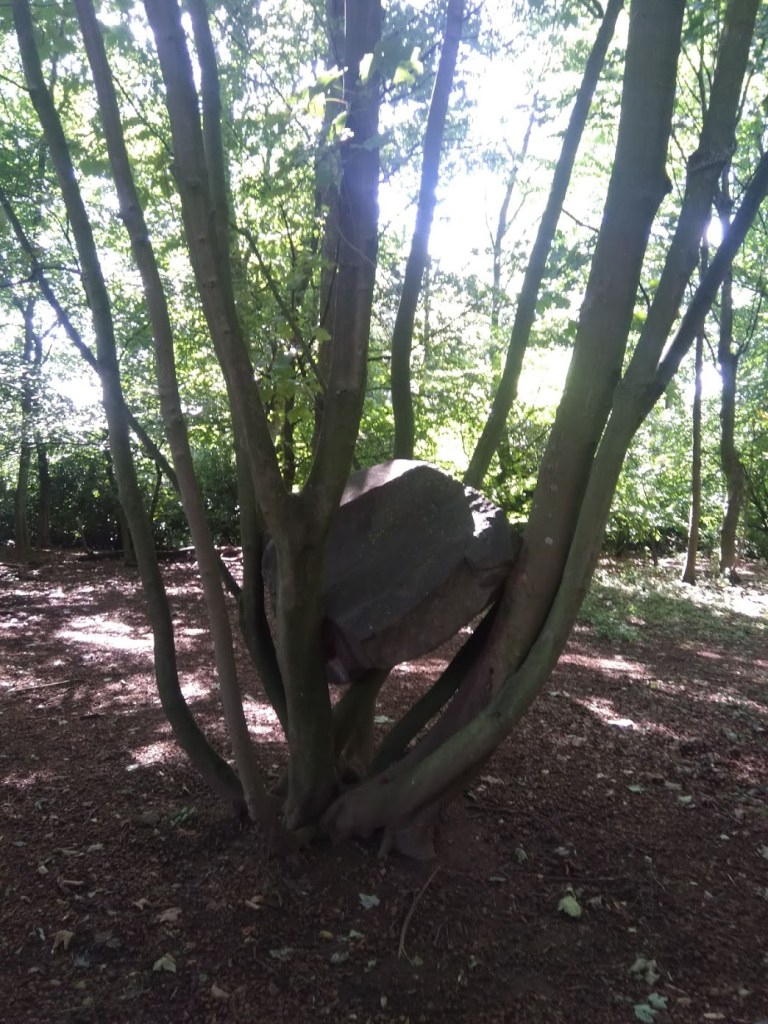
‘Stone Coppice’, by Andy Goldsworthy, at Jupiter Artland

4) Rainbows – Colinton Tunnel

The cynical among you will perhaps raise your eyebrows at this… rainbows in windows everywhere were sweet at first, but as the grim reality and longevity of the pandemic set in, they started creating a backlash, with one of my favourite tweets of the year capturing a perfect counterpoint – a sign in Glasgow that simply said “This is shite”. But this huge rainbow, arching over me as I cycled through Colinton Tunnel stopped me in my tracks. Street art and bike rides have both helped me through the year.
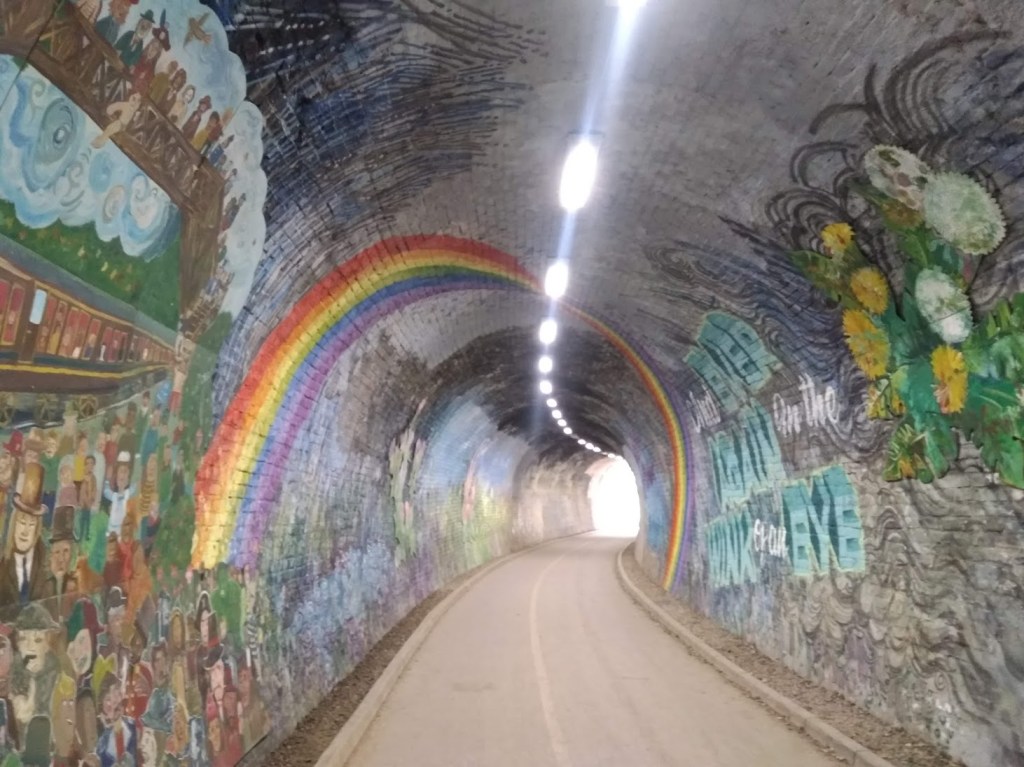
Colinton Tunnel

3) Rediscovering Black Portraiture by Peter Brathwaite

Peter Brathwaite has taught me so much this year. His project to recreate artworks at home was born out of a light-hearted DIY art challenge started by the Getty Art Museum. But Peter’s project took on huge significance as he made it his mission to shine a light on Black portraiture specifically, and used objects in his home to explore his own ancestry and past. In the context of the Black Lives Matter protest movement this year, this exercise in sharing these portraits of Black people with the world was so important, reminding us that these figures do exist in art and history, we just haven’t seen them, we haven’t named then. The whole project showed how the personal is political. How art is a mirror that reflects history and society, flaws and all, and critical engagement with it can help us understand the world and ourselves. Scroll through Peter’s Instagram to have your mind expanded, or take a deep dive into five of his recreations as part of The Essay on Radio 3 – highly recommended listening.

2) Violet Chachki’s ‘fall reveal’ runway look on Ru Paul’s Drag Race

Though I was a fan of Ru Paul’s Drag Race before 2020, the antics of the queens, their talent, their silliness, their mental strength and their artistry has meant the show has been my constant companion through lockdown. Yes, one of the reasons I love the show is that it satisfies my craving for gossip and drama, which has been so utterly lacking in real life this year. But despite its highly formulaic reality TV structure, the show has done so much to expose mainstream heterosexual audiences like me to the art of drag. And what an art it is! It’s difficult for me to pinpoint an exact moment, but I think we can all appreciate that the two-in-one catwalk outfit Violet Chachki burst on the scene with, in the very first mini-challenge of season 7, is the most delicious balance between high fashion and performance art.

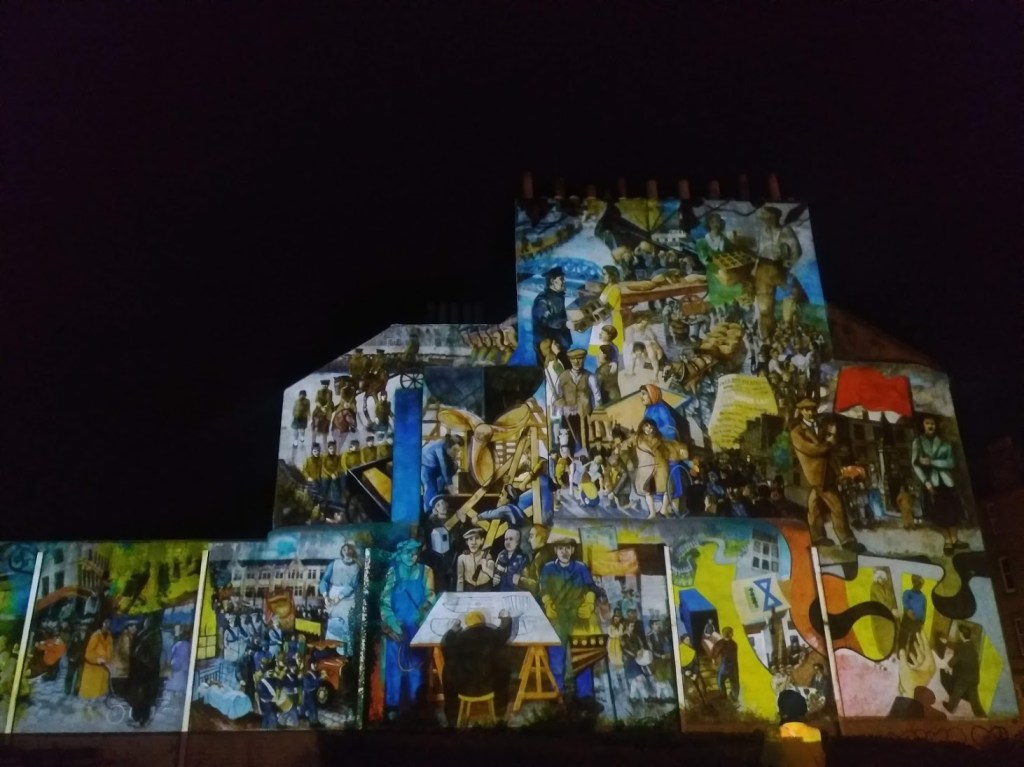
1) Leith’s historic mural, brought to life by Double Take Projections

There are some artworks that seem a little like magic and this is one of those. If you’ve ever seen Leith’s historic mural near Leith Theatre, you’ll know it’s not in the best state of repair. The colours have faded, the edges are eroding, it’s difficult to decipher. I wouldn’t necessarily want to change that, fading is part of a mural’s cycle of existence. Plus I’ve heard that the artists Paul Grime and Tim Chalk, who created the mural in collaboration with local residents in 1985-6, have resisted suggestions of the mural being restored. This decision then, to use projections, sound effects and music to bring different parts of the mural to life, is inspired. With the projection focusing on particular characters and animating different parts, we see a ship’s rudder gently rotating, children playing and soldiers marching. We notice the mural’s complex layers, and the installation restores what is a special piece of street art and local history in the city’s collective memory.
There you have it, my top ten art moments of 2020 so far. What have yours been? I would love to hear from you, so feel free to leave me a comment or DM me on Instagram or Twitter.
Glasgow International is happening online, right now

The art festival Glasgow International (Gi) had to cancel and has curated a set of seven different artworks available online for the duration of the festival (until 10th May). Some are special commissions, some works were made long before the pandemic hit, but all artists would have been taking part in the festival itself, and the works represent a taster of what would have been available to see. While I understand that Gi want to mark the period when the festival would have taken place, it feels needlessly restrictive to have made this very interesting set of works available only to take them down after two and a half weeks. Time seems arbitrary now. I barely know what day it is, let alone the date. Why not leave them up until the end of lockdown or the end of May at least?

I was a bit late to the party but I’ve just finished watching/listening to them all and wanted to highlight two that resonated with me.

The first is Yuko Mohri’s Everything Flows – distance, 2020. Mohri has taken Yasujirō Ozu’s 1953 silent film Tokyo Story (which I haven’t seen), and has spliced together scenes devoid of human presence. What we are left with is a ghostly compilation of images which suggest humans through their absence. The city continues to function, ships move through water with purpose, but seem to be operated by remote control. Robotic railway station signs indicate platforms and train times to no one. Clothes on washing lines blow in the breeze and shadows on the walls of cramped interiors hint at human life, but each time, the film cuts out just before the figure comes into frame. It’s a tantalising series of almost-moments, which chimes well with having experienced a quiet, deserted central Edinburgh over the last month or so. There’s a strong sense of people watching the goings on from the high viewpoints over the city. Lanterns look like eyes. A moth bashes against a light, a fragile reflection on the futility of existence in this silent world.

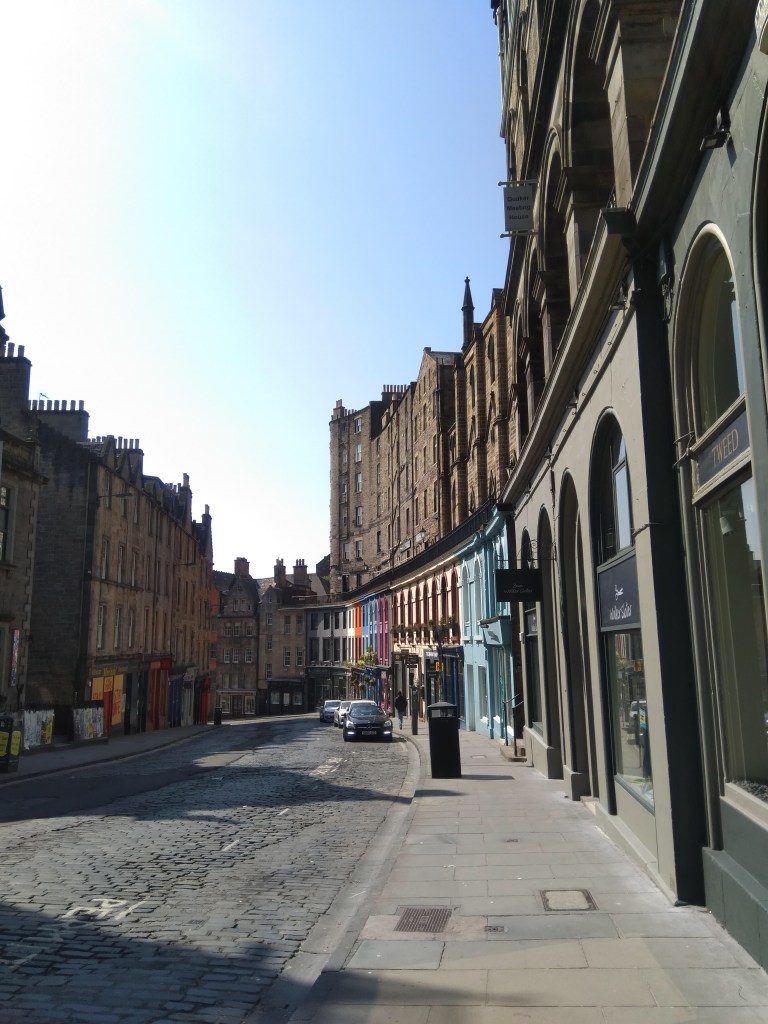
Victoria St, Edinburgh looking empty on 25 April 2020

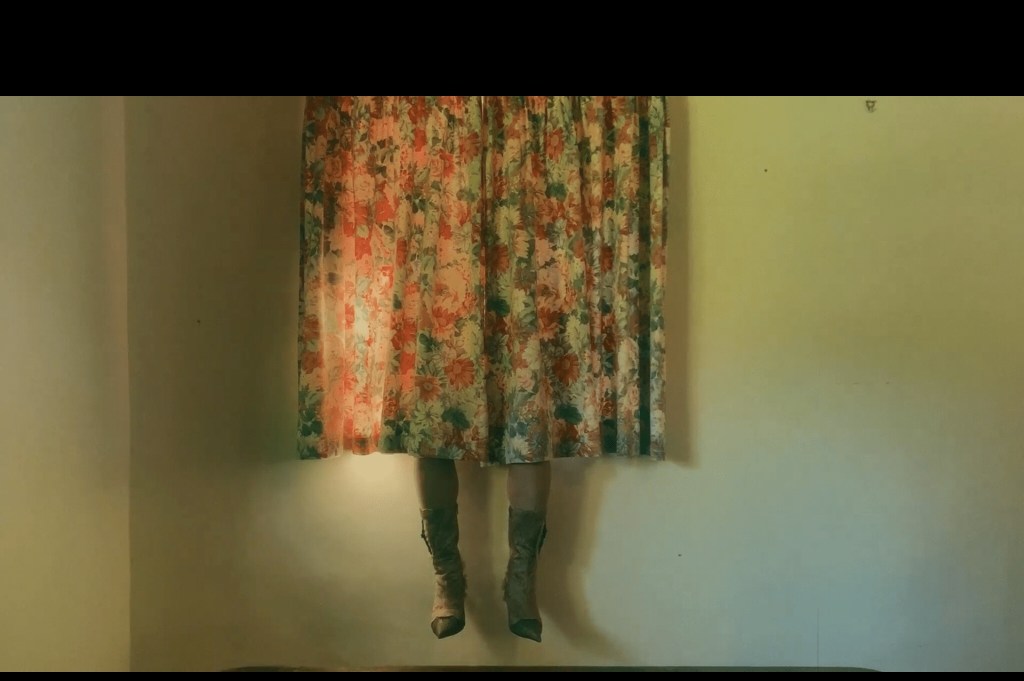
Urara Tsuchiya’s Give us a Meow, 2019, is my other pick of the bunch. This one surprised me – from the cover image and the title I didn’t think I would like it. But the 9 minute film is captivating. It tells a fragmented story, set in the rural idyll of a cottage and the countryside around it. We follow the escapades of a glamorous Asian woman who dons an impressive range of sexy outfits including animal print catsuits, fluffy negligee, powder blue and baby pink fur coats. The costumes are all made by Tsuchiya and are highly influenced by drag, adding to the fascinating confusion around the identity of our protagonist. She dances, applies makeup, takes selfies and does the ironing. It’s a surreal and humorous mash-up of the extremes of femininity, typified by one excellent shot which briefly flashes up, showing a pair of legs clad in high-heeled boots, sticking out from behind twee floral curtains. I took a screenshot which is probably not allowed, but who knows the rules of a digital art festival. Maybe this is part of a process of the democratisation of image-making, taken to a new level.

Still from Urara Tsuchiya’s ‘Give us a Meow’, 2019

For me, in a time of lockdown, it seems as though the character in Give us a Meow is attempting to recreate the experience of being in a nightclub within a completely incompatible setting of ‘home’. She dances like no one’s watching. She even has a little cry in the bathroom, picks herself back up and heads out again, an experience I’m sure we can all relate to. Seeing her vulnerability when navigating a cattle grid in heels is beautiful and moving and funny.

There’s also a fascinating, sinister aspect reflecting on the voyeurism of the film. She appears to be alone, but is not – she breaks the fourth wall repeatedly to interact with us, casting glances directly at the camera, creepily/seductively waving at us from the toilet seat. In the moments filmed outside, with her dancing by the side of the road, the film is shot from the perspective of someone watching from a car window. We are there, but it feels like someone else is there too. This also resonates particularly now – we rely on our cameras more than ever for interaction and attention, but constant rumours circulating about hackers in Zoom calls and sessions on Houseparty make us paranoid about who else might be watching. Tsuchiya created the work last year, but it feels more relevant than ever now.

So, that’s my take. I know there’s so much content out there at the moment, it can be overwhelming. I know that digital art events don’t appeal in the same way as the ones in ‘real life’, which can take you to different corners of your city and have a physicality to them that can’t be recreated on screen. But these artists have created something really interesting. What worked for me may not work for you – see what you think and let me know in the comments, or DM me on Instagram @encounters_art. I’m always here for a conversation about art!

Performance Live: The Way Out review

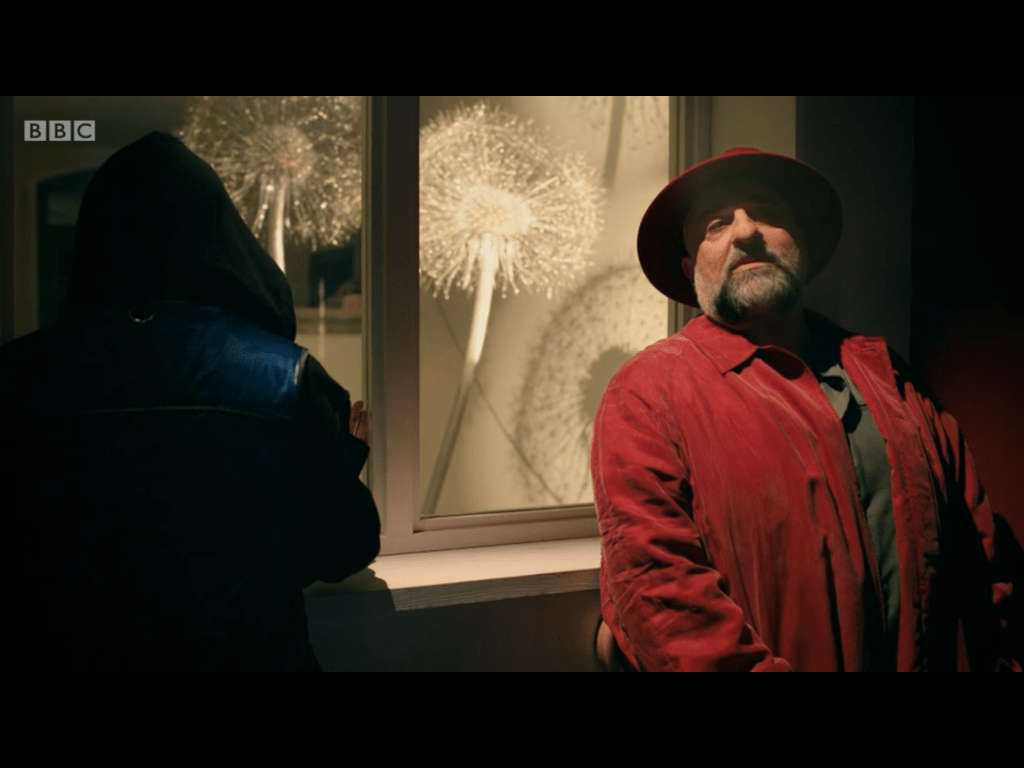
It’s raining heavily outside, and a soaked through, frightened, hooded figure stumbles upon a grand pair of wooden doors. They open automatically, and seem to offer an alternative to the storm, and whatever else is lurking outside that troubles our protagonist. This is how The Way Out, Battersea Arts Centre’s offering for BBC Culture in Quarantine, begins. I promise you that if you like imaginative, surreal adventures and need an escape from this covid-consumed world (as I did yesterday) you will fall down this creative rabbit hole and not look back.

There are a number of references to Lewis Carroll’s Alice’s Adventures in Wonderland, and in many ways this is a modern retelling, one that celebrates the talent that Battersea Arts Centre has to offer as well as the transformative power of creativity. But before we make our way to experience the performances, we first encounter the enigmatic Omid Djalili, our guide and master of ceremonies. His existential musings on pathways, growth, entrances and exits hover between philosophy and riddle. As our journey through this old town hall with crumbling walls and labyrinthine corridors continues, he is increasingly likeable and intriguing.

The work incorporates some of BAC’s art installations, such as Hope, by Caroline Russell (2019)

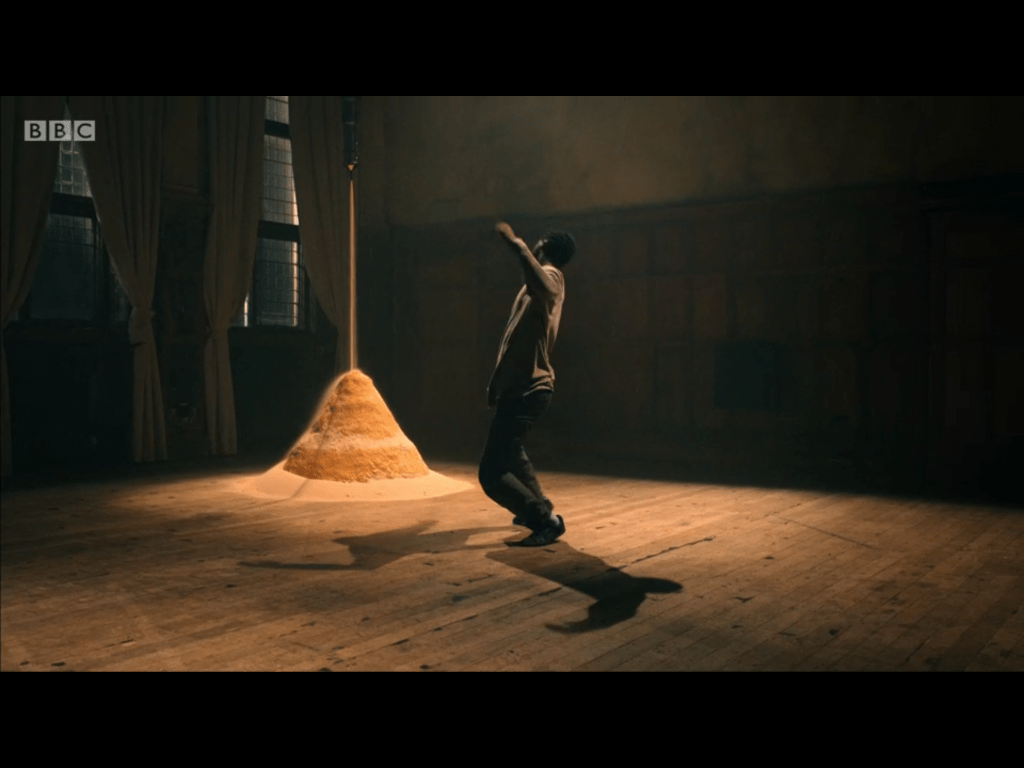
We begin as curious but detached observers, audience members, pondering how it is possible for a body to become fluid in the way that Botis Seva’s does in his performance of Quick Sand, performed alongside what seems to be a broken hourglass, its sediments hardened to the floor. As we venture further into the warren, we enter different worlds, a deep sea chamber where drag artist and opera performer Le Gateau Chocolat reigns supreme, singing a lonely siren song to the luscious, pulsating backdrop of a string trio. As the journey continues, its sinister edge, probably imagined by our own suspicions and scepticism, slowly gives way lightness and joy. We enter the cabaret world of the Cocoa Butter Club and we realise we are now participants in the show. There’s a performance of “Young Hearts Run Free”, one of my favourite disco classics which is poignant and joyful in equal measure. It’s a party and a crazy one at that, the kind of night when time warps and you don’t realise how late or early it is, or how it got to be light outside?

Botis Seva working magic with his movements in Quick Sand

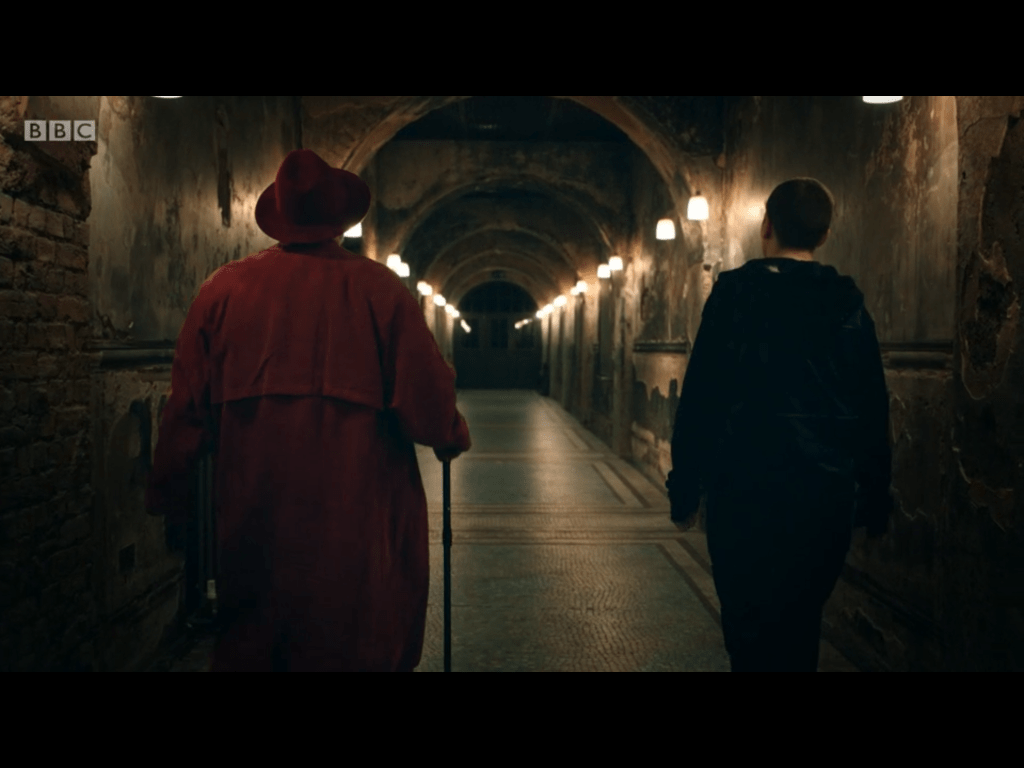
The building is in many ways my favourite part of the show. It transported me, kindling memories of similar places I’ve been or known – art venues like Summerhall in Edinburgh (which is currently crowdfunding), nightclubs, the backstages of theatres, the burlesque house from The Simpsons, Shangri-la at Glastonbury, and even certain dark, decrepit corridors of my Midlands secondary school. The film is about 40 minutes long and is taken in a single shot from around head height, making it as close to immersive theatre as TV can get. You are the one journeying through the maze. And wow, it feels good to be traveling through and exploring a hive of creativity and weirdness. While watching I vow to myself not to take these experiences for granted again.

Come As You Are is a heartfelt poem written and performed by Sanah Ahsan, resplendent in a bright yellow suit and standing in centre of what seems to be a yellow brick road. It’s a nod to another memorable, psychedelic adventure into another land – except it is made from flowers and not bricks. A road made of flowers sums up the paradoxes of this wonderful piece of theatre, this story. It’s bizarre, fun and seems impossible and yet it works because of all the paradoxes woven into it. It is a beautiful escape, so perfect and so utterly needed for these times that it’s hard to believe that it wasn’t planned for a quarantined world (it was filmed in January). 

This flight of fantasy took me out of myself for a moment. Hopefully, on the other side of this stationary journey we are all undergoing, we can emerge, like the character from The Way Out, with our hoods thrown back, ready to embrace the world, each other and ourselves.

Through the labyrinth

Nicky Bird & Art Walk Projects, Portobello

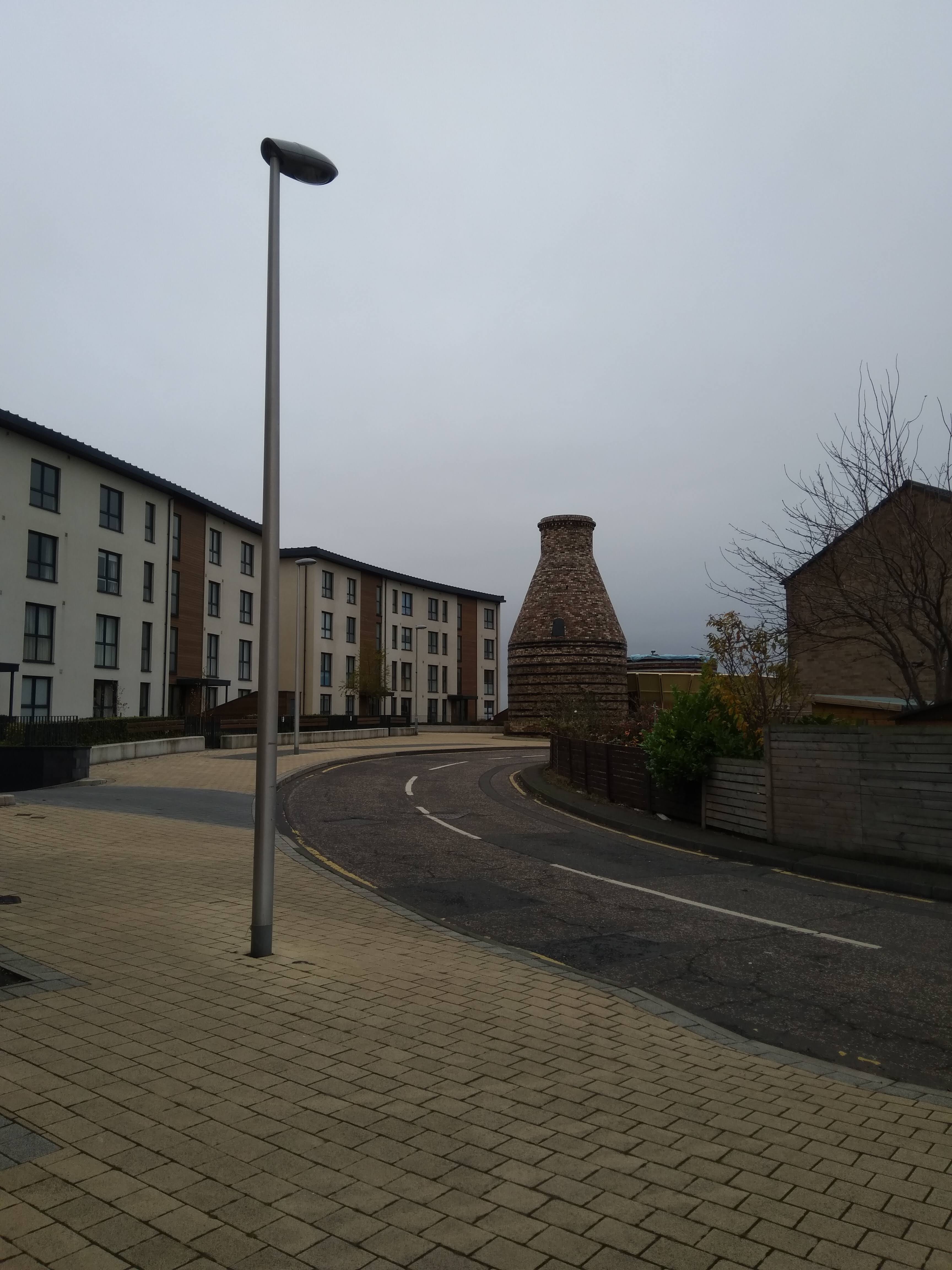
How much do we really know about our surroundings? Living in towns and cities, there are fragments of past lives and clues to how the environment has changed scattered all around us, if we look carefully. That careful looking, backed up by detailed research is how artist Nicky Bird is spending her LAND MARK residency with Art Walk Projects, based in Portobello. The starting points for her project are the two bottle kilns close to the shore (dated 1906 and 1909), the only fragments left of the large Buchan Pottery complex, which dominated the area close to the shore, but closed in the early 1970s.

One of the bottle kilns, an alien industrial fragment adrift in a sea of new builds

Portobello is a seaside town between Leith and Musselburgh, east of Edinburgh city centre. It’s a beautiful walk along the promenade, more a place of leisure than of work, but until relatively recently it was an important industrial hub – there was a paper mill and a chocolate factory all within easy reach of the Pottery.

Today a small group, led by Bird, helped to revive a memory of that recent industrial past, through a walk event which told the decorators’ stories. These were the women who painted the ceramics before they were fired in they kiln, who occasionally raked through the spoils to try out their own designs and have them fired on the sly. Like a band of investigators searching for clues we walked around the area and examined maps from different phases of the area’s history.

Classic Buchan Portobello pottery, set against the backdrop of the beautiful kiln bricks

We also looked at examples of the pottery the women had decorated, and two fellow participants told me they recognised the design – it used to be sold in all the tourist shops in the 1970s, but they had never realised it had been made in Portobello itself. It felt good to participate in reviving that part of the town’s story, and I’ll be keeping an eye out for pieces of Buchan pottery in Edinburgh’s shops from now on. Even the most everyday objects can be brought to life through giving a voice to their past, which is why art projects like this one, which evoke memories that have been lost, are so important, especially for communities that have changed as much as Portobello.

Nicky Bird’s residency with Art Walk Projects is culminating with an event in February, so this walk was really a launch for her project. The completed work promises to be one that shakes off the dust that has settled on Portobello’s recent history, and I’ll look forward to seeing what else is revealed.

Senga Nengudi, Fruitmarket Gallery

Walking into the Senga Nengudi exhibition at Fruitmarket Gallery, I was struck again by how weird art is. Immediately visible were two pieces that looked so utterly different, you would never think they were by the same artist. One was a large section of the gallery floor covered in sand, with what looked like little mole hills spattered with colour. The other was like three giant ice pops that had melted in their plastic sheaths, with bubbles that had formed where the garish colours met the surface of the clear plastic. This work was wholly artificial where the other was primarily natural. My first urge was to reach out and touch these kitsch water features, to poke the plastic and watch the bubbles move and see the tube take a different shape. However, being a natural rule-abider, I didn’t. Didn’t want to be told off.

I often feel that by being a postgrad History of Art student, I ought to know what’s happening with ALL artworks. What are they about? Could I explain them to someone else, who maybe wasn’t as keen on art as I am? But at this stage of the exhibition, I was quite lost and I couldn’t really get my head around the artist’s aesthetic choices. Perhaps the invigilator noticed I looked baffled and handed me the Gallery guide, which was helpful. This has happened to me a couple of times at the Fruitmarket and I always think how great it is that the invigilators are encouraged to interact with the public.

The guide explained that the giant melted ice pops were part of a series of early works known as Untitled Water Compositions.

“When they were first made and shown for short periods of time, they were designed to be activated by the audience, to be pliable and responsive to touch as flesh might be, challenging the static, intransigent nature of much minimalist sculpture of the 1960s. The works we are showing have been recreated for this exhibition. We ask you not to touch them as they become extremely fragile over the longer time of the exhibition.”

This really irks me. What’s the point of something which was conceived by the artist as kinetic, which is now static? The meaning and substance of the work is completely altered. For artists like Nengudi who work with performance, the fragility of the piece is surely essential to its conception? Plus, on a practical note, these aren’t even the ‘original’ pieces, so that plastic can’t be that fragile. It is sometimes difficult to know who makes these decisions. Is it the host gallery, the external curator, the gallery representing the artist, or the artist herself? The whole thing reminded me, in a bad way, of one of my most frustrating exhibition experiences at the Alexander Calder exhibition at Tate. There was a key piece of sculpture which took up an entire room. The conceit of the work was a pendulum that swung and hit the different objects in its path, thus creating different patterns of sounds and a unique journey through the space each time it was set off. The sculpture was not permitted to move because the estate of Alexander Calder didn’t want it to be damaged: the ultimate example of how monetary value can totally eraticate the aesthetic value of a work.

I made my way upstairs feeling a bit pissed off about the whole thing. But the upstairs was where the exhibition really started to come together, the R.S.V.P sculptures Nengudi has created with tights/stockings having the biggest impact. These were first created in the mid-1970s, way before Sarah Lucas created her tortured forms using stockings (I’m thinking of Tate’s Pauline Bunny, 1997). The tension between the stretched nylon and the stones/sandbags weighing them down was palpable. Particularly striking and important was the use of dark brown tights, depicting black skin. It brought to mind the difficulties women of colour can face when trying to do a simple thing like buying tights: “flesh coloured” is a loaded term, and many beauty products still haven’t caught up. These seemingly simple works allude to absent female bodies which are simultaneously weak and fragile, powerful and tenacious, able to withstand their own tortured forms. They say a lot even though their forms are simple, their materials part of the everyday. That was the part of the exhibition that will stay with me and helped me to better understand the other works I had almost dismissed.