Goodwood Art Foundation

The corner of West Sussex where my Dad lives, you are never far from a large country estate. Brown National Trust signs proliferate (Petworth; Uppark), and there are also estates that are still going, that still belong to some of the country’s richest families. You can tell this even by the architecture. In the villages surrounding Midhurst, many of the houses windowframes are painted in a bright saffron yellow, the colour of corn-fed chicken’s egg yolks. To a casual passerby, this might just be a jolly colour scheme collectively chosen by the locals, but in reality they are a territorial marker, showing that they belong to the Cowdray Estate (a 16,000-acre estate owned by Michael Pearson, aka the 4th Viscount Cowdray). 

The Viscount’s neighbour is Charles Gordon-Lennox, 11th Duke of Richmond. His estate, Goodwood, is about 10 miles south of Cowdray. He is the owner of the the Goodwood Art Foundation, a beautiful new sculpture park and exhibition space tucked amongst the rolling hills of the South Downs. From 1992-2020, it was the site of the Cass Sculpture Foundation but it has been expanded and reopened. As it’s just a stone’s throw away from my Dad’s, I was keen to get there. Especially when I found out their first headline exhibition is by Rachel Whiteread, an artist I researched as part of my Master’s in 2019.
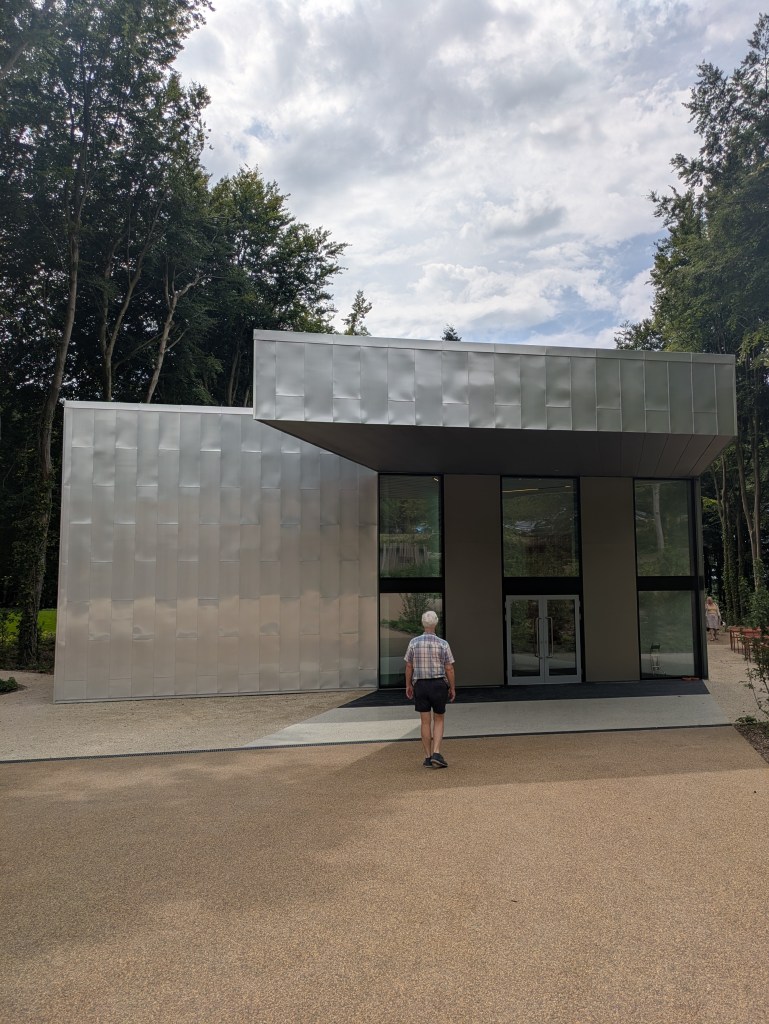
The Restaurant at Goodwood Art Foundation with my Dad for scale

My first impression is one of taste: everything looks new and clean and swanky. Like it cost a lot. There’s a striking black and silver and asymmetrical building, and for a second, it feels like I’m back at the Louisiana museum on the far reaches of Copenhagen. But the landscape around here is undeniably English: the rolling hills, the ancient woodlands, and the mighty oak trees dotted in the fields. It’s a fascinating, jarring almost, setting for Rachel Whiteread’s work, which has always struck me as unfailingly urban. Her use of concrete is what defines much of her sculpture, with her most famous work, House (1993) filling up an east London townhouse from the inside out, then its cast left behind, standing as a lonely monument to demolition and faded domesticity. 

This season, Whiteread is the main focus of the larger gallery, one of two indoor art spaces at the Foundation. In the centre, the space is dominated by her work Doppelgänger (2020-21), a bright white ghost of a tumbledown corrugated iron shack, trees poking through the building’s seams. However, I was drawn to the photos on display, the first substantial showing of her photography. Her photos, like most people’s, were largely taken on her phone and capture landscapes, interesting shapes, everyday encounters with the traces of human presence, or as she says “eccentric features” that interest her. Whiteread views photographs as a form of notetaking, a sentiment which strongly chimes with me. Part of the reason for starting this blog came from a desire to capture those artistic ‘encounters’ that one meets within the city. So in Whiteread’s photos, we see fragments of colour against brown and grey of signs and posts, and the pleasing, satisfying textures of tiles, pictured side by side with dried, fragmented earth. The wall labels tells us the locations for these images: France, Rome, California, Essex, Tuscany.
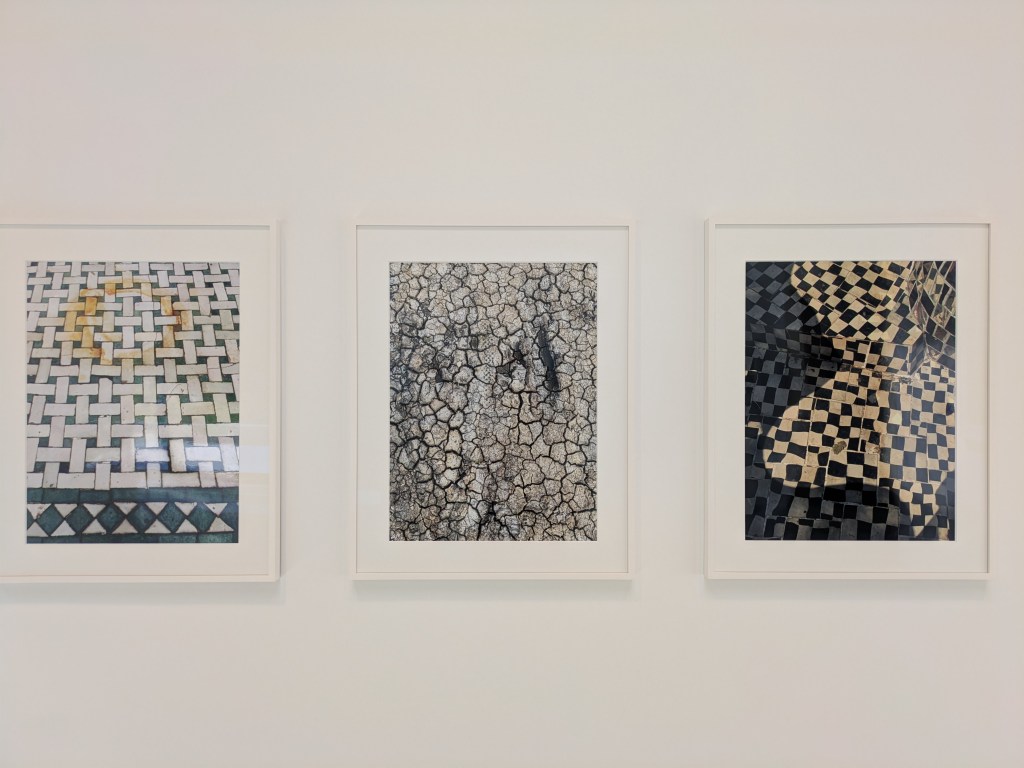
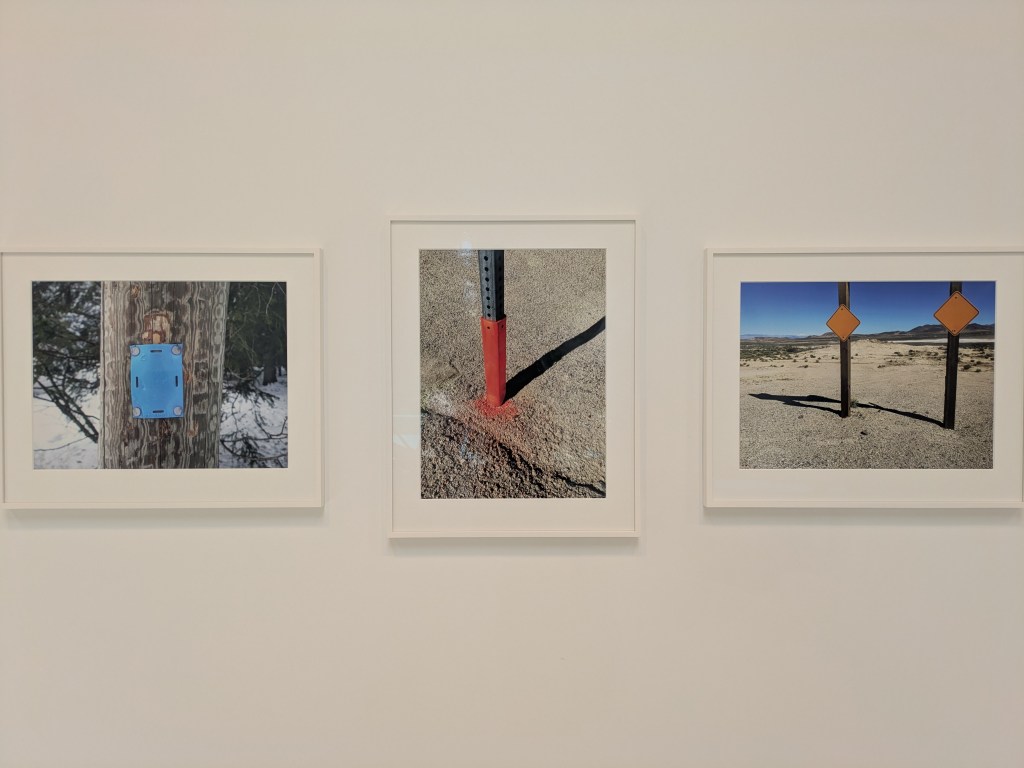
Whiteread’s photographs

Back outside, my Dad and I strolled around at an easy pace, enjoying the vistas through the woods and occasionally playing a game of “is it an artwork or is it a nicely arranged pile of wood?” The landscape gardener, Dan Pearson, clearly has a nuanced understanding of the playful boundary between them. I enjoyed the exploration of materials and fragility in Veronica Ryan’s Magnolia Blossoms (2025) a circle of fallen petals and buds made from bronze. Rose Wylie’s Pale-Pink Pineapple/Bomb (2025) isn’t my type of thing, but looked pleasantly incongruous in the landscape. Unfortunately, Hélcio Oiticica’s Magic Square #3 (1978) was not yet open for exploration, but I’ll go back.
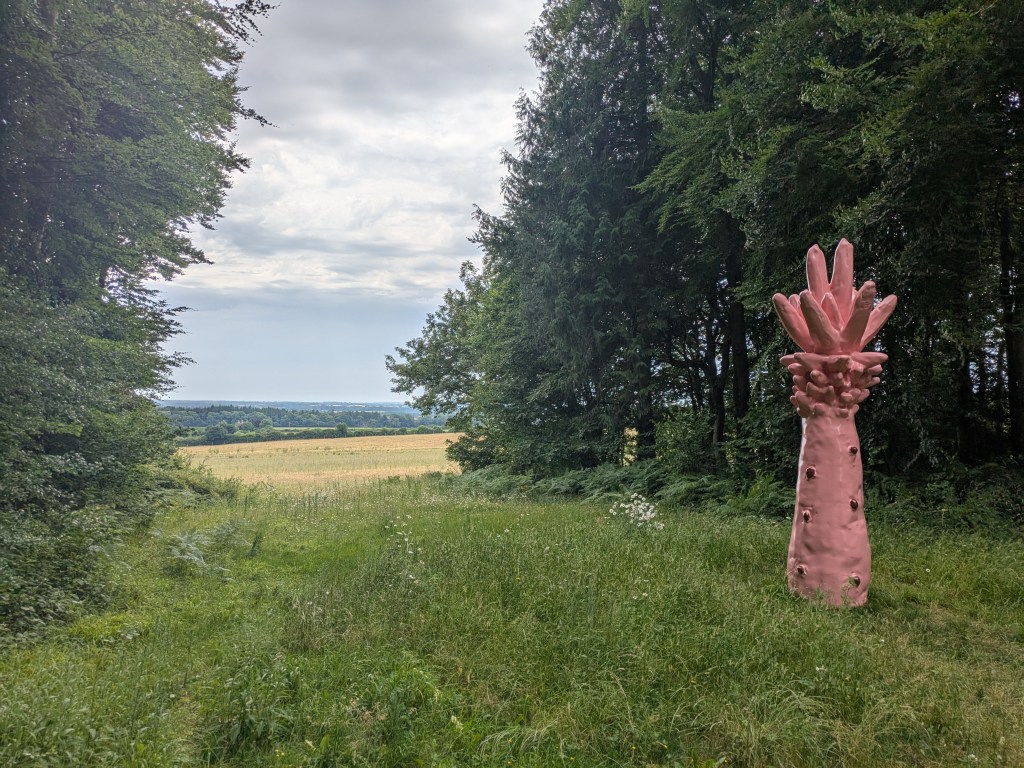
Rose Wylie’s Pale-Pink Pineapple/Bomb (2025)

When we came upon Susan Phillipsz’ work As Many As Will (2015), it took a few moments of listening to the silence (actually the birds and the wind in the trees) before being startled by a lone signing voice, soon joined by others. This beautiful ‘in the round’ song, which Phillipsz sings herself with her soft Scottish accent, about refuge and Robin Hood moved me, but I couldn’t quite say why I had tears in my eyes and a strange catch in my throat. Something about feeling lucky and sad at the same time. How did I get to stroll through this beautiful landscape, stumbling upon art, when there is so much horror unfolding before our very eyes on our phones from morning ‘til night. Why is the world like this.

Whiteread’s unmistakable footprints appear again across the wildflower meadow, her signature concrete casting process back with Down and Up (2024-25), a staircase flung in the wide field like a strange fragment of a disappeared home. The free guide booklet contained an interview with Whiteread, where she refers to this sculptural staircase as  “universal memory of a commonplace architectural form”. I cannot think of her work without feeling it is haunted, these casts of buildings capture a ghostly suggestion of a structure that once was and now isn’t there any more. It is no wonder her art is associated with memorials: her Memorial to the 65,000 Austrian Jews who were Murdered in the Shoah in the Judenplatz in Vienna is an unforgettable work. Seeing this staircase then, one cannot help but think of ruined buildings of Gaza, of destruction and war. It is inescapable.
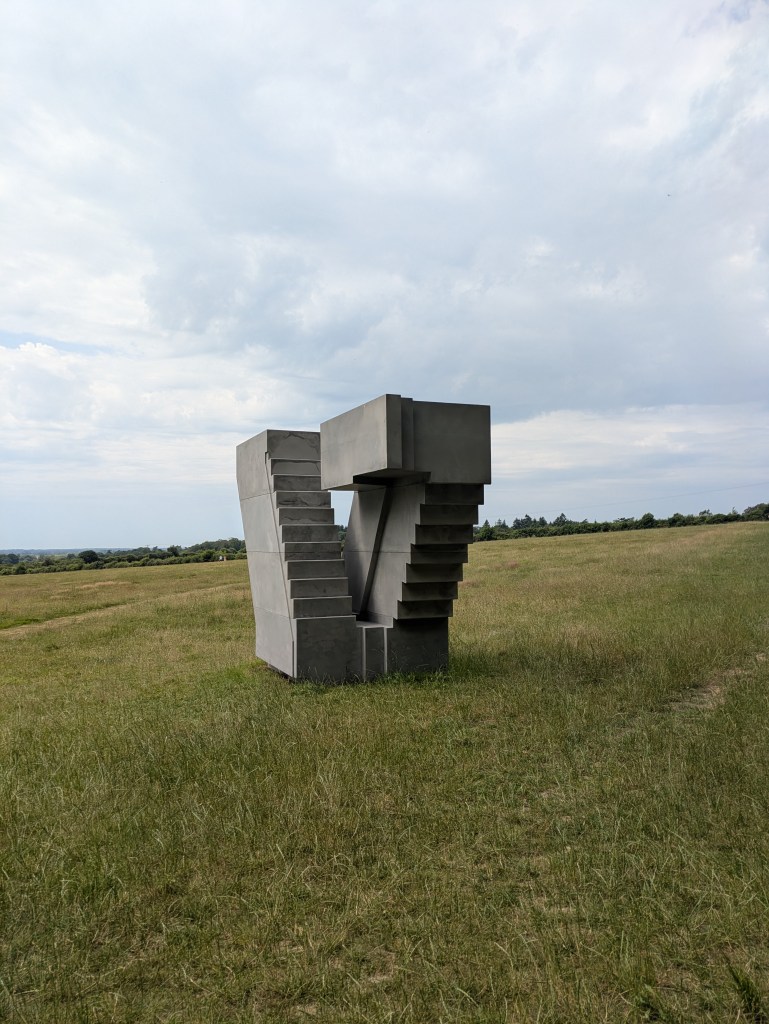
Whiteread, Down and Up (2024-25)

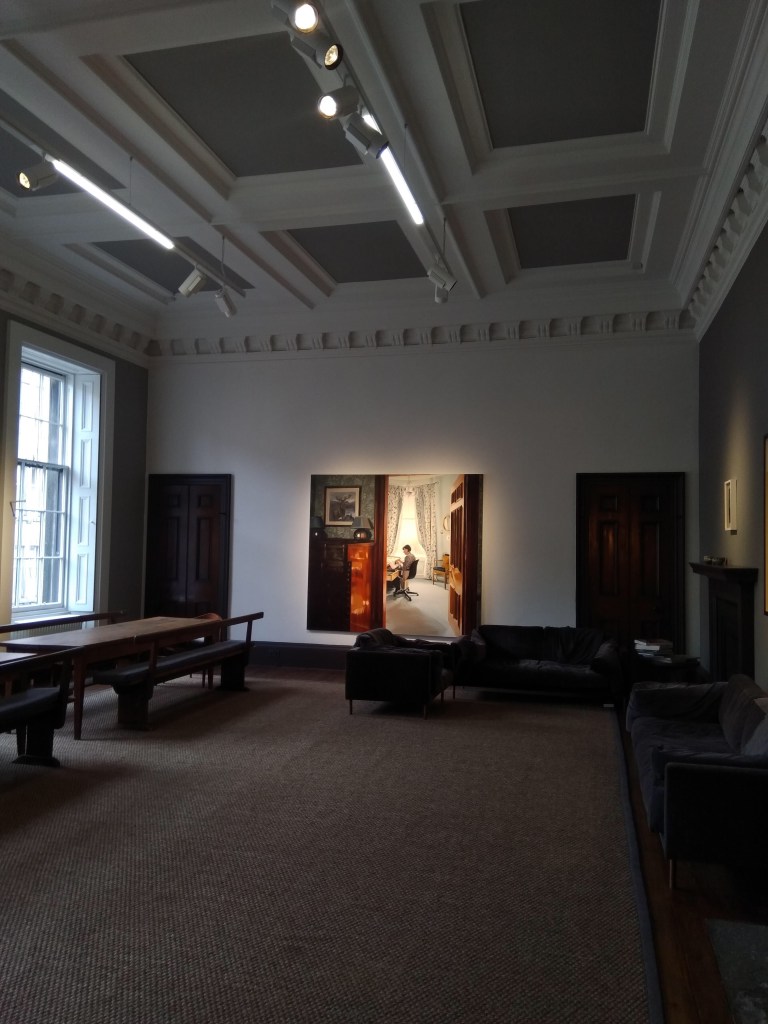
The smaller gallery space housed Amie Siegel’s Bloodlines (2022). I don’t normally engage video art for long, I’m naturally impatient. Here though, in the shade and darkness I was completely captivated by the luxurious interiors of Seigel’s film. Unnarrated, the camera drifts eerily along magnificently decorated hallways and into rooms with ticking clocks, marble pillars and strange taxidermied animal collections. We see an ‘insider’ view of huge stately homes, that are choc-full of artworks. It felt very apt that Bloodlines, which traces the movement of artworks by George Stubbs between private collections and public museums but really explores wealth, history, the legacies of ownership, class, and the strange power dynamics of who owns art and who can look at, and on whose terms that is, felt an important nod to where we were: the art collection of an actual Duke, (because yes, they’re still around), in the middle of a field in England.
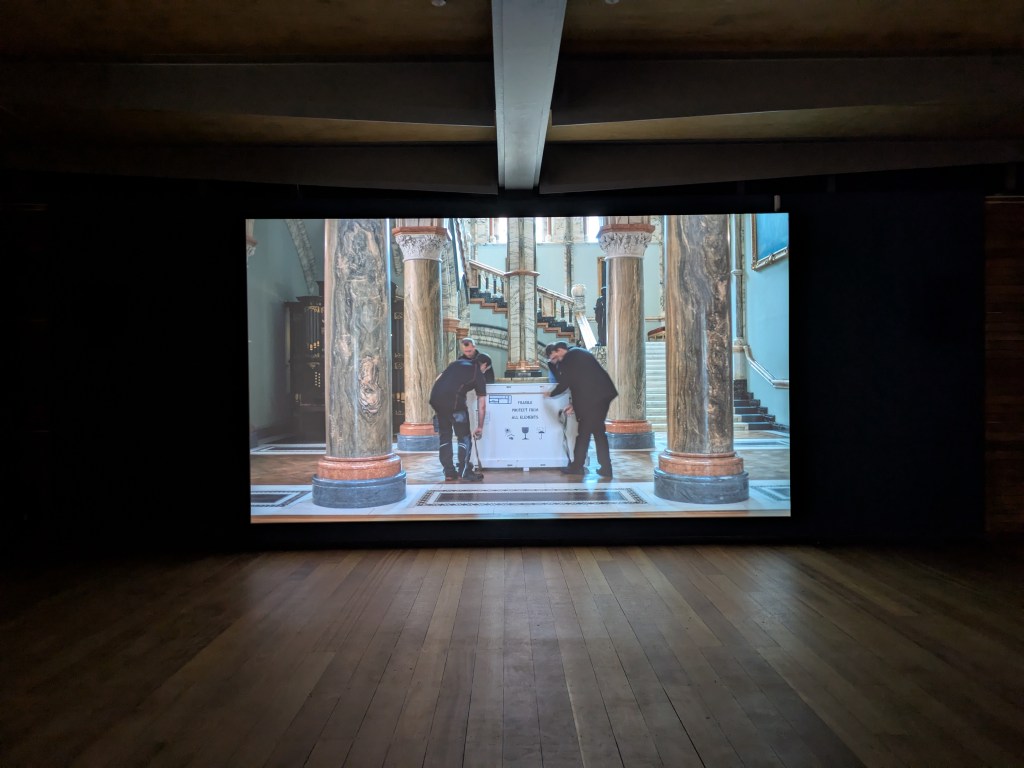
Film still from Amie Siegel’s Bloodlines (2022)

Crying in the Gallery

This is perhaps the first of a series I’m going to call ‘crying in the gallery’. Art can move us in unexpected ways and catch us off guard at times. That’s what happened during a visit earlier this year to the Royal Scottish Academy for a look at their exhibition Dürer to Van Dyck: Drawings from Chatsworth House. It was a small exhibition featuring exceptionally high quality drawings and watercolours from the Devonshire Collection (amassed by the 1st, 2nd and 3rd Dukes of Devonshire) and usually housed at Chatsworth in Derbyshire. 

As the title suggests, the exhibition featured some of the most famous-of-famous artists: Albrecht Dürer, Hans Holbein the Younger, Peter Paul Rubens, Anthony van Dyck and Rembrandt. The darkness of the room enhanced the magical effect of these delicate drawings, faces peer out from history and the darkness; animals and landscapes emerge with exquisite fragility.

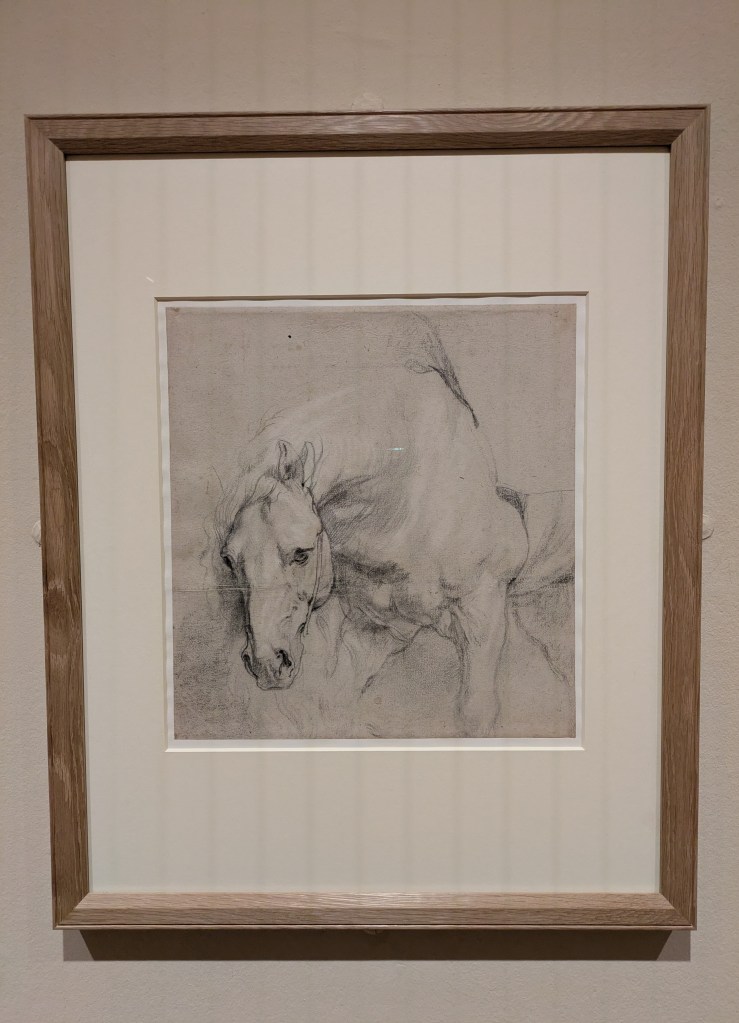
Head and Forequarters of a gray horse by Anthony van Dyck

So much of what we see in drawings feels like a glance into the ‘behind the scenes’ of an artist’s process, whether that is preparatory sketches, studies for prints or tapestries, observations of landscapes, or designs for much larger works. One piece that caught my eye was a beautiful sketch of a horse by Van Dyck. Its head is lowered, its gaze fixed. It appears to be waiting patiently – you can see the fine detail from pulsating veins to strands of its mane. This was a preparatory sketch for the 1618 painting, St Martin Dividing his Cloak, an altarpiece in the Sint-Martinuskerk in Zaventem, Belgium. If you look at them side-by-side, I much prefer the drawing to the fully fledged painting. It is the most immediate art form – far more intimate than a grand oil painting in a heavy gold frame.

Saint Martin Dividing His Cloak, Anthony Van Dyck, 1618

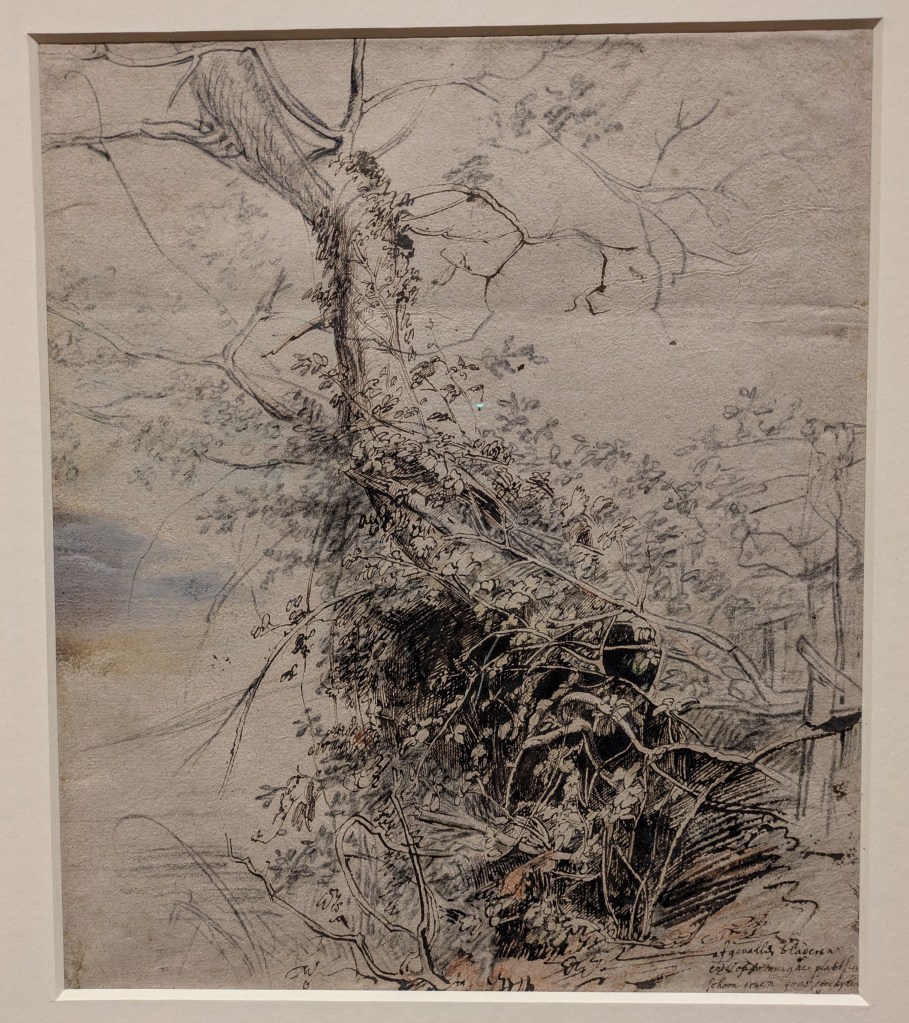
The horse wasn’t what brought tears to my eyes, though. It was this one: ‘A Dying Tree, its Trunk Covered with Brambles, Beside a Fence’, about 1618, by Peter Paul Rubens (though experts are divided as to whether it’s by Rubens or Van Dyck).

‘Dying Tree, its Trunk Covered with Brambles, Beside a Fence’, about 1618, by Peter Paul Rubens

The label explained that the drawing is made with a combination of materials: pen and brown ink; red and black chalk, with greenish-brown watercolour, touches of opaque watercolour and possibly oil paint. As with the horse, the drawing is a study for a larger painting. Rubens’ Landscape with a Boar Hunt, now held at the Gemäldegalerie in Dresden.

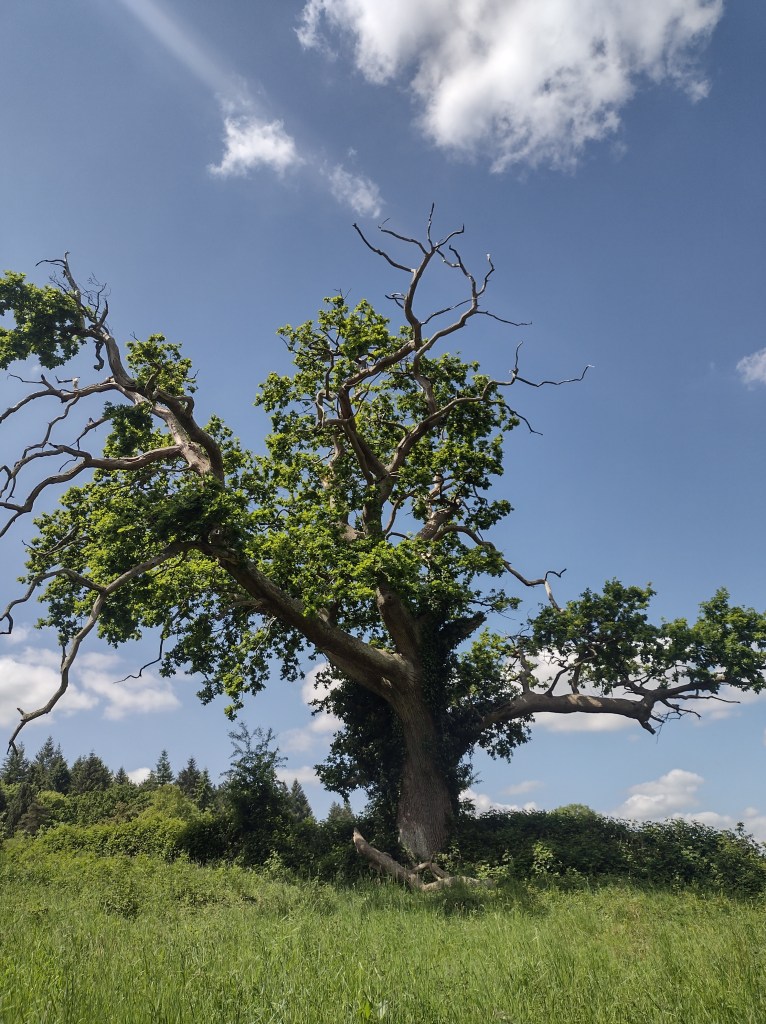
We see a tall, curving trunk of a tree emerging from a dark undergrowth. Its branches are bare, but all around it is covered in leaves, crawling up its spine, embracing it, possibly cradling its inevitable fall. The leaves fade in and out of focus, like a magnifying glass is passing over the surface of the drawing while we look at it. The undergrowth is dense and dark with cross-hatching. It reminded me of an oak tree I developed a fascination with when my mum was dying. While she was in hospital, I’d pass the time at walking near her home, watching the landscape blossom from late spring to the height of summer, this explosion of nature and life totally at odds with the personal turmoil we were experiencing. 

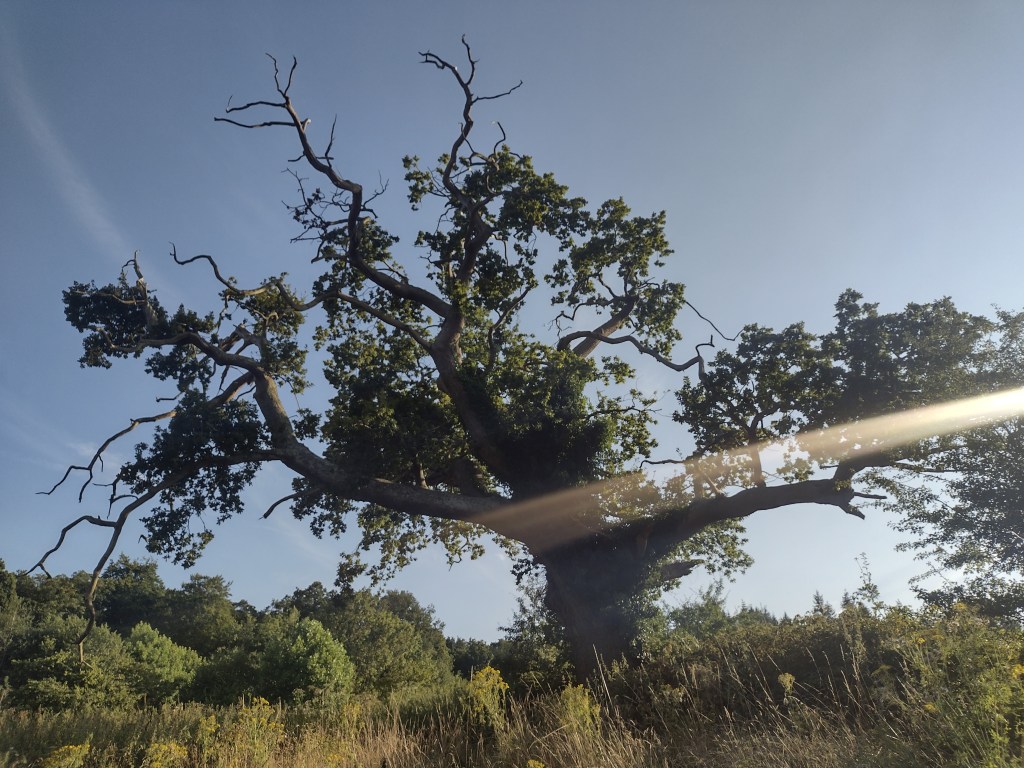
This special tree is a patchwork of life and death. Some branches are spindly and bare, but other parts of it are thriving, covered with masses of green, bright growth, healthy leaves shining in the sun. To this day, whenever I visit my dad, I check on the tree to see how it’s doing. It’s just a short walk from where my mum is buried.

The tree in May 2022

There is something comforting in being reminded that death and life coexist. Nature knows this: the ivy thrives on the branches of a dying tree, and dead wood itself is a great source of shelter for insects and is home to fungi. When a tree dies, the light that reaches down can cause huge spurts of growth on the forest floor beneath. Back in the early 1600s, Rubens took the time to observe this, laboured over it with intense detail to create what is now considered to be one of the greatest nature studies produced in Europe in the 17th century. Little did he know that 400 years later, his study of life and death would bring tears to the eyes of an observer, because it reminded her of someone, something, a time and a place, lodged in memory.

That, ultimately, is the beauty and meaning of art for me: every time you look at a picture, you bring the whole weight of associations of images, places and people you have encountered before along with you. It will mean something unique and distinct to everyone. Sometimes, it might just be a picture. Other times, it might be a whole lot more.

The tree in September 2024 – it’s still living and dying

“It pleases me to stand in silence here” Giorgio Morandi at the Estorick Collection

I was in London last weekend, and with the cultural cul-de-sac of January now over, I was spoilt for choice as to what art to see. Exhibitions including Donatello: Sculpting the Renaissance at the V&A and Alice Neel: Hot Off the Griddle at the Barbican were clamouring for my attention. But instead, I picked a small exhibition at one of London’s ‘secret’ treasures – the Estorick Collection in Islington.

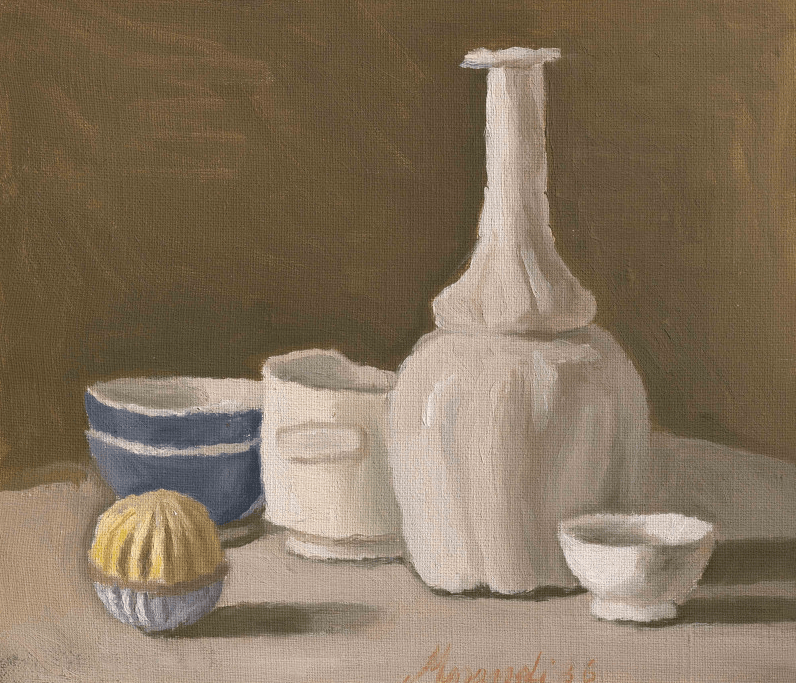
I don’t get art sometimes. Not perhaps the stance you’d immediately associate with someone claiming to be an art blogger. But what I really mean is I don’t always understand why I like what I like. Giorgio Morandi’s work is quiet, steady, pastel-coloured, and consists mainly of still lifes of vases. Writing it now, it doesn’t sound particularly scintillating. Luckily my pal trusted my artistic judgement and, coupled with the fact that that London postcode is particularly strong on post-gallery cake options, we headed along.

Still Life (1936), Giorgio Morandi

For the exhibition, the Estorick Collection has paired up with the Magnani-Rocca Foundation, combining both the Estorick’s own collection of etchings by Morandi, and the Foundation’s more extensive collection of paintings. Magnani was a persistent collector over the course of his and Morandi’s lives, and the letters between them on display in the exhibition provide an interesting insight into the artist-patron relationship.

The exhibition was small, made up of only a few rooms, which allows you to focus on each work in its own time, and I think these sorts of artworks need some time. There they were, lined up in neat rows along the white walls. Morandi’s persistent, almost obsessive, repetitive paintings of vessels. Vases, cups, bottles, all stand in grey and brown and pink arrangements. This should not be that interesting, but somehow I found myself under their slow spell.

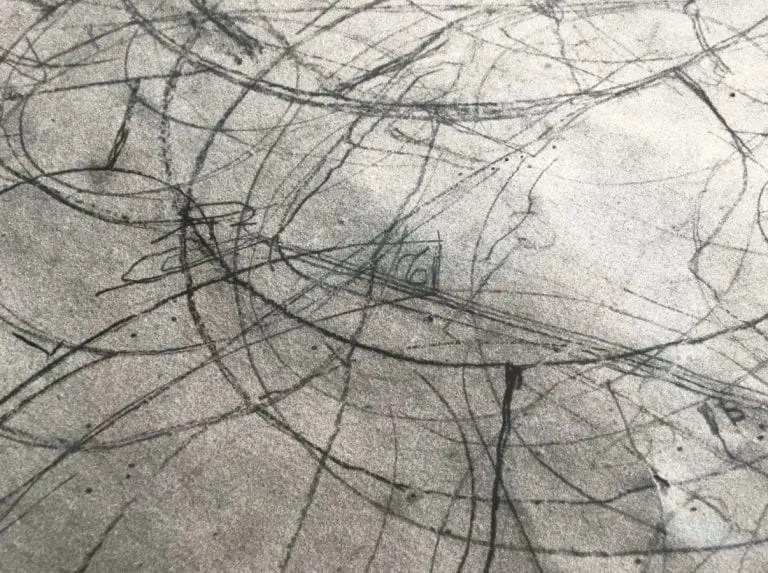
Artists over the decades have been fascinated by Morandi, and while looking at the paintings in front of me, I was reminded of a film, Still Life by Tacita Dean, made in 2009 after she spent time in the Bologna apartment where Morandi lived and worked for over 50 years. The film focuses on the measurements and careful markings found on the paper Morandi placed underneath his objects. These traces have a kind of magic to them, the same magic held by the objects, the empty vessels he returned to again and again.

Still Life (2009), Tacita Dean

I’ve long been a fan of still lifes, and by this, I mean the grand ones from the 17th century that you can find the National Gallery or the Wallace Collection. They are voluptuous, excessive, violent even. Full of reminders of life and death, tables groaning with the excess of food and silverware. Looking at these paintings is a visual treasure hunt, like reading Where’s Wally. Is that a monkey in the corner?

Still Life of Fruit and Vegetables with Two Monkeys (about 1620), Jan Roos

Morandi’s are the opposite. They are sort of dry and dusty. They are objects which hint at a precious use or existence but don’t give much else away. There are no extraneous distractions. It is not the sort of art that ‘performs’ well in the Instagram age, but there is a joy in this stillness. Up close, the objects are scrubby and mottled, the scratches in the paint are plainly obvious. But then, you take a few steps back and they meld and resolve, like a key change from minor to major.

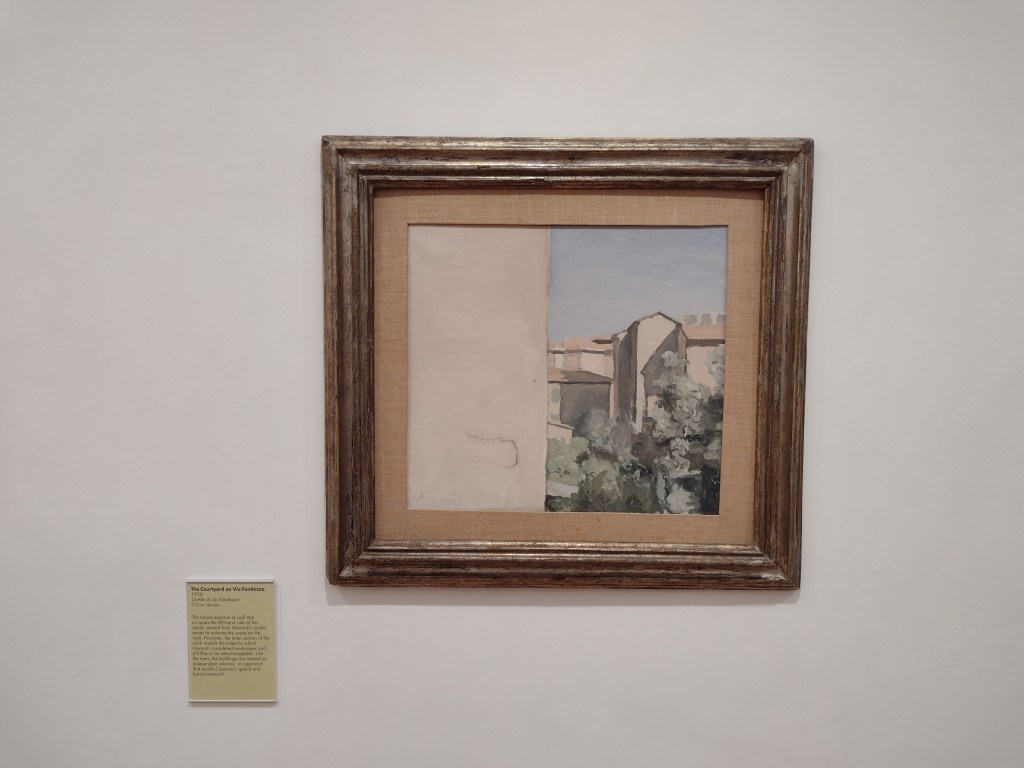
The only photo I took, shows The Courtyard on Via Fondazza (1954), a painting of some buildings and trees next to an enormous blank space on the left, which almost looks like totally untreated canvas, but actually depicts the empty side of a windowless building. It’s the space Morandi gives his subjects that I find satisfying to observe, and the exhibition wall text suggested similarities with Cézanne’s approach to space and form.

The Courtyard on Via Fondazza (1954), Giorgio Morandi

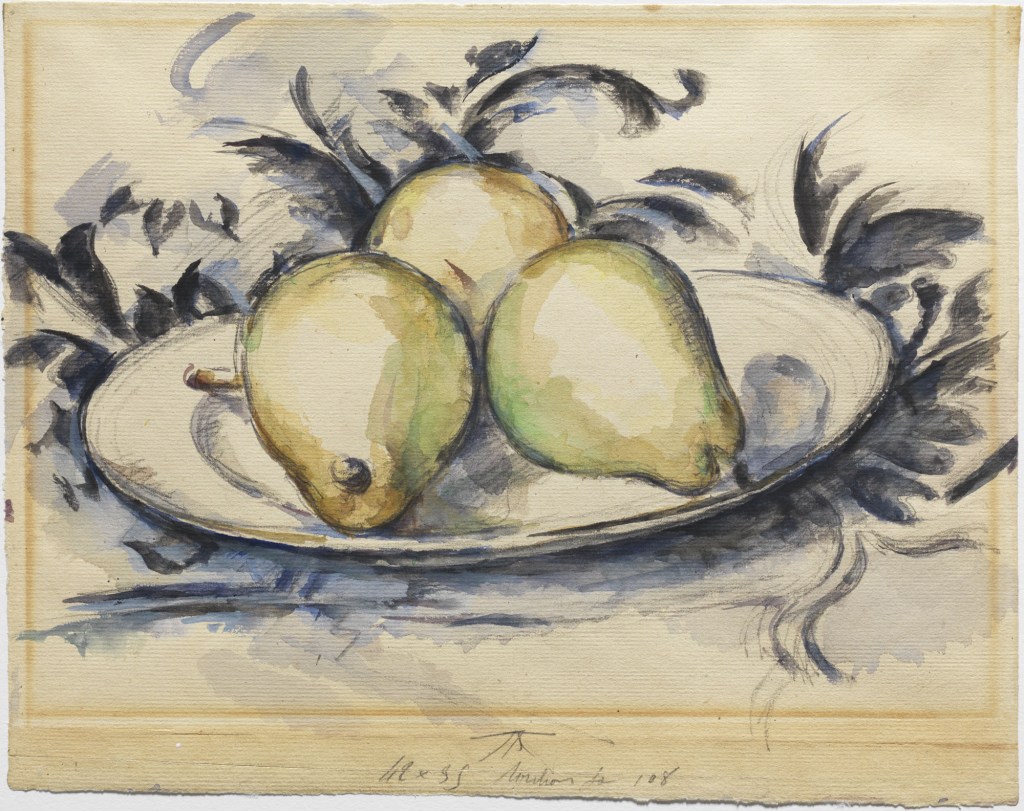
Perhaps this parallel with Cézanne is what endears me to Morandi so much. Years ago, I went to a Cézanne exhibition in Oxford where I bought a postcard of his work Three Pears (1889-90). After the show, a friend of a friend was bemused by it all: “I don’t get it. It’s just pears?”. I didn’t really know what to say. Yes, they are pears. But they are very lovely pears?

Three Pears (1889-90), Paul Cézanne

More and more these days, if I try to interrogate what I like about looking at art, it boils down to how it makes me feel. The feelings lead the way. After a while of walking around the exhibition wondering why Morandi was so obsessed with empty vessels, I decided to stop wondering why and just enjoyed the tranquillity, stillness and peace that looking at these quiet paintings can bring. 

There’s a poem by Philip Larkin my Mum loved called Church Going, where he describes encountering an old abandoned church, and he doesn’t know why, but it means something to him. He says, “it pleases me to stand in silence here”, and that’s what came to mind looking at these small, intimate paintings. Sometimes standing, looking and feeling is enough. No other justifications or explanations necessary.

Art in Edinburgh this spring

After months of closed doors and darkened rooms, museums and galleries are set to begin opening in Scotland from Monday 26 April. Unsurprisingly, I’m excited about the prospect of returning to experiencing art ‘in the flesh’, though lockdown has proven that art can be found everywhere and anywhere, and isn’t confined to the walls of a hushed gallery space.

Over the past year, I’ve had to be more imaginative about what to look at and write about: seeking out artists to highlight each week on Instagram, exploring virtual viewing rooms and reading more art criticism. This unwanted pause on what had seemed a never-ending cycle of exhibitions has, I hope, made the blog less of a diary of exhibition reviews, and more a set of broad suggestions of how we can engage with art.

The more I think about it, the more I realise we’ll have to reacquaint ourselves with how to look at art in person, as the world around us becomes available again in all its glory. How will we prioritise our time? Can we pace ourselves? Will we be overwhelmed, underwhelmed, or just ‘whelmed’? Will our stamina for standing and wandering around galleries be a shadow of its former self?

Contrary to what some might suggest, Edinburgh is alive and buzzing with art all year, so here’s a round-up of some things I’m most looking forward to visiting in person this spring and summer.

Jonathan Owen at Ingleby Gallery: 29 May-17 July

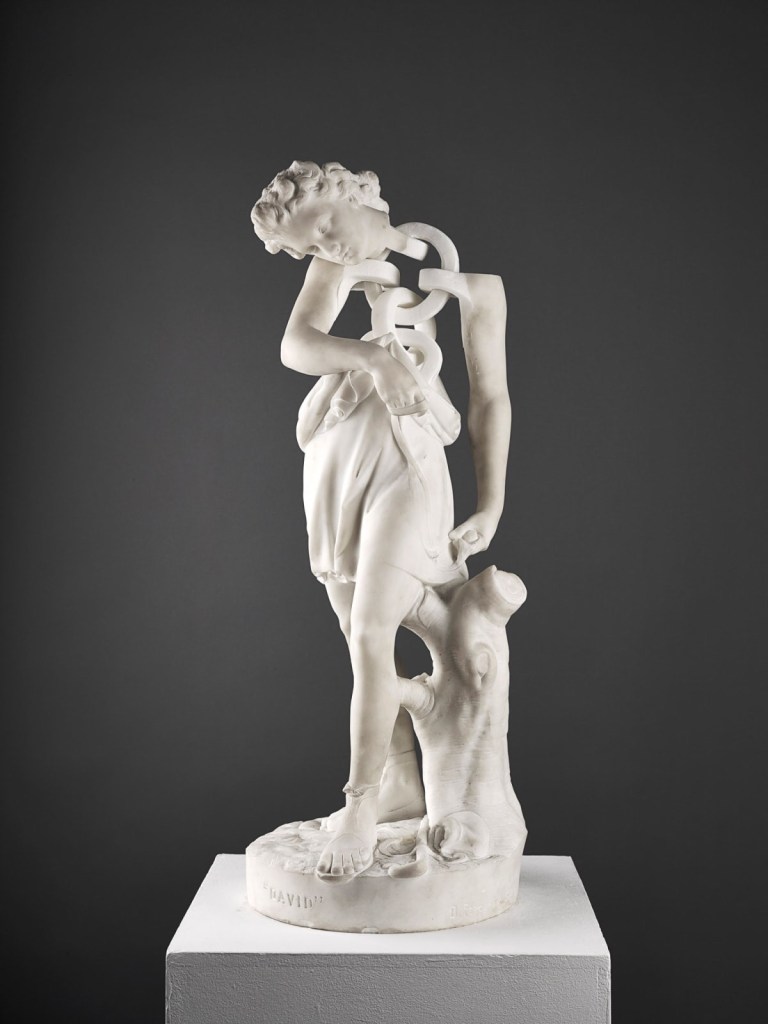
Regular readers will know that I love the Old Masters. That’s where my art journey started (as a child I loved The National Gallery card game). But I also love it when contemporary artists reinterpret traditional forms to say something new e.g. Meekyoung Shin’s slowly eroding soap sculpture of the Duke of Cumberland in Cavendish Square. Jonathan Owen is such an artist. His work uses erasure and interventions to alter found materials, including marble statues. This show at Ingleby Gallery, one of my favourite places to see art in Edinburgh, will feature these altered statues, and will also include the unveiling of a new life-size work about empire and exploitation. I’m sure this exhibition will go straight into the heart of the monument debate and I can’t wait to see these sculptural works in 3D. For me, sculpture is something you have to see in person. The screen just doesn’t cut it.

Jonathan Owen, ‘David’, (2013),
nineteenth century marble figure with further carving

A very interesting rehang at the Scottish National Gallery: Open Thursday-Saturday from 6 May

When I was studying art history at ECA, we were incredibly lucky to get to visit the Scottish National Gallery before opening hours. I remember asking our host, Frances Fowle, Senior Curator of French Art, why some of the most famous paintings are kind of… hard to find in the Gallery. While some people love the fact that you go up a narrow set of stairs and suddenly you’re surprised to be in the company of Van Gogh’s Olive Trees, Monet’s Haystacks and Gaugin’s Vision of the Sermon, apparently lots of folk agreed that they seemed needlessly buried. The latest Friends newsletter explains:

You spoke, we listened. For the re-opening of the Scottish National Gallery we have moved seven of the much-requested Post-Impressionist paintings to a display on the ground floor.

While I doubt this will be a permanent change (the rooms upstairs are probably a much better scale for these works), it will be really wonderful to see these incredible paintings placed front and centre, and I’m fascinated to see how the team at the Galleries will take on this re-hang.

Vincent Van Gogh, ‘Olive Trees’, 1889. Excuse my wonky camerawork.

Fine Art Society Edinburgh, Joan Eardley 6-29 May

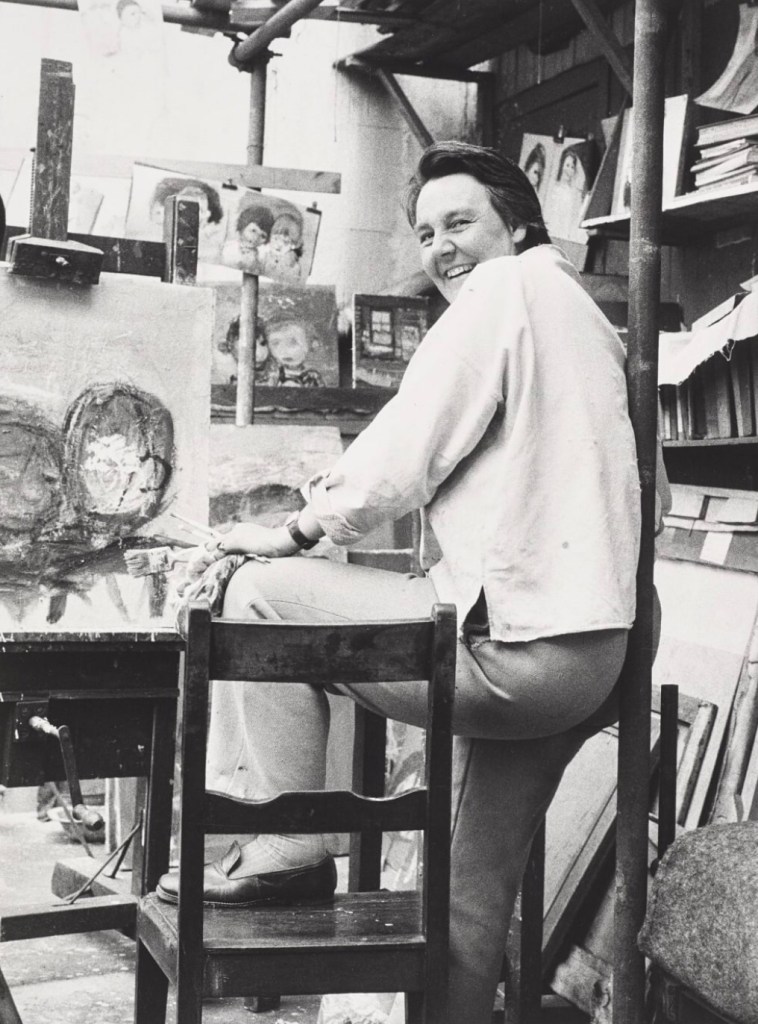
I’ve written about the forthcoming #Eardley100 celebrations before, and am hoping to write about her again several times this year. While the centenary celebrations are happening across Scotland (especially at Paisley Art Museum and the Hunterian in Glasgow), this exhibition at the Fine Art Society on Dundas Street in Edinburgh pairs works by Eardley with photographs of her in her studio. I’ve long been interested in our obsession with artists’ studios (the weird preserved Paolozzi studio at Modern Two is a great example), so I’m really curious to see this combination. It also ticks off a major ambition for me, which is to visit more of the galleries on Dundas Street. From the outside, they aren’t the most welcoming, but to learn more about Eardley, one of the best artists I’ve encountered since moving to Scotland, I’ll brave it.

Oscar Marzaroli ‘Joan Eardley in her Townhead studio’, 1942

Restless Worlds for MANIPULATE Festival: Lyceum, 22 April-2 May

This is why everyone should go to their local art school’s degree show (happening online this year, watch this space). At the ECA Degree Show in 2019, I came across an artist called Chell Young, who works to create miniature worlds that make you feel like you’ve had one of Alice’s EAT ME cupcakes. I’ve followed Chell’s work since, and that’s how I came across Restless Worlds. MANIPULATE Festival has commissioned eight Scottish artists to create kinetic sculptural works, displayed in windows, alongside a short story or soundscape that you download to your phone. While I’m especially looking forward to seeing what Chell has created, the whole project sounds fascinating. In Edinburgh, it is happening in the windows of the Lyceum foyer but there are projects planned for Glasgow and Aberdeen too. More info and tickets here.

Chell Young, ‘Fragile Realities’, part of installation at ECA Degree Show, 2019

Christian Newby at Collective: 13 May-29 August

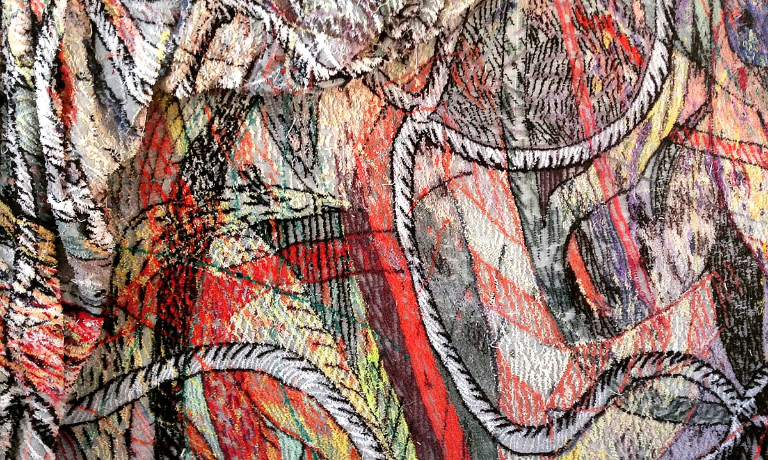
I’m sure lots of Edinburgh residents have braved the climb up Calton Hill for a lockdown walk, just to feel *something*. Well, from early May we will be rewarded with an open-for-business Collective Gallery at the summit. The exhibition they’re emerging from lockdown with is by Christian Newby, and features a large-scale textile called Flower-Necklace-Cargo-Net. This tapestry, made with industrial carpet tufting techniques responds to the building, which originally housed an astronomical telescope. Christian’s work explores ideas of craftsmanship, labour and the use of machinery in the fine and applied arts. I am intrigued by the description and I really want it to be absolutely massive. We all love a large scale work.

Christian Newby, ‘Flower-Necklace-Cargo-Net’ (detail), 2020

There will be so, so much more to talk about and explore, so please consider this an initial scanning of the Edinburgh art horizon. Other things I want to explore further are the Fruitmarket Gallery reopening after its refurbishment, The Normal exhibition at the Talbot Rice Gallery which explores the pandemic, the ECA Degree Show and the Art Festival. I’ll keep my ear to the ground and post more recommendations as and when.

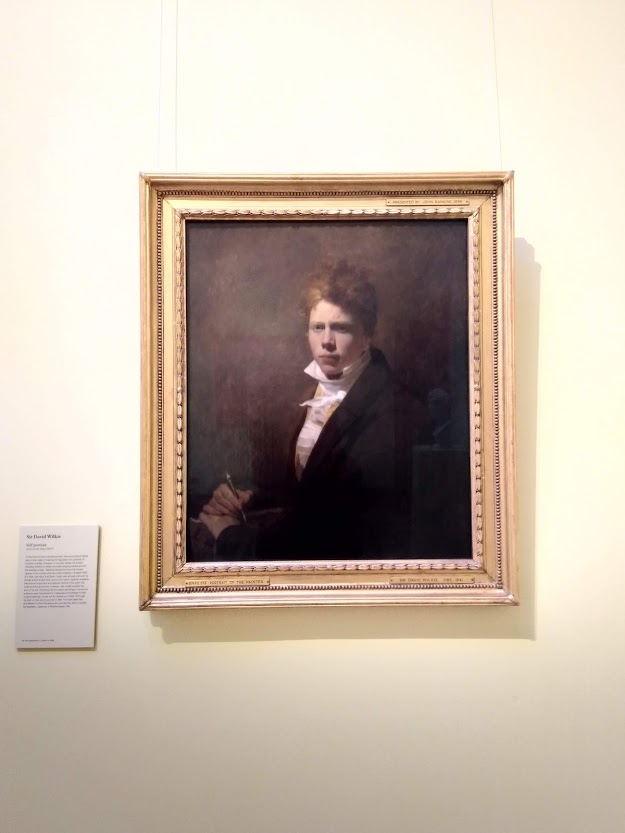
Alongside all that, we can never forget our old favourites. One of my first tasks when the Scottish National Portrait Gallery opens on 30th April is to go and visit my old pals, David Wilkie and Duncan Grant, to check they’ve been OK over the past year.

David Wilkie, Self Portrait, 1804-05

‘Florilegium: A Gathering of Flowers’ at the Royal Botanic Garden, Edinburgh

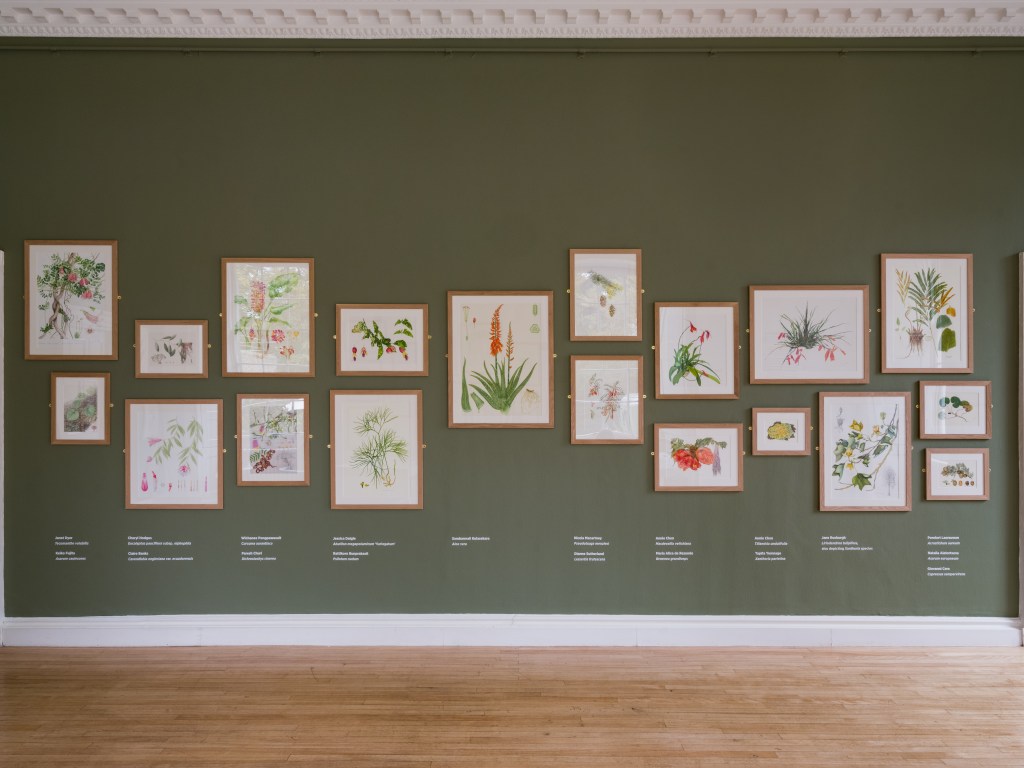
There’s a new, free exhibition in town, at the Botanics. Ever a beautiful place to relieve your Covid-19 cabin fever, to feel the peace of looking at plants and be made to feel small by impossibly tall trees, now you can supplement it with a visit to Florilegium: A Gathering of Flowers. The first exhibition since the RBGE started its Climate House initiative, the exhibition marries what seem to be two very different ways of looking at flowers. 

The first is factual, scientific, research-based. Packed into the first room are depictions of flowers from the Garden’s collections, submitted by botanical illustrators from around the world. I love their precision, the sense that these drawings have been set to view in HD. Glancing at these densely stacked images, their uniform wooden frames fitting perfectly with the olive green of the wall, I’m convinced there would be enough detail here alone to make an entire exhibition. Enhanced by the ikebana style floral displays, it’s what visitors might expect, might hope to see. It’s beautiful, classy, and it’s about flowers. Tick.

Florilegium: a gathering of flowers, installation view. Photo by Tom Nolan

Up the stairs, we’re taken into a somewhat different realm by four contemporary artists, Wendy McMurdo, Lee Mingwei, Annalee Davis and Lyndsay Mann. While the immensely skilled botanical illustrators are concerned with depicting the flower exactly, and in some cases, the pollinators too, the artists upstairs are more concerned with what we cannot see. The emotions and meanings we as humans attach to plants, their embroilment in our colonial past, and the metaphor of life and death a flower provides so effortlessly, are all explored here.

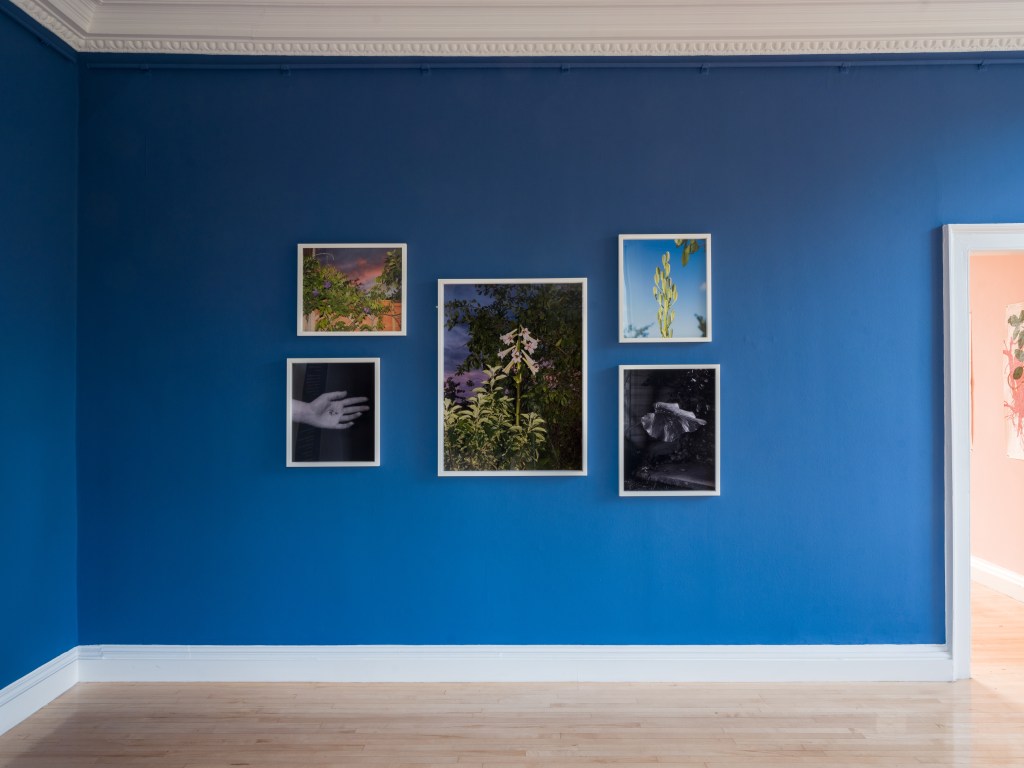
Wendy McMurdo’s photographs from the Indeterminate Objects series from 2019 use gaming software to collapse the blooming/withering lifecycle of a single flower in one vase, an eye-catching narrative that makes you look twice. Her Night Garden series (2020), reflects on how her mother’s ill health and recent death was combined and synchronised with blossoming of a large, mystery, tropical-looking plant in her suburban garden. I loved the uncanny photo of seeds resting in the palm of her hand, which looked to me like the hand itself was punctured, decaying: a wound between the states of hurt and healing.

Wendy McMurdo, ‘Night Garden’, 2020, installation view, photo by Tom Nolan

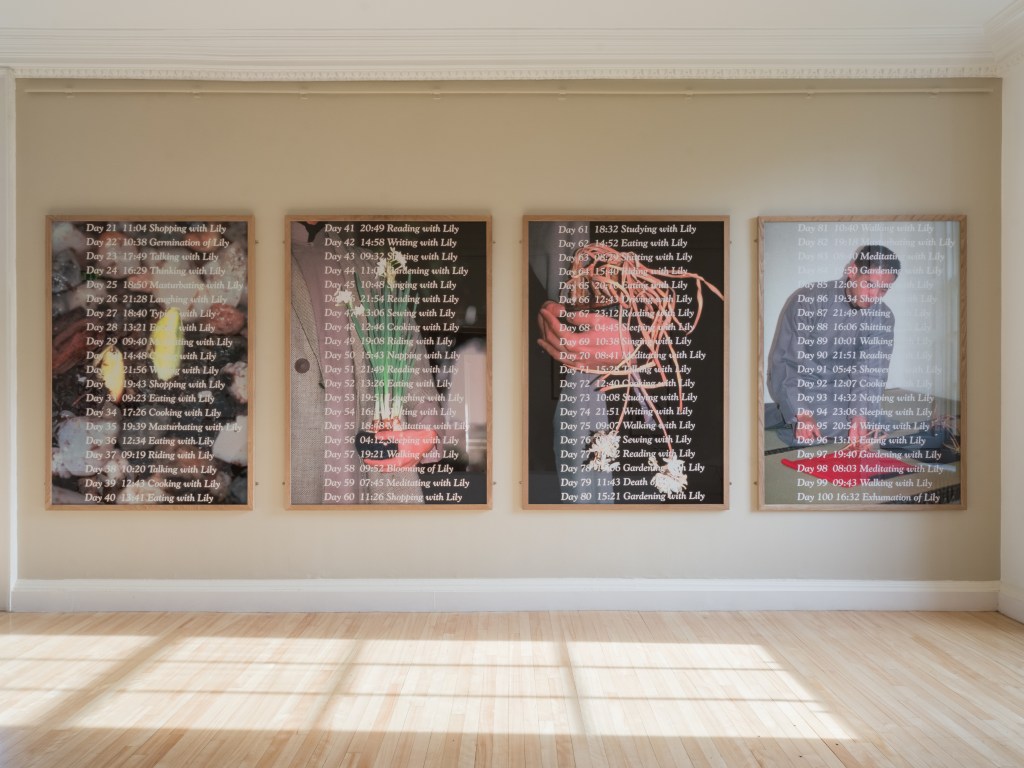
There’s a pleasant chiming here with the work 100 Days with Lily by Lee Mingwei, which documents a performance created back in 1995. His grandmother died, and in mourning he lived with this plant for 100 days, carrying it everywhere. He projects his own grief on to lifecycle of this plant, but the presence of the banal activities of daily life (Eating with Lily, Sleeping with Lily, Shitting with Lily) overwrite and undermine this strange, solemn ritual. For Florilegium, Mingwei has planned a new work called Invitation for Dawn, where opera singers will perform directly to the recipient via live video call. It sounds weird, experimental and intimate, but in a great way. You can participate between 16 November and 11 December, email creativeprogrammes@rbge.co.uk for more details on how to get your ‘gift of song’.

Lee Mingwei, 100 Days With Lily, installation view (photo by Tom Nolan)

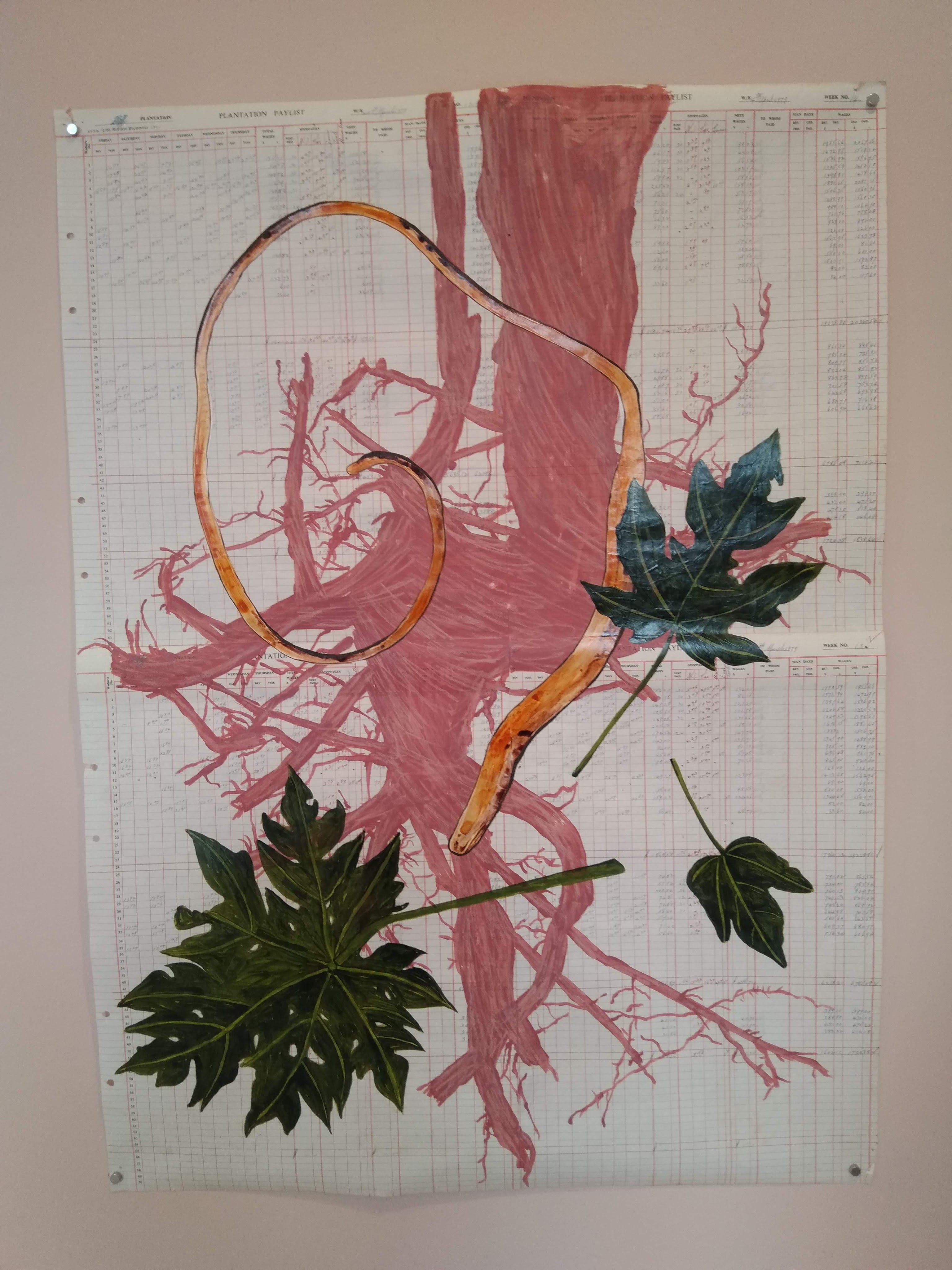
The work of both Annalee Davis and Lyndsay Mann anchors the exhibition in something deeper, bringing the role of the Botanic Garden, the collection of plants, the colonial ecosystem at the heart of RBGE’s existence, into view. Annalee Davis is a Barbadian artist whose studio is situated on what used to be a sugar plantation. Her practice investigates the history of that land, examining the power structures that have been tilled into the soil. Here, her series As If the Entanglements of Our Lives Did Not Matter (2019-20), is casually pinned up on the wall, unframed, unglazed. It immediately felt visceral and direct, denying the formality, poise and stiffness of Inverleith House. Pink, flesh-like depictions of messy clumps of roots are daubed over old payment ledgers from the plantation, which are intriguing, loaded documents in their own right. In a haunting portrait, she places two of her ancestors side by side, who though blood relatives, would have never lived together in reality, separated as they are by race and class. 

Annalee Davis, ‘As if the Entanglements of Our Lives Did Not Matter’ (2019-20), detail

Davis’ art works in dialogue with Lyndsay Mann’s A Desire for Organic Order (2016), a mesmerising film of 55 minutes which explores the RBGE’s Herbarium, where species of preserved plants are kept for study and research. Although most visitors won’t have time watch the film from start to finish, it’s a fascinating piece, which shines a light on the strangeness of it all: the meticulously categorised, catalogued, classified plants, sitting in row upon row of filing cabinets and box files, the collection expanding over the centuries as new species are found and brought to the RBGE, their final resting place. 

The violence surrounding these collections is examined at a distance, with the narrator’s voice dispassionately implying but never quite explaining what we know now, that far more care was given to these foreign plants than to the humans who lived alongside them. If you do have the chance to sit here a while, I’m sure it will make you see the exhibition, and the whole RBGE endeavour, in a slightly different light. You may not think you need this part of your world to be challenged, that you just want to enjoy the Botanics and not think too much about the difficult history and context. But it’s the ability of artists to show things you thought you knew in a new way, that is what makes them so vital to how we think about our past, present and future. That’s why we need the upper floor of the exhibition. We can’t just have a “gathering of flowers”, we need someone to tell us what they mean.

Flower displays at ‘Florilegium: a gathering of flowers’

‘Janet’ by Caroline Walker at Ingleby Gallery

Yesterday I went to see Janet, an exhibition of paintings by Caroline Walker. This was my first Edinburgh gallery visit since March, and it felt great to be back.

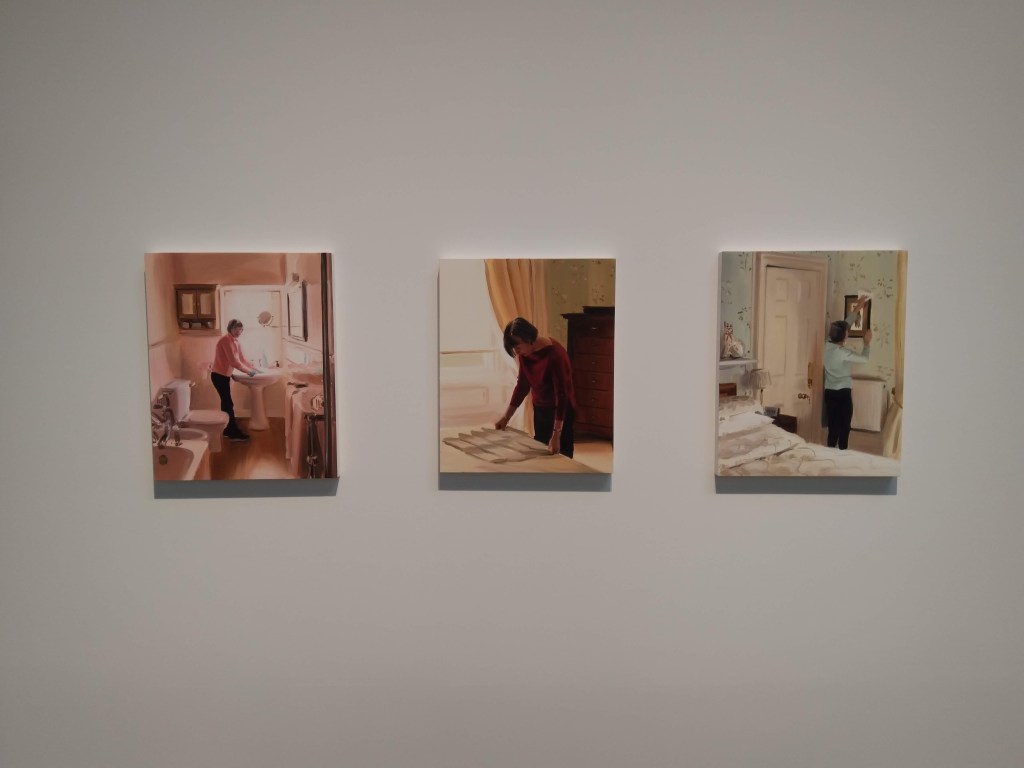
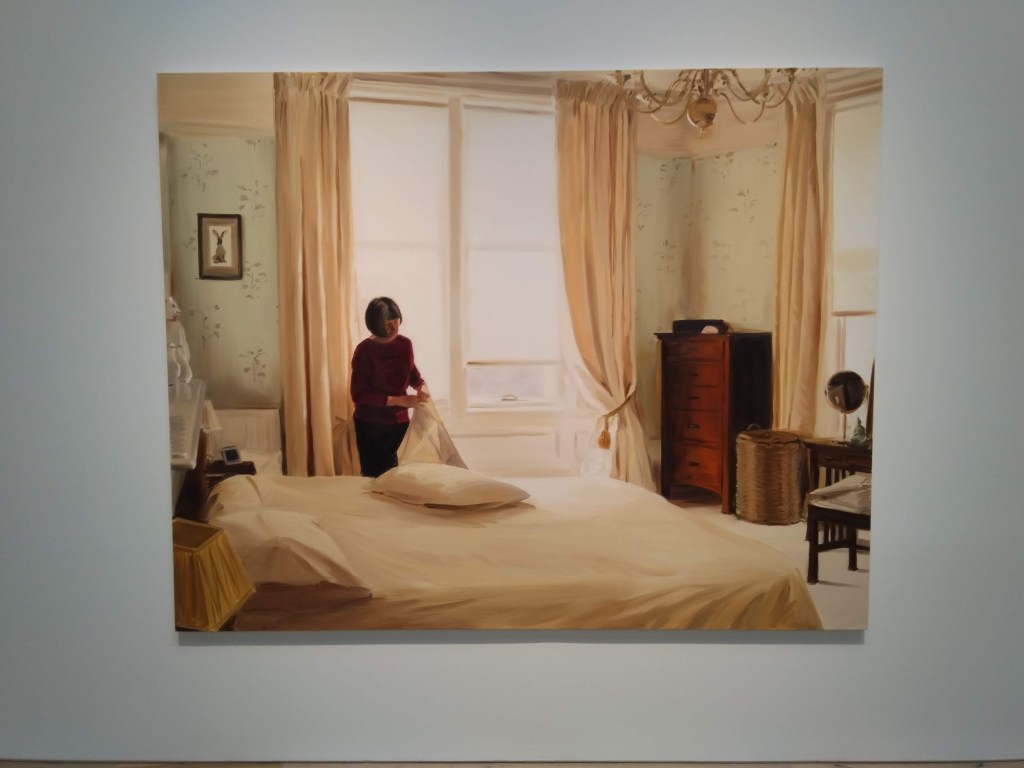
Caroline Walker, (born Dunfermline, Scotland), has created a series of works focusing on her mother, Janet, based entirely in her home. They document her mother moving from room to room, like the evidence of a childhood game. Caroline seemingly goes unnoticed, she spies on her mother, following her as she carries out chores: cleaning, gardening, cooking, dusting. We too, the viewers, spy, follow and peer in unnoticed, and it’s almost surprising when on one canvas, Janet looks straight back at us.

From left to right: ‘Bathroom Sink Cleaning, Mid Morning, March’, (2019), ‘Sizing Pillowcases‘, (2020) and ‘Dusting Pictures, Late Morning, March’, (2019)

These domestic activities are elevated, not dismissed, by the artist. The images are snapshots which combine immediacy of photography with the grandiose detachment of oil paintings. These daily moments are purposeful, meaningful, considered, deliberate.

Changing Pillowcases, Mid Morning, March’, (2020)

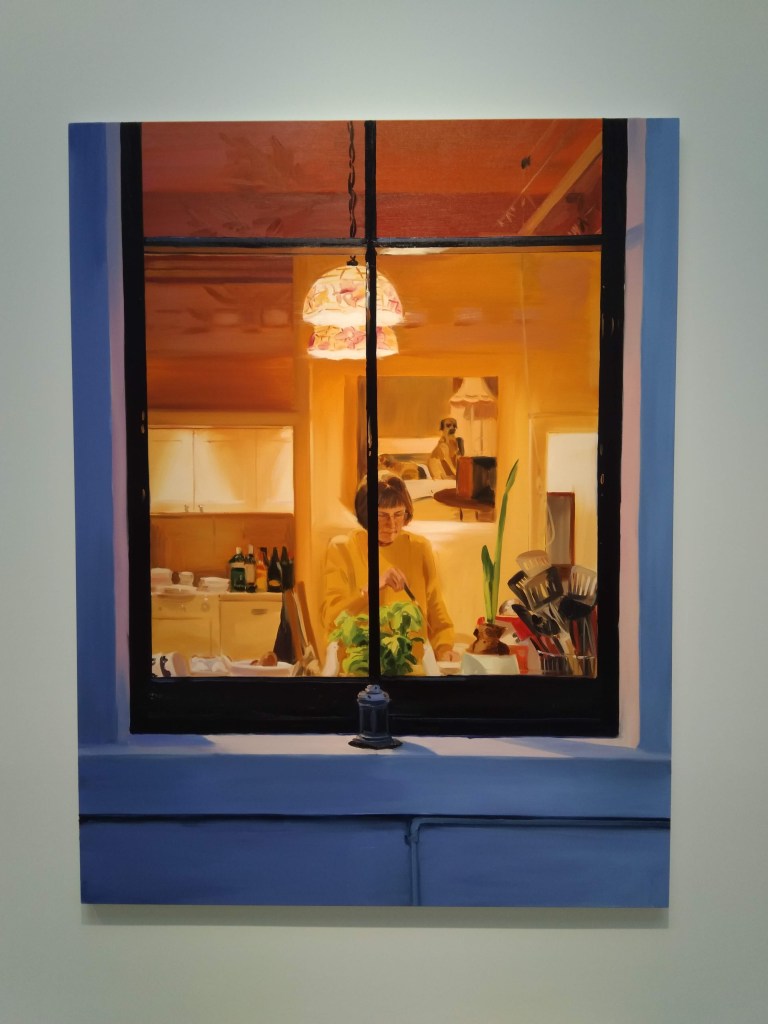
Yet they are also intimate. They capture the feeling of when you’re walking past houses in the winter when it’s dark outside, when you’re thrilled and somehow comforted by the warm glow within, even though you’re outside of that warmth. That feeling is especially captured by the jewel-like light in Making Fishcakes, Late Afternoon, December (2019), and Tucking In, Late Evening, March (2020). I loved looking in, indulging my curiosity. You can tell a lot about someone by what they surround themselves with. Janet likes animals. Janet seemingly also collects egg flips.

Making Fishcakes, Late Afternoon, December‘, (2019)

At Ingleby Gallery, the main exhibition space is on the ground floor, but upstairs in the Feast Room there are works by other artists the gallery represents. It’s like a special extra helping of art you didn’t know you were going to get, and was here where I found my favourite work by Walker, Hemming Pyjamas, Late Morning, December (2020). The darker palette of the room around the painting, the fact that the room itself is more domestic (with sofas and a dining table, albeit very grand), the placement of seeing it from afar as you come up the stairs makes it so utterly convincing and beautiful. Even though Walker paints on linen, which gives an overall matte effect, the warm light shines from the room, reflecting off the chest of drawers, beckoning you in.

‘Hemming Pyjamas, Late Morning, December’, (2020)

This is a wonderful show about light, home, warmth, the intimacy of people doing normal things. It’s what we want our homes to be, there’s a serenity about these paintings, a peace I’d like to carry with me into the next few months of winter at home.

Janet by Caroline Walker is on at Ingleby Gallery until 19th December, they are open Wednesday-Saturday, 11am-5pm. The exhibition is free but you need to book a timed slot via the website.

My two-year-old nephew taught me how to look at art after lockdown

Last week I spent a really nice chunk of time hanging out with the youngest member of my family. My nephew is two and he’s great company. He’s how I want to be: curious, reflective, eager for fun and a sponge for new information. With his wide-eyed wonderment, he has taught me how to look at art again after a long, enforced break (otherwise known as lockdown).

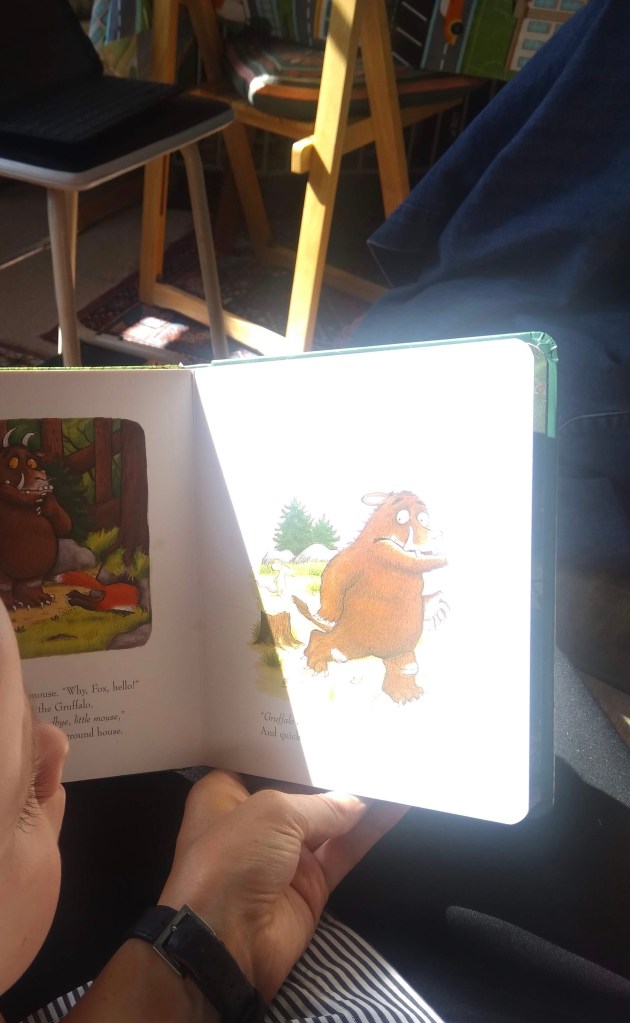
We read books together and looked at the pictures (me reading, both of us looking). Illustration is amazing, and I think a severely underrated form of art. I’m extremely lucky that in my day job, I interact with children’s books on a regular basis. Children’s books are some of the most accessible, universally loved and widely appreciated ways we experience art. The stories fascinate us, but the images are what portray and communicate the joy and terror of the narratives to young minds who cannot yet read or form sentences themselves. Fearfully gazing at the Gruffalo’s long black tongue and terrible teeth, or admiring the crisp and clear (read Scandi) aesthetic in Jon Klassen’s I Want My Hat Back, we carry the pictures with us long after the words have faded from memory.

Some of the most memorable books from my childhood were about looking at details. I was raised on books by Janet and Allan Ahlberg, searching for the characters and minuscule, meticulously written lost letters in The Jolly Postman was my delight. Later, The Most Amazing Night Book by Robert Crowther was my favourite. My nephew is also seemingly enthralled by the details. His favourite thing to do is to ask “Who’s dat?”, pointing excitedly at tiny ladybirds, trees, rocks, main characters, random piles of hay, clothes and anything else that catches his eye. Anyone who has interacted with children regularly will tell you they are incredibly perceptive and observant. Sometimes surprisingly so. They can see and sense things adults can’t.

A household favourite: The Gruffalo by Julia Donaldson, illustrated by Axel Scheffler

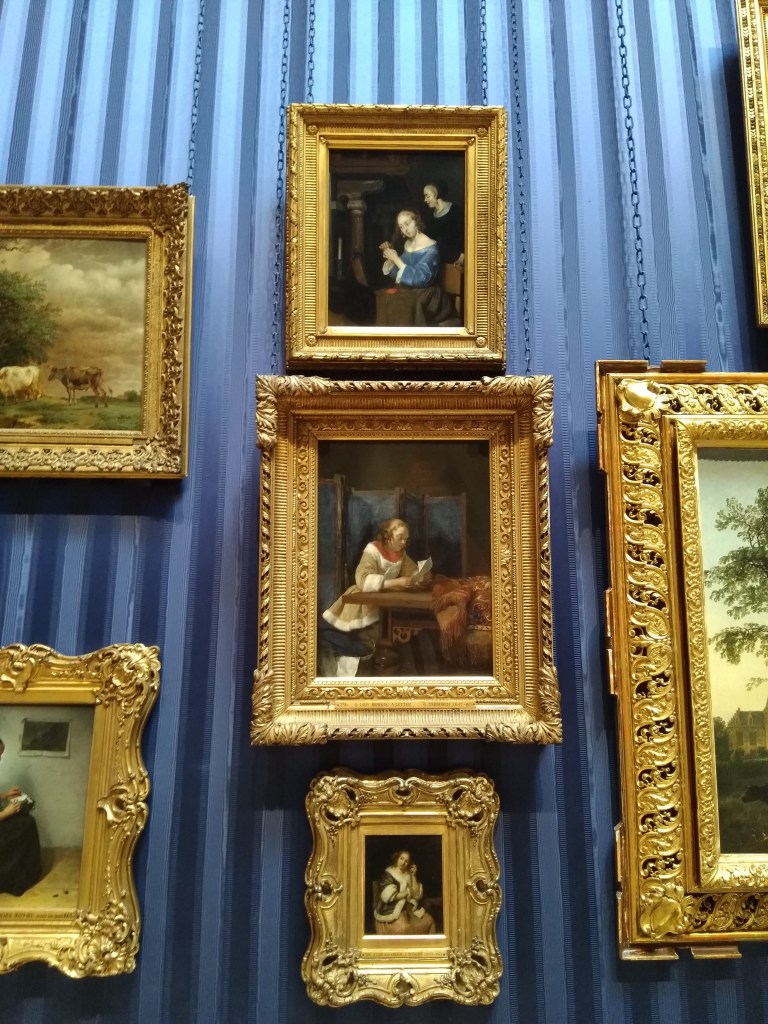
Last week, along with hanging out with my family I also went to a gallery for the first time in six months. After trawling the internet and realising most places in London had been booked out long before by far better-organised art lovers, I managed to get a midday slot at the Wallace Collection, one of my favourite places to see art, as well as admire luxurious furnishing (and pretend I’m part of eighteenth century aristocracy). I would probably go to see the silk wall hangings alone.

Blue wall silks and golden frames in a dense salon hang

I was so happy to have a slot, but despite really friendly staff and the safety measures that had been introduced, it wasn’t the most relaxing experience. It was a pressing reminder that we’re all still working through the anxieties this pandemic has produced. That the new normal isn’t going to be as good as the old normal for quite a while.

A one way system was in place and there were capacity limits on all of the rooms on the route, which created the slightly unpleasant feeling of being on a conveyor belt. Somewhat obliged to wait for those in front without pressuring them, but not wanting to take too long, disrupt the flow or be left behind, stuck in a swirling eddy without being able to rejoin the main current of my fellow gallery-goers. Not the best atmosphere for being absorbed by and for absorbing art.

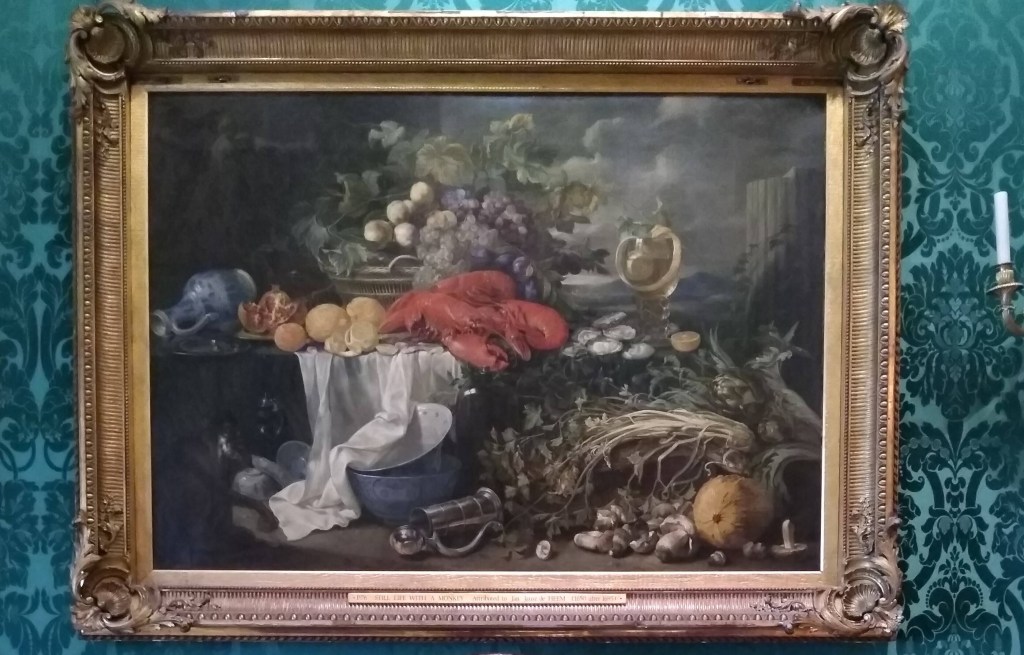
I spent the first part of my visit worrying about the choreography of my movements between my fellow observers, concerned I was getting too close, getting mildly annoyed with pushy people behind me. But then I saw an oil painting, Still Life With A Monkey, attributed to Jan Jansz de Heem (c.1670-95), that made me stop in my tracks. I thought about my nephew, how much he would love looking at the cornucopia of riches in the painting and examining all the elements, individually interrogating their form and purpose. I stepped off the conveyor belt and just looked.

Still Life With A Monkey, attributed to Jan Jansz de Heem (1670-95)

The spiral of lemon peel, the oysters, the mushrooms scattered on the table, the oozing pomegranate, the jug on its side, the tankard on its side, the bright white cloth, the monkey?! This kind of artwork demands your time, forces your eye to wander. We understand that still life paintings are often laced with double or even triple meanings (broken column = transitory nature of human life), but just looking at the surface level composition of what is there, without any further knowledge of iconography or semantics, is a pleasure in itself. The brightness of the lobster, the chaos and excess of it all, the way the food packs 7/8ths of the entire canvas, the needlessly dramatic sky behind. The above is my photo taken on the day, but there’s a brighter, slightly yellowy version of the painting here if you want to look more closely at the details.
Much of what drives my blog and my Instagram is a need and a wish to celebrate the everyday, to encourage others to read the notes in the margins, to slow down and enjoy colours and contrasts, patterns, eccentricities, particularly of city life. We can apply this attitude to great paintings in grand houses too. We think we know still life paintings. I imagine they’re the paintings most readily walked past without so much as a second glance because they are rarely super-famous showstoppers — but let’s take this opportunity to recognise how very bizarre and beautiful they are.

When we return to art galleries, they might not be the same as they were. But if we remember to approach art with curiosity, to take time, and notice the details, even if we haven’t got the brain space to work out what they mean, they can bring us both joy and a little peace. As from now, I’ll be adopting the “Who’s dat?” philosophy of close looking. That’s how I want to return to engaging with art as lockdown lifts. I’ll encourage you to do the same, but if you’re not feeling ready just yet, you can always start with The Gruffalo.

Art in lockdown: The Hermitage, St Petersburg

Each week for the past month, I’ve been going to Russia. To the State Hermitage Museum in St Petersburg, specifically. A close friend and I have been watching something we wouldn’t have considered engaging with before lockdown: a five-hour iPhone 11 advert, which explores the museum in an extraordinary way.

Even in lockdown, five hours is a bit too long. It’s far longer than I would be able to spend in a museum before fatigue, overwhelm and “museum back” set in. So we watched it in bite-size chunks. It became a little ritual. Every Tuesday at 9pm we would call each other, and press play at the same time to experience the tour together. It sounds bizarre, but it’s one of my favourite ways I’ve experienced art in lockdown.

The tour is meticulously curated. It is in one take, but isn’t a film that simply drifts past the museum’s many artworks (there are three million objects in the collection, including paintings, sculptures, textiles, porcelain, jewels, armour, coins, etc., so we only see a snapshot). This is a focussed journey that pays attention to the architecture and the interiors of the building. Dancers, actors and musicians all feature. They activate the space in vast corridors and lavish rooms, enliven the collection, and act as ciphers for our own bodies which, in normal circumstances, could be travelling through the rooms, pacing the floors, gazing at the ceilings.

I’ve long enjoyed watching people engaging with art: imagining what they’re thinking, and wondering why certain artworks speak to some people but not to others. My friend and I were now observing a false version of this in private and at a distance. We discussed the characters’ hair and clothes, speculated about their relationships with each other, puzzled over what the experience of making a film in an otherwise empty national museum, on the precipice of a global pandemic might have been like.

Gossiping with my friend, analysing what we were seeing together, was one of the best parts of the experience, making the surreal normal, as if we were actually touring a museum together. The mutuality of it, my friend watching in London and me in Edinburgh, spurred us on, and time slipped away quickly. Sometimes, the film became the backdrop to our conservation, sometimes we just watched and our words left us.

The physicality of the camera moving through rooms, doubling back, going in circles, helped make the experience lifelike. We commented on different works we liked, we discussed the merits of the decor (she hated the white curtains), I tried to show off some biblical knowledge to help interpret some of the Christian paintings, to varying degrees of success. There were moments when I craved a few clues about the paintings’ narratives, who made them, their titles – without explanation or context, lots of artworks are VERY weird and tricky to interpret – but providing additional information on screen would have made it too educational. The experience was more about wonder than learning.

The Garden of Earthly Delights prior to ultra zoom

The entire film is shot on iPhone 11, which is where the advert side comes in. The detail it captures is really extraordinary. The ultra zoom is one of my favourite digital tools through which we can experience art differently. Our capacity to see intricate close-ups of paintings is mind-blowing, and something to be celebrated. Zooming in on The Garden of Earthly Delights by a follower of Hieronymus Bosch (1556-1568?) – the original is in the Prado in Madrid – we could see more clearly than had we been standing before it. There are people cavorting on/with animals, giant birds, bodies inside clam shells, people with flowers sprouting from their bums, fruit the size of humans. If you want to pick three minutes of the whole thing to watch, this carnival of a painting features from 1:09-1:12.

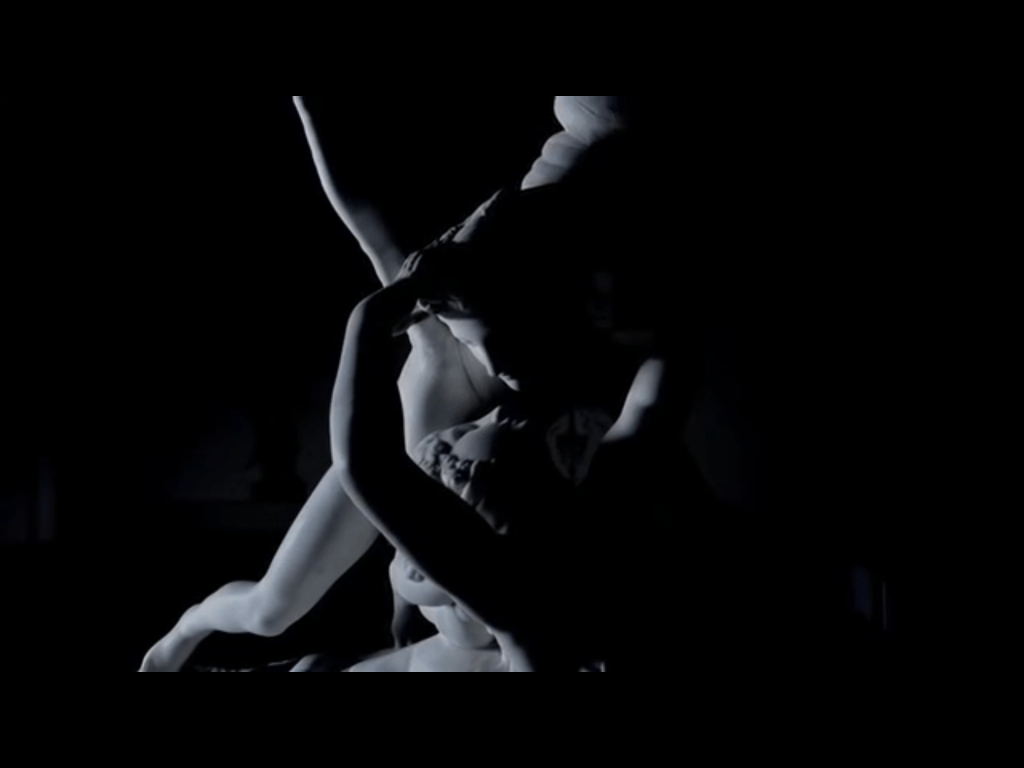
The Hermitage film played with light in interesting ways which warped time, creating uncertainty over whether it was day or night. Towards the end the use of a white torch light on white marble sculptures plunged everything else into darkness, and we were floating in a monochrome world.

Marble sculptures floating in a monochrome world

The museum at night is a creepy, exciting prospect, and one the film makes use of. There were several allusions to the presence of history, and the ghosts that live within its very walls. After all, it is a building which began as a private palace, its first collections were amassed by Catherine the Great in the 18th century. It has ridden the waves of Russian/Soviet/global history since then: wars, revolutions, political regimes, the Siege of Leningrad, and this pandemic. That it is still here today, for us to enjoy, even only as digital ghosts from a distance, is something we can all take comfort in.

‘National Gallery, London’, by Jean-François Rauzier (2018)

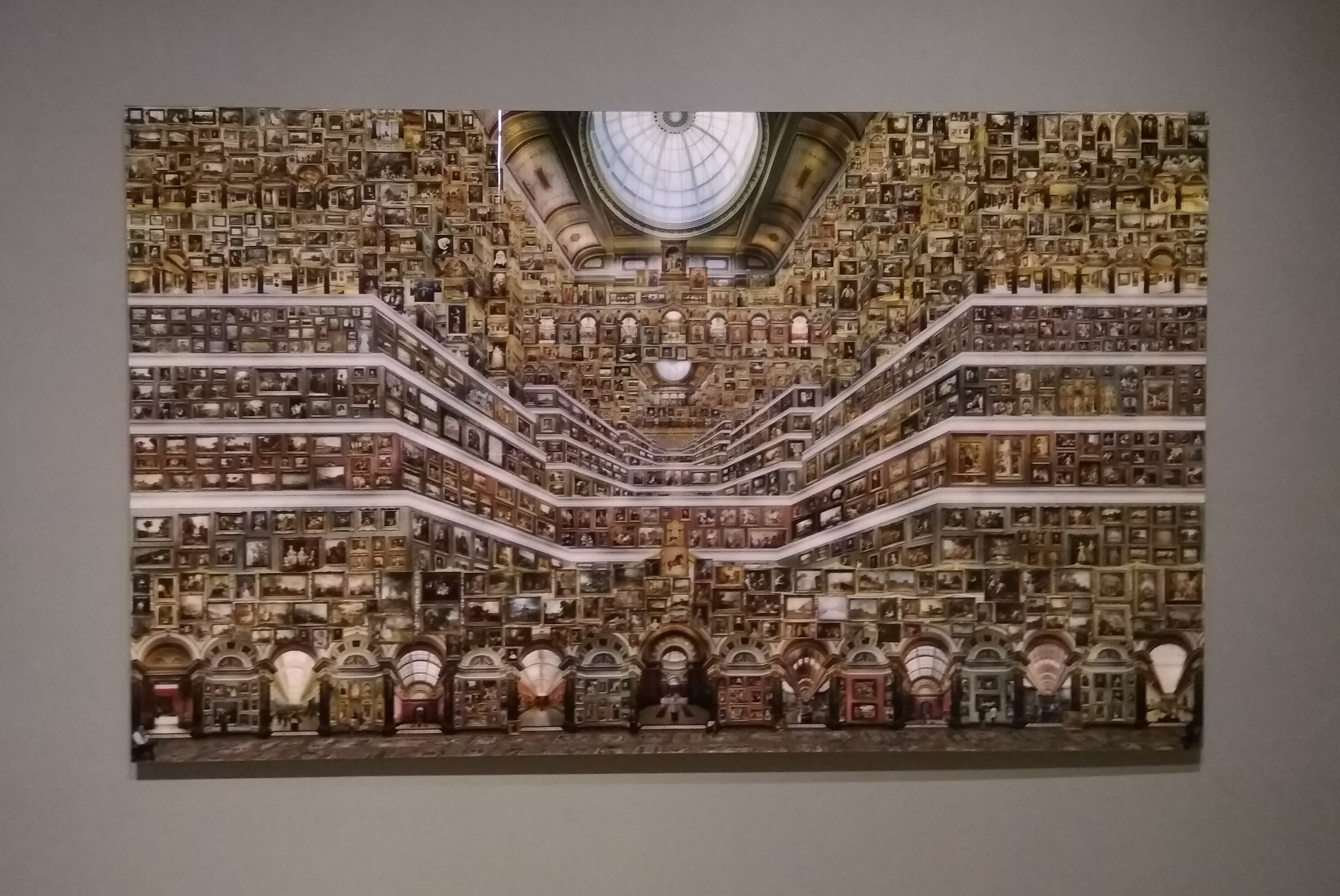
I keep on thinking about a remarkable work I saw as part of Cut and Paste: 400 Years of Collage at the Modern last week, which I didn’t include in my review. The work was made in 2018 by Jean-Francois Rauzier (b.1952) and is called National Gallery, London.

At this stage I will admit that I may have been predisposed to think favourably of the piece. I worked at National Gallery for around four years, and the bonds I form with places dear to me don’t tend to fade away casually. This work recreates some of the place’s grandeur, its abundance, then mashes it up and reimagines it in the most striking way.

Familiar architecture, reimagined

The composition is made up of thousands of different photos of the National Gallery, with around 3000 works from the collection digitally stitched together (hence being part of the ‘Cut and Paste’ narrative). The National Gallery’s architecture has been futuristically transposed, its famous long vistas and arches lined up across the base of the work, while the broad white borders that cut horizontally across the centre give the impression of a multi-storey building, packed to the rafters with paintings in a dizzying salon hang.

National Gallery, London is one of Rauzier’s “Hyperphotos”, which he began creating in 2002 and which combine the feeling of a panorama with microscopic detail. While it may not be evident from my own photographs of the work, snapped during an exhibition visit, each painting is reproduced with pinpoint accuracy, astounding detail and clarity. Getting up close to the work, the viewer can pick out any number of famous, recognisable and well-loved paintings. For me, finding some of my old favourites was like searching for the faces of long lost friends in a crowd.

I found George Stubbs’ Whistlejacket (1762), a painting I loved as a child, taking pride of place in the centre.

One of the special things about the National Gallery is that in the action of walking through its rooms, the visitor goes on a pretty comprehensive journey through the history of Western European painting from c.1250-c.1930. Within that broad narrative, each painting tells an individual story, and captures something of its own historical moment. With the help of wall texts, written by curators and educators, we as viewers use clues to decipher that story, such as the subject matter, the style in which it is painted, the life of the artist, or through the artwork’s history as an object itself (who it was painted for, who has owned it throughout the centuries).

Even though I am lucky enough to be familiar with some of the works photographed by Rauzier, I felt as though I needed hours, if not days, to look properly at this artwork and the paintings contained within it, just as when you visit an art gallery you know it won’t be possible to absorb everything before what a friend of mine calls “museum back” kicks in and you need to sit down in the cafe.

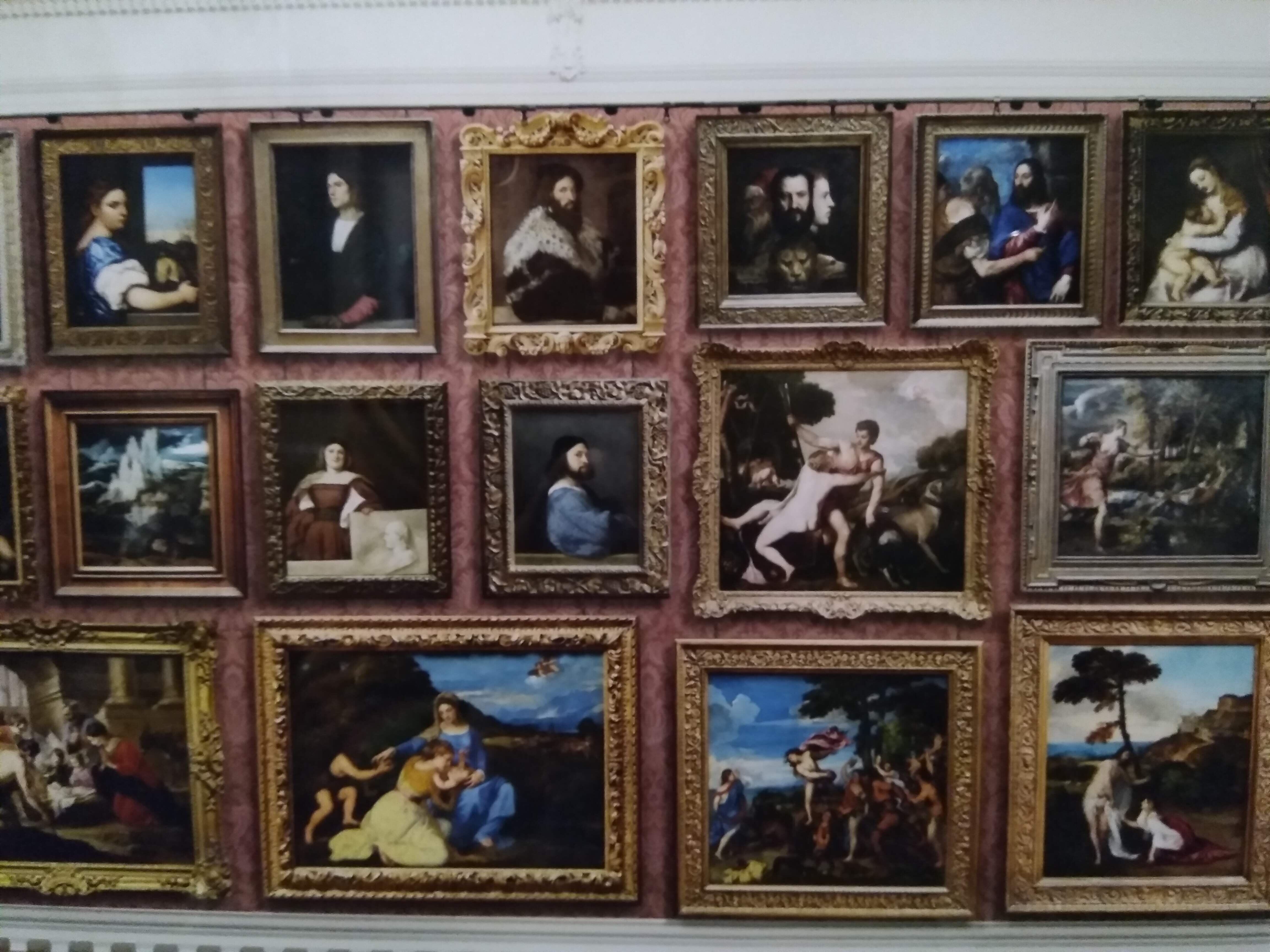
A wall of paintings by Titian (1490-1576). What’s not to love?

There is so much life packed into every single artwork, and the more you learn about the history of art, the more remarkable it is that here, Rauzier has piled a major chunk of that sumptuous and fascinating history into one single work, exercising his own curatorial and architectural choices along the way. He tells the story in way that would almost be legible in one glance, were it not for the sheer weight of all that’s packed into it.

As individuals, we create and take our own meanings from artworks, and our experience of art is informed by our own stories, which is certainly one of the reasons why I found this work by Rauzier so fascinating, and why I know I’ll keep finding things to say about it even after I’ve hit the ‘publish’ button for this blog post. Whether or not you are interested in art history, it is impossible to deny that Rauzier’s futuristic retelling of it is a visual feast, albeit an overwhelming one that is impossible to finish in one sitting.

Ivon Hitchens, Pallant House Gallery, Chichester

I’ve been meaning for a while now to write about a lovely, focused exhibition I saw at the Pallant House Gallery in Chichester last week. I’d never been to the gallery before, and unfortunately I didn’t have enough time to explore its permanent collection, which is based around modern and contemporary British art – I’m looking forward to exploring that the next time I go.

So many important creative people of the twentieth century, including members of the Bloomsbury Group, the poet Edward Thomas and visual artists like Eric Ravilious, seem to have been drawn to spend time in Sussex at some point in their lives, so it makes sense that this Sussex gallery represents some of the most important artistic developments of the last century. While Ivon Hitchens (who I hadn’t heard of before seeing the show) isn’t someone who rewrote the rulebook of modern art, his work shows a talent for noticing and capturing the remarkable detail within the big picture, the abstract patterns he experimented with in his early career continuing playing a major part in the landscapes he is primarily known for today.

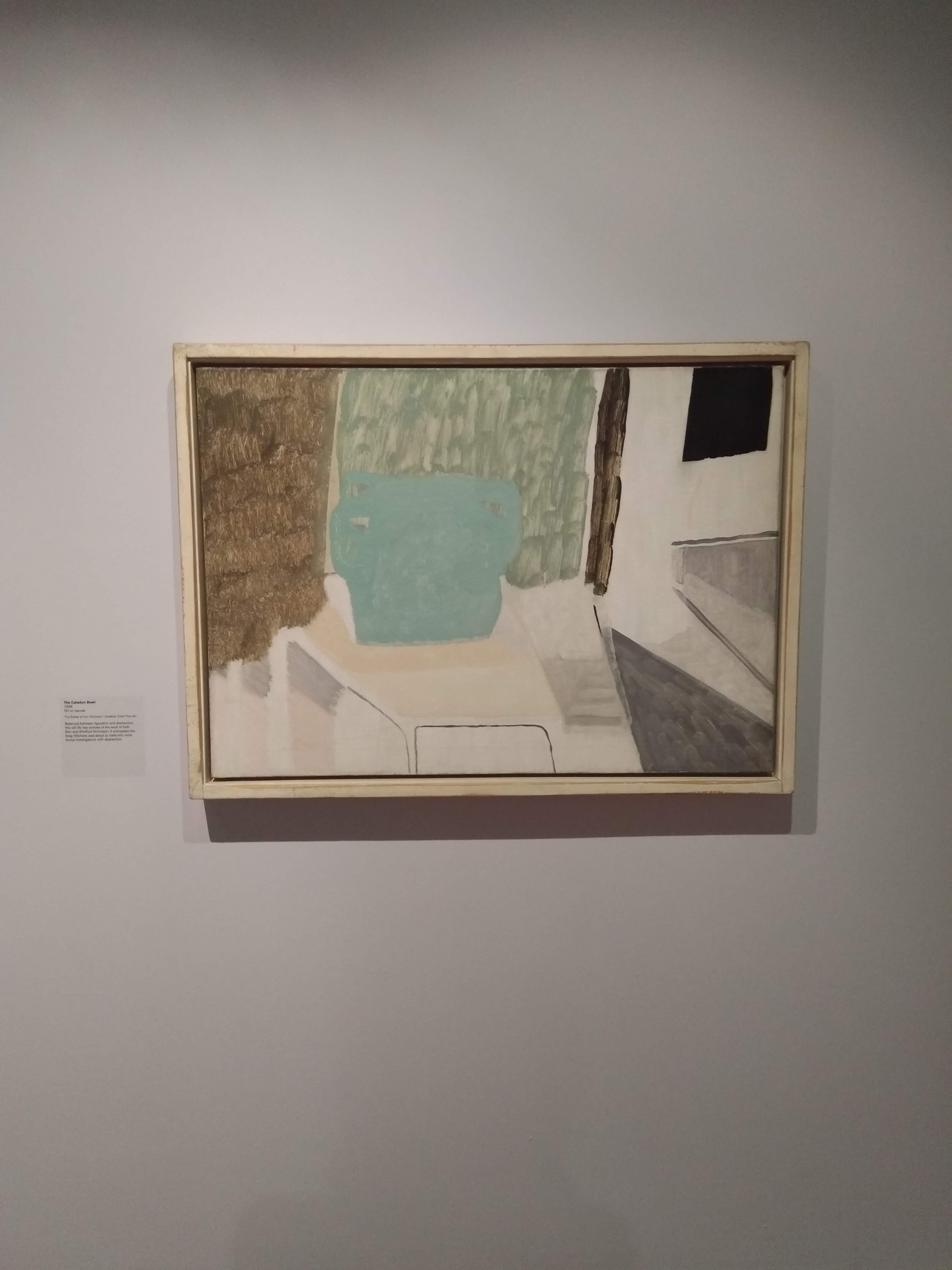
The Celadon Bowl (1936)

Some of my favourite of his works were early ones like The Celadon Bowl (1936), in the way that it delicately treads the line between abstraction and figuration, the scrubby brushstrokes of the teal and khaki squares in the backdrop adding texture to the plain white canvas. In a sketchbook annotation, he wrote “don’t try to find a picture. Find a place you like and discover the picture in that”, which is true of every setting he painted, interior and exterior.

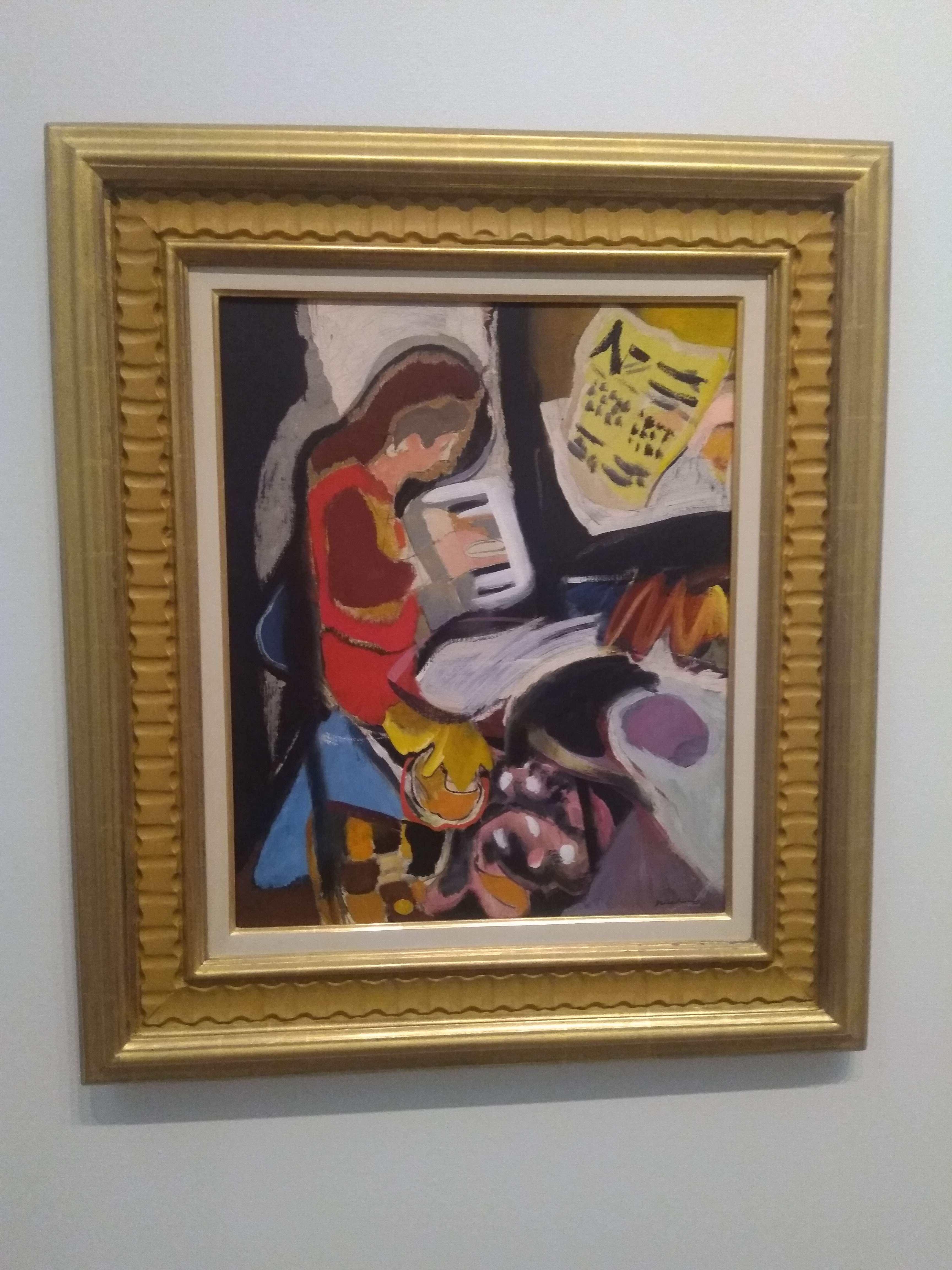
Woman playing the piano, c.(1942)

He left London during the war, and lived in a caravan called Greenleaves with his wife and their baby, set in a forest clearing. Living in the heart of the countryside clearly gave Hitchens more than enough subject matter for his art, and he set about painting the landscape, not focusing on grand vistas, but on his favourite spots that he visited repeatedly, capturing the view in different seasons and at times of day.

I love the Sussex countryside and have enjoyed walking on the South Downs, in the woods and by the rivers that Hitchens lived alongside, and so I may be biased, but I found his landscapes very evocative and able to capture the magic of the place. Perhaps there’s something in the water that makes it special.

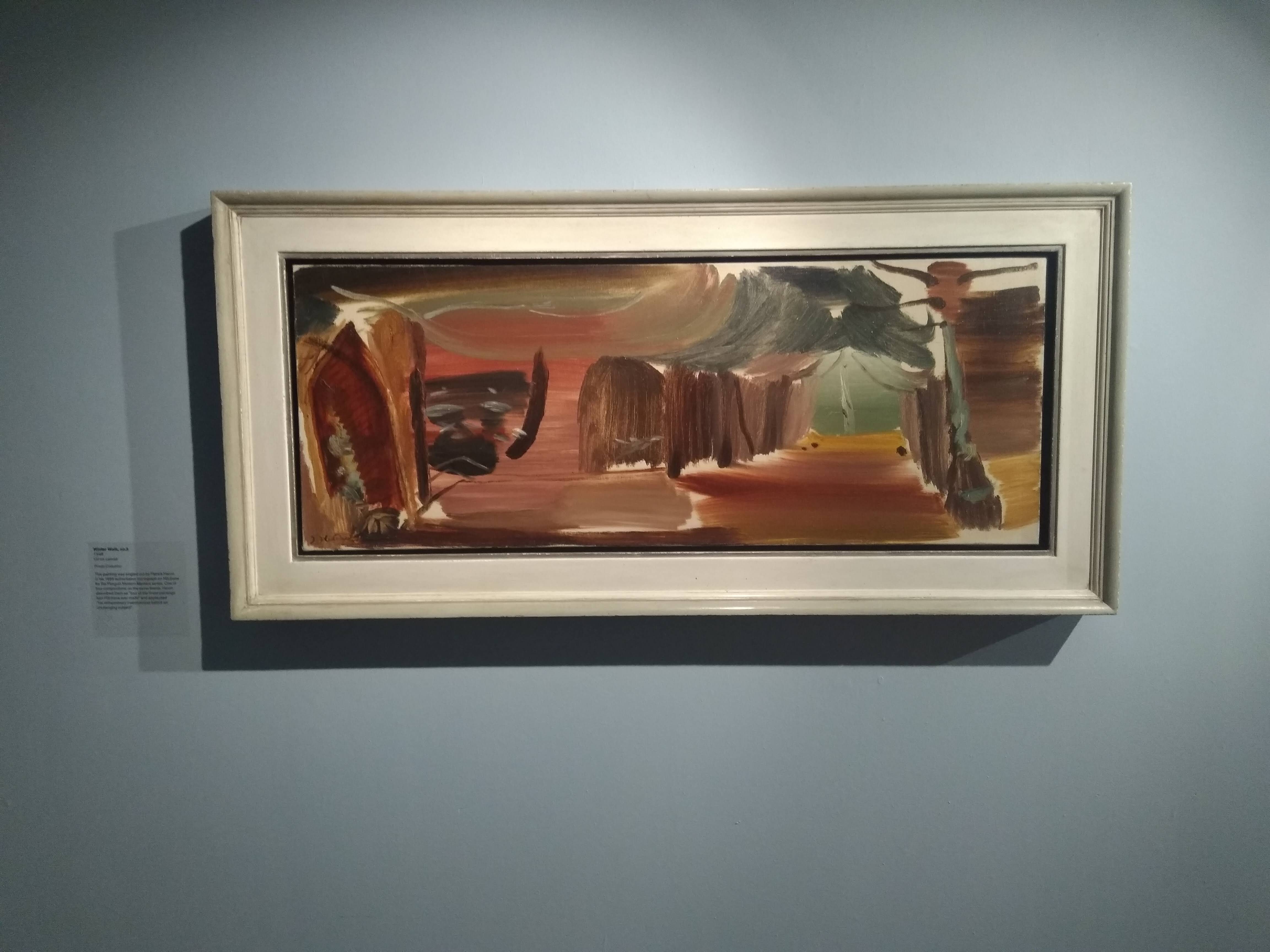
Winter Walk, no.3 (1948)

Winter Walk no.3 (1948), really captured me. The earthy brown and scratchy red tones, mixed with the evergreen of the avenue of pine trees towards the right of the picture perfectly sum up the colours of winter which are beautiful too, in their muted way.

The theme of the exhibition, how artists use their works as an exploration of their surroundings and of place more generally, was underpinned by the audio element of Simon Roberts’ Inscapes exhibition, which were dotted throughout Hitchens show. Roberts is an artist-photographer whose work focuses on identity and people’s connections with the landscape around them, and as part of the exhibition was invited to revisit the settings that so fascinated Hitchens. His soundscapes of the countryside (cattle lowing, brooks babbling, branches creaking in the wind) brought Hitchens’ landscapes to life in new ways, and the pairing of the two artists’ work brought out the best in both of them.