Top ten art moments of 2020

This year, it is needless to say that we’ve not had the art experiences we might have been hoping for. With travel restrictions, exhibitions cancelled, rescheduled and put online, the art world landscape has changed significantly, perhaps forever. I have just had pre-Christmas visits to see Artemisia and Titian’s Poesie at the National Gallery cancelled, as London crashes into Tier Three. I’ve been longing to see these once-in-a-lifetime exhibitions for years, since I first heard they were going ahead. So I began writing this with a sad heart.

Yet despite and because of what 2020 has thrown at us, the need for art and culture is stronger than ever, as a way to escape, to heal, to reflect on what is happening. Many people have used 2020 to have a go at making art themselves, with countless organisations sending out art packs for people to unleash creativity at home. What I’m now calling Self Portrait with Haribo was born of boredom and childishness (yes I’m 29 and I still buy Haribo), but looking back at it now, it captures a particularly cabin fever-ridden moment of lockdown. Marking moments like this is a good way of acknowledging time passing, in a year that has felt interminable but with very little to show for it.
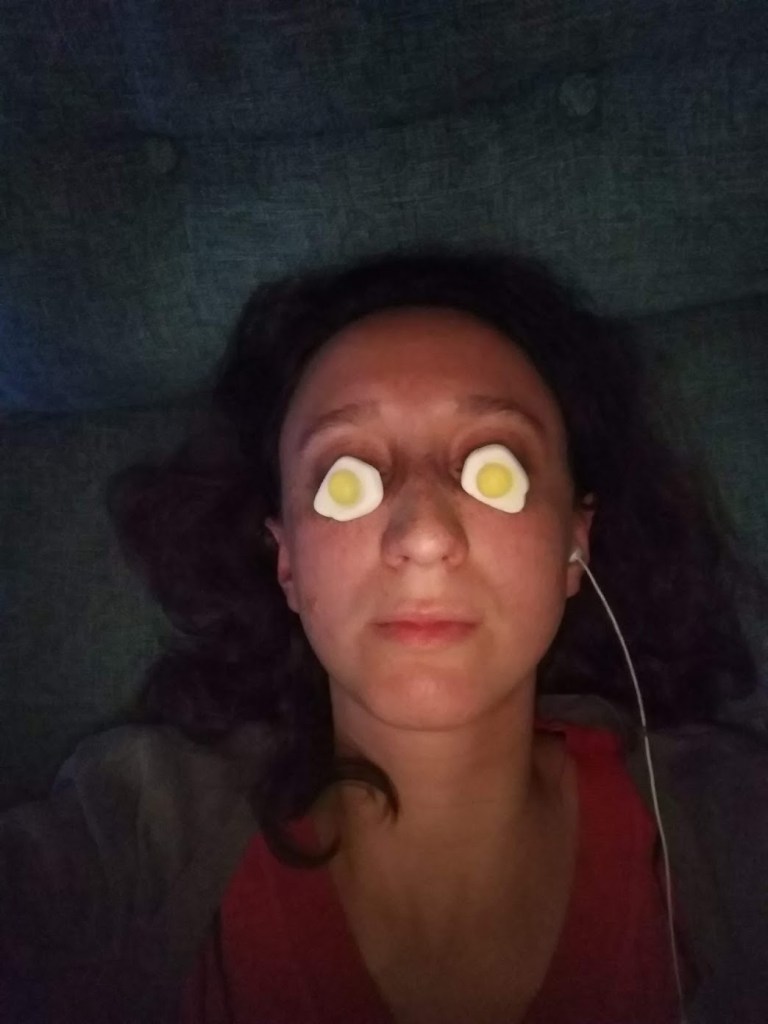
‘Self portrait with Haribo’

You’ll be relieved to hear, this blog post isn’t about my own personal creative output. Rather, it’s a moment of reflection and reassurance, to look back at 2020 and realise it hasn’t been a total creative wasteland. As by now you may have guessed, my concept of what art is is very broad, and that attitude has helped me this year.  It helps me notice my surroundings, and to not feel culturally deprived, even when museums and galleries have been largely closed.

Art hasn’t gone away this year, we’ve just experienced it differently. So consider this an invitation for you to get out your phone, scroll through 2020’s photos and consider the past twelve months in a new light: there will be evidence of things you’ve seen that connect us, that have made life more interesting, that have enabled you to see or understand something differently. To me, that is the purpose of art.

10) “Please do not remove” sign, Fountainbridge

This comes under the category of ‘weird things I take photos of in the streets of Edinburgh’. I first noticed this sign in Fountainbridge in January. It was still there in June. I love random signs, posters and stickers that are woven into the fabric of our cities. Once you start noticing them, you’ll never be able to stop: there are whole debates played out on bus stops, sign posts, bins and streetlights. I like this one because it shows how people did what the sign said by leaving it there. Either the people Edinburgh are very law abiding, or, possibly more likely, it went unnoticed.
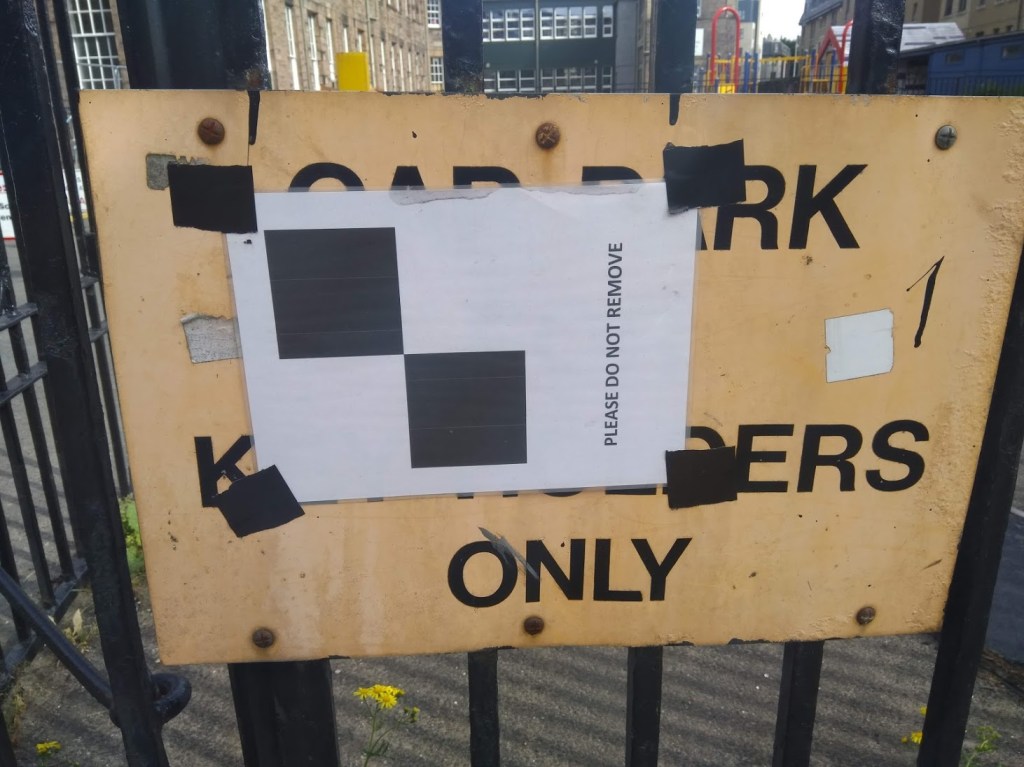
‘Please do not remove’, Fountainbridge, June 2020

9) A visit to Petworth House

When infection rates were low, I visited Petworth House for the first time this year. I’d known that the house had lots of art connections, having seen it in the film Mr Turner, but I hadn’t realised how many treasures are packed into just a few rooms. The National Trust’s webpage says that it is one of the finest art collections in their care. It includes The Adoration of the Magi by Hieronymous Bosch, a bust of Aphrodite attributed to Praxiteles which is over 2,300 years old, and The Molyneux Globe, the earliest English-made globe in existence, made in 1592. My favourite moment was seeing the beautiful marble sculpture of Saint Michael overcoming Satan by Jonathan Flaxman, created 1817-1826. When I was studying at UCL, the full-scale plaster model that Flaxman made in preparation for this piece was on display in the main library, so seeing the final result felt like the artwork had come full circle for me.
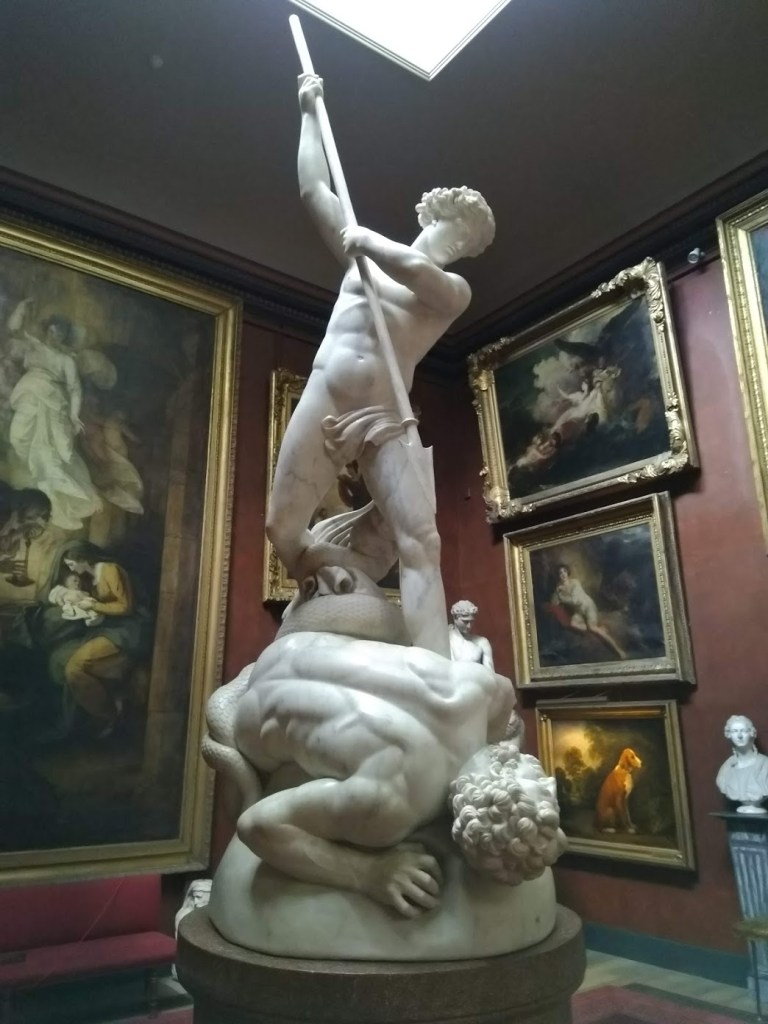
‘Saint Michael overcoming Satan’, Jonathan Flaxman

8) Apple’s iPhone X advert at The Hermitage

Ah, who knew an advert would play such an important part in my year. I actually am one of those people who enjoy TV adverts: the ludicrous fantasies of high-end perfume, the terrible, expensive sofas at DFS. An oven chip advert about family made me cry once. Yet this advert was not your usual one. It was five hours long, a slow-paced art house film with minimal dialogue, all shot on iPhone X, filmed in The Hermitage in St Petersburg. Each Tuesday in the spring, my friend Jane and I sat down, started a phone call and pressed play on YouTube together as we watched an installment. We discussed the paintings, the dancers, the architecture, the narratives, and sometimes, we just talked over the film about life. It was as close as I came to the real experience of trawling through a major museum while on holiday and I looked forward to it every Tuesday for over a month. I’ve written a longer piece which has a link to the advert here.

7) A specific frame in The Wallace Collection

From my trip to The Wallace Collection in the summer, one object is thoroughly wedged in my mind: the frame of Ary Scheffer’s Francesca da Rimini (1835). The painting itself is very dramatic, it depicts a scene from Dante’s Inferno, with the tragic figures of Francesca and her lover Paolo condemned with the souls of the lustful to the second circle of hell. The frame completely wowed me, I think it’s one of the largest frames I’ve ever seen. You can see a book in the bottom right corner, there are doves, chains, oak leaves and a scroll which incorporates elements of Dante’s text. It was created by a certain Félicie de Faveau for the painting’s third owner, Anatole Demidoff, Prince of San Donato, who owned the painting from 1853-70.

Ary Scheffer’s ‘Francesca da Rimini’ in the Wallace Collection

6) Graveyards of Edinburgh

Edinburgh is one of the greenest cities in the UK and I recognise my privilege in experiencing lockdown here for that very reason. Exploring the city’s open spaces has led me to encounter several of Edinburgh’s old graveyards for the first time this year. Being a fan of the Romantics, the more dilapidated and ivy-covered the angels, skulls and crossbones and shrouded urns, the better. Perhaps it seems morbid, but I’ve always found these places peaceful and interesting, and as someone who doesn’t believe in life after death, seeing nature flourish in these places has always been reassuring. Warriston Cemetery, Greyfriars Kirkyard, Dean Cemetery and Dalry Cemetery are some places I’ve found solace this year, as well a place to appreciate the art and symbolism in the carvings, sculptures and iconography.

A grave with ivy, Warriston Cemetery

5) Andy Goldsworthy’s Stone Coppice at Jupiter Artland

Jupiter Artland – I visited at last! Cycling with my sister out to Wilkieston on the canal path, this was one of the most perfect art afternoons of the year. We walked around the whole thing slowly, soaking it all up, and got a seat in the café just as the rain came down. I love so many of the artworks here, but my top one for this list is Stone Coppice by Andy Goldsworthy. You stumble upon this artwork in one of the more unkempt pockets of the sculpture park, you might not even know it was there at first. It’s the perfect balancing act: the way the trees delicately hold the rocks, how some seem composed in a tender embrace, how others seem crushed by the branches or vice versa. The artist’s positioning of the natural matter, which is then left to its own devices to grow and unfold over the years, is poetic.
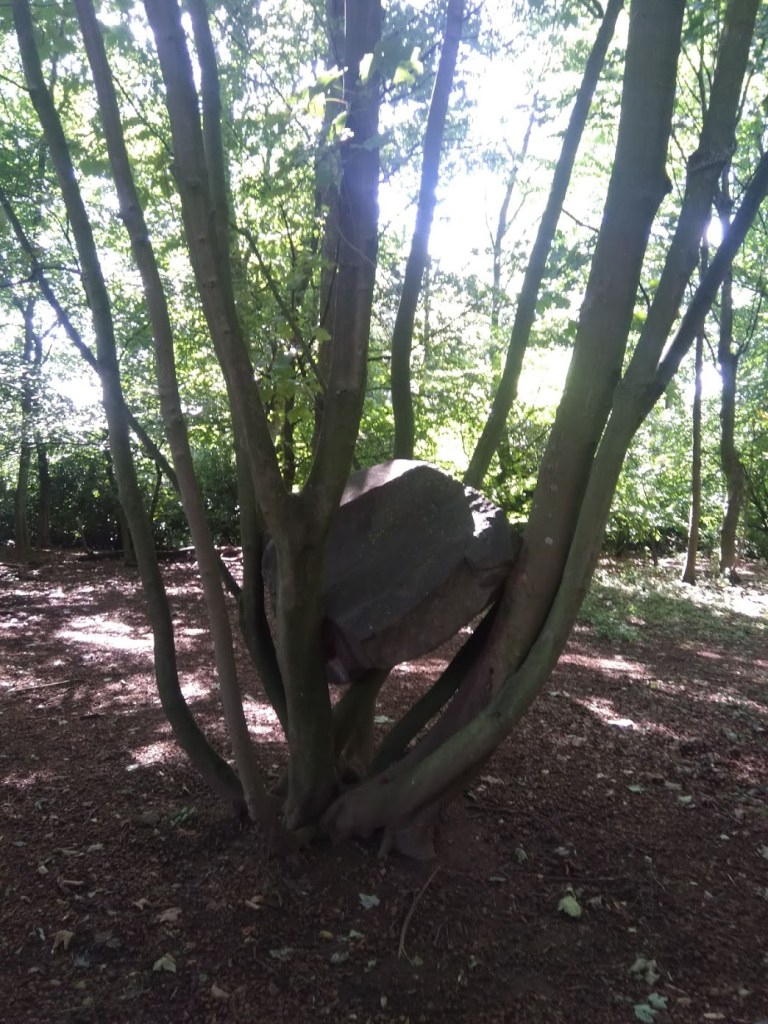
‘Stone Coppice’, by Andy Goldsworthy, at Jupiter Artland

4) Rainbows – Colinton Tunnel

The cynical among you will perhaps raise your eyebrows at this… rainbows in windows everywhere were sweet at first, but as the grim reality and longevity of the pandemic set in, they started creating a backlash, with one of my favourite tweets of the year capturing a perfect counterpoint – a sign in Glasgow that simply said “This is shite”. But this huge rainbow, arching over me as I cycled through Colinton Tunnel stopped me in my tracks. Street art and bike rides have both helped me through the year.
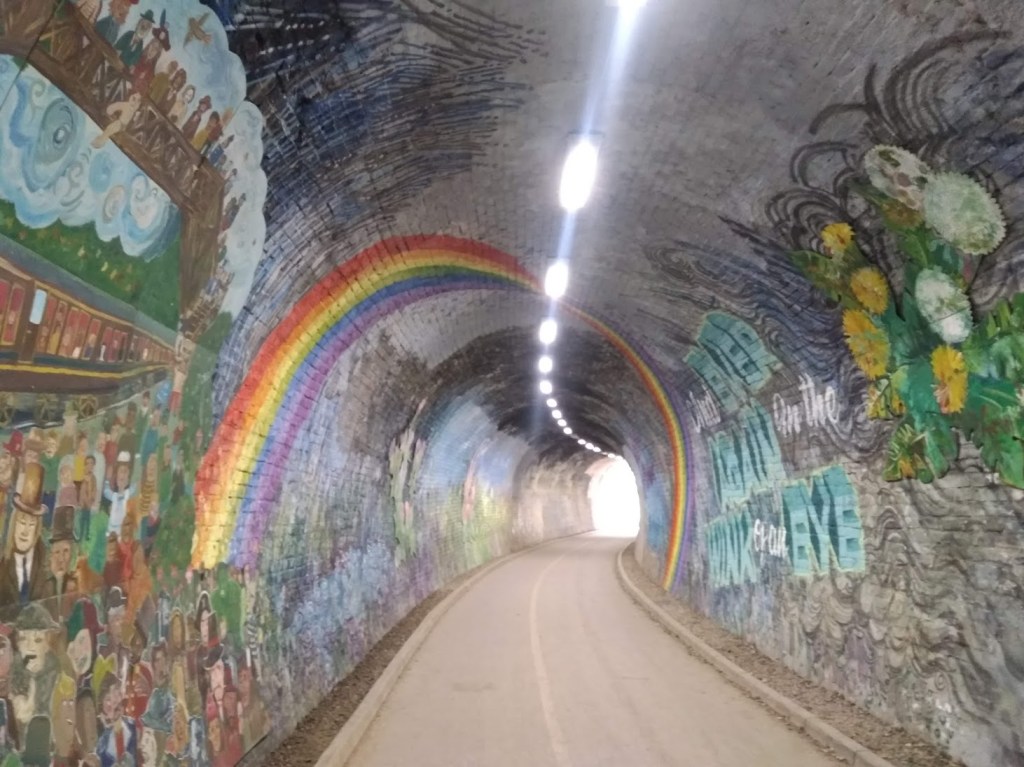
Colinton Tunnel

3) Rediscovering Black Portraiture by Peter Brathwaite

Peter Brathwaite has taught me so much this year. His project to recreate artworks at home was born out of a light-hearted DIY art challenge started by the Getty Art Museum. But Peter’s project took on huge significance as he made it his mission to shine a light on Black portraiture specifically, and used objects in his home to explore his own ancestry and past. In the context of the Black Lives Matter protest movement this year, this exercise in sharing these portraits of Black people with the world was so important, reminding us that these figures do exist in art and history, we just haven’t seen them, we haven’t named then. The whole project showed how the personal is political. How art is a mirror that reflects history and society, flaws and all, and critical engagement with it can help us understand the world and ourselves. Scroll through Peter’s Instagram to have your mind expanded, or take a deep dive into five of his recreations as part of The Essay on Radio 3 – highly recommended listening.

2) Violet Chachki’s ‘fall reveal’ runway look on Ru Paul’s Drag Race

Though I was a fan of Ru Paul’s Drag Race before 2020, the antics of the queens, their talent, their silliness, their mental strength and their artistry has meant the show has been my constant companion through lockdown. Yes, one of the reasons I love the show is that it satisfies my craving for gossip and drama, which has been so utterly lacking in real life this year. But despite its highly formulaic reality TV structure, the show has done so much to expose mainstream heterosexual audiences like me to the art of drag. And what an art it is! It’s difficult for me to pinpoint an exact moment, but I think we can all appreciate that the two-in-one catwalk outfit Violet Chachki burst on the scene with, in the very first mini-challenge of season 7, is the most delicious balance between high fashion and performance art.

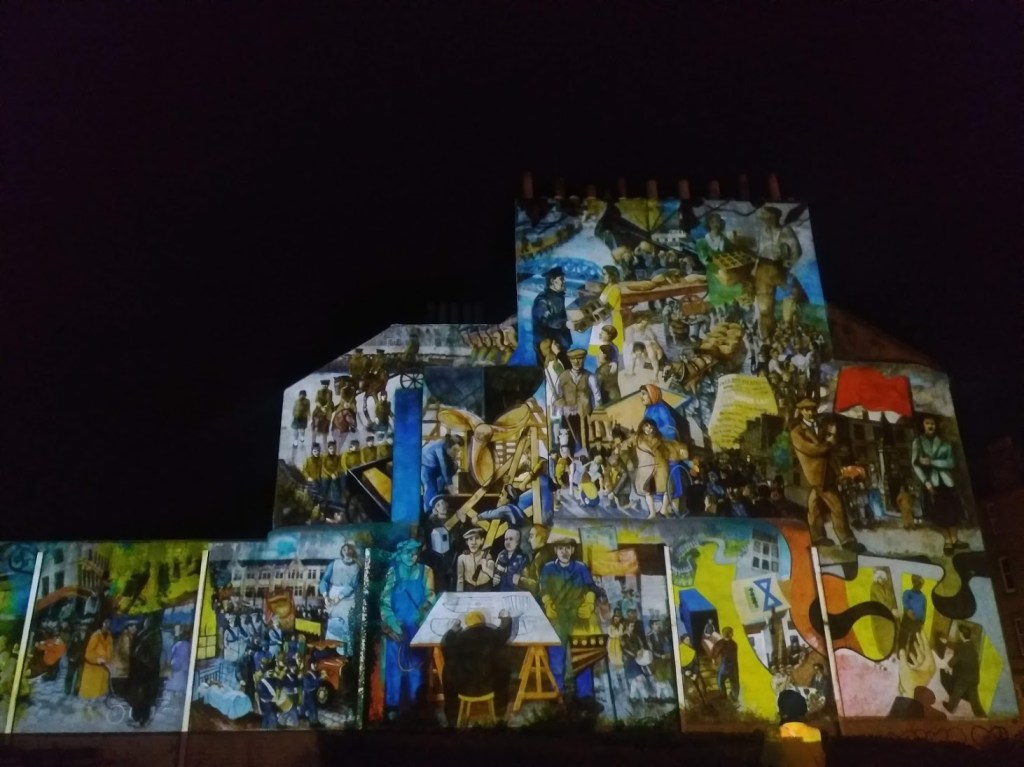
1) Leith’s historic mural, brought to life by Double Take Projections

There are some artworks that seem a little like magic and this is one of those. If you’ve ever seen Leith’s historic mural near Leith Theatre, you’ll know it’s not in the best state of repair. The colours have faded, the edges are eroding, it’s difficult to decipher. I wouldn’t necessarily want to change that, fading is part of a mural’s cycle of existence. Plus I’ve heard that the artists Paul Grime and Tim Chalk, who created the mural in collaboration with local residents in 1985-6, have resisted suggestions of the mural being restored. This decision then, to use projections, sound effects and music to bring different parts of the mural to life, is inspired. With the projection focusing on particular characters and animating different parts, we see a ship’s rudder gently rotating, children playing and soldiers marching. We notice the mural’s complex layers, and the installation restores what is a special piece of street art and local history in the city’s collective memory.
There you have it, my top ten art moments of 2020 so far. What have yours been? I would love to hear from you, so feel free to leave me a comment or DM me on Instagram or Twitter.
Art is so much bigger than me

Over the last six months, I’ve missed a certain feeling that being in a gallery or museum gives me. Before lockdown, I knew that looking at art made me feel calm and curious, slowed me down, gave me space. But my return to visiting a couple of places which house art (in London – Scotland’s major galleries are still closed for business) has made me realise what I particularly like about it. Experiencing art makes me remember I am part of something bigger than me.

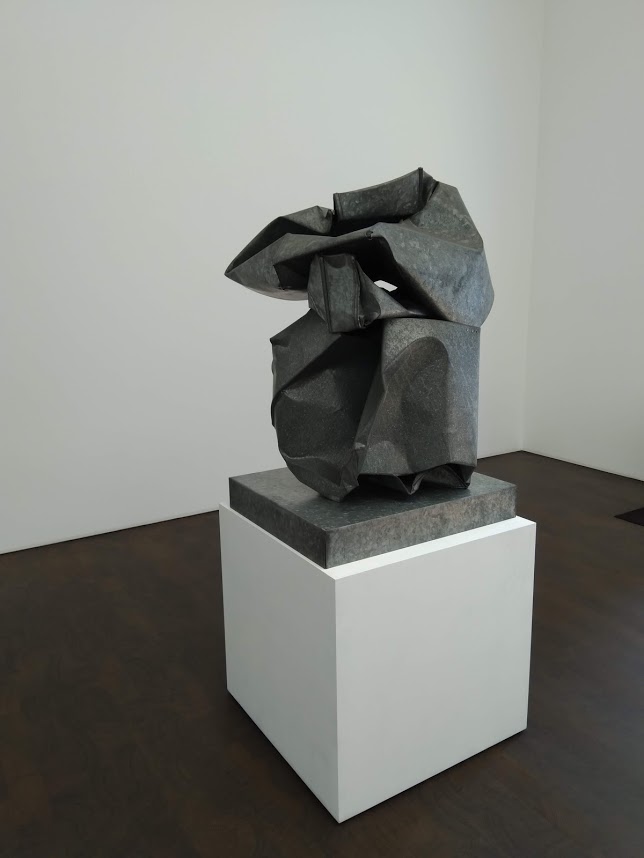
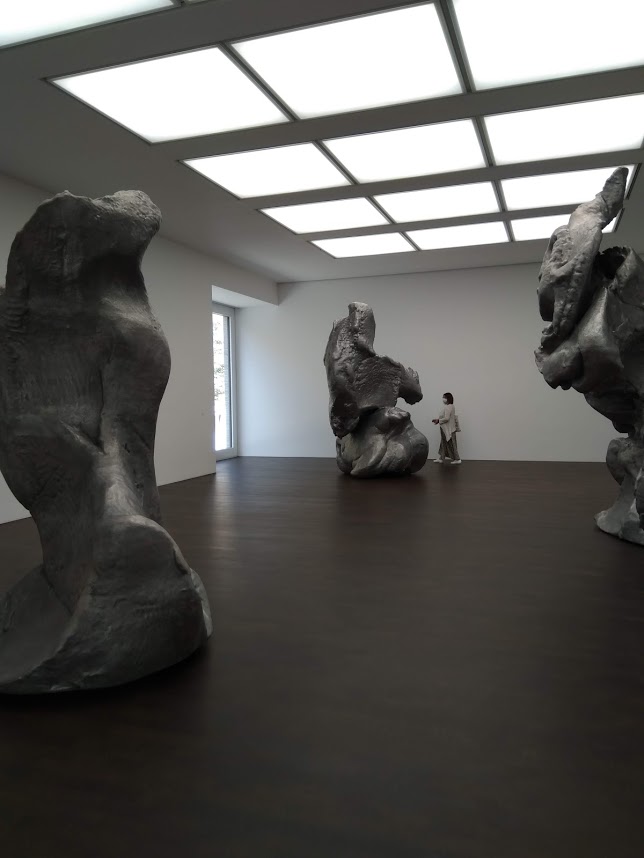
This realisation hit home most clearly when I went to Gagosian Grosvenor Hill to see Crushed, Cast, Constructed, a show with a wholly grey palette, featuring only five works. These are sculptures made in metal by John Chamberlain, Urs Fischer and Charles Ray. The three works by Fischer dominated the show: they started out as lumps of clay moulded by the artist’s hand, and then were scanned, enlarged so each model was over 3 metres high, and cast in aluminium. It’s like they are the product of a kindergarten for giants, that have been dipped in a vast vat of bubbling of metal and then returned to our world as serious, grown up objects. They are alien, they are too big, the Guardian’s critic Adrian Searle found them overbearing.

Installation view showing the vast scale of Urs Fischer’s aluminium sculptures

But that feeling of being overbourne (not a word) is actually pleasant after being the biggest thing in your same four walls night and day for six months. It’s the same reason I like big skies, mountaintop views, the sea.

Even the mechanisms and processes that created these objects and made them possible as art – the ideas, the funding, the training, the supplies, the gallerists, the agents, the transportation, the curation and a million steps in between are too big and complex for me to get my head around – especially after being separated from this ecosystem for such a long while. We, the viewers, are the very end point, the final cog in the machinery of the art world. Sometimes it’s actually nice to feel like a cog, while at the same time knowing you are the privileged recipient of all the cumulative hard work of others. It takes you out of the mundane minutiae or dramatic highs and lows of your personal existence and allows you to just be, for a brief moment, an uncommitted observer. You don’t even have to like the art you’re looking at to get this feeling.

In an era where we’ve all had so much time to sit with ourselves, in our sometimes messy, sometimes directionless lives, it was somehow restorative to spend time in this clean box of a gallery. With its white walls and dark, smooth floors, architecturally it is the polar opposite of a home, where each object is imbued with personal meanings or tasks yet to be completed (laundry, cards to respond to, bikes needing a service). To be an anonymous person in this quiet room, looking at these weird objects, is to abdicate responsibility. I owe nothing to them, they owe nothing to me.

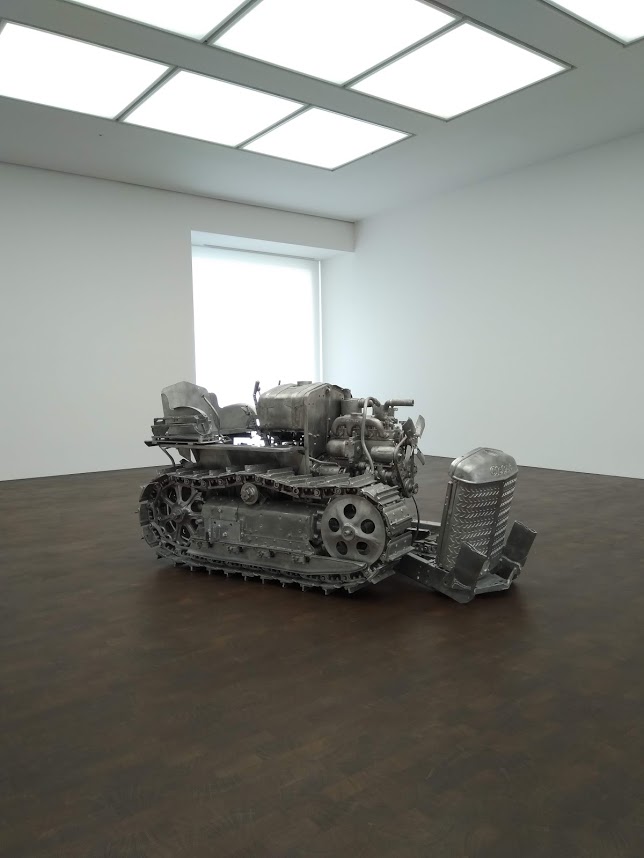
Charles Ray, Tractor, (2003-4)

They are weird objects. Alongside Fischer’s gigantic clay-as-metal lumps, there is a crushed box cast in galvanised steel and zinc by John Chamberlain and an old tractor that was painstakingly taken apart by Charles Ray and each piece cast in aluminium before being put back together. 

Some might say this kind of art is pointless: it’s difficult to imagine who might even collect such objects, once perhaps useful and functional, now rendered inept by their recreation. But here, in their very pointlessness, in their mere taking up of space for our perusal, they signify everything we’ve been denied in these serious Covid times: fun, playfulness and even a kind of detachment from the chaos of the world unfolding around them. That shift in perspective was like a tonic to me. In their metallic, alien coldness, these sculptures restored my understanding of the world as something far bigger than me, a realisation I often find reassuring.

John Chamberlain, Untitled, (c.1967)

My two-year-old nephew taught me how to look at art after lockdown

Last week I spent a really nice chunk of time hanging out with the youngest member of my family. My nephew is two and he’s great company. He’s how I want to be: curious, reflective, eager for fun and a sponge for new information. With his wide-eyed wonderment, he has taught me how to look at art again after a long, enforced break (otherwise known as lockdown).

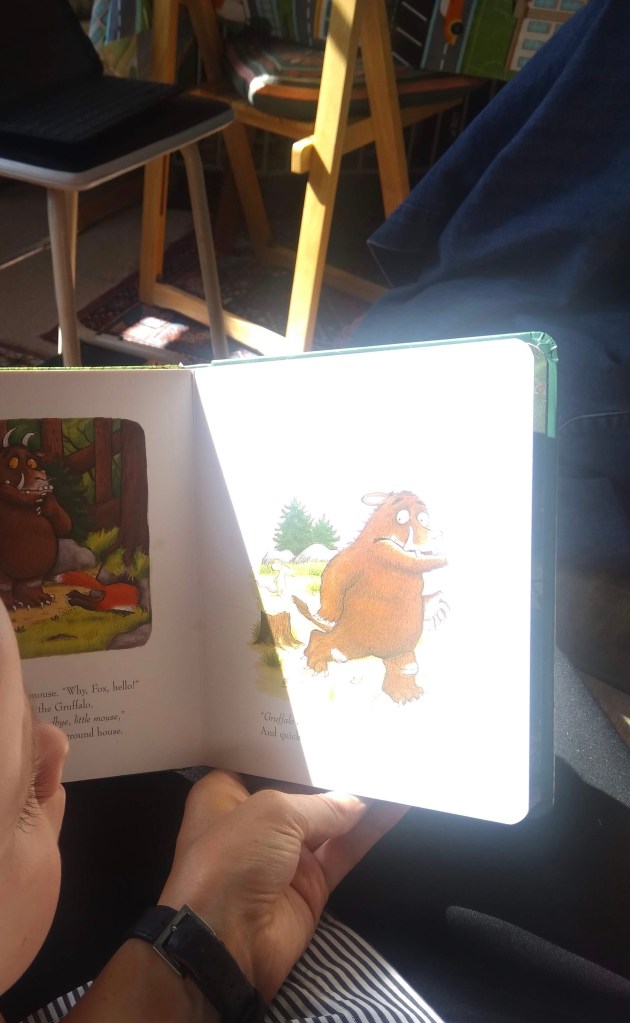
We read books together and looked at the pictures (me reading, both of us looking). Illustration is amazing, and I think a severely underrated form of art. I’m extremely lucky that in my day job, I interact with children’s books on a regular basis. Children’s books are some of the most accessible, universally loved and widely appreciated ways we experience art. The stories fascinate us, but the images are what portray and communicate the joy and terror of the narratives to young minds who cannot yet read or form sentences themselves. Fearfully gazing at the Gruffalo’s long black tongue and terrible teeth, or admiring the crisp and clear (read Scandi) aesthetic in Jon Klassen’s I Want My Hat Back, we carry the pictures with us long after the words have faded from memory.

Some of the most memorable books from my childhood were about looking at details. I was raised on books by Janet and Allan Ahlberg, searching for the characters and minuscule, meticulously written lost letters in The Jolly Postman was my delight. Later, The Most Amazing Night Book by Robert Crowther was my favourite. My nephew is also seemingly enthralled by the details. His favourite thing to do is to ask “Who’s dat?”, pointing excitedly at tiny ladybirds, trees, rocks, main characters, random piles of hay, clothes and anything else that catches his eye. Anyone who has interacted with children regularly will tell you they are incredibly perceptive and observant. Sometimes surprisingly so. They can see and sense things adults can’t.

A household favourite: The Gruffalo by Julia Donaldson, illustrated by Axel Scheffler

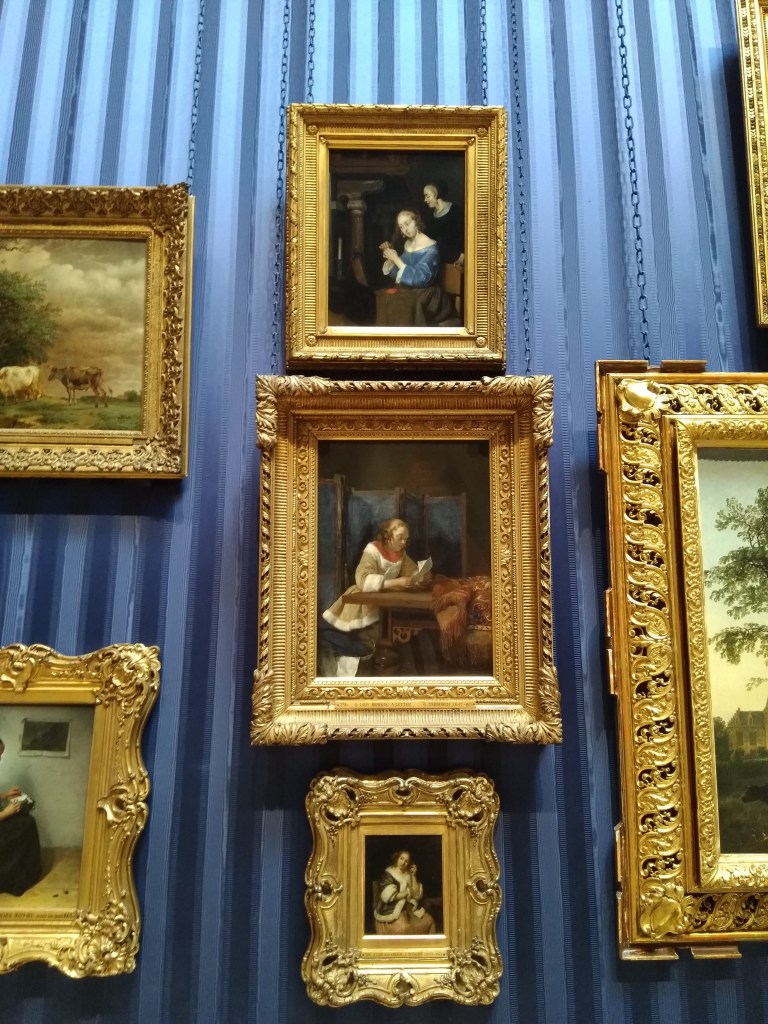
Last week, along with hanging out with my family I also went to a gallery for the first time in six months. After trawling the internet and realising most places in London had been booked out long before by far better-organised art lovers, I managed to get a midday slot at the Wallace Collection, one of my favourite places to see art, as well as admire luxurious furnishing (and pretend I’m part of eighteenth century aristocracy). I would probably go to see the silk wall hangings alone.

Blue wall silks and golden frames in a dense salon hang

I was so happy to have a slot, but despite really friendly staff and the safety measures that had been introduced, it wasn’t the most relaxing experience. It was a pressing reminder that we’re all still working through the anxieties this pandemic has produced. That the new normal isn’t going to be as good as the old normal for quite a while.

A one way system was in place and there were capacity limits on all of the rooms on the route, which created the slightly unpleasant feeling of being on a conveyor belt. Somewhat obliged to wait for those in front without pressuring them, but not wanting to take too long, disrupt the flow or be left behind, stuck in a swirling eddy without being able to rejoin the main current of my fellow gallery-goers. Not the best atmosphere for being absorbed by and for absorbing art.

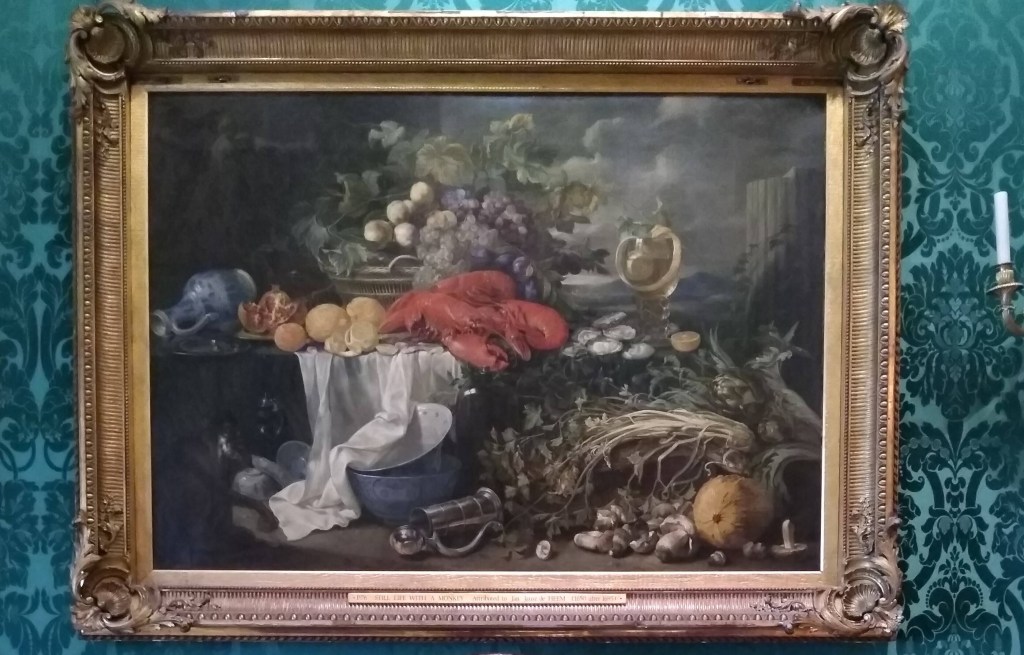
I spent the first part of my visit worrying about the choreography of my movements between my fellow observers, concerned I was getting too close, getting mildly annoyed with pushy people behind me. But then I saw an oil painting, Still Life With A Monkey, attributed to Jan Jansz de Heem (c.1670-95), that made me stop in my tracks. I thought about my nephew, how much he would love looking at the cornucopia of riches in the painting and examining all the elements, individually interrogating their form and purpose. I stepped off the conveyor belt and just looked.

Still Life With A Monkey, attributed to Jan Jansz de Heem (1670-95)

The spiral of lemon peel, the oysters, the mushrooms scattered on the table, the oozing pomegranate, the jug on its side, the tankard on its side, the bright white cloth, the monkey?! This kind of artwork demands your time, forces your eye to wander. We understand that still life paintings are often laced with double or even triple meanings (broken column = transitory nature of human life), but just looking at the surface level composition of what is there, without any further knowledge of iconography or semantics, is a pleasure in itself. The brightness of the lobster, the chaos and excess of it all, the way the food packs 7/8ths of the entire canvas, the needlessly dramatic sky behind. The above is my photo taken on the day, but there’s a brighter, slightly yellowy version of the painting here if you want to look more closely at the details.

Much of what drives my blog and my Instagram is a need and a wish to celebrate the everyday, to encourage others to read the notes in the margins, to slow down and enjoy colours and contrasts, patterns, eccentricities, particularly of city life. We can apply this attitude to great paintings in grand houses too. We think we know still life paintings. I imagine they’re the paintings most readily walked past without so much as a second glance because they are rarely super-famous showstoppers — but let’s take this opportunity to recognise how very bizarre and beautiful they are.

When we return to art galleries, they might not be the same as they were. But if we remember to approach art with curiosity, to take time, and notice the details, even if we haven’t got the brain space to work out what they mean, they can bring us both joy and a little peace. As from now, I’ll be adopting the “Who’s dat?” philosophy of close looking. That’s how I want to return to engaging with art as lockdown lifts. I’ll encourage you to do the same, but if you’re not feeling ready just yet, you can always start with The Gruffalo.

Art in lockdown: The Hermitage, St Petersburg

Each week for the past month, I’ve been going to Russia. To the State Hermitage Museum in St Petersburg, specifically. A close friend and I have been watching something we wouldn’t have considered engaging with before lockdown: a five-hour iPhone 11 advert, which explores the museum in an extraordinary way.

Even in lockdown, five hours is a bit too long. It’s far longer than I would be able to spend in a museum before fatigue, overwhelm and “museum back” set in. So we watched it in bite-size chunks. It became a little ritual. Every Tuesday at 9pm we would call each other, and press play at the same time to experience the tour together. It sounds bizarre, but it’s one of my favourite ways I’ve experienced art in lockdown.

The tour is meticulously curated. It is in one take, but isn’t a film that simply drifts past the museum’s many artworks (there are three million objects in the collection, including paintings, sculptures, textiles, porcelain, jewels, armour, coins, etc., so we only see a snapshot). This is a focussed journey that pays attention to the architecture and the interiors of the building. Dancers, actors and musicians all feature. They activate the space in vast corridors and lavish rooms, enliven the collection, and act as ciphers for our own bodies which, in normal circumstances, could be travelling through the rooms, pacing the floors, gazing at the ceilings.

I’ve long enjoyed watching people engaging with art: imagining what they’re thinking, and wondering why certain artworks speak to some people but not to others. My friend and I were now observing a false version of this in private and at a distance. We discussed the characters’ hair and clothes, speculated about their relationships with each other, puzzled over what the experience of making a film in an otherwise empty national museum, on the precipice of a global pandemic might have been like.

Gossiping with my friend, analysing what we were seeing together, was one of the best parts of the experience, making the surreal normal, as if we were actually touring a museum together. The mutuality of it, my friend watching in London and me in Edinburgh, spurred us on, and time slipped away quickly. Sometimes, the film became the backdrop to our conservation, sometimes we just watched and our words left us.

The physicality of the camera moving through rooms, doubling back, going in circles, helped make the experience lifelike. We commented on different works we liked, we discussed the merits of the decor (she hated the white curtains), I tried to show off some biblical knowledge to help interpret some of the Christian paintings, to varying degrees of success. There were moments when I craved a few clues about the paintings’ narratives, who made them, their titles – without explanation or context, lots of artworks are VERY weird and tricky to interpret – but providing additional information on screen would have made it too educational. The experience was more about wonder than learning.

The Garden of Earthly Delights prior to ultra zoom

The entire film is shot on iPhone 11, which is where the advert side comes in. The detail it captures is really extraordinary. The ultra zoom is one of my favourite digital tools through which we can experience art differently. Our capacity to see intricate close-ups of paintings is mind-blowing, and something to be celebrated. Zooming in on The Garden of Earthly Delights by a follower of Hieronymus Bosch (1556-1568?) – the original is in the Prado in Madrid – we could see more clearly than had we been standing before it. There are people cavorting on/with animals, giant birds, bodies inside clam shells, people with flowers sprouting from their bums, fruit the size of humans. If you want to pick three minutes of the whole thing to watch, this carnival of a painting features from 1:09-1:12.

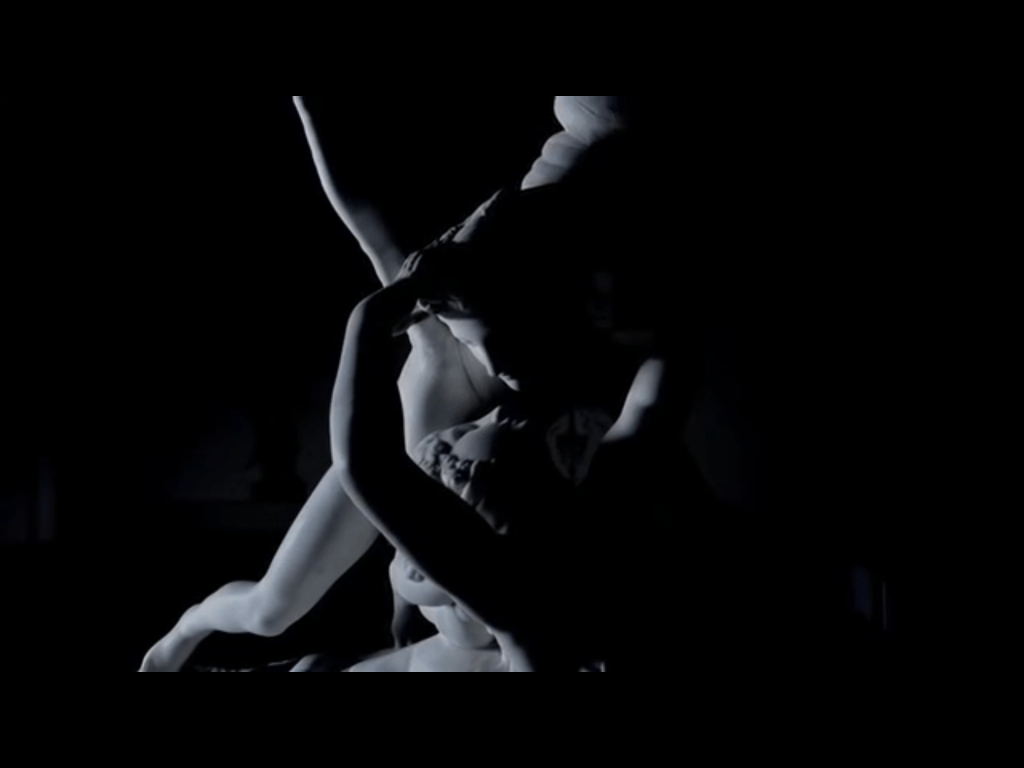
The Hermitage film played with light in interesting ways which warped time, creating uncertainty over whether it was day or night. Towards the end the use of a white torch light on white marble sculptures plunged everything else into darkness, and we were floating in a monochrome world.

Marble sculptures floating in a monochrome world

The museum at night is a creepy, exciting prospect, and one the film makes use of. There were several allusions to the presence of history, and the ghosts that live within its very walls. After all, it is a building which began as a private palace, its first collections were amassed by Catherine the Great in the 18th century. It has ridden the waves of Russian/Soviet/global history since then: wars, revolutions, political regimes, the Siege of Leningrad, and this pandemic. That it is still here today, for us to enjoy, even only as digital ghosts from a distance, is something we can all take comfort in.

I found some old photos

I recently found an old hard drive I’d stored photos on for many years, dating back roughly to 2009 – pre cloud storage and Instagram. Back then, I was getting ready to leave school and move out of the family home I’d lived in for most of my life. Finding these photos now, I’m struck by what you can learn about yourself by seeing what you’ve carried with you, and who you’ve journeyed with, over the years.

I never thought I’d taken that many pictures, and yet here they are. A selection of moments documenting around 8 years of my life. Over that time, what did I decide to photograph? Is this curation, of a sort?

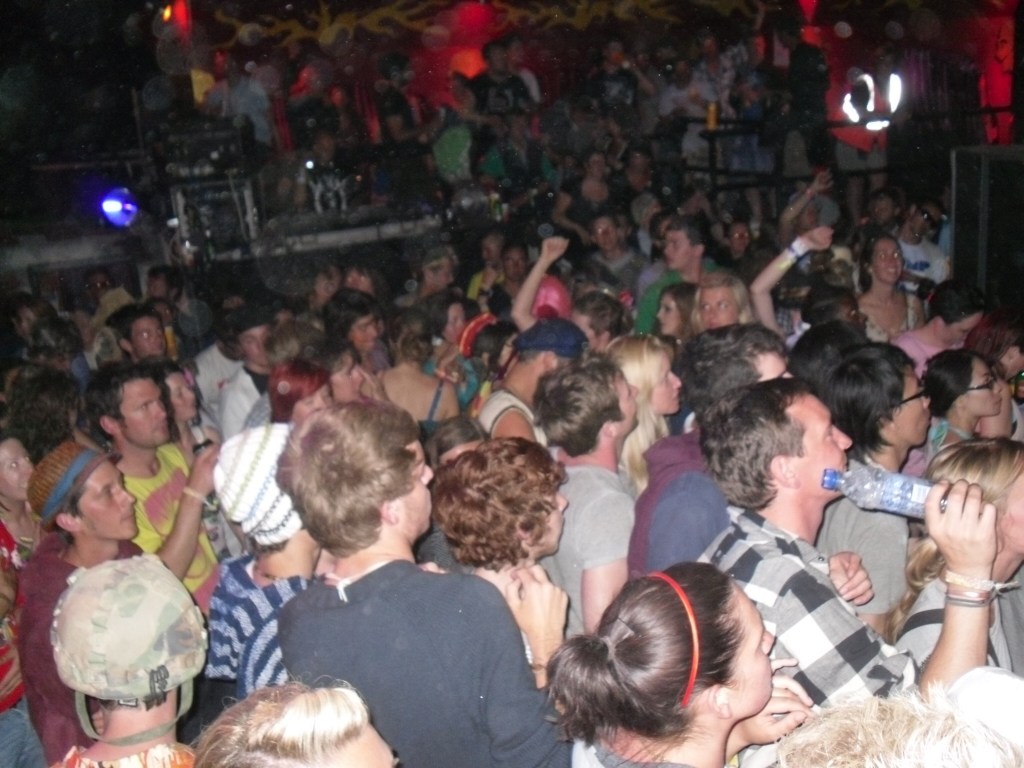
Of course, my favourite photos, the ones that give me the most pleasure, are those of people. Family and friends, people I’ve held close, literally, over the years. My appearance has barely changed, I’ve never had an interesting or drastic haircut. But despise the lack of intrigue provided by my personal aesthetic, these pictures of people together show moments of joy, some of which feel so distant now – a packed Shangri la at Glastonbury in 2010. Look how many people are in such close proximity!

Shangri-la, Glastonbury, 2010

There are a couple of art photos, but not that many. Before formally studying and writing about art, I don’t think I took many photos of paintings or sculptures. In fact, I thought that was lame. That it was a distracting side quest which got in the way of the true purpose: engaging directly with the art, without intermediaries. Yes, I was a censorious undergrad. Now of course, photography is one of the prime ways I engage with and consume art.

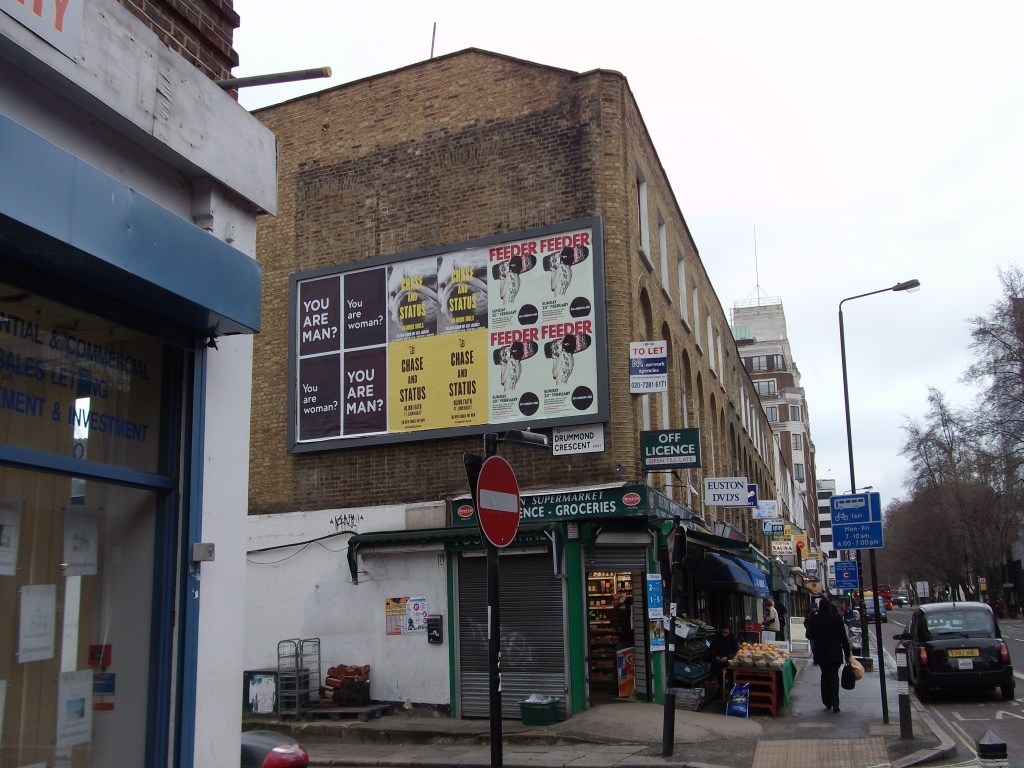
Themes start to recur. There are photos of old buildings, the backs of houses. The patchwork aesthetic of cities, their layering, has always appealed to me. I like seeing things in multiples, billboards that repeat themselves, tiny bricks, signage, squares of different colours and textures that make up a whole.

Drummond Street, London, as a patchwork quilt

It turns out that the idea which underpins Encounters Art, of finding intrigue or humour or beauty in the everyday has been there for a long while. There are more photos of graffiti, ephemera, what I call ‘notes in the margins’ than there are of Art™, and each of these is loaded with associations and place-memories. My photo library treasures are a bin in Berlin that screams “HATE Gentrification” and an annotation on a signpost in New Haven (the home of Yale University) that advises, “God = 1st / College = 2nd).”

Bin graffiti, Berlin, 2012

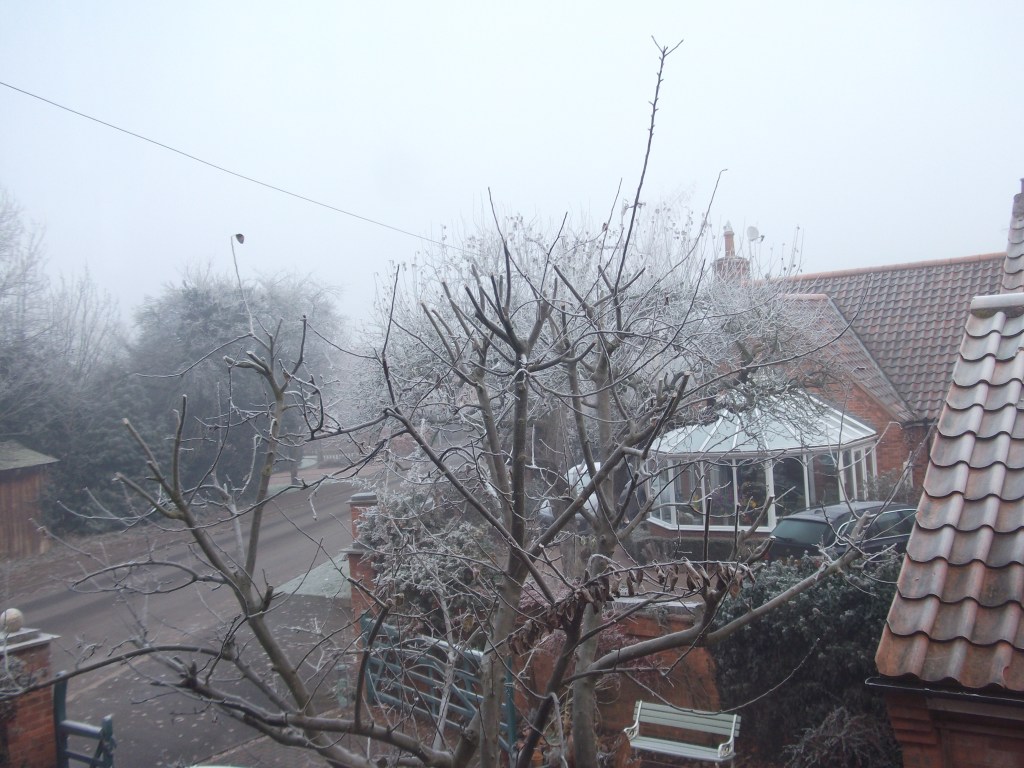
Some of the photos that unexpectedly chimed with me were of a different kind of ‘everyday’, not in the city but at home. There aren’t many of these – clearly we don’t document where we live as much as the special, occasional, noteworthy moments in our lives. There’s a photo from my childhood bedroom window which I must have taken to preserve the delicate lattice of snow and frost on trees and buildings, but now it’s everything else, the normality of it, that resonates.

The view from my bedroom from 1992-2010

Looking back at the somewhat unremarkable picture, I realised that the view I saw every day for nearly 18 years (the apple tree in the garden, our neighbours’ grand conservatory they never used) had been forgotten. Or rather, it was covered in memory-dust that had gathered over years without me realising, which I hadn’t bothered to wipe away. Even my basement room in university halls of residence, a place I hated, seems interesting at this distance, captured in blurry photographs, hastily taken and packed away until now. Artists who work with found objects (a genre I, perhaps predictably, love) have understood that things don’t actually need to be our own to feel intimate, to resonate. Certain feelings, moments, memories are almost universal, though drawn from vastly differing actual experiences.

Perhaps these images of home interiors and window views have taken on a new significance since lockdown began. Looking at these photos didn’t feel simply like a trip down memory lane. I felt more like an archivist with the task of retrieving and reviving the forgotten. Unraveling continuities and disruptions in relationships, places, things my eyes have been drawn to, was a task which felt like the psychological equivalent of traveling. It gave me reassurance I think I needed, that this period of staying at home doesn’t have to be a vacuum because nothing has really happened. That memories can be made out of and despite boredom, via the simple act of taking a photograph from your window, or failing that, just looking out of it.

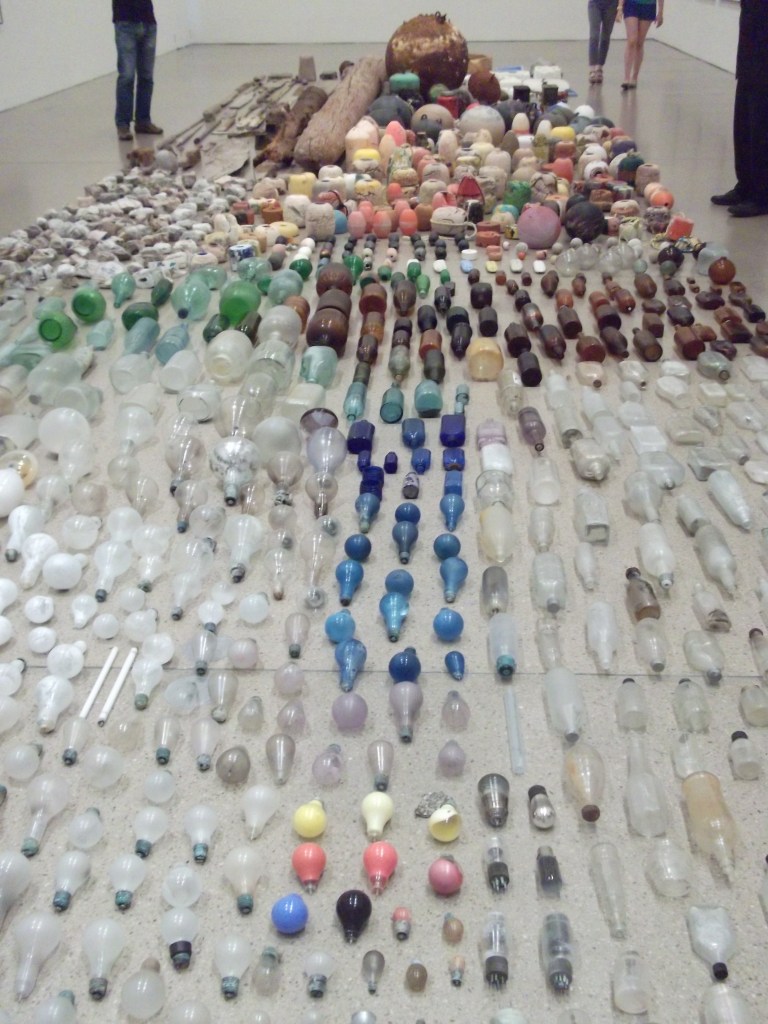
One of the exhibitions I did photograph, Gabriel Orozco,
Deutsche Guggenheim in Berlin, 2012

Layers of a life

There are some artworks that become wedged in your heart. You carry them with you, and mostly they lay dormant. Then occasionally they will surface from nowhere, reminding you of something you saw, read, felt years ago. For me, one of those objects is something I saw at Found, an exhibition curated by Cornelia Parker at The Foundling Museum in 2016. I must have loved it at the time, because I bought the catalogue, and that hardly ever happens.

The piece in question is by John Smith and is unassuming and profound in equal measure. As someone who believes in the necessity of encountering art in the everyday, it’s exactly the kind of work that chimes with me.

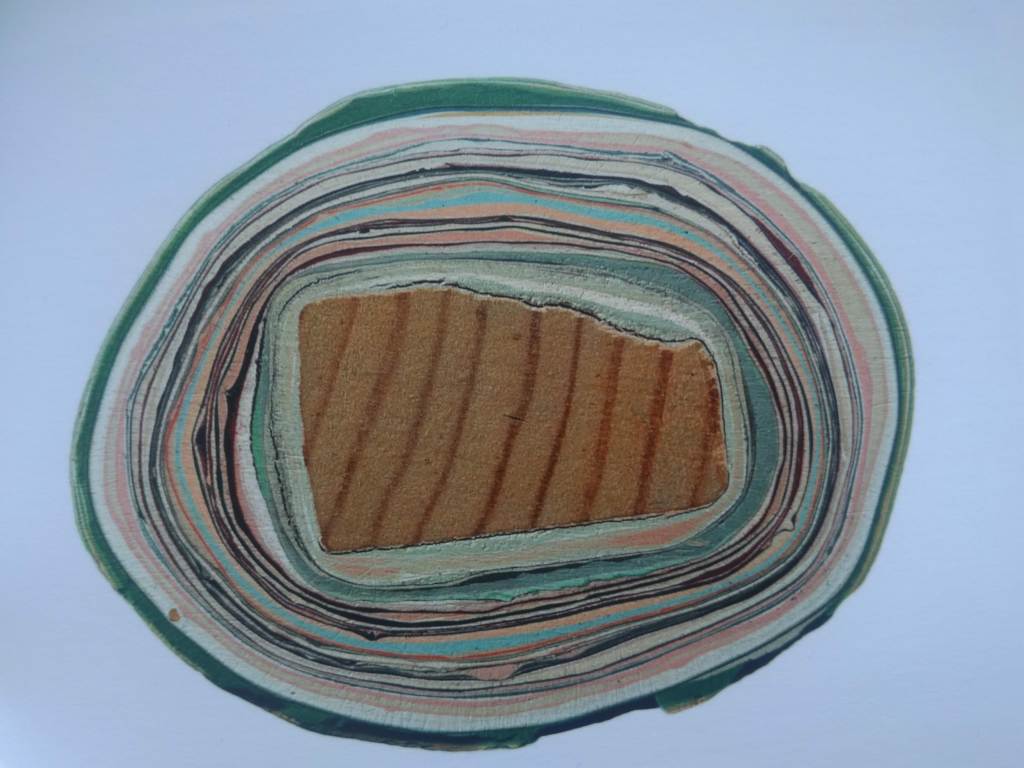
John Smith, Dad’s Stick, c.1950-2007, wood and paint, 23 x 2.7cm

It’s difficult to know how to describe Dad’s Stick – it hovers part way between art piece, art object, tool, item, artefact. This stick belonged to the artist’s father and was used to stir paint pots for around six decades. Then, towards the end of his life, Smith’s father cut through the stick. This act revealed a cross-section of multiple layers of paint, each covering over the other, like the concentric rings of a tree. It’s a wonderful thing: documenting changes in taste, memories of rooms, snapshots of different projects, a humble memorial preserving a life story, or multiple stories. In the Found catalogue, Smith reflects that looking at the colours of the stick took him back to his childhood, “the greyish green of our 1950s kitchen cupboards and the bright orange that covered the walls of our hallway in the 1960s.” (p.122). Smith created a film to accompany the object which was also shown in the exhibition. You can see an extract of it here.

Perhaps this object resonated with me because my own childhood home had this layering too. My mum, a good seamstress with an eye for interior design, made our own curtains, and as I grew up, she covered over the childish Alice in Wonderland fabric in my bedroom with a more teenager-appropriate material. My parents don’t live there anymore, but I wonder if the current inhabitants ever puzzle over the faint colours and shapes they can see through the fabric in certain types of light. Or they may have got rid of the curtains entirely – I’ll never know.

The flip side of Dad’s Stick is the rooms themselves. Most houses have multiple layers of paint, wallpaper, and questionable decor that exists below our current surroundings. Buildings have stories, and ghosts, in their very walls. Their history is a layered patchwork of the different lives played out in their rooms.

This feels more prevalent than ever while we are all confined to our homes. I live in an Edinburgh tenement flat, part of an old stone block with one side facing the street and the other overlooking an enclosed courtyard at the back. Muffled voices through walls, the frenzy of a washing machine from the flat next door, the occasional footsteps in the hallway are all part of the daily routine. They were always there, but noticing them, and their closeness, is unavoidable now. I see people smoking out of their windows, they see me moving from room to room, chasing the sun as it graces different parts of the flat throughout the day, we watch people hanging out their washing and cats prowling in the overgrown backyard. 

Being at home all the time has reminded me of these layers of lives and histories we live alongside and we contribute towards. Artworks like this one can help us process these situations, reminding us we are all part of the layering process, reassuring us that people lived here before, and they will again once we move on.

Art and life at home (in the age of Coronavirus)

This is my first post since the Coronavirus outbreak hit Europe. Not for a lack of time – like all of us, I’ve had more time at home than ever before in my adult life. It’s not even for a lack of having things to write about. Rather, it’s because I haven’t had the will, or the inclination to sit down and focus. I often have vague waves of guilt around this – but then I remind myself that this is a pandemic, not a sabbatical. Having free time doesn’t automatically make this an opportune moment to hone my art writing, and that’s ok.

There are a million and one distractions (some would say excuses) that have prevented me from writing, or doing other productive things. The same is also true of engaging with art, the activity I love most. Galleries and museums have been closed for weeks, and they have scrabbled, been inventive and tried their best not to let years of work bringing exhibitions together go to waste. Switching projects to the digital realm successfully is not easy, and I would be interested to see the stats on reach and engagement for online content. I would hazard a guess that for the majority of us, while digital outputs are appreciated, quantity is overwhelming and we still don’t really want to go online to “visit” an exhibition. Even the idea of it brings to mind my least favourite gallery online content of all – photographs of exhibition previews where influential art people drink champagne and look thoughtful. No matter the quality of the exhibition, the virtual tour doesn’t sound appealing. It is more screen time that could be spent looking at things that are created for screens in the first place: telly, films, games. Even “doom-scrolling” through reams of information about the virus, though stress-including, is addictive and sometimes even mentally easier than engaging with something that doesn’t concern the virus at all. 

Art can be engaged with online. Some of the artworks I have studied in depth I have only ever seen via a screen. But there is a social and physical element to visiting exhibitions that is a necessary side-effect of the experience. Why else would the National Gallery have worked through years of negotiations to bring Titian’s poesie together into the same room? We could have googled them individually and seen them together that way if we wanted. But it’s not the same. The best exhibitions have a strength of narrative that enables us to enter a state of meditative curiosity which really absorbs us. That is simply not possible at this moment, and especially on a device, where we are accustomed to enjoying art in Instagram-sized chunks. There are too many other distractions, including our own boredom, to compete with. I doubt that a physical exhibition transported online could recreate that effect – though maybe I will be pleasantly surprised. My sister and I are going to tour the Royal Academy’s Picasso and Paper virtually later this week – will report back…

Despite the circumstances, against all the odds, people have been creative and productive. Far more relevant and fun than an online exhibition, is seeing the results of people making and imitating art themselves. The hashtag #tussenkunstenquarantaine reminds us that with a bit of inventiveness and improvisation, some of the best-loved artworks can be recreated at home. I am biased, but my former colleagues have done a fantastic Twitter thread recreating some of their favourite works in the collection. The results are totally heartwarming, and that’s what we need now. 

Projects like the weekly creative challenge run by OG Education (the learning branch of the October Gallery) provide a bit more freedom than creating an exact copy of an artwork – taking their artists’ work as a starting point for inspiration. Defying gravity, the theme inspired by artist Benji Reid, produced some daft and wonderful homemade results. 

The idea of creating artworks at home is of course, not especially new. The foremost example I can think of is Activities with Dobromierz, created by the Polish artist duo KwieKulik in the early 1970s. Having experienced issues with publicly showing their work, they made the decision to produce and exhibit art in their flat, working with objects they found. Their home, which they renamed Studio of Activities, Documentation and Propagation (PDDiU) became the site for art that blurred the boundaries of the personal and political. 

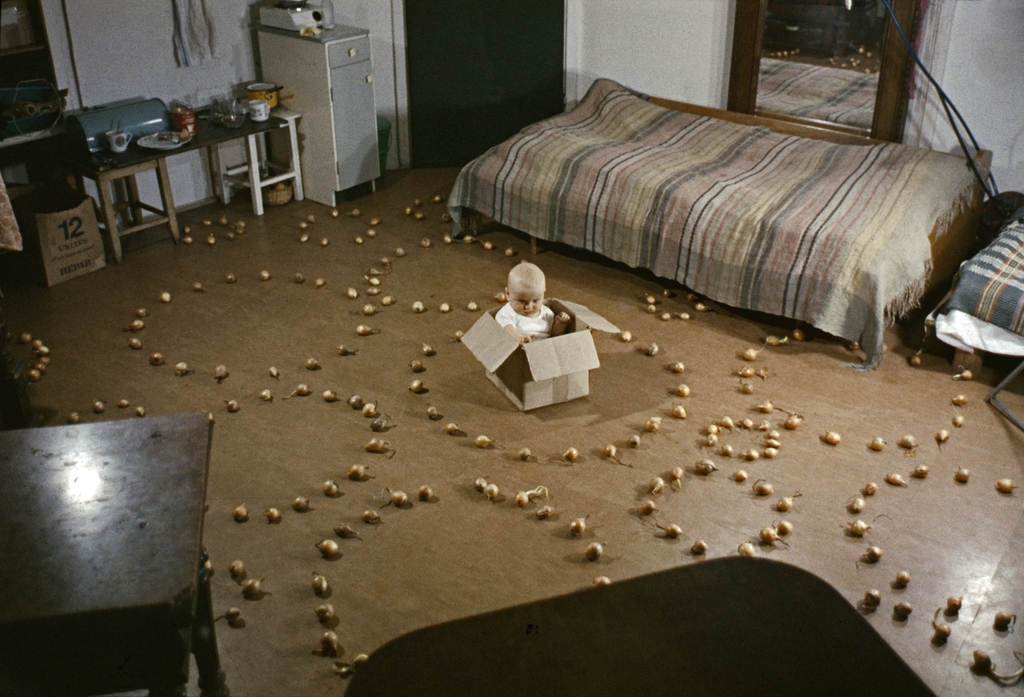
KwieKulik, Activities with Dobromierz, (1972-74)

We see the couple’s baby, Dobromierz, arranged in multiple surreal scenarios, surrounded by the miscellanea of domestic life. At the centre of a circle of onions, he is a cherub surrounded by stars, or a sacrificial offering in the midst of an occult ceremony. You can see more examples of this fascinating artwork here. There’s an absurdist symmetry and playfulness to these images which I find enchanting – if you can overlook the slightly dubious ethics around it (is it ok to make art by making your child the subject and placing him in a toilet? – I’ll leave that one to the psychoanalysts.) 

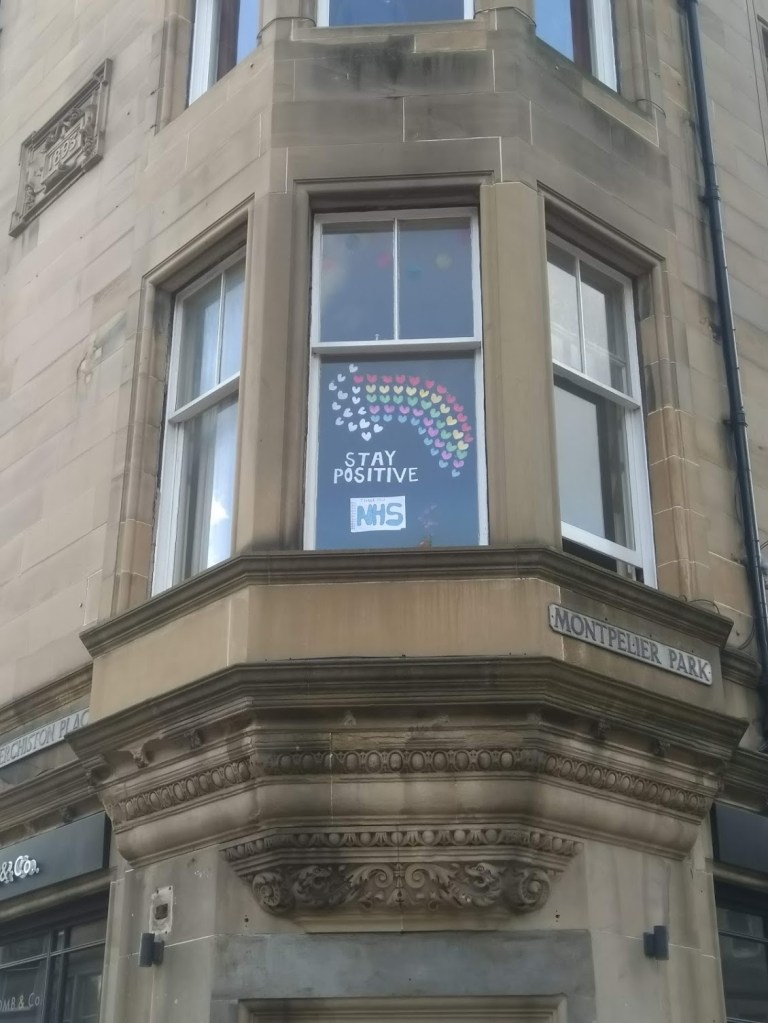
On my daily walks I am reminded of how much inspiration we really can derive from visual symbols and art marks left by other people. The name of this blog is inspired by my belief that art can (and must) be encountered in the everyday. Graffiti is, as always, the site for debate, discussion and seat-of-the-pants creativity. Seeing rainbows stuck against windows does give me hope. People are amazing, creative and inventive, and in the case of an iconic image of a sign spotted in Glasgow which reads “this is shite”, they are astutely acerbic. It is shite. There is as much truth and validity in that as there is in a rainbow.

Rainbows of all shapes and sizes adorn our streets now

We are all dealing with this situation differently: some things that appeal to you as a way to spend your time might not be fathomable to others. Some will create art, others will chuckle at their creations. There will be time to do life admin, and time to sit on the sofa. All are ok.

As we enter another week of lockdown, I miss the outside world. From the privileged perspective of someone who likes to write about art, I miss the solace of visiting exhibitions, learning new things, seeing weird and wonderful objects “in the flesh” and of course, sharing those experiences with others. But the restrictions on our movement have shown us that the democratisation of artwork is possible. Celebrating the joy of art is necessary. Humour and a spirit of accessible creativity are two tools with which we can counter the cultural shock of this pandemic. The challenge now is to bottle that spirit and carry it with us into the post-COVID 19 art world. We are going to need it.