Art for our times

I ask myself how can it already be the end of April. What happened to the first third of the year? It seemed to have passed me by without me noticing, meanwhile the world plunges from one crisis to another. I find myself asking, ‘was it always like this?’ Did we always lurch from tragedy to crisis in a never-ending cycle? Have I only started noticing now, after living in a pandemic-induced state of hyper awareness? Or are things just particularly bad at the moment?

War, suffering, poor health, exploitation, callous political decision-making. It seems to be closing in on every side. Has it always been like this?

Four months since my last blog post and the time just keeps on ticking away. The truth is, in times like these, I don’t feel like I have much to say. Or maybe I just don’t feel like any contribution I could make adds much value. The old saying, “If you don’t have something nice to say, then don’t say anything at all”, is pretty deeply ingrained in me, and I don’t have anything nice to say about the times we’re living in. They’re scary, depressing and disorientating, and sometimes it seems like the only alternative (for the privileged ones like me) is to wrap ourselves in a comfort blanket and disengage – I actually re-downloaded Candy Crush and got to level 306 – my way of wishing it was 2015 again. Sometimes, you just don’t have anything to say.

I haven’t seen much art, for one thing, which is a big contributing factor in not having much to share here on the blog, or on Instagram. I went to the Louise Bourgeois exhibition at Hayward Gallery, and while I loved the huge spider and appreciated the dark, uncanny bone sculpture installation, it didn’t make me want to write. The show was busy. The photos I took were blurry. And perhaps I just didn’t need more heavy subject matter to struggle with in my free time – Bourgeois’ art is about as far as you can get from light and breezy.
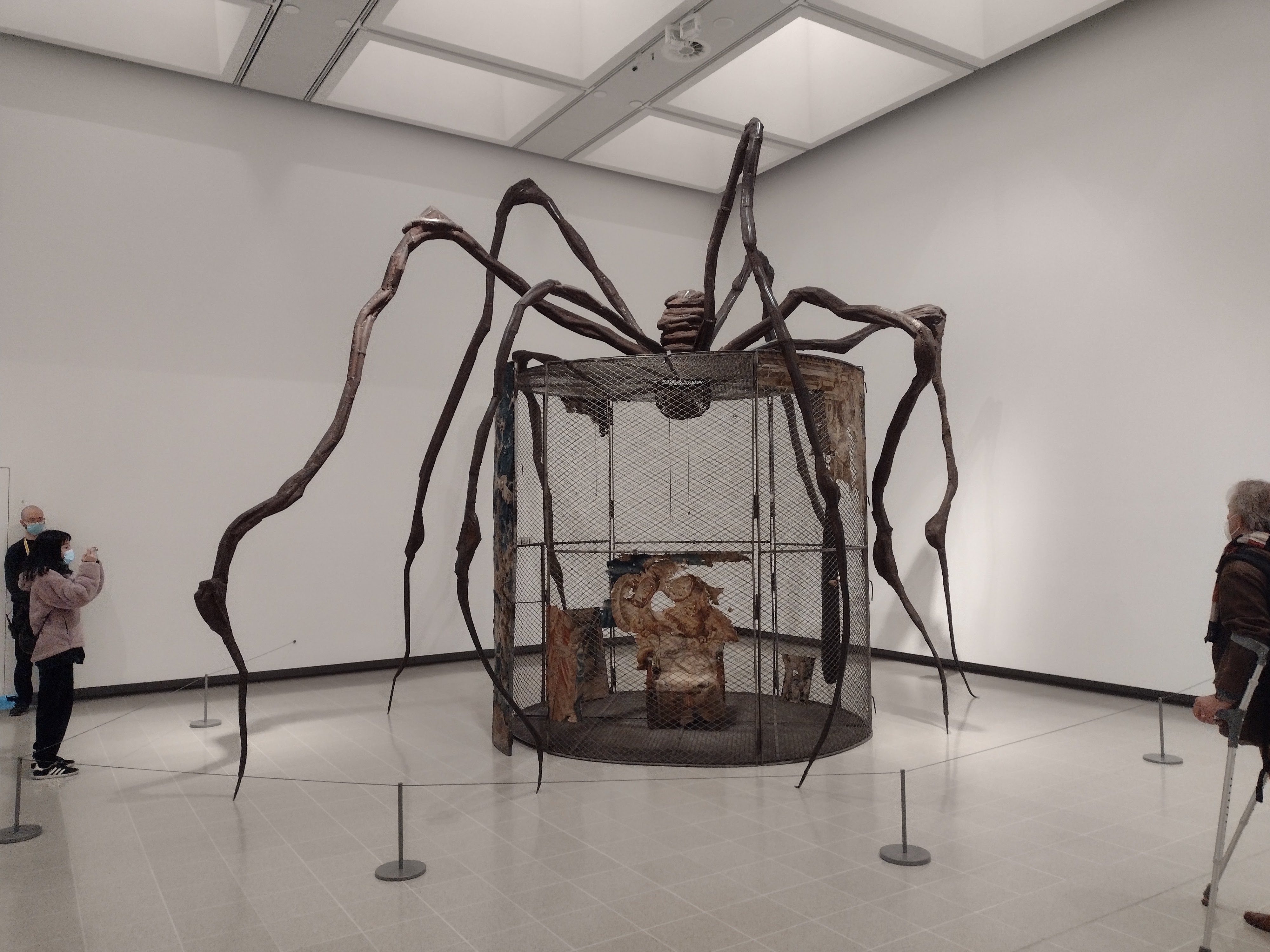
A photo of Louise Bourgeois' artwork, Spider
Louise Bourgeois, Spider, (1997)

Despite my personal reaction to the weight of this show, I continue to believe that engaging with art that seems difficult can be enlightening, illuminating, and can give us tools to help us process difficult things. Art can say things we don’t want to, or that we don’t have the words for. A few weeks ago, it was on this basis that I decided to use my Instagram to “highlight some artworks that speak to what’s happening in the world over the coming weeks, if that doesn’t seem too crass”. The aim was to post a couple of works per week, broadly related to the displacement of people and refugees, with the Ukraine crisis unfolding on our doorstep. 

A couple of months prior, I’d posted Dark Water, Burning World (2017) by Issam Kourbaj, an unforgettable work made up of boats, packed with burnt-out matches that resemble people. I wanted to try and make the effort to promote works and artists that engage with, rather than shirk, these difficult themes. But it tuned out that was far more challenging than I could’ve anticipated, with research becoming draining as the overarching complexity of posting artworks about refugees made me hesitate. The very fear of being crass or insensitive or saying the wrong thing was enough to shut me up. These are real people’s lives. Is it exploitative, or somehow trivialising, to wrap them up into bitesize chunks of ‘content’? Welcome to my brain. There are a lot of rhetorical questions.
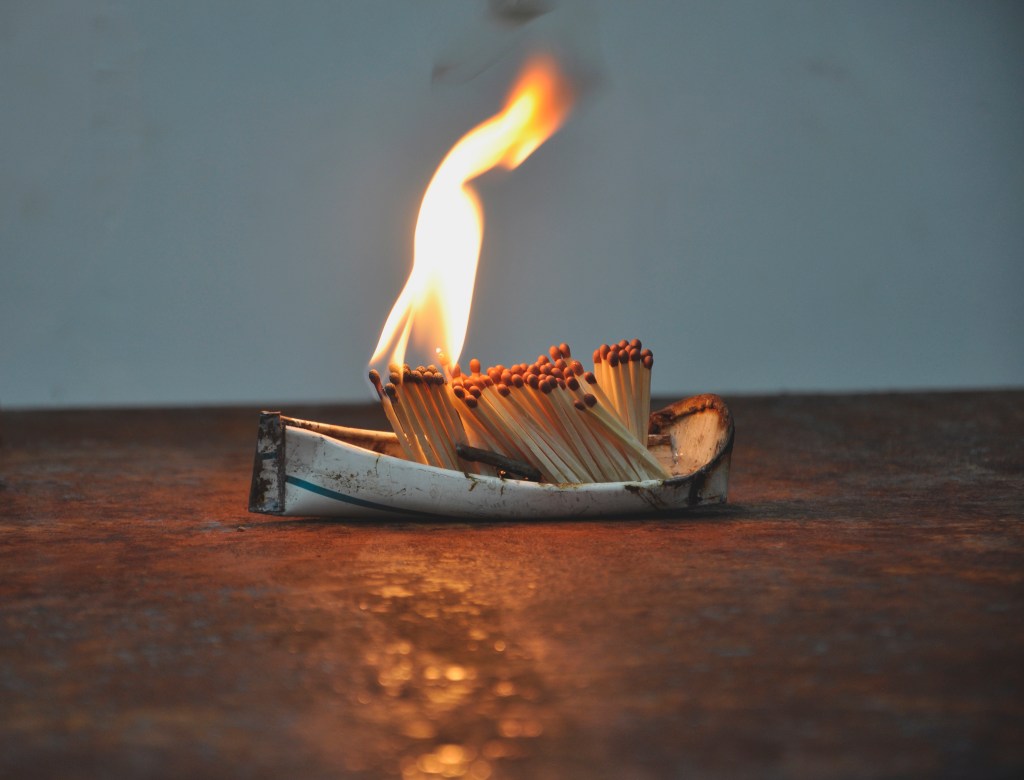
A photo of Issam Kourbaj's work, 'Dark Water, Burning World'.
Issam Kourbaj, ‘Dark Water, Burning World’ (2017)

Art that is fraught with difficulty is something Mary Beard grapples with on her latest excellent two-part series, Forbidden Art. I think I have a fairly sturdy threshold for engaging with art and film that can make me feel uncomfortable (the example I pride myself on is that I loved Julia Ducournau’s 2016 film, Raw), but I was surprised at how I found some of these works, including Martin Creed’s Sick Film, and Marcus Harvey’s Myra, extremely challenging. I’d love to see the ratings on the show, which aired on the BBC at prime time on two Mondays in February. Surely I wasn’t the only one who felt genuine nausea as Mary broke taboo after taboo.

Probably the most shocking image of all from the series was Peter Howson’s Croatian and Muslim (1994), which depicts the rape of a woman with her head being shoved down a toilet. Howson was an official war artist in The Bosnian War (1992-95), though the work since has attracted controversy for being based on eyewitness accounts, rather than direct observation. Whatever the circumstances, the image points to what we now know for certain: that rape was used as a weapon in the conflict (Wikipedia estimates between 12,000-50,000 women were raped). The stories emerging from the war in the Ukraine suggest the same. As I hear this news, I have the grim realisation that I am not surprised.

In the end, I just posted two works, Tarifa by Daniel Richter, and Soleil Levant by Ai Weiwei. They are both works I’d encountered before, which felt more natural than specifically seeking out refugee-themed works. If you google ‘art about refugees’, one suggested piece that pops up is Banksy’s ‘Son of a migrant from Syria’, (2015), a mural that the world’s most famous anonymous street artist created in the Calais Jungle, which depicts Steve Jobs as a migrant. But the message behind this idea, that among refugees the next Steve Jobs might be lying in wait, is way too simplistic, clumsy and misses the point entirely. The point of welcoming refugees is not because of the part they may end up playing in global capitalism, or because they look and live like us.
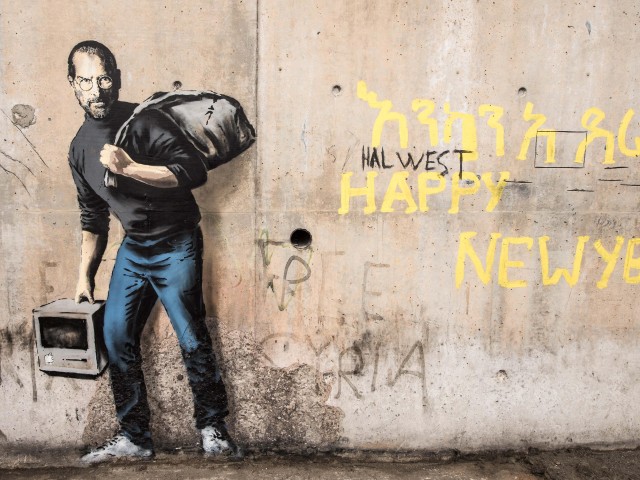
A photo of 'Son of a Migrant from Syria' mural by Banksy
Banksy, ‘Son of a Migrant from Syria’, 2015

Building these narratives into a piece of artwork is challenging, and so much of the art I came across didn’t sit right. Even Jeremy Deller’s poster artwork, Thank God For Immigrants (2020), which I have a copy of, delivers a cloudy message that is (intentionally) fraught with complexity.

Someone who has done a significant amount more meaningful thinking and research about this than me is art writer Tom Jeffreys, whose brilliant piece, reviewing Iman Tajik’s Bordered Miles performance for Glasgow International, broaches the issues of borders, safety, identity and what is at stake for undocumented immigrants and refugees in this country. Tajik’s work is built upon lived experience as a detainee at Dungavel detention centre, but his art, which encompasses performance, photography and installation, seeks to widen the lens beyond his own life and perspective, to deal with ideas, not stories. It is the kind of nuanced work with a scope and resonance goes way beyond that of an Instagram feed. The kind of work that shows us that if we want to engage with art, we may as well do it properly. That can sometimes take stamina, research, and courage.

When we encounter art, we may not always like what we see. We may want to look away and in some moments, the act of avoidance may feel like be our only option, for self-preservation and protection. As long as we clock that urge to shy away, I think that’s ok. In the meanwhile, artists will continue to respond to crises in ways that can range from the effective to the offensive. And when we do decide to re-engage, artists and artworks will be ready to receive us, to educate us, and to challenge us.
Unearthing curiosity: Stephen Gill at the Arnolfini, Bristol

A few months ago I was in the Self Help section of a bookshop. It isn’t a zone I am particularly familiar with, being a cynically-minded, stubborn sort of person. I had been searching for a specific book in the Art section ‒ much more familiar territory ‒ before realising I’d been looking in the wrong place: cue the obvious metaphor here. 

The Artist’s Way: A Spiritual Path to Higher Creativity by Julia Cameron is a multi-million-copy worldwide bestseller. It’s something my sister read years ago, and she had gleaned a lot from it, but I’d never considered giving it a try myself. Until now. It was late Autumn, I hadn’t written anything for weeks, and creativity of any kind seemed an exhausting and far-off prospect. Along with the background of the never-ending pandemic slowly eating away at my sense of self, I could tell I was in a rut. Keen to bundle myself out of this rut by any means necessary, I decided to put my scepticism aside while attempting Cameron’s twelve-week journey which promised to ‘unblock my creative potential’. Yikes. Writing that down makes me physically cringe. But I’m doing my best to embrace the cringe, the daily freewriting, the imaginative exercises and the creative affirmations. Yes, these elements are all part of the process (some are a bit much).

Around the same time, I went to a wonderful wedding in Bristol, one of my favourite cities. With a strong culture of street art since the late 70’s, explored brilliantly at a recent exhibition at M-Shed, and the recent history of trundling Edward Colston’s defaced and disgraced statue into its harbour, Bristol is the kind of place where creative and political agency seem to fizz just beneath the surface. If there were ever a place to mix up my stagnant energy, then surely it was here, with time to myself and new places to explore.

Looking at art is one of my main ports of call when dealing with a whole range of emotions and feelings. I expect a lot from my interactions with art, but one of the best things is when these interactions surprise me. This kind of joyful surprise can be something incidental, like the unexpected shapes and surfaces in the city fabric captured by Matt Calderwood on Instagram, but if you want to be surprised at a gallery, you have to go in with little to no expectations and as little background reading as possible.

On the day I visited the Stephen Gill: Coming Up For Air exhibition at the Arnolfini I didn’t know that I’d end up being so enchanted with it. I almost ended up missing my plane back to Edinburgh because I was so absorbed (yup, I flew there, I’m a bad person). Stephen Gill is a Bristol-born, internationally-exhibited photographer who I didn’t know anything about before seeing this show, which is free and on until 16th January (omicron willing).

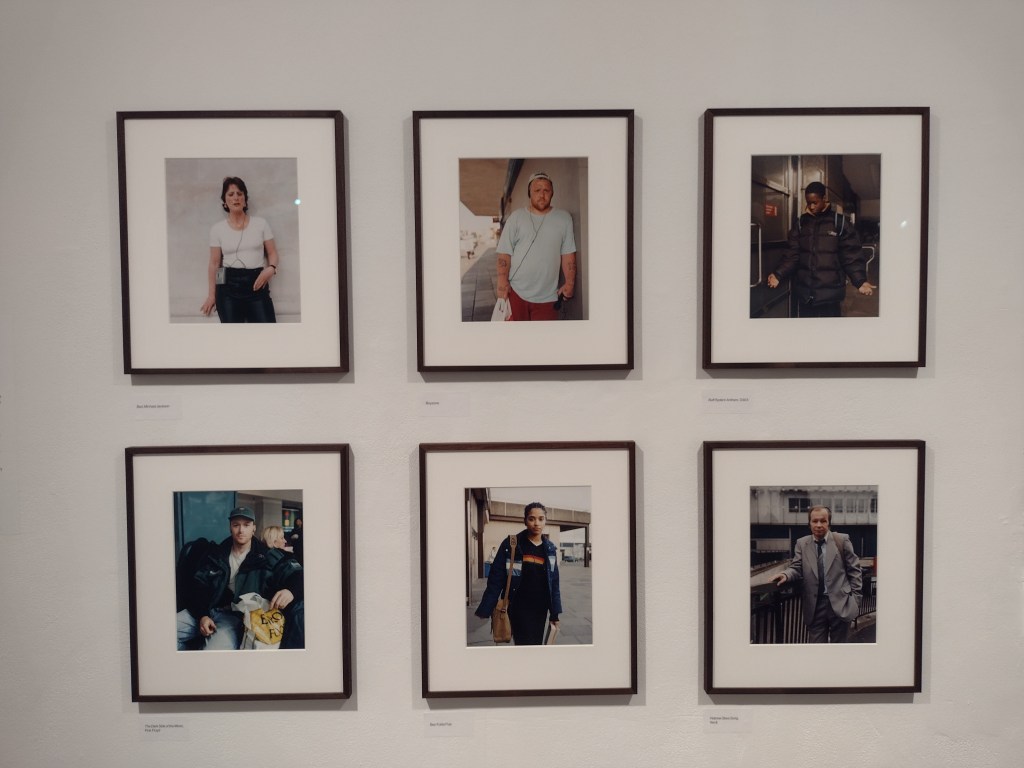
Six portraits of people listening to headphones, each in a black frame on a white gallery wall
‘Audio Portraits’, 1999-2000

I skimmed through the first half of the first room, until I came upon his Audio Portraits, (1999-2000). These are portraits of people with headphones on, with what they’re listening to written below. I like it when artists can articulate a thought you’ve already had, but never known how to express. As someone who frequently listens to music while on the move, I love the feeling that I’m immersed in my own world. I can listen to Ariana Grande with no one judging me. I can stomp down the streets of Edinburgh listening to Rage Against The Machine’s Kick Out the Jams when I’m feeling angry or rebellious. I can silently sing along word-for-word with Joseph and His Amazing Technicolour Dreamcoat whilst commuting and no one suspects a thing. In Audio Portraits, Gill lifts the lid: he lets us into other people’s worlds. The people and the tracks won’t always match or be what you expect. This is the artwork that made me realise that I was going to enjoy the exhibition.

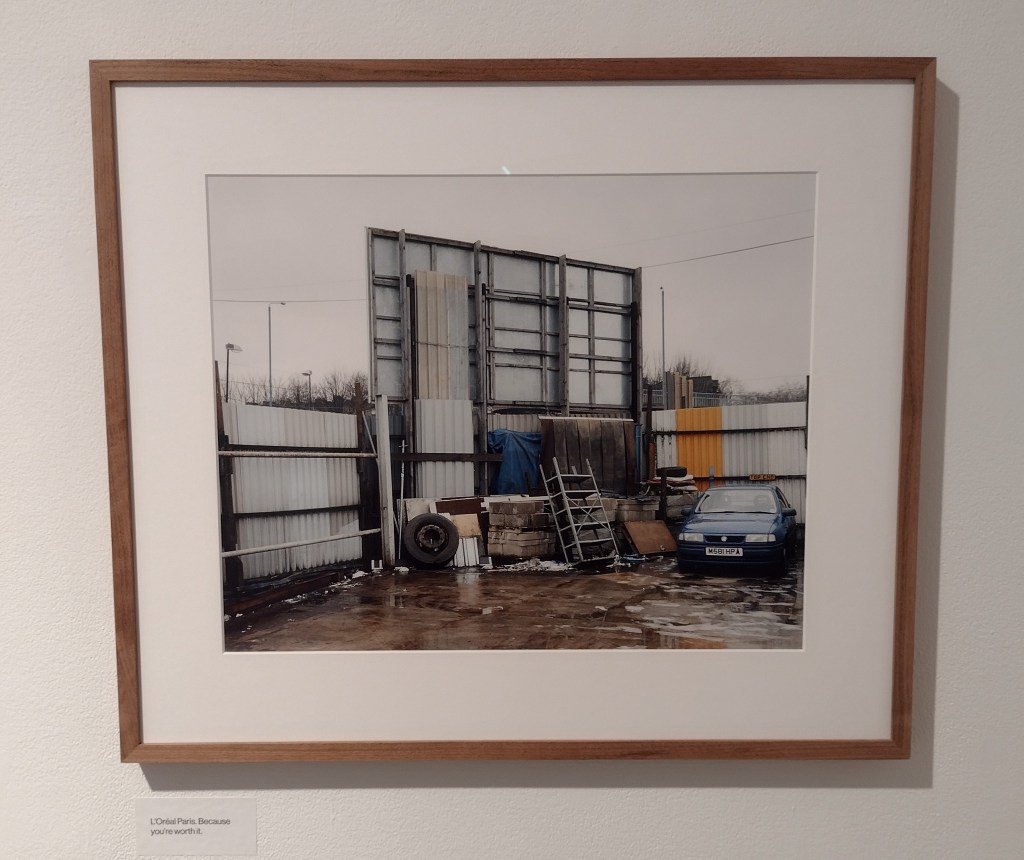
The next was the Billboards series from 2002-2004, where Gill has photographed the back of several billboards, showing the stark and frequently ironic contrasts between the aspirational notions of the advert and the reality surrounding it. L’Oréal Paris proclaims “you’re worth it” and backs on to a wet yard surrounded by corrugated iron, a tyre and some upturned shelving units. Noticing the unnoticeable, and allowing us to notice that magic too, is the photographer’s special gift. It’s a gift we need in a world full of drudgery.

A photograph showing the back of a billboard and a junk yard with an old car, some shelving units and a tyre
“L’Oréal Paris, Because You’re Worth It”, from ‘Billboards’, 2002-2004

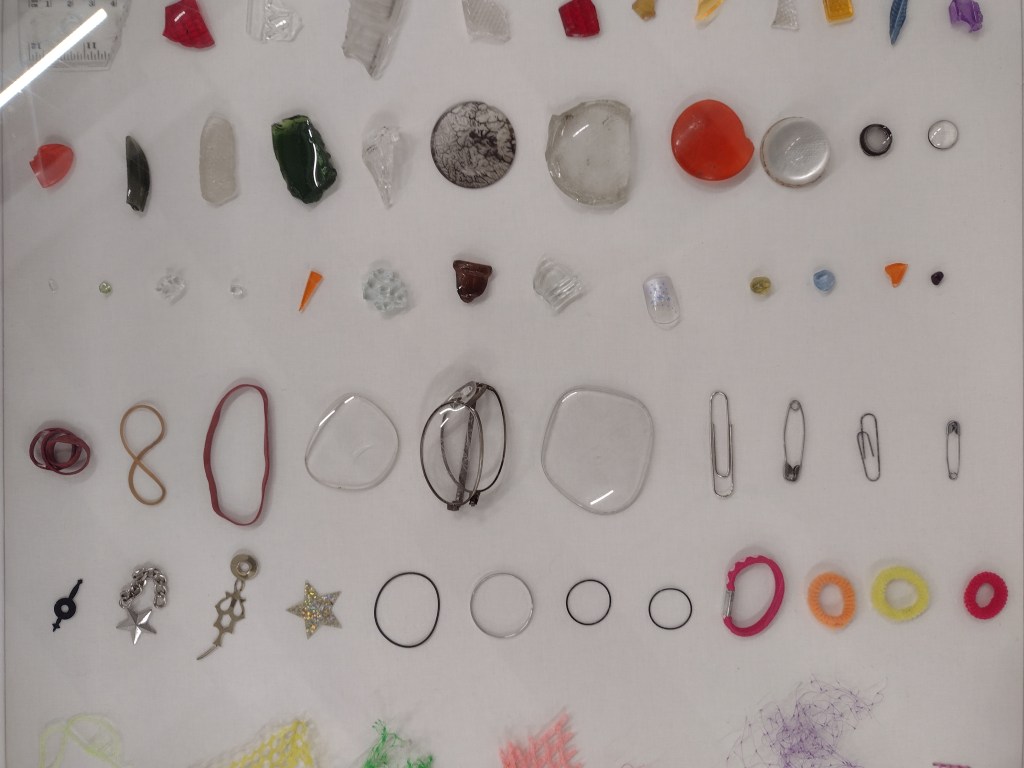
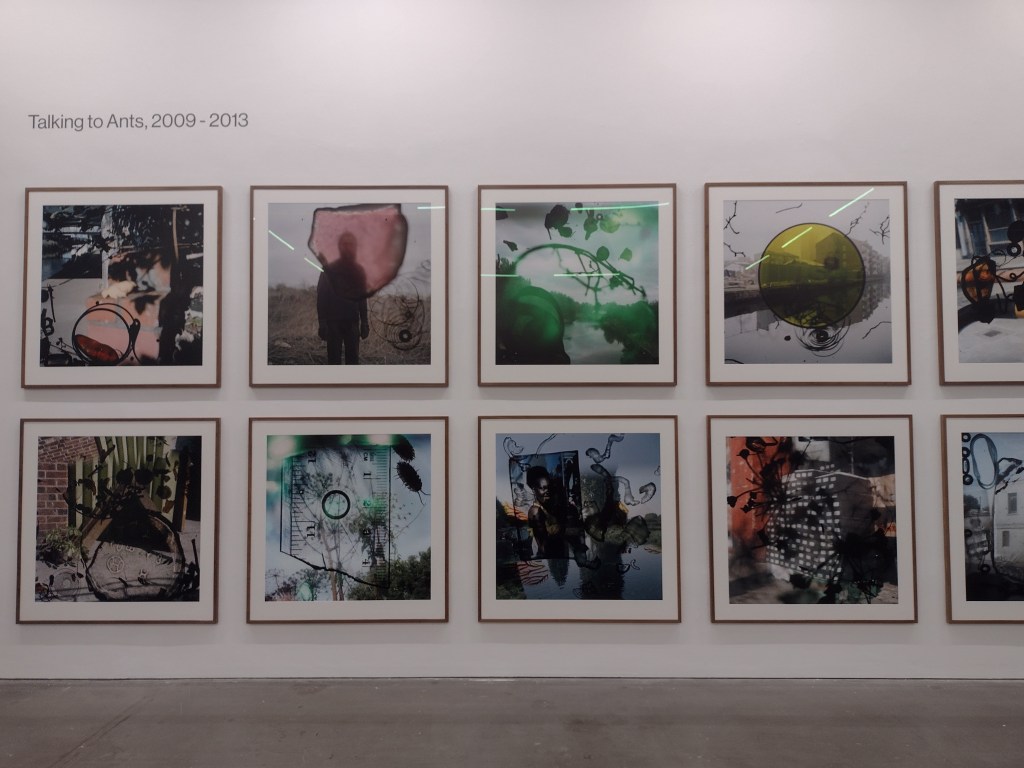
There’s a playfulness and sense of experimentation in Gill’s work that I loved. For his monumental work Talking to Ants, Gill scooped up detritus from the surrounding landscape and embedded it into his camera: stray hair bobbles, broken glasses frames, seed heads, bits of ruler and even insects weave their way into his photos and complicate the scale of the landscapes behind them. These ‘image ingredients’ make for a fascinating display that is utterly mundane but also strangely beautiful. Cable ties have never looked so poetic. 

Rows of small items including hair bobbles, safety pins and shards of glass
Image ingredients for ‘Talking to Ants’, 2009-2013
Large framed photographs from Gill's series, Talking to Ants, on a while gallery wall
Gill, ‘Talking to Ants’, (2009-2013)

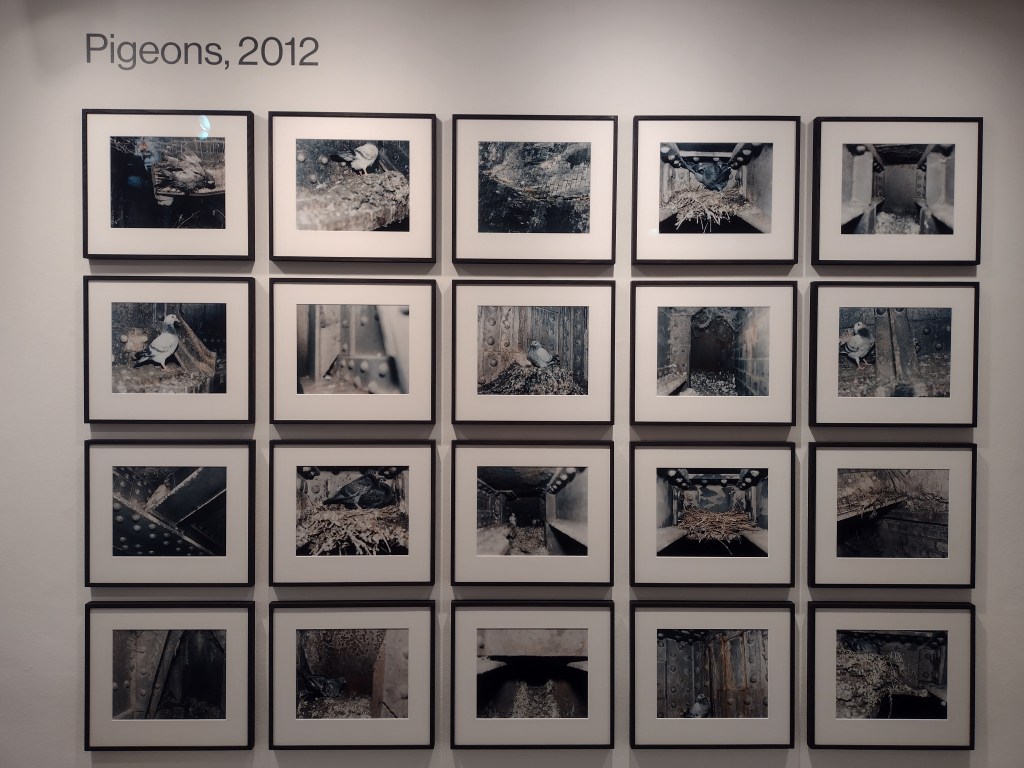
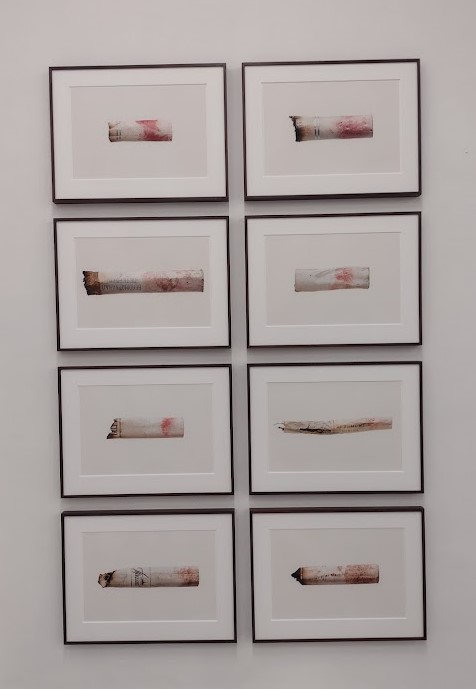
I feel somehow reassured that creative people will be brave enough to do things that others wouldn’t dream of: sticking a camera on a pole and shoving it between iron shafts on railway bridges in order to try and photograph the pigeons that live there (Pigeons, 2012) or collecting lipstick-marked cigarettes from the streets of St Petersburg to compile a series of anonymous portraits for Russian Women Smokers (2002). There’s a courage in this sort of experimentation, one that is drawn from a conviction that an idea is worth exploring, that there’s something special to be found in the documentation of everyday scenarios, no matter how repetitive or odd the process of capturing those scenarios may be.

20 photographs from the pigeons series, framed and mounted on a white gallery wall
‘Pigeons’, 2012

I wanted to make a study deep within the underside of brick and iron railway bridges where I found the bleak and colourless hidden labyrinth of the pigeon world

Stephen Gill
Eight landscape photos of lipstick marked cigarettes on a white wall
Gill, ‘Russian Women Smokers’, (2002)

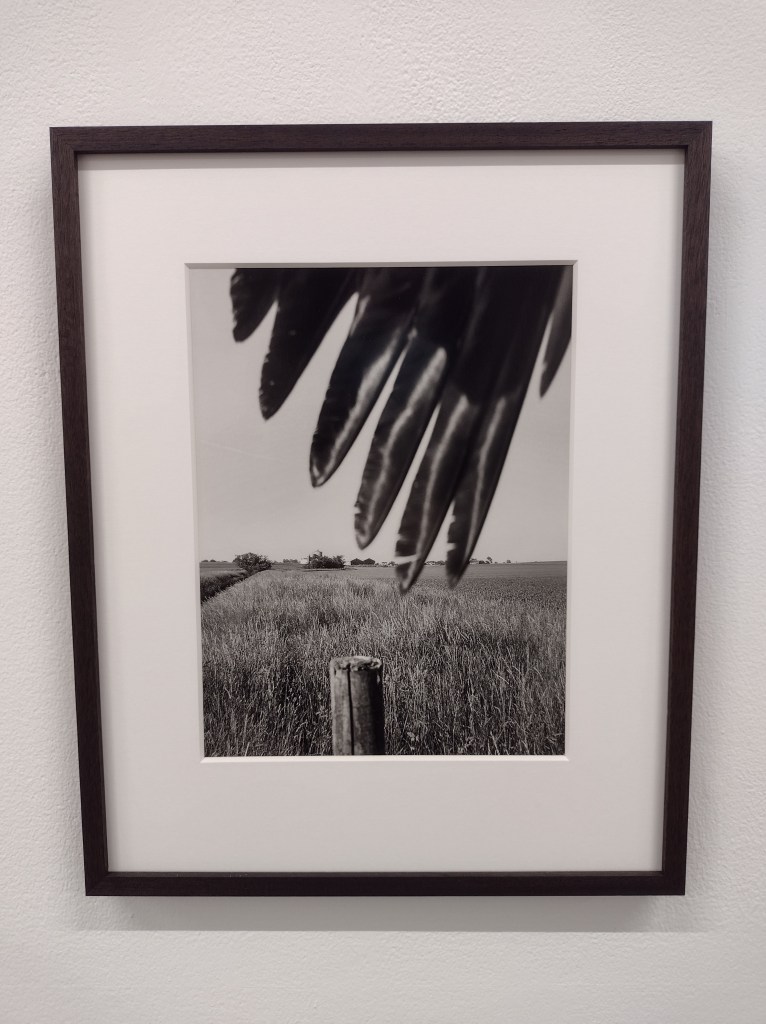
For his work Pillar (2015-2019), Gill set up a motion-sensor camera on a fence post outside his home in Sweden, and over the years, that camera caught so many wondrous sights, even he was surprised by the variety of birds that visited this strange rural CCTV outpost. There were flypasts from flocks of starlings, contortionist crows and even fearsome looking birds of prey that seem to be posing for the camera. The feeling that underpins Gill’s work is one of trusting the process, a conviction that if you look out the window for long enough, something good will happen.

A black and white frame photo of a wing and a fence post
Stephen Gill, from the series ‘The Pillar’, (2015-2019)

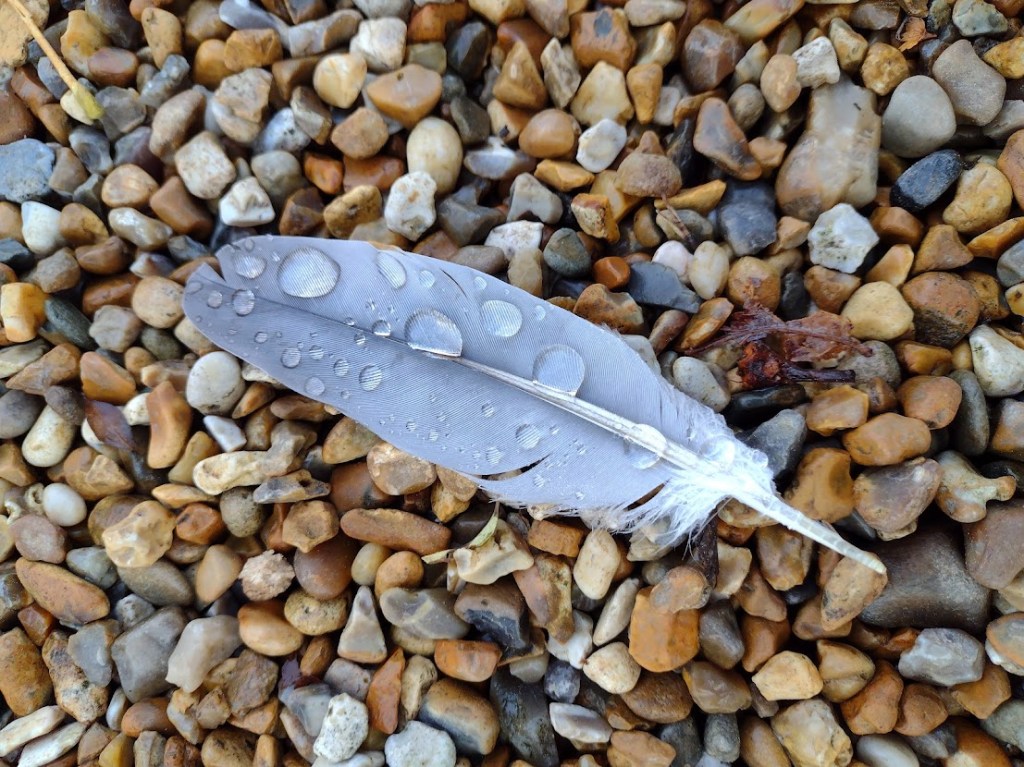
It’s an attitude that is reflected, emphasised and celebrated in The Artist’s Way, which I have been working through, sometimes diligently, sometimes reluctantly, for eight weeks now. Week Six (when I began writing this blog post) is all about ‘recovering a sense of abundance’ and includes some of my favourite tasks so far, collecting interesting rocks, flowers or leaves, playful reminders of natural beauty and ‘creative consciousness’. I’ve not yet bothered to collect any stones or leaves, but I did see a feather with raindrops on it on a gravel drive, which was so beautiful it stopped me in my tracks. I’m thankful to both Cameron and Gill for helping me to see it.

A close up photo of raindrops on a feather on a gravel drive
Photo of a feather on a gravel driveway

As December now draws to a close, I find myself reflecting again on my own creative endeavours over the past year. This is my first proper blog post for six or seven months, so perhaps The Artist’s Way is helping me get back into writing at last. It hasn’t been an easy year for anyone, and it doesn’t look like 2022 is about to get a whole lot easier. However, I continue to draw comfort from art and the way it brings interesting, creative and supportive people together. Thank you to everyone who recommended shows, books, articles and exhibitions, who challenged me with creative conundrums, who joined me on Instagram for 20 Mins With and the (recently somewhat elusive) Sunday Spotlight. You’re all gems for reading this far. My wish for 2022 is that we continue to encounter art, and hope, where we least expect it.

A close up photo from Gill's Talking To Ants series, there are silhouettes of seed heads which obscure most of the photo behind which looks like it is of a tower block.
Detail from Gill’s ‘Talking to Ants’, (2009-2013)

Emma Talbot at Dundee Contemporary Arts

I am standing in a light-filled room, one that is almost silent. The walls are white, the ceiling is high. Across the middle of the space, a huge diagonal tapestry floats, seemingly hovering, swaying slightly. It is made of the lightest of materials, silk panels hang there, lightly stitched together, suspended.

I am in a gallery for the first time in months, in a town I don’t know well. I’m looking at Emma Talbot’s Ghost Calls, created specifically for the main exhibition space at Dundee Contemporary Arts. It feels really good to be back.

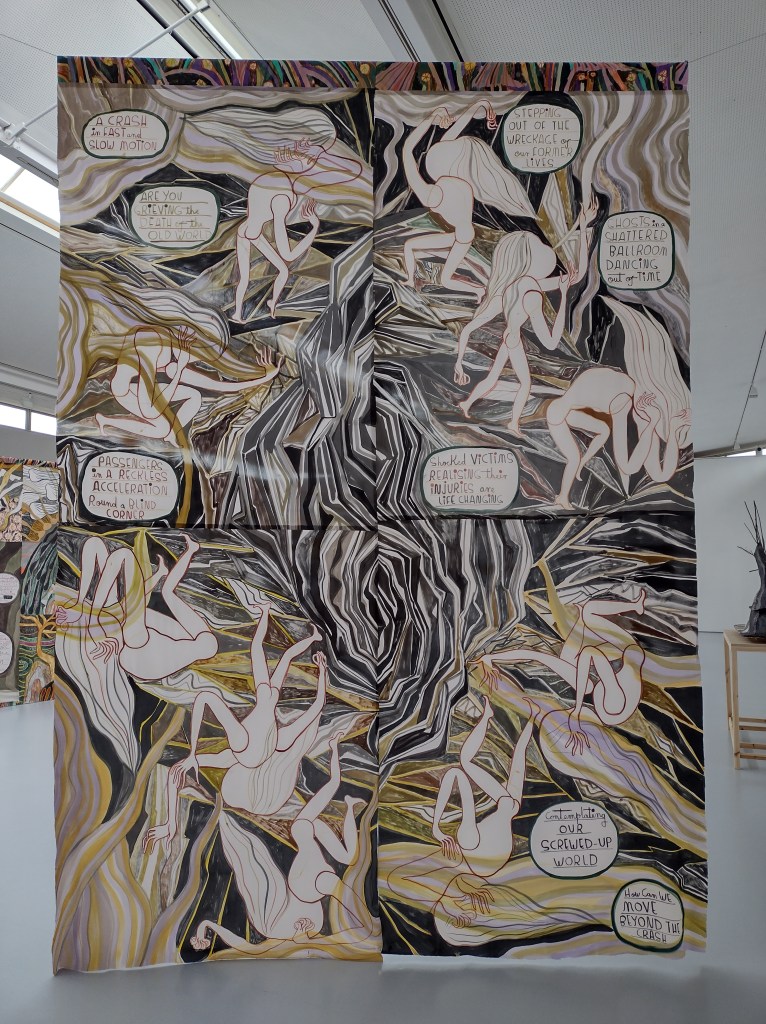
‘A Crash in Fast And Slow Motion’, 2020

The thing I notice first about this display is the colour palette: greens, ochre, rusty red, greys and creamy white. The repeated tones help to conjure the feeling that we have entered a specific world. There is a narrative here: the first work you encounter, also a large silk tapestry, depicts an unnamed disaster that has shattered the earth and turned it upside down. There are ghostly white bodies everywhere, positioned at strange angles and holding their heads in their hands. Scattered speech bubbles tell us more: ‘passengers in a reckless acceleration round a blind corner’; ‘a crash in fast and slow motion’.

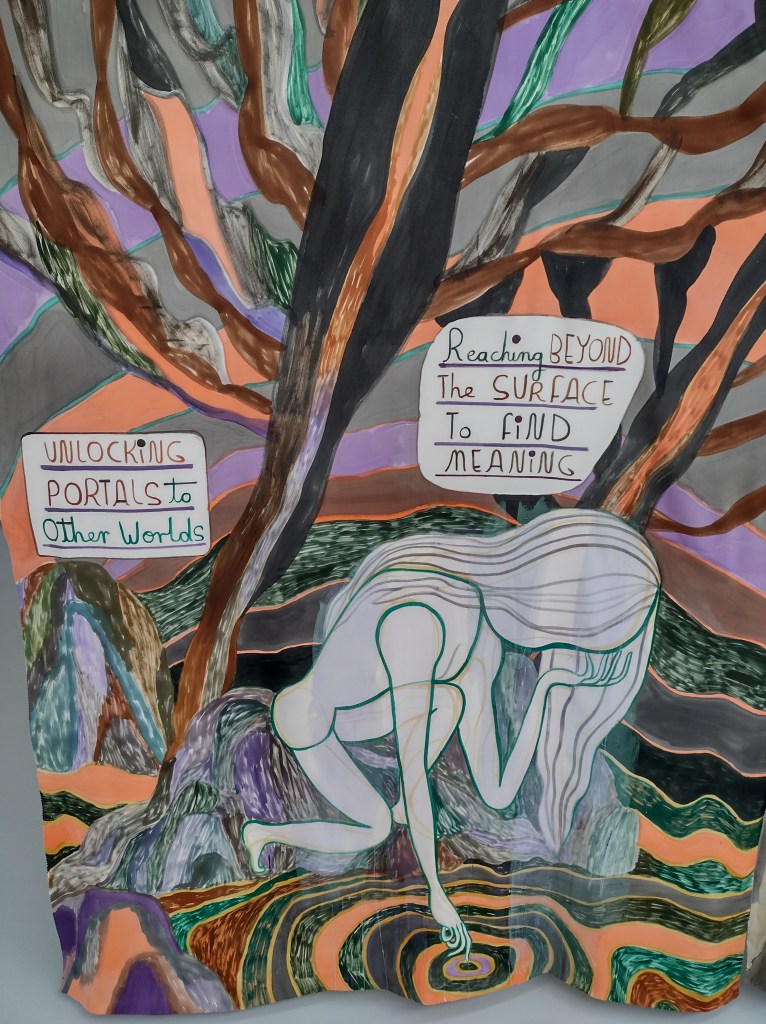
The centrepiece, a large tapestry that bisects the room, tells the story of what happens after the cataclysmic crash. Text in the first panel both questions and explains: ‘Do you hear ghost calls? A teary lament for human existence. A shout out to the living to take more care of themselves, of the world, of each other.’ I like these little ghostly souls with their long, wavy hair. The way they journey through an unknown landscape, little disembodied heads blowing long trumpets – or are these trees lying on their sides?

A section from ‘Ghost Calls‘, 2020

Though the story is about processing collective trauma, looking around me, I feel surrounded by a complete sense of calm and serenity, like a blanket has settled over the entire room. Something in the fragility of these artworks makes engaging with them a very tender encounter. Even calling the largest works ‘tapestries’ feels wrong, because that conjures up images of heavily-embroidered, thick wall hangings, decorating old castles and torchlit halls. Here, there is a palpable lightness.

The drawings are my favourite. Small-scale and pinned to the wall, they exist almost completely without ceremony: these are pages from sketchbooks. There is no glazing, there are no frames. Everything feels very immediate, right in front of me and so utterly delicate – the papers are handmade.

‘Celtic Birds’, 2020

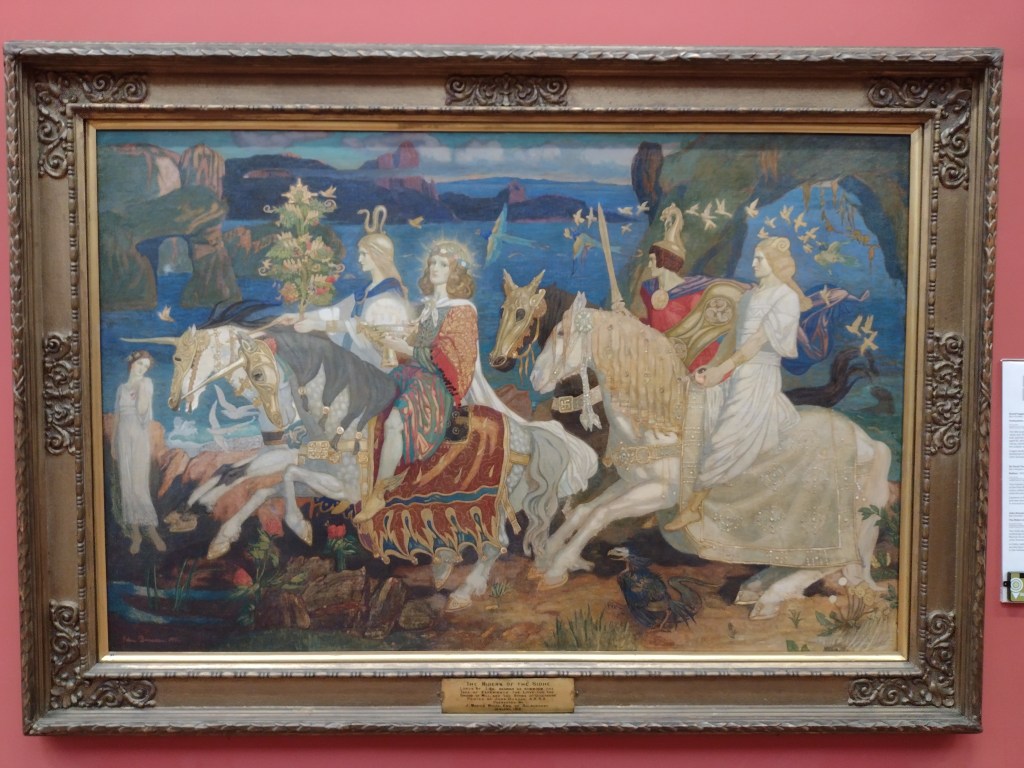
When researching for this exhibition, Talbot came to Dundee and was struck by the paintings at the local museum, the McManus. You can see here her fascination with The Riders of the Sidhe by John Duncan, one of the collection’s most famous paintings, a work thick with symbolism and arcane magic, and of great importance in the Celtic Revival movement. I had just been to the McManus and was admiring it too, so the connections felt particularly present in Talbot’s fine drawings of mythical beasts, a connection that was reinforced by the sense that her tapestries represent a linear journey, one with a similarly ambiguous destination.

John Duncan, ‘The Riders of the Sidhe’, 1911

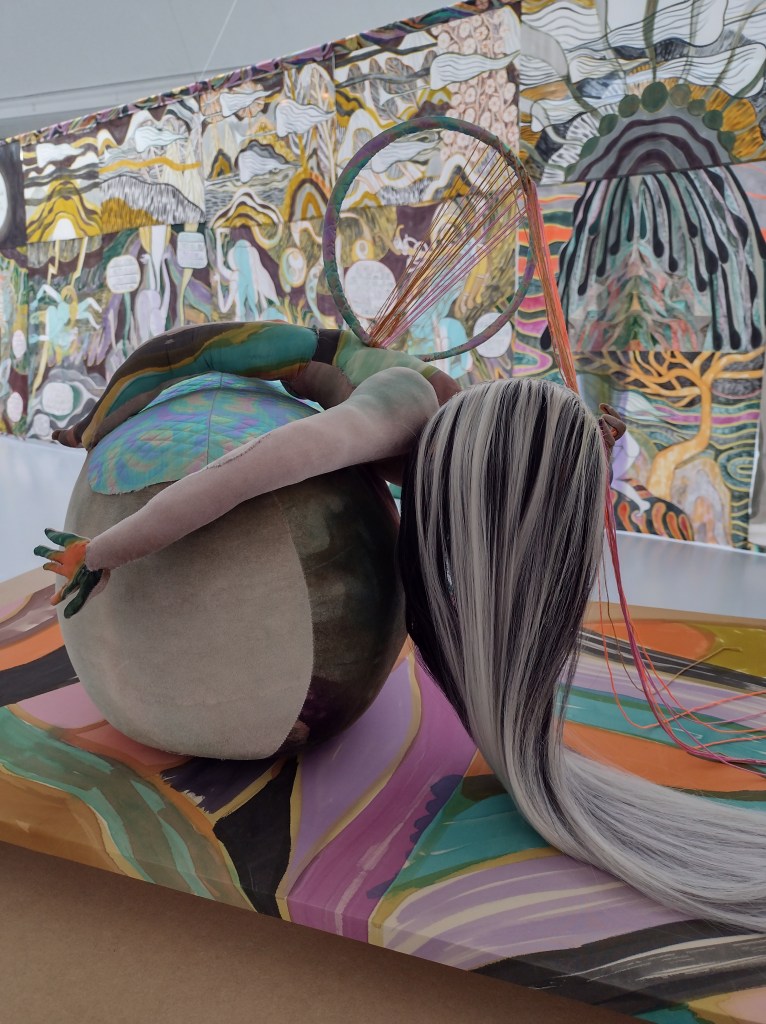
There were five sculptures dotted around the exhibition, but these struck me as out-of-place, needless add-ons to the main body of work. The stuffed figurines were 3D versions of the ghost characters, made from a kind of velour material, with crudely kirby-gripped wigs and random accessories (a dream catcher, a willow tree). To me, they looked clumsy and jarred displeasingly with everything else, which was so finely drawn and meticulously put together.

A much more successful use of a different medium was the animated 14-minute film Keening Songs, where figures of women move through a landscape, meeting animals and spirits, enacting a ‘keening,’ a mourning ritual associated with old Gaelic communities in Scotland and Ireland. These stories were enchanting, layered with poetry and intrigue, and the exhibition as a whole suggested that we will have to enact our own keening, as we journey beyond the global trauma of the pandemic. Perhaps art can be a tool in that process?

I was visiting my second gallery of the day, for the first time in over a year, and my stamina was wavering. Yet despite the inevitable ‘museum back’, I was here at last, looking at new art in all its freshness. I felt so much gratitude for this place, these artworks, that they existed right here in front of me, without the intermediary of a screen. There is an undeniable physicality to the experience of looking, and looking carefully, one that can make the viewer feel truly present, truly awake and alive for the first time in a long time.

‘Dreaming Woman’, 2020

Art in Edinburgh this spring

After months of closed doors and darkened rooms, museums and galleries are set to begin opening in Scotland from Monday 26 April. Unsurprisingly, I’m excited about the prospect of returning to experiencing art ‘in the flesh’, though lockdown has proven that art can be found everywhere and anywhere, and isn’t confined to the walls of a hushed gallery space.

Over the past year, I’ve had to be more imaginative about what to look at and write about: seeking out artists to highlight each week on Instagram, exploring virtual viewing rooms and reading more art criticism. This unwanted pause on what had seemed a never-ending cycle of exhibitions has, I hope, made the blog less of a diary of exhibition reviews, and more a set of broad suggestions of how we can engage with art.

The more I think about it, the more I realise we’ll have to reacquaint ourselves with how to look at art in person, as the world around us becomes available again in all its glory. How will we prioritise our time? Can we pace ourselves? Will we be overwhelmed, underwhelmed, or just ‘whelmed’? Will our stamina for standing and wandering around galleries be a shadow of its former self?

Contrary to what some might suggest, Edinburgh is alive and buzzing with art all year, so here’s a round-up of some things I’m most looking forward to visiting in person this spring and summer.

Jonathan Owen at Ingleby Gallery: 29 May-17 July

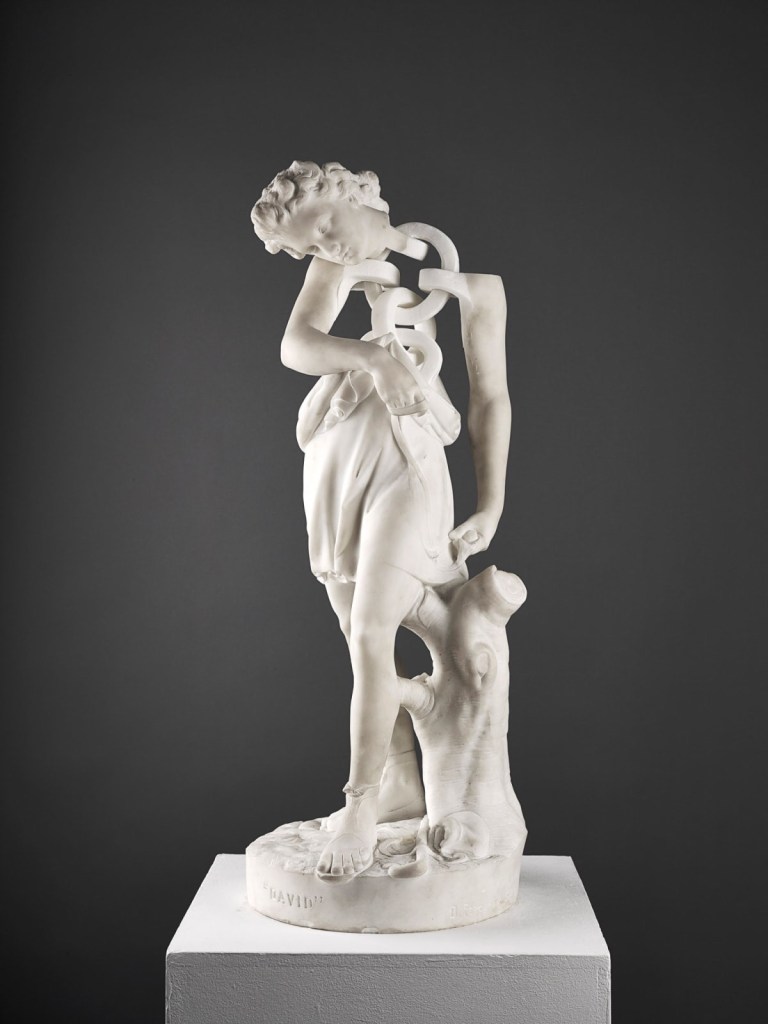
Regular readers will know that I love the Old Masters. That’s where my art journey started (as a child I loved The National Gallery card game). But I also love it when contemporary artists reinterpret traditional forms to say something new e.g. Meekyoung Shin’s slowly eroding soap sculpture of the Duke of Cumberland in Cavendish Square. Jonathan Owen is such an artist. His work uses erasure and interventions to alter found materials, including marble statues. This show at Ingleby Gallery, one of my favourite places to see art in Edinburgh, will feature these altered statues, and will also include the unveiling of a new life-size work about empire and exploitation. I’m sure this exhibition will go straight into the heart of the monument debate and I can’t wait to see these sculptural works in 3D. For me, sculpture is something you have to see in person. The screen just doesn’t cut it.

Jonathan Owen, ‘David’, (2013),
nineteenth century marble figure with further carving

A very interesting rehang at the Scottish National Gallery: Open Thursday-Saturday from 6 May

When I was studying art history at ECA, we were incredibly lucky to get to visit the Scottish National Gallery before opening hours. I remember asking our host, Frances Fowle, Senior Curator of French Art, why some of the most famous paintings are kind of… hard to find in the Gallery. While some people love the fact that you go up a narrow set of stairs and suddenly you’re surprised to be in the company of Van Gogh’s Olive Trees, Monet’s Haystacks and Gaugin’s Vision of the Sermon, apparently lots of folk agreed that they seemed needlessly buried. The latest Friends newsletter explains:

You spoke, we listened. For the re-opening of the Scottish National Gallery we have moved seven of the much-requested Post-Impressionist paintings to a display on the ground floor.

While I doubt this will be a permanent change (the rooms upstairs are probably a much better scale for these works), it will be really wonderful to see these incredible paintings placed front and centre, and I’m fascinated to see how the team at the Galleries will take on this re-hang.

Vincent Van Gogh, ‘Olive Trees’, 1889. Excuse my wonky camerawork.

Fine Art Society Edinburgh, Joan Eardley 6-29 May

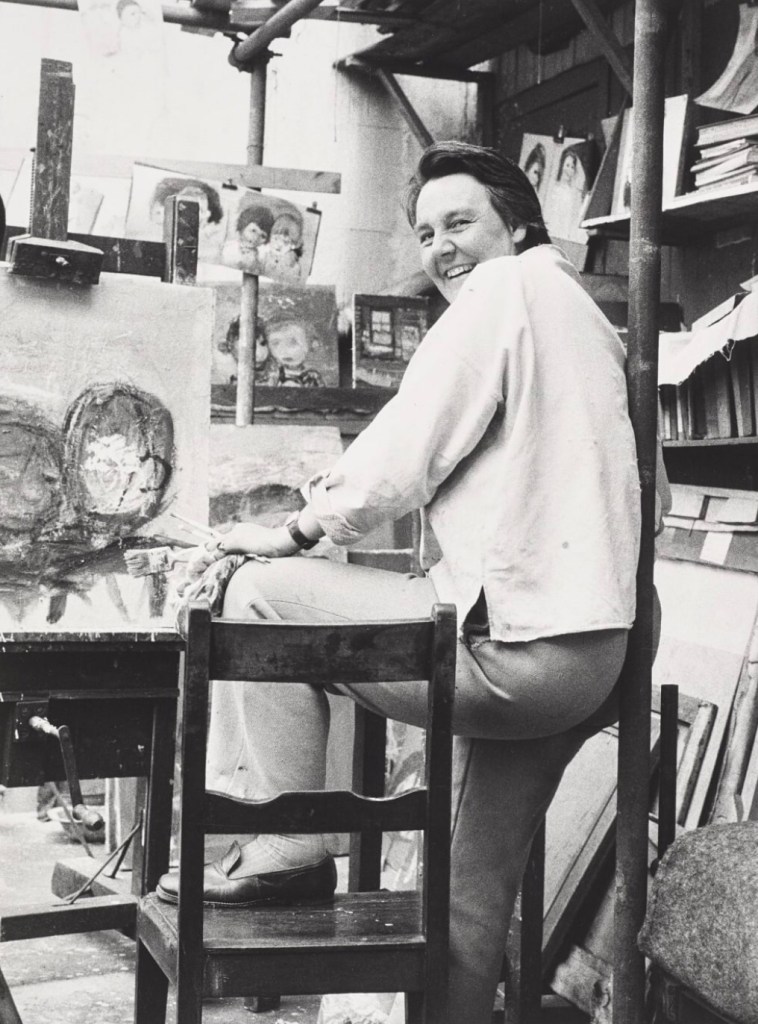
I’ve written about the forthcoming #Eardley100 celebrations before, and am hoping to write about her again several times this year. While the centenary celebrations are happening across Scotland (especially at Paisley Art Museum and the Hunterian in Glasgow), this exhibition at the Fine Art Society on Dundas Street in Edinburgh pairs works by Eardley with photographs of her in her studio. I’ve long been interested in our obsession with artists’ studios (the weird preserved Paolozzi studio at Modern Two is a great example), so I’m really curious to see this combination. It also ticks off a major ambition for me, which is to visit more of the galleries on Dundas Street. From the outside, they aren’t the most welcoming, but to learn more about Eardley, one of the best artists I’ve encountered since moving to Scotland, I’ll brave it.

Oscar Marzaroli ‘Joan Eardley in her Townhead studio’, 1942

Restless Worlds for MANIPULATE Festival: Lyceum, 22 April-2 May

This is why everyone should go to their local art school’s degree show (happening online this year, watch this space). At the ECA Degree Show in 2019, I came across an artist called Chell Young, who works to create miniature worlds that make you feel like you’ve had one of Alice’s EAT ME cupcakes. I’ve followed Chell’s work since, and that’s how I came across Restless Worlds. MANIPULATE Festival has commissioned eight Scottish artists to create kinetic sculptural works, displayed in windows, alongside a short story or soundscape that you download to your phone. While I’m especially looking forward to seeing what Chell has created, the whole project sounds fascinating. In Edinburgh, it is happening in the windows of the Lyceum foyer but there are projects planned for Glasgow and Aberdeen too. More info and tickets here.

Chell Young, ‘Fragile Realities’, part of installation at ECA Degree Show, 2019

Christian Newby at Collective: 13 May-29 August

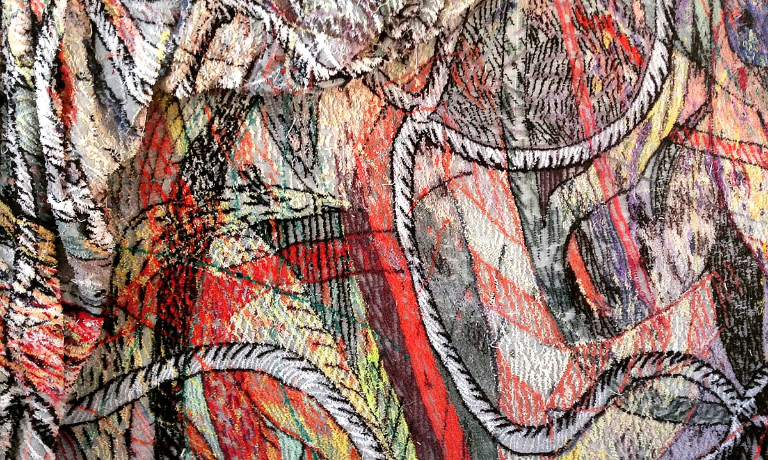
I’m sure lots of Edinburgh residents have braved the climb up Calton Hill for a lockdown walk, just to feel *something*. Well, from early May we will be rewarded with an open-for-business Collective Gallery at the summit. The exhibition they’re emerging from lockdown with is by Christian Newby, and features a large-scale textile called Flower-Necklace-Cargo-Net. This tapestry, made with industrial carpet tufting techniques responds to the building, which originally housed an astronomical telescope. Christian’s work explores ideas of craftsmanship, labour and the use of machinery in the fine and applied arts. I am intrigued by the description and I really want it to be absolutely massive. We all love a large scale work.

Christian Newby, ‘Flower-Necklace-Cargo-Net’ (detail), 2020

There will be so, so much more to talk about and explore, so please consider this an initial scanning of the Edinburgh art horizon. Other things I want to explore further are the Fruitmarket Gallery reopening after its refurbishment, The Normal exhibition at the Talbot Rice Gallery which explores the pandemic, the ECA Degree Show and the Art Festival. I’ll keep my ear to the ground and post more recommendations as and when.

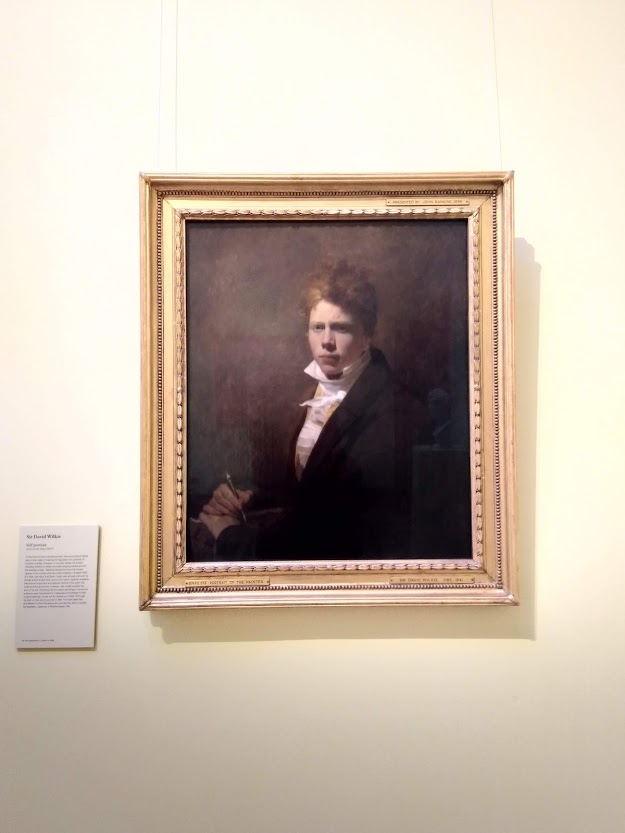
Alongside all that, we can never forget our old favourites. One of my first tasks when the Scottish National Portrait Gallery opens on 30th April is to go and visit my old pals, David Wilkie and Duncan Grant, to check they’ve been OK over the past year.

David Wilkie, Self Portrait, 1804-05

‘Florilegium: A Gathering of Flowers’ at the Royal Botanic Garden, Edinburgh

There’s a new, free exhibition in town, at the Botanics. Ever a beautiful place to relieve your Covid-19 cabin fever, to feel the peace of looking at plants and be made to feel small by impossibly tall trees, now you can supplement it with a visit to Florilegium: A Gathering of Flowers. The first exhibition since the RBGE started its Climate House initiative, the exhibition marries what seem to be two very different ways of looking at flowers. 

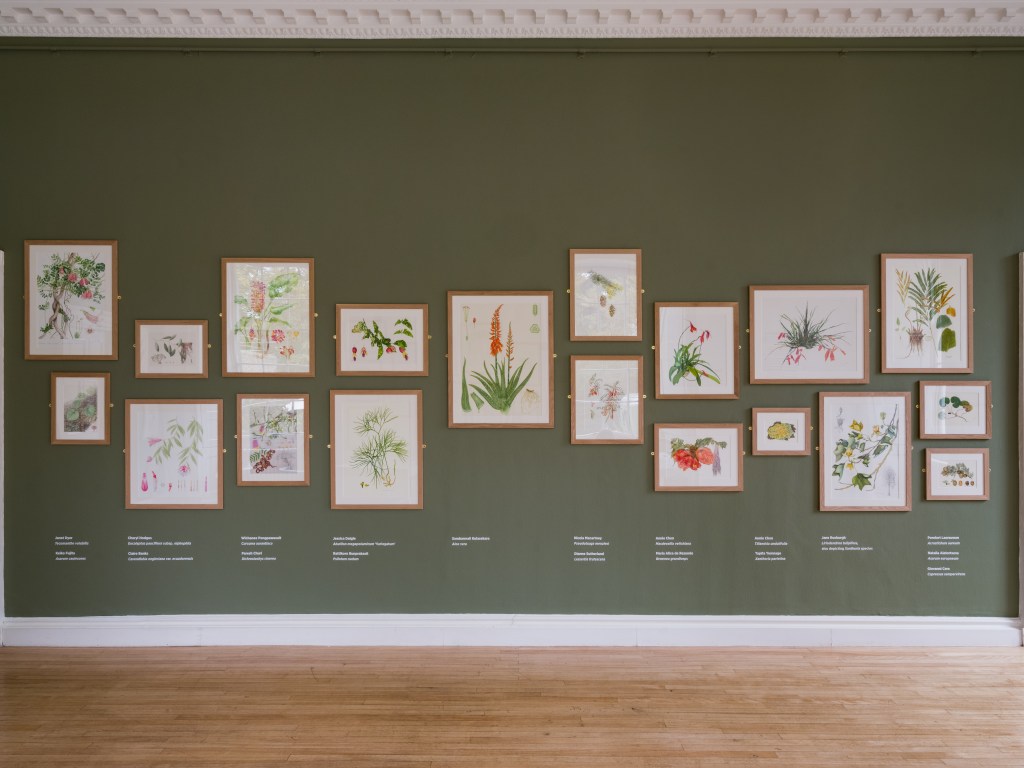
The first is factual, scientific, research-based. Packed into the first room are depictions of flowers from the Garden’s collections, submitted by botanical illustrators from around the world. I love their precision, the sense that these drawings have been set to view in HD. Glancing at these densely stacked images, their uniform wooden frames fitting perfectly with the olive green of the wall, I’m convinced there would be enough detail here alone to make an entire exhibition. Enhanced by the ikebana style floral displays, it’s what visitors might expect, might hope to see. It’s beautiful, classy, and it’s about flowers. Tick.

Florilegium: a gathering of flowers, installation view. Photo by Tom Nolan

Up the stairs, we’re taken into a somewhat different realm by four contemporary artists, Wendy McMurdo, Lee Mingwei, Annalee Davis and Lyndsay Mann. While the immensely skilled botanical illustrators are concerned with depicting the flower exactly, and in some cases, the pollinators too, the artists upstairs are more concerned with what we cannot see. The emotions and meanings we as humans attach to plants, their embroilment in our colonial past, and the metaphor of life and death a flower provides so effortlessly, are all explored here.

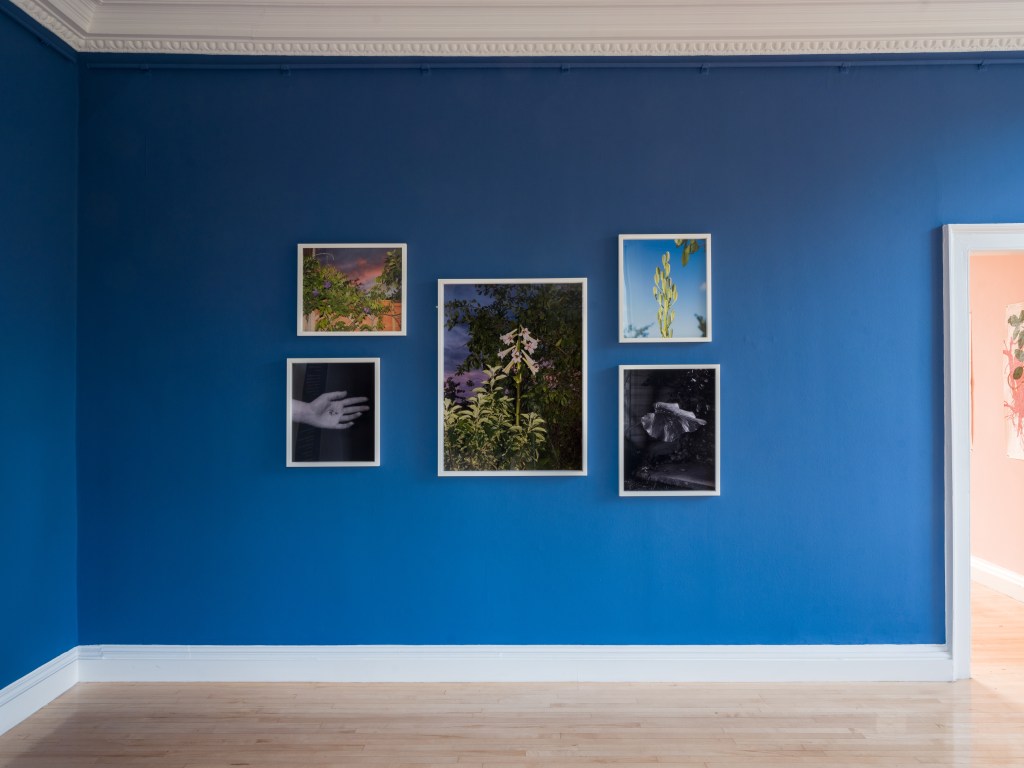
Wendy McMurdo’s photographs from the Indeterminate Objects series from 2019 use gaming software to collapse the blooming/withering lifecycle of a single flower in one vase, an eye-catching narrative that makes you look twice. Her Night Garden series (2020), reflects on how her mother’s ill health and recent death was combined and synchronised with blossoming of a large, mystery, tropical-looking plant in her suburban garden. I loved the uncanny photo of seeds resting in the palm of her hand, which looked to me like the hand itself was punctured, decaying: a wound between the states of hurt and healing.

Wendy McMurdo, ‘Night Garden’, 2020, installation view, photo by Tom Nolan

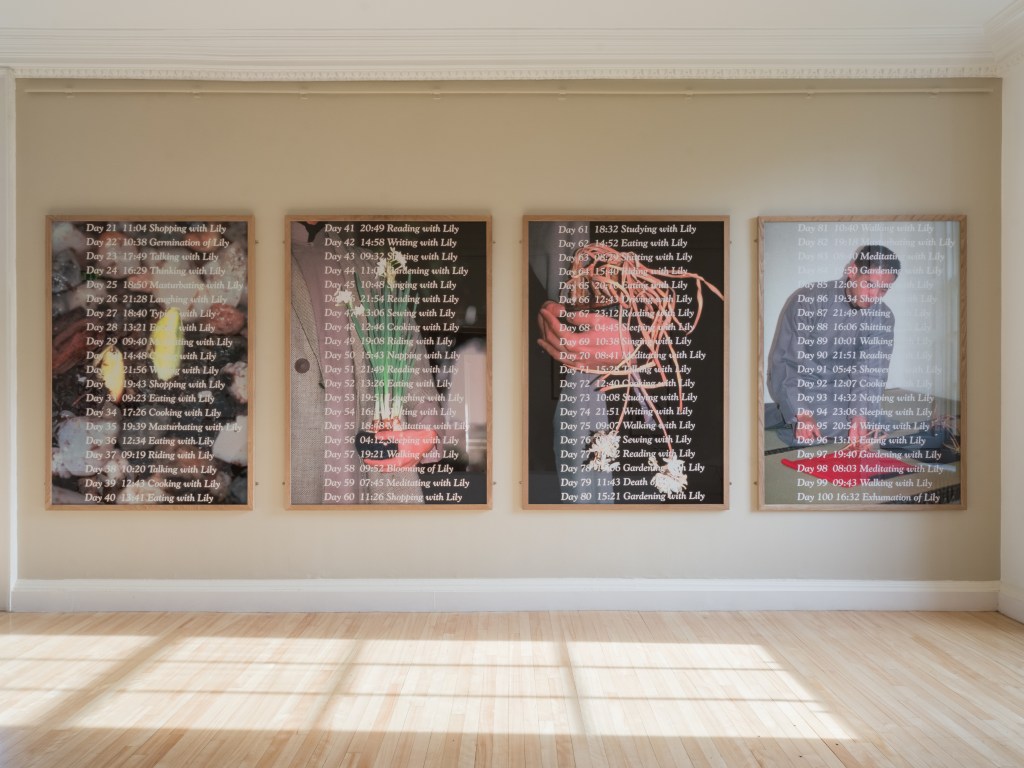
There’s a pleasant chiming here with the work 100 Days with Lily by Lee Mingwei, which documents a performance created back in 1995. His grandmother died, and in mourning he lived with this plant for 100 days, carrying it everywhere. He projects his own grief on to lifecycle of this plant, but the presence of the banal activities of daily life (Eating with Lily, Sleeping with Lily, Shitting with Lily) overwrite and undermine this strange, solemn ritual. For Florilegium, Mingwei has planned a new work called Invitation for Dawn, where opera singers will perform directly to the recipient via live video call. It sounds weird, experimental and intimate, but in a great way. You can participate between 16 November and 11 December, email creativeprogrammes@rbge.co.uk for more details on how to get your ‘gift of song’.

Lee Mingwei, 100 Days With Lily, installation view (photo by Tom Nolan)

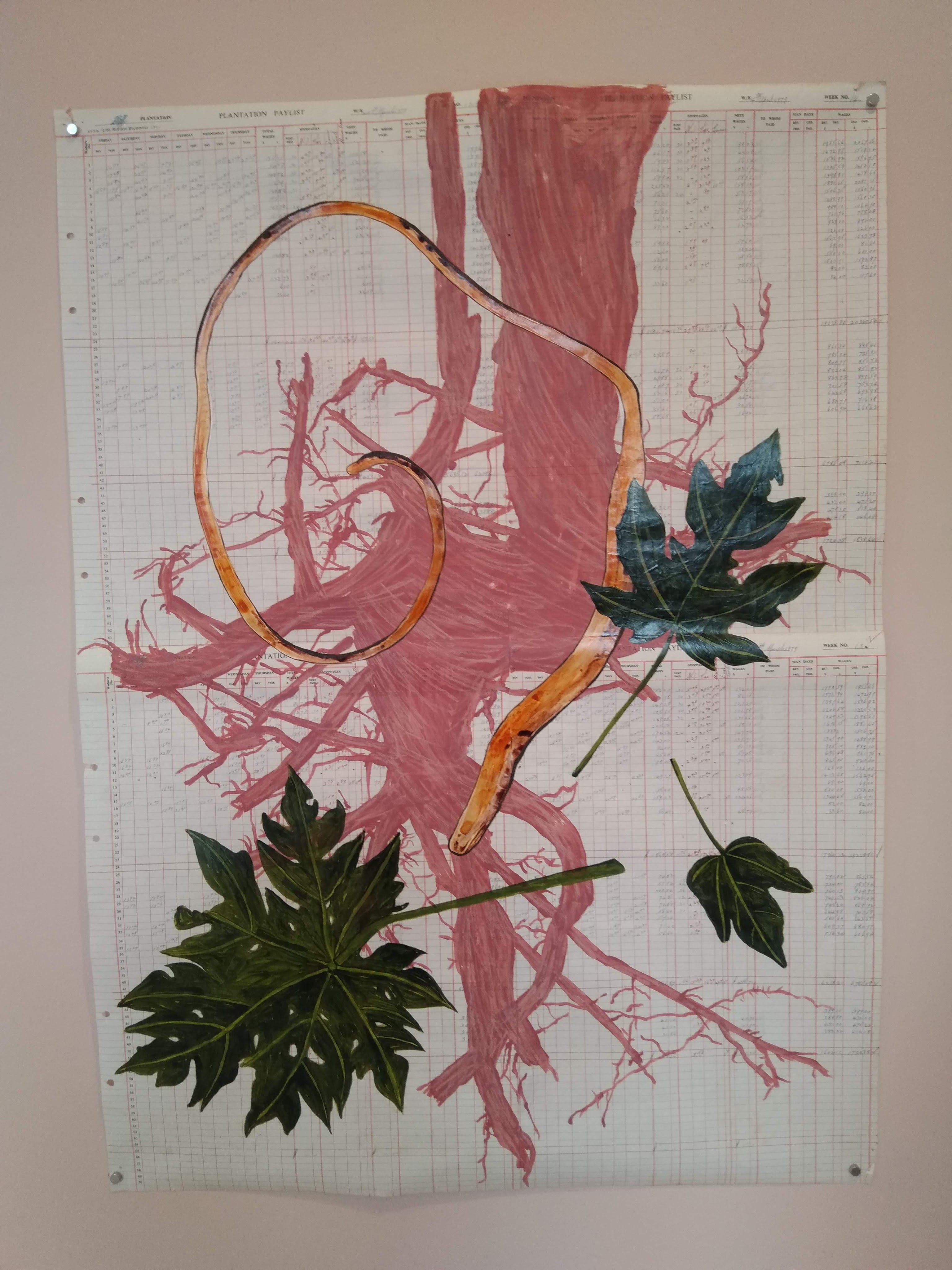
The work of both Annalee Davis and Lyndsay Mann anchors the exhibition in something deeper, bringing the role of the Botanic Garden, the collection of plants, the colonial ecosystem at the heart of RBGE’s existence, into view. Annalee Davis is a Barbadian artist whose studio is situated on what used to be a sugar plantation. Her practice investigates the history of that land, examining the power structures that have been tilled into the soil. Here, her series As If the Entanglements of Our Lives Did Not Matter (2019-20), is casually pinned up on the wall, unframed, unglazed. It immediately felt visceral and direct, denying the formality, poise and stiffness of Inverleith House. Pink, flesh-like depictions of messy clumps of roots are daubed over old payment ledgers from the plantation, which are intriguing, loaded documents in their own right. In a haunting portrait, she places two of her ancestors side by side, who though blood relatives, would have never lived together in reality, separated as they are by race and class. 

Annalee Davis, ‘As if the Entanglements of Our Lives Did Not Matter’ (2019-20), detail

Davis’ art works in dialogue with Lyndsay Mann’s A Desire for Organic Order (2016), a mesmerising film of 55 minutes which explores the RBGE’s Herbarium, where species of preserved plants are kept for study and research. Although most visitors won’t have time watch the film from start to finish, it’s a fascinating piece, which shines a light on the strangeness of it all: the meticulously categorised, catalogued, classified plants, sitting in row upon row of filing cabinets and box files, the collection expanding over the centuries as new species are found and brought to the RBGE, their final resting place. 

The violence surrounding these collections is examined at a distance, with the narrator’s voice dispassionately implying but never quite explaining what we know now, that far more care was given to these foreign plants than to the humans who lived alongside them. If you do have the chance to sit here a while, I’m sure it will make you see the exhibition, and the whole RBGE endeavour, in a slightly different light. You may not think you need this part of your world to be challenged, that you just want to enjoy the Botanics and not think too much about the difficult history and context. But it’s the ability of artists to show things you thought you knew in a new way, that is what makes them so vital to how we think about our past, present and future. That’s why we need the upper floor of the exhibition. We can’t just have a “gathering of flowers”, we need someone to tell us what they mean.

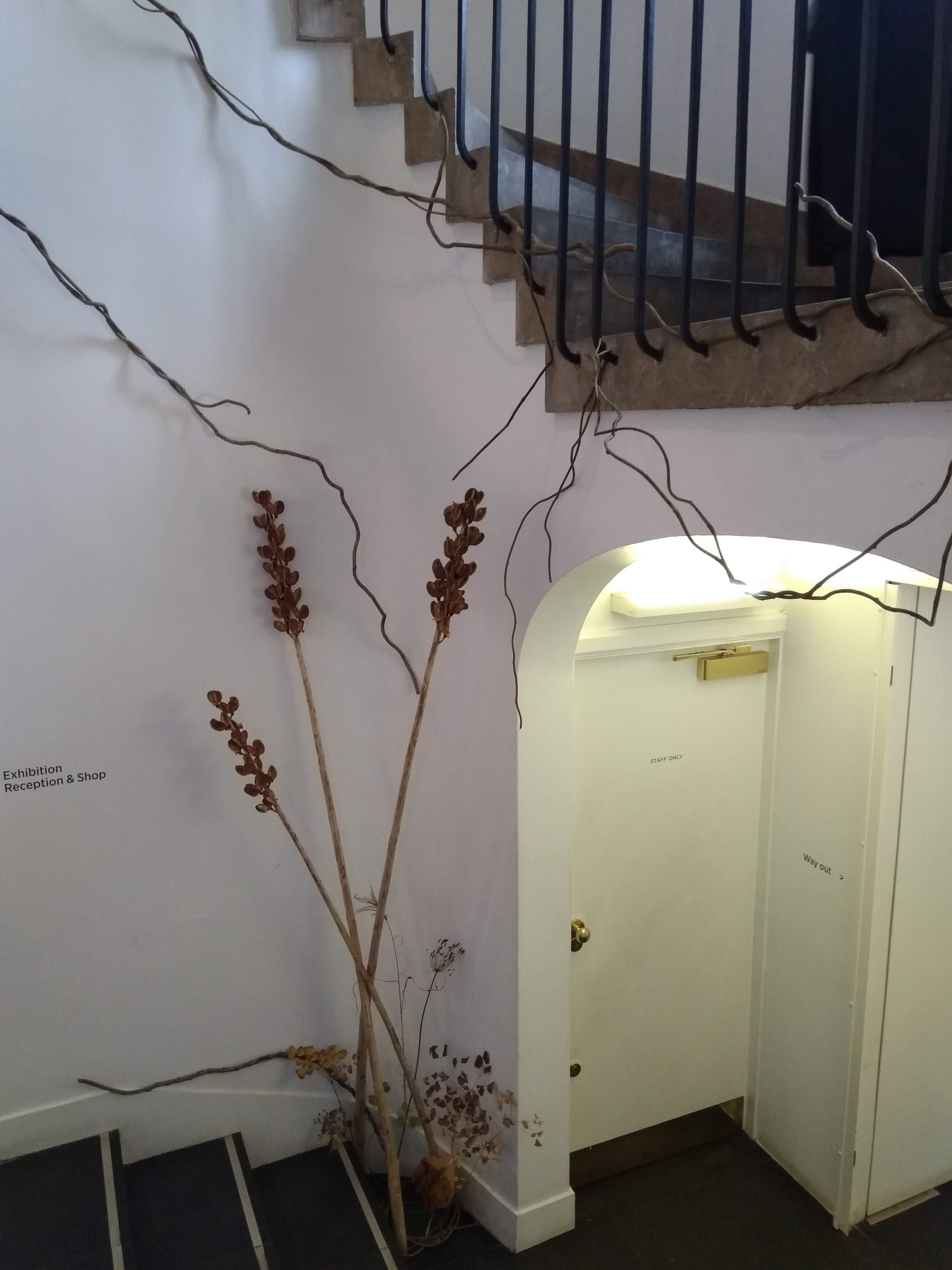
Flower displays at ‘Florilegium: a gathering of flowers’

‘Janet’ by Caroline Walker at Ingleby Gallery

Yesterday I went to see Janet, an exhibition of paintings by Caroline Walker. This was my first Edinburgh gallery visit since March, and it felt great to be back.

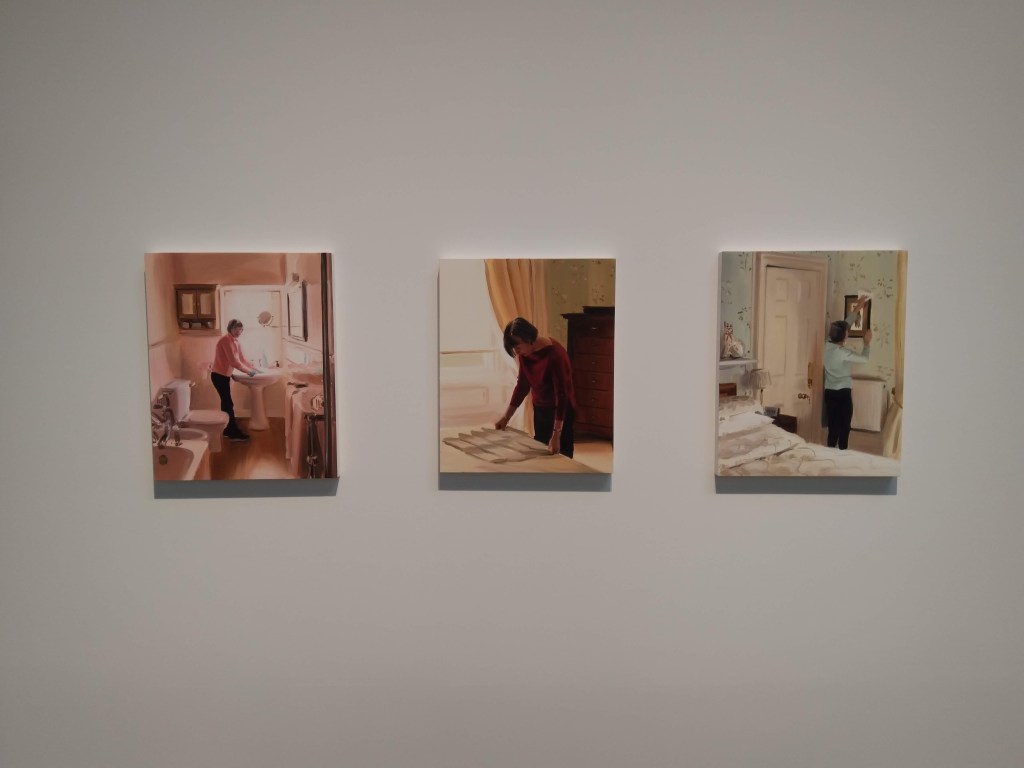
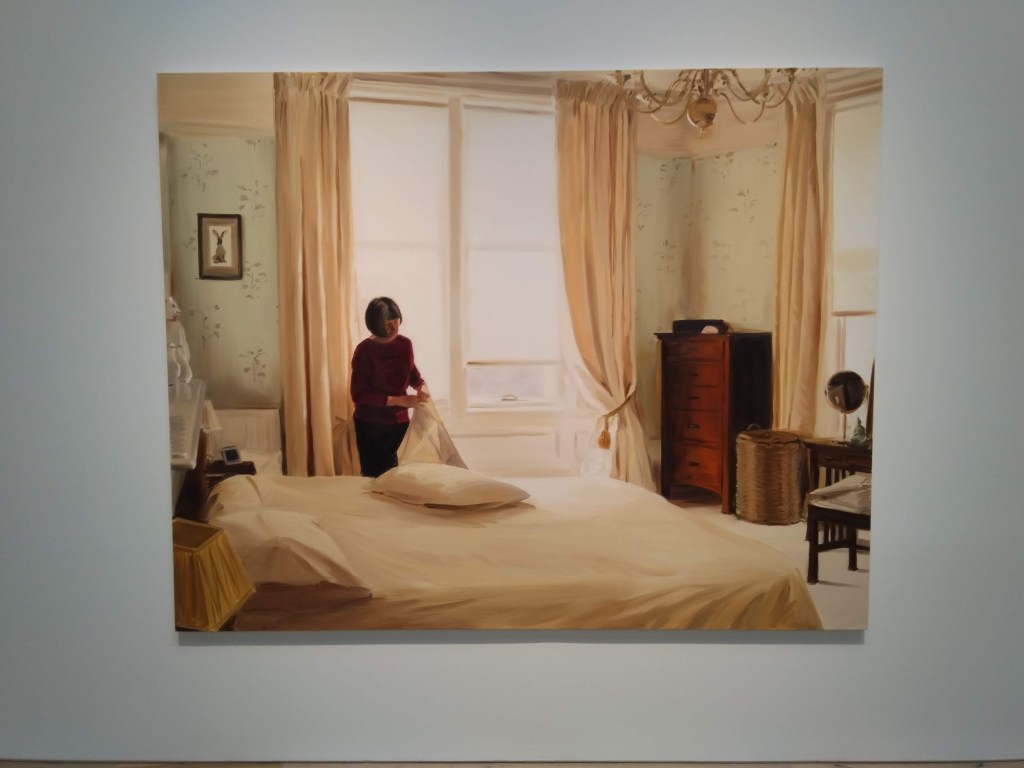
Caroline Walker, (born Dunfermline, Scotland), has created a series of works focusing on her mother, Janet, based entirely in her home. They document her mother moving from room to room, like the evidence of a childhood game. Caroline seemingly goes unnoticed, she spies on her mother, following her as she carries out chores: cleaning, gardening, cooking, dusting. We too, the viewers, spy, follow and peer in unnoticed, and it’s almost surprising when on one canvas, Janet looks straight back at us.

From left to right: ‘Bathroom Sink Cleaning, Mid Morning, March’, (2019), ‘Sizing Pillowcases‘, (2020) and ‘Dusting Pictures, Late Morning, March’, (2019)

These domestic activities are elevated, not dismissed, by the artist. The images are snapshots which combine immediacy of photography with the grandiose detachment of oil paintings. These daily moments are purposeful, meaningful, considered, deliberate.

Changing Pillowcases, Mid Morning, March’, (2020)

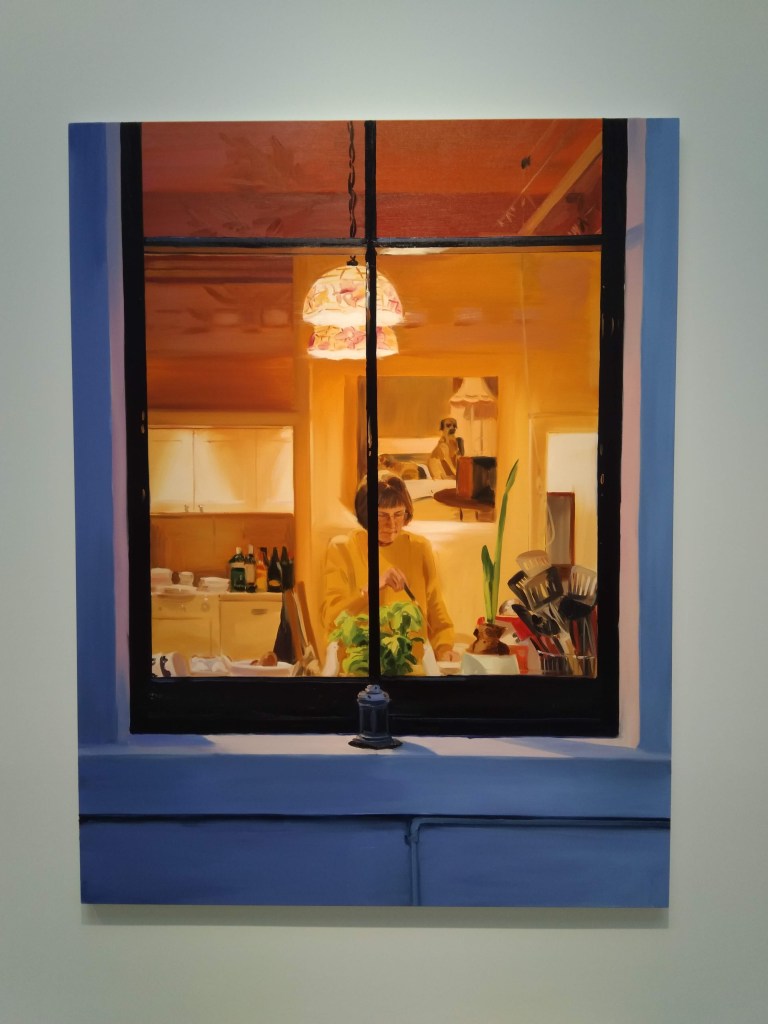
Yet they are also intimate. They capture the feeling of when you’re walking past houses in the winter when it’s dark outside, when you’re thrilled and somehow comforted by the warm glow within, even though you’re outside of that warmth. That feeling is especially captured by the jewel-like light in Making Fishcakes, Late Afternoon, December (2019), and Tucking In, Late Evening, March (2020). I loved looking in, indulging my curiosity. You can tell a lot about someone by what they surround themselves with. Janet likes animals. Janet seemingly also collects egg flips.

Making Fishcakes, Late Afternoon, December‘, (2019)

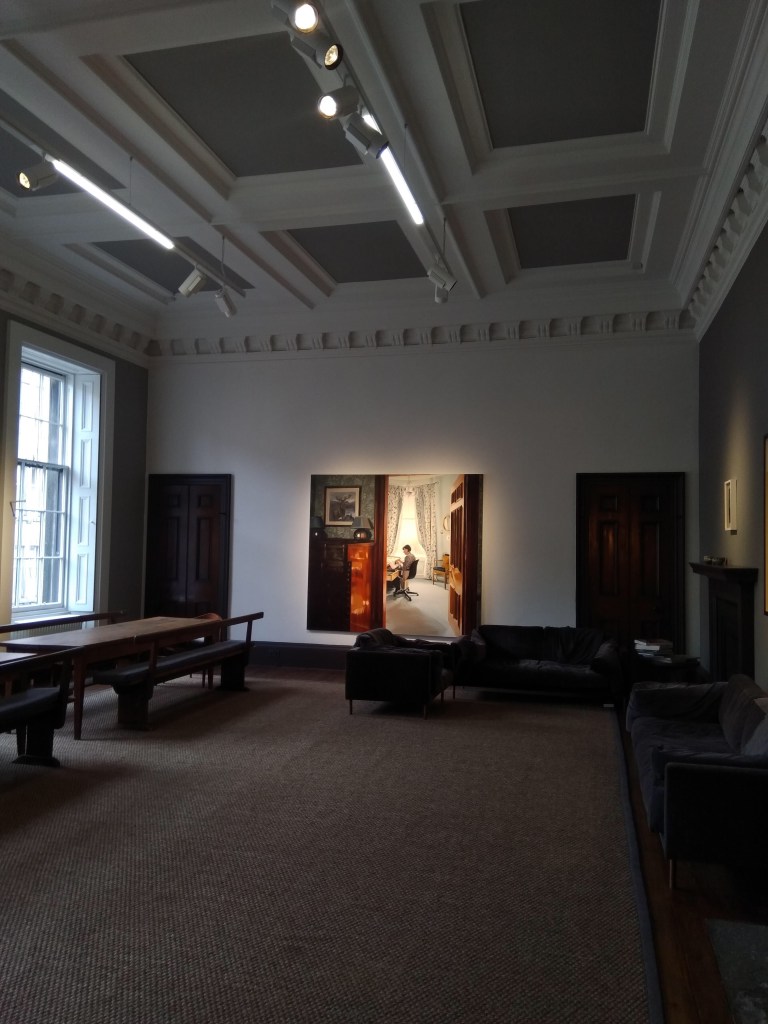
At Ingleby Gallery, the main exhibition space is on the ground floor, but upstairs in the Feast Room there are works by other artists the gallery represents. It’s like a special extra helping of art you didn’t know you were going to get, and was here where I found my favourite work by Walker, Hemming Pyjamas, Late Morning, December (2020). The darker palette of the room around the painting, the fact that the room itself is more domestic (with sofas and a dining table, albeit very grand), the placement of seeing it from afar as you come up the stairs makes it so utterly convincing and beautiful. Even though Walker paints on linen, which gives an overall matte effect, the warm light shines from the room, reflecting off the chest of drawers, beckoning you in.

‘Hemming Pyjamas, Late Morning, December’, (2020)

This is a wonderful show about light, home, warmth, the intimacy of people doing normal things. It’s what we want our homes to be, there’s a serenity about these paintings, a peace I’d like to carry with me into the next few months of winter at home.

Janet by Caroline Walker is on at Ingleby Gallery until 19th December, they are open Wednesday-Saturday, 11am-5pm. The exhibition is free but you need to book a timed slot via the website.

Among the Trees review

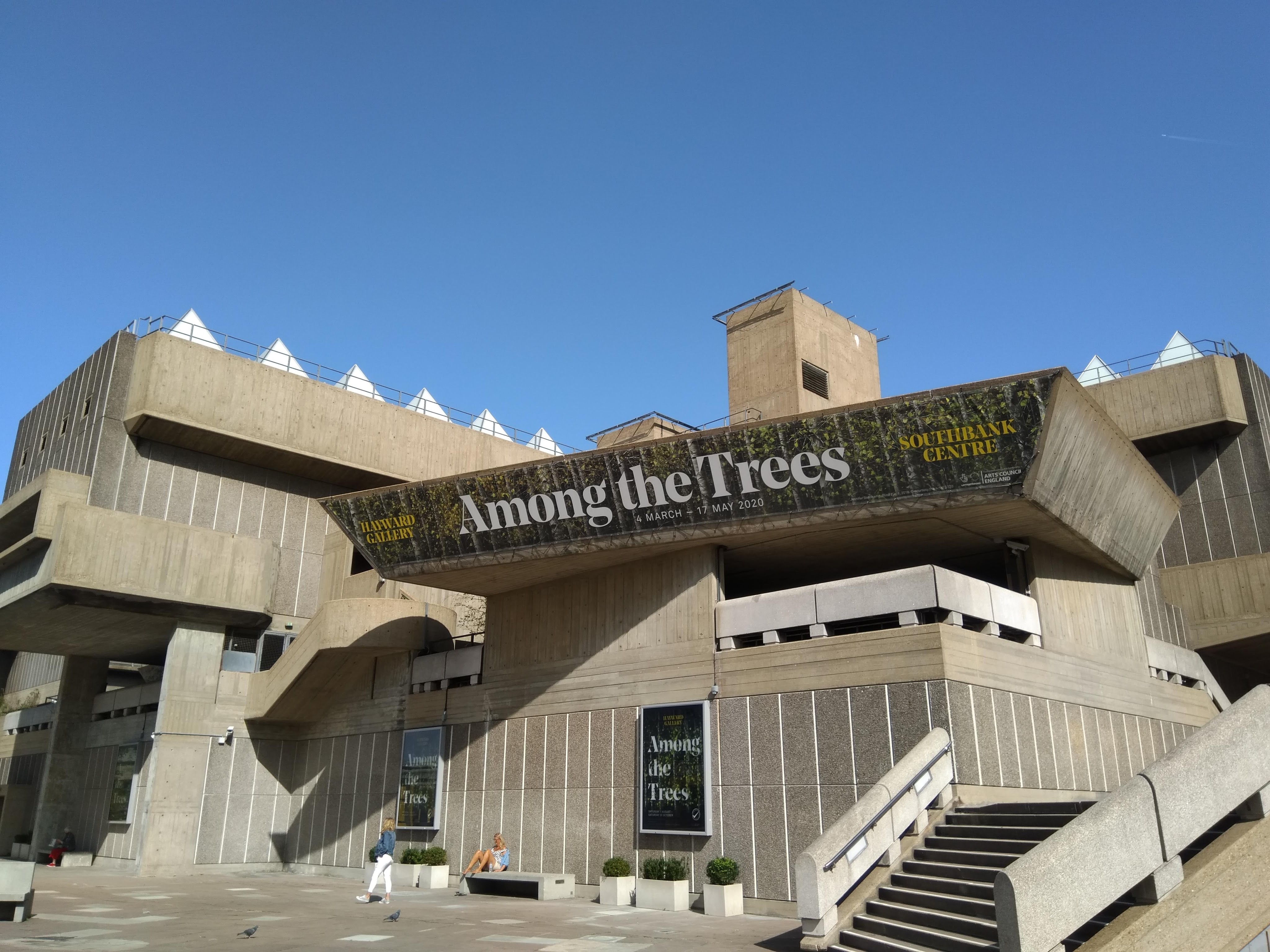
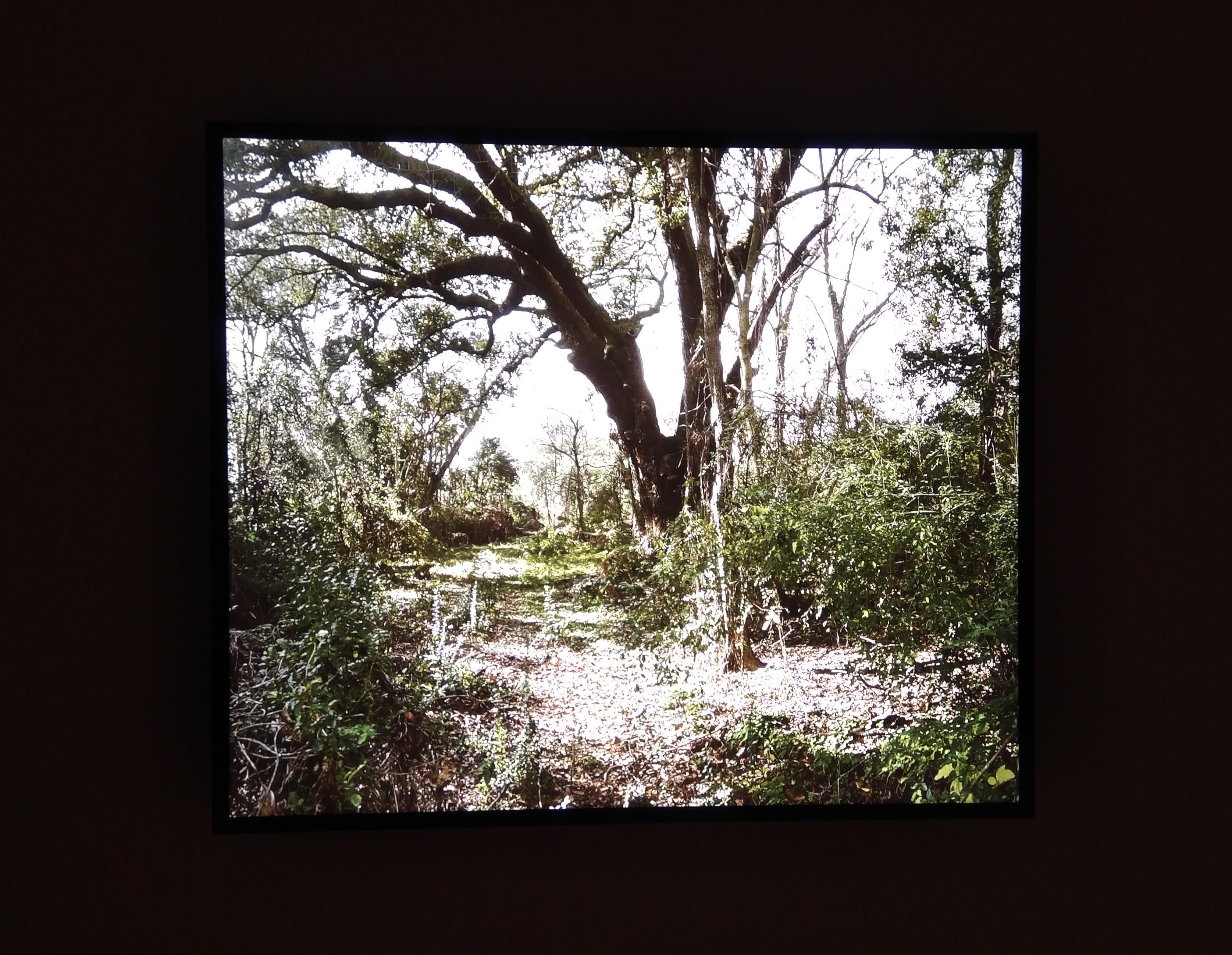
What does it mean to come to a place like the Hayward Gallery, the most concrete of concrete buildings in the heart of the UK’s largest city, to immerse oneself in images of trees? This isn’t a museum, a science hub, or a university, so it’s not a place dedicated to learning about trees, but for looking at them. It’s impossible not to hear strains of Big Yellow Taxi as you see the hoardings around the Hayward Gallery: “They took all the trees, put them in a tree museum/ and charged the people a dollar and a half just to see em”. The irony was particularly present for me, as I headed straight to a dark exhibition space to look at nature, having just arrived from the actual countryside (full of actual trees).

The outside view

In the first room, I began by wondering whether this was going to be a contemporary echoing of Romanticism. There were seemingly no signs of human life, except for the artists of course. The ghostly, delicate Untitled (2008) by Toba Khedoori, and Robert Longo’s Untitled (Sleepy Hollow) (2014) exposed what we forget in the height of summer, the intricacies of tangled branches. I wondered then whether the show was going to be boiled down to a central message: escapism through beauty. With Covid-19, Brexit, government incompetency, economic collapse and the US election for context, we crave escape more than ever, and nature can seem to offer some sort of way out of it all. That’s also what the Romantics thought too: the fewer humans in their landscapes, the better! But we know that’s not a true representation of landscapes. They are, and now always will be, shaped by humans – for better and for worse. In that context, what does it mean to imagine landscapes without humans? Is it eco-fascism, or just an overly simplistic, narrative of nature = good, humans = bad? The artists and artworks in Among the Trees put this idea under a microscope, reminding us that art can do both – be visually pleasing and profound.

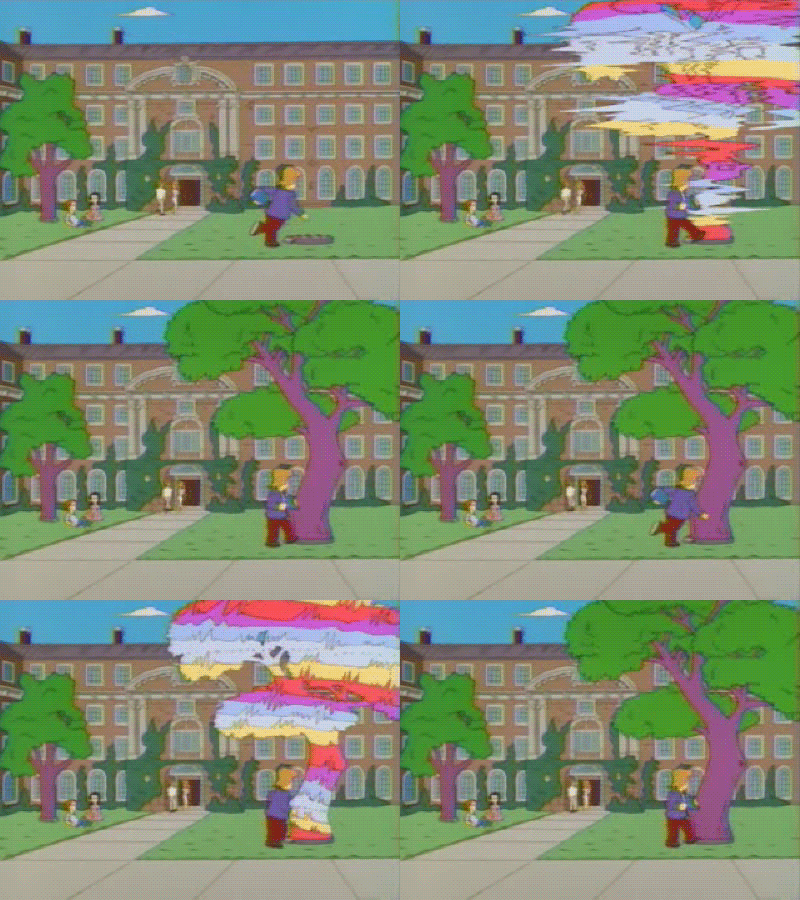
Remember the iconic Simpsons episode where Lisa has her fortune told? It’s full of painfully ironic, insightful vignettes of how the near future might pan out. In a college campus quad, a plaque reads “In memory of a real tree”, but the tree is flickering like a static TV screen. An electrical malfunction exposes this simulacrum for what it is – until a passer-by boots it back into functionality, into looking natural again. That’s the image I couldn’t get out of my mind while at this exhibition. I was looking at a monument to something we are knowingly destroying; the monument was artificial.

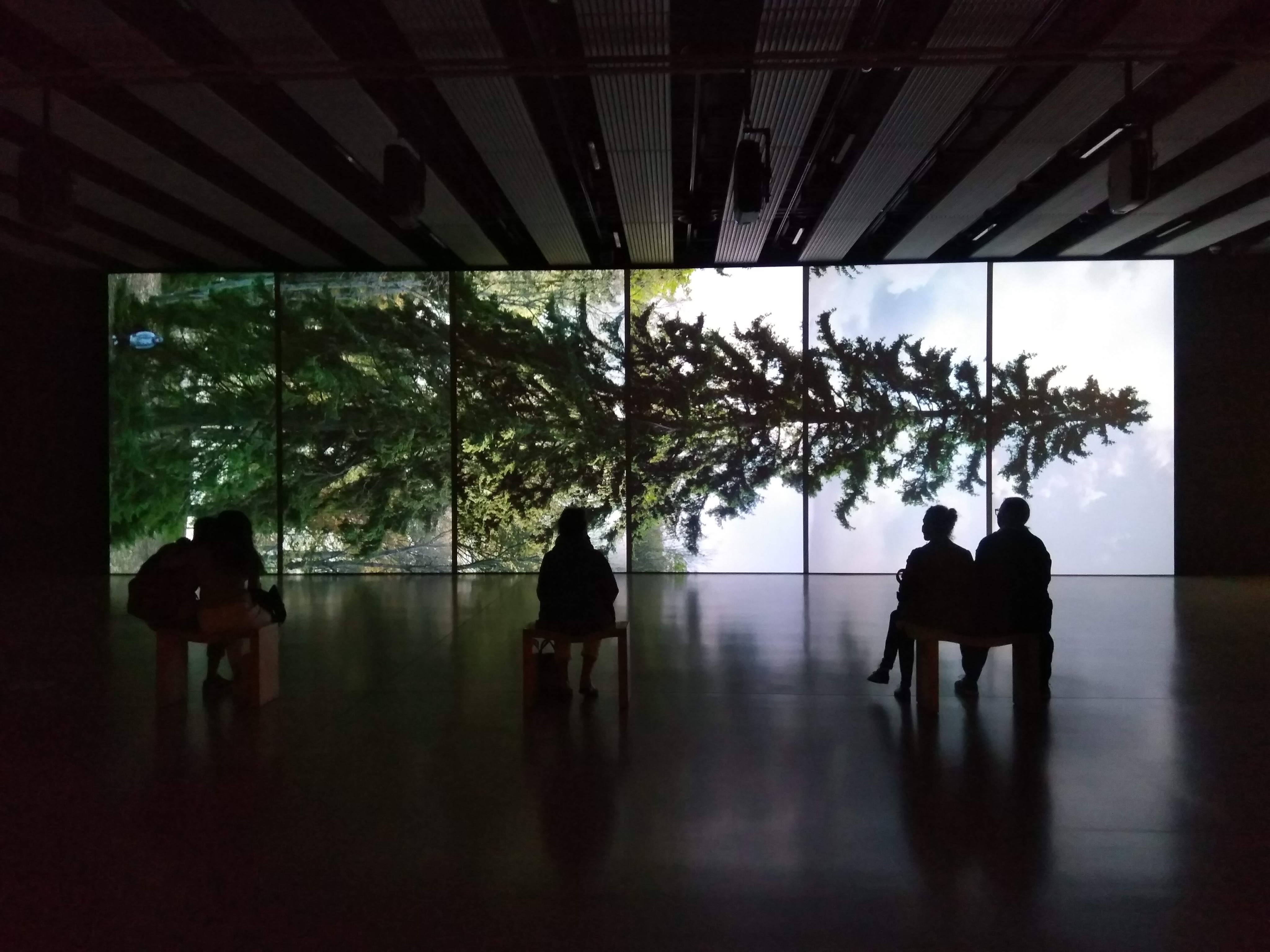
Yet the highly effective use of artifice in conjuring the natural is what I found most interesting about Among the Trees. One of the first spaces is dominated by a huge video projection across the back wall, the work that is on all the posters. This is Horizontal Vaakasuora (2011) by Eija-Liisa Ahtila, depicting a huge native Finnish spruce in five video panels, each slightly out of sync. It’s mesmerising. We hear the wind in the branches, bird song, and watch the spindly, yet strong and flexible, living tree, dancing, creaking and swaying in on itself. There’s a kind of discombobulation that comes from seeing something this tall lying on its side. You’re not supposed to see the tops of these trees close up. There’s a feeling of privilege in looking without having to crane your neck, but also a foreboding in the position. Trees lie this way when they are felled.

Eija-Liisa Ahtila, ‘Horizontal – Vaakasuora’, 2011

The other large-scale video work is Jennifer Steinkamp’s Blind Eye 1 (2018). It is wholly artificial, using animated computer technology to show a fake birch tree forest move through the cycle of all four seasons in a cool 2 minutes 47 seconds. I’ve always loved the visual effect of technology speeding up the forces of nature in a way that reveals how utterly miraculous they already are – time-lapse videos of plants growing impossibly quickly, sprouting leaves, buds, flowers, seeds and withering and dying all in a few moments. It’s all so heart-wrenching and magical.

Jennifer Steinkamp, ‘Blind Eye 1’, 2018

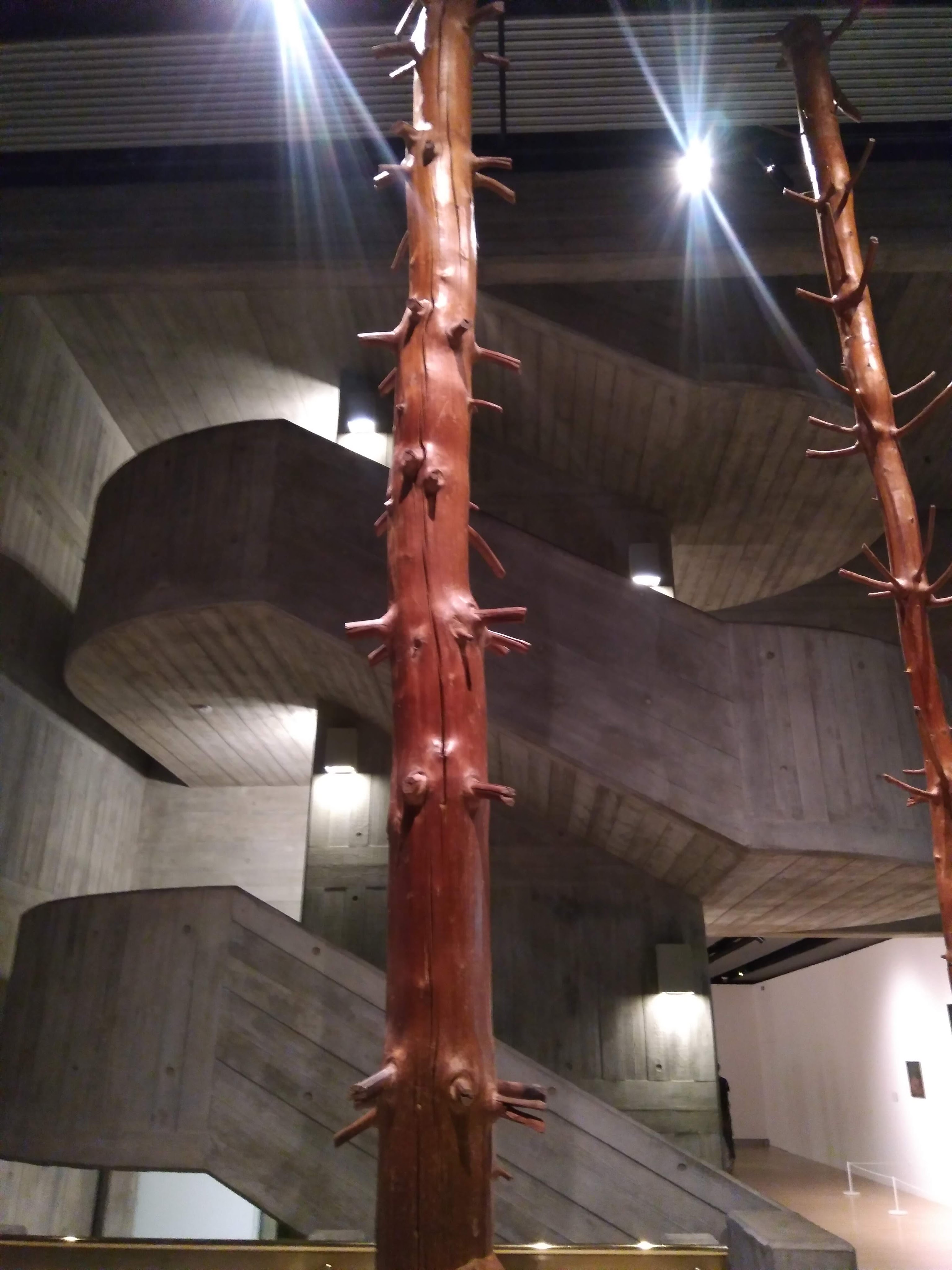
Revealing what is already there is at the heart of Giuseppe Penone’s work with trees. His Tree of 12 Metres (1980-82) is the most ‘natural’ of all works in the first room: a very tall tree has seemingly been divided in two, stuck into plinths and carted into an art gallery, it’s warm earthy tones juxtaposing with the smooth, cold concrete staircase behind. But this tree is actually a sculpture, fashioned from an industrially planed piece of timber that Penone painstakingly scraped away, in a reverse Frankenstein fashion, following the knots, lines and ridges in the wood, unlocking how the tree would have looked long before it was felled. He takes it back in time, back to nature, back to life.

Giuseppe Penone, ‘Tree of 12 Metres’, 1980

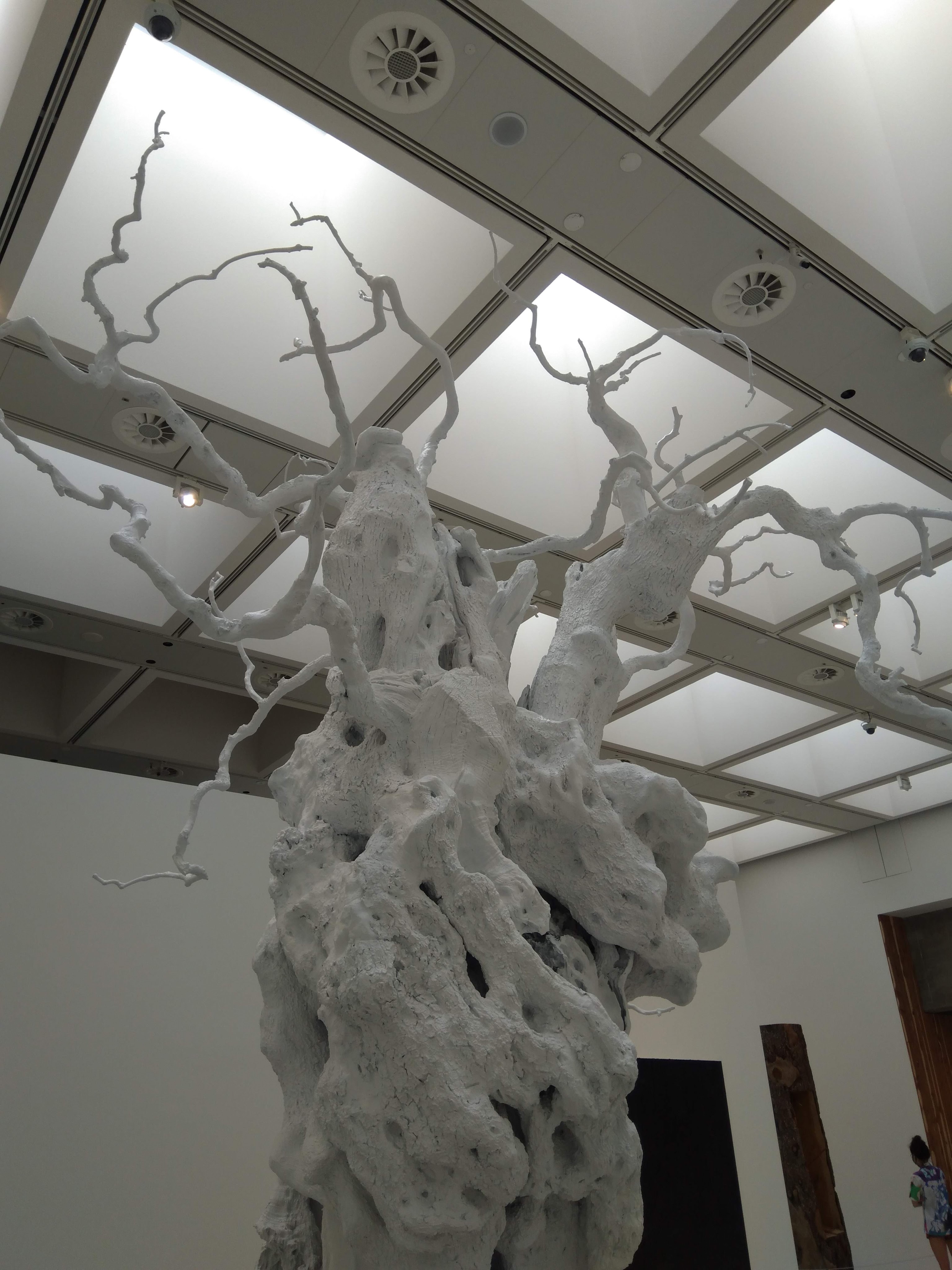
Death and life are here in abundance. Because trees can span many human lifetimes, they are presented as witnesses, as memento mori. Ugo Rondinone’s cold moon (2011) is a cast of an ancient olive tree in southern Italy, its hulking, twisted, wizened form reminiscent of the White Tree of Gondor, as well as calling to mind the Ancient Mariner, an old man sitting in a corner of a dark city pub, a man who has *seen things*. Steve McQueen’s Lynching Tree documents where countless African-American bodies were lynched, a site encountered while filming 12 Years A Slave. It is a tree that has, in its very shape, borne witness to and memorialised the worst of us.

Steve McQueen, ‘Lynching Tree’, 2013

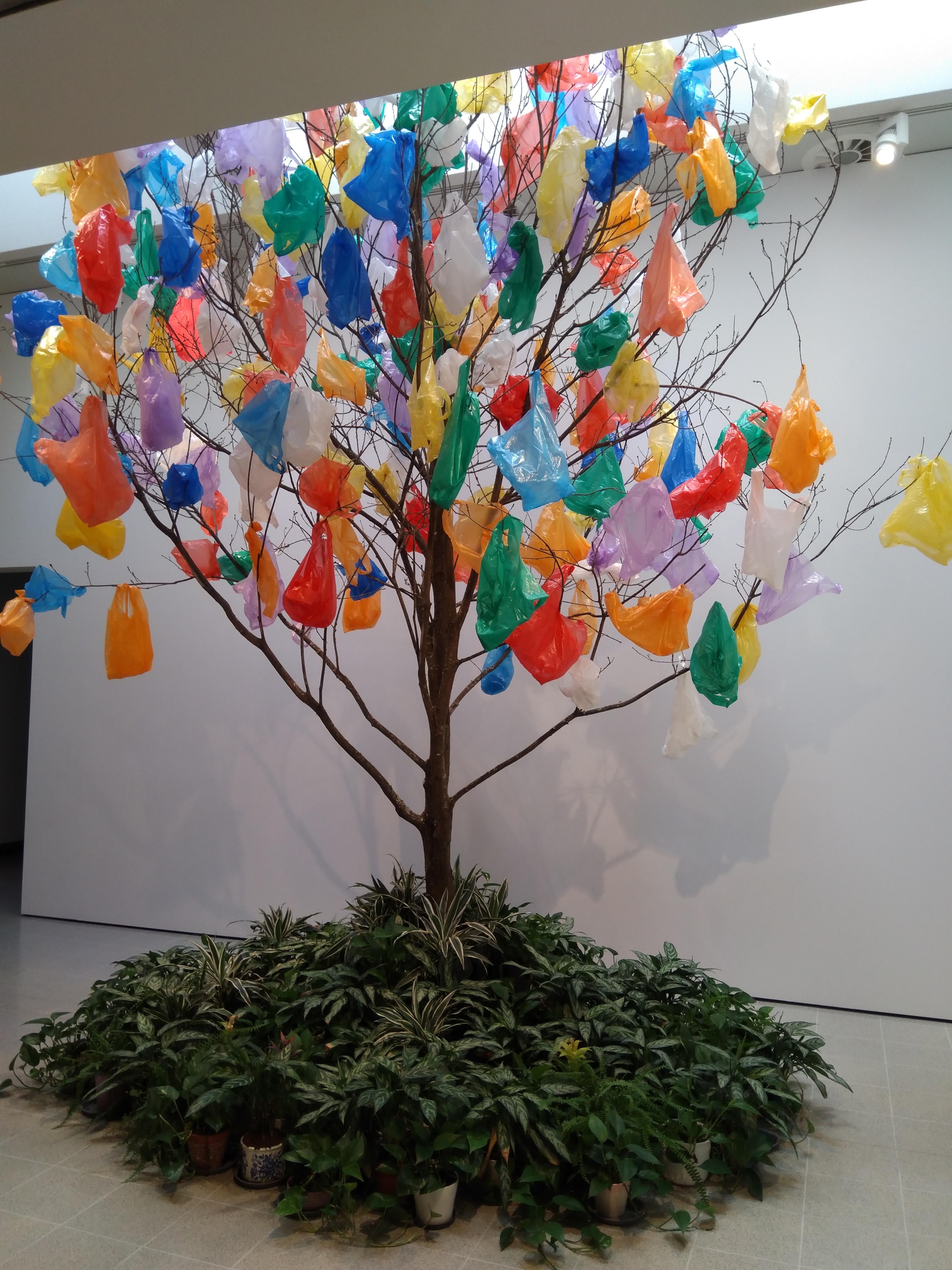
Alongside this, you can see Plastic Tree B, created this year by Pascale Marthine Tayou, where plastic bags have become the bright, somehow beautiful blossoms of an Instagram-worthy sculptural tree. Simplistic idea perhaps, but still visually striking, and reminding us of how damn precious it all is, and how much it is slipping through our fingers because we are, by and large, terrible custodians. You can’t even walk down a street without seeing hundreds of disposed plastic masks on the ground, like scattered flags of surrender to the coronavirus age. The show could probably have pressed more on the climate crisis message. But I was reminded in a talk by Olivia Laing recently, that in the face of politics, art won’t make the change itself, but it’s a way of “galvanising, and grouping a response”. In other words, art can’t do the work for us.

Pascale Marthine Tayou, ‘Plastic Tree B’, 2020

The woodland I was walking in just hours before my trip to London is full of signs of human life. On a nearby bench, “Trump Out” is scratched into the surface, reminding us that our human politics infiltrate every part of our world, no matter how much we might wish to escape them. We have to acknowledge that, and not lose ourselves in the mesmerising beauty of nature and of art. That is appreciation, and it might give us space to become mindful, but that is only the first step. A moment of escapism is acceptable, but only if we emerge from it refreshed to re-engage, to take meaningful steps to do some damage limitation, to avoid the climate crisis that is unfolding before our very eyes. Otherwise we might find ourselves, in forty years, frustrated that our tree memorial isn’t convincing enough, wishing we had acted before it was too late.

Ugo Rondinone, ‘cold moon’, 2011

Year 3, Steve McQueen

Yesterday ArtAngel ran a live Q&A with artist and director Steve McQueen, following their most recent collaboration for his vast work, Year 3. For this artwork, McQueen arranged for 76,146 kids, from 3,128 Year 3 classes (ages 7–8) to be photographed in the timeless, traditional, and I would even say iconic format of the class photo. It’s something most of us can relate to. Bodies arranged in rows, taller kids standing, some sitting on plastic chairs or old wooden gym benches, and others cross-legged on the floor. What has emerged is a rich tapestry, a beautiful, huge patchwork quilt of thousands of photographs that document the present and, as McQueen emphasised in the talk, the future of London. What an incredible concept for a piece of art. I’ve heard it described as a giant portrait. But it feels far more dynamic, participatory and meaningful than that word implies.

I knew that the work was being exhibited at Tate Britain (I was due to visit in April, and am gutted that now I’m unlikely to see it at all), but from photos the installation looks impressive. The messy brightness of 1,504 schools packed into the grandiose space of the Duveen Galleries would always create a delicious juxtaposition. I hadn’t realised that for the ArtAngel side of the work, some 600 of the photos were created into billboards, situated across all 33 London boroughs, in November 2019. An ephemeral facet of a monumental artwork. It’s the stuff Encounters Art was made to write about – my only regret is to not have seen and documented them myself. In some ways that’s the beauty of these pop up artworks though. They aren’t supposed to be sought out, they mix and mingle with the everyday and you don’t know it’s there until you stumble upon it. If you did see a billboard in London back in November then I would love to hear your thoughts – leave a comment or DM me @encounters_art.

Installation view on Camden Road

Subverting a space that is usually used for adverts by filling it with a school photograph which is simultaneously strange (because we don’t know these children) and familiar (because we’ve all been children) is such a strong, engaging idea. One of the best moments I’ve come across by searching online for #year3project is a BT advert on Camden Road announcing “Technology will save us”. It is a timelapse video of BT’s billboard being surmounted with a photo of smiling kids in bright red cardigans and summer dresses in an old school hall. Here the children aren’t being prepped and presented as the consumers of the future. They are the future. They will save us. (Though I suppose ironically I owe my thanks to technology for preserving this moment for me to find months later.)
I love seeing these images interwoven into the London landscape. In tube stations, framed by carriage windows, this array of smiling young faces must have cheered up and intrigued countless commuters. Even in the gallery display, away from the urban fabric, it feels like a very London-based artwork, because it celebrates the city’s amazing diversity. McQueen chose Year 3 because for him, that is the moment we start to gain perception of our identities. Our classroom becomes a window on society and a crucible of the nuances of race, class, privilege and opportunity, all of which are explored in the work.

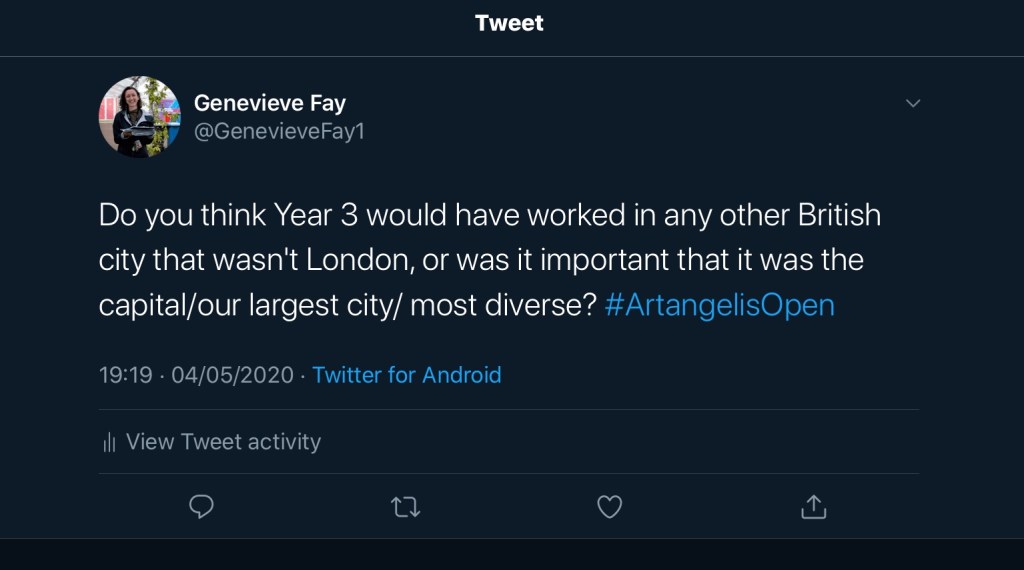
I found the London aspect particularly intriguing so I decided to ask a question using the hashtag #artangelisopen and I couldn’t believe it when it was picked for McQueen to answer. I was so excited, cheering and jumping up and down that I almost forgot to listen to his response. He said that for him, London was the clear choice, but it didn’t have to be limited to that – it could be carried out anywhere – and he seemed to be encouraging people to take up the project and move it on elsewhere. I would love to see that, particularly somewhere like Nottinghamshire (where I grew up) where there are rural and urban childhoods playing out. I wonder if it would click in the same way the original project does.

Installation view at Tate Britain Duveen Galleries

Listening to McQueen, the work was also understandably rooted in London because that was his experience – despite its scale, there is a highly personal context to the artwork which draws on his own boyhood engagement with art: a primary school outing to Tate Britain was the start of his journey. But it’s also about visibility. According to TIME magazine, Steve McQueen is one of the 100 most influential people in the world. For Twelve Years A Slave he won an Academy Award for Best Picture, and became the first black filmmaker to do so.

By creating this work, displayed in the gallery he visited as a child, he has come full circle. What an amazing thing, to provide an opportunity for the children in Year 3 be able to visit that same space, and see themselves, and others who look like them, on the walls. It fills me with hope that the project will be the spark that ignites countless artistic explorations and adventures. I can’t wait to see what they create when they’re fully grown.

Art and life at home (in the age of Coronavirus)

This is my first post since the Coronavirus outbreak hit Europe. Not for a lack of time – like all of us, I’ve had more time at home than ever before in my adult life. It’s not even for a lack of having things to write about. Rather, it’s because I haven’t had the will, or the inclination to sit down and focus. I often have vague waves of guilt around this – but then I remind myself that this is a pandemic, not a sabbatical. Having free time doesn’t automatically make this an opportune moment to hone my art writing, and that’s ok.

There are a million and one distractions (some would say excuses) that have prevented me from writing, or doing other productive things. The same is also true of engaging with art, the activity I love most. Galleries and museums have been closed for weeks, and they have scrabbled, been inventive and tried their best not to let years of work bringing exhibitions together go to waste. Switching projects to the digital realm successfully is not easy, and I would be interested to see the stats on reach and engagement for online content. I would hazard a guess that for the majority of us, while digital outputs are appreciated, quantity is overwhelming and we still don’t really want to go online to “visit” an exhibition. Even the idea of it brings to mind my least favourite gallery online content of all – photographs of exhibition previews where influential art people drink champagne and look thoughtful. No matter the quality of the exhibition, the virtual tour doesn’t sound appealing. It is more screen time that could be spent looking at things that are created for screens in the first place: telly, films, games. Even “doom-scrolling” through reams of information about the virus, though stress-including, is addictive and sometimes even mentally easier than engaging with something that doesn’t concern the virus at all. 

Art can be engaged with online. Some of the artworks I have studied in depth I have only ever seen via a screen. But there is a social and physical element to visiting exhibitions that is a necessary side-effect of the experience. Why else would the National Gallery have worked through years of negotiations to bring Titian’s poesie together into the same room? We could have googled them individually and seen them together that way if we wanted. But it’s not the same. The best exhibitions have a strength of narrative that enables us to enter a state of meditative curiosity which really absorbs us. That is simply not possible at this moment, and especially on a device, where we are accustomed to enjoying art in Instagram-sized chunks. There are too many other distractions, including our own boredom, to compete with. I doubt that a physical exhibition transported online could recreate that effect – though maybe I will be pleasantly surprised. My sister and I are going to tour the Royal Academy’s Picasso and Paper virtually later this week – will report back…
Despite the circumstances, against all the odds, people have been creative and productive. Far more relevant and fun than an online exhibition, is seeing the results of people making and imitating art themselves. The hashtag #tussenkunstenquarantaine reminds us that with a bit of inventiveness and improvisation, some of the best-loved artworks can be recreated at home. I am biased, but my former colleagues have done a fantastic Twitter thread recreating some of their favourite works in the collection. The results are totally heartwarming, and that’s what we need now. 

Projects like the weekly creative challenge run by OG Education (the learning branch of the October Gallery) provide a bit more freedom than creating an exact copy of an artwork – taking their artists’ work as a starting point for inspiration. Defying gravity, the theme inspired by artist Benji Reid, produced some daft and wonderful homemade results. 

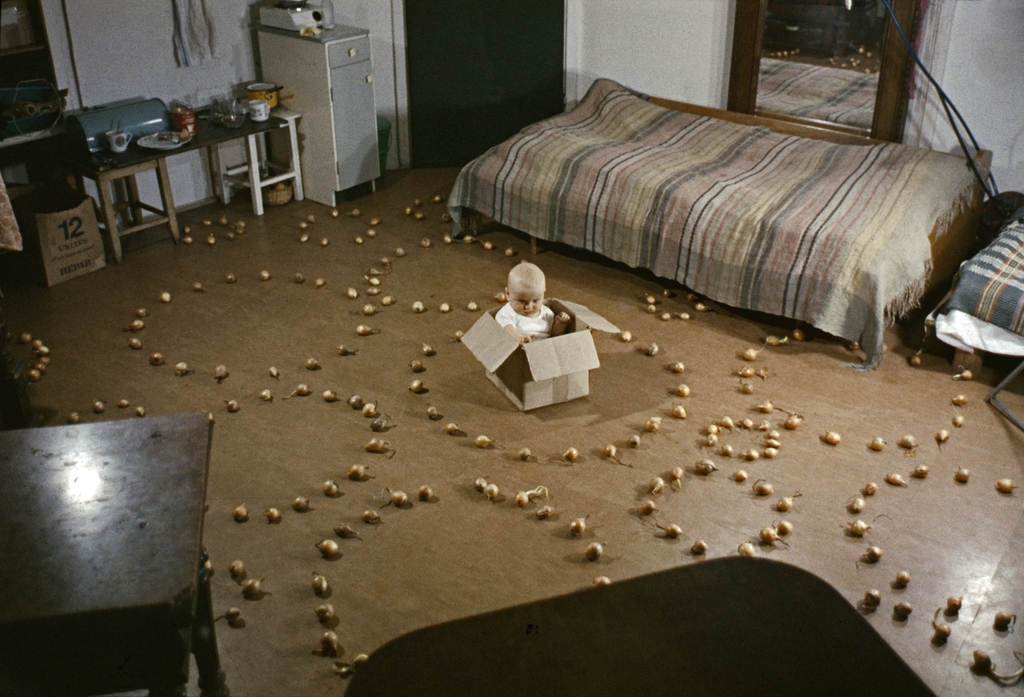
The idea of creating artworks at home is of course, not especially new. The foremost example I can think of is Activities with Dobromierz, created by the Polish artist duo KwieKulik in the early 1970s. Having experienced issues with publicly showing their work, they made the decision to produce and exhibit art in their flat, working with objects they found. Their home, which they renamed Studio of Activities, Documentation and Propagation (PDDiU) became the site for art that blurred the boundaries of the personal and political. 

KwieKulik, Activities with Dobromierz, (1972-74)

We see the couple’s baby, Dobromierz, arranged in multiple surreal scenarios, surrounded by the miscellanea of domestic life. At the centre of a circle of onions, he is a cherub surrounded by stars, or a sacrificial offering in the midst of an occult ceremony. You can see more examples of this fascinating artwork here. There’s an absurdist symmetry and playfulness to these images which I find enchanting – if you can overlook the slightly dubious ethics around it (is it ok to make art by making your child the subject and placing him in a toilet? – I’ll leave that one to the psychoanalysts.) 

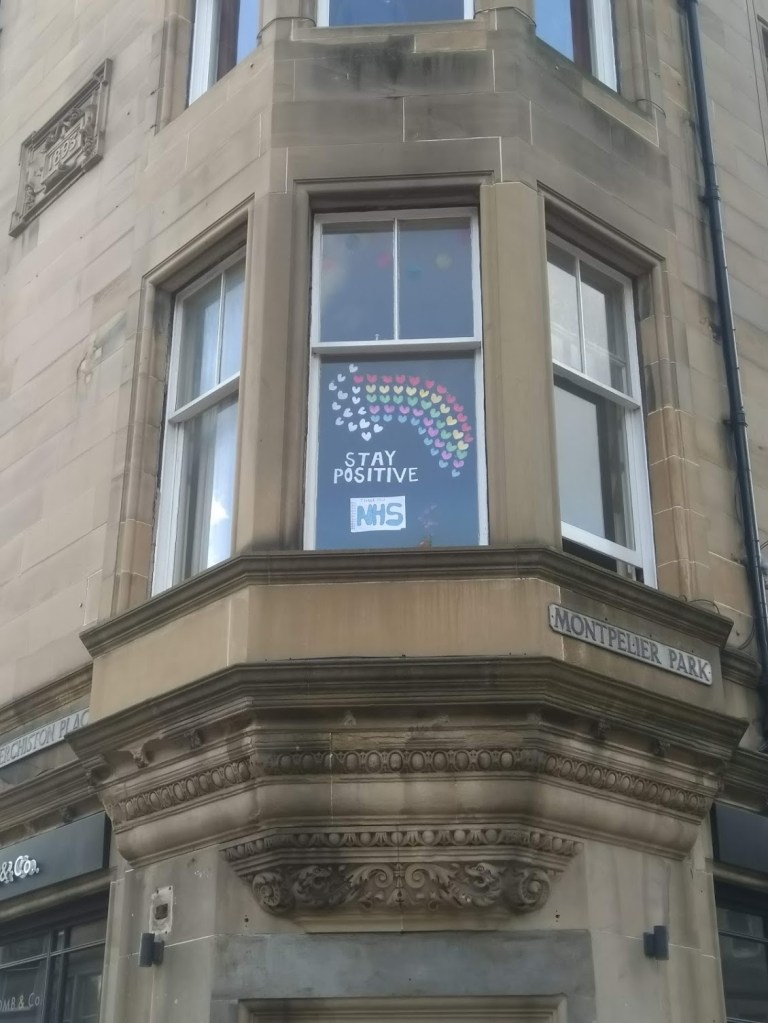
On my daily walks I am reminded of how much inspiration we really can derive from visual symbols and art marks left by other people. The name of this blog is inspired by my belief that art can (and must) be encountered in the everyday. Graffiti is, as always, the site for debate, discussion and seat-of-the-pants creativity. Seeing rainbows stuck against windows does give me hope. People are amazing, creative and inventive, and in the case of an iconic image of a sign spotted in Glasgow which reads “this is shite”, they are astutely acerbic. It is shite. There is as much truth and validity in that as there is in a rainbow.

Rainbows of all shapes and sizes adorn our streets now

We are all dealing with this situation differently: some things that appeal to you as a way to spend your time might not be fathomable to others. Some will create art, others will chuckle at their creations. There will be time to do life admin, and time to sit on the sofa. All are ok.

As we enter another week of lockdown, I miss the outside world. From the privileged perspective of someone who likes to write about art, I miss the solace of visiting exhibitions, learning new things, seeing weird and wonderful objects “in the flesh” and of course, sharing those experiences with others. But the restrictions on our movement have shown us that the democratisation of artwork is possible. Celebrating the joy of art is necessary. Humour and a spirit of accessible creativity are two tools with which we can counter the cultural shock of this pandemic. The challenge now is to bottle that spirit and carry it with us into the post-COVID 19 art world. We are going to need it.

Myriam Lefkowitz / Walk, Hands, Eyes (Edinburgh)

I have been wanting to write a piece about this for a long time. I regret I’ve been behind on my blog posts lately, but February is the month I’m going to write regularly. As my friend Kate put it, ‘perfectionism is taking a hit’. She is drawing every day, and I’m trying to do the written equivalent, whether on here, in my journal or on Instagram (@encounters_art).

What does it mean to meet a stranger, and within minutes, be expected to rely upon them for everything? To trust them to be your eyes, to guide you through the complex labyrinths of city streets, buildings, traffic, and other people? This is the question that lies at the heart of Myriam Lefkowitz’s extraordinary work ‘Walk, Hands, Eyes (Edinburgh)’, which was organised and performed by Talbot Rice Gallery, one of the city’s best places for engaging with contemporary art (art that is being made now, or has been very recently).

The work is a 45-minute 1-1 walk where the performer takes you by the hand and leads you through the city, with your eyes closed throughout. It is a silent experience, except for the occasional, whispered command by your performer “one step down… and another”. It was as intense as it sounds, and most people I have discussed the piece with have recoiled in horror, and asked me why anyone would voluntarily put themselves through that kind of thing. Was it even “art” if there wasn’t a object or thing you could look at as part of it?

Yet, I would go so far as to say it was one of the best art pieces I’ve experienced. Yes, it was intense, but in all the best ways. The childlike, gentle way the performer took my hand, and the way my body responded with utter trust (even though my mind fluctuated between embarrassment, confusion and hilarity) was a fascinating experience. It’s a simple concept when you boil it down, but for me as participant, it was and emotional and sensory rollercoaster.

People have always told me that when a person loses one sense, the others become sharper, super-senses. Temporarily ‘losing’ my sight for around an hour (I just about managed without peeking) demonstrated how accurate this is. I became aware of so much more in a way that was genuinely exhilarating: the frosty blades of grass crunching under my feet, the snippets of conversations, and even the atmosphere or feeling that you sense when entering a place. I did the walk on 12 December, and certain rooms we passed through vibrated with intense festiveness. In other moments I could sense we were in the deserted crevices of Edinburgh: alleys and corners where the sun barely ever reaches, the very quality of the air a telltale sign of pervasive damp.

There was an almost embarrassing sense of intimacy to it. As a rule, we only ever hold hands with people we know really well, who we feel affection for, who we know will not judge us if our hands are clammy or our skin rough. I found myself thinking about the performer (who was fast becoming my spirit guide through this new sensory world). I worried that her hand was cold: that prolonged connection with a stranger, though artificially created through an artistic concept, became a strong bond through a shared surreal experience. I had to trust her, because I had no choice otherwise. I also had to trust the other people we encountered in the streets not to hurt me, to take advantage of my vulnerability, my acute sense of which was counteracted with relief when nothing did go wrong. (On a side note, I have new respect for those who navigate landscapes with limited sight, by using a white stick or a guide dog. It really brought home the element of trust and bravery involved in that).

Experiential art, or art that functions through making us interact or participate with it in some way, is a big business. In our free time more and more we seek “experiences”, moments we can document on social media that boost our social capital in the process. Unfortunately, this can often lead to art experiences that are packed with gimmicks, but art vacuous at their core. By contrast, this simple action of two people walking together, with the city as their backdrop, felt minimalist and radical. Lefkowitz’s ‘Walk, Hands, Eyes (Edinburgh)’ reminded me that to make this kind of art successfully, you don’t need lights, big budget shows, music, bells and whistles.

For me, the best art can makes us as viewers/listeners/participants feel, perceive, experience and enjoy both reality and artifice in a way we hadn’t before, that stays with us. You can tell from the lack of images on this post that there were no visual tokens or takeaways from the experience, nothing to prove I was there. That’s because the best part of the work came from something intangible, from what I experienced within.