Layers of a life

There are some artworks that become wedged in your heart. You carry them with you, and mostly they lay dormant. Then occasionally they will surface from nowhere, reminding you of something you saw, read, felt years ago. For me, one of those objects is something I saw at Found, an exhibition curated by Cornelia Parker at The Foundling Museum in 2016. I must have loved it at the time, because I bought the catalogue, and that hardly ever happens.

The piece in question is by John Smith and is unassuming and profound in equal measure. As someone who believes in the necessity of encountering art in the everyday, it’s exactly the kind of work that chimes with me.
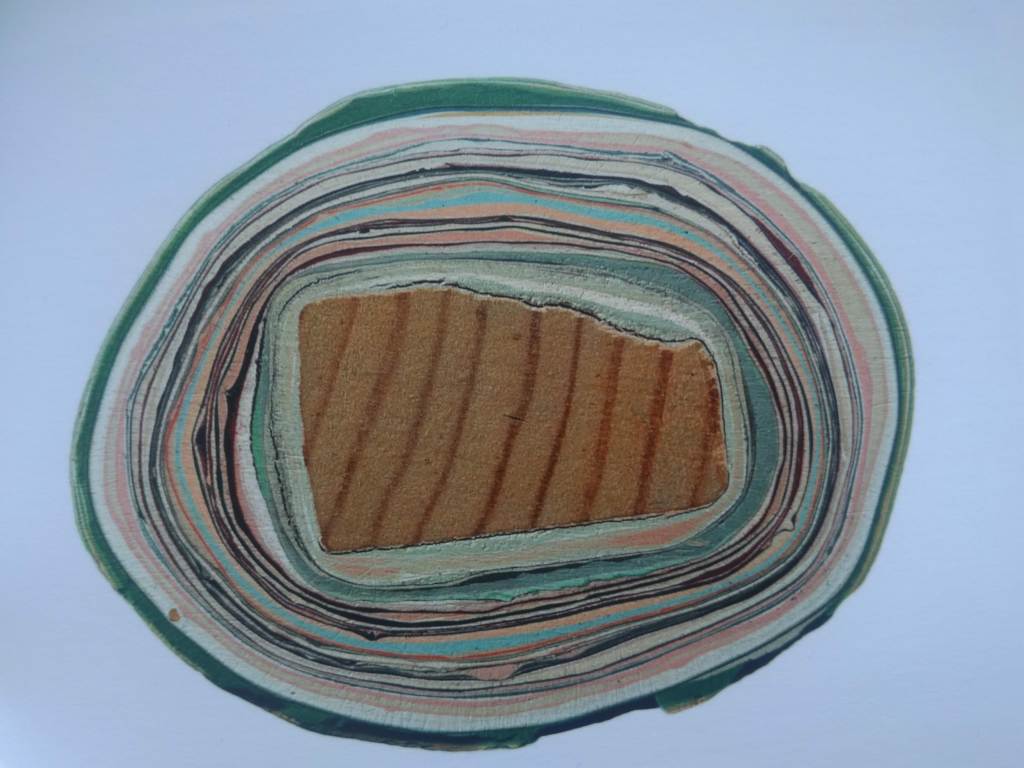
John Smith, Dad’s Stick, c.1950-2007, wood and paint, 23 x 2.7cm

It’s difficult to know how to describe Dad’s Stick – it hovers part way between art piece, art object, tool, item, artefact. This stick belonged to the artist’s father and was used to stir paint pots for around six decades. Then, towards the end of his life, Smith’s father cut through the stick. This act revealed a cross-section of multiple layers of paint, each covering over the other, like the concentric rings of a tree. It’s a wonderful thing: documenting changes in taste, memories of rooms, snapshots of different projects, a humble memorial preserving a life story, or multiple stories. In the Found catalogue, Smith reflects that looking at the colours of the stick took him back to his childhood, “the greyish green of our 1950s kitchen cupboards and the bright orange that covered the walls of our hallway in the 1960s.” (p.122). Smith created a film to accompany the object which was also shown in the exhibition. You can see an extract of it here.

Perhaps this object resonated with me because my own childhood home had this layering too. My mum, a good seamstress with an eye for interior design, made our own curtains, and as I grew up, she covered over the childish Alice in Wonderland fabric in my bedroom with a more teenager-appropriate material. My parents don’t live there anymore, but I wonder if the current inhabitants ever puzzle over the faint colours and shapes they can see through the fabric in certain types of light. Or they may have got rid of the curtains entirely – I’ll never know.

The flip side of Dad’s Stick is the rooms themselves. Most houses have multiple layers of paint, wallpaper, and questionable decor that exists below our current surroundings. Buildings have stories, and ghosts, in their very walls. Their history is a layered patchwork of the different lives played out in their rooms.

This feels more prevalent than ever while we are all confined to our homes. I live in an Edinburgh tenement flat, part of an old stone block with one side facing the street and the other overlooking an enclosed courtyard at the back. Muffled voices through walls, the frenzy of a washing machine from the flat next door, the occasional footsteps in the hallway are all part of the daily routine. They were always there, but noticing them, and their closeness, is unavoidable now. I see people smoking out of their windows, they see me moving from room to room, chasing the sun as it graces different parts of the flat throughout the day, we watch people hanging out their washing and cats prowling in the overgrown backyard. 

Being at home all the time has reminded me of these layers of lives and histories we live alongside and we contribute towards. Artworks like this one can help us process these situations, reminding us we are all part of the layering process, reassuring us that people lived here before, and they will again once we move on.
Art and life at home (in the age of Coronavirus)

This is my first post since the Coronavirus outbreak hit Europe. Not for a lack of time – like all of us, I’ve had more time at home than ever before in my adult life. It’s not even for a lack of having things to write about. Rather, it’s because I haven’t had the will, or the inclination to sit down and focus. I often have vague waves of guilt around this – but then I remind myself that this is a pandemic, not a sabbatical. Having free time doesn’t automatically make this an opportune moment to hone my art writing, and that’s ok.

There are a million and one distractions (some would say excuses) that have prevented me from writing, or doing other productive things. The same is also true of engaging with art, the activity I love most. Galleries and museums have been closed for weeks, and they have scrabbled, been inventive and tried their best not to let years of work bringing exhibitions together go to waste. Switching projects to the digital realm successfully is not easy, and I would be interested to see the stats on reach and engagement for online content. I would hazard a guess that for the majority of us, while digital outputs are appreciated, quantity is overwhelming and we still don’t really want to go online to “visit” an exhibition. Even the idea of it brings to mind my least favourite gallery online content of all – photographs of exhibition previews where influential art people drink champagne and look thoughtful. No matter the quality of the exhibition, the virtual tour doesn’t sound appealing. It is more screen time that could be spent looking at things that are created for screens in the first place: telly, films, games. Even “doom-scrolling” through reams of information about the virus, though stress-including, is addictive and sometimes even mentally easier than engaging with something that doesn’t concern the virus at all. 

Art can be engaged with online. Some of the artworks I have studied in depth I have only ever seen via a screen. But there is a social and physical element to visiting exhibitions that is a necessary side-effect of the experience. Why else would the National Gallery have worked through years of negotiations to bring Titian’s poesie together into the same room? We could have googled them individually and seen them together that way if we wanted. But it’s not the same. The best exhibitions have a strength of narrative that enables us to enter a state of meditative curiosity which really absorbs us. That is simply not possible at this moment, and especially on a device, where we are accustomed to enjoying art in Instagram-sized chunks. There are too many other distractions, including our own boredom, to compete with. I doubt that a physical exhibition transported online could recreate that effect – though maybe I will be pleasantly surprised. My sister and I are going to tour the Royal Academy’s Picasso and Paper virtually later this week – will report back…

Despite the circumstances, against all the odds, people have been creative and productive. Far more relevant and fun than an online exhibition, is seeing the results of people making and imitating art themselves. The hashtag #tussenkunstenquarantaine reminds us that with a bit of inventiveness and improvisation, some of the best-loved artworks can be recreated at home. I am biased, but my former colleagues have done a fantastic Twitter thread recreating some of their favourite works in the collection. The results are totally heartwarming, and that’s what we need now. 

Projects like the weekly creative challenge run by OG Education (the learning branch of the October Gallery) provide a bit more freedom than creating an exact copy of an artwork – taking their artists’ work as a starting point for inspiration. Defying gravity, the theme inspired by artist Benji Reid, produced some daft and wonderful homemade results. 

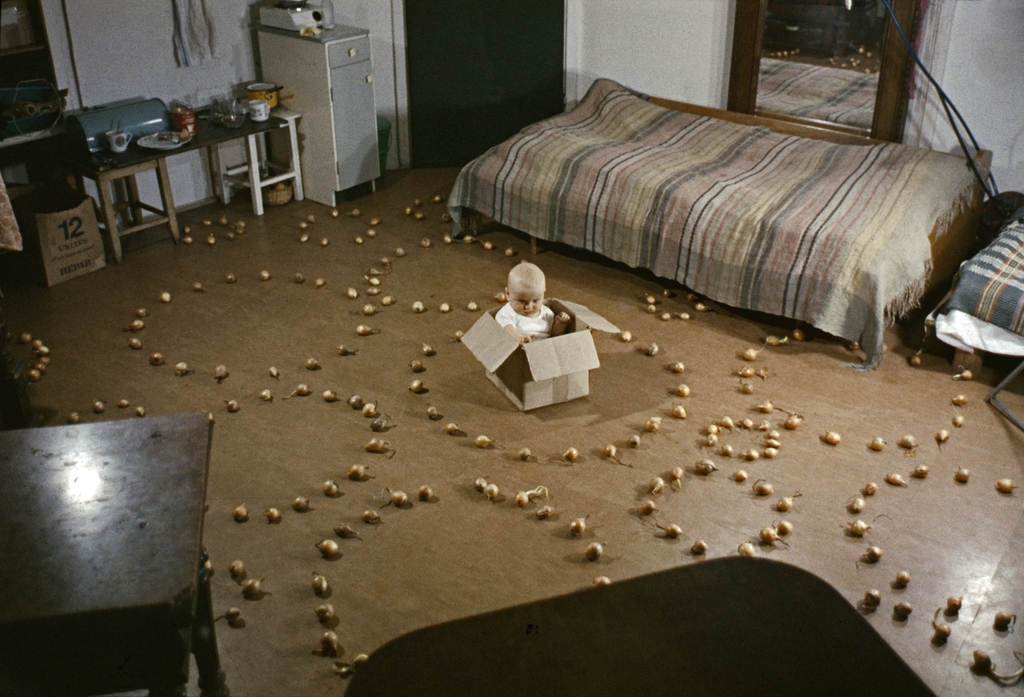
The idea of creating artworks at home is of course, not especially new. The foremost example I can think of is Activities with Dobromierz, created by the Polish artist duo KwieKulik in the early 1970s. Having experienced issues with publicly showing their work, they made the decision to produce and exhibit art in their flat, working with objects they found. Their home, which they renamed Studio of Activities, Documentation and Propagation (PDDiU) became the site for art that blurred the boundaries of the personal and political. 

KwieKulik, Activities with Dobromierz, (1972-74)

We see the couple’s baby, Dobromierz, arranged in multiple surreal scenarios, surrounded by the miscellanea of domestic life. At the centre of a circle of onions, he is a cherub surrounded by stars, or a sacrificial offering in the midst of an occult ceremony. You can see more examples of this fascinating artwork here. There’s an absurdist symmetry and playfulness to these images which I find enchanting – if you can overlook the slightly dubious ethics around it (is it ok to make art by making your child the subject and placing him in a toilet? – I’ll leave that one to the psychoanalysts.) 

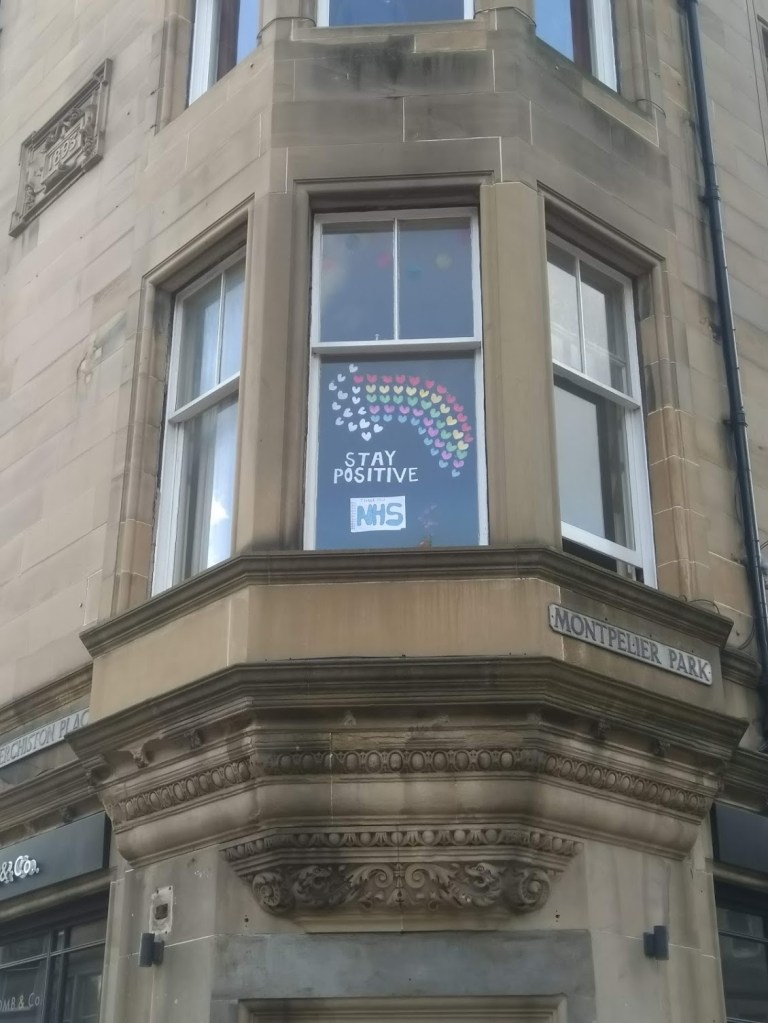
On my daily walks I am reminded of how much inspiration we really can derive from visual symbols and art marks left by other people. The name of this blog is inspired by my belief that art can (and must) be encountered in the everyday. Graffiti is, as always, the site for debate, discussion and seat-of-the-pants creativity. Seeing rainbows stuck against windows does give me hope. People are amazing, creative and inventive, and in the case of an iconic image of a sign spotted in Glasgow which reads “this is shite”, they are astutely acerbic. It is shite. There is as much truth and validity in that as there is in a rainbow.

Rainbows of all shapes and sizes adorn our streets now

We are all dealing with this situation differently: some things that appeal to you as a way to spend your time might not be fathomable to others. Some will create art, others will chuckle at their creations. There will be time to do life admin, and time to sit on the sofa. All are ok.

As we enter another week of lockdown, I miss the outside world. From the privileged perspective of someone who likes to write about art, I miss the solace of visiting exhibitions, learning new things, seeing weird and wonderful objects “in the flesh” and of course, sharing those experiences with others. But the restrictions on our movement have shown us that the democratisation of artwork is possible. Celebrating the joy of art is necessary. Humour and a spirit of accessible creativity are two tools with which we can counter the cultural shock of this pandemic. The challenge now is to bottle that spirit and carry it with us into the post-COVID 19 art world. We are going to need it.

Artist interview with Nicky Bird

Recently I had the opportunity to interview Nicky Bird, an artist who, among many exciting projects, has been undertaking a Land Mark residency with Art Walk Porty.

Her residency has focused on rediscovering and retelling the lost stories of the Buchan Pottery decorators, using found photographs and oral histories. The project is culminating in two weekends of events/exhibits, including an artist walk, site-specific artworks and a soundscape, which will be played in one of the pottery’s old kilns. Definitely worth a trip down to Portobello, if you needed any further encouragement to visit Edinburgh’s loveliest coastline.

We talked about artistic process, how Bird’s work treads the boundaries between art and heritage, and the importance of place and community in the project. You can read the interview in full here.

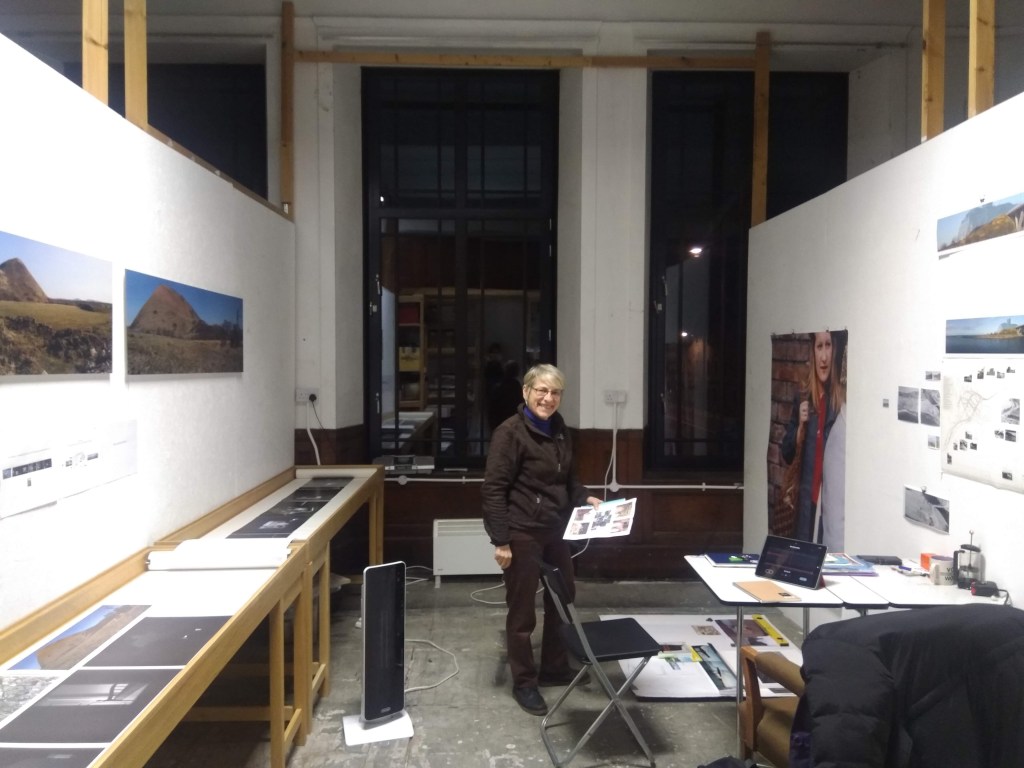
This is the first time I’ve interviewed an artist directly, and the process was fascinating. Though much of her work is site-specific, we met in Bird’s studio in Leith, where various projects and works-in-progress are tacked to the walls. She described how she doesn’t always manage to work in the studio – alongside her artist projects she teaches at Glasgow School of Art – but the images that surround her when she returns are good reminders that help her pick up where she left off.

I recorded the conversation and transcribed it into its interview format afterwards, and was reminded of how conversations jump around in a way the written word simply cannot. Though audio interviews, via the radio or through podcasts, are probably more personal and intimate, I liked the procedure of drilling down into our conversation and distilling Bird’s thoughts and motivations into a few paragraphs, though editing while keeping someone’s voice is always a challenge.

This is a new venture for me and I’m hoping it is the starting point for more interviews, written and recorded, which shine a light on the fascinating process of art making. I’m very grateful to Nicky Bird for her warmth and patience, and to Rosy Naylor, Curator of Art Walk Porty, for giving me this opportunity.

Nicky Bird in her Leith studio

Myriam Lefkowitz / Walk, Hands, Eyes (Edinburgh)

I have been wanting to write a piece about this for a long time. I regret I’ve been behind on my blog posts lately, but February is the month I’m going to write regularly. As my friend Kate put it, ‘perfectionism is taking a hit’. She is drawing every day, and I’m trying to do the written equivalent, whether on here, in my journal or on Instagram (@encounters_art).

What does it mean to meet a stranger, and within minutes, be expected to rely upon them for everything? To trust them to be your eyes, to guide you through the complex labyrinths of city streets, buildings, traffic, and other people? This is the question that lies at the heart of Myriam Lefkowitz’s extraordinary work ‘Walk, Hands, Eyes (Edinburgh)’, which was organised and performed by Talbot Rice Gallery, one of the city’s best places for engaging with contemporary art (art that is being made now, or has been very recently).

The work is a 45-minute 1-1 walk where the performer takes you by the hand and leads you through the city, with your eyes closed throughout. It is a silent experience, except for the occasional, whispered command by your performer “one step down… and another”. It was as intense as it sounds, and most people I have discussed the piece with have recoiled in horror, and asked me why anyone would voluntarily put themselves through that kind of thing. Was it even “art” if there wasn’t a object or thing you could look at as part of it?

Yet, I would go so far as to say it was one of the best art pieces I’ve experienced. Yes, it was intense, but in all the best ways. The childlike, gentle way the performer took my hand, and the way my body responded with utter trust (even though my mind fluctuated between embarrassment, confusion and hilarity) was a fascinating experience. It’s a simple concept when you boil it down, but for me as participant, it was and emotional and sensory rollercoaster.

People have always told me that when a person loses one sense, the others become sharper, super-senses. Temporarily ‘losing’ my sight for around an hour (I just about managed without peeking) demonstrated how accurate this is. I became aware of so much more in a way that was genuinely exhilarating: the frosty blades of grass crunching under my feet, the snippets of conversations, and even the atmosphere or feeling that you sense when entering a place. I did the walk on 12 December, and certain rooms we passed through vibrated with intense festiveness. In other moments I could sense we were in the deserted crevices of Edinburgh: alleys and corners where the sun barely ever reaches, the very quality of the air a telltale sign of pervasive damp.

There was an almost embarrassing sense of intimacy to it. As a rule, we only ever hold hands with people we know really well, who we feel affection for, who we know will not judge us if our hands are clammy or our skin rough. I found myself thinking about the performer (who was fast becoming my spirit guide through this new sensory world). I worried that her hand was cold: that prolonged connection with a stranger, though artificially created through an artistic concept, became a strong bond through a shared surreal experience. I had to trust her, because I had no choice otherwise. I also had to trust the other people we encountered in the streets not to hurt me, to take advantage of my vulnerability, my acute sense of which was counteracted with relief when nothing did go wrong. (On a side note, I have new respect for those who navigate landscapes with limited sight, by using a white stick or a guide dog. It really brought home the element of trust and bravery involved in that).

Experiential art, or art that functions through making us interact or participate with it in some way, is a big business. In our free time more and more we seek “experiences”, moments we can document on social media that boost our social capital in the process. Unfortunately, this can often lead to art experiences that are packed with gimmicks, but art vacuous at their core. By contrast, this simple action of two people walking together, with the city as their backdrop, felt minimalist and radical. Lefkowitz’s ‘Walk, Hands, Eyes (Edinburgh)’ reminded me that to make this kind of art successfully, you don’t need lights, big budget shows, music, bells and whistles.

For me, the best art can makes us as viewers/listeners/participants feel, perceive, experience and enjoy both reality and artifice in a way we hadn’t before, that stays with us. You can tell from the lack of images on this post that there were no visual tokens or takeaways from the experience, nothing to prove I was there. That’s because the best part of the work came from something intangible, from what I experienced within.

Gormley and Eliasson: perception and perspective

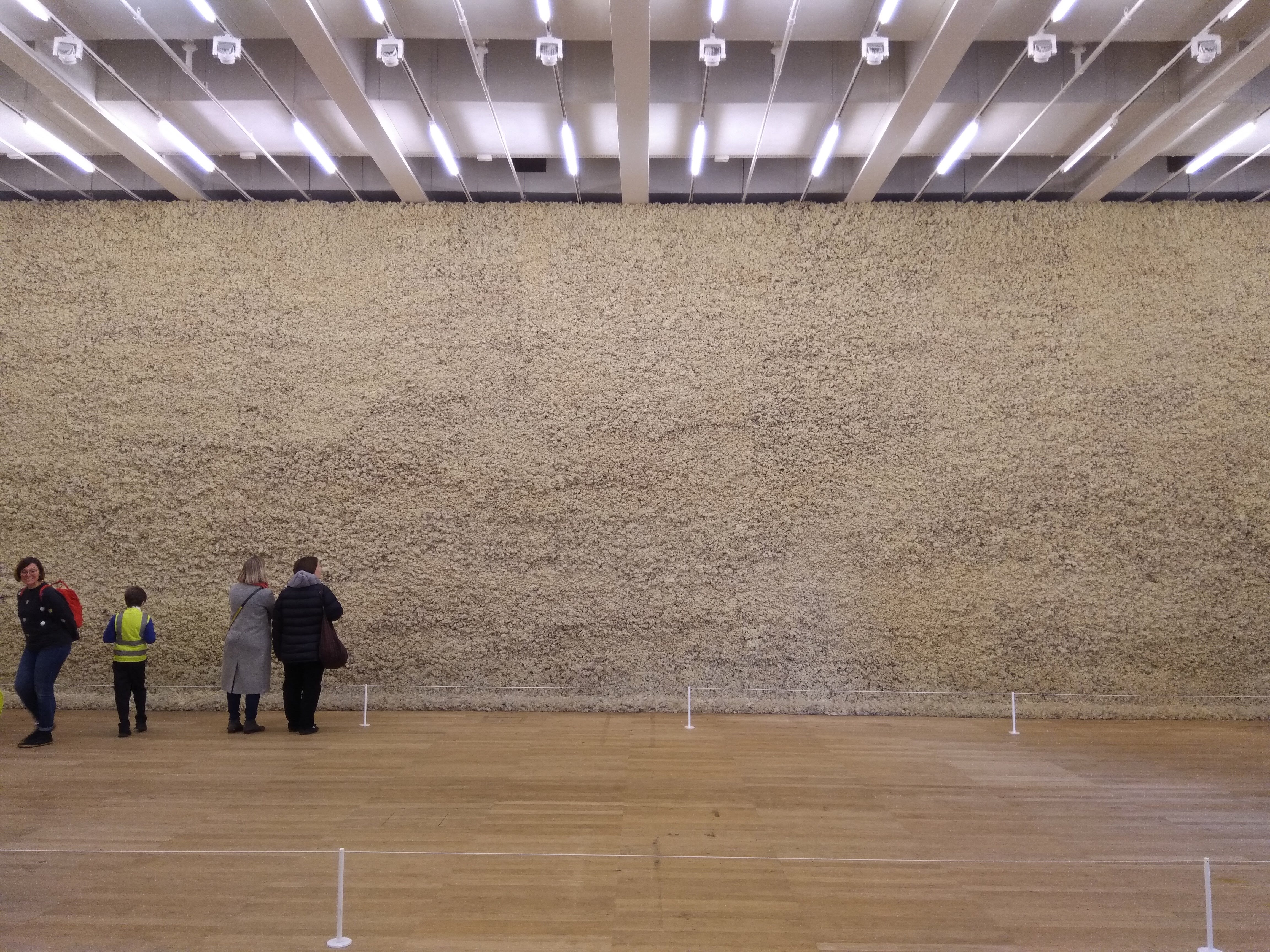
At first glance, it might not seem that there is much that connects the art of Anthony Gormley and Olafur Eliasson. Two weeks ago I would have summarised Gormley’s work as largely figurative, heavy, often made using metal and other industrial materials, and sombre in tone, while I tended to think of Eliasson’s as abstract, colourful and using a range of substances, natural and artificial, to playful effect.

Eliasson’s Moss Wall (1994)

Before visiting their recent exhibitions in London two weeks ago, the only thing that connected them in my mind was the fact that both shows were exceedingly busy and popular. This was based on the huge volume of posts I’d seen on Instagram, combined with an article in the Guardian in which gallery-goers expressed their chagrin that other people were getting in their way of enjoying art (more on that later).

Both exhibitions surprised me, starting with the Gormley. Although I’ve always enjoyed his work when I’ve come across it, I’ve often thought of it as fairly repetitive (frequently based on his own body) and ubiquitous. His sculptures are scattered across the country, in high-profile installations from Gateshead to Merseyside. In Edinburgh there are six Gormleys standing in a short stretch of the Water of Leith. But the Royal Academy show demonstrated how his artwork is much broader and more varied than the ‘universal’ self portraits we are frequently exposed to in his public art. His best works challenge how we perceive space, and how we perceive ourselves and each other through art.

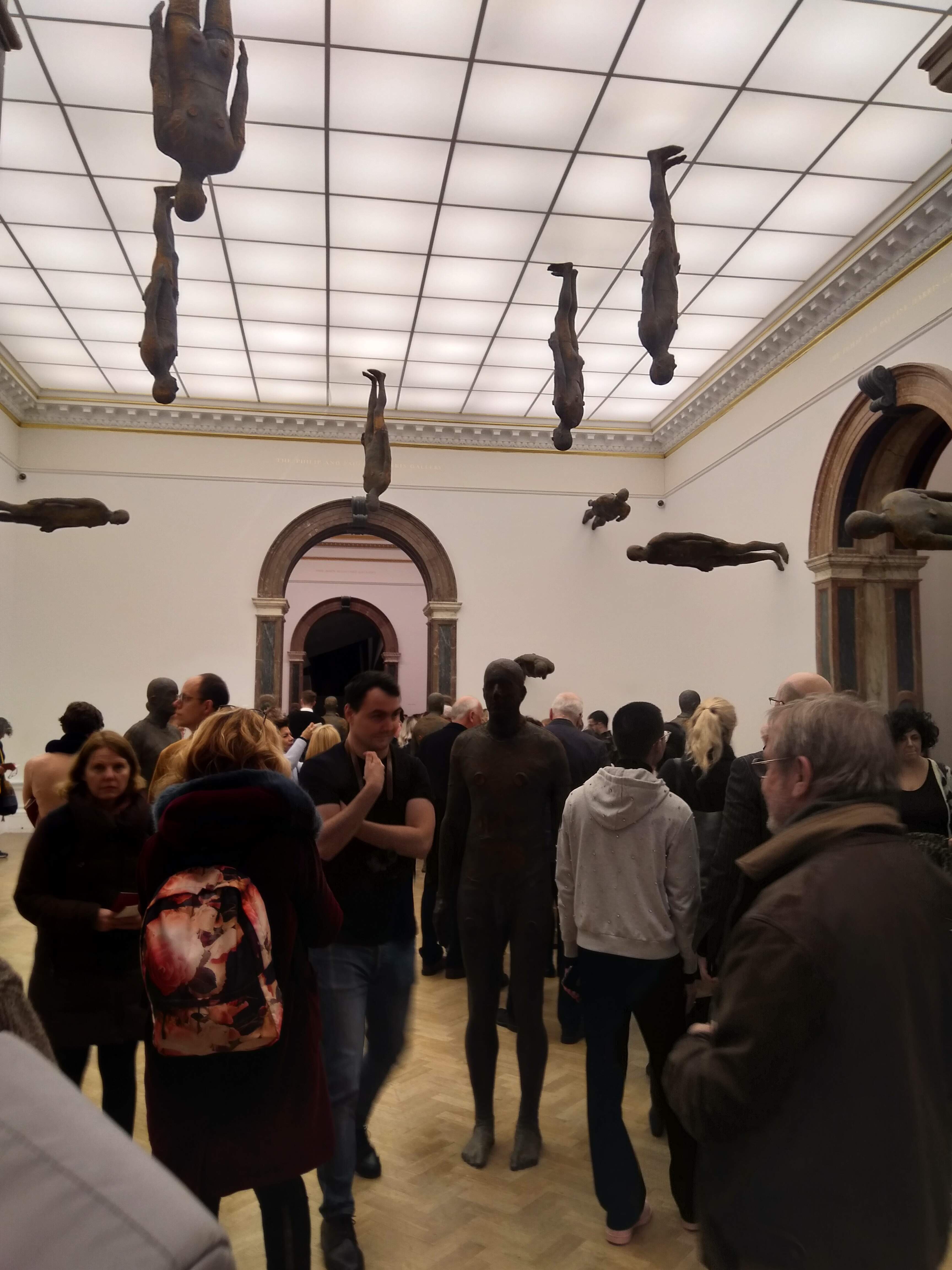
For instance, his Lost Horizon (2008), presents us with a familiar sight, multiple forms of Gormley’s body in cast iron, but in a different way. Bodies jut out at all angles and surround us, defying gravity and playing with our senses. The work isn’t ponderous, it’s fun. Seeing the exhibition on the last day meant that the room was packed with people, making it difficult to tell the sculptures from the live bodies that surrounded them.

Art and life intermingle in Lost Horizon I (2008)

Some of you might look at that photo and recoil at the number of people in the room. Yes, both exhibitions were busy. But part of experiencing art is noticing how others experience it: seeing other people react to and interact with art is one of the things I find most interesting about it. This aspect was what really made me see the connections between the two artists’ work. Humans play a major part in activating these artworks and making them resonate.

Visiting the Eliasson exhibition mid-week and during the day, I experienced it alongside a large school group of teenagers. Their interactions with Your Uncertain Shadow (colour) (2010), brought the work to life for me: they danced, flicked their hair, and had fun with it. One criticism that has been levelled at the show is that it’s a little gimmicky, but it is indisputable that this very quality makes it a good entry point for young people. And in turn, they remind us that we don’t have to be so serious all the time when it comes to art.

My fellow guests brought Your Uncertain Shadow (colour) to life

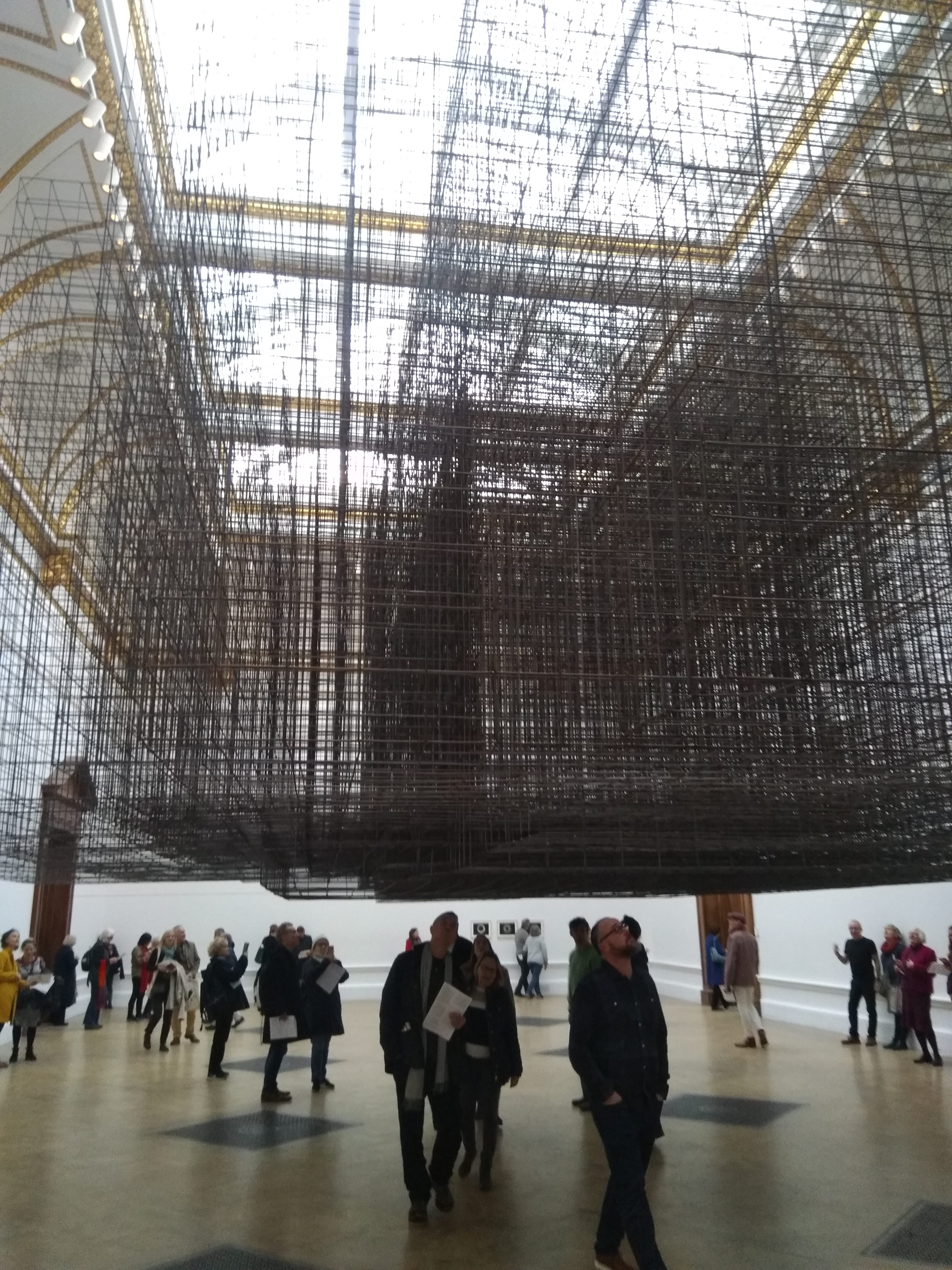
As well as having moments of levity and playfulness though, both exhibitions experimented with their visitors’ senses of fear and disorientation. Walking, sitting and lying beneath the Gormley’s colossal Matrix III (2019), 21 intersecting weighty steel mesh cages that contrasted satisfyingly with the Academy’s gilt cornices, felt genuinely daring. Cautiously making my way through the 39-metre fog tunnel of Eliasson’s Din blinde Passager (Your blind passenger) (2010), I wondered whether this immersive journey through colour and light would ever end (is this what they speak about when they say you see a white light when you die?!) Both were enormous, immersive, visceral and tinged with danger.

Walking underneath Matrix III – not for the faint-hearted

Alongside the colossal, statement-making art of these two big budget shows, there is also an exploration of vulnerability which makes them more than a bombastic celebration of these highly successful artists’ achievements.

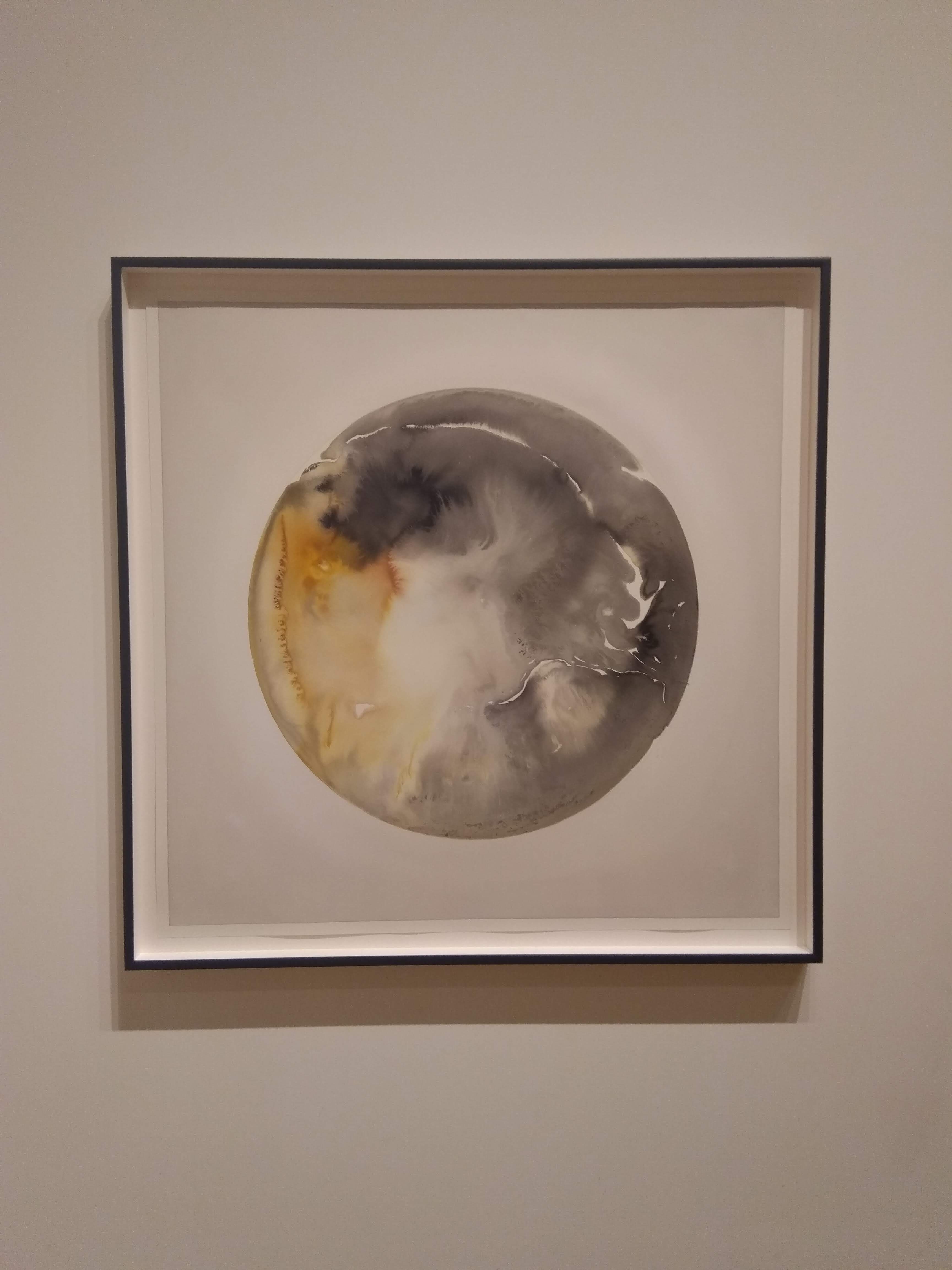
Eliasson’s work is centred around the environment, focusing on absence as well as presence, and soberly examines the loss of elements of our natural world in an era of climate crisis. Installations remind the viewer of the magic of the everyday: rain trickling down a window in Regenfenster (1999), the different effects that occur when light and water meet are made manifest in Beauty (1993) and Big Bang Fountain (2014). The ghostly imprints left by glacial ice melting into thin washes of colour in the Glacial currents series (2018) were almost haunting.

Glacial currents (yellow, sienna), 2018

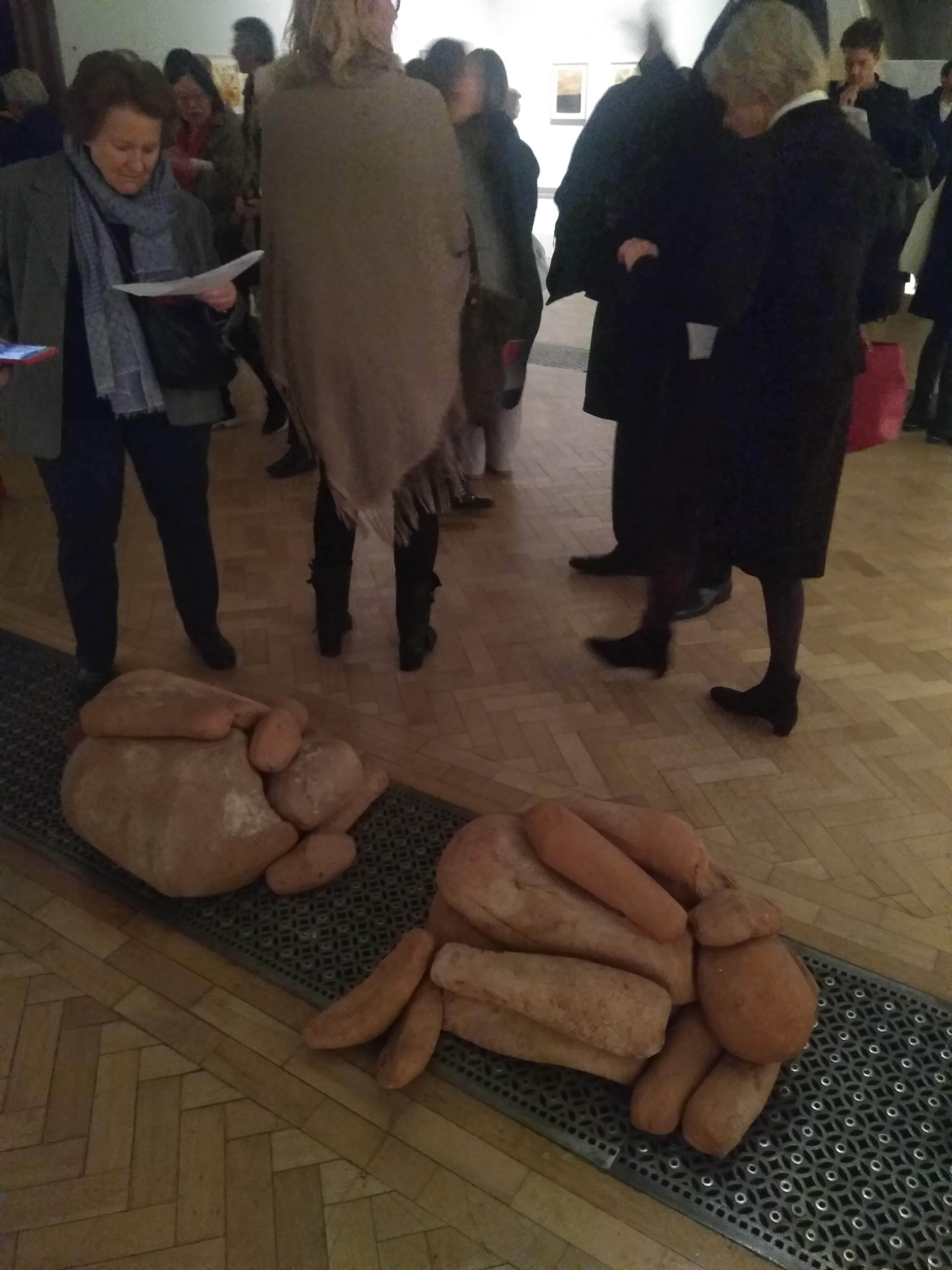
While Eliasson’s work focusses on the vulnerability of the planet, Gormley takes us back to ourselves once again. Starting the journey in the courtyard with Iron Baby (1999), at the end of the show we encounter ourselves once more, in Pile I (2017) and Pile II (2018). Stacks of simple, earth-coloured clay, huddled on the floor and without a plinth to protect them from the metal grates beneath, these small works are the hardest hitting of all in their unassuming fragility. We contemplate ourselves, our earthliness and our mortality.

Full circle: we encounter ourselves again as huddled lumps of clay

In very different ways, both artists are helping us to make sense of ourselves, our present, and heightening our awareness of our surroundings. That kind of lesson is worth braving a crowded exhibition for – and who knows – you might even feel inspired by those you have been thrown together with on your journey of discovery.

Belfast’s murals

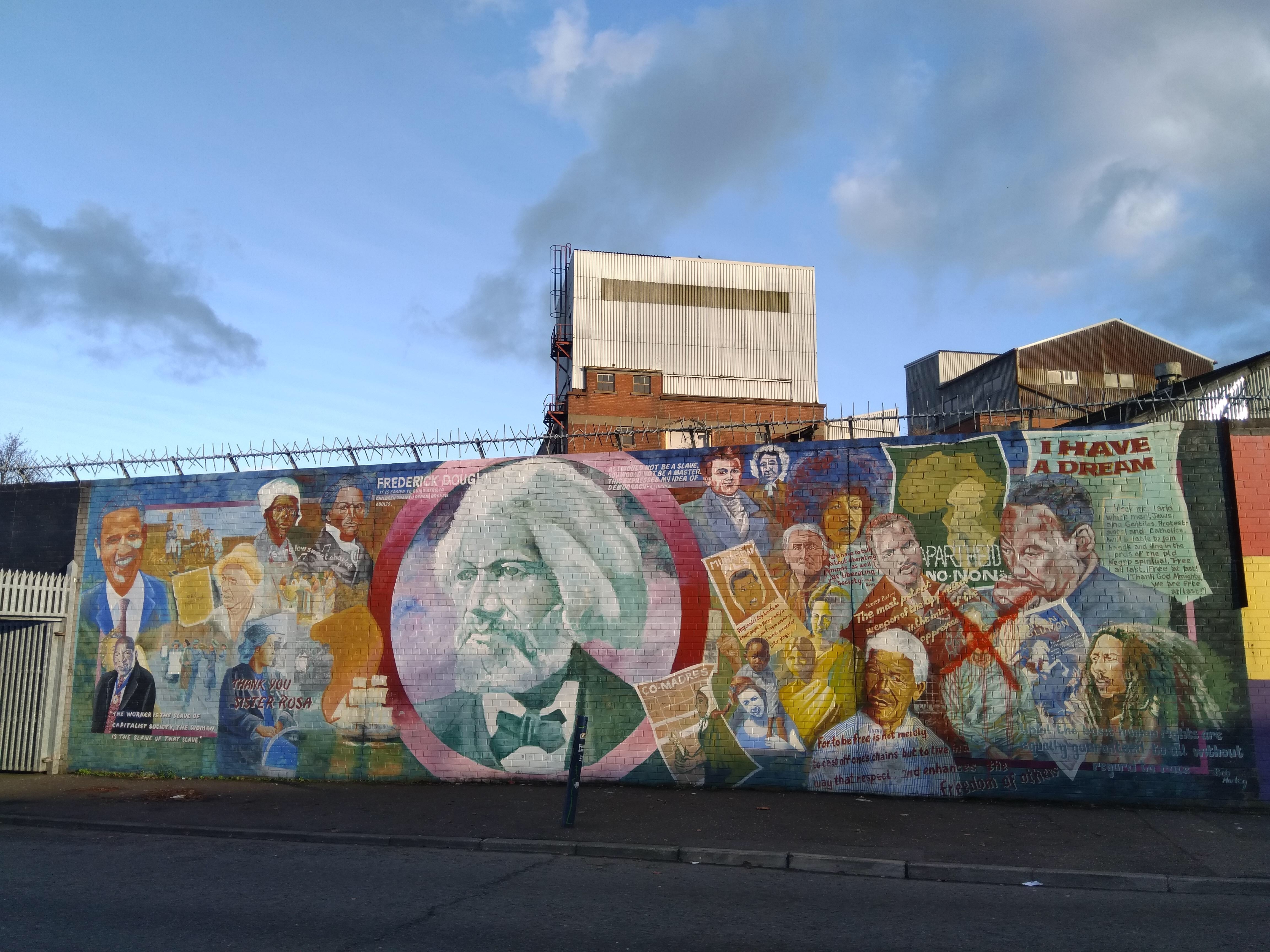
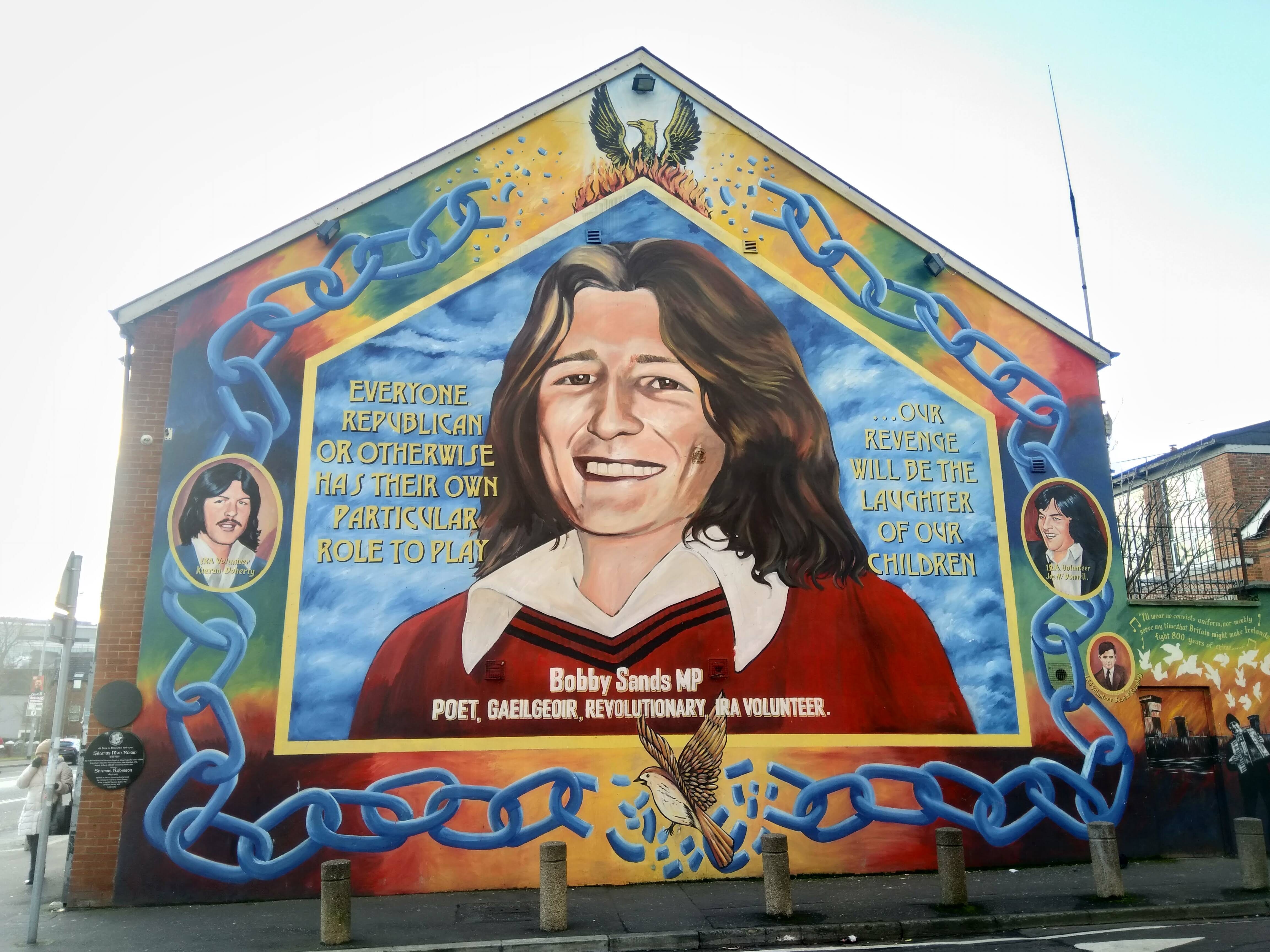
Last weekend was my first visit to Belfast, and I spent some time looking at the city’s famous murals. I wasn’t there for nearly long enough – there are hundreds of murals scattered throughout the city and I only managed to walk around the Falls Road and Shankill Road areas for a short while. But what little I saw I know will stay with me for a long time.

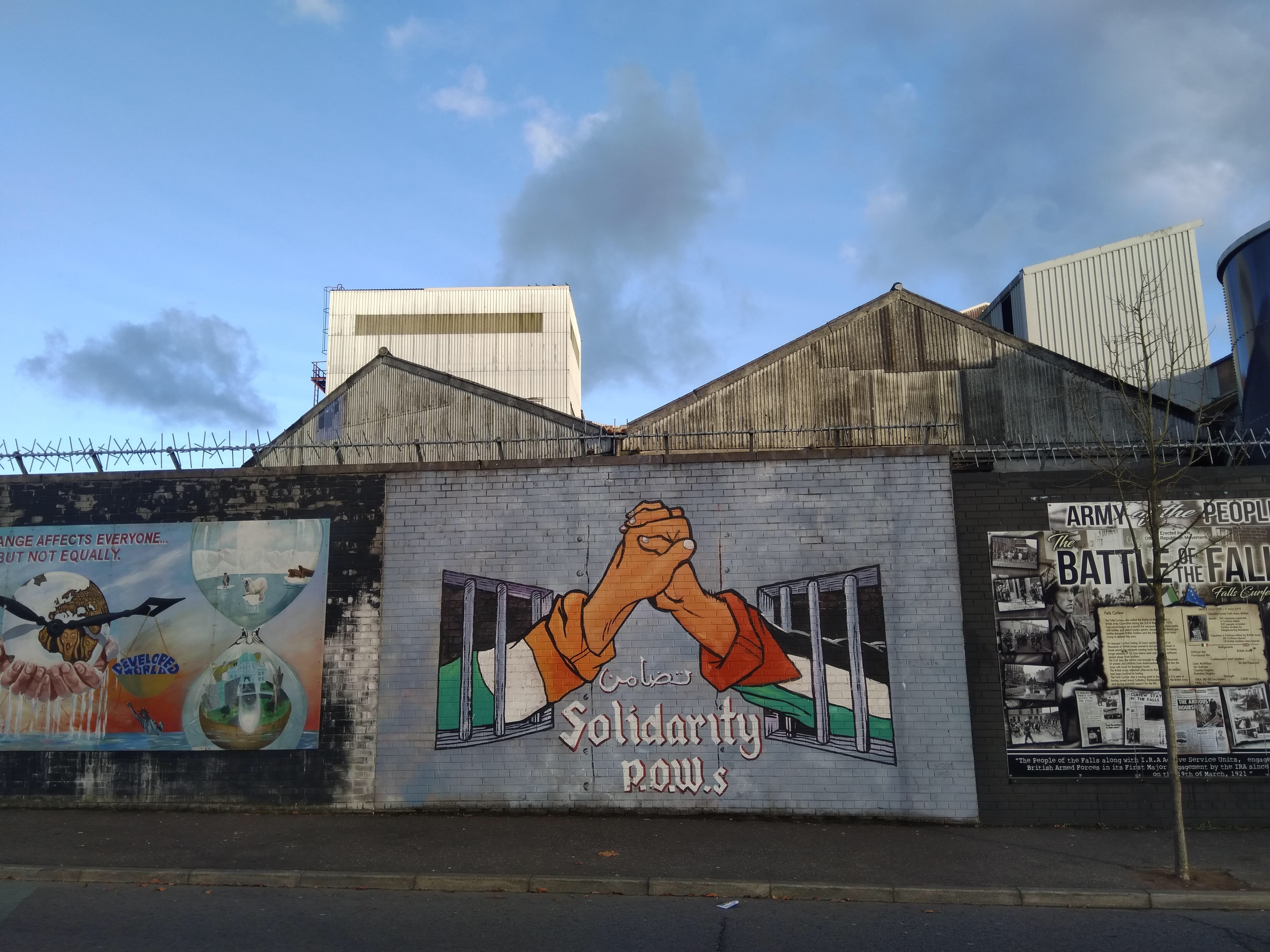
A section of the International Wall, which addresses global struggles

I wouldn’t presume to even try and talk in detail about the context here, but the murals are deeply embedded in years of complicated and violent political history. Public art is always a reflection of power struggles: who is represented and who is left out is a political issue. This is even more true in the case of the murals, which have sprung up over decades, and are for the most part created by people who live in these communities, rather than by artists brought in from outside and commissioned to make work.

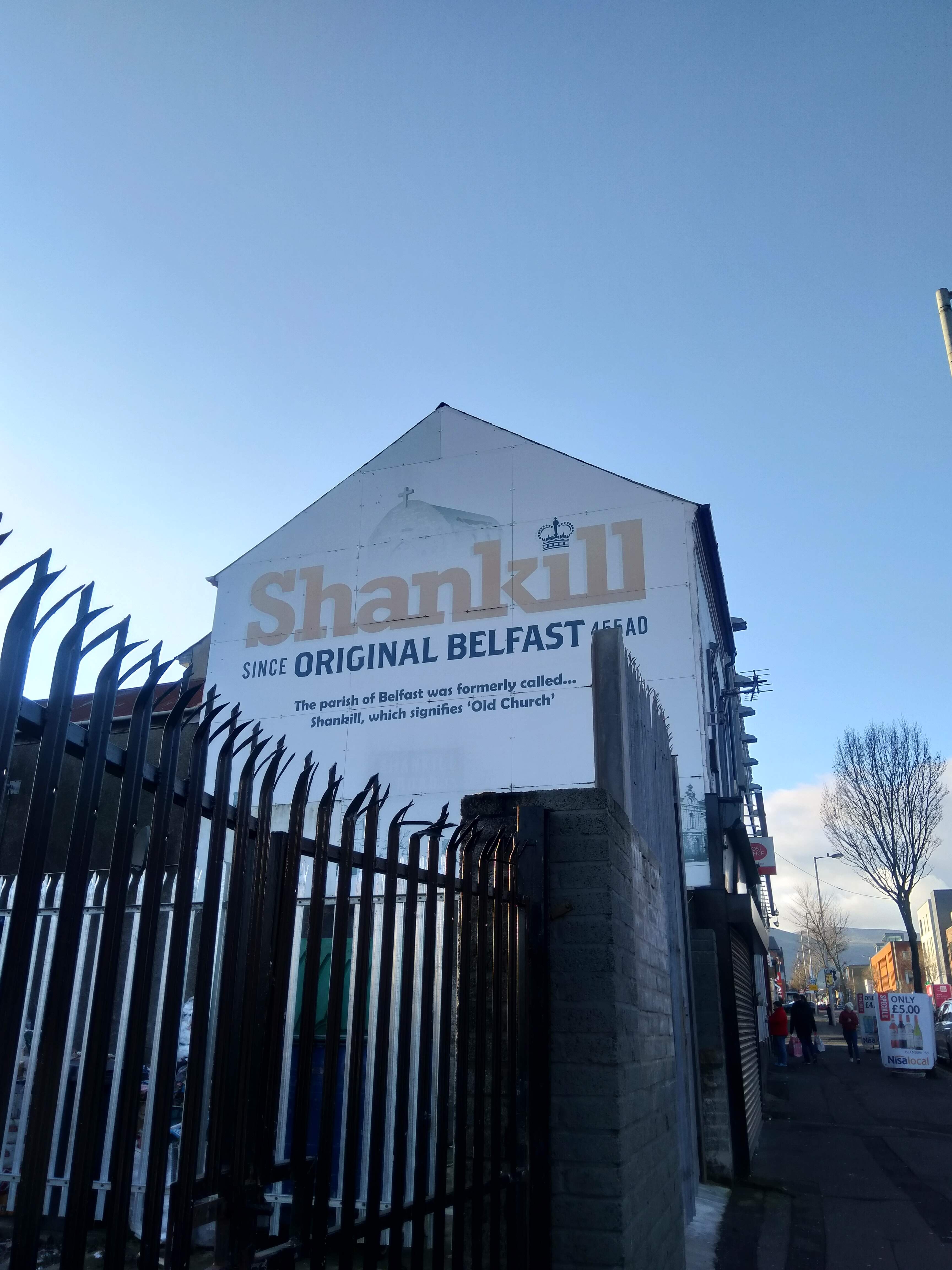
The subjects of the murals vary hugely, but many of them commemorate the victims of The Troubles. In a conflict fought at such close quarters, even the smallest of exposed façades becomes a canvas for stating the allegiances of the area.

Signs and symbols: the crown dotting the ‘i’ of Shankill denotes the area’s allegiances

I was shocked to learn that thousands of lives were lost in the violence, and perhaps just as surprising was that neither me, nor any of the people I was with (Scottish and English) had learned anything about the conflict in school, even though it is very much in living memory and an important part of both British and Irish history.

The Bobby Sands mural is the most photographed in Belfast.

It’s a moving and hard-hitting experience, but walking the streets and engaging with the murals as a tourist is one of the ways we can learn about the city’s difficult past in an accessible way. It’s also an important reminder that images, signs and symbols are always laced with countless different meanings, and it is worth taking some time to try and decipher them.

Images of solidarity using the colours of the Irish and Palestinian flags, situated on the International Wall

Nicky Bird & Art Walk Projects, Portobello

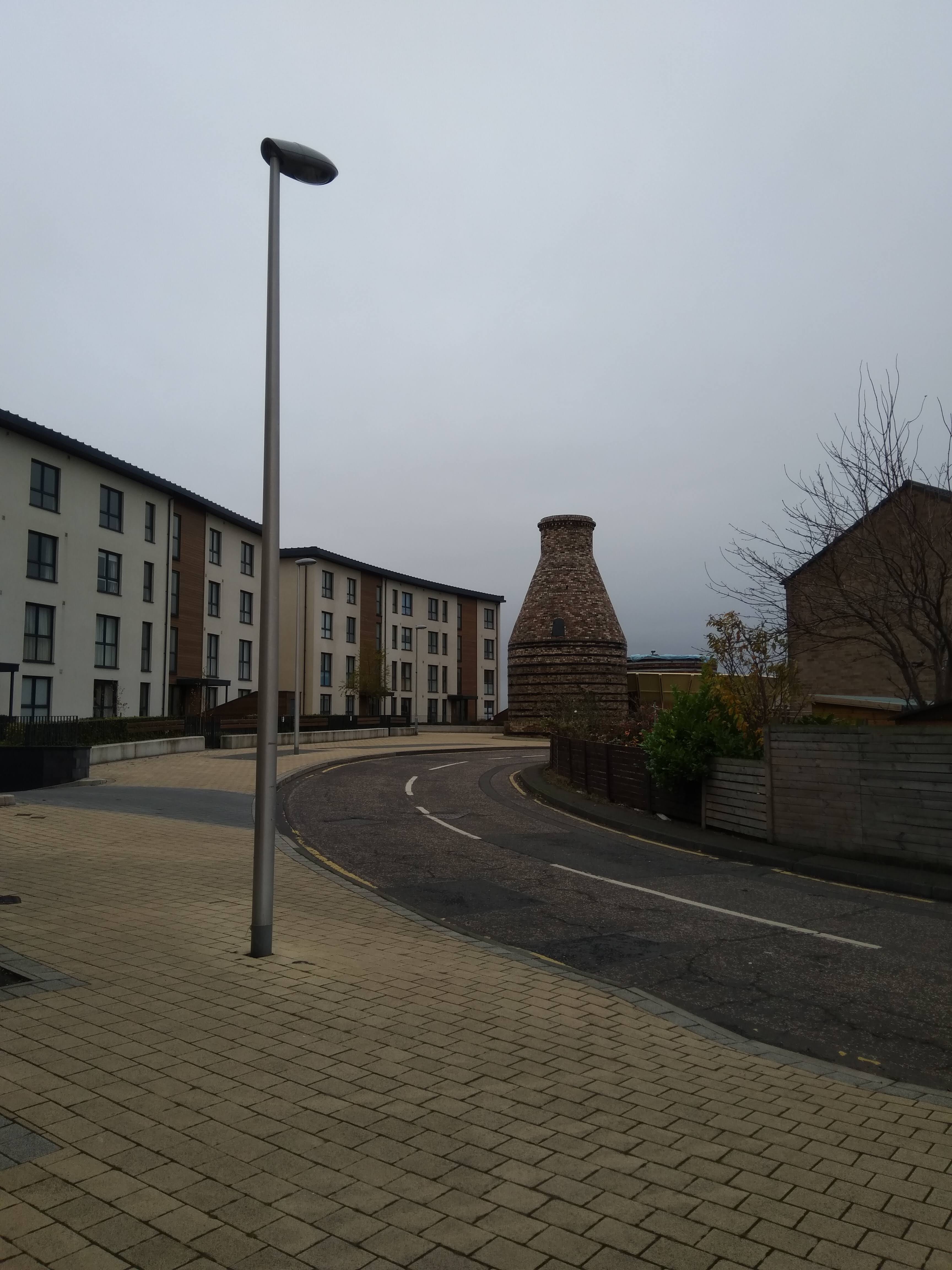
How much do we really know about our surroundings? Living in towns and cities, there are fragments of past lives and clues to how the environment has changed scattered all around us, if we look carefully. That careful looking, backed up by detailed research is how artist Nicky Bird is spending her LAND MARK residency with Art Walk Projects, based in Portobello. The starting points for her project are the two bottle kilns close to the shore (dated 1906 and 1909), the only fragments left of the large Buchan Pottery complex, which dominated the area close to the shore, but closed in the early 1970s.

One of the bottle kilns, an alien industrial fragment adrift in a sea of new builds

Portobello is a seaside town between Leith and Musselburgh, east of Edinburgh city centre. It’s a beautiful walk along the promenade, more a place of leisure than of work, but until relatively recently it was an important industrial hub – there was a paper mill and a chocolate factory all within easy reach of the Pottery.

Today a small group, led by Bird, helped to revive a memory of that recent industrial past, through a walk event which told the decorators’ stories. These were the women who painted the ceramics before they were fired in they kiln, who occasionally raked through the spoils to try out their own designs and have them fired on the sly. Like a band of investigators searching for clues we walked around the area and examined maps from different phases of the area’s history.

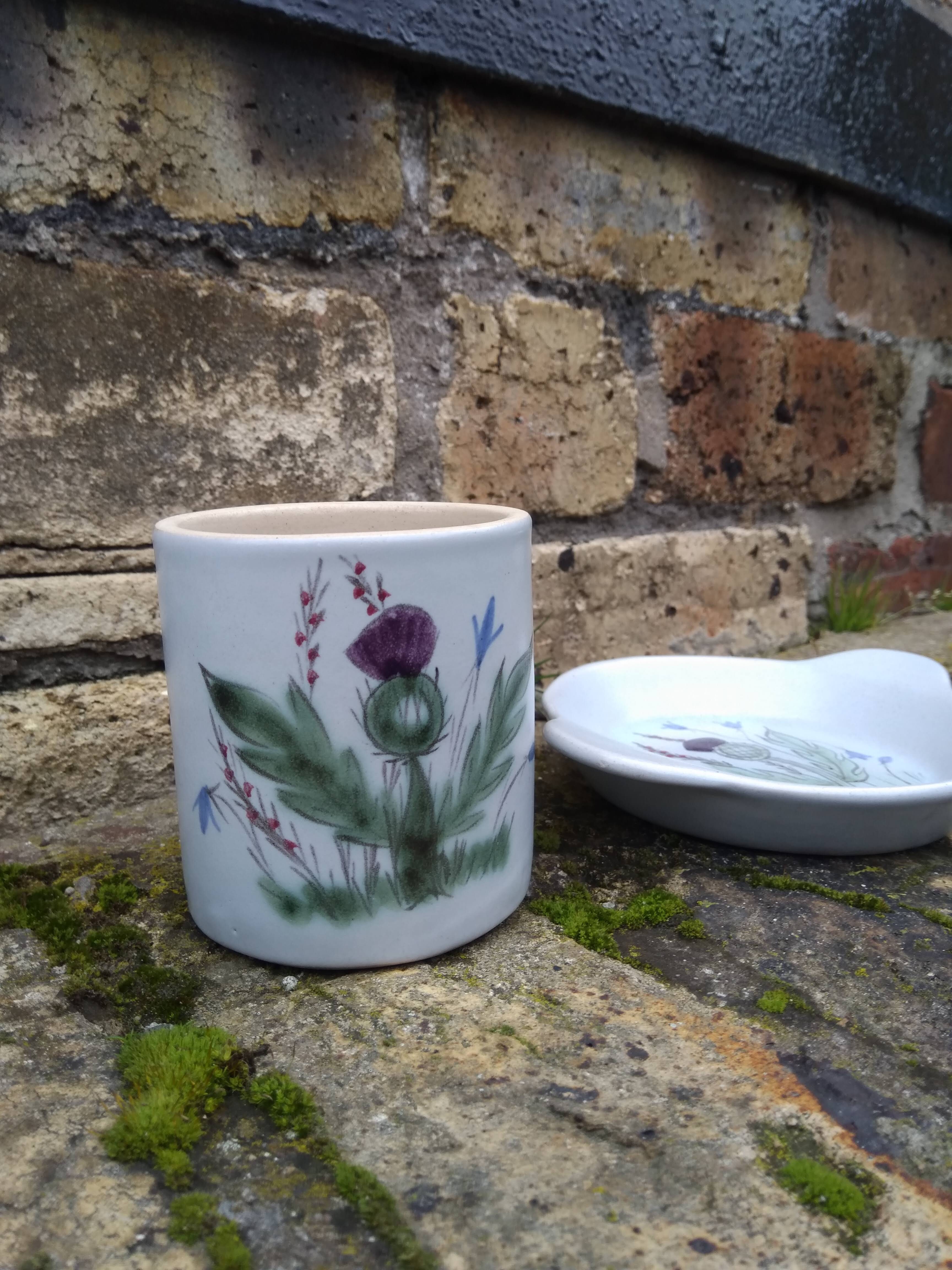
Classic Buchan Portobello pottery, set against the backdrop of the beautiful kiln bricks

We also looked at examples of the pottery the women had decorated, and two fellow participants told me they recognised the design – it used to be sold in all the tourist shops in the 1970s, but they had never realised it had been made in Portobello itself. It felt good to participate in reviving that part of the town’s story, and I’ll be keeping an eye out for pieces of Buchan pottery in Edinburgh’s shops from now on. Even the most everyday objects can be brought to life through giving a voice to their past, which is why art projects like this one, which evoke memories that have been lost, are so important, especially for communities that have changed as much as Portobello.

Nicky Bird’s residency with Art Walk Projects is culminating with an event in February, so this walk was really a launch for her project. The completed work promises to be one that shakes off the dust that has settled on Portobello’s recent history, and I’ll look forward to seeing what else is revealed.

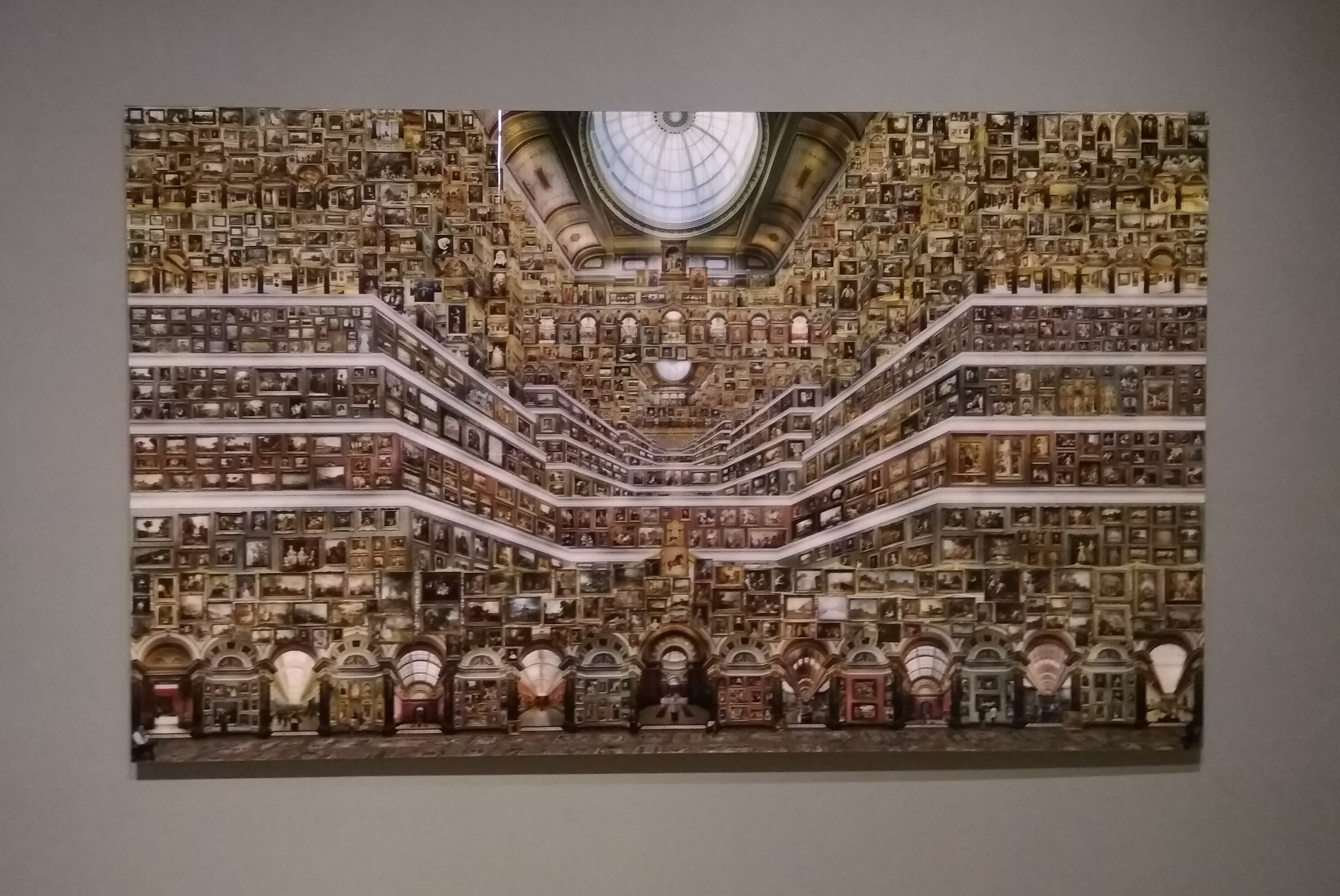
‘National Gallery, London’, by Jean-François Rauzier (2018)

I keep on thinking about a remarkable work I saw as part of Cut and Paste: 400 Years of Collage at the Modern last week, which I didn’t include in my review. The work was made in 2018 by Jean-Francois Rauzier (b.1952) and is called National Gallery, London.

At this stage I will admit that I may have been predisposed to think favourably of the piece. I worked at National Gallery for around four years, and the bonds I form with places dear to me don’t tend to fade away casually. This work recreates some of the place’s grandeur, its abundance, then mashes it up and reimagines it in the most striking way.

Familiar architecture, reimagined

The composition is made up of thousands of different photos of the National Gallery, with around 3000 works from the collection digitally stitched together (hence being part of the ‘Cut and Paste’ narrative). The National Gallery’s architecture has been futuristically transposed, its famous long vistas and arches lined up across the base of the work, while the broad white borders that cut horizontally across the centre give the impression of a multi-storey building, packed to the rafters with paintings in a dizzying salon hang.

National Gallery, London is one of Rauzier’s “Hyperphotos”, which he began creating in 2002 and which combine the feeling of a panorama with microscopic detail. While it may not be evident from my own photographs of the work, snapped during an exhibition visit, each painting is reproduced with pinpoint accuracy, astounding detail and clarity. Getting up close to the work, the viewer can pick out any number of famous, recognisable and well-loved paintings. For me, finding some of my old favourites was like searching for the faces of long lost friends in a crowd.

I found George Stubbs’ Whistlejacket (1762), a painting I loved as a child, taking pride of place in the centre.

One of the special things about the National Gallery is that in the action of walking through its rooms, the visitor goes on a pretty comprehensive journey through the history of Western European painting from c.1250-c.1930. Within that broad narrative, each painting tells an individual story, and captures something of its own historical moment. With the help of wall texts, written by curators and educators, we as viewers use clues to decipher that story, such as the subject matter, the style in which it is painted, the life of the artist, or through the artwork’s history as an object itself (who it was painted for, who has owned it throughout the centuries).

Even though I am lucky enough to be familiar with some of the works photographed by Rauzier, I felt as though I needed hours, if not days, to look properly at this artwork and the paintings contained within it, just as when you visit an art gallery you know it won’t be possible to absorb everything before what a friend of mine calls “museum back” kicks in and you need to sit down in the cafe.

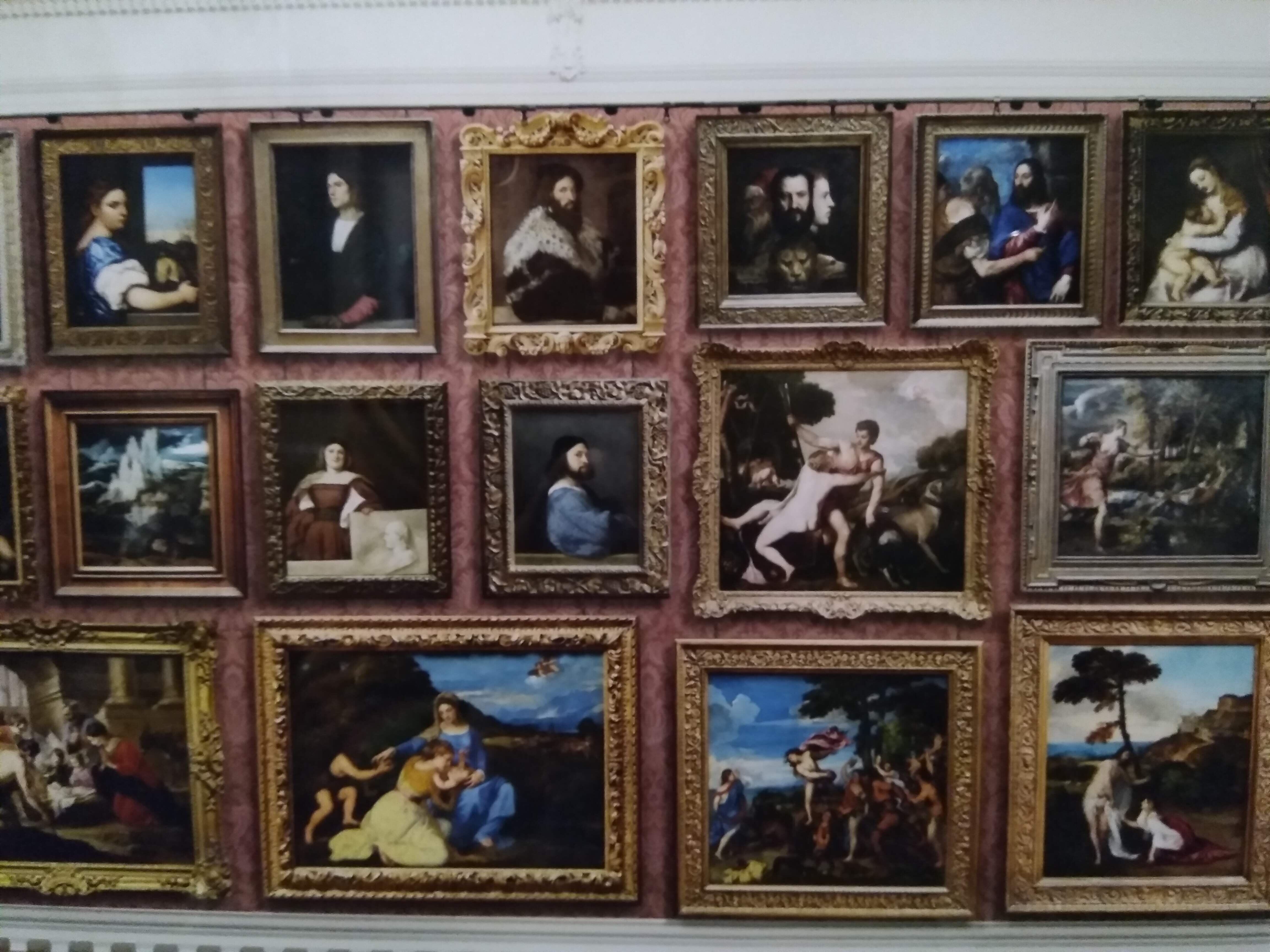
A wall of paintings by Titian (1490-1576). What’s not to love?

There is so much life packed into every single artwork, and the more you learn about the history of art, the more remarkable it is that here, Rauzier has piled a major chunk of that sumptuous and fascinating history into one single work, exercising his own curatorial and architectural choices along the way. He tells the story in way that would almost be legible in one glance, were it not for the sheer weight of all that’s packed into it.

As individuals, we create and take our own meanings from artworks, and our experience of art is informed by our own stories, which is certainly one of the reasons why I found this work by Rauzier so fascinating, and why I know I’ll keep finding things to say about it even after I’ve hit the ‘publish’ button for this blog post. Whether or not you are interested in art history, it is impossible to deny that Rauzier’s futuristic retelling of it is a visual feast, albeit an overwhelming one that is impossible to finish in one sitting.

‘My Own Private Bauhaus’, David Batchelor at Ingleby Gallery, Edinburgh

I first encountered David Batchelor’s work about a year ago, and I was so happy when I heard he had a show in Edinburgh, at Ingleby Gallery (free, ending 28 September). It’s not a place I’m familiar with, and being a commercial gallery, I wondered whether the space would feel welcoming. Though I had to ring a bell to be let in, there was no need to fear – I was welcomed by a friendly member of staff who introduced me to the gallery and some of the ideas behind the exhibition.

The building itself dates from 1834 and is settled in the heart of Edinburgh’s austere but beautiful New Town. It was originally built as a religious meeting house for the Glasites, a break-away group of worshippers from the Church of Scotland, who heartily disapproved of embellishment, decoration (or, it seems, joyfulness of any kind) in their places of worship. So it is with a delicious sense of irony that such a space has been transformed into a gallery, a dynamic that I’m sure Batchelor would have revelled in when planning the exhibition.

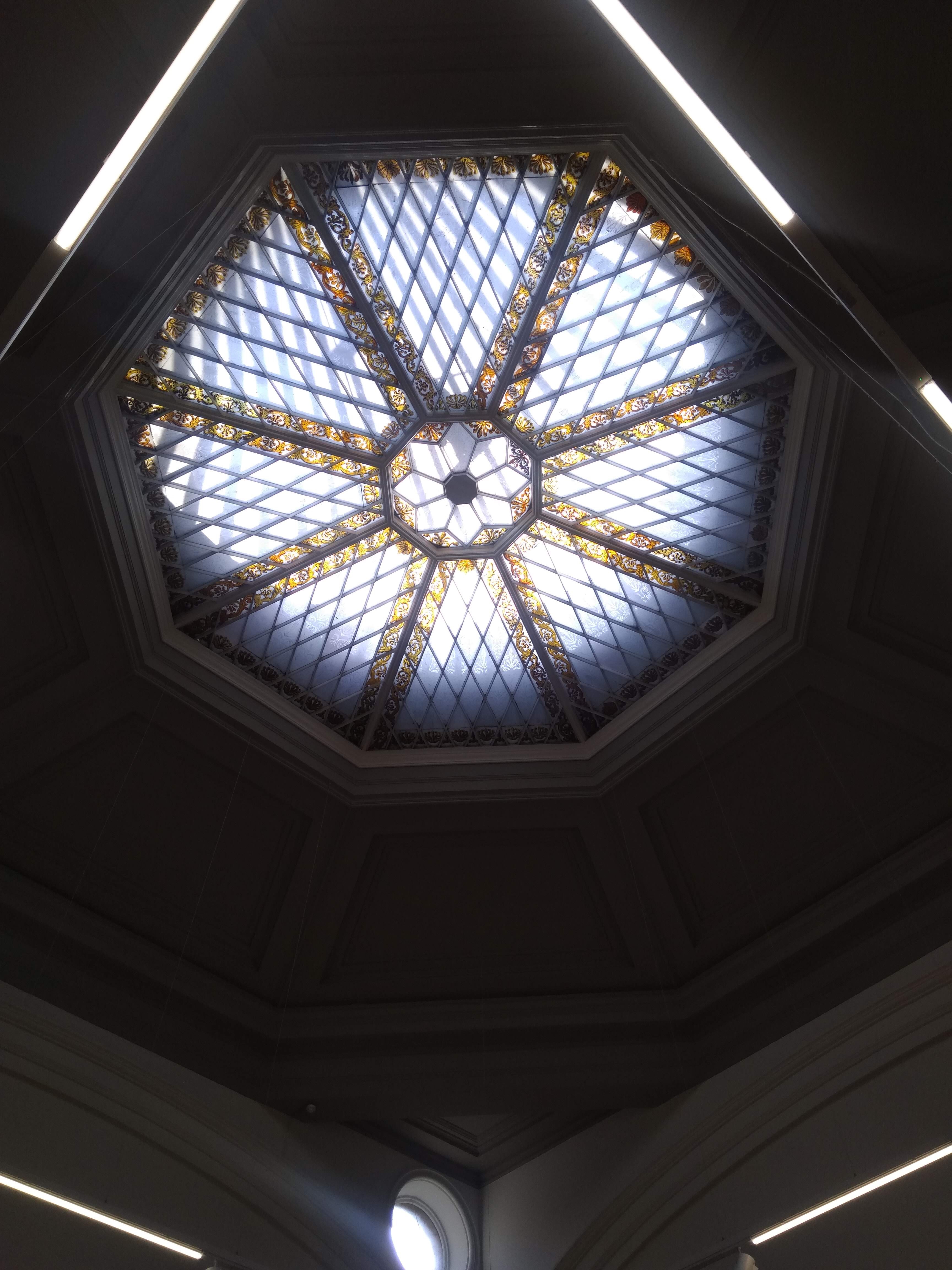
The ceiling of the main exhibition space

One of my favourite things about Batchelor’s work is that it is characterised by a sense of playfulness. It doesn’t seem to take itself to seriously: art is boiled down to its essentials – colours and shapes – reminding us that all of us begin interacting with the world through these two key sensory building blocks. Through his explorations, Batchelor invites us become children again, to see with fresh eyes and wonderment that art can exist within the banal and the everyday. He’s there to show us where and how to look.

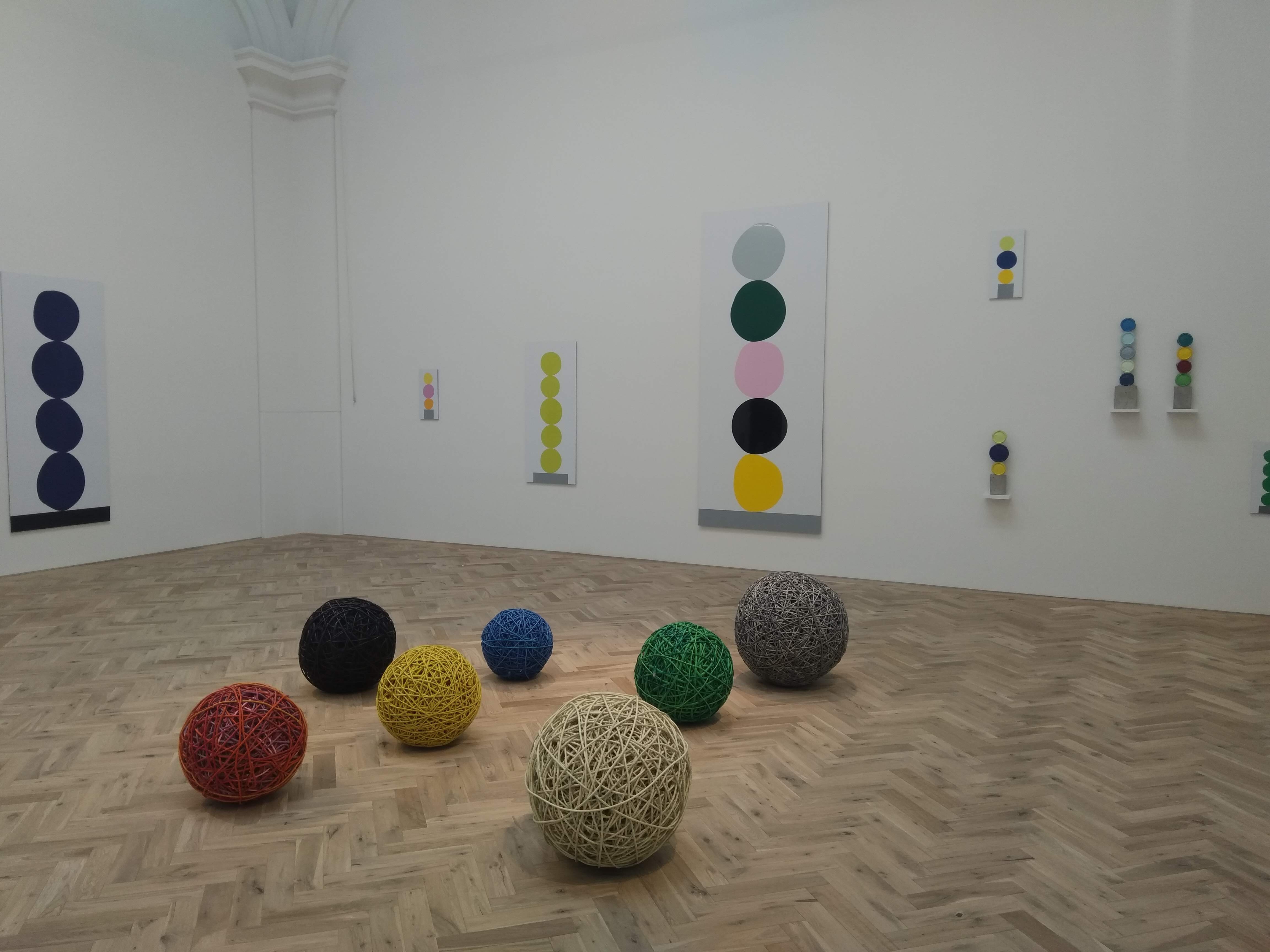
Installation view, the piece on the floor in the centre is Dogdays, 2008-2011

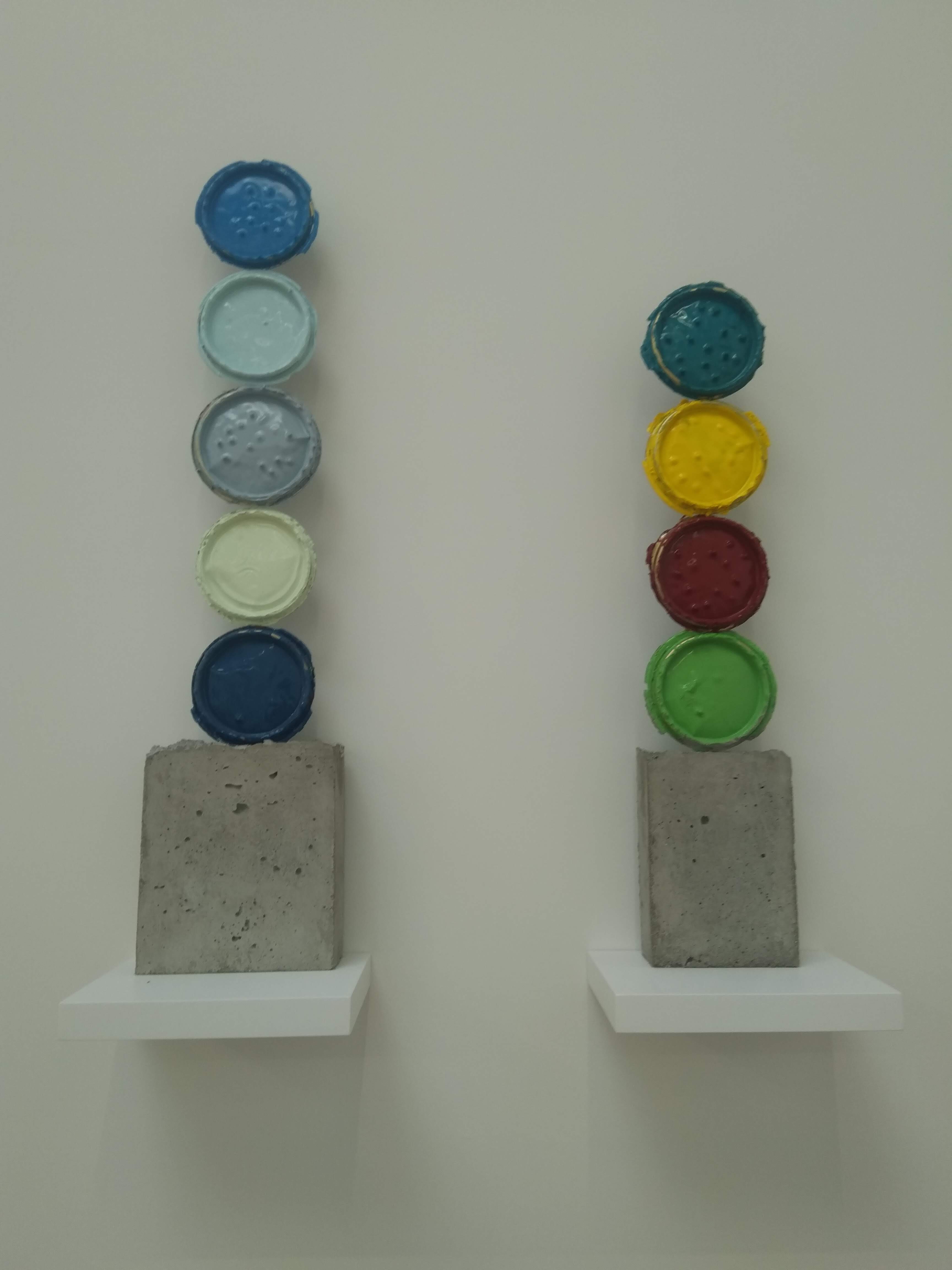
The exhibition is full of all sorts of mundane objects made fascinating, mounted on their concrete plinths and transformed into abstract sculptures. There are tape measures, huge spheres made of electrical wires and cable ties, sheets of intricate mesh, plastic circles that look like bottle tops, all celebrating the vibrancy of artificial colour. There’s not much suggesting the natural world in here, though shards of glass stuck in concrete look remarkably like window boxes. Rather, it’s the things we have invented that take precedence, repurposed and reframed by Batchelor, the magpie-esque collector of all things shiny, bright and saturated.

Geo-Concreto 06, 2018 (left) and Geo-Concreto 02, 2018 (right)

Yet for all of their man-made qualities, the show is not about looking at the pristine perfection of these objects, but rather their imperfections. The paintings on the walls are made using spray paint, giving them a mechanical shine that seems totally devoid of the artist’s hand, yet the circles themselves are misshapen and pleasingly wobbly, with the occasional splodge of paint that may not have been intended, but remains present on the canvas nonetheless.

Part of the Concreto 1.0h series

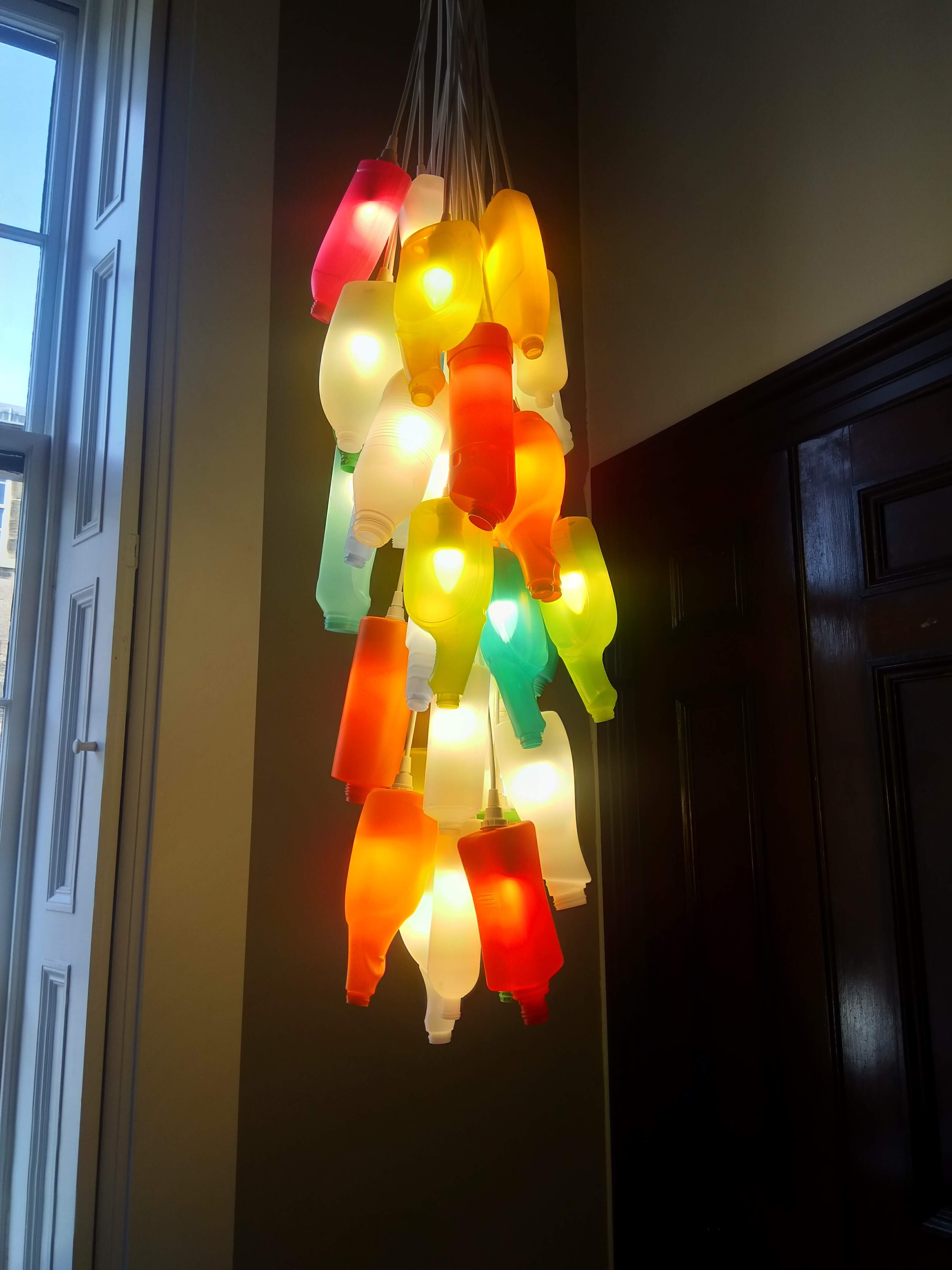
Much more tactile than the paintings, however, are their partner sculptures, made by precariously stacking the lids of paint pots on to of one another, the paint crusty, wrinkled and stippled, crying out to be prodded and poked. Some sculptures are framed by fluorescent fabric backdrops, and the much maligned plastic bottle is transformed the ultimate 21st century chandelier.

It’s art that’s fun, accessible, and shows us the possibility of finding beauty in the most basic of everyday things, a skill we need more than ever at the moment.

Candela, 2016

Bridget Riley, National Galleries Scotland

This week, I finally got round to seeing the Bridget Riley exhibition at the Scottish National Gallery. A couple of friends had been telling me how great the show was, and the critics had been raving about it, so I knew I had to catch it before it closes (Sunday 22nd September), and moves to the Hayward Gallery in London for its second leg.

Riley was a key figure in the Op Art movement, which developed in the 1960s and used abstract patterns and geometric shapes to create optical illusions in art. You can see that straight away, with Cataract 3, in Room 1. The whole painting is pulsating and vibrating with energy, in a way that makes you want to reach out and check that the canvas itself isn’t undulating. It’s a dizzying experience and quite a shock to the system.

Detail of Cataract 3 (1967)

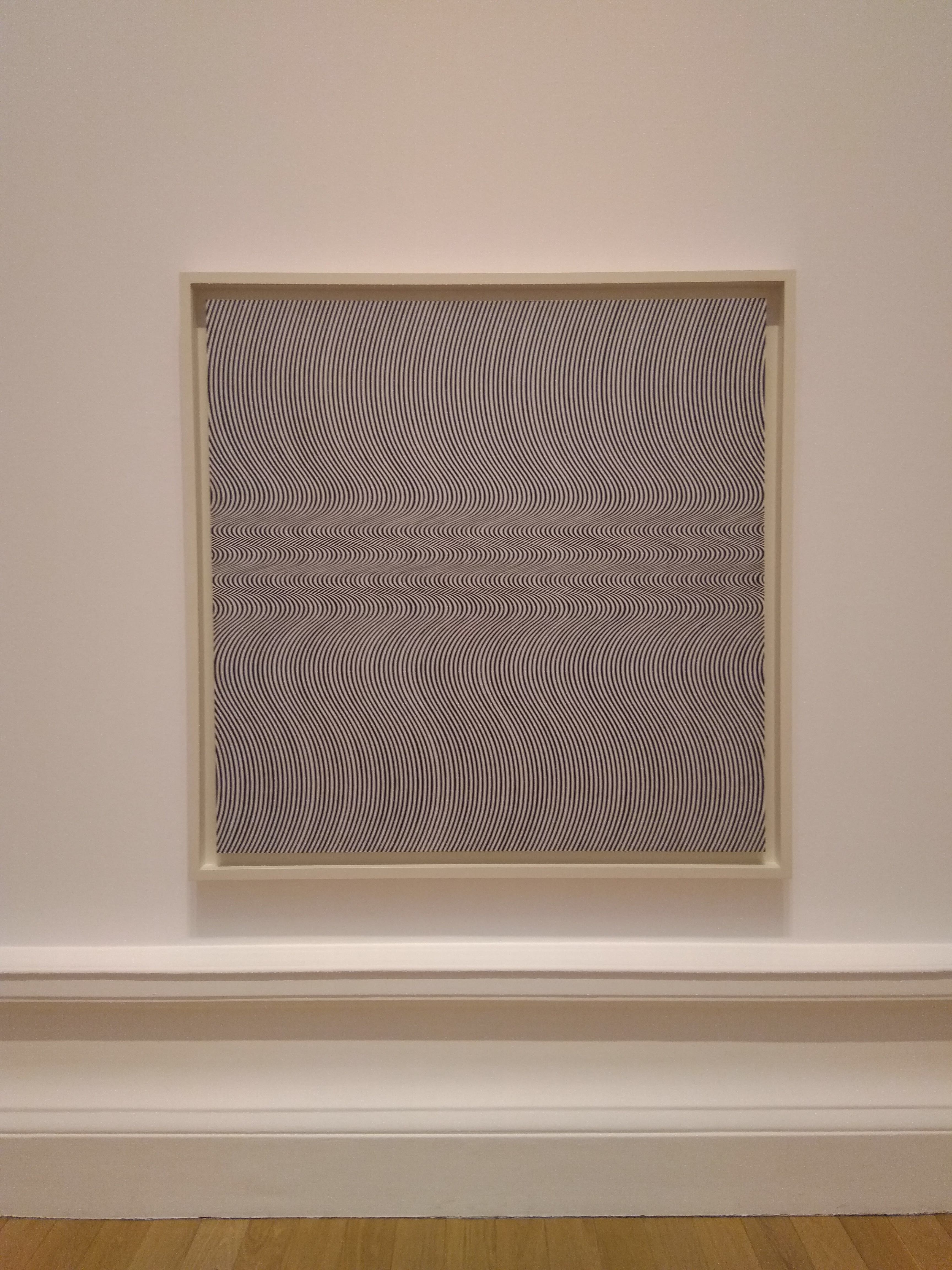
Some of Riley’s most famous works are the black and white pieces (Room 2), which seem, paradoxically, to be alive with colour. As your eyes scan the canvas, it flickers with pink and green, like looking at a TV screen when the channel isn’t tuned in, the visual equivalent of white noise.

I was familiar with the concept of Riley’s work and was vaguely interested in seeing it, but hadn’t been prepared for just how convincing it is when experienced in person. As the exhibition continued, I realised I had expected it to be fairly simplistic and one-note, but her work is a much more in-depth exploration of perception and sensation. It shows us how what we see is deeply connected to how we feel, not just emotionally, but physically as well.

Current (1964)

As your body moves closer to and further away from the paintings, or your eyes refocus as they try to figure out the mechanics of the brushstrokes, what you see shifts and morphs. It made me want to take off my glasses and lie down, to let the colours wash over me, the paintings becoming hallucinogenics and bringing a kind of playful blurring to the gallery space. It’s not surprising that Op Art was born in the 1960s.

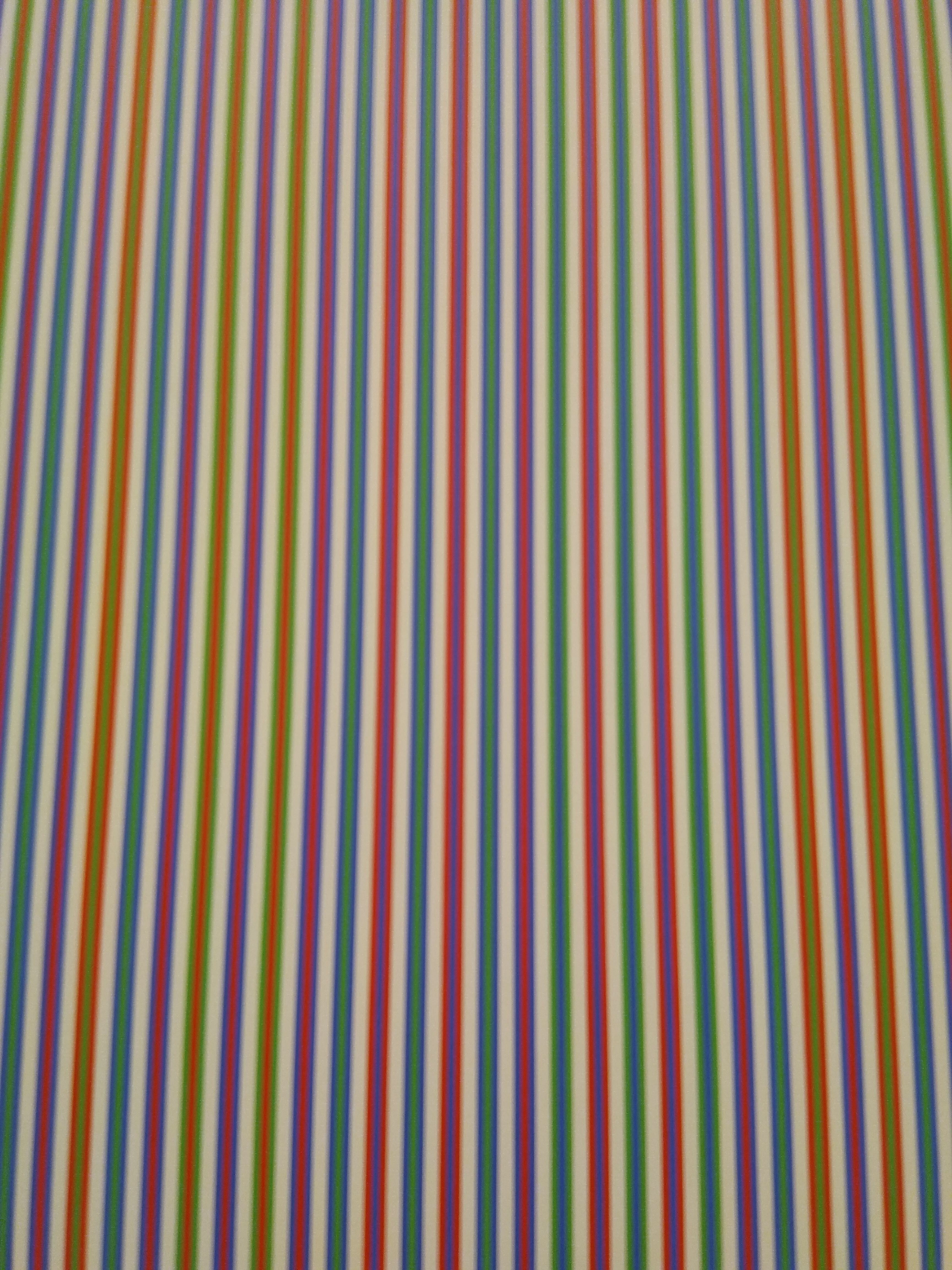
My favourite room was at the heart of the exhibition, and displayed a number of Riley’s brightly-coloured monumental striped canvases. The way the pairings of colours create different effects, and can trick the eye, made me wonder how colour really works. In Paean (1973), stripes of red, white, blue and green seem to create flashes of pink. Riley’s work must be underpinned by a proper understanding of the physics of colour theory, and the fascinating room packed full of her sketches and studies show how meticulously worked out each composition is.

Detail of Paean (1973)

In 2017, Riley said that ‘the movement is created by looking’, which to me, is the key to her work. It suggests that it is the viewer, as a participant, who plays a pivotal role in ‘activating’ the compositions. As we move around the paintings and allow our eyes to drift over them, we help to bring them to life. It’s an experience everyone will react to differently, but one I would recommend trying.