Communities, connections and growing things

Adapting projects to fit our ‘new normal’ has been the concern of many of us over the past few days, weeks and months. Artists have had to rethink entire proposals, final year degree shows are being reimagined so they can be exhibited online, and there have been lots of virtual gallery content for us to connect with. But how do you adapt a project that is about physically being present in a place, without being able to access it in person?

This was the challenge facing artists Felicity Bristow and Susie Wilson, who have been carrying out a Landmarks residency with Art Walk Porty. The project is based around a plot at Craigentinny Telferton allotments. After months of planning, preparing the soil, connecting with other plot holders and discovering what they had inherited from the previous owner, they were just on the cusp of beginning to plant, run workshops and kickstart the project in earnest when lockdown and the coronavirus crisis changed all that.

I had the pleasure of speaking to Felicity and Susie about their project, to find out how they have adapted and changed their approach to suit new surroundings. The interview has just gone live on the Art Walk Porty website. You can access it here.

Plot 55b, like all of Art Walk Porty’s residencies, is a place-centred project based in the local Portobello community. It is about process and engagement as much as, if not more than, about presenting a ‘final product’. In that way, the artists have discovered that although separated from the allotment itself, the process of growing things, of documenting their progress, could be carried out from their homes. They have set up a seed exchange and have been prompting each other with ideas, artworks and games sent in the post. They also discovered that the almost meditative act of sewing seeds and looking after plants has been beneficial to their mental health over the lockdown period. This is something that I can relate to even without access to a garden: managing not to kill my two houseplants over the last twelve weeks has been a source of great joy.

The recognition that connecting with the natural world can contribute positively to our mental health, combined with our need to avoid enclosed spaces in the coming months, will hopefully lead to more imaginative thinking in art projects, community engagement ideas and education as we turn to face our ‘new normal’. Plot 55b is a really lovely example of how that process can come to life.
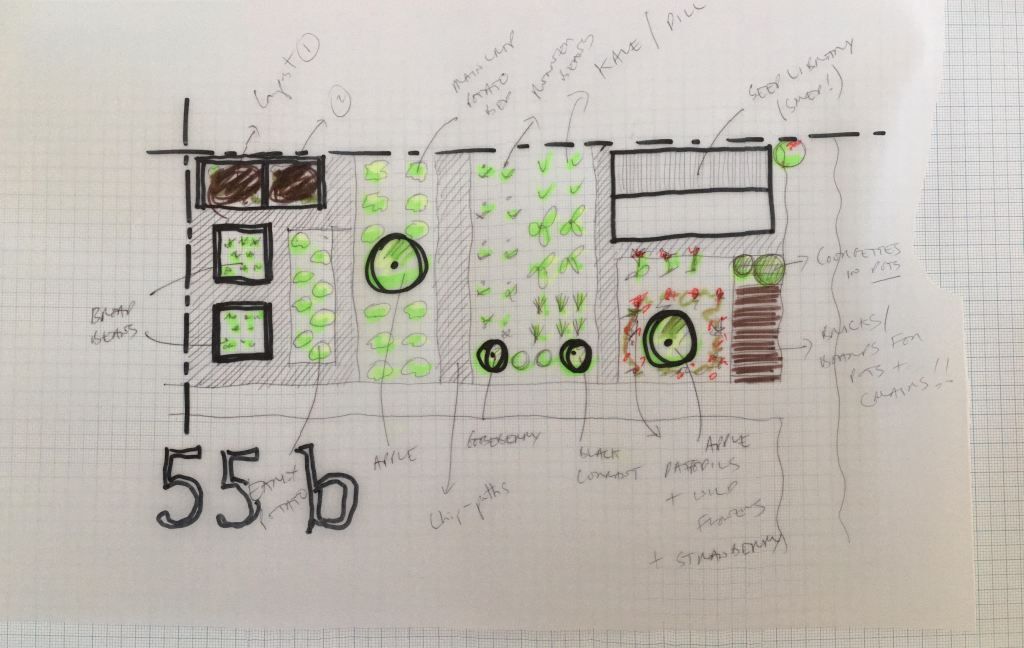
The plan for Plot 55b – once Felicity and Susie can get back to it

Performance Live: The Way Out review

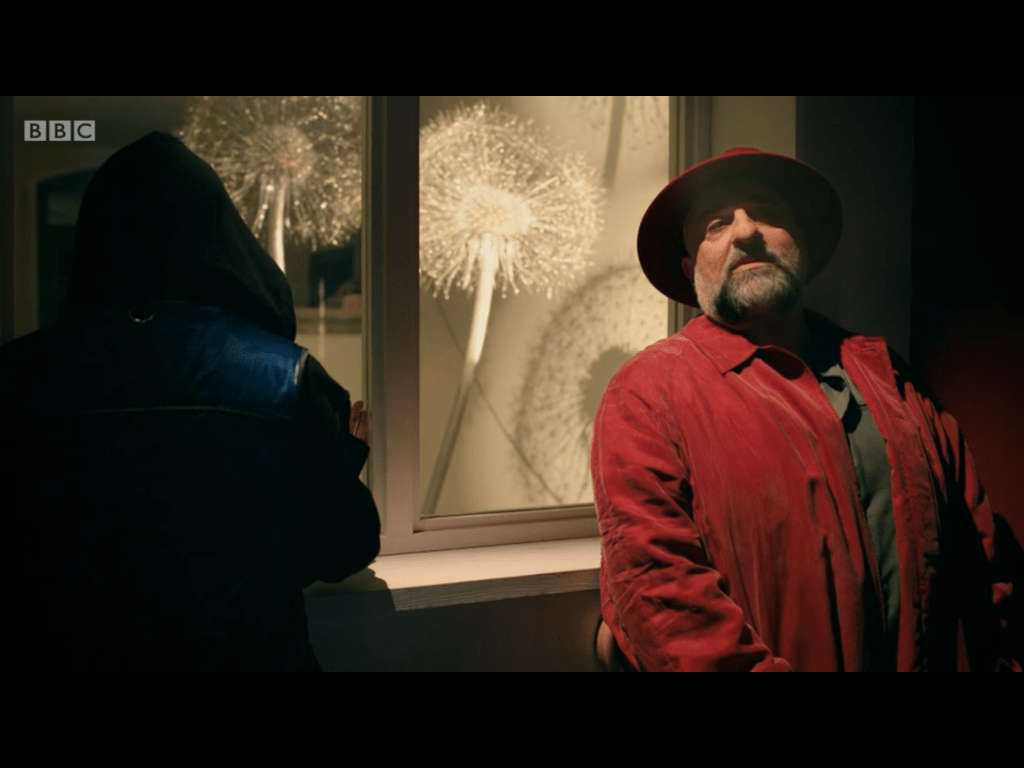
It’s raining heavily outside, and a soaked through, frightened, hooded figure stumbles upon a grand pair of wooden doors. They open automatically, and seem to offer an alternative to the storm, and whatever else is lurking outside that troubles our protagonist. This is how The Way Out, Battersea Arts Centre’s offering for BBC Culture in Quarantine, begins. I promise you that if you like imaginative, surreal adventures and need an escape from this covid-consumed world (as I did yesterday) you will fall down this creative rabbit hole and not look back.

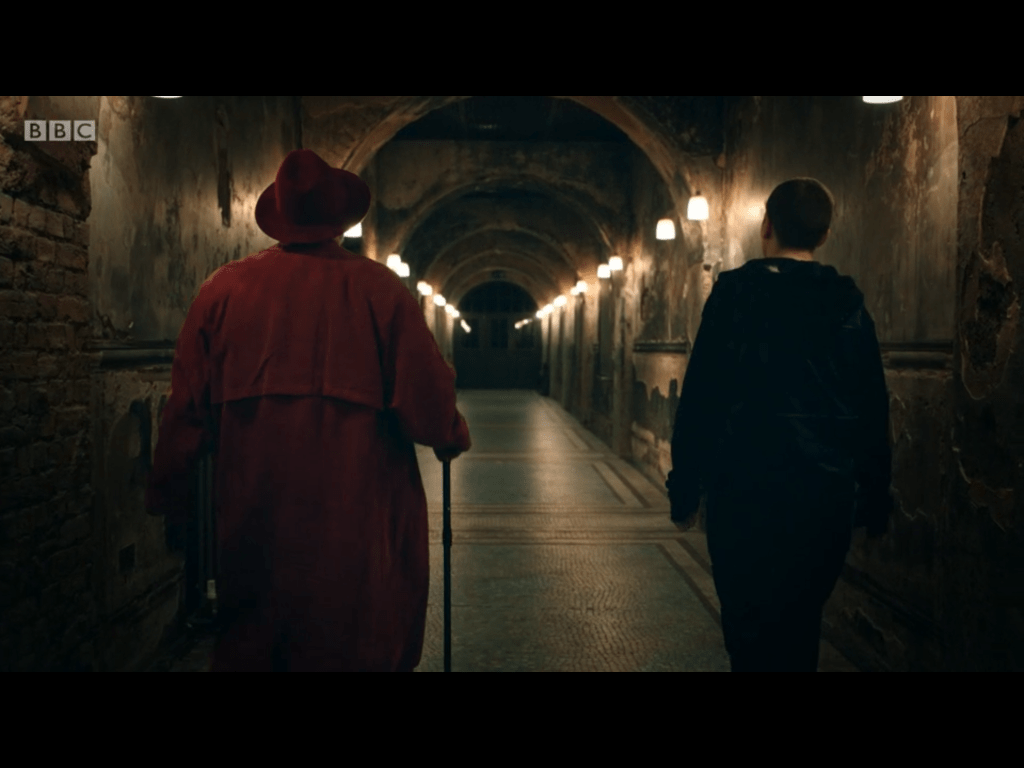
There are a number of references to Lewis Carroll’s Alice’s Adventures in Wonderland, and in many ways this is a modern retelling, one that celebrates the talent that Battersea Arts Centre has to offer as well as the transformative power of creativity. But before we make our way to experience the performances, we first encounter the enigmatic Omid Djalili, our guide and master of ceremonies. His existential musings on pathways, growth, entrances and exits hover between philosophy and riddle. As our journey through this old town hall with crumbling walls and labyrinthine corridors continues, he is increasingly likeable and intriguing.

The work incorporates some of BAC’s art installations, such as Hope, by Caroline Russell (2019)

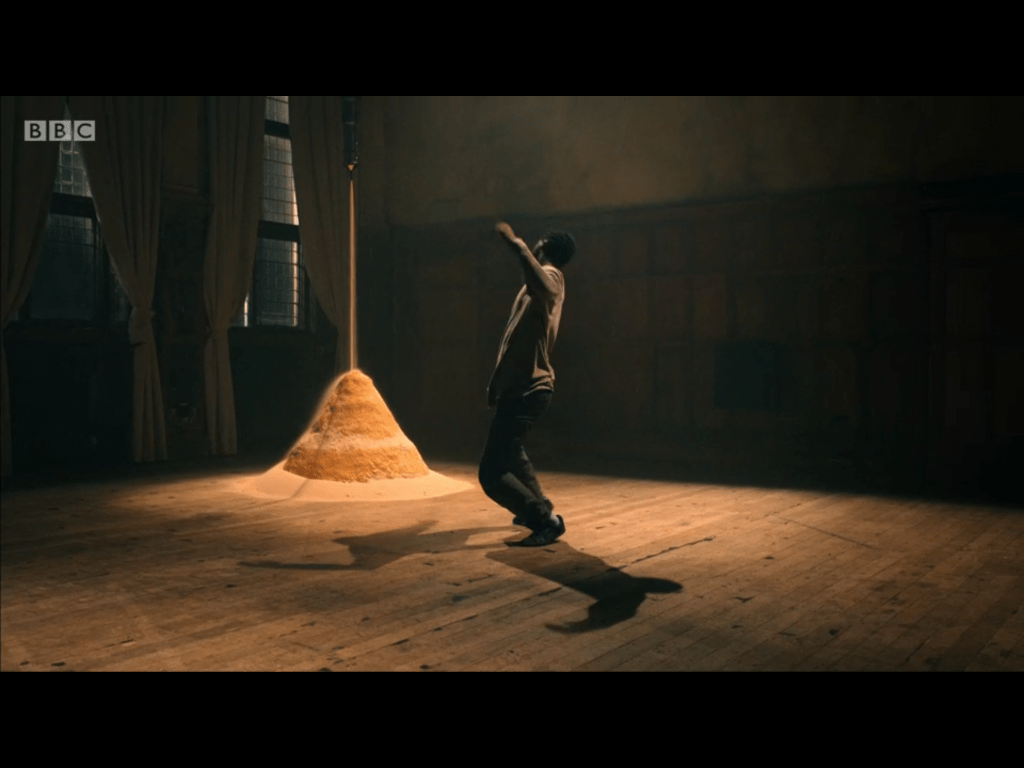
We begin as curious but detached observers, audience members, pondering how it is possible for a body to become fluid in the way that Botis Seva’s does in his performance of Quick Sand, performed alongside what seems to be a broken hourglass, its sediments hardened to the floor. As we venture further into the warren, we enter different worlds, a deep sea chamber where drag artist and opera performer Le Gateau Chocolat reigns supreme, singing a lonely siren song to the luscious, pulsating backdrop of a string trio. As the journey continues, its sinister edge, probably imagined by our own suspicions and scepticism, slowly gives way lightness and joy. We enter the cabaret world of the Cocoa Butter Club and we realise we are now participants in the show. There’s a performance of “Young Hearts Run Free”, one of my favourite disco classics which is poignant and joyful in equal measure. It’s a party and a crazy one at that, the kind of night when time warps and you don’t realise how late or early it is, or how it got to be light outside?

Botis Seva working magic with his movements in Quick Sand

The building is in many ways my favourite part of the show. It transported me, kindling memories of similar places I’ve been or known – art venues like Summerhall in Edinburgh (which is currently crowdfunding), nightclubs, the backstages of theatres, the burlesque house from The Simpsons, Shangri-la at Glastonbury, and even certain dark, decrepit corridors of my Midlands secondary school. The film is about 40 minutes long and is taken in a single shot from around head height, making it as close to immersive theatre as TV can get. You are the one journeying through the maze. And wow, it feels good to be traveling through and exploring a hive of creativity and weirdness. While watching I vow to myself not to take these experiences for granted again.

Come As You Are is a heartfelt poem written and performed by Sanah Ahsan, resplendent in a bright yellow suit and standing in centre of what seems to be a yellow brick road. It’s a nod to another memorable, psychedelic adventure into another land – except it is made from flowers and not bricks. A road made of flowers sums up the paradoxes of this wonderful piece of theatre, this story. It’s bizarre, fun and seems impossible and yet it works because of all the paradoxes woven into it. It is a beautiful escape, so perfect and so utterly needed for these times that it’s hard to believe that it wasn’t planned for a quarantined world (it was filmed in January). 

This flight of fantasy took me out of myself for a moment. Hopefully, on the other side of this stationary journey we are all undergoing, we can emerge, like the character from The Way Out, with our hoods thrown back, ready to embrace the world, each other and ourselves.

Through the labyrinth

Artist interview with Nicky Bird

Recently I had the opportunity to interview Nicky Bird, an artist who, among many exciting projects, has been undertaking a Land Mark residency with Art Walk Porty.

Her residency has focused on rediscovering and retelling the lost stories of the Buchan Pottery decorators, using found photographs and oral histories. The project is culminating in two weekends of events/exhibits, including an artist walk, site-specific artworks and a soundscape, which will be played in one of the pottery’s old kilns. Definitely worth a trip down to Portobello, if you needed any further encouragement to visit Edinburgh’s loveliest coastline.

We talked about artistic process, how Bird’s work treads the boundaries between art and heritage, and the importance of place and community in the project. You can read the interview in full here.

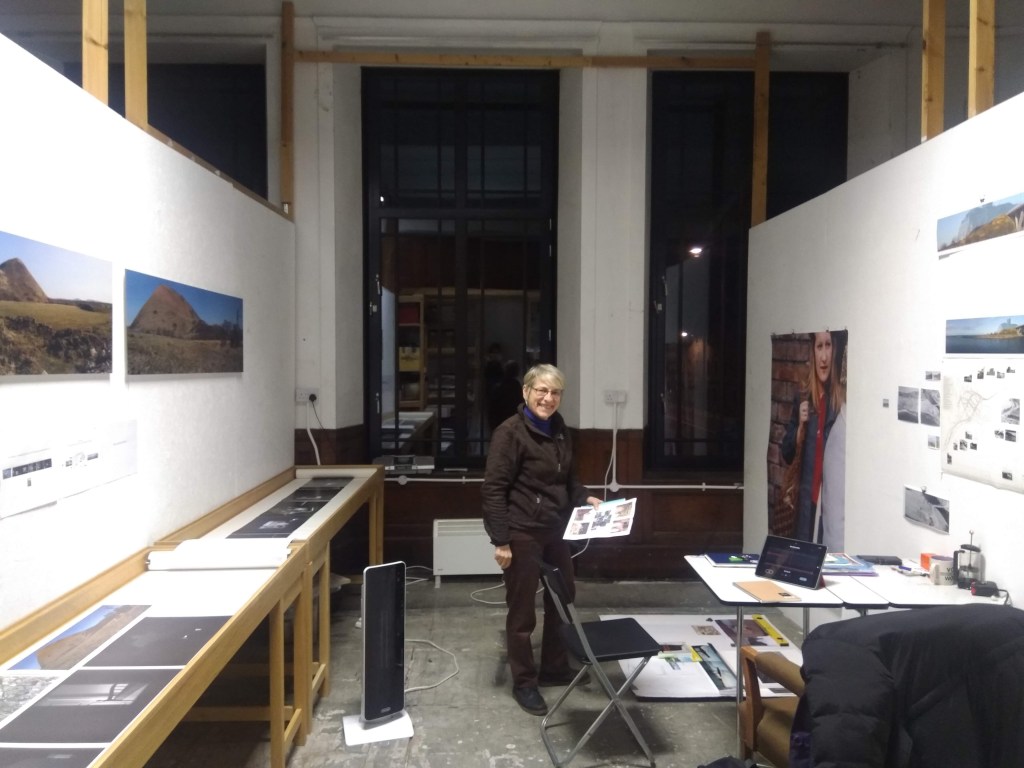
This is the first time I’ve interviewed an artist directly, and the process was fascinating. Though much of her work is site-specific, we met in Bird’s studio in Leith, where various projects and works-in-progress are tacked to the walls. She described how she doesn’t always manage to work in the studio – alongside her artist projects she teaches at Glasgow School of Art – but the images that surround her when she returns are good reminders that help her pick up where she left off.

I recorded the conversation and transcribed it into its interview format afterwards, and was reminded of how conversations jump around in a way the written word simply cannot. Though audio interviews, via the radio or through podcasts, are probably more personal and intimate, I liked the procedure of drilling down into our conversation and distilling Bird’s thoughts and motivations into a few paragraphs, though editing while keeping someone’s voice is always a challenge.

This is a new venture for me and I’m hoping it is the starting point for more interviews, written and recorded, which shine a light on the fascinating process of art making. I’m very grateful to Nicky Bird for her warmth and patience, and to Rosy Naylor, Curator of Art Walk Porty, for giving me this opportunity.

Nicky Bird in her Leith studio

Myriam Lefkowitz / Walk, Hands, Eyes (Edinburgh)

I have been wanting to write a piece about this for a long time. I regret I’ve been behind on my blog posts lately, but February is the month I’m going to write regularly. As my friend Kate put it, ‘perfectionism is taking a hit’. She is drawing every day, and I’m trying to do the written equivalent, whether on here, in my journal or on Instagram (@encounters_art).

What does it mean to meet a stranger, and within minutes, be expected to rely upon them for everything? To trust them to be your eyes, to guide you through the complex labyrinths of city streets, buildings, traffic, and other people? This is the question that lies at the heart of Myriam Lefkowitz’s extraordinary work ‘Walk, Hands, Eyes (Edinburgh)’, which was organised and performed by Talbot Rice Gallery, one of the city’s best places for engaging with contemporary art (art that is being made now, or has been very recently).

The work is a 45-minute 1-1 walk where the performer takes you by the hand and leads you through the city, with your eyes closed throughout. It is a silent experience, except for the occasional, whispered command by your performer “one step down… and another”. It was as intense as it sounds, and most people I have discussed the piece with have recoiled in horror, and asked me why anyone would voluntarily put themselves through that kind of thing. Was it even “art” if there wasn’t a object or thing you could look at as part of it?

Yet, I would go so far as to say it was one of the best art pieces I’ve experienced. Yes, it was intense, but in all the best ways. The childlike, gentle way the performer took my hand, and the way my body responded with utter trust (even though my mind fluctuated between embarrassment, confusion and hilarity) was a fascinating experience. It’s a simple concept when you boil it down, but for me as participant, it was and emotional and sensory rollercoaster.

People have always told me that when a person loses one sense, the others become sharper, super-senses. Temporarily ‘losing’ my sight for around an hour (I just about managed without peeking) demonstrated how accurate this is. I became aware of so much more in a way that was genuinely exhilarating: the frosty blades of grass crunching under my feet, the snippets of conversations, and even the atmosphere or feeling that you sense when entering a place. I did the walk on 12 December, and certain rooms we passed through vibrated with intense festiveness. In other moments I could sense we were in the deserted crevices of Edinburgh: alleys and corners where the sun barely ever reaches, the very quality of the air a telltale sign of pervasive damp.

There was an almost embarrassing sense of intimacy to it. As a rule, we only ever hold hands with people we know really well, who we feel affection for, who we know will not judge us if our hands are clammy or our skin rough. I found myself thinking about the performer (who was fast becoming my spirit guide through this new sensory world). I worried that her hand was cold: that prolonged connection with a stranger, though artificially created through an artistic concept, became a strong bond through a shared surreal experience. I had to trust her, because I had no choice otherwise. I also had to trust the other people we encountered in the streets not to hurt me, to take advantage of my vulnerability, my acute sense of which was counteracted with relief when nothing did go wrong. (On a side note, I have new respect for those who navigate landscapes with limited sight, by using a white stick or a guide dog. It really brought home the element of trust and bravery involved in that).

Experiential art, or art that functions through making us interact or participate with it in some way, is a big business. In our free time more and more we seek “experiences”, moments we can document on social media that boost our social capital in the process. Unfortunately, this can often lead to art experiences that are packed with gimmicks, but art vacuous at their core. By contrast, this simple action of two people walking together, with the city as their backdrop, felt minimalist and radical. Lefkowitz’s ‘Walk, Hands, Eyes (Edinburgh)’ reminded me that to make this kind of art successfully, you don’t need lights, big budget shows, music, bells and whistles.

For me, the best art can makes us as viewers/listeners/participants feel, perceive, experience and enjoy both reality and artifice in a way we hadn’t before, that stays with us. You can tell from the lack of images on this post that there were no visual tokens or takeaways from the experience, nothing to prove I was there. That’s because the best part of the work came from something intangible, from what I experienced within.