Funny Weather by Olivia Laing

For someone who writes about art, I will sheepishly admit that I haven’t read much art criticism. There were lots of academic papers while I was at university, but actual art magazines always seemed unattainable to me: sitting in rows at the entrance of the library, shiny pages, heavy and untouched by anyone, looking rich and intimidating. I used to wonder who those pristine publications were for, as I walked past them to go and bury my head in a battered old catalogue, full of black and white photo reproductions and not too much text.

I’d heard of Olivia Laing through friends. One gave me a copy of Crudo, her first work of fiction, a couple of years ago, while another mentioned I might like The Lonely City. Then last summer a copy of Funny Weather, a collection of her essays, landed in my lap through work. When I finally started it, what struck me most was that this writing was both easy to read, and somehow had an air of poetic stillness to it. The force of the voice, the strength of the writing, would be enough to carry you through, even if you weren’t that into art. Take her description of wandering through the Wallace Collection, for example, an experience which I also wrote about last year.

The Wallace Collection was almost empty. I drifted through the violet and empire-green rooms, with their washed-silk walls… The Fragonard girl still hung on her swing, suspended in thick air; a goose lay perpetually unplucked on a kitchen table. Nothing beats paint for stopping time cold.

From ‘Dance to the Music’, December 2017
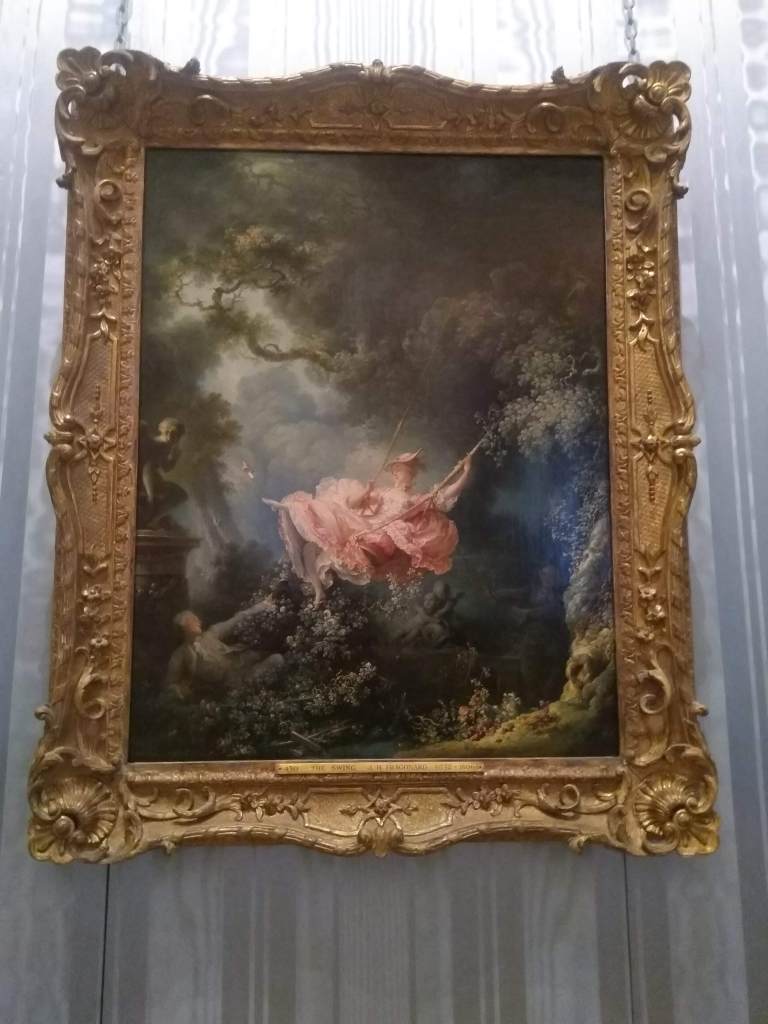
Jean-Honoré Fragonard, The Swing, 1767

Many of these essays started life as columns for Frieze magazine, but this didn’t feel like reading art criticism. Laing’s observations felt more like the notes in the margins from some recent but only half-recognisable memory, observing life, love, intimacy, rage, humanity, shame, identity. Her subjects are broad. One essay can take in Patti Smith, killer whales, abortion rights, as well as a performance at the Barbican, and she manages to connect them all cohesively. I learned more about later 20th century American art than I had ever bothered to before. Biographies of artists and writers mix with recollections of her own experiences, and every now and then you get a glistening nugget of a sentence which you just have to let soak in.

“It was a very bright day. The sun was so low that every grain of sand cast a shadow.”

From ‘Between the Acts’, November 2018

There are many fascinating things about reading these essays, and one is that they allow you to time-travel into what, since the juggernaut of the coronavirus pandemic, seems like distant history. They are dispatches from the recent past, and the unfolding events (the refugee crisis, Trump’s election, Brexit, Nigel Farage’s “breaking point” poster) are examined with unflinching insight and a healthy dose of terror. Funny Weather places art solidly in its political context. It shows us that news ages quickly, but reminds us that many of these threats still exist: they remain there to call out, and fight against, during and after the pandemic. The way visual signs and symbols are used in the political landscape will always be a fruitful trove for artists and art observers to analyse. I would love to get Laing’s take on all the union jacks we keep seeing in politicians’ homes. Deeply sinister, would be my guess.

That the essays have been compiled into book form is a joy, because the book itself is a very beautiful object. Its pale pink, candyfloss-coloured cloth cover contrasts shockingly with the photograph: a close-cropped image of David Wojnarowicz’s partially-buried face, gritted teeth, covered in dirt and dust, called Untitled (Face in Dirt), 1992-93.

With such a strong cover, the book’s complete lack of images inside was a disappointment. Reading one article or essay online, it is easy to search for the images on my phone simultaneously. With a book, all that research is far too time consuming and disrupts to the act of reading. Asking people to read about art without including the visual reference point is a swing and a miss. It assumes a certain level of knowledge or awareness of the artists’ work, which I definitely didn’t have for every piece or even every artist discussed (I hadn’t heard of Sargy Mann at all, but now I’m glad I have). I wish they’d at least inserted a few pages of images. Or, how about a link to an online index, where we could browse all the works mentioned, side by side? That would be an amazing insight into Laing’s critical eye. That way, we could see what she is most drawn to, at a glance.
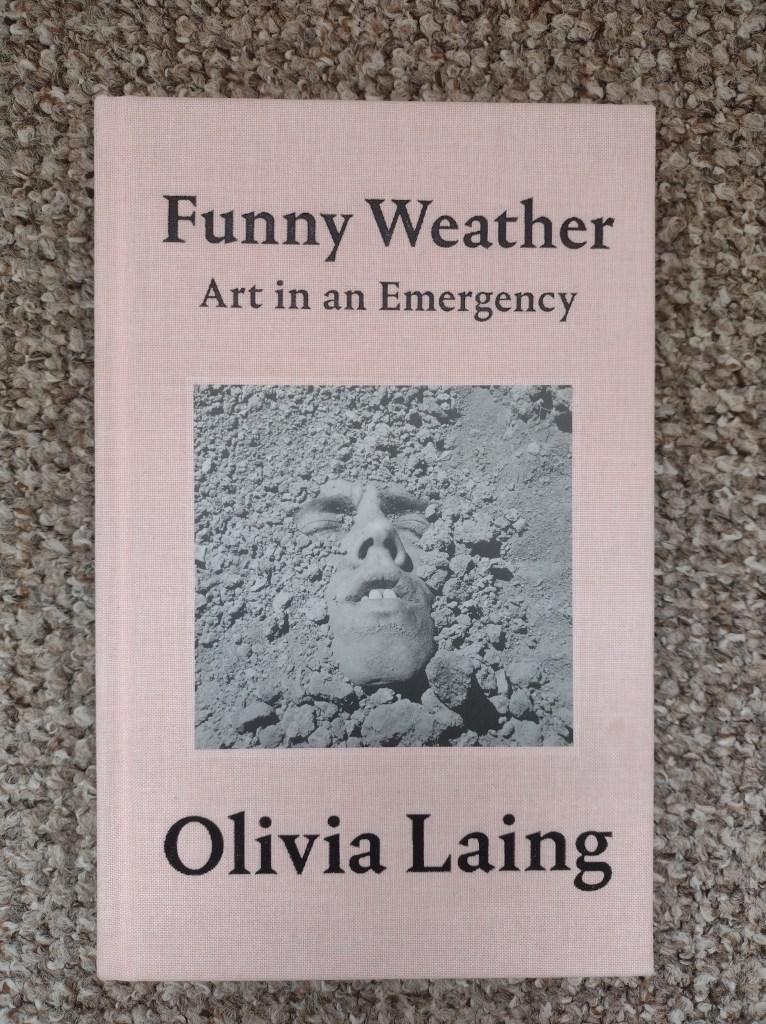
That’s a strong book cover

The major take-home for me was that Laing’s writing shines brightest when describing the work and lives of queer artists. Her essay on Derek Jarman, ‘Sparks through Stubble’ (2018) completely charmed me, partly because it lets us in to her own life too. Her mother was gay, and she grew up in ‘a village near Portsmouth where all the cul-de-sacs were named after the fields they’d destroyed’. I later discovered that this essay was written as an introduction to a recent edition of Jarman’s Modern Nature, which I added straight to my TBR list.

Through exploring the world of Jarman, Laing writes about the Aids crisis with such empathy. Her essay on David Wojnarowicz, who died aged 37 of Aids-related complications, is a plea for compassion, and re-opened my own eyes to the very recent reality of the gay community living every day in fear, their very existence politicised: ‘What does it mean if what you desire is illegal? Fear, frustration, fury, yes, but also kind of a political awakening, a fertile paranoia.’ Wojnarowicz was completely unfamiliar to me, but Laing’s writing about him illuminated connections to a young artist called Graham Martin whose work I was familiar with through Instagram. Martin’s depictions of empty, dilapidated warehouses, with naked male bodies barely distinguishable in the shadows, brought Laing’s essay to life for me. Making this conceptual link between Laing, Wojnarowicz, and Martin, I could feel the synapses in my brain lighting up. It all made sense.

Since starting this blog, a few people have asked me: if I want to learn about art, where should I start? What should I read? How does it work? I haven’t always known how to respond. If you want to read what other people have to say about art, if you find it helpful or illuminating, that’s great (thank you for getting so far with this review!) But reading Funny Weather has also made me understand that while great art writing like Laing’s can stand up by itself, the best way to engage with art is looking at it first, reading about it second.
Embracing art across the UK

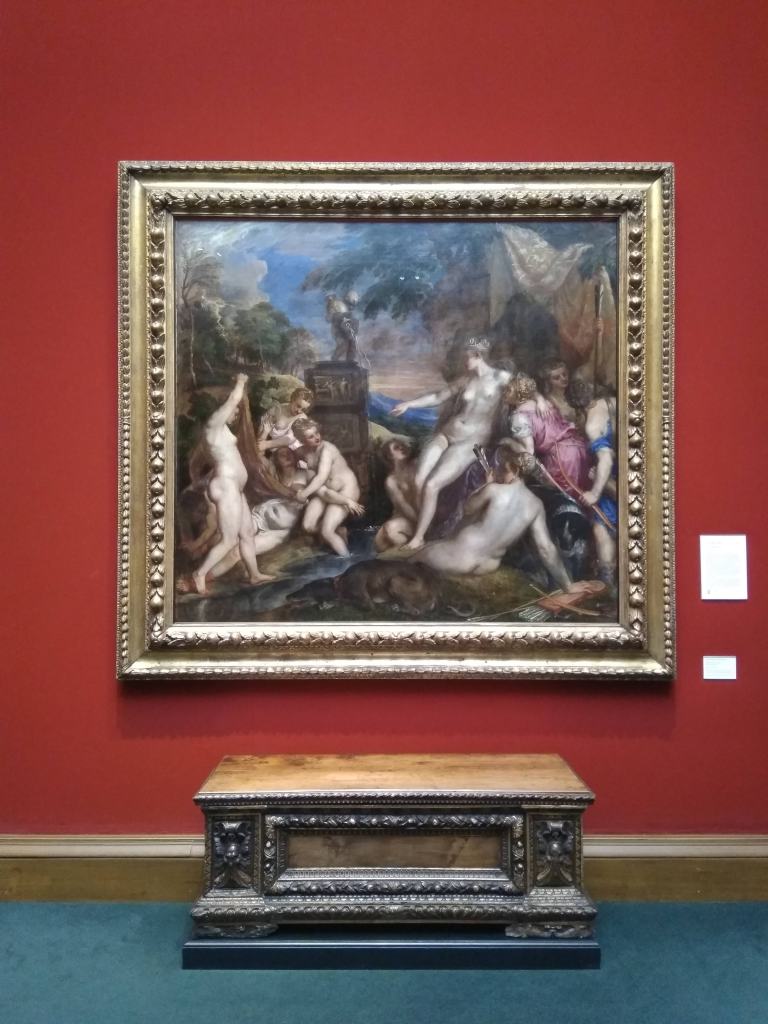
It started with the news that the Titian exhibition, which united all six of his poesie paintings, commissioned in 1551 by Prince Philip Spain, would not be travelling to Scotland. I was completely gutted. I had been looking forward to this exhibition since I first heard of the plans hatching, while I still worked at the National Gallery in London. The very idea of bringing these huge masterpieces of myth together seemed magical to me. An idea that somehow turned back time, reconstructed a historical moment, and recognised paintings as objects with lives of their own (over the centuries they travel, are put in different frames, owned by different people, and end up in different museums across the world). To have these paintings brought together once more, we would be able to see them as a series, to see them as Philip II of Spain saw them. I think I might have been mildly obsessed with the idea. I certainly saw myself as personally attached to two of these paintings, Diana and Callisto and Diana and Actaeon, which are co-owned by the National Gallery in London and the National Galleries of Scotland. When I moved to Edinburgh from London, I didn’t have a job and only knew about four people. So, I spent time in the Galleries, and seeing these paintings in their Scottish setting made me feel like I was reunited with old friends.

‘Diana and Callisto’ by Titian, (1556-9), situated in the Scottish National Gallery

The circumstances of its cancellation were understandable. The pandemic had disrupted the schedule completely (the show was supposed to go to London, Edinburgh, Spain and Boston – it still will go to the latter two locations). Even if the pandemic had been contained, the lack of festivals in Edinburgh in the summer meant the usual glut of tourists would not be in circulation, so presumably there would not be enough people paying to see these artworks and buying overpriced cakes in the shops to offset the huge costs of putting on exhibitions like this one. Travel for pleasure became a thing of the past and we were forced, by necessity, to embrace what the local could offer.

For years, uncertainty about funding has changed the way galleries operate, pushing them further down a path of supposed self-sufficiency. This is survival by embracing corporate opportunities such as venue hire, event experiences, cafes, shops, big-name exhibitions that can sell more pricey tickets (and on the more sinister side, outsourcing huge swathes of security staff and cutting specialist teams). The gallery-as-business was hit hard by the pandemic: by taking away the consumers, the model no longer worked. What is going to emerge from the wreckage of the pandemic and Brexit remains to be seen, but what’s for sure is our urgent need to recognise that art isn’t just about blockbuster exhibitions, much though we love them. Not all galleries will, or have ever, been able to afford to put on those shows. We must safeguard these places. We have to acknowledge the role of the local, the small-scale, the community-driven in art, and its capacity to provide inspiration.

To state the obvious, not everyone’s local is the same, which is why two articles that appeared in the Guardian and the Scotsman towards the end of last year made me angry (I’ve been stewing on this a while). Firstly, the Guardian’s review of the year featured the top 10 in the visual arts and literally everything, except one show in Oxford, one virtual tour, and one podcast, EVERYTHING was in London. I am not London-bashing here. I love London and its galleries, but as art writing, this is lazy. It’s likely that the writer lives in London, and wasn’t able to travel as much to explore other places in the UK, but I wish they’d acknowledged that, or simply call the article “The Top 10 Art Exhibitions in London”. Or maybe – crazy idea – the paper could have commissioned writers around the country to talk about what art was happening in their towns and cities? Yes, 9 million people live in London, but there are a further 58 million people in the rest of the UK. I could have just googled “big exhibitions London” and the same results would have come up. The article held no real reference to the pandemic, to the flourishing of artwork at home and online that it has engendered, to the incredible innovation by recent art graduates as they reinvented their degree shows, or to the turmoil it had thrown galleries around the country into.

The same lack of imagination was played out again in the Scotsman article picking highlights in visual art for 2021. Literally all suggestions bar one were in Edinburgh. As an art blogger based here, that’s a great list for me, but what about the rest of Scotland? For a start, everyone knows that Glasgow is the hub of exciting contemporary artistic development in Scotland. Beyond the central belt – what about Dundee’s thriving scene, or the two arts organisations in Scotland, Deveron Projects in Huntley, Aberdeenshire, and Inverness’ Eden Court, whose civic role in their local communities during the pandemic has earned them a place on the shortlist of a £100,000 prize from the Calouste Gulbenkian foundation?

I’m sorry to say it, but it’s likely that international travel will be off the menu for much of this year. But hopefully, just maybe, we’ll be able to visit places beyond our own homes. I’m therefore going to finish this post (this rant, sorry) with a highly personalised list of where and what I would like to visit once it is safe to do so, and with a personal commitment to push my writing, and not solely rely on reviewing big shows and exhibitions in capital cities. Art critics need to take a leaf out of the Ru Paul’s Drag Race UK’s book and start to celebrate diversity in a joyful way.

If you’d like to explore what’s out there, I’d recommend looking at the Art Fund map, an interactive tool that highlights interesting places you can see art across the UK. The National Trust and the National Trust for Scotland look after some brilliant art collections, sculpture trails and new contemporary art commissions in the UK too. Instagram can be a great way of finding out about art that is happening near you and online. If the pandemic has proven anything, it is that the local, the everyday, can still provide inspiration and wonder. Of course, we still want to see blockbusters, but there’s so much more out there to explore and to value.

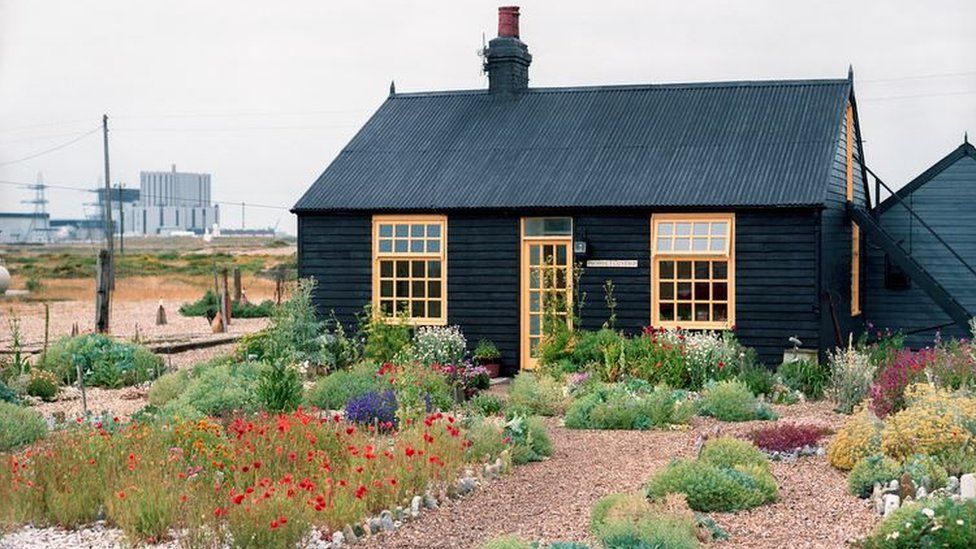
Prospect Cottage, Dungeness

My list: much is in Scotland and near-ish my parents’ house in Sussex, because I’m realistic that I might not be able to get to do a full UK tour this year. I’ll update as the year evolves.

Prospect Cottage, Dungeness

Those of you who follow me on Instagram know I’ve been reading Funny Weather by Olivia Laing, and I’m planning to post a review of that here soon. In this collection of essays, the one that shines through is ‘Sparks through stubble’, originally written as an introduction to a new edition of Derek Jarman’s Modern Nature. Laing’s talk of his special home, a fisherman’s hut on Dungeness beach where he ‘set about conjuring an unlikely oasis’, has bumped Prospect Cottage right to the top of my list for as soon as I can get there.

Deveron Projects, Huntly

Mentioned above and shortlisted for the Calouste Gulbenkian prize, I have known about Deveron Projects for a while, but when I started reading properly about it yesterday, I couldn’t stop. An innovative, place-driven project that uses a 50/50 principle to balance art/community, global/local, experimental/traditional in its ethos, it’s right up my street. I can’t wait to visit, and I hope to meet the inspiring people who run it. Until then, they are hosting a series of online talks/chats on Friday lunchtimes which I’m hoping to tune into, next week’s guest is Amanda Catto talking about Creative Scotland’s visual arts strategy.

Charleston

Ah Charleston. I have been meaning to go for years and then when it had to go into survival mode during the pandemic, I worried I would never get to see inside. Thankfully, the campaign to #ReopenCharleston was successful, and a further discovery of erotic drawings by Duncan Grant, gifted to the institution, has ensured it will continue to tell the incredible stories of the lives, loves and the art of the Bloomsbury Group in Sussex for a long time to come.

Self Portrait by Duncan Grant, (about 1920),
in the Scottish National Portrait Gallery

Newhailes House and Gardens

This is a Palladian Mansion looked after by the National Trust for Scotland, situated down the road from Edinburgh, in Musselburgh. Apparently it has amazing rococo interiors including 18th-century trompe l’oeil decoration. The house is undergoing some restoration and hopefully will open in the spring. Book me up for a guided tour please!

Joan Eardley 100, Various venues

The work of Joan Eardley has been a revelation to me since moving to Scotland, and on 18 May 2021 it will be 100 years since her birth. This year several organisations are collaborating to form a series of retrospectives of her work, in a project led by Scottish Women and the Arts Research Network. There will be shows at the Hunterian Museum in Glasgow, Paisley Museum, Gracefield Arts Centre in Dumfries, a Heritage Trail on Arran, an exhibition at the National Galleries in Edinburgh along with more not yet announced. Follow #Eardley100 on social media for updates.

The BALTIC, Gateshead

I am ashamed to say I’ve never been to Gateshead or Newcastle. I can’t quite believe I’m confessing to that. I have no excuse, especially since moving to Edinburgh, it’s not a long train journey. The BALTIC has long been on my list of galleries to visit, so when I can, I’m booking a trip. We all know Newcastle is famous for its nightlife too, so I might try and hold out for when the pubs are open again, for this one.

Artes Mundi, Cardiff

The Artes Mundi prize is probably going online this year, but if there’s a chance to see it in person, I would love to take it. The prize was on Will Gompertz’s list of 2021 art to hope for (the list also featured places in Scotland and Northern Ireland. We ❤ the Beeb). Previous winners include Theaster Gates and Teresa Margolles, and this year’s winner will be announced on 11 February.

Towner Gallery, Eastbourne

The Towner got my attention recently because of its commitment to anti-racism action and pledges following up on statements made in the wake of the Black Lives Matter protests last summer. I like that they’re following up with action, not just words stopping at words. It makes me respect them as an institution and want to go there and support their work in Eastbourne.

CAMPLE LINE, Thornhill

Located in the countryside close to Lockerbie, CAMPLE LINE is an independent arts organisation for contemporary art and film. I’ve been waiting for restrictions to ease so I can see Sara Barker’s Undo the Knot exhibition, which looks like it hovers between sculpture and painting in a very satisfying way. Also, I’ve never really been to south west Scotland and I’d like to remedy that soon.

Dalmeny House

Cycling out to South Queensferry has been one of my favourite ways to alleviate the cabin fever of lockdown. Dalmeny Estate is on the way out there, and their art collection is usually open to visitors in the summer months. I have heard great things, fingers crossed they will open up again this year.

What’s on your list? What should I write about? I would love to hear from you! Leave a comment, click the contact page or you can DM me on Instagram or Twitter.

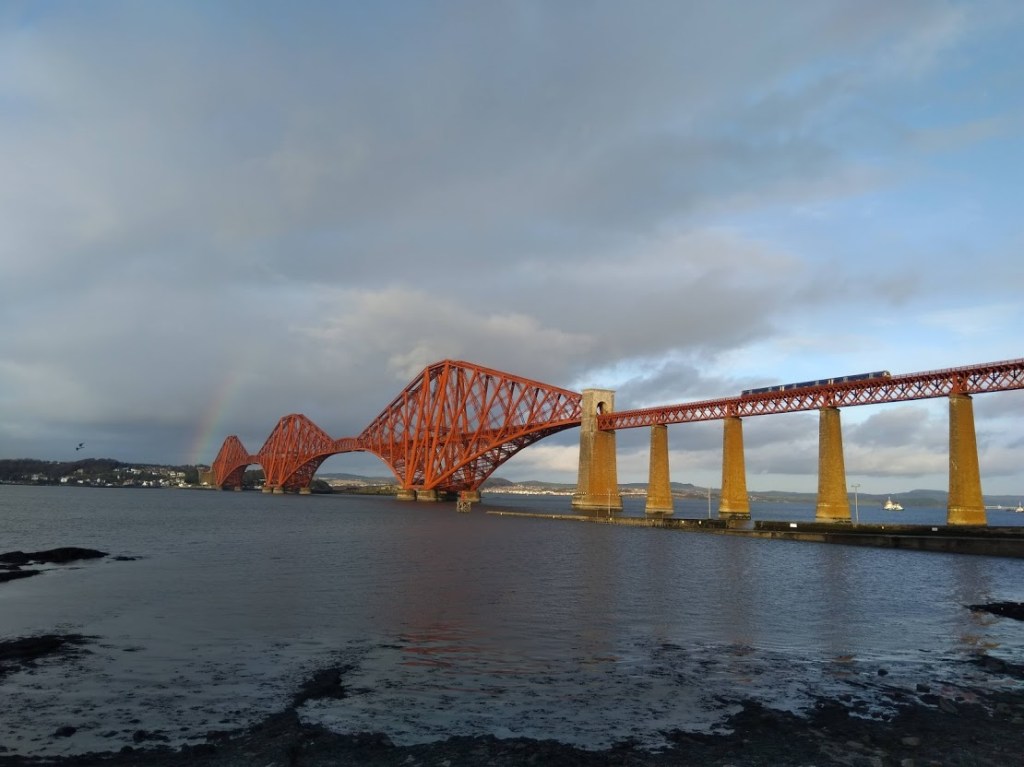
The Forth Rail Bridge from South Queensferry, reached by bike via Dalmeny Estate