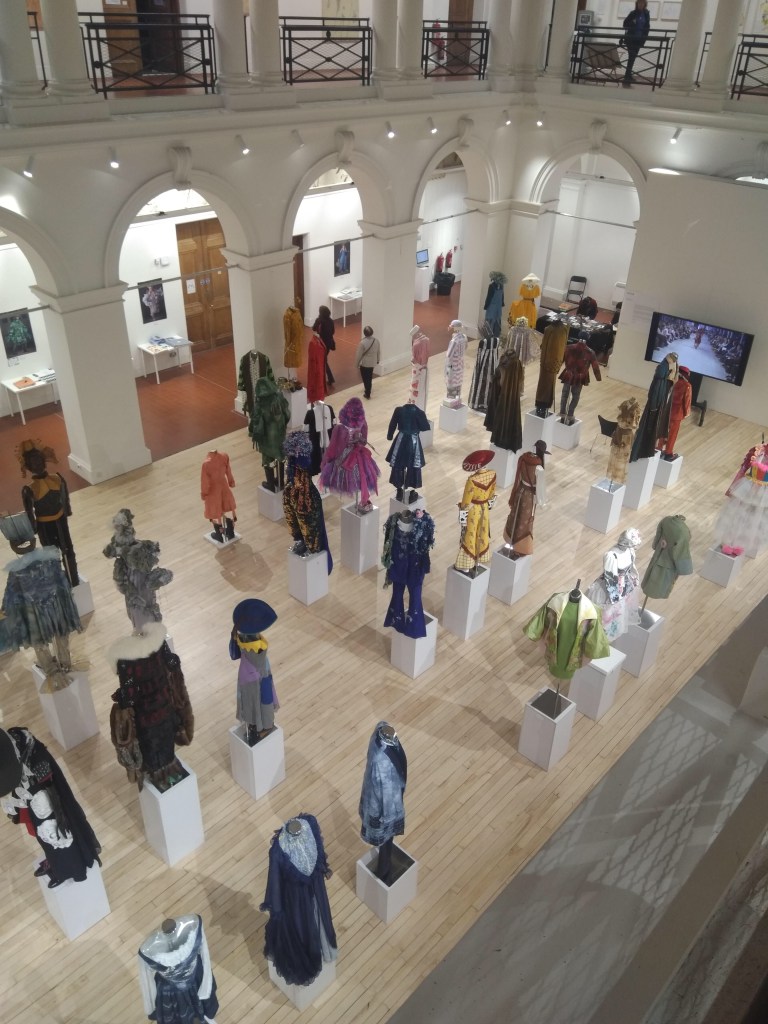
Last week it was Edinburgh College of Art’s degree show, and while it is already over and those who haven’t seen it have unfortunately missed out already, it keeps popping up in my head as something important to write about. There was such a huge variety of things to see across the campus, from design informatics and illustration, to performance costume and interior design, it was a great celebration of the immense creativity of people starting out on their artistic journeys. Going there and exploring all these disciplines was an exciting, inspiring experience.
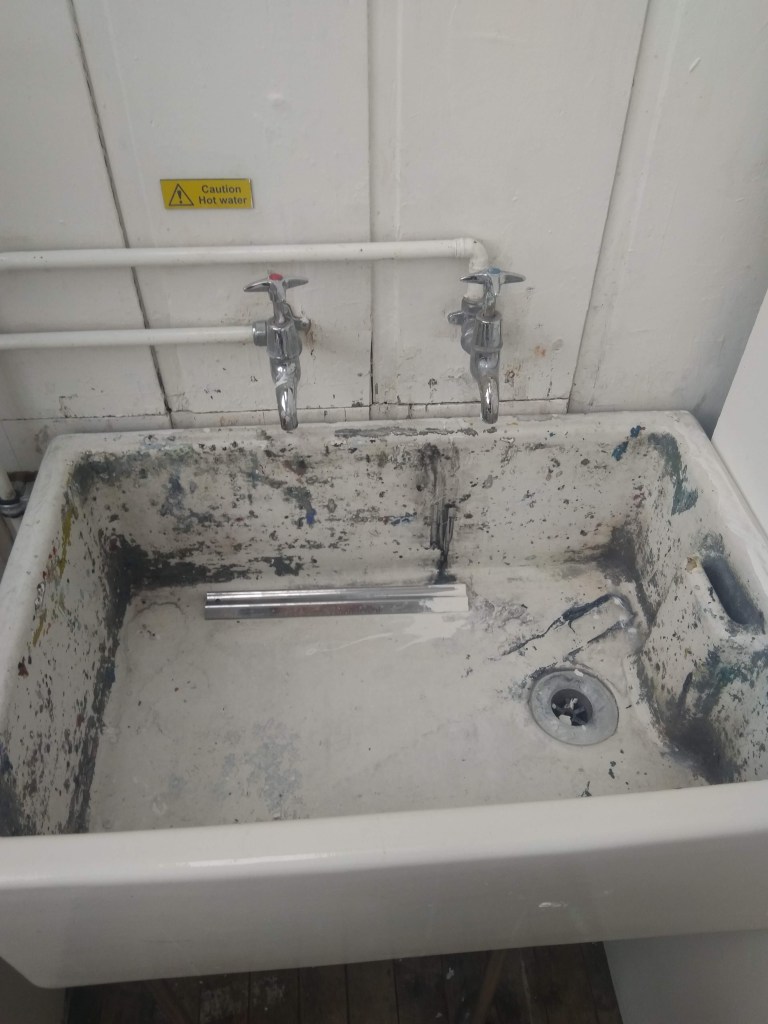
My main focus was on the painting and sculpture section, which was housed in some of the prime spaces in ECA’s main building studios. These are noteworthy rooms in themselves, with huge north-facing widows looking out on to Edinburgh Castle. One of my favourite things about the rooms were the paint-spattered sinks in each corner, a reminder of the previous generations of students who have worked in these spaces and left messy traces behind.
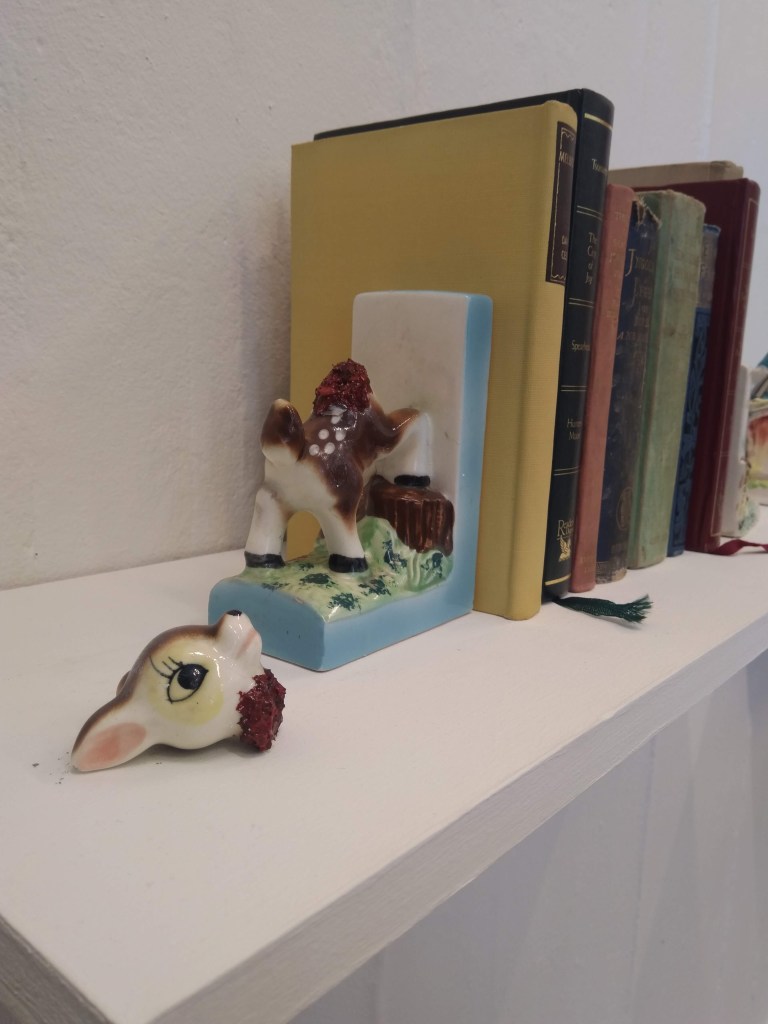
One of the prevailing things I noticed about the show is the recurring theme of everyday items that had been ‘made strange’ by the artists’ interventions. There were mobility aids weighed down by large crystal growths, a disorientating corridor leading to a storeroom where everything was painted in a sickly lilac paint, deconstructed spirit levels, and a creepy room inhabited by mutilated ornaments: Bambi’s severed head looking particularly macabre.
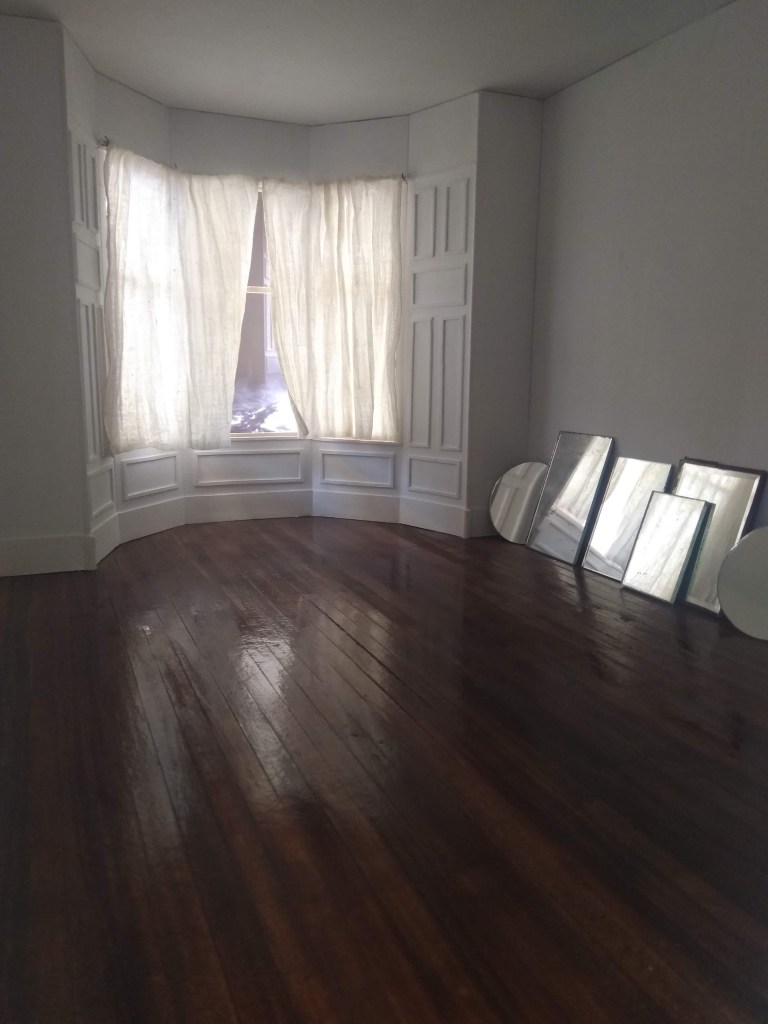
As someone who has been spending a lot of time recently thinking about the ‘uncanny’ in art, things once familiar, perhaps from childhood, that have re-manifested themselves as something that makes us feel uneasy, it was fascinating to see these strategies at work at the degree show (though perhaps I was looking for it in the way that whenever something is on your mind, it seems to come up everywhere). There was one installation by Chell Young called Fragile Realities which produced highly detailed dolls house-esque dioramas of interiors that the viewer/voyeur looked at through a peep hole door or window. The recreation was so exact, photographs of these miniature rooms could have been advertising a place to rent.
Another series of sculptures that caught my eye were figurative works by Hugo Harris. Made from wax, the outer skin of the sculpture was smooth and highly realistic. But the inside of the bodies were also exposed, the torn flesh a messy tangled web clinging to the metal structures that gave them their shape. The work was highly visceral, acting in dialogue with the photographs behind, but the presence of the metal also alerted the viewer to the robotic falseness of the bodies themselves: the boundaries of truth, fiction and sci-fi becoming blurred.
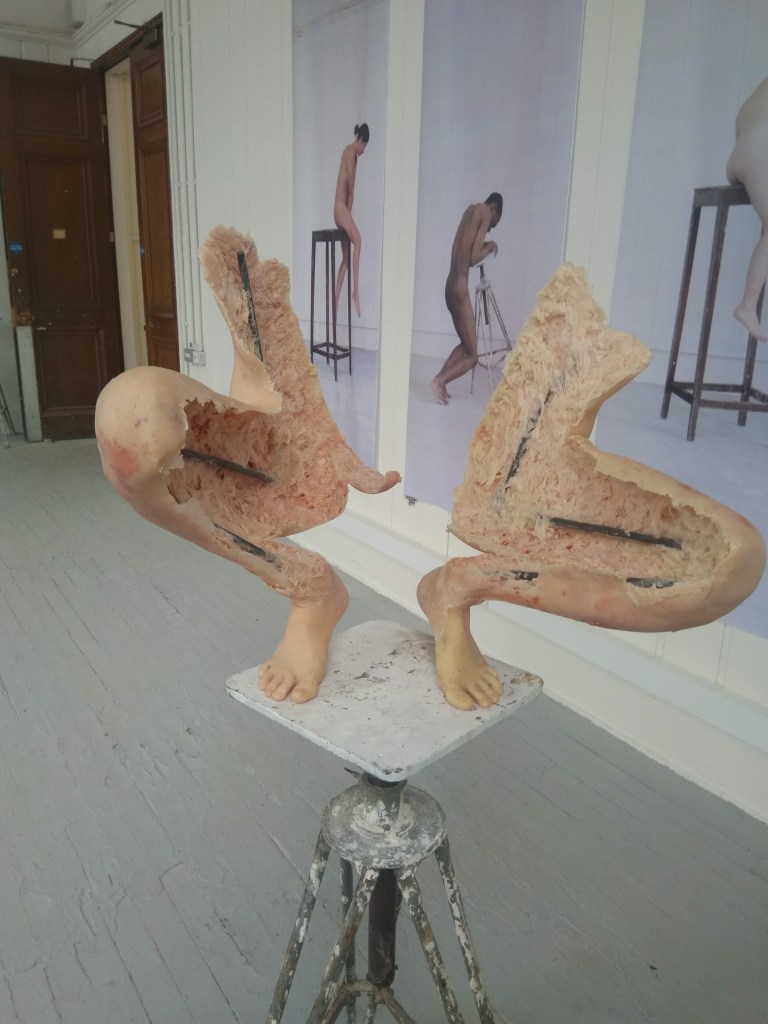
There were lots of fascinating and interesting pieces, and many more I could have written about, that served to enchant and unsettle the viewer simultaneously. I had hoped to get across to Glasgow and see what the Glasgow School of Art students had presented. I wondered whether there would be a marked difference between the approaches taken by the students and the resulting artworks. Sadly I didn’t make it, but it’s on my agenda for next year.
What you can be sure of with art school degree shows is that there is always something to make you think, and also to feel reassured that the next group of emerging artists have lots of interesting experiments they are yet to make.

 encounters_art